
5 Tier Wedding Cake Prices for 100 People: 2026 Guide
A five-tier wedding cake makes a dramatic reception centerpiece, yet five real tiers can produce far more servings than 100 guests need. For 2026, a fully edible design for this guest count often costs about $1,000 to $3,000, with luxury cakes featuring fondant, sugar flowers, or detailed piping reaching $5,000 or more.
You can reduce the bill by using dummy tiers, a smaller cutting cake, or sheet cake prepared by the same bakery. Your final wedding cake cost also depends on frosting, flavors, decorations, delivery, setup, and venue rules.
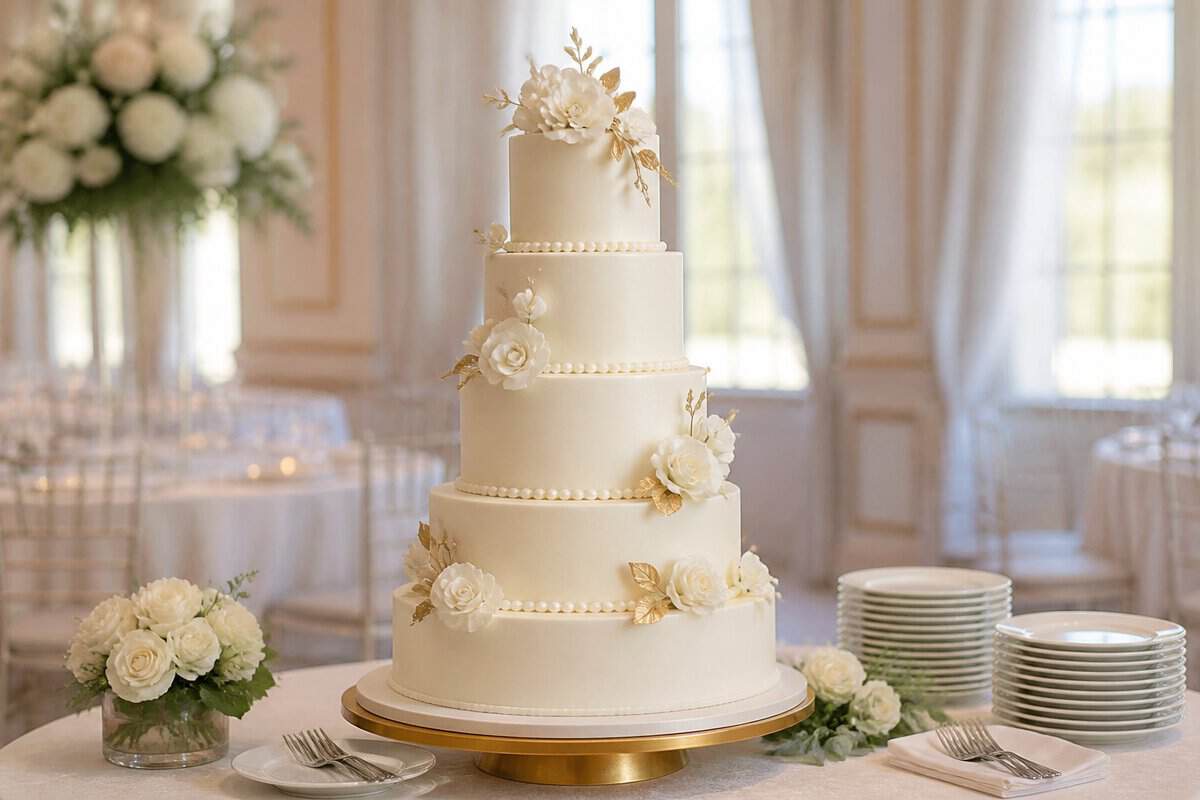
For 100 guests, budget $1,200 to $2,500 for a polished five-tier display, then confirm whether every tier needs to be edible. If you want help comparing serving sizes and design choices, use a wedding cake cost calculator and request itemized quotes from local bakers.
What Should You Budget for a Five-Tier Display?
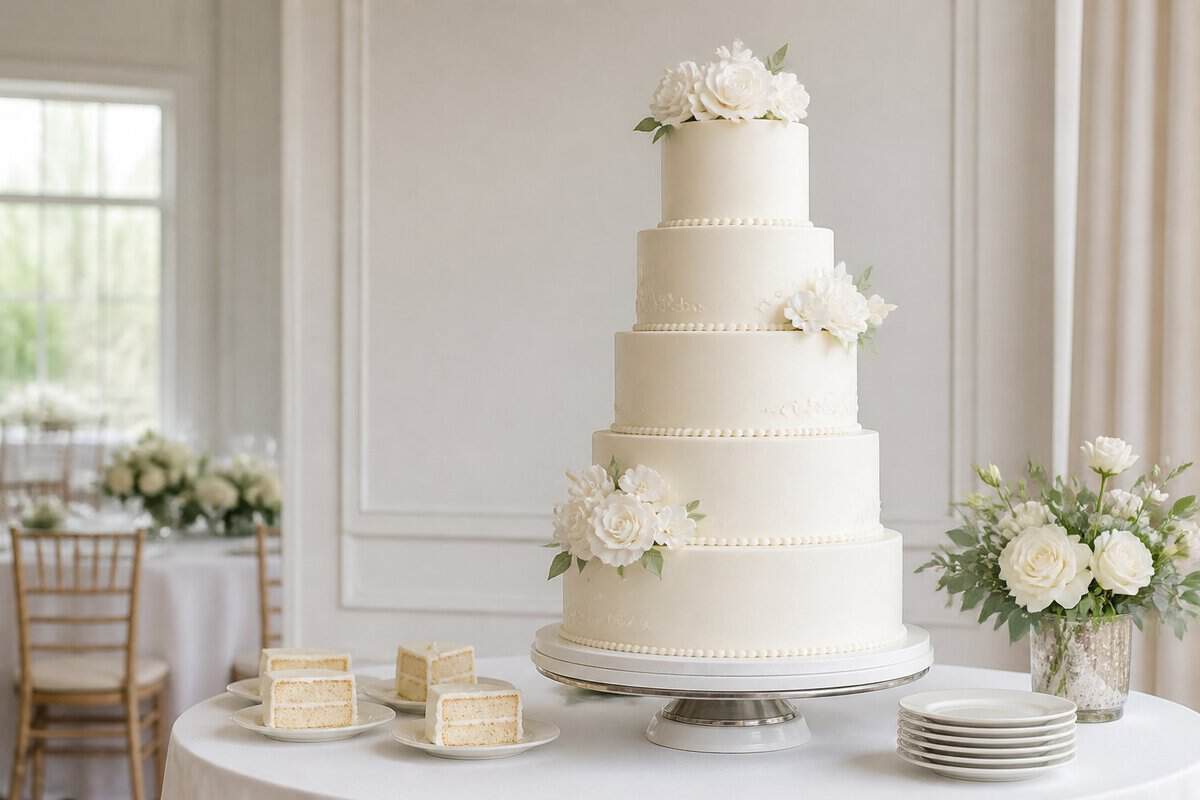
A five-tier display for 100 guests usually costs $1,000 to $3,000, with simple designs near the low end and luxury custom work at the high end. The number of wedding cake tiers affects labor, structure, transport, and decoration even when the guest count stays the same.
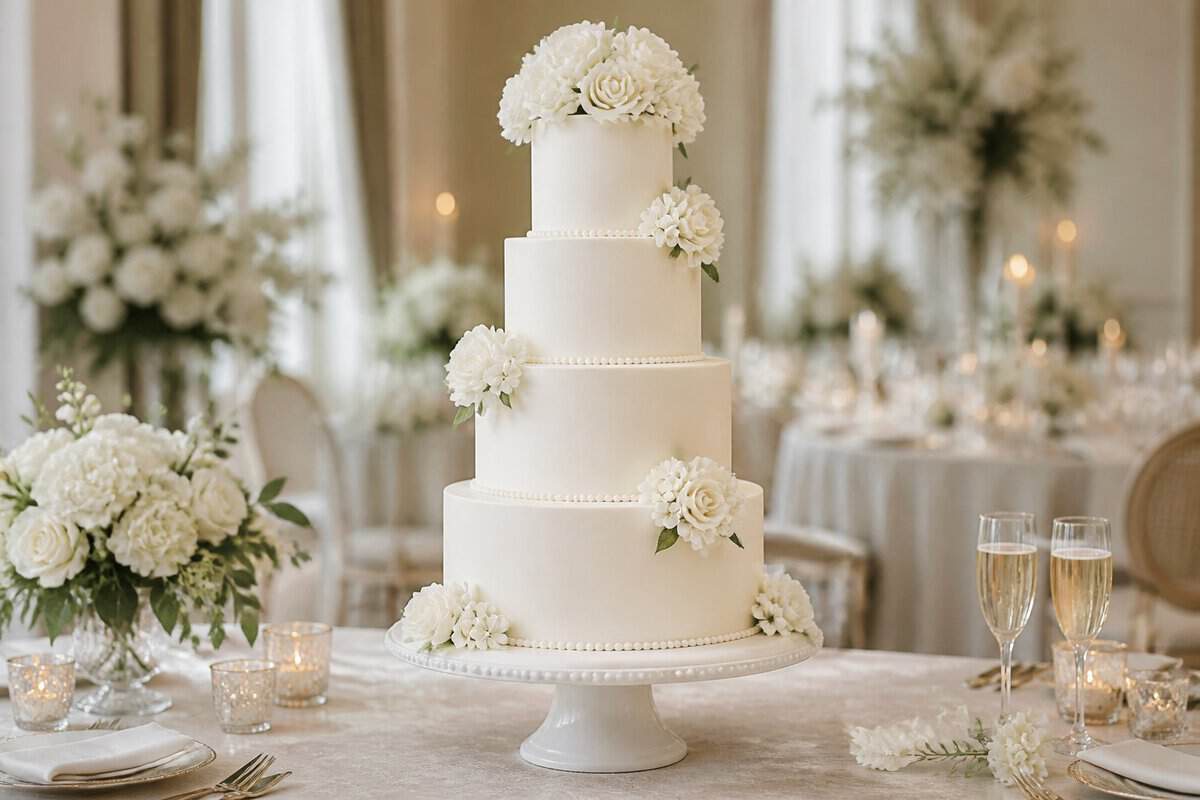
Typical 2026 Price Ranges for Simple, Custom, and Luxury Designs
Wedding cake prices for a five-tier cake often fall into these ranges:
| Design level | Approximate price | Common details |
|---|---|---|
| Simple buttercream | $1,000-$1,500 | Smooth or textured finish, basic topper |
| Custom buttercream | $1,500-$2,500 | Piped details, multiple flavors, fresh flowers |
| Luxury custom | $2,500-$5,000+ | Fondant, edible gold, hand-painted work, sugar flowers |
A tiered wedding cake may carry a per-serving price of $5 to $15 for professional work. Custom cake artists with highly detailed designs may charge $15 to $30 or more per serving. Ask whether the quote includes a cake topper, support structure, delivery, and setup.
Why a Fully Edible Five-Tier Cake Usually Exceeds 100 Servings
Five edible wedding cake tiers need practical diameter changes to stay stable and attractive. A baker might use tiers measuring 6, 8, 10, 12, and 14 inches, creating well over 100 wedding cake servings.
The extra cake increases ingredient, baking, filling, frosting, and decorating costs. A five-tier cake also needs internal dowels or boards, chilled transport, and careful assembly at the venue. You can review sizing examples in this guide to how many wedding cake tiers for 100 people.
A Realistic Budget for a Display Cake and Supplemental Servings
A display cake with two or three edible tiers and two or three dummy tiers can fit a $900 to $2,000 budget. The bakery supplies matching sheet cakes or kitchen cakes for guest servings, which keeps the visible design tall without producing hundreds of extra portions.
A small display cake paired with sheet cake may reduce the cake portion of your budget by 30% to 50%. Request one combined quote so the design, flavors, serving count, delivery, and cutting instructions stay clear.
How to Size the Cake for 100 Guests
A three-tier edible cake often supplies enough cake for 100 guests, while a five-tier display needs dummy tiers or supplemental cake to avoid excess. Your serving plan should account for the reception menu, other desserts, and whether guests receive full wedding cake slices.
What Is a Standard Wedding Cake Serving?
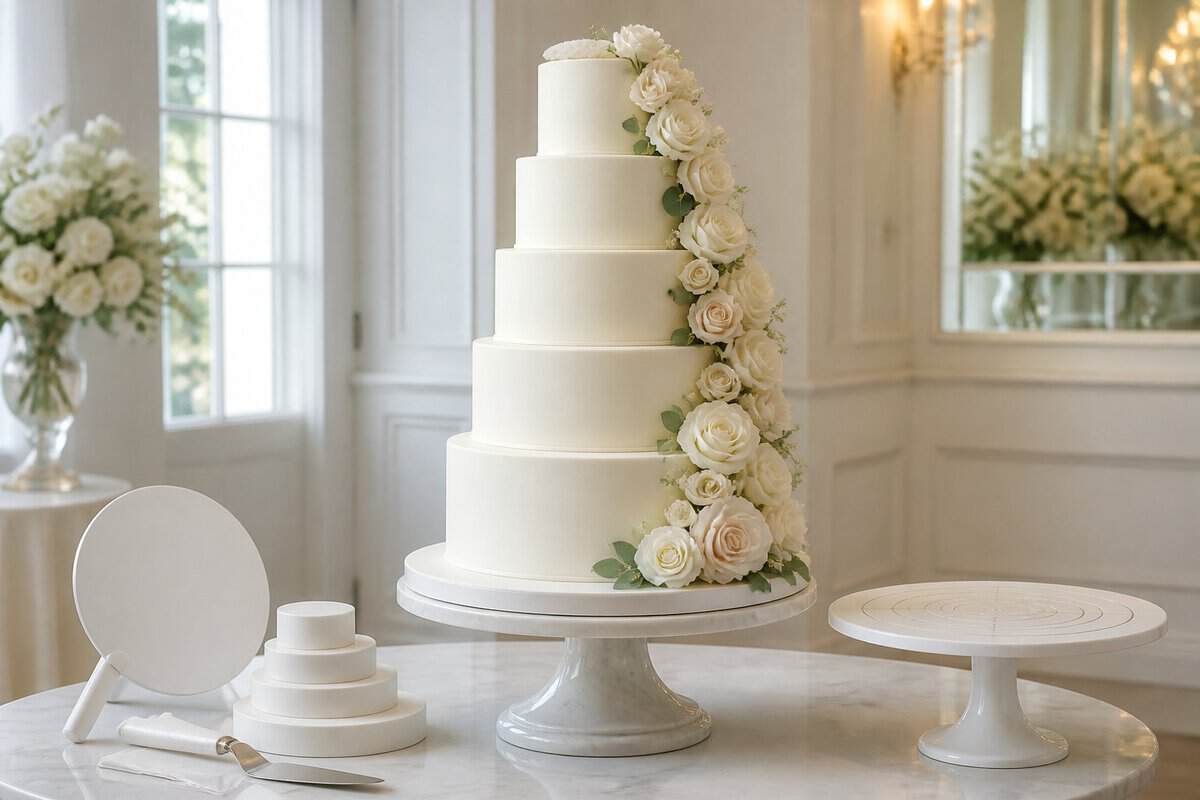
A standard wedding cake serving is a narrow slice measuring about 1 by 2 inches. Bakers use this portion when estimating cake servings for receptions. Party-size slices are larger, so a cake labeled for 100 wedding servings may provide fewer generous dessert portions.
Your baker may use different charts for round, square, or tall tiers. Ask for the bakery’s serving chart before approving the design.
How Many Cake Slices Should You Order?
For 100 guests, order 100 servings when cake is the main dessert. Ordering 110 to 120 portions gives you a small buffer for larger slices, staff servings, or guests who want seconds.
If you serve a dessert bar, cupcakes, or ice cream alongside the cake, 75 to 85 wedding cake portions may cover the reception. A three-tier configuration with 6-, 9-, and 12-inch tiers produces about 100 servings in many bakery charts. For more sizing help, see how big of a wedding cake do I need for 100 guests.
When to Use Dummy Tiers or a Cutting Cake
Use dummy tiers when you want the height and style of a five-tier cake without five full tiers of edible cake. Foam tiers receive the same icing and decorations as the real cake, so the finished display looks complete.
A cutting cake gives you enough edible cake for the cake-cutting tradition. The kitchen team then portions sheet cake for guests. Tell the baker how many tiers must be edible because dummy tiers affect both the structure and the quote.
How Sheet Cakes Fill the Serving Gap
Sheet cakes provide efficient servings for a large guest count. They stay in the kitchen, where staff can cut consistent portions and plate them quickly.
A bakery may match the sheet cake flavor and filling to the display cake. Confirm whether sheet cakes receive the same frosting, whether they require refrigeration, and who handles cake cutting. Your venue may charge a separate cutting fee of $2 to $5 per slice.
What Drives the Final Quote?
The final wedding cake price reflects design labor, ingredients, structural work, and event services. Frosting, fillings, flowers, piping, delivery distance, venue access, and setup time can each change the quote.
Buttercream Frosting vs. Fondant Icing
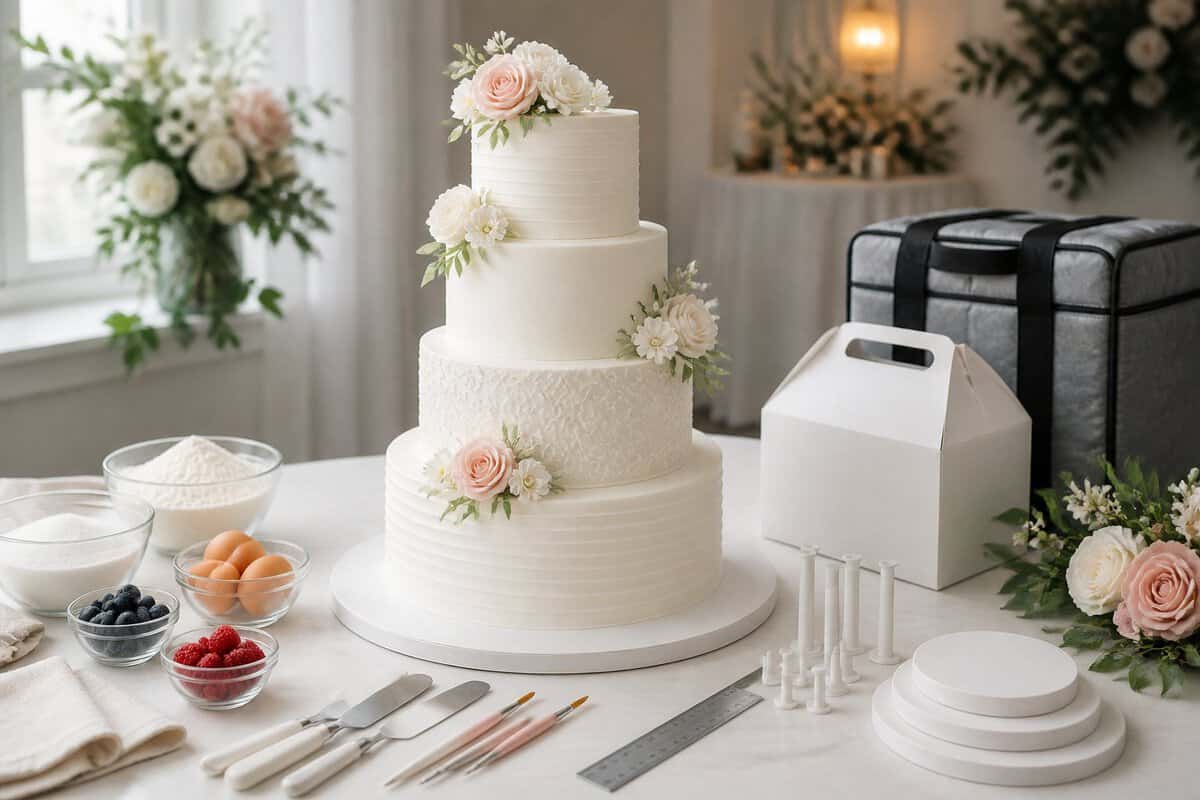
Buttercream cakes often cost less than comparable fondant cakes because buttercream requires less finishing labor. A textured buttercream finish creates a soft, romantic look, while smooth fondant icing gives you sharp edges and a formal surface.
Fondant cakes may cost 20% to 40% more than similar buttercream designs. Fondant also adds a smooth base for painted details, geometric patterns, and edible gold. Ask whether the quote includes a buttercream layer beneath the fondant.
How Flavors, Fillings, and Premium Ingredients Affect Cost
Vanilla, chocolate, and basic strawberry flavors commonly fit the base price. Premium ingredients can add $0.50 to $2 per slice, especially when you choose specialty fillings or several flavor combinations.
Extra charges may apply for champagne, espresso, lavender honey, fruit curd, ganache, caramel, or high-quality chocolate. Each additional flavor can require separate preparation, testing, and assembly. Limiting the design to two flavors helps control production time.
The Labor Behind Flowers, Piping, and Edible Details
Handmade sugar flowers require skilled labor and can add $500 to $1,000 to a large cake. A single detailed sugar flower may take several hours to shape, dry, color, and assemble.
Fresh flowers may cost $50 to $150 when coordinated with your florist. Use food-safe flowers with a protective barrier between stems and cake. Intricate piping, edible gold, painted details, ruffles, and custom cake decorations also raise labor costs. A cake topper adds another line item when it requires custom lettering or sculpting.
Delivery, Setup, and Venue Fees to Ask About
Wedding cake delivery often costs $50 to $150, with higher charges for long distances, difficult parking, stairs, or narrow venue access. A five-tier cake needs careful transport and on-site assembly, so setup may appear as a separate fee.
Ask these questions before signing:
- Is delivery included?
- Does the price include assembly and setup?
- Who supplies the cake stand?
- Does the venue charge a cake cutting fee?
- Does the baker need refrigeration or a private setup area?
- What happens if the reception timeline changes?
How to Get the Look for Less
You can create an impressive five-tier wedding cake display for less by reducing edible volume and choosing efficient decoration. Semi-naked buttercream, fresh fruit, and a small feature cake can preserve the visual effect while limiting labor.
Choose a Semi-Naked or Textured Buttercream Finish
A semi-naked wedding cake uses a thin layer of buttercream that leaves some cake color visible. This finish suits garden, rustic, and modern receptions while using less frosting and less smoothing time.
Textured buttercream also reduces the need for perfectly sharp edges. Add fresh fruit, a few flowers, or a clean cake topper to create a finished wedding cake design without extensive piping.
Pair a Smaller Feature Cake With Kitchen Cake
A two- or three-tier feature cake gives you enough height for photos and cake cutting. Matching kitchen cake supplies the remaining servings at a lower labor cost.
Ask your cake artist to use the same buttercream and filling on both cakes. The baker can cut the kitchen cake behind the scenes while the display cake stays intact for photographs.
Simplify Decorations Without Losing Impact
Choose one focal decoration, such as a floral cascade, edible gold accent, or sculpted topper. Repeating several complex details across five tiers quickly increases labor.
Fresh flowers can create color and movement at a lower price than handmade sugar flowers. A limited palette, clean piping, and a well-placed topper also give the cake a polished appearance.
Use Fewer Flavors and More Efficient Tier Sizes
Two flavors reduce mixing, filling, labeling, and assembly time. Ask your baker to place the most popular flavor in the edible tiers and use the same flavor for supplemental servings.
Efficient tier sizes can provide the servings you need without filling every visible tier. Share your guest count, dessert menu, and desired height so the baker can recommend a practical structure.
Alternatives to a Traditional Tiered Cake
Cupcakes, dessert bars, donut walls, brownies, and cake pops can feed 100 guests at a lower or similar cost while giving you more variety. A small cutting cake lets you keep the cake-cutting tradition alongside another dessert format.
When a Cupcake Tower Makes More Sense
A cupcake tower costs about $300 to $500 for 100 guests, depending on flavors, frosting, decorations, and display rental. Each guest receives an individual portion, so cake cutting and plate service become easier.
You can place a small top-tier cake on the tower for the ceremonial cutting. Cupcakes also let guests choose different flavors and make leftovers easier to package.
Building a Dessert Table or Dessert Bar
A dessert table can combine cookies, mini pies, brownies, fruit, and a small cake. Plan for about one to two small pieces per guest when the table follows a meal with other sweets.
A dessert bar works well when you want several flavor choices or need gluten-free and vegan items. Include serving trays, labels, utensils, table styling, and restocking in your budget.
Comparing Donut Walls, Brownies, and Cake Pops
| Option | Approximate cost for 100 | Serving style | Best feature |
|---|---|---|---|
| Donut wall | $200-$400 | Individual | Playful display |
| Brownies | $150-$350 | Bar pieces | Easy batch service |
| Cake pops | $250-$500 | Individual | Portable portions |
| Traditional cake | $500-$3,000+ | Sliced | Classic centerpiece |
Donut walls need a stable display and food-safe hooks or shelves. Brownies offer simple portion control and several flavor options. Cake pops create a decorative favor-style dessert, though detailed coatings and custom shapes increase labor.
Serving Cake Alongside Other Desserts
Serve a smaller wedding cake with a dessert bar when you want both a traditional centerpiece and multiple choices. Order cake for 50 to 75 guests, then provide enough additional desserts for the remaining people.
Tell your baker and caterer how desserts will be served. A late cake cutting, limited plates, or unclear portion sizes can leave guests waiting even when the dessert quantity is sufficient. For more options, explore these wedding cake alternatives.
How to Get an Accurate Baker Quote
An accurate quote requires your guest count, serving plan, tier structure, design reference, flavors, venue details, and event date. Give each wedding cake baker the same information so you can compare prices fairly.
Use a Wedding Cake Cost Calculator as a Starting Point
A wedding cake cost calculator can estimate a starting budget from servings, tier count, frosting, flavors, and decoration level. Use the result for planning, then request a custom quote because calculators cannot price every delivery route, venue condition, or design detail.
Enter 100 guests, then test separate options for a fully edible five-tier cake, a display cake with dummy tiers, and a smaller cake with sheet cakes. Save the estimates so you can compare the trade-offs.
Questions to Ask at a Tasting and Consultation
Ask the wedding cake maker:
- How many wedding cake servings does each tier provide?
- Which tiers will be edible?
- Does the price include fillings and tasting fees?
- Are delivery, setup, stands, and toppers included?
- What is the cake cutting policy?
- How will the cake be transported and assembled?
- What deposit and cancellation terms apply?
- How long will the cake remain fresh?
Bring your venue address, reception time, inspiration photos, color palette, and guest count. Ask for an itemized wedding cake pricing sheet before you approve the design.
How Dietary Restrictions and Food Allergies Change Pricing
Gluten-free, vegan, dairy-free, and nut-free cakes often cost 15% to 25% more because they require specialty ingredients and separate preparation. A bakery may also charge more for individual allergen-safe portions or dedicated equipment.
Tell the baker about food allergies before the tasting. Ask how the kitchen prevents cross-contact, whether the cake uses shared equipment, and how the venue will label and store special servings.
When to Book Your Wedding Cake Baker
Book your wedding cake baker about six to nine months before the wedding, and reserve earlier for peak-season dates or custom sugar flowers. Popular bakers may fill their calendars a year ahead.
Finalize the design, flavors, serving count, and delivery details several weeks before the event. A signed contract should list the date, venue, cake description, edible and dummy tiers, price, payment schedule, and cancellation terms.