
Abandoned Pocono Mountains Honeymoon Resorts Map: Sites and Status
The abandoned Pocono Mountains honeymoon resorts map points to a vanished era of romantic travel in Eastern Pennsylvania. From the 1950s through the 1980s, couples came to the Poconos for private cabins, dramatic suites, indoor pools, and famous heart-shaped tubs.
Many of those properties now stand empty, have been demolished, or serve a new purpose.
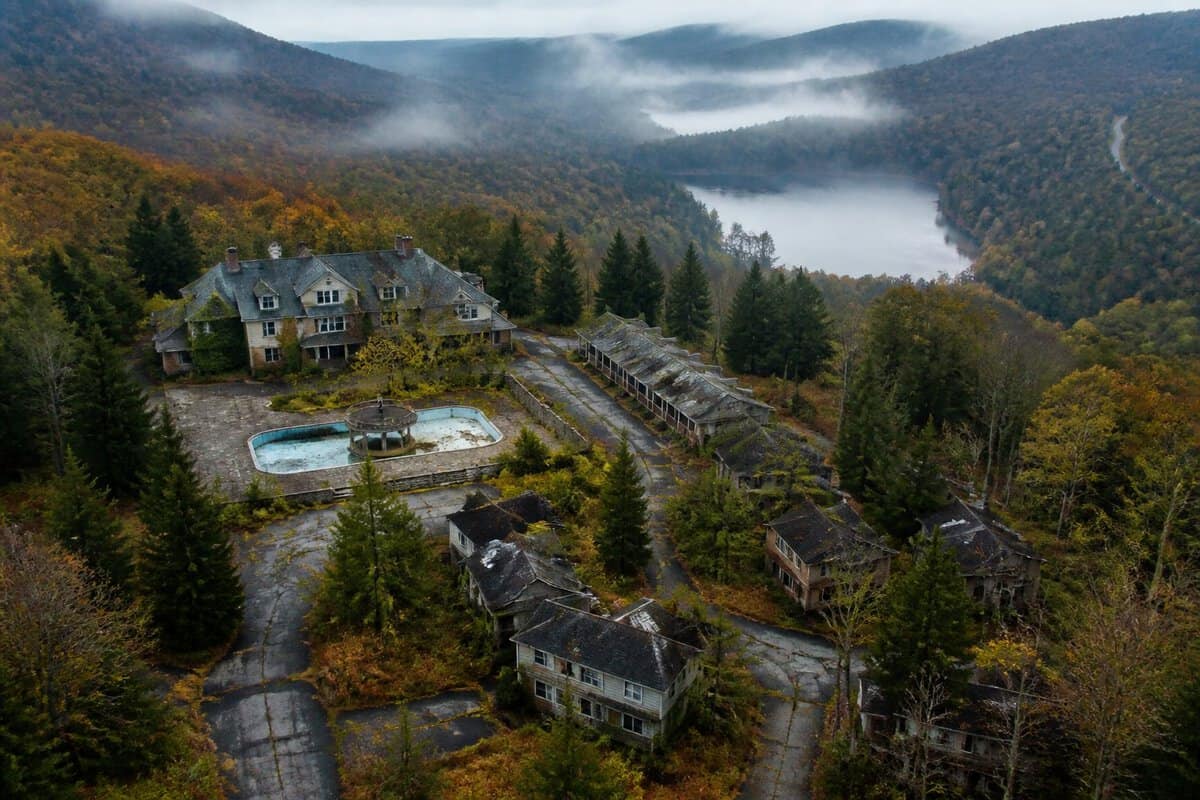
Use the map as a historical reference, not as a route to enter an abandoned resort. Property conditions change, ownership rules apply, and several sites are dangerous or closed to visitors.
You can still experience the region through public roads, nearby towns, preserved history, and current romantic honeymoon destinations in the mountains.
How to Use the Map and Read Each Location Status
The map separates former Pocono resorts into three useful status groups: demolished sites, properties with new uses, and structures that remain standing on private land. Roads and map markers show a location’s history, not public access.
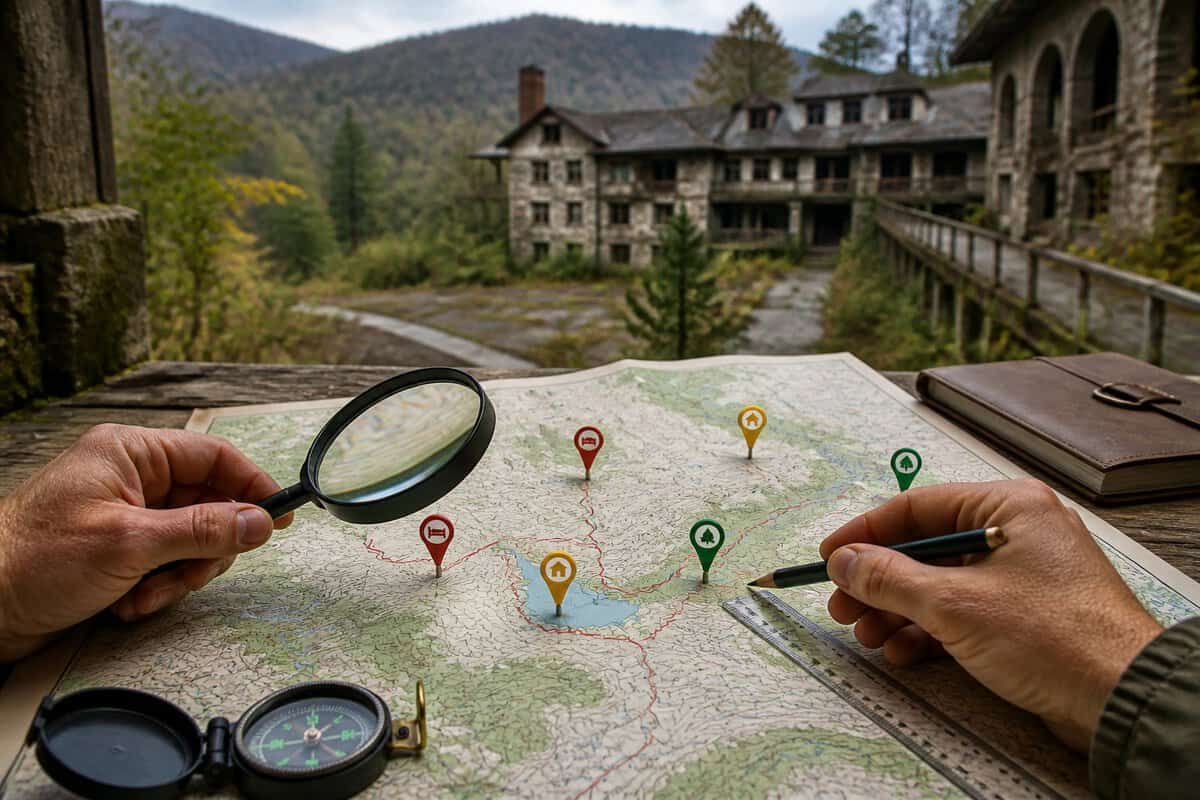
Which Former Resorts Are Demolished, Repurposed, or Still Standing?
Penn Hills Resort in Analomink lost many of its signature buildings after fires and demolition, including major structures along the highway. The former Buck Hill Falls Inn in Barrett Township was demolished after years of decline and fire damage.
Caesars Brookdale Resort on the Lake moved toward reuse as the Brookdale Treatment Resort. The property’s past as a private resort still shapes local stories, while its current use requires strict privacy.
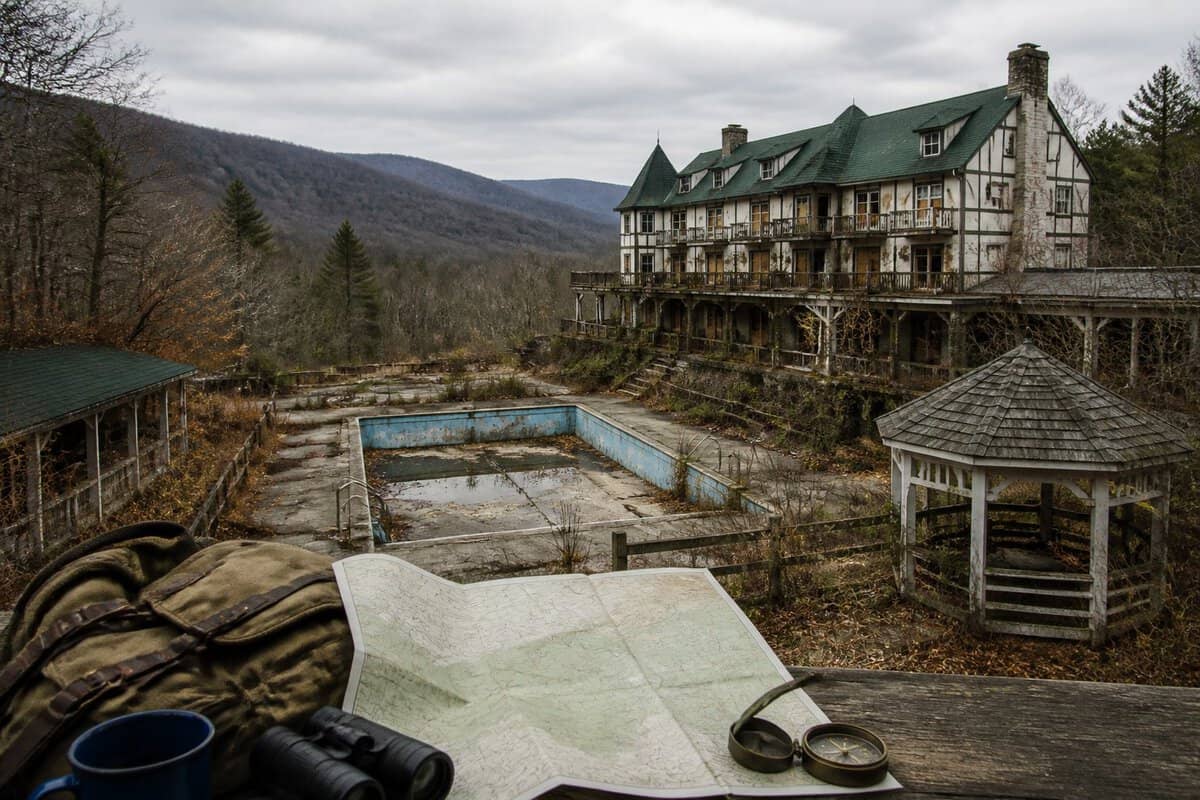
The Summit Resort near Tannersville remains one of the best-known abandoned resort subjects in photographs. Unity House Resort, Pocono Gardens Lodge, and other former properties have also appeared in accounts of vacant or deteriorating Pocono sites. A map should show these as historical locations with current status notes.
Where Are the Major Former Resort Clusters in Monroe County?
Many recognizable sites sit in or near Monroe County, with clusters around Mount Pocono, Pocono Township, Stroud Township, and nearby communities. Analomink lies along roads connected with the former Penn Hills property, while Tannersville places The Summit near a busy mountain travel corridor.
Other locations spread toward Barrett Township, Bushkill, and the Analomink area. Route 447 helps place several historic resort communities within the wider Pocono Mountains region.
Since boundaries and property names can vary across older records, use a current map alongside historic resort names.
What Can Be Seen Legally From Public Roads?
Penn Hills was visible from public roads because parts of the resort bordered state highways near Analomink. The former Buck Hill Falls Inn could also be viewed from nearby public roads before demolition.
A roadside view does not grant entry. Every abandoned resort remains private property unless the owner or an authorized operator provides permission.
Do not cross gates, walk around barriers, enter buildings, or follow informal trails. Trespassing creates legal risks and exposes you to unstable floors, broken glass, fire damage, and hidden wells or debris.
Mapped Locations of the Best-Known Former Honeymoon Resorts
The best-known former honeymoon resorts stretch across communities from Analomink and Tannersville to Scotrun, Barrett Township, and Bushkill. Their status ranges from partial demolition to adaptive reuse and standing ruins.
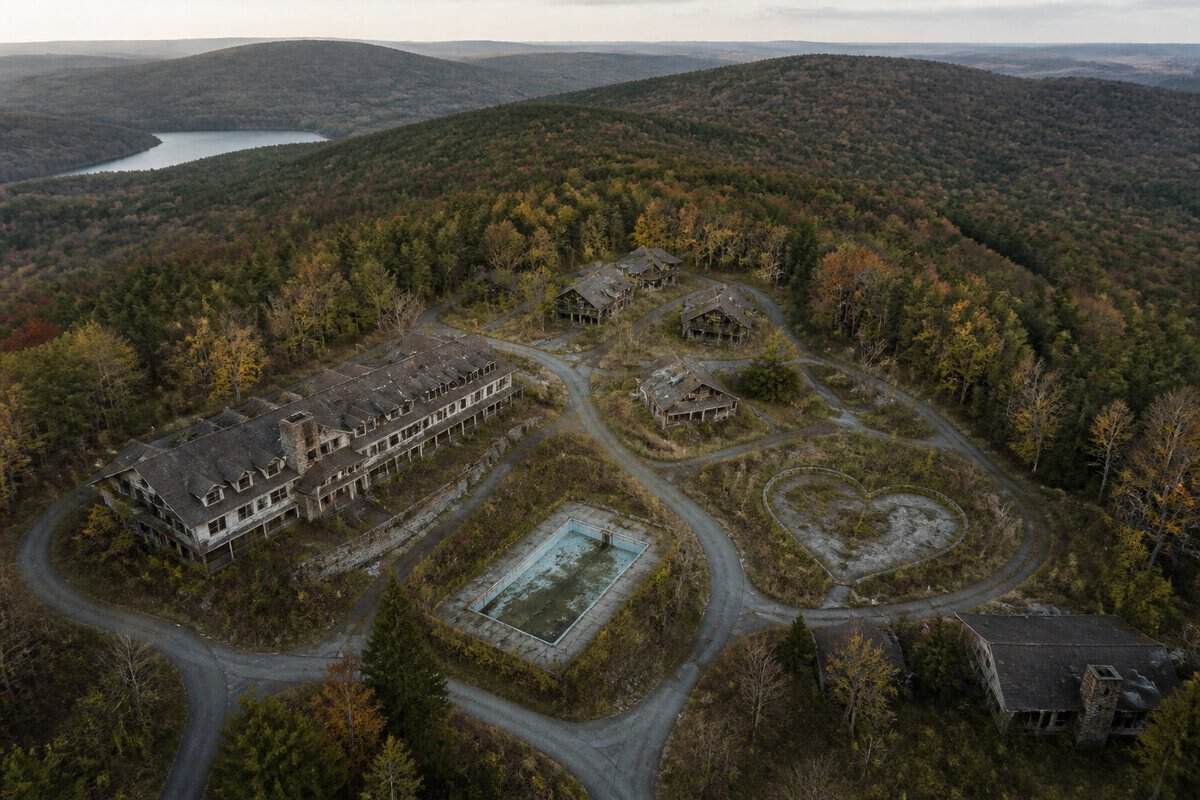
Penn Hills Resort in Analomink
Penn Hills Resort occupied a large site near Analomink Road and Routes 191 and 447. The property became famous for couples-only vacations, golf, pools, and romantic rooms with signature decor.
Fires and years of decline changed the landscape. Much of the resort was demolished in 2021, while a few buildings remained on the broad property.
Since sections could be seen from the roadway, Penn Hills became one of the most photographed abandoned Poconos resorts. Public visibility still does not permit entry.
The Summit Resort in Tannersville
The Summit Resort, also called The Summit, is remembered for its couples-oriented rooms and unusual amenities, including heart-shaped bathtubs. Its wooded setting and decaying interiors made it a popular subject for urban-exploration photography.
The site’s condition and access rules can change with ownership and redevelopment plans. Treat every building and driveway as private property, even when a structure looks empty from outside.
Birchwood Resort and the Former Airpark
Birchwood Resort occupied a large wooded property associated with the former Airpark area. The resort joined a group of Pocono properties built around extended stays, recreation, and private lodging.
Older maps and photographs help place Birchwood within the region’s resort network. Physical remnants may be scattered, altered, or inaccessible, so avoid assuming that a historic marker identifies an open attraction.
Caesars Brookdale Resort on the Lake in Scotrun
Caesars Brookdale Resort on the Lake stood on about 250 acres beside a private lake in Scotrun. The resort closed permanently in 2008 after operating under the Caesars name.
A later owner proposed a timeshare community called Brook Village at Caesars Brookdale. In 2017, Brookdale Enterprises received approval for a 196-bed inpatient drug and alcohol rehabilitation center called the Brookdale Treatment Resort. The property’s current use calls for privacy and distance.
Buck Hill Falls Inn in Barrett Township
The Buck Hill Falls Inn began as part of a Quaker retreat established around 1900. The inn opened in 1901, followed by a pool, golf facilities, cottages, and cabins.
The larger Buck Hill Falls community remains associated with recreation and lodging, while the historic inn was demolished after fire damage and years of neglect. The former inn site should be treated as private land, even though nearby roads once provided views.
Fernwood Resort in Bushkill
Fernwood Resort in Bushkill belonged to the generation of Pocono properties built for romantic getaways and longer vacations. Its history connects with the region’s cabin culture, recreation facilities, and couples travel.
Fernwood also illustrates adaptive reuse and changing ownership patterns. A former resort name does not reveal the current legal status of each building, road, or parcel, so check posted rules and stay on public routes.
Why the Poconos Became the Honeymoon Capital of the World
The Poconos earned the nickname “honeymoon capital of the world” through easy access from major East Coast cities, mountain scenery, and resorts designed around private couple time. The region’s romantic image grew from classic hotels into highly themed honeymoon resorts.
From Early Mountain Hotels to Postwar Honeymoon Travel
Tourists reached Eastern Pennsylvania mountain resorts by train after the Civil War, with visitors arriving from Philadelphia, New York, Boston, and Washington, D.C. Early hotels along the Delaware River and in the Pocono Mountains offered fresh air, outdoor recreation, and a break from city life.
After World War II, automobile travel and rising vacation demand expanded the market. Resorts added private cabins, dining rooms, pools, golf courses, entertainment, and winter activities such as skiing. Honeymoon travel became a major part of the region’s identity.
You can still see that influence in modern Pocono honeymoon destination hotels, even though today’s travelers expect updated rooms, wellness services, and family-friendly amenities.
How Morris Wilkins Made the Heart-Shaped Hot Tub Famous
Morris Wilkins helped turn the heart-shaped jacuzzi into a defining symbol of Pocono romance. His resort designs made private bathing a central part of the guest experience and gave couples a feature that looked playful, theatrical, and instantly recognizable.
The idea spread through Cove Haven Resort and related properties. Heart-shaped jacuzzis, heart-shaped hot tubs, and oversized whirlpool rooms became part of the visual language of American honeymoon advertising.
That signature design also created a lasting link between the Poconos and kitschy romantic travel. Couples could book a room built around a heart-shaped tub, mirrored walls, a round bed, or a private indoor pool.
The Design Features That Defined Pocono Romance
Classic romantic honeymoon resorts used theatrical details to create privacy and fantasy. Common features included:
- Heart-shaped tubs and pools
- Heart-shaped beds and round beds
- Mirrored walls and shag carpeting
- Fireplaces and champagne-glass whirlpools
- Private cabins and secluded outdoor spaces
- Themed suites such as the Garden of Eden Apple Suite and Juliette Suite
These details separated Pocono resorts from ordinary mountain hotels. The design focused on the room itself, giving couples a self-contained setting for a short romantic escape.
What Happened to These Resort Properties?
Former Pocono resorts closed because aging ownership, costly maintenance, changing travel habits, and weak investment collided. Some sites were demolished, while others moved into treatment, casino, religious, or community uses.
Closures, Aging Owners, and Changing Vacation Habits
Many properties depended on family owners and long-running traditions. As owners aged or died, the next generation faced large repair bills and older buildings that required constant work.
A 400-room inn, 27-hole golf course, amphitheater, tunnels, stone walls, and many cabins created a costly maintenance burden.
Travel preferences also shifted. Couples began choosing international trips, cruises, modern resorts, and destinations with updated rooms. Families sought water parks, while affluent guests favored spa properties. Older resorts built around fixed routines and themed rooms struggled to keep pace.
The former Mount Airy Lodge shows the scale of the problem. Once a vast property with hundreds of rooms, it closed after foreclosure and heavy debt. The site later became associated with the Mount Airy Casino Resort.
Demolition and Redevelopment at Penn Hills and Buck Hill
Penn Hills lost much of its remaining resort landscape after repeated fires and demolition in 2021. A few structures survived, yet the buildings that made the roadside view famous were mostly gone.
The Buck Hill Falls Inn followed a different path. Fire damage in 2003 deepened a long decline, and demolition began in 2017 after local fundraising supported removal of the historic building. The wider Buck Hill Falls community continued its own activities, including cabins and golf.
Other properties also changed beyond recognition. The old Mount Airy Lodge site became a casino resort, while the former Unity House property has been linked with new ownership and redevelopment discussions. Historic names remain useful for maps, even when the original structures disappear.
Adaptive Reuse at Brookdale and Fernwood
Brookdale moved through several proposed uses after closing, including a timeshare plan and approval for the Brookdale Treatment Resort. That change placed the former romantic resort within a healthcare setting.
Fernwood represents another path through changing ownership and reuse. Its resort history remains important, while individual structures and parcels may serve new purposes or face restricted access.
Other former properties have also gained new identities. A former historic hotel site may become a memorial, a religious center such as the Jinyin Temple of Sino Esoteric Buddhism, or a community retreat.
The International Ladies Garment Workers Union once used Unity House as a retreat connected with labor history and Eleanor Roosevelt. These layers make a map more useful when it records both the resort era and the property’s present role.
Safety, Access, and Responsible Resort History Tourism
Responsible resort history tourism means viewing former properties from legal public spaces, respecting current owners, and avoiding unstable abandoned buildings. A map helps you locate a story, while posted rules determine where you may stand.
Why Abandoned Buildings Are Not Visitor Attractions
Empty buildings contain hazards that you cannot judge from a road or photograph. Fire damage, rotten floors, exposed nails, mold, broken glass, electrical systems, deep water, and falling materials create serious risks.
Dense vegetation can hide holes, wells, and drainage areas.
A private resort remains closed even when gates appear open or no staff are visible. Security patrols and cameras may protect active parcels, treatment facilities, religious properties, and redevelopment sites. Stay outside fences and never enter through a broken window or damaged door.
The Eric Frein Connection and Persistent Rumors
The abandoned Poconos resort stories gained extra attention after Eric Frein, an FBI’s Most Wanted fugitive, hid in the region during a 2014 manhunt. Reports connected the search with remote wooded areas and abandoned structures, adding to the reputation of deserted properties as mysterious places.
Photographer Seph Lawless also brought national attention to decaying American sites through projects such as Autopsy of America: The Death of a Nation. Coverage in the Pocono Record and other outlets helped preserve public interest in former resorts.
Those stories do not create public access. They add context to the region’s modern folklore while each property remains governed by its owner and local law.
How to Explore Pocono History Without Trespassing
Use public roads, official overlooks, local museums, historical records, and permitted tours to study former resorts. Pull over only where parking is legal, keep clear of traffic, and avoid stopping on highway shoulders.
You can also visit active Pocono attractions that preserve the region’s mountain travel tradition. Ask a township office or historical organization about public viewpoints and current redevelopment plans before setting out.
If you want photographs, use a long lens from public land and respect signs, barriers, residents, workers, and private resort operations.