
Affordable Wedding Venues on Long Island: Budget Guide
Long Island gives you plenty of ways to celebrate beautifully while keeping your venue spending under control. Affordable wedding venues on Long Island include restaurants, community spaces, gardens, smaller banquet halls, waterfront rooms, and outdoor sites with flexible packages.
Your date, guest count, and preferred services will shape the final quote more than the venue’s photos alone.
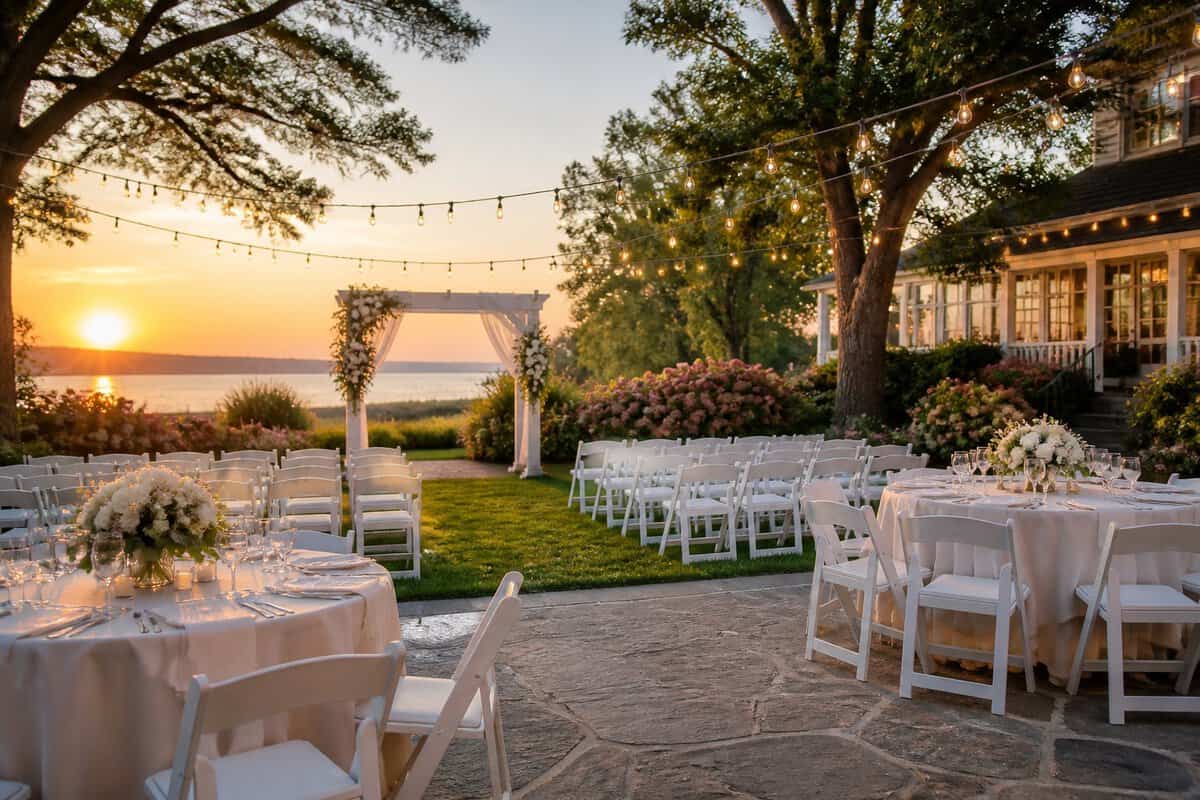
You can create a practical venue budget by comparing the full package, asking about extra fees, and choosing a date that gives you more flexibility. A lower starting price helps only when it includes the services your wedding needs.
Set your guest count and top priorities first, then request detailed quotes from wedding venues in Long Island. This approach helps you compare Long Island wedding venues with other New York wedding venues on equal terms and find a setting that fits your celebration.
You can also explore these cheap wedding venue ideas for more ways to lower your site costs.
How Much Should You Budget for the Venue?
Plan for roughly $110 to $165 per guest at the all-inclusive end of the Long Island market, while venues with flat site fees can start around several thousand dollars and reach $12,000 to $25,000 or more. Your final wedding budget depends on what the quote includes, the season, and the number of guests.
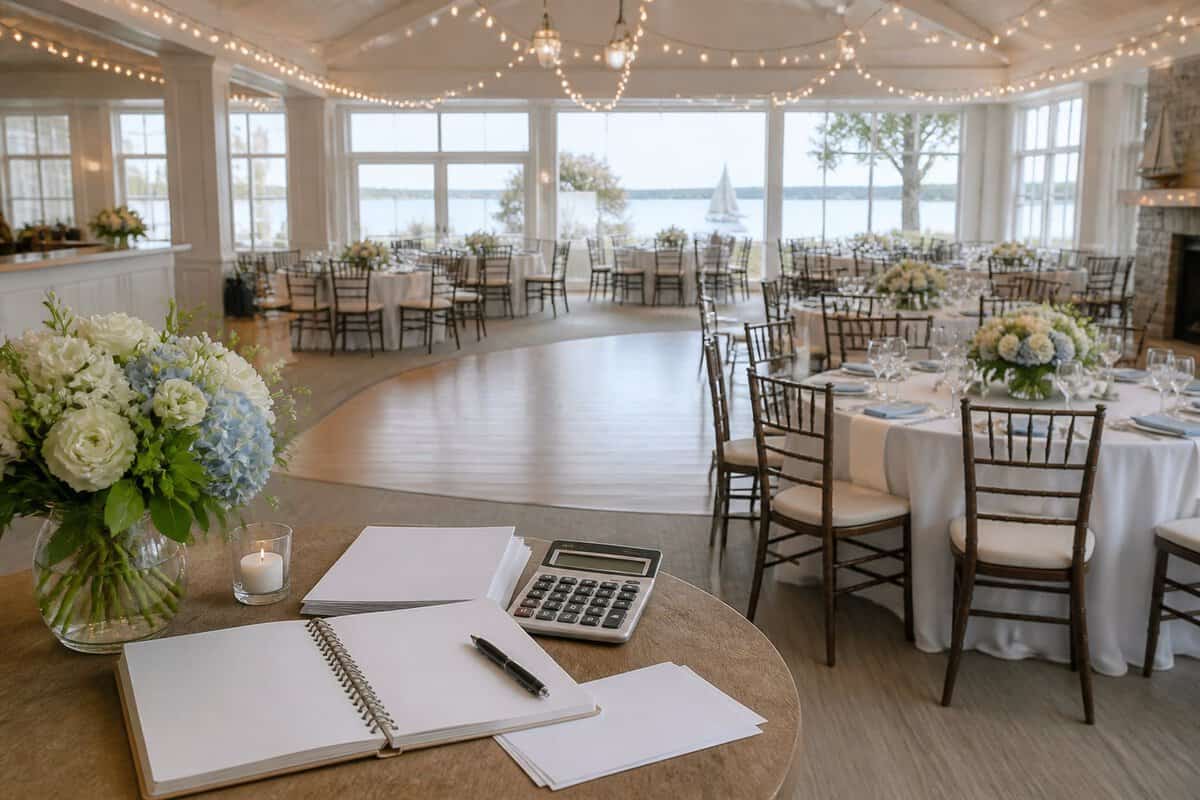
A package with catering, an open bar, tables, staffing, and basic setup may cost more at first while covering expenses you would otherwise arrange separately. Ask every venue for a sample invoice so you can compare the full wedding reception cost.
What Is Included in a Per-Person Venue Quote?
A per-person quote often includes the meal, service staff, tables, chairs, linens, and a beverage package. Some all-inclusive wedding packages also cover an open bar, cocktail hour, dessert, and wedding cake.
Ask whether the price includes:
- Ceremony space
- Cocktail hour food
- Dinner and dessert
- Open bar duration and liquor selection
- Tables, chairs, linens, and china
- Setup and cleanup
- Bridal suite or getting-ready room
- Service charges and sales tax
A low per-person rate can leave out the ceremony, upgraded bar, cake, or additional event time. Request the package menu and fee sheet before comparing venues.
How Guest Count Changes the Total Cost
Guest count affects both the package total and the space you need. At $140 per person, 100 guests creates a food and beverage base of $14,000, while 150 guests raises that base to $21,000 before taxes and added fees.
A smaller guest list also gives you more venue choices. Intimate restaurants, private dining rooms, gardens, and small halls may offer better value for 50 to 100 guests.
Build your list in tiers so you can see how each group affects the quote.
For more planning context, review this guide to how much you should budget per person for a wedding.
Which Fees Can Raise the Final Bill?
Administrative fees, sales tax, ceremony charges, overtime, bar upgrades, and vendor fees can raise your final bill. Rentals for specialty linens, lighting, furniture, heaters, or a tent can add more when the venue provides a basic site rental.
Ask these questions in writing:
- Is the service charge included?
- Does the quote include New York sales tax?
- What does the ceremony cost?
- What is the overtime rate?
- Are outside vendors allowed?
- Are setup, cleanup, and security included?
- Does the venue charge a cake-cutting or corkage fee?
Keep a separate line in your wedding budget for fees that are not part of the advertised rate.
When Can You Get the Best Long Island Rates?
The best rates for affordable wedding venues in Long Island usually come from off-season dates, Friday or Sunday celebrations, daytime events, and locations outside the highest-demand coastal areas. Flexibility gives you more room to negotiate package details.
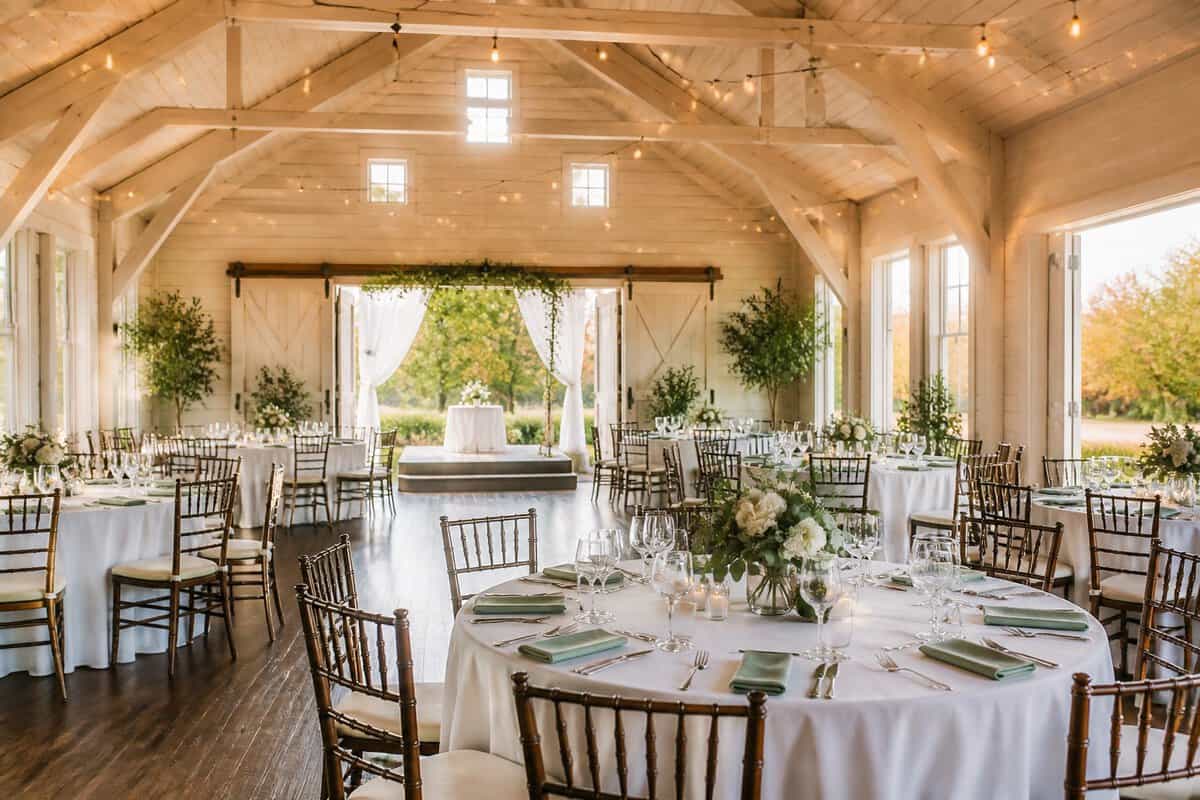
Long Island offers very different price points across the North Fork, Hamptons, Garden City, Oyster Bay, and Port Washington. Compare the guest experience you want with the travel, parking, and service costs tied to each location.
Why Off-Season and Daytime Weddings Cost Less
Late fall, winter, and early spring dates have less demand than peak summer and early fall Saturdays. A daytime reception also reduces the need for extended staffing, late-night transportation, and several hours of bar service.
Ask about January through March dates, holiday weekends that do not conflict with major celebrations, and lunch or brunch packages. A venue might also offer better availability for a ceremony and reception on the same day during these periods.
Are Friday and Sunday Weddings Better Value?
Friday and Sunday weddings often provide lower package rates and more open dates. Sunday brunch or early afternoon celebrations can also reduce bar hours and simplify the menu.
Check the timing carefully. A Friday wedding needs enough lead time for guests traveling from New York City or other parts of Long Island. A Sunday evening event could affect Monday work schedules, so an earlier start often creates a better guest experience.
How Location Affects Your Venue Spend
Location affects both the venue quote and the cost of getting guests there. The Hamptons and some waterfront areas carry strong seasonal demand, while venues farther inland can offer more favorable rates and parking.
The North Fork brings vineyard scenery and a relaxed setting, while Garden City offers convenient access and formal spaces. Oyster Bay and Port Washington provide waterfront character, though parking and transportation deserve close review.
Compare the venue fee with shuttle service, hotel rooms, tolls, and travel time before making your choice.
Choose a Setting That Fits Your Priorities
The right setting protects your budget by matching the features you value most. A restaurant venue can simplify food service, a ballroom venue can provide a weatherproof plan, and an outdoor wedding venue can reduce décor needs when the setting already supplies a strong backdrop.
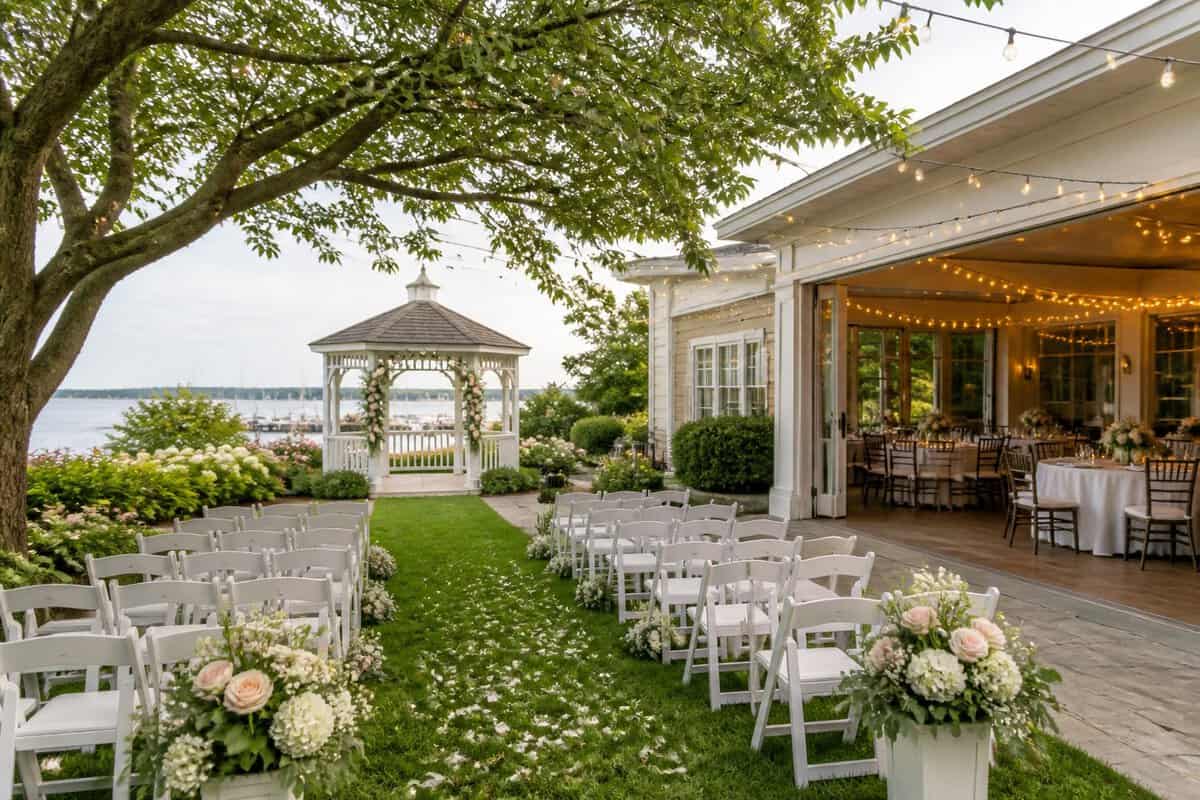
Decide whether your priority is scenery, guest comfort, menu quality, privacy, or easy logistics. Then compare venues that solve that priority without charging for features you will not use.
Waterfront Views Without a Premium Price
You can find water views at a lower cost by considering bayside restaurants, public gardens with approved event areas, community facilities near the shore, and venues with partial views. The Long Island Sound, Great South Bay, and South Bay offer varied settings, so ask what guests can see from the ceremony and reception rooms.
A room with large windows or a nearby photo location can provide a coastal feel without requiring a high-end estate. Confirm whether the view is available throughout the event and whether tides, public access, or weather affect the site.
When a Restaurant Venue Makes Sense
A restaurant venue suits you when food quality and a comfortable guest experience rank high on your list. Private dining rooms often include tables, chairs, staff, kitchen service, and a set menu, which reduces the number of outside vendors you need.
Ask about minimum spending, private-room fees, music limits, dancing space, and bar rules. A restaurant works especially well for smaller weddings, rehearsal dinners, and celebrations where conversation and dining take center stage.
Ballrooms, Gardens, and Golf Courses Compared
Ballrooms offer controlled lighting, climate control, built-in restrooms, and a dependable rain plan. Gardens provide natural scenery and photo opportunities, though you may need rentals, power, restroom access, and a weather backup.
Golf courses such as Harbor Links Golf Course can combine landscaped grounds with indoor reception rooms. Ask whether the event space feels private, how nearby play affects the celebration, and what the Harbor Links package includes.
Lake Ronkonkoma also offers a scenic inland setting for couples who want water views without a coastal address.
What to Expect From an Outdoor Wedding Venue
An outdoor wedding venue requires a complete weather plan, including an indoor room or tent, flooring, lighting, restrooms, power, and heaters or fans. Ask who pays for the backup setup and when the final weather decision is made.
Review noise rules, insect control, guest accessibility, parking, and sunset timing. If your outdoor ceremony and reception use separate areas, confirm the walking route and the staff plan for moving guests between spaces.
For more ideas, see these affordable outdoor wedding ideas and beach wedding ideas on a budget.
Notable Value-Focused Venues to Compare
Value-focused venues on Long Island span restaurants, waterfront spaces, gardens, golf properties, and ballrooms. Compare their package structure, capacity, included services, and location before treating any venue as the least expensive choice.
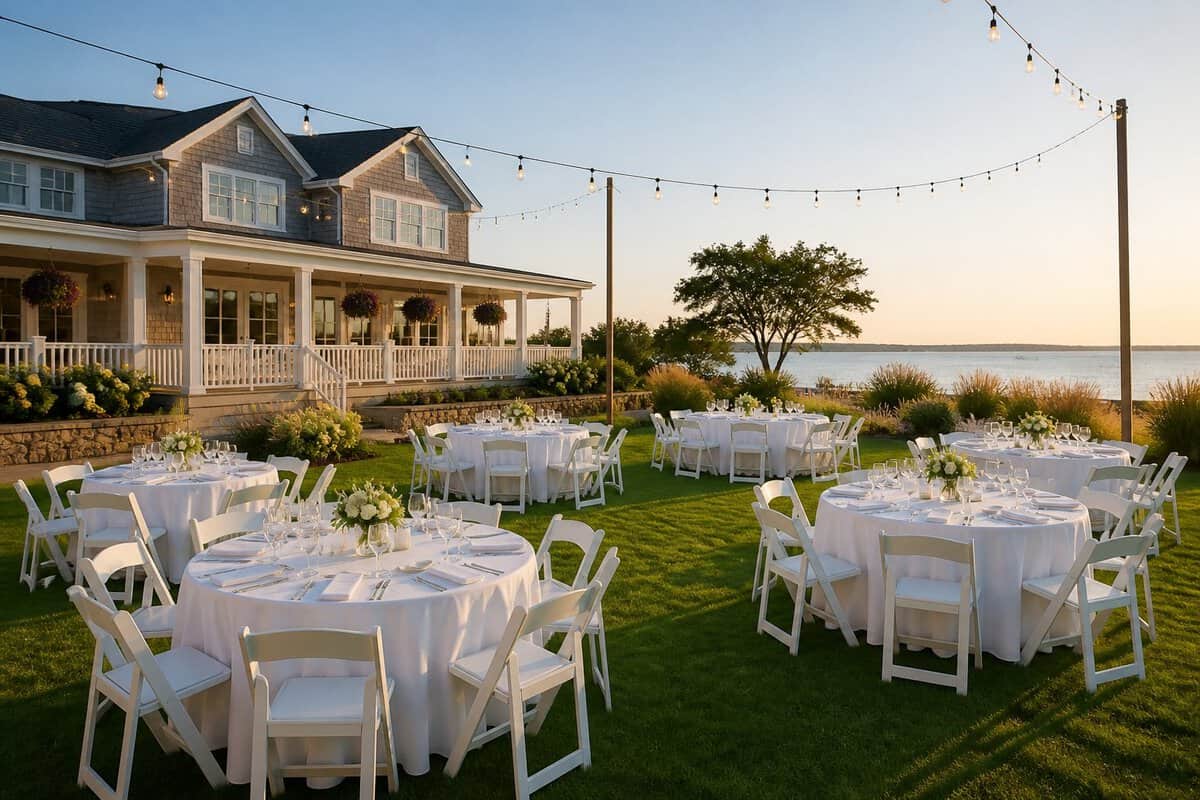
The names below give you useful starting points for your venue search. Request current menus, date-specific pricing, minimums, and fee sheets because rates and availability change.
Restaurant and Casual Celebration Options
Novita Wine Bar & Trattoria offers a restaurant-style direction for couples who want a food-centered celebration with a warm atmosphere. Ask about private dining areas, guest capacity, minimum spending, music, and whether dancing is part of the plan.
The Garden in Farmingdale can suit couples looking for a more relaxed event setting. Request details about indoor and outdoor use, ceremony options, catering, décor rules, and the number of hours included.
Restaurants and casual venues can work well for smaller weddings, rehearsal dinners, and daytime receptions. Their existing kitchens and dining furniture can reduce rental needs, though you should confirm whether the room supports your desired layout.
Waterfront and Lakeside Package Options
Captain Bill’s Bayview House offers a waterfront direction for couples who want views and a reception-focused experience. Ask which rooms provide direct water views, whether the ceremony can take place on-site, and how the venue handles weather.
Beach Club Estate can appeal to couples seeking a coastal estate feel. Clarify the site fee, catering requirements, event hours, guest minimum, and included furniture before comparing it with an all-inclusive package.
A waterfront venue earns its place on your shortlist when the setting reduces décor needs and gives guests a strong experience. Check parking, shuttle access, accessibility, and photo locations along with the package price.
Ballroom and Country Club Options
Ariana Waterfall gives you a ballroom-style option with a more formal reception setting. Ask about room capacity, food and bar inclusions, ceremony fees, wedding cake, lighting, and the number of events hosted on the same day.
Ballrooms and country clubs often provide a dependable indoor plan, coordinated service, and built-in reception equipment. Their minimum guest counts and package rules can affect affordability, so request a quote for your exact guest number and date.
Compare each venue using the same list: base price, guest minimum, ceremony cost, bar package, service charge, tax, overtime, and outside-vendor rules.
Questions to Ask Before You Sign
Ask for written answers about food, bar service, weather protection, event access, transportation, and every added fee before you sign a venue contract. Clear terms help you protect your wedding budget and avoid last-minute planning problems.
Your contract should match the quote, menu, floor plan, payment schedule, cancellation policy, and event timeline. Have both partners review the agreement and request changes in writing.
Can You Customize the Food and Bar Package?
Ask whether you can change the entrée choices, cocktail hour, dessert, wedding cake, wine service, and open bar. Confirm whether substitutions affect the per-person price or require a minimum upgrade.
Find out how the venue handles dietary needs, children’s meals, vendor meals, alcohol brands, signature drinks, and last-call timing. A flexible package can reduce waste and help you spend on the parts of the menu your guests will enjoy.
What Is the Rain Plan and Ceremony Fee?
Ask for the exact ceremony fee and learn what it includes, such as chairs, setup, rehearsal access, microphones, and a ceremony coordinator. Confirm whether the ceremony fee changes when you use the reception room as a backup.
For outdoor plans, ask when the venue moves the event indoors, who makes the call, and whether tent, flooring, fans, heaters, or lighting cost extra. Get the backup layout in writing so you know where guests will sit and how the reception will flow.
Can the Venue Host Other Wedding Events?
Ask whether the property can host your rehearsal dinner, bridal shower, welcome party, or day-after gathering. Bundling events could simplify planning, though each event needs its own menu, room, staffing, and time estimate.
Confirm whether another wedding will take place on the same day. Also ask about getting-ready rooms, early access, storage, cleanup, and vendor load-in times.
Which Transportation and Vendor Rules Apply?
Ask whether you can hire your own caterer, DJ, photographer, florist, planner, or limousine service. Some venues require approved vendors, charge outside-vendor fees, or limit delivery and setup times.
Review parking, shuttle access, accessibility, rideshare pickup, and guest transportation after the bar closes. If you plan to use limousine service, confirm where vehicles can wait and whether the venue has a safe loading area.