
Affordable Wedding Venues Vancouver: Costs and Ideas
Vancouver gives you plenty of ways to host a beautiful wedding without spending luxury-hotel prices. Affordable wedding venues Vancouver couples choose include community halls, small restaurants, city parks, heritage spaces, and flexible event studios.
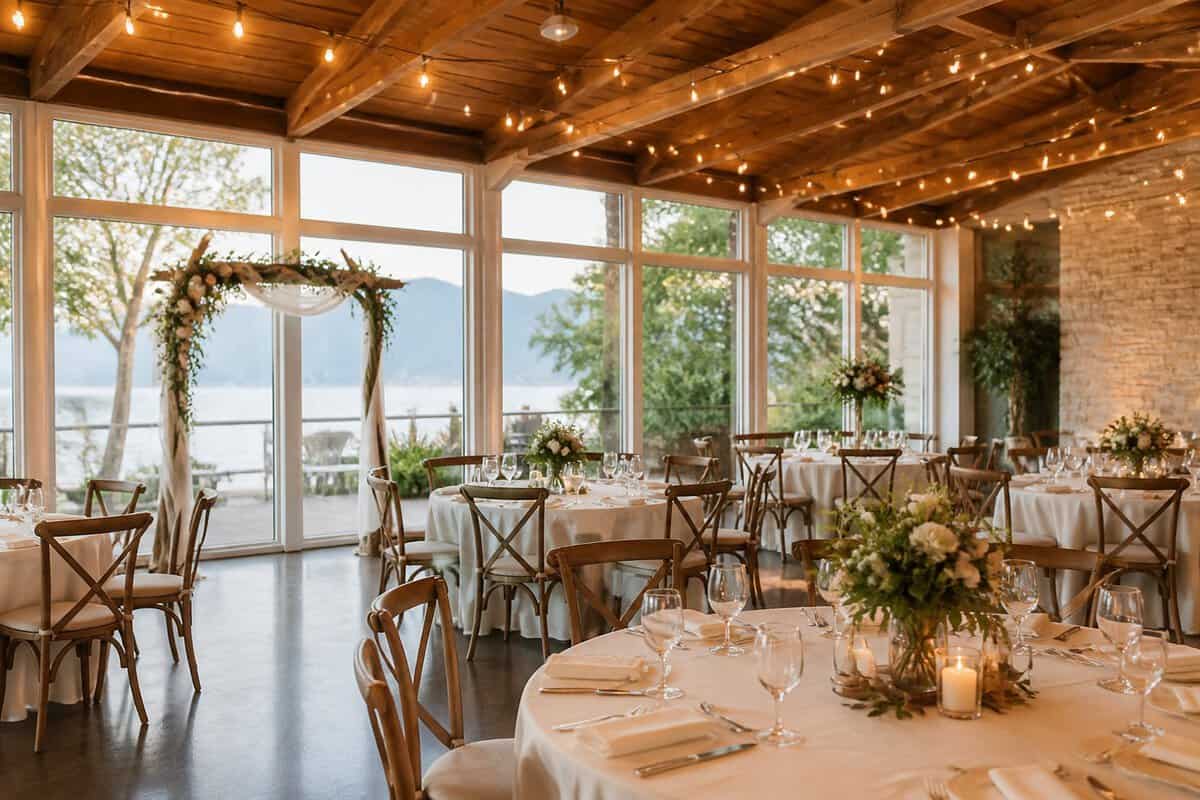
A practical venue budget starts with the full event cost, including food, rentals, staffing, taxes, service charges, and cleanup. A low rental fee can rise quickly when each service carries a separate charge, while a higher package price may include enough essentials to save money.
You can also create an inviting celebration with affordable wedding ideas such as seasonal flowers, a smaller guest list, and a weekday date. Compare local spaces, ask for an itemized quote, and contact venues early for your preferred season and guest count.
What Does a Budget-Friendly Vancouver Venue Really Cost?
A budget-friendly Vancouver venue may cost anywhere from a few hundred dollars for a short rental to several thousand dollars for a full reception, depending on timing, capacity, and included services.
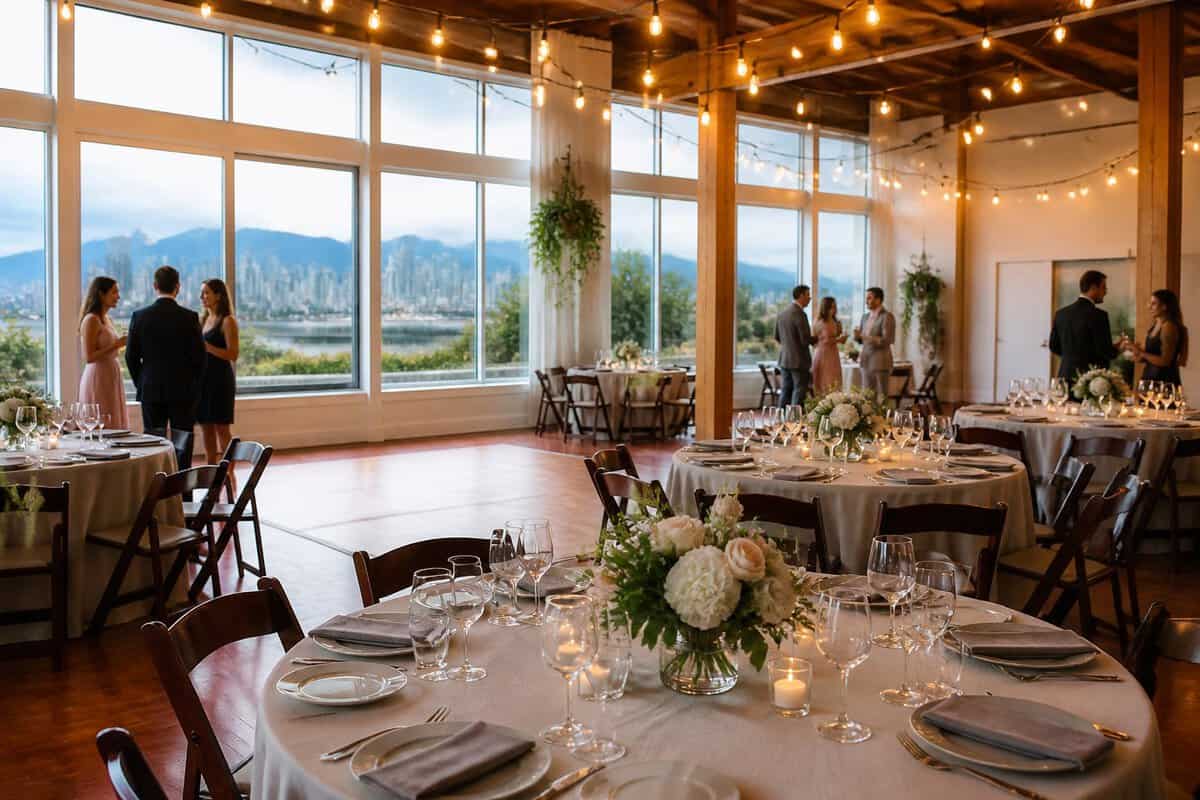
Community halls and small event spaces can offer lower hourly or daily rates, while waterfront venues and established reception locations often charge more. Some Vancouver listings show hourly rates from about C$175 to C$500, event rentals from roughly C$800 to C$2,100, and food or beverage packages priced per guest. Treat these figures as planning ranges because each owner sets its own rates.
Rental Fees vs. Minimum-Spend Commitments
A rental fee pays for access to the room during a set time. A minimum-spend commitment requires you to spend a stated amount on food, drinks, or venue services.
A hall with a C$1,500 rental might require separate catering, tables, chairs, linens, security, and cleanup. A restaurant may charge little for the room while requiring a food and beverage minimum.
Ask whether the quoted amount includes:
- Setup and teardown time
- Tables, chairs, and linens
- Catering or kitchen access
- Bartenders and service staff
- Insurance or security
- Taxes and gratuities
- Sound equipment and cleanup
The Add-Ons That Can Change Your Total
Add-ons can add thousands of dollars to a basic venue quote. Extra hours, corkage, cake-cutting fees, overtime staffing, rental delivery, and required preferred vendors deserve a place in your first budget.
Request an itemized estimate for your expected guest count. Also confirm the payment schedule, cancellation terms, damage deposit, noise rules, décor limits, and rain plan before you sign.
Best Venue Types for Different Wedding Budgets
The best venue type depends on your guest count, preferred level of service, and willingness to manage details. Community halls support DIY receptions, restaurants simplify meals for smaller groups, and urban spaces create a strong setting with less décor.
Community Halls for Flexible DIY Receptions
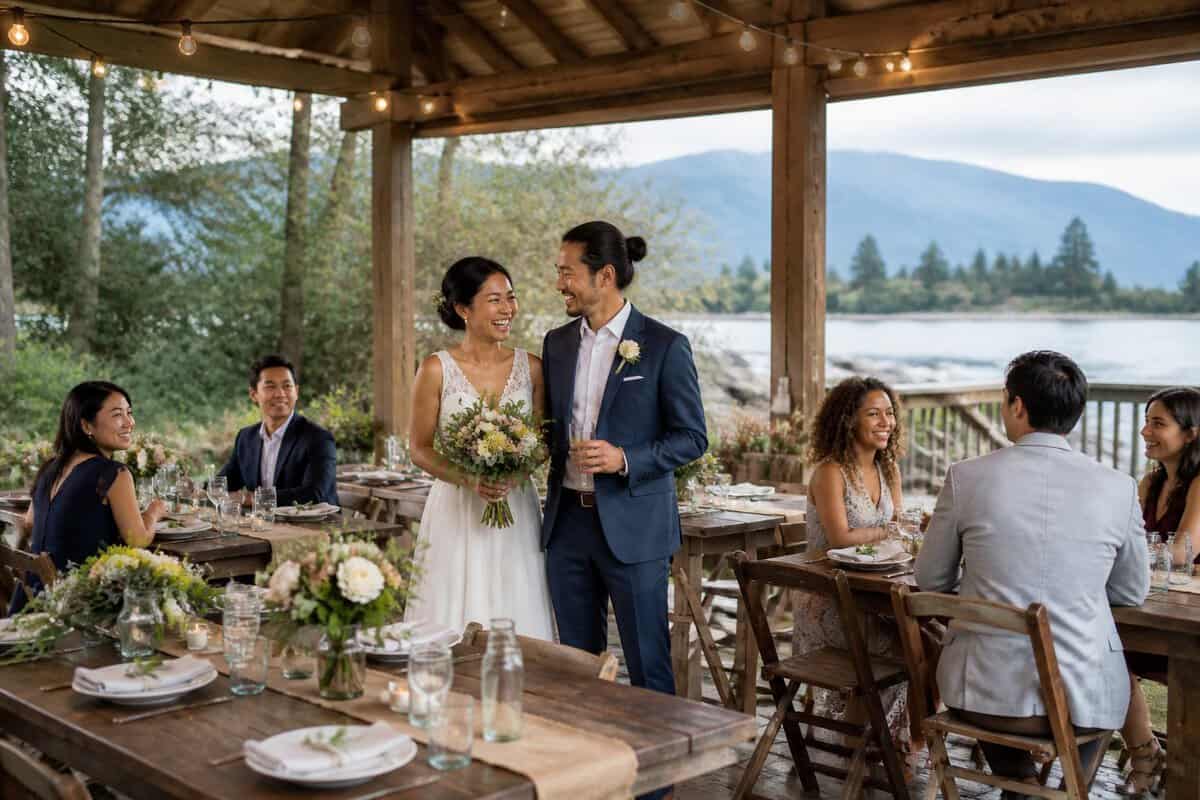
Community halls in neighborhoods such as Mount Pleasant can suit couples who want control over food, décor, and timing. You may bring approved caterers, rent your own linens, and choose a simple buffet that fits your budget.
Check the hall’s kitchen equipment, loading access, parking, sound limits, and required cleanup process. A lower room rate works best when you have reliable help for setup and teardown.
Restaurants and Private Dining Rooms for Smaller Groups
Restaurants near Main Street and Downtown Vancouver can reduce planning work for intimate weddings. Your meal, service team, tables, and basic atmosphere come from one provider, which makes the final bill easier to track.
Ask about private-room fees, menu choices, drink packages, service charges, and the time available for speeches. A restaurant reception can work well for a guest list that fits within the existing dining layout.
Lofts and Heritage Spaces for Urban Celebrations
A loft or heritage hall gives you a distinctive Vancouver setting for ceremonies, portraits, and dinner. These spaces can suit modern décor, cocktail receptions, and smaller dance floors.
Review restrictions on candles, hanging décor, outside catering, music volume, and access hours. Historic details often reduce the amount of decoration you need, while a blank loft may require more rentals.
Garden, Park, and Waterfront Settings on a Budget
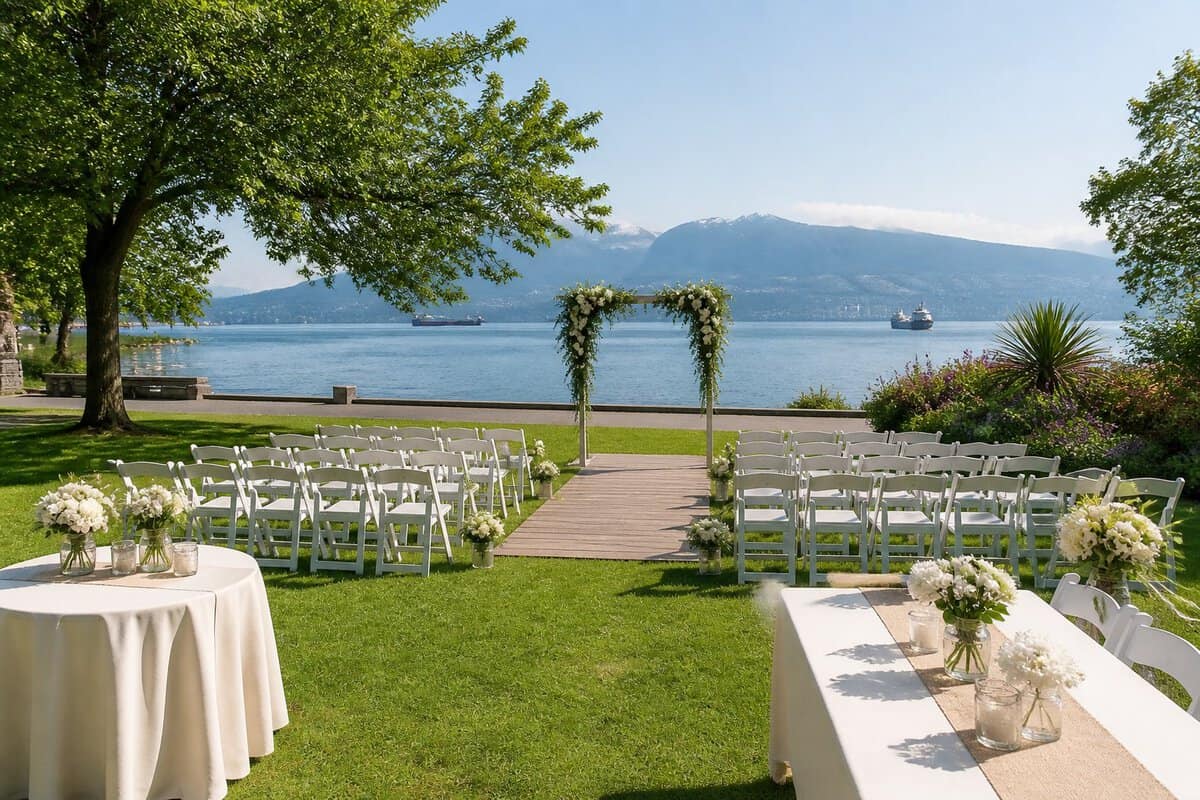
Outdoor venues can lower your room costs, especially for a short ceremony or elopement, while giving you built-in scenery for photographs. Your budget needs a weather plan, permit fees, guest comfort items, and a nearby reception option.
UBC Botanical Garden for a Build-Your-Own Celebration
The UBC Botanical Garden can provide a leafy backdrop for a ceremony with a separate meal at a nearby restaurant or rented hall. A garden pavilion or designated ceremony area may help with guest seating and light weather protection.
Confirm access times, photography rules, chair placement, sound limits, parking, and wet-weather arrangements. Keep décor light so the plants and pathways remain the focus.
Queen Elizabeth Park and the Bloedel Floral Conservatory
Queen Elizabeth Park offers striking views and landscaped spaces for a ceremony or portrait session. The Bloedel Floral Conservatory adds a sheltered setting with tropical plants, which helps when rain threatens outdoor plans.
Ask about permits, capacity, reserved areas, accessibility, and restrictions on amplified sound. Schedule portraits around the time of day when the park has the best light and fewer visitors.
False Creek Views and Waterfront Photo Opportunities
False Creek, Granville Island, and locations near the Burrard Bridge create memorable waterfront photo opportunities. You can hold a short ceremony outdoors and move to a nearby restaurant or private room for dinner.
Plan for wind, changing weather, public foot traffic, and transportation between locations. Views toward the North Shore Mountains can provide strong scenery without a large floral installation.
City Park Ceremonies for Elopements
A city park can work well for an elopement or a ceremony with a small guest list. Stanley Park, a neighborhood city park, or a Fraser River viewpoint may offer a meaningful setting with limited rental needs.
Check municipal permit rules, reserved-area policies, washroom access, seating requirements, and noise limits. Keep the ceremony short and arrange an indoor meal nearby so weather affects fewer parts of your day.
How to Choose the Right Space for Your Guest Count
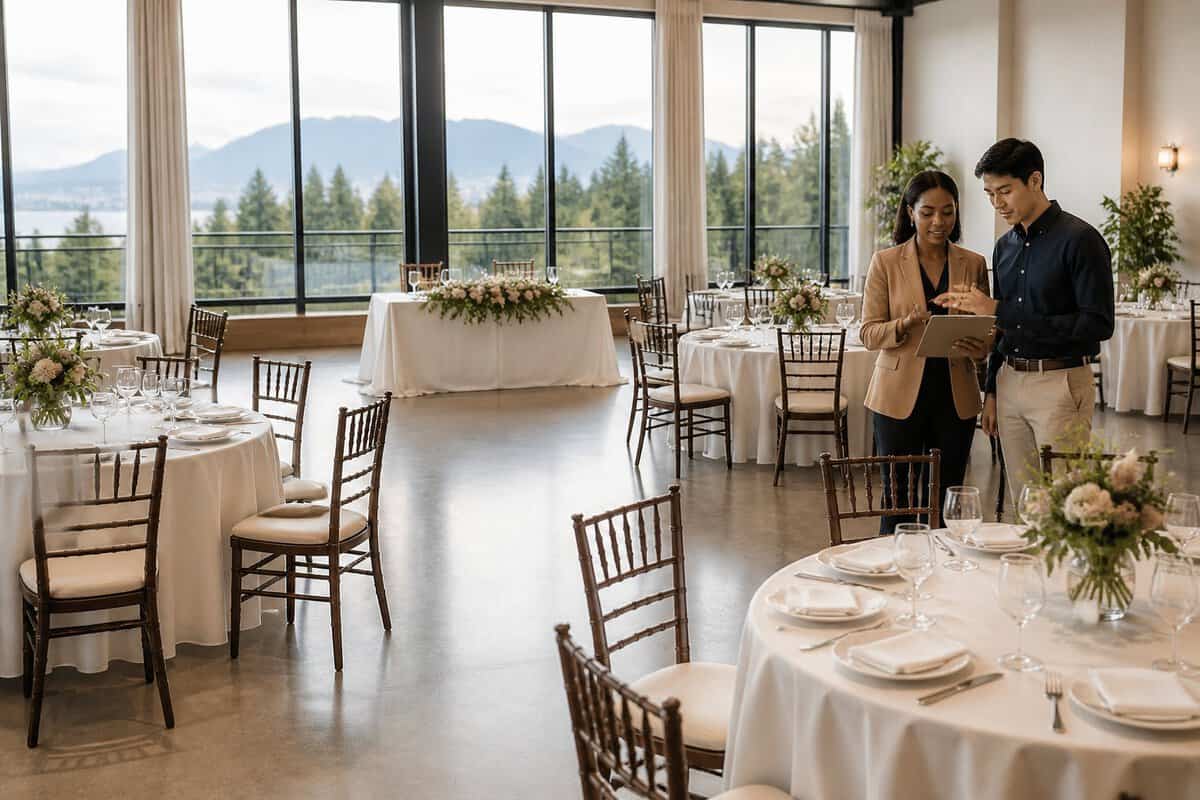
Choose a venue by measuring usable floor space, seating needs, food service areas, and dance space against your confirmed guest count. A room that fits chairs may feel crowded once you add a buffet, bar, DJ table, gifts, and a dance floor.
Intimate Weddings Under 50 Guests
Small weddings give you more choices, including private dining rooms, garden patios, studios, and spaces such as Koerner’s Pub. Look for a room that feels comfortable with fewer tables instead of choosing a large hall that needs extra décor.
Confirm whether the venue offers a private entrance, quiet area for vows, accessible washrooms, and enough room for a small music setup. A family-style meal or plated dinner can suit this size well.
Mid-Size Receptions for 50 to 120 Guests
For a mid-size reception, map the ceremony, dining, buffet, bar, and dance areas before booking. Community halls, heritage venues, restaurants, and flexible event spaces can work when their layout supports smooth guest movement.
Ask for a floor plan with exact measurements. Check table shapes, aisle width, coat storage, vendor access, and the distance between the kitchen and dining area.
Larger Celebrations With Room to Dance
Larger celebrations need a venue with strong service access, parking or transit options, ample restrooms, and a dance area that does not block dining tables. A package venue or large community hall may keep the logistics manageable.
Confirm the maximum seated capacity with your chosen table layout. Ask whether the venue has power for entertainment, a loading zone for rentals, and enough setup time for a larger vendor team.
Ways to Reduce Your Venue Bill Without Compromising the Day
You can lower venue costs by choosing an off-peak date, comparing package and DIY pricing, and checking every contract fee before booking. These choices reduce spending while protecting guest comfort and the parts of the day you value most.
Choose a Weekday, Sunday, or Off-Season Date
Friday, Sunday, and weekday dates often open more affordable options than peak Saturday bookings. Winter and early spring dates may also provide better availability, though you should plan for rain and shorter daylight.
Ask each venue for its full rate calendar. A date discount helps when it applies to staffing, food, rentals, and minimum-spend requirements as well as the room fee.
Compare All-Inclusive Packages With DIY Rentals
Compare the final cost of an all-inclusive package with a blank-space rental plus outside vendors. Include delivery, setup, staffing, dishware, linens, alcohol service, taxes, and cleanup in the DIY total.
A package may offer value when it includes essentials you would otherwise rent separately. DIY works well when you have trusted vendors and friends who can manage setup without taking time away from your celebration.
Ask the Right Questions Before Signing
Use a written question list during every venue tour. Ask:
- What is the complete estimated price for my guest count?
- Which fees are mandatory?
- How many hours cover access, setup, and cleanup?
- Can I choose my caterer, baker, florist, and DJ?
- What happens if rain, smoke, or another emergency affects the date?
- What deposit, insurance, cancellation, and refund rules apply?
- Are taxes, gratuities, security, and overtime included?
Compare itemized quotes on the same assumptions. Once you select a space, keep the signed agreement and every approved estimate together so changes remain easy to track.