
Affordable Wedding Venues Zola: Find More Value
You can find affordable wedding venues on Zola by setting a firm budget, entering your location, and comparing each venue’s full package cost. The listed rental price tells only part of the story. Catering, rentals, taxes, service fees, and weather plans can change what you pay.

The best value comes from choosing a venue that fits your guest count and includes services you would otherwise need to book separately. Zola can help you find wedding venues that match your style while you keep your wedding planning focused on the total budget.
Start your search with a clear guest list and a target amount for the venue. Then compare options by location, date, included services, and final estimated cost. You can begin browsing Zola’s listings and contact promising venues for current availability and pricing.
How to Search Zola for a Venue Within Your Budget
Zola’s venue search works best when you enter your location, guest count, and preferred date before comparing listings. Those details help you focus on spaces that can host your celebration without stretching your wedding budget.

Start With Location, Date, and Guest Count
Enter your city or region first, then add your wedding date if you have one. If you are searching in the South Bay, check nearby cities and surrounding communities to widen your options without creating a long travel route for guests.
Your guest count affects capacity, food costs, seating, and the amount of space you need. A 40-person celebration can fit in small wedding venues that would feel too limited for 150 guests. Keep a working guest range, such as 60 to 75 people, while you search.
Flexible dates can also open more choices. Ask about Friday, Sunday, weekday, and off-season availability when peak Saturday dates are booked or priced beyond your target.
Use Filters to Narrow the Venue Search
Use filters for location, capacity, venue style, indoor or outdoor space, and services. Look for listings that show pricing details, package information, photos, and contact options.
Save venues that meet your basic needs, then compare them in one note or spreadsheet. Record the rental fee, food rules, guest capacity, included furniture, parking details, and required vendors. This keeps a low advertised price from hiding a long list of extra expenses.
Search with your priorities in mind. If you want a garden ceremony, filter for outdoor space. If you want a smaller gathering, focus on venues with a comfortable capacity close to your guest count.
When to Request a Quote
Request a quote as soon as a venue fits your date, size, and style requirements. Ask the venue to price your expected guest count and provide a complete estimate that includes service charges, taxes, catering, rentals, and required staffing.
Ask these questions:
- Is your date available?
- What guest count fits comfortably in the room?
- What does the rental fee include?
- Are tables, chairs, linens, and setup included?
- Do you have required caterers or beverage vendors?
- What deposit and cancellation terms apply?
- What happens if weather affects an outdoor event?
A written quote lets you compare venues on the same terms before you schedule a tour or sign a contract.
How Much Does a Wedding Venue Really Cost?
A wedding venue’s true cost includes the space, required services, rentals, taxes, fees, and any guest-based charges. Compare the complete wedding reception estimate instead of relying on the room rental alone.
Compare Venue Fees and Included Services
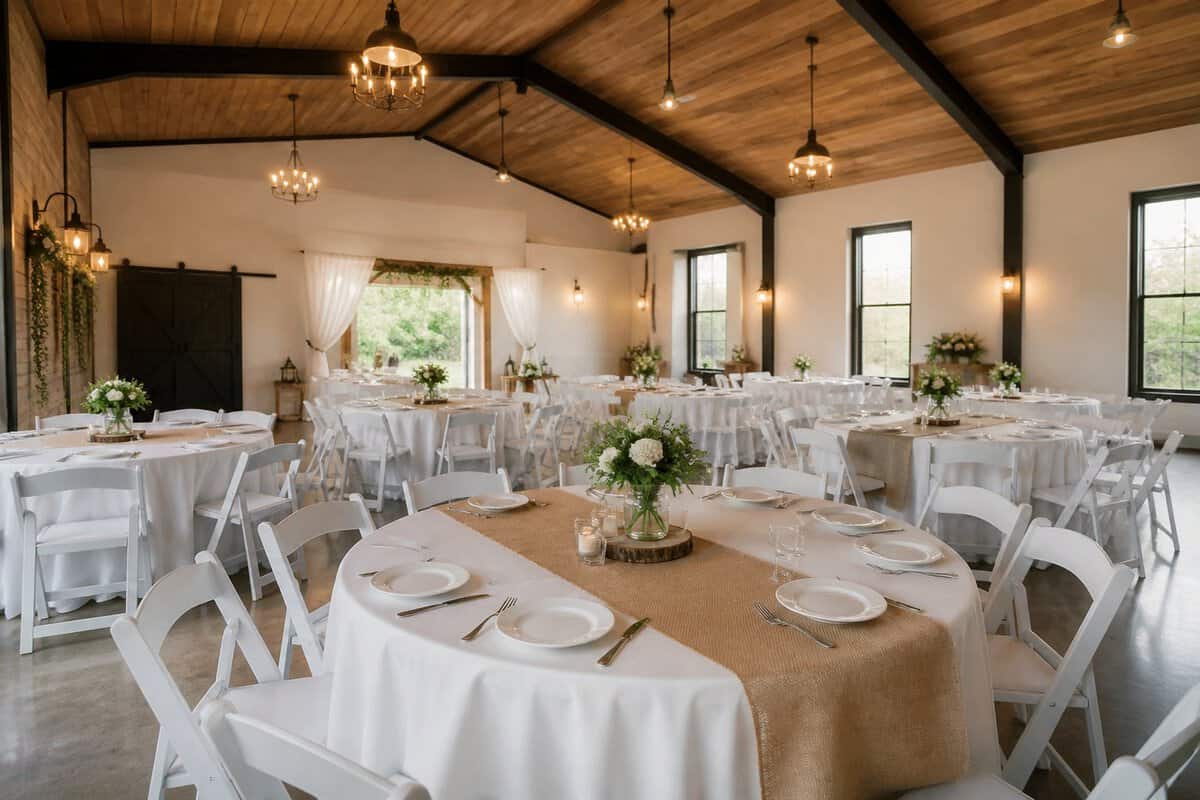
Venue cost varies by location, date, guest count, event length, and package details. A space with a higher rental fee can deliver better value when it includes catering, staffing, tables, chairs, linens, setup, and cleanup.
Ask each venue to separate fixed costs from per-person costs. This shows how your total changes when the guest count moves up or down. It also helps you compare a site with an inclusive package to a venue that charges for space alone.
Review the service list carefully. Confirm whether the venue provides a coordinator, security, parking attendants, sound equipment, ceremony seating, and access for your vendors.
Watch for Rentals, Taxes, and Other Add-Ons
A low quote can grow through rentals, service charges, sales tax, gratuities, delivery, corkage, parking, and overtime. Outdoor events can add costs for tents, lighting, heaters, power, restrooms, or weather protection.
Ask for a sample invoice or a full fee sheet. Check whether the quoted food price includes staffing, drinks, cake cutting, and cleanup. Confirm whether you must rent tables and chairs from a specific company.
Keep a separate line in your wedding budget for costs the venue does not include. That amount gives you room for changes after you choose your vendors.
Assess Wedding Packages by Total Value
Compare packages by what they provide for your full event. A package with catering, tables and chairs, linens, staffing, and cleanup can reduce the number of vendors you need to manage.
A space-only rental can still work for a DIY celebration if you have access to affordable caterers and rental companies. Add those outside costs before deciding that the venue is cheaper.
Use this simple comparison:
| Cost item | Venue A | Venue B |
|---|---|---|
| Rental fee | $3,000 | $6,000 |
| Catering and service | $9,000 | Included |
| Tables and chairs | $1,200 | Included |
| Estimated extras | $1,000 | $1,500 |
| Estimated total | $14,200 | $7,500 |
The lowest rental fee does not always produce the lowest final total. Compare the complete estimate for your guest count and event plans.
Which Budget-Friendly Venue Types Fit Your Wedding?
Community spaces, parks, restaurants, cultural sites, and courthouses offer practical ways to reduce venue costs. Each option has different rules for food, alcohol, guest capacity, decor, and event timing.

Community Centers and City Parks
Community centers provide indoor rooms, kitchens, restrooms, and flexible layouts at rates that fit many smaller budgets. Ask whether the rental includes tables, chairs, cleaning, setup time, and access to the kitchen.
City parks create an outdoor ceremony setting with natural scenery. You may need a reservation, event permit, insurance, noise approval, or a separate reception location. Check parking, restrooms, power, shelter, and rules for alcohol before booking.
These spaces work well when you want control over food and decor. Include delivery, setup, and cleanup labor in your estimate.
Restaurants, Museums, and Art Galleries
Restaurant weddings can combine the venue and meal in one contract. Private dining rooms work well for small receptions, and a set menu can make food costs easier to track. Ask about minimum spending, bar packages, room fees, and service charges.
Museums and art galleries provide distinctive interiors with built-in decor. Review restrictions on candles, hanging decorations, music, food service, and guest movement. A venue with an attractive setting can reduce the amount you spend on flowers and decor.
Zoos and Aquariums for Distinctive Celebrations
Zoos and aquariums offer memorable spaces for ceremonies and receptions. Their event packages may include staffing, tables, chairs, security, and access to selected exhibits.
Ask which areas your guests can use, how long the rental lasts, and whether admission or transportation fees apply. Confirm catering rules and the plan for guests with mobility needs. A smaller guest list can help keep this type of venue within reach.
Courthouses for Intimate Civil Ceremonies
A courthouse wedding suits couples who want a brief civil ceremony with a small guest list. You will need to follow local rules for scheduling, identification, witnesses, and the marriage license.
Contact the courthouse or county clerk for current fees and appointment requirements. Some couples hold the legal ceremony at the courthouse, then host a separate dinner or party at a restaurant or private home.
This plan separates the legal ceremony from the wedding reception and lets you spend more of your budget on the guests and setting you value most.
Affordable Outdoor Wedding Options to Consider
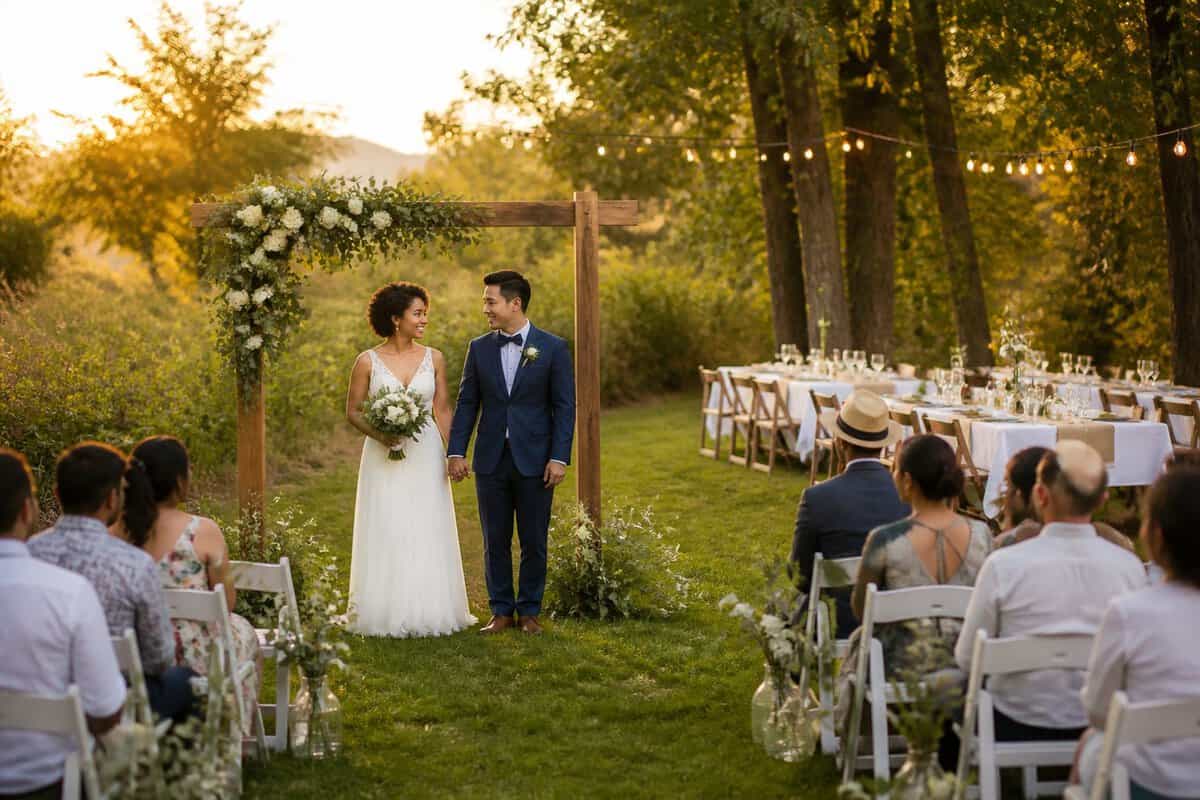
An outdoor wedding can lower venue costs when you choose a permitted space and plan for seating, restrooms, power, lighting, and weather. Your outdoor ceremony also needs a clear guest flow from arrival through the reception.
Plan a Park or Beach Wedding
City parks and beaches offer scenic backdrops with modest reservation fees in many areas. Check permit rules, guest limits, parking, restrooms, amplified music, alcohol, fires, and cleanup requirements before you choose a date.
Budget for tables and chairs, shade, signage, transportation, trash removal, and a nearby meal location. Sand, wind, and uneven paths affect footwear, seating, accessibility, and decor.
For more planning ideas, explore these affordable outdoor wedding ideas and match each idea to your site rules.
Make a Backyard Wedding Work
A backyard wedding gives you control over the schedule, food, music, and decor. Measure the usable area before inviting guests, then plan space for dining, dancing, catering, restrooms, parking, and vendor access.
Rent equipment that improves guest comfort, such as chairs, tables, lighting, shade, fans, or heaters. A portable restroom can protect the home from heavy traffic. Confirm local noise and parking rules before sending invitations.
These budget-friendly backyard wedding ideas can help you plan the layout and choose rentals without filling the space with unnecessary items.
Prepare an Outdoor Ceremony Weather Backup
Choose a backup plan before you pay a deposit. An indoor room, covered pavilion, tent, nearby community center, or rescheduled time can protect your ceremony from rain, heat, wind, or smoke.
Ask the venue who makes the weather call, when the decision must happen, and who pays for a tent or room change. Get those terms in writing.
Create a guest message plan and keep vendors informed. Reserve essentials early if your location has limited rental supply during peak wedding months.
How to Keep Your Venue Choice Affordable
You keep venue costs manageable by matching the space to your guest count, choosing a flexible date, and comparing inclusive packages with DIY plans. A clear total estimate helps you avoid paying for capacity and services you will not use.
Match the Space to Your Guest Count
Choose a venue that fits your expected attendance comfortably. A large room with a high minimum can raise food, staffing, heating, and decoration costs even when many seats stay empty.
Ask about the venue’s comfortable capacity, not only its legal maximum. A smaller room can create a warmer wedding reception and reduce furniture, decor, and lighting needs.
Build your guest list in tiers while you compare quotes. Know which guests receive invitations first if your preferred venue has a strict capacity or minimum spend.
Consider Off-Peak Dates and Shorter Events
Friday, Sunday, weekday, and off-season dates can offer more availability and lower minimums. Ask about morning, afternoon, brunch, and shorter evening rentals.
A shorter event can reduce hourly staffing, bar service, entertainment, and overtime charges. Confirm the time needed for vendor setup and cleanup before choosing a smaller rental window.
Keep your date flexible when possible. One extra month or a different day of the week can create more venue choices and improve your negotiating position.
Choose Between All-Inclusive and DIY Options
All-inclusive wedding packages simplify planning by combining services such as catering, rentals, staffing, setup, and cleanup. They work well when the package includes services you already need at a fair total price.
A DIY venue gives you more control over vendors, menu, decor, and schedule. It works best when you have time to coordinate deliveries, contracts, setup, cleanup, and insurance.
Compare both paths using the same guest count and event length. Add outside vendor fees to a space-only quote, then compare that total with the complete price of an inclusive package. Use affordable wedding tips to review other budget choices before you sign.