
All-Inclusive Honeymoon Packages Thailand: What to Expect
Thailand gives you a honeymoon with warm beaches, flavorful food, welcoming resorts, and culture close at hand. All-inclusive honeymoon packages Thailand work best when your room, meals, transfers, resort activities, and chosen romantic extras appear in one written itinerary and price.
You get easier planning while keeping room for special experiences such as a private dinner or island cruise.
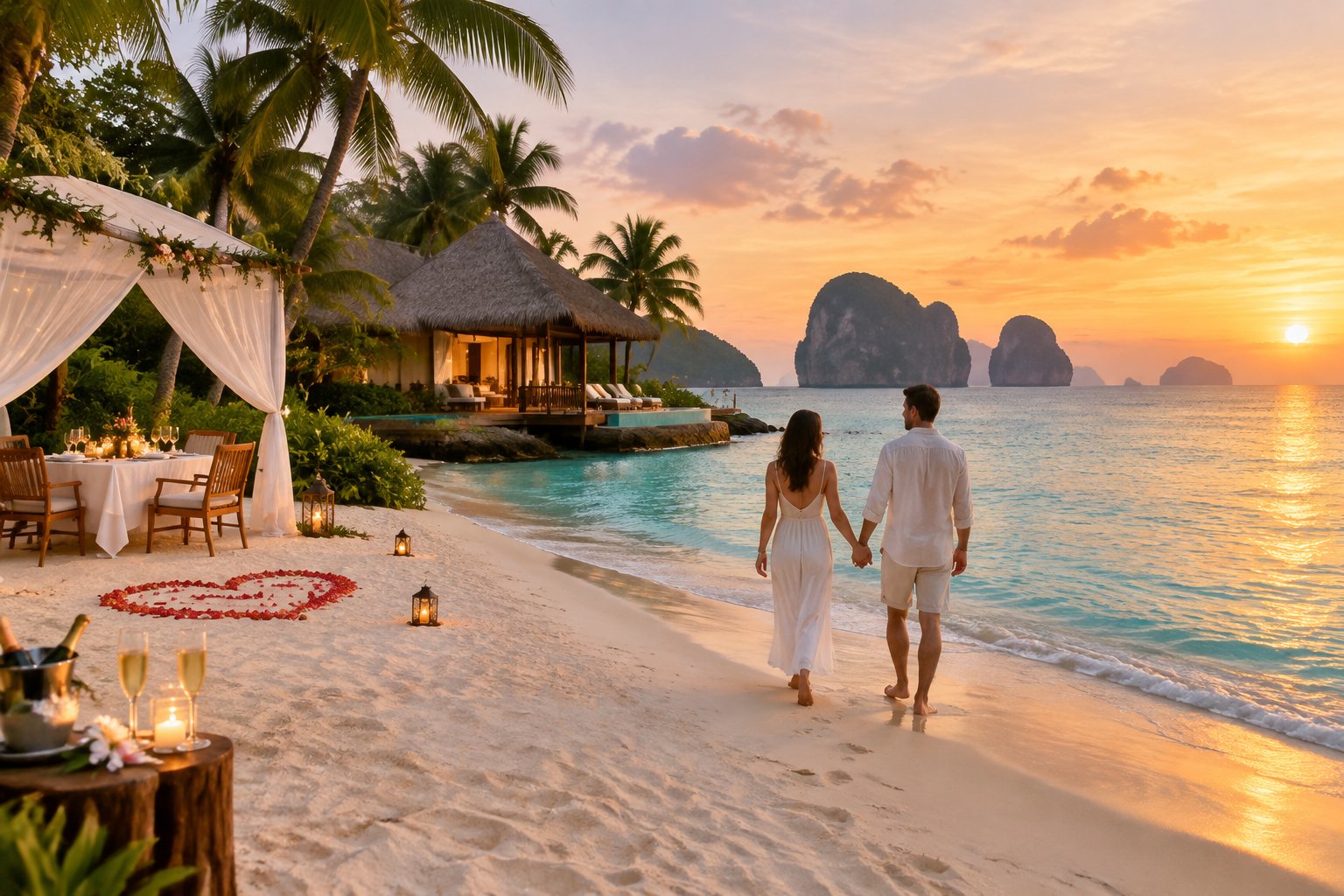
A well-planned honeymoon in Thailand might pair a few nights in Bangkok with a quiet island stay. You might choose luxury resorts in Phuket, a secluded beach near Krabi, or a beachfront villa on Koh Samui.
Check each package carefully because “all-inclusive” describes different levels of service across Thailand honeymoon packages and a Thailand honeymoon tour.
You can compare ideas through honeymoon destinations in Thailand and request a package that matches your dates, budget, and preferred pace.
What Does All-Inclusive Really Cover?
Thailand honeymoon packages all inclusive commonly include your room, meals, selected drinks, resort activities, and some transfers, while flights, insurance, premium experiences, and many tours require separate payment.
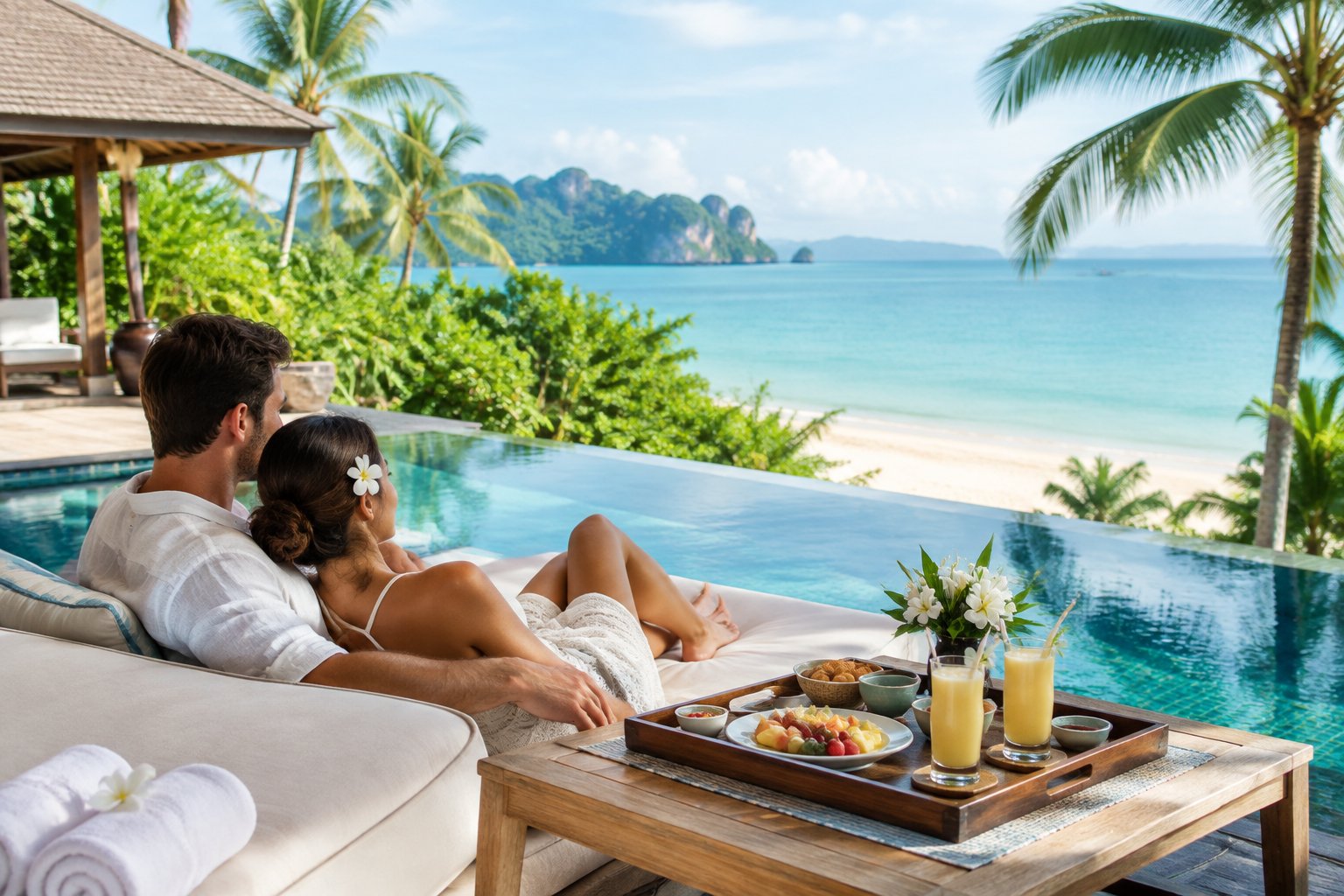
Your package level controls the details. Read the inclusion sheet beside the cancellation terms, room description, and transfer plan before you pay a deposit.
Core Inclusions to Look For
Look for these items in writing:
- Accommodation in a suite, villa, or private pool room
- Breakfast, lunch, dinner, snacks, and selected beverages
- Resort pools, fitness facilities, beach access, and nonmotorized water sports
- Welcome amenities such as flowers, fruit, or sparkling wine
- Scheduled airport transfers, with the vehicle type clearly listed
- A honeymoon dinner, spa credit, or excursion allowance
Ask whether dining includes every restaurant or only selected venues. Confirm whether drinks cover house brands and whether room service has a separate fee.
Travel insurance deserves its own check because it is rarely part of a resort meal-and-room plan.
Common Exclusions That Raise the Final Cost
Budget separately for airfare, baggage, visa-related costs where applicable, tips, and personal shopping. Premium liquor, private airport transfers, spa treatments, motorized water sports, scuba diving, and off-site tours also appear as extra charges on many plans.
A private beach dinner, sunset cruise, or room upgrade can carry a set fee. Resort credits reduce eligible charges under specific rules, so check their value, expiration date, minimum stay, and booking deadlines.
Resort All-Inclusive vs. Tour Package
A resort all-inclusive plan keeps meals, drinks, and activities within one property. It suits you when you want slow mornings, pool time, and easy dining without changing hotels.
A tour package combines hotels with transportation, guides, sightseeing, and scheduled experiences. It fits couples who want temples, markets, islands, and several regions.
Ask whether meals, domestic flights, ferries, airport transfers, and travel insurance are included at every stop.
Which Thailand Destination Fits Your Honeymoon Style?
Phuket suits convenience and variety, Koh Samui favors privacy, Krabi delivers dramatic scenery, and Bangkok with Chiang Mai adds culture before your beach stay.
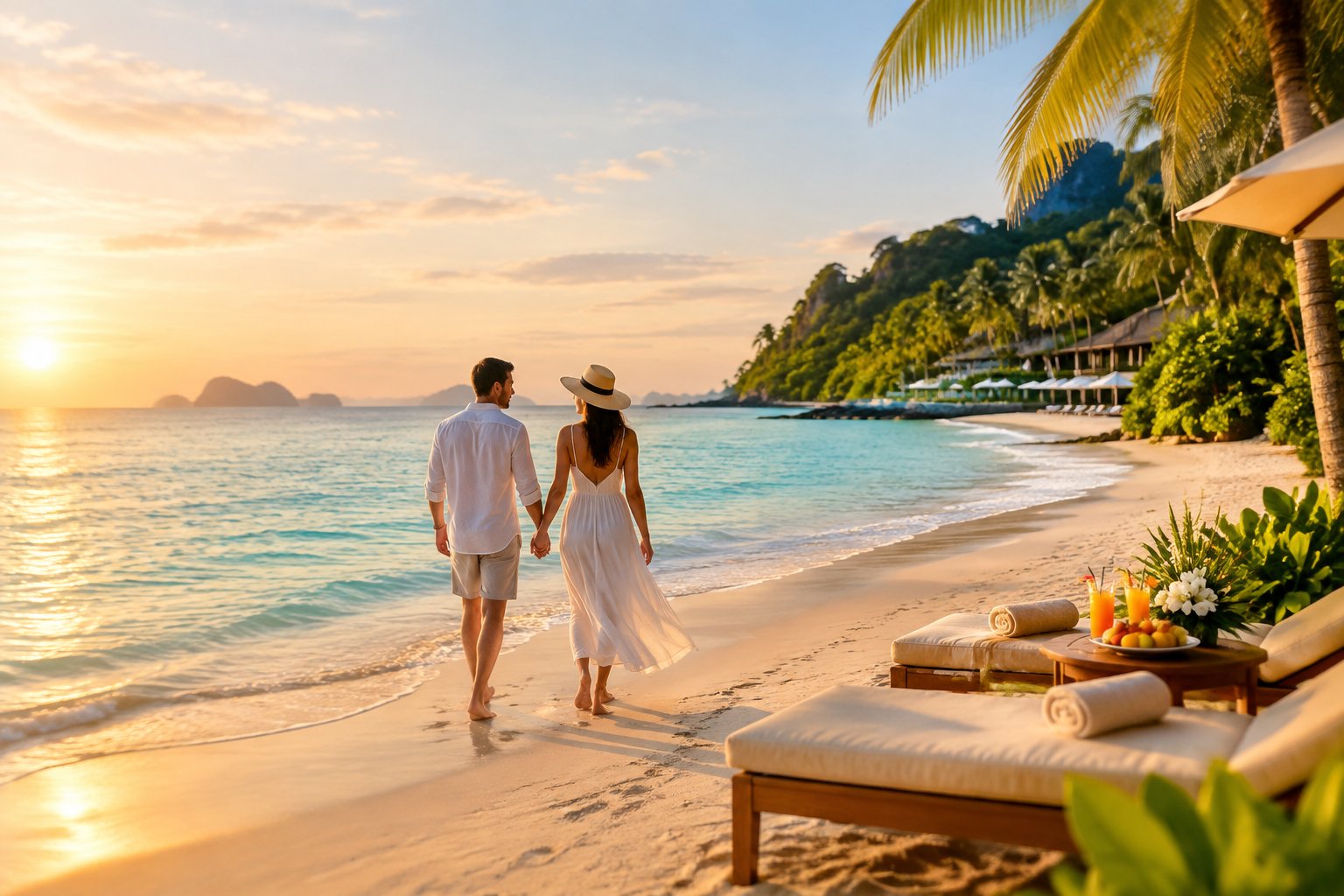
Your ideal base depends on how much travel you want after landing. Phuket has broad resort choice and excursion access, while smaller island settings create a quieter rhythm.
A split stay gives you both sightseeing and unhurried beach time.
Phuket for Convenience, Resorts, and Day Trips
Phuket works well for a first honeymoon because its airport, dining, beaches, and luxury resorts make logistics easy. Choose a lively area for restaurants and nightlife, or select a quieter property near Mai Khao, Nai Harn, or Bang Tao.
Day trips reach nearby islands, coral reefs, and Phang Nga Bay. Check the distance between your resort and the marina because early boat departures can make a remote hotel less convenient.
Koh Samui for Relaxed Island Privacy
Koh Samui fits couples who want tropical calm with strong resort service. Private pool villas, spa treatments, and quiet coves create a comfortable setting for a beach honeymoon.
Chaweng offers more activity, while Choeng Mon, Bophut, and Taling Ngam provide calmer surroundings. Confirm the beach conditions and seasonal weather before choosing an oceanfront room.
Krabi and Railay for Dramatic Coastal Scenery
Krabi gives you limestone cliffs, clear water, and easy access to smaller islands. Railay Beach feels secluded because steep karst formations separate it from road traffic, with arrival usually handled by boat.
A resort near Ao Nang offers more restaurants and transport choices. A stay close to Railay gives you memorable scenery and a slower pace.
Ask how luggage transfers work when your hotel requires a longtail boat.
Bangkok and Chiang Mai for Culture Before the Beach
Bangkok adds grand temples, river views, rooftop dining, and busy night markets before you settle into island time. Chiang Mai brings craft markets, mountain scenery, northern Thai food, and a quieter city pace.
A two- or three-night cultural stay works well at the start of a longer package. Keep your final night near your departure airport when domestic connections and international flights fall on the same day.
Romantic Experiences Worth Adding to a Package
Add one or two private experiences, such as a beach dinner and sunset cruise, while keeping unscheduled time for swimming, naps, and local exploration.
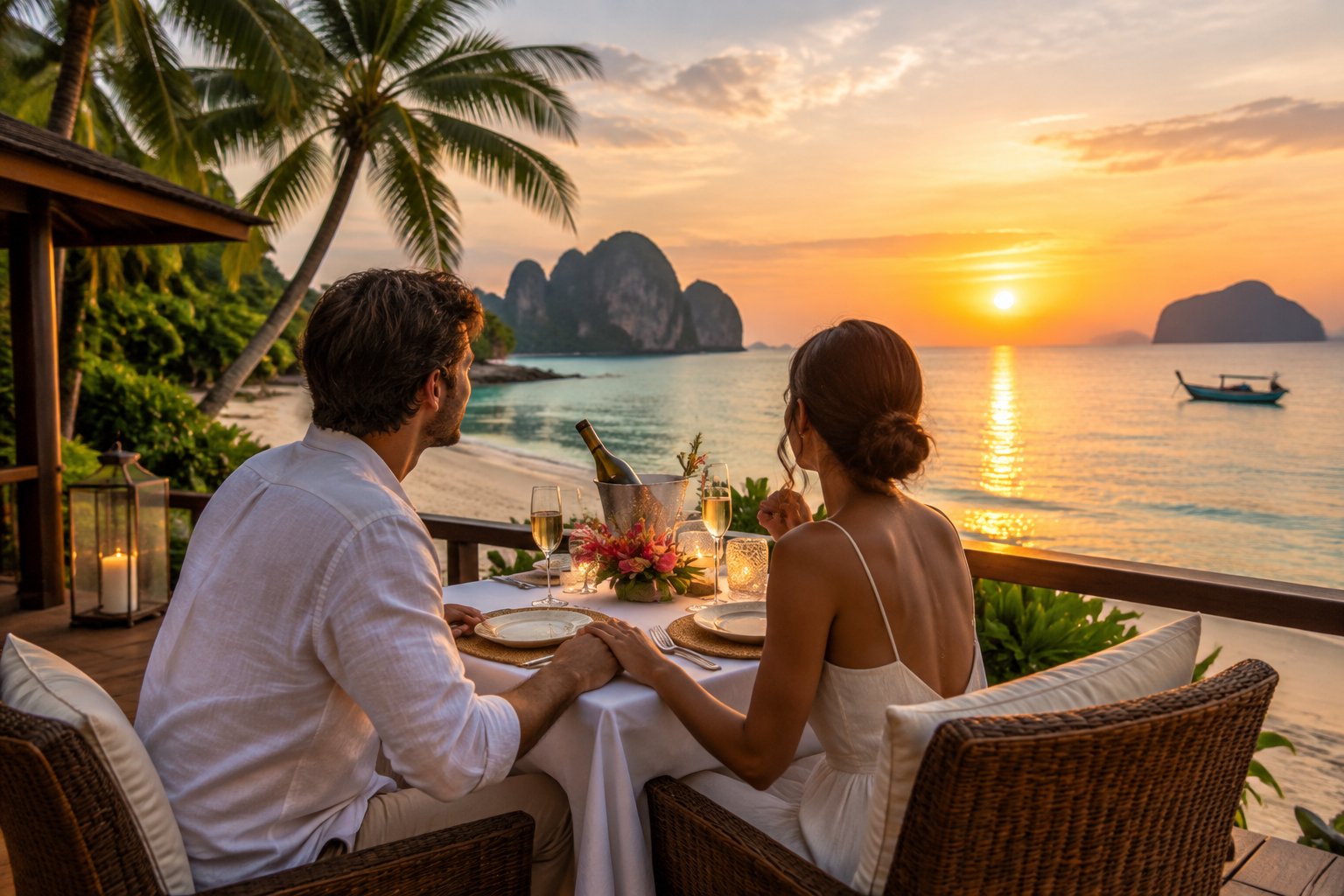
The best additions match your setting and energy. Water activities suit island stays, while cooking, temples, and ethical wildlife visits bring variety during inland stops.
Private Beach Dinners and Sunset Cruises
A private beach dinner creates a special evening with a set menu, candles, and dedicated service. Confirm the backup plan for rain, the menu price, drink limits, and whether transportation from your room is included.
A sunset cruise offers open water, changing coastal views, and time together away from the resort. Private boats cost more than shared trips, while a private longtail boat gives you flexibility around nearby bays and islands.
Island Hopping, Snorkeling, and Scuba Diving
Island hopping from Phuket, Krabi, or Koh Samui gives you access to beaches and reefs that differ from your resort shoreline. Check the departure time, boat size, lunch arrangement, park fees, and return schedule.
Snorkeling equipment and beginner sessions sometimes come with a resort plan. Scuba diving, boat dives, and certification courses often carry extra charges.
Choose an operator that explains safety rules, equipment, weather limits, and guide qualifications.
Thai Cuisine and a Thai Cooking Class
A Thai cooking class turns dinner into a shared activity. You might learn to prepare curry paste, pad Thai, tom yum, or mango sticky rice, then sit down to eat what you made.
Ask whether the class includes market shopping, hotel transfers, dietary substitutions, and printed recipes. Reserve a class in Bangkok, Chiang Mai, Phuket, or Koh Samui based on your itinerary.
Ethical Elephant Encounters and Temple Visits
An ethical elephant encounter should prioritize observation, space, natural behavior, and responsible care. Ask how the sanctuary handles bathing, riding, feeding, group size, and animal welfare before booking.
Temple visits add cultural depth to a honeymoon in Thailand. Dress modestly, follow photography rules, and choose a private guide when you want clear context at major temples or smaller local sites.
How Much Do Thailand Honeymoon Packages Cost?
A seven-night Thailand honeymoon often ranges from about $2,500 for a careful budget to $12,000 or more for luxury, with flights, room type, season, and private experiences driving the total.
Treat these figures as planning ranges instead of fixed quotes. A package with airfare, private transfers, villa stays, and daily tours will cost more than a resort-only booking.
What Changes the Package Price
Your dates affect room rates, airfare, and boat availability. Peak beach seasons bring higher prices, while shoulder-season travel can lower costs with more changeable weather.
Room category has a major effect. A standard sea-view room costs less than a beachfront villa or private pool villa. Destination choice also shapes the bill: Phuket and Koh Samui offer broad price ranges, while remote islands and luxury properties raise transport and lodging costs.
A private guide, yacht, scuba trip, spa treatment, and beach dinner each add to the final amount. Extending from seven to ten nights increases accommodation and dining costs while giving you more time to spread out travel days.
When All-Inclusive Offers Better Value
All-inclusive pricing helps when you plan to eat most meals at the resort, use its included activities, and enjoy a predictable daily budget. It also suits you when private transfers and celebration amenities are bundled at a fair rate.
Thailand has many independent restaurants and affordable excursions, so a breakfast-only hotel can work well for couples who plan to explore. Compare the package with a Maldives stay when privacy and villa service are your top priorities, and consider Khao Lak for a quieter mainland beach setting.
Ways to Compare Packages Fairly
Compare the same number of nights, room category, meal plan, transfer type, and activity level. Add airfare, taxes, service charges, tips, baggage, travel insurance, and planned extras to each estimate.
Pattaya may show a lower room rate, while Phuket or Koh Samui may offer the beach setting you want. Write down the full price per couple and the number of included experiences before choosing a deal.
How much does a honeymoon cost offers another budgeting reference for your planning.
Sample Thailand Honeymoon Itineraries
A strong Thailand honeymoon itinerary pairs cultural sightseeing with enough beach time to recover from travel. These routes range from seven to twelve nights and leave space for rest between transfers.
Seven Nights in Bangkok and Phuket
Spend two nights in Bangkok near the river, with time for the Grand Palace, Wat Arun, a dinner cruise, and a night market. Move to Phuket for five nights in a beachfront resort.
Use one Phuket day for a Phi Phi Islands trip, another for a sunset experience, and the remaining days for pool time and a private dinner. Confirm that your domestic flight, hotel transfer, and boat excursion connect comfortably.
Ten Nights From Chiang Mai to Koh Samui
Start with three nights in Chiang Mai for temples, night markets, northern Thai cuisine, and a guided visit with an ethical elephant sanctuary. Fly south for seven nights on Koh Samui.
Keep at least two days free at the resort. Add a Thai cooking class, a private pool villa, and a boat trip when the sea forecast looks favorable.
This route suits couples who want culture, nature, and relaxed beaches.
An Island-Hopping Escape Through Krabi and Phi Phi
Spend three nights near Krabi, with a Railay Beach visit, a private longtail boat, and a day around nearby islands. Continue to Koh Phi Phi for three nights, then return to Phuket or Krabi for two final nights.
Pack light for ferry travel and confirm luggage handling at each pier. Kayaking in calm coastal water adds activity without filling every day with scheduled tours.
A Private Luxury Route Through Phuket and Phang Nga Bay
Base yourself in Phuket for four or five nights in a private pool villa. Plan a private boat through Phang Nga Bay, with time for sea caves, kayaking, and James Bond Island.
Finish with three nights in Khao Sok or a quieter coastal resort, depending on your comfort with jungle travel. A private guide, flexible transfers, and a villa with in-room dining suit couples who value privacy and control over their schedule.
How to Book With Confidence
Book after you confirm the resort setting, regional weather, transfer schedule, cancellation terms, and support available during every part of your trip.
Your written quote should list room type, meals, airport transfers, excursions, taxes, travel insurance, and celebration benefits. Save the final itinerary, payment receipts, and emergency contact details in one place.
Match the Resort to Your Privacy Preferences
Choose an adults-only property, secluded villa, or private pool when quiet time ranks high. Ask whether the beach is shared, how close rooms sit to restaurants, and whether evening events create noise.
A larger resort gives you more dining and activity choices. A small boutique property offers a calmer setting with fewer guests.
Review the room map and recent guest policies before paying for a premium category.
Check Weather and Regional Seasons
Thailand has different weather patterns across its coasts. Phuket and Krabi follow the Andaman Sea season, while Koh Samui follows a different Gulf pattern.
Check conditions for your exact travel month and region. Keep indoor dining, spa time, cooking classes, and flexible excursion dates available when rain affects boat trips.
If you want cooler mountain weather, add Chiang Mai or Kanchanaburi before your beach stay.
Confirm Transfers, Cancellation Terms, and Support
Ask who meets you at the airport, whether the transfer is private or shared, how ferry tickets are handled, and what happens when a flight or boat runs late. Confirm hotel check-in times for every connection.
Read cancellation deadlines, deposit rules, refund terms, rebooking options, and weather-related policies. Travel insurance can protect eligible prepaid costs and medical needs, while a local support contact helps with changes during the trip.
If you add Ayutthaya, Koh Tao, or a side trip to Cambodia, request separate transport and border details in writing. Keep your passport requirements, insurance documents, and emergency numbers accessible throughout the journey.