
All-Inclusive Wedding Venues DC: Packages, Costs, and Picks
Washington, D.C. gives you all-inclusive wedding venues in grand hotels, waterfront spaces, wineries, historic buildings, and urban event rooms. For couples who want one coordinated planning process, a full-service hotel ballroom is often the strongest starting point because it can combine ceremony and reception space, catering, bar service, rentals, guest rooms, and an on-site coordinator.
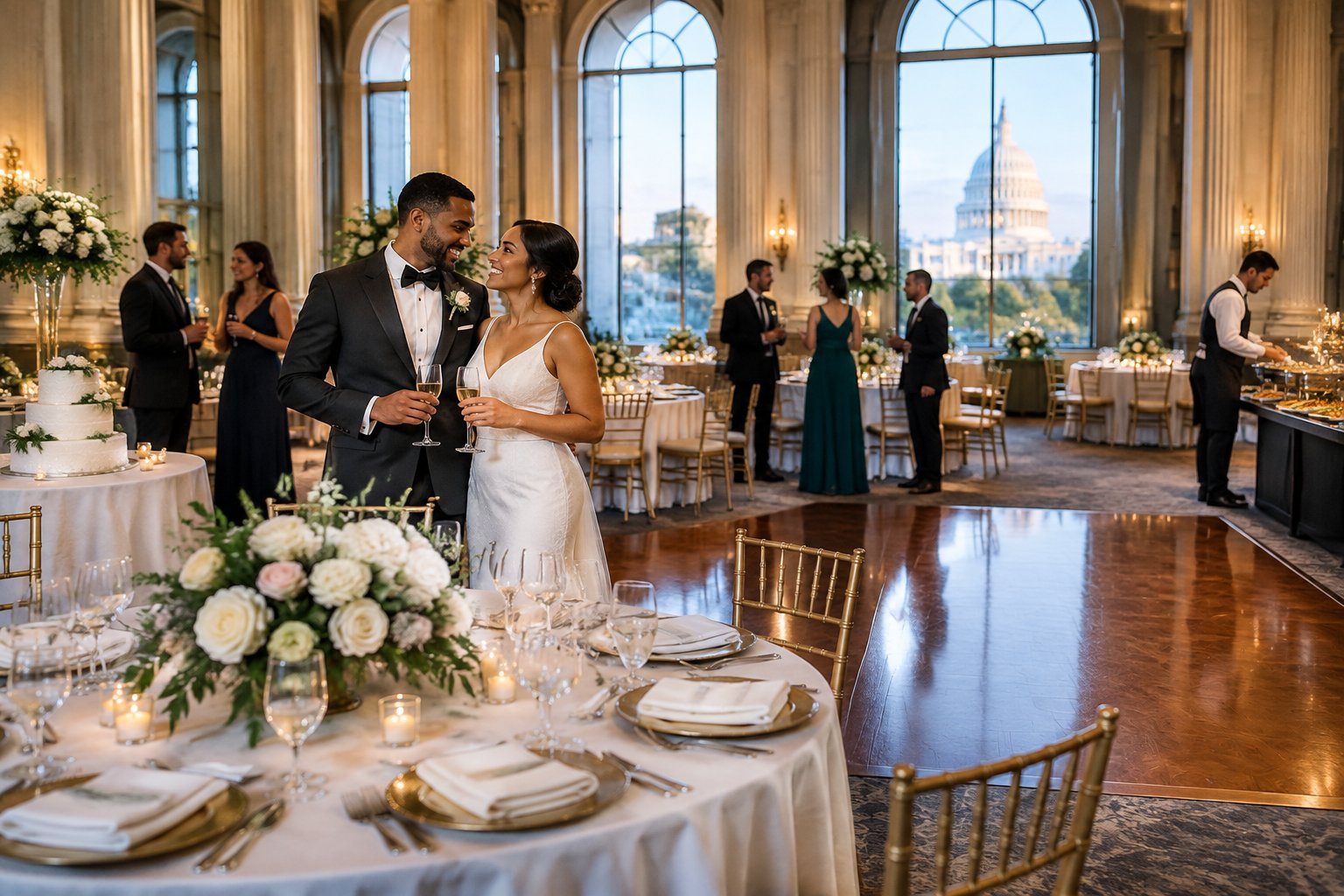
Package prices rise with guest count, peak dates, menu choices, and service fees. You can create a clear wedding budget by comparing the complete invoice, checking what the package includes, and asking about every required upgrade. If you are ready to compare local options, explore these all inclusive wedding venues in DC and request current package details from your favorite venues.
What Does All-Inclusive Mean for a DC Wedding?
All-inclusive wedding packages combine the main venue services into one agreement, giving you a central point of contact for your wedding ceremony and wedding reception.
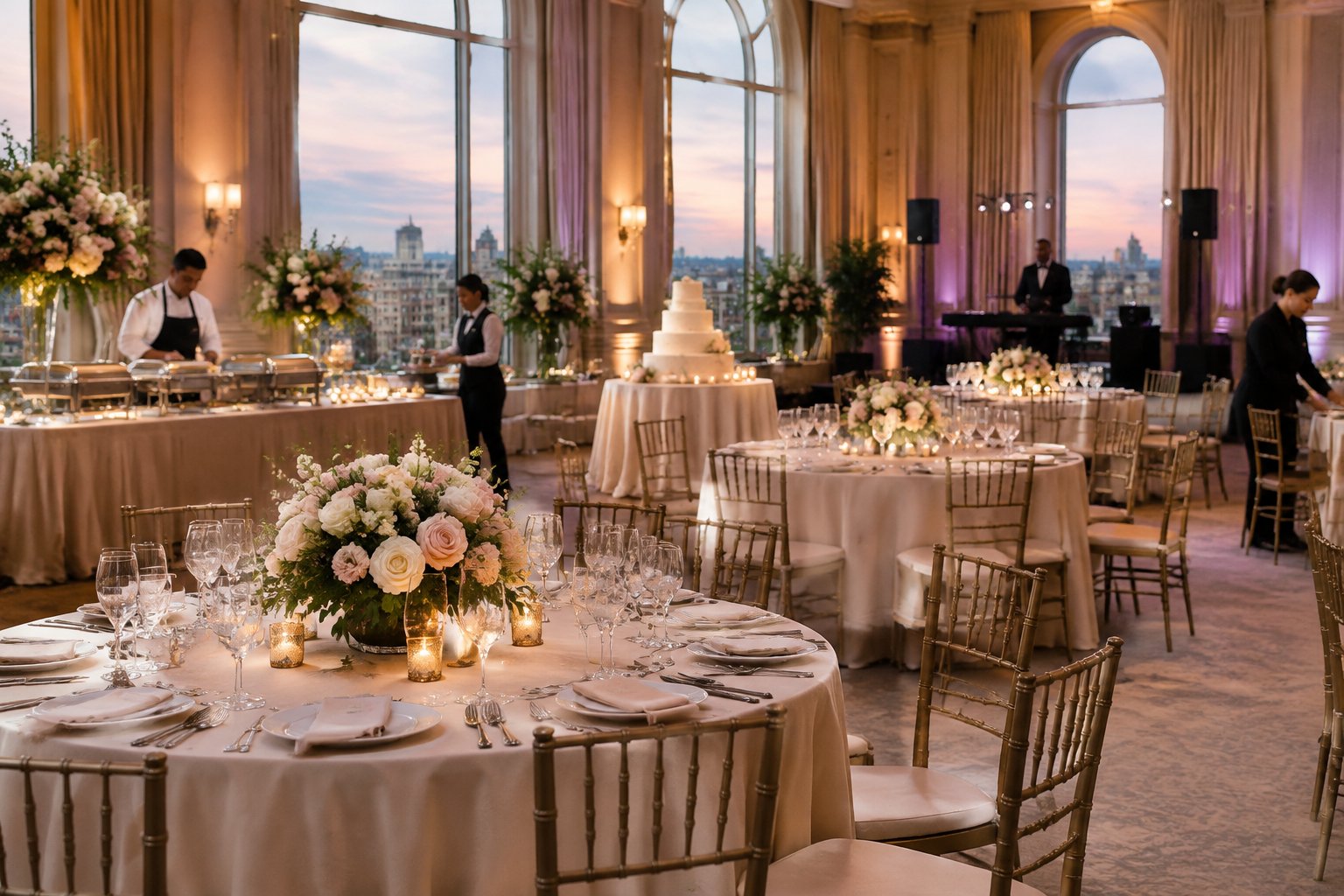
What Is Usually Included in One Contract?
A package may include the ceremony and reception space, tables and chairs, linens, catering, bar service, setup, cleanup, and basic event staffing. Many venues also include a dance floor, a bridal suite, menu tastings, and a wedding coordinator who manages the venue team.
Some packages include a wedding cake or dessert service. Wedding photography is less consistent, so treat it as a separate line item unless the contract names the photographer, coverage hours, editing, album, and delivery schedule.
Read the package details closely. “All-inclusive” describes a bundled service model, and each venue defines its bundle differently.
What Upgrades and Fees Are Commonly Extra?
Common extra charges include premium liquor, specialty cocktails, upgraded linens, floral design, enhanced lighting, extra reception hours, vendor meals, ceremony fees, coat check, parking, and overtime. Taxes and service charges can add a significant amount to the quoted food and beverage price.
Ask for a sample invoice based on your guest count. Request separate lines for the venue fee, food, bar, rentals, staffing, service charge, tax, and optional upgrades. This format lets you see whether a lower package price still fits your needs.
How Does a Venue Coordinator Differ From a Wedding Planner?
A venue coordinator manages the property’s event operations. They confirm the floor plan, supervise venue staff, coordinate setup, and keep the venue schedule moving.
A wedding planner supports your entire celebration. They can help with vendor selection, design, invitations, transportation, rehearsal details, timeline creation, and personal decisions that fall outside the venue’s duties. Ask what your coordinator handles and whether they work with you before the wedding day.
How Much Do All-Inclusive Packages Cost in DC?
All-inclusive wedding packages in Washington, DC commonly range from about $10,000 to $25,000 for a mid-sized celebration, with luxury hotels and large guest counts reaching higher totals.
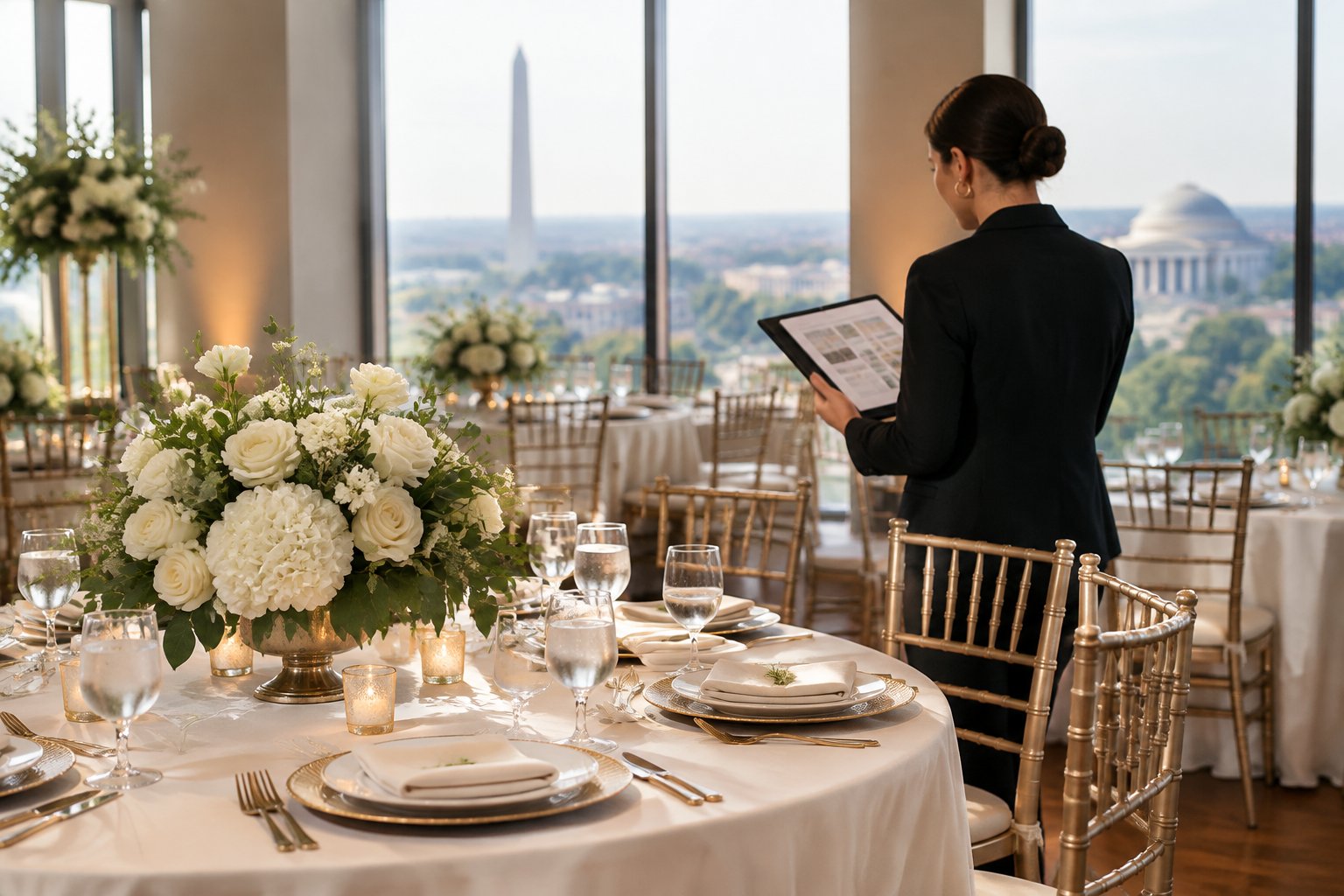
Published cost guides, including the Zola Wedding Cost Index, place DC weddings among the higher-cost urban markets. Use those figures as a planning reference, then request a venue quote built around your date, guest count, menu, and bar selection.
How Guest Count and Date Affect Your Total
Guest count drives food, drinks, staffing, tables, chairs, linens, and room size. A 150-person wedding also requires more restroom access, parking planning, and setup time than a 60-person celebration.
Saturday evenings during spring and fall command strong demand. Weekdays, Sundays, winter dates, and dates outside major city events may offer different rates or minimums. Ask about food and beverage minimums, since a low room rental can come with a required spending level.
Rehearsal dinners and room blocks add separate costs. A hotel venue may package guest rooms or provide room-block benefits, so request those terms with your main proposal.
How to Compare a Package With À La Carte Vendors
Build one comparison sheet with the same categories for every option:
- Venue rental and event hours
- Catering per guest
- Bar package and service charge
- Tables, chairs, linens, and dance floor
- Ceremony setup and staffing
- Cake, flowers, décor, music, and photography
- Taxes, gratuity, insurance, and overtime
An all-inclusive package reduces vendor coordination and gives you a more unified quote. À la carte planning gives you broader vendor choice and tighter control over individual selections. Compare the complete estimated total, since a low starting price can leave major services outside the package.
Which Costs Should Your Wedding Budget Reserve?
Reserve money for attire, invitations, rings, beauty services, transportation, photography, entertainment, flowers, décor, favors, officiant fees, marriage-license costs, rehearsal dinners, guest lodging, and tips. Keep a contingency amount for guest-count changes, weather plans, overtime, and requested upgrades.
Ask each venue whether gratuity is included in the service charge. Put every promised inclusion in the contract, including the menu, bar hours, room access, cake service, bridal suite, and cleanup.
Top Venue Styles and Locations to Consider
DC offers all-inclusive wedding venues across hotel ballrooms, waterfront spaces, wineries, cruise decks, historic properties, and nearby countryside.
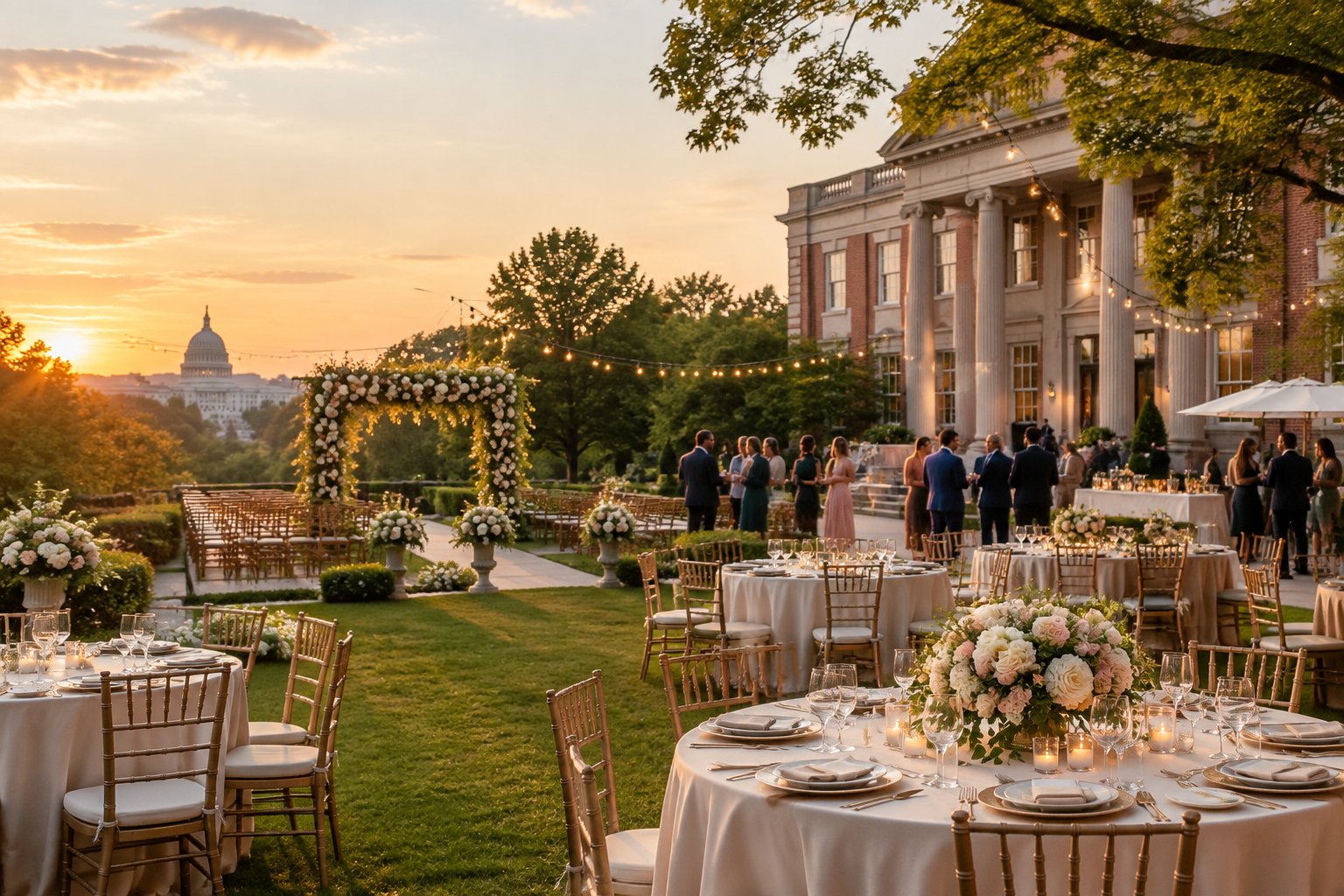
Your location affects guest travel, photos, room blocks, noise rules, and the style of your reception. Consider the experience you want guests to have from arrival through the final dance.
Hotel Ballrooms for Guest Convenience
Hotel ballrooms work well when you want a grand ballroom, in-house catering, bar service, guest rooms, and event staff under one roof. Hotel Washington, Kimpton Hotel Monaco Washington DC, The Westin Georgetown, and Viceroy DC represent the city’s hotel-based choices, with options shaped by ballroom size, neighborhood, and design.
Penn Quarter, Chinatown, and areas near the convention center offer convenient access to downtown attractions. Hotel packages may also support rehearsal dinners, bridal suites, and room blocks. Confirm the ceremony layout, reception capacity, guest-room terms, parking options, and music end time before booking.
Waterfront, Winery, and Cruise Celebrations
District Winery pairs a winery setting with views of the Anacostia River and in-house event services. Its setting suits couples who want a polished reception with a strong food and wine identity.
City Cruises offers celebrations on the water, with views that change throughout the event. Ask about boarding time, weather procedures, menu format, bar service, dock access, and the length of the cruise. Waterfront and cruise venues create memorable scenery, while transportation and timing require closer planning.
Historic and Urban Spaces for Smaller Weddings
Logan Circle and nearby central neighborhoods offer historic inns, restaurants, rooftops, and stylish private rooms. These spaces suit smaller weddings that focus on atmosphere, walkability, and a personal guest experience.
A venue near the National Mall or White House can support landmark photos, though public locations may involve permits and timing rules. Ask whether photography, outdoor ceremonies, amplified music, and guest movement require separate approval.
Nearby All-Inclusive Escapes Worth the Drive
Milton Ridge and Ostertag Vistas give you countryside settings within reach of the DC region. These venues may provide more open space, scenic ceremony areas, and a private event-day feel.
The drive affects your guests, vendors, and transportation budget. Ask about shuttle routes, nearby hotels, setup access, overnight stays, weather backup space, and the venue’s required vendor list before placing a deposit.
How to Choose the Right Package for Your Celebration
The right package fits your guest count, desired layout, food and drink preferences, vendor plans, and travel needs without leaving key costs unclear.
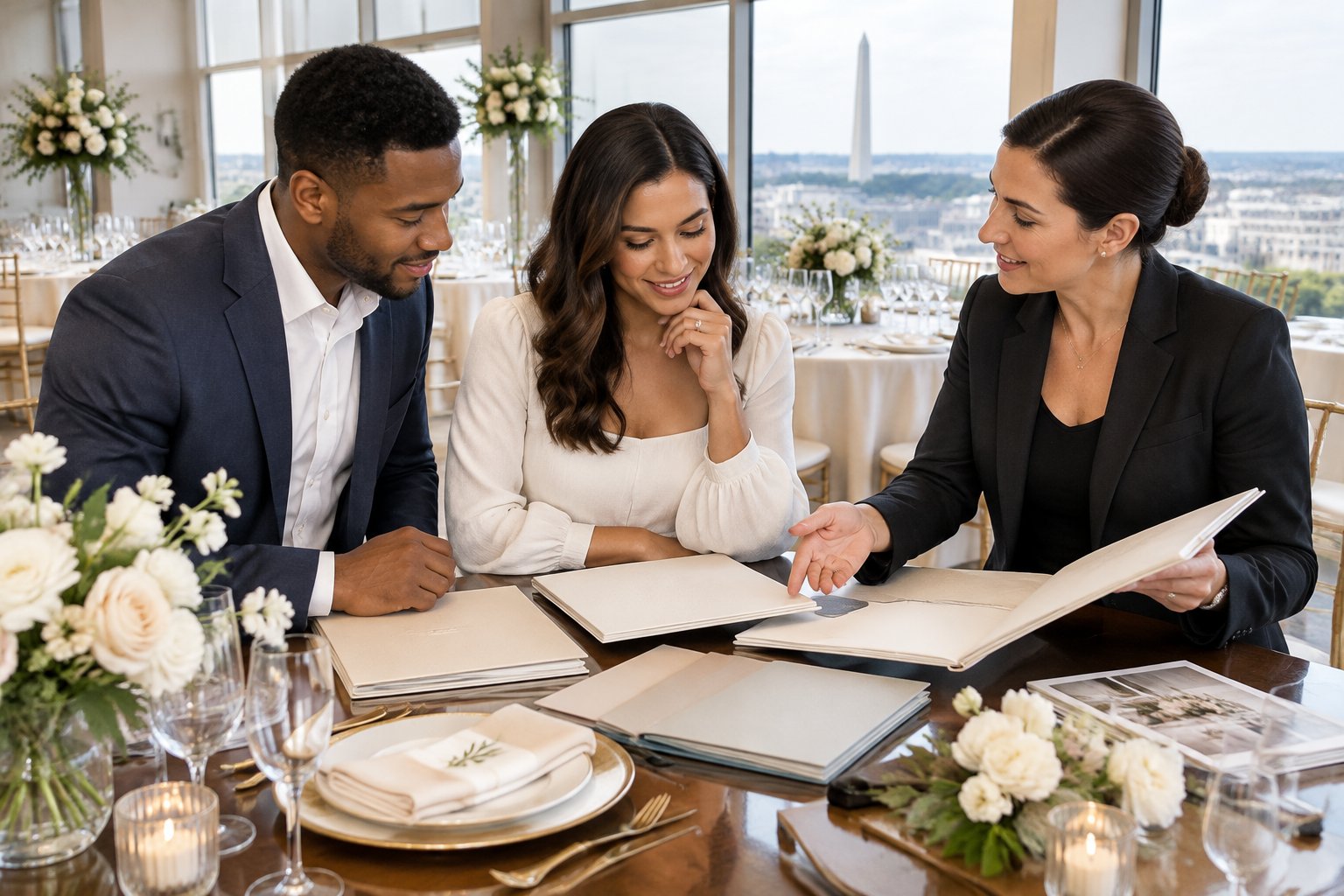
Bring your estimated guest list and preferred dates to every tour. Then compare the physical space and contract terms alongside the package price.
Match Capacity and Layout to Your Guest List
Ask for the seated dinner capacity, dance-floor size, cocktail-hour location, ceremony setup, and table layout. A venue can meet its maximum capacity while leaving too little room for dancing, buffet lines, a band, or accessible guest movement.
Check whether the ceremony and reception space are separate. Ask how quickly staff can reset a room and whether another event shares the property that day. Visit at a similar time of day to review lighting, traffic, and sound.
Evaluate Food, Drinks, and Rental Quality
Taste the proposed menu and ask how dietary needs are handled. Confirm whether the bar service includes beer, wine, spirits, signature drinks, bartenders, mixers, glassware, ice, and the full service period.
Inspect the tables, chairs, linens, plates, glassware, dance floor, lighting, and décor samples. If you want a specific style, place the exact color, fabric, finish, or rental upgrade in the proposal. Ask whether outside caterers, bakers, florists, DJs, and photographers are allowed.
Plan for Out-of-Town Guests and Transportation
Choose a location that gives out-of-town guests practical lodging and easy transportation. Ask about room blocks, booking deadlines, shuttle access, parking, rideshare pickup, Metro proximity, and accessibility.
Hotel venues simplify overnight stays. Independent venues may require a shuttle between the celebration and nearby hotels. Share travel details with guests early, especially for dates that overlap with large conventions, festivals, or city events.
Questions to Ask Before You Sign a Venue Contract
Ask for a complete written estimate and contract before you commit to any of the all-inclusive wedding venues you are considering.
What Is Included in the Final Price?
Ask for the total price at your expected guest count, including venue rental, wedding ceremony access, wedding reception hours, catering, bar service, rentals, staffing, tax, service charges, gratuity, and cleanup.
Confirm whether the package includes a wedding coordinator, bridal suite, cake cutting, rehearsal dinners, security, parking, and event insurance. Ask what happens if your guest count changes and when the final headcount is due.
Which Vendor Rules and Timing Limits Apply?
Ask whether you must use preferred vendors for catering, photography, flowers, music, rentals, or cake. Confirm outside-vendor fees, insurance requirements, loading access, setup time, breakdown deadlines, décor rules, candle policies, and noise limits.
Review the ceremony start time, reception end time, overtime rate, and access window for getting ready. Put approved vendors and promised access times in the contract.
What Are the Deposit and Cancellation Terms?
Ask how much you must pay at signing, whether the deposit is refundable, and when each remaining payment is due. Read the cancellation, postponement, weather, force-majeure, and date-change clauses carefully.
Confirm the terms for vendor failure, venue closure, guest-count reductions, and unpaid balances. Have every verbal promise added to the written agreement before you sign.