
All-Inclusive Wedding Venues Destination Guide
An all-inclusive wedding venues destination gives you a ceremony, reception, guest accommodations, dining, and resort activities in one coordinated setting. For most couples, a resort in Mexico or the Caribbean offers the easiest path to a tropical celebration because wedding services and guest travel support are managed through one property.
Your ideal venue should match your guest list, preferred setting, travel access, and complete wedding budget. Compare the full contract, room requirements, legal rules, and upgrade prices before you place a deposit. If you want help narrowing your choices, explore all-inclusive destination wedding venues and request current package details from each resort.
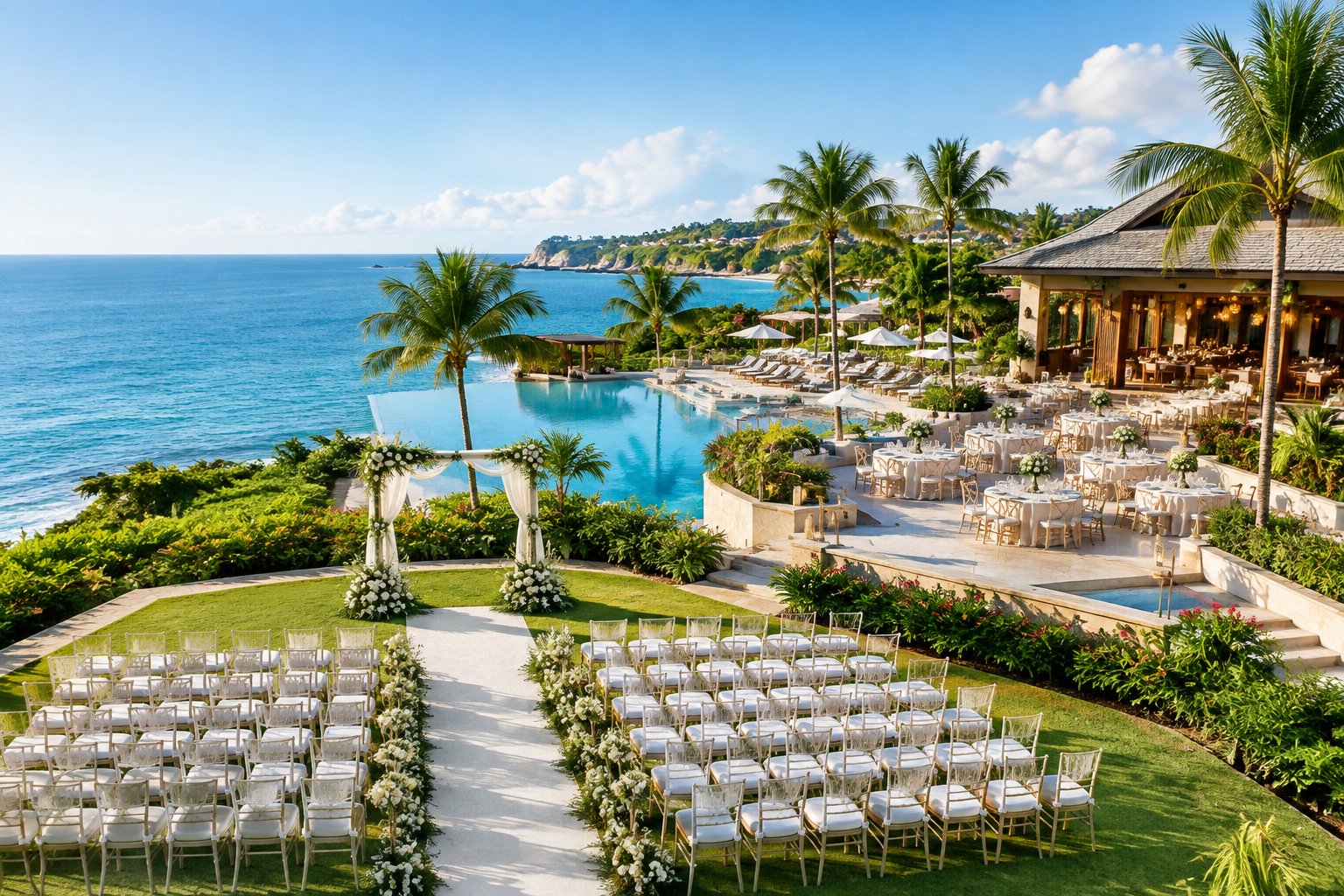
What Does an All-Inclusive Resort Wedding Actually Include?
An all-inclusive resort wedding commonly bundles the venue, ceremony setup, food, drinks, basic décor, and on-site coordination, with exact inclusions set by the resort. Package names can sound similar while covering different services, guest counts, and private-event fees.
Your resort stay may include a room, meals at selected restaurants, snacks, beverages, entertainment, pools, beach access, and resort activities. Wedding services follow a separate package, so read both the accommodation terms and wedding contract.
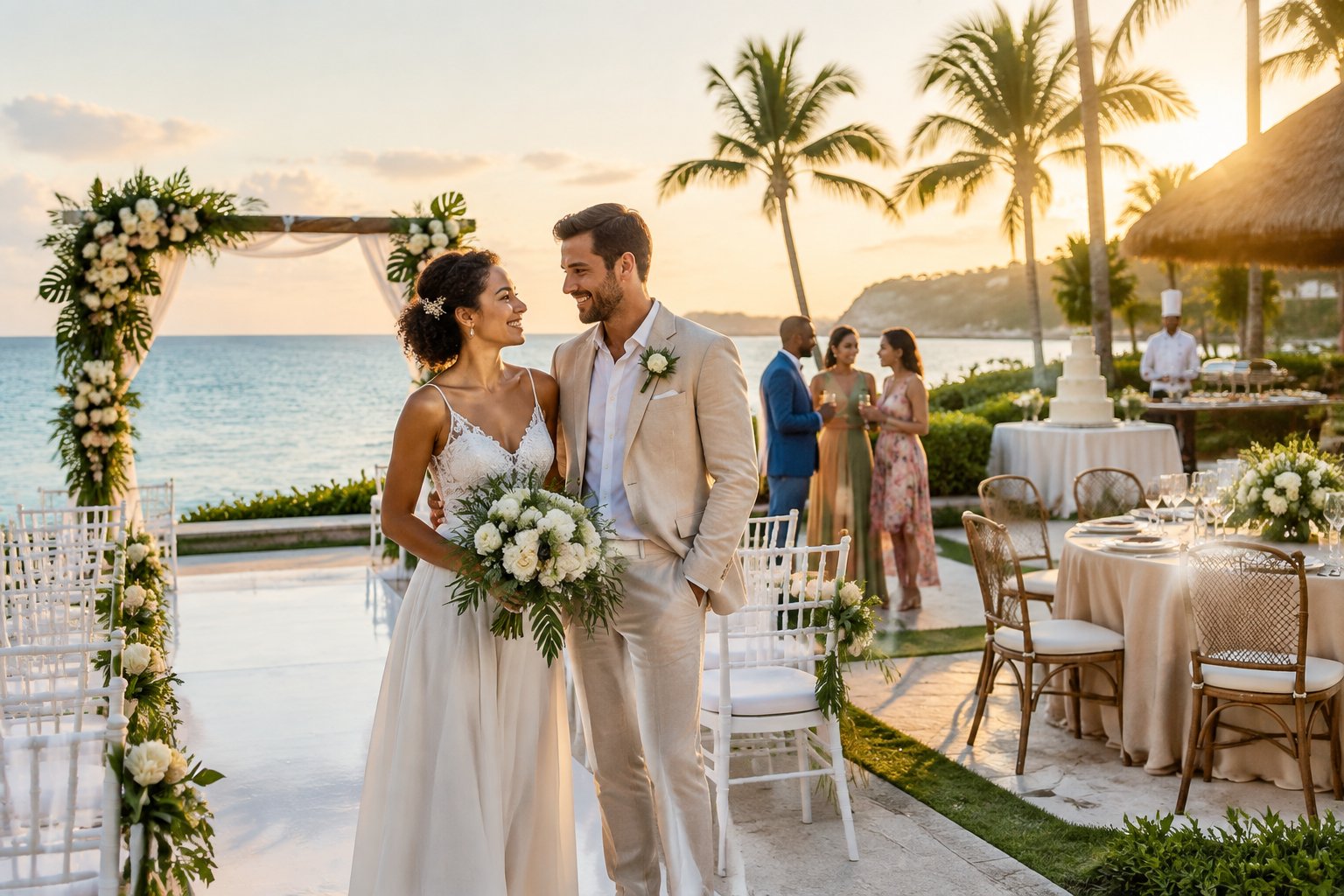
What Is Included in Most Wedding Packages?
Common wedding packages include:
- A ceremony location and basic seating
- A symbolic ceremony with an officiant
- A bridal bouquet and boutonniere
- Ceremony music or a sound system
- Basic décor, linens, and table settings
- A wedding cake
- A champagne toast
- A set menu or semi-private reception
- Open bar for a stated time
- An on-site wedding coordinator
- A room decoration or romantic amenity for the couple
Higher package tiers can add a private cocktail hour, private dinner reception, private reception space, upgraded flowers, custom menus, a DJ, live music, fireworks, photography, and videography. Hair and makeup services may appear in the wedding package or spa menu.
Ask whether the quoted price covers setup and cleanup, the number of guests, reception hours, and a rain backup location. Those details shape the value of destination wedding packages.
Which Expenses Are Usually Extra?
Airfare, guest rooms, passports, and personal excursions sit outside most all-inclusive wedding packages. Other common additions include:
- Legal ceremony paperwork and document translation
- Blood tests or civil ceremony fees
- Premium liquor and extended open-bar hours
- Private cocktail hour or private dinner reception
- Extra guests beyond the package limit
- Upgraded flowers, décor, lighting, or furniture
- DJ, live music, fireworks, and special entertainment
- Photography, videography, and extra editing time
- Hair and makeup trials or additional appointments
- Vendor day passes and outside-vendor fees
- Airport transfers
- Couples massage and spa services
- Swim-up suites or a bridal suite upgrade
Request an itemized quote in writing. Confirm taxes, service charges, gratuities, delivery fees, corkage, overtime, and the cost of a private event before comparing package tiers.
Symbolic Ceremony vs. Legal Wedding Ceremony
A symbolic ceremony gives you flexibility and fewer destination-specific paperwork steps. You can complete the legal marriage at home, then exchange personal vows at the resort with a ceremony designed around your style.
A legal wedding ceremony requires documents and procedures set by the destination. Requirements can include passports, birth certificates, translated records, waiting periods, blood tests, witnesses, and local officiant fees. Ask the resort coordinator for a current checklist because rules vary by country and location.
How to Choose the Right Resort Setting and Guest Experience
Choose a resort that supports your guests’ ages, mobility needs, room budgets, and preferred pace of travel. A beautiful wedding venue works best when guests can reach it easily, afford the stay, and enjoy the resort between events.
Review flight routes, airport transfer times, weather patterns, dining choices, resort size, accessibility, and sound rules. Your ceremony setting also affects privacy, shade, wind protection, décor, and the backup plan.
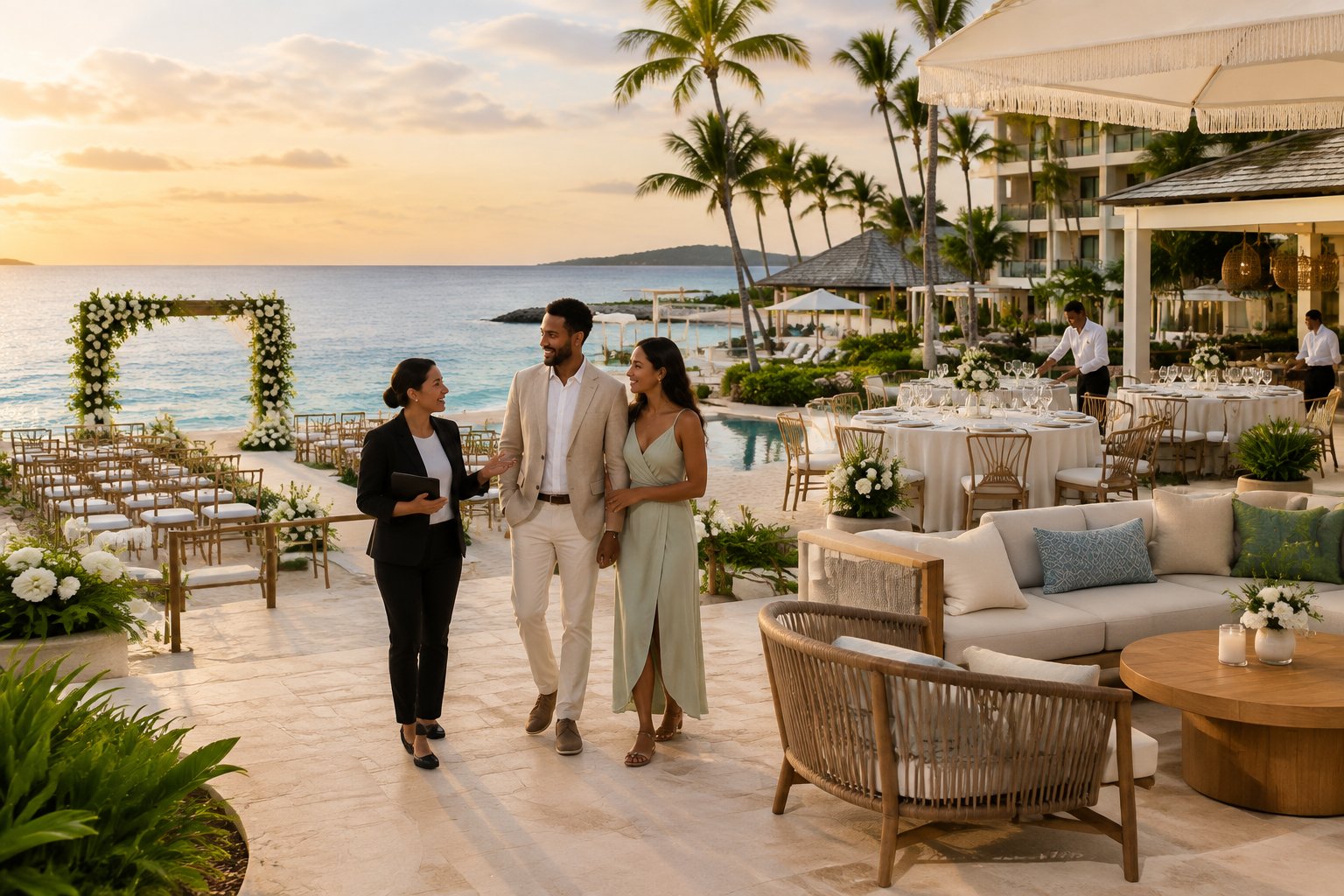
Beach Wedding, Rooftop, Garden, or Ballroom?
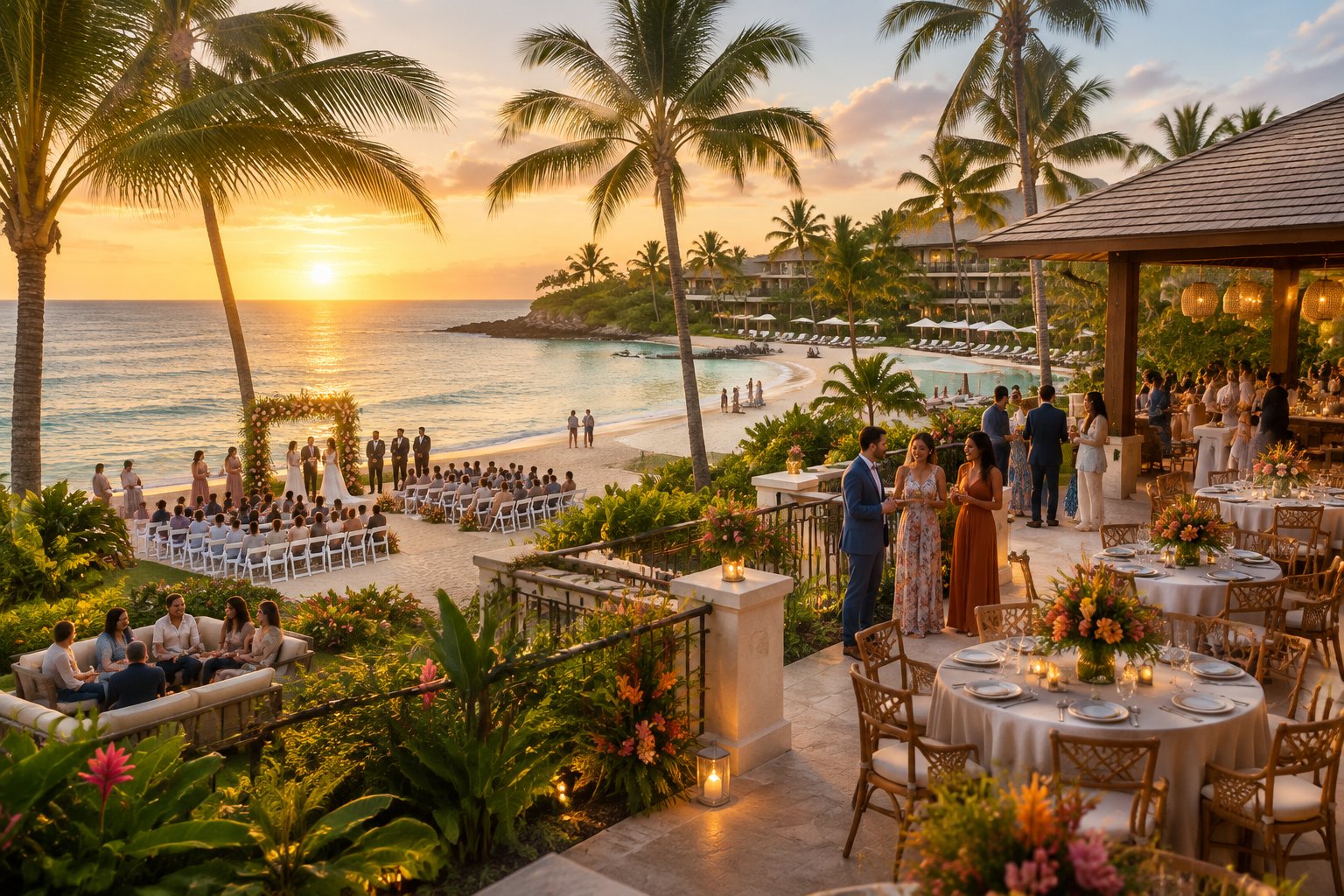
A beach wedding creates a relaxed setting with a white sand beach, ocean views, and natural light. A beachfront resort beside the Caribbean Sea or Pacific Ocean suits couples who want their location to carry much of the décor.
A garden venue offers shade, greenery, and firmer ground for guests. Rooftop terraces bring sunset views and city or ocean scenery, while ballrooms provide stronger weather protection, controlled sound, and a formal atmosphere.
Ask each venue:
- Is the ceremony space private?
- Does it have shade at your chosen time?
- What happens during rain or strong wind?
- Can guests with limited mobility reach the site?
- Can the reception stay nearby?
- Are music and dancing limited after a set hour?
- How many guests fit with dinner tables and a dance floor?
Should You Choose an Adults-Only or Family-Friendly Resort?
An adults-only resort suits a wedding group that wants quiet pools, spa services, romantic dining, nightlife, and a late reception. These properties also work well when your guest list centers on couples and adult friends.
A family-friendly resort fits groups with children, parents, and grandparents. Look for kids’ clubs, connecting rooms, calm pools, flexible menus, childcare options, and activities for several age groups.
Some destination wedding resorts connect adults-only and family-friendly properties, giving guests access to different experiences. Ask about sister-resort access, transportation, age limits, and event rules before booking.
How Do Room Blocks and Guest Travel Affect the Decision?
A room block gives guests a clear booking path and helps the resort plan meals, transfers, and staffing. Ask when the block expires, whether rooms are guaranteed, how deposits work, and what happens when guests book outside the group reservation.
Share the nearest airport, transfer time, room categories, nightly rates, taxes, cancellation deadlines, and accessible-room details as soon as you announce the destination. A resort with convenient flights and a short transfer can make attendance easier than a property with a lower package price.
Check whether room nights qualify you for a complimentary package, couple’s upgrade, honeymoon benefit, or resort credit. Guests also need time to budget, request leave, and arrange passports.
Where Are the Best Destinations for Your Wedding Style?
Mexico and the Caribbean offer the widest mix of all-inclusive wedding venues, from lively beach resorts to private luxury properties. Choose the region by matching your wedding mood with flight access, resort style, landscape, and guest budget.
Mexico gives you many resort sizes and venue layouts across two coasts. The Caribbean offers island settings, varied resort brands, and strong choices for adults-only celebrations, family groups, and romantic honeymoons.
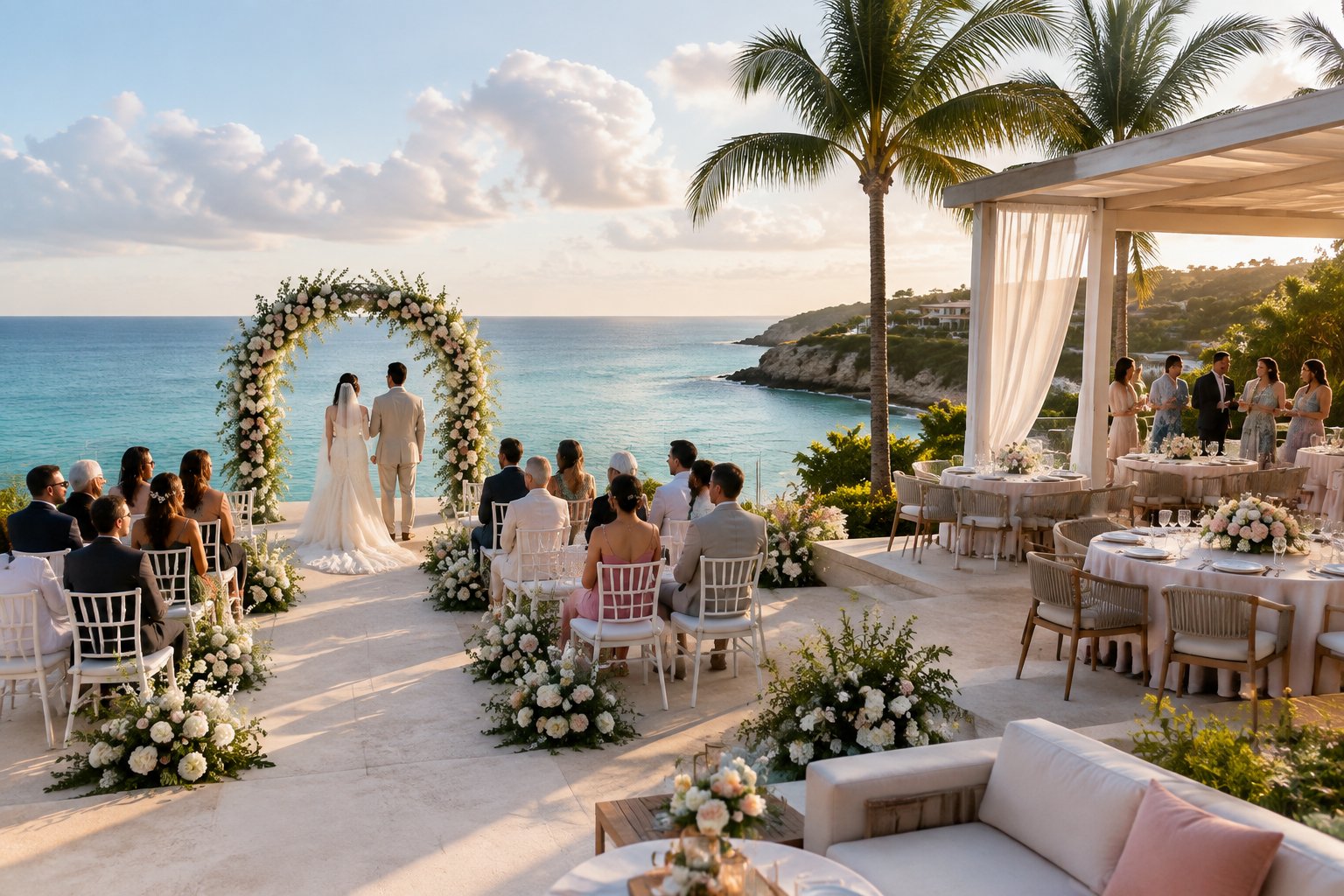
Mexico: Cancun, Costa Mujeres, Riviera Maya, and Tulum
Cancun works well for groups that value direct flights, lively entertainment, broad resort choices, and easy access to restaurants and attractions. Cancun weddings can range from casual beach ceremonies to large ballroom receptions.
Costa Mujeres and Playa Mujeres offer a quieter coastal setting north of Cancun. Resorts in this area appeal to couples who want polished grounds, private-feeling beaches, and access to luxury room categories.
Riviera Maya gives you a long stretch of resorts between Cancun and Tulum, with gardens, beaches, cenotes, terraces, and large event spaces. It suits couples who want several venue styles within one region.
Tulum brings a more relaxed, design-focused feel with natural textures and boutique-inspired settings. Check transfer times, road conditions, weather plans, and resort rules carefully when comparing Tulum properties.
Pacific Mexico: Puerto Vallarta, Riviera Nayarit, and Cabo San Lucas
Puerto Vallarta combines a coastal setting with a walkable town, restaurants, and mountain views. It suits couples who want guests to explore beyond the resort.
Riviera Nayarit offers wide beaches, lush landscapes, and resort communities north of Puerto Vallarta. It works for couples seeking a peaceful celebration with space for group activities.
Cabo San Lucas brings desert scenery, dramatic rock formations, and Pacific Ocean views. Properties such as Breathless Cabo San Lucas Resort & Spa and Hard Rock Hotel Los Cabos support different wedding moods, from nightlife to family entertainment.
Check ocean conditions and venue rules before choosing a ceremony directly on the shore. Pacific beaches can have stronger surf and different swimming conditions than Caribbean beaches.
Caribbean and Central America: Punta Cana to St. Lucia
Punta Cana offers extensive resort choice, broad beaches, and packages for many group sizes. Montego Bay and Ocho Rios in Jamaica suit couples who want island culture, lush scenery, and resort-based celebrations.
Turks and Caicos appeals to couples who prioritize clear water, white sand, and a quieter luxury feel. St. Lucia adds mountains, dramatic coastlines, and intimate ceremony settings, including beach areas and ocean-front gazebos.
Costa Rica brings rainforest scenery and adventure activities, with options such as Secrets Papagayo Costa Rica, Planet Hollywood Costa Rica, Riu Palace Costa Rica, and Occidental Papagayo. Compare transfer routes, event privacy, rain plans, and room rates before selecting a property.
Resort Shortlist by Crowd, Budget, and Vibe
Start your resort shortlist with guest type and celebration style, then compare package rules, room rates, venue privacy, and travel access. Resort brands serve different audiences, so a strong match begins with the group you are inviting.
Look beyond the ceremony photos. Review restaurant access, room categories, event capacity, entertainment rules, children’s services, and the cost of private spaces.
Adults-Only Escapes for Food, Nightlife, and Romance
For an adults-only celebration, compare Secrets Moxché Playa del Carmen, Valentin Imperial Riviera Maya, Breathless Cabo San Lucas Resort & Spa, Secrets Papagayo Costa Rica, and Sandals Regency La Toc Golf Resort & Spa.
Grand Lido Negril, Hotel Paradisus Palma Real, Royal Hideaway, and selected Iberostar Hotels properties also suit couples seeking polished dining, spa time, and romantic resort amenities. Secrets and Breathless lean toward different social styles, so review nightlife, restaurant layouts, music rules, and private event options.
Ask whether the resort offers a private cocktail hour, private dinner reception, DJ, live music, photography, or upgraded bar service within your chosen tier.
Family-Friendly Resorts for Multigenerational Groups
Family groups can compare Hyatt Ziva, Hyatt Ziva Cancun, Beaches Turks & Caicos, Dreams Bahia Mita Surf & Spa, Dreams Natura Resort & Spa, and Dreams Dominicus La Romana.
Dreams Playa Bonita Panama, Dreams Curacao Resort, Spa & Casino, Majestic Colonial Punta Cana, and Royalton Riviera Cancun provide additional choices for groups that need children’s activities, varied room types, and flexible dining.
Ask about connecting rooms, kids’ clubs, teen activities, accessible rooms, calm pool areas, and restaurants that welcome young guests. A sister property with adults-only spaces can help guests choose the pace that suits them.
Luxury and Distinctive Properties for a Elevated Celebration
Luxury-focused couples can explore Atelier Playa Mujeres, Hotel Xcaret Mexico, Casa de Campo Resort & Villas, Susurros del Corazon, El Embajador, and Dreams Bahia Mita Surf & Spa.
Hotel Xcaret Mexico adds access to a broader destination experience, while Casa de Campo Resort & Villas offers a resort setting with villas and activities. Susurros del Corazon suits couples who want a refined Pacific Mexico atmosphere.
For distinctive celebrations, also compare Barceló Puerto Vallarta, Barceló Tambor, Occidental Papagayo, Riu Palace Costa Rica, and Royal Hideaway. Review privacy, custom décor rules, vendor policies, and the cost of premium rooms before you choose a higher-tier property.
How Much Do Destination Wedding Packages Cost?
Destination wedding costs combine the wedding package, guest rooms, travel, taxes, private events, and personal upgrades. A low starting price can rise when you add a private reception, extra guests, premium décor, photography, entertainment, and legal services.
Resorts use flat package prices, per-guest charges, room-night requirements, or a combination of these models. Compare the total for your expected guest count and date.
How to Build a Realistic Wedding Budget
Create separate totals for the couple’s wedding expenses and guest travel expenses. A useful budget worksheet includes:
- Wedding ceremony and reception package
- Guest rooms, taxes, and resort fees
- Airfare and airport transfers
- Welcome event or rehearsal dinner
- Photography and videography
- Flowers, décor, lighting, and rentals
- DJ, live music, or other entertainment
- Legal paperwork and translation
- Hair, makeup, spa services, and attire
- Honeymoon nights or room upgrades
- Emergency reserve
Ask each resort for a full quote instead of relying on a “starting at” price. You can also compare how much per person for a destination wedding when setting expectations for guests.
Off-peak dates, weekday ceremonies, standard décor, shared dining, and symbolic ceremonies can reduce your wedding budget. Keep a written record of deposits, due dates, cancellation terms, and currency rules.
Comparing Package Tiers and Per-Guest Charges
Entry packages often cover the ceremony, basic flowers, cake, toast, simple décor, and a coordinator. Middle tiers can add a cocktail hour, private dinner reception, upgraded bar, photography, or enhanced décor.
Review each package for:
- Included guest count
- Additional guest price
- Reception length
- Meal format and menu choices
- Open-bar brands and service hours
- Private versus semi-private space
- Included photography time and images
- Setup, cleanup, taxes, and service charges
- Room-night requirements
- Rain-plan location and cost
A package with a higher starting price can cost less after you add the services you already want. Request two quotes, one with standard choices and one with your preferred upgrades.
When a Complimentary Package Is Worth It
A complimentary wedding package can be valuable when you already plan to meet the resort’s room-night or stay-length requirement. Confirm which ceremony services are included, the guest limit, the required room category, and the booking deadline.
Names such as Eternal Love Wedding Package and Tropical Bliss Wedding Package describe different resort offerings, so compare the itemized inclusions. Check whether the package covers a private reception, open bar, dinner, photography, legal services, taxes, and service fees.
A complimentary package may fit an intimate symbolic ceremony with standard décor. A larger celebration with a private dinner, custom flowers, entertainment, or legal paperwork can require paid upgrades.
How to Book With Fewer Surprises
Book after you receive a written proposal that lists every inclusion, exclusion, fee, deadline, and cancellation rule. A clear contract gives you a usable budget and a shared plan with the resort team.
Keep one document for package details and another for guest travel. Save updated proposals, payment receipts, room-block reports, and messages from the resort.
Wedding Planner vs. Resort Wedding Coordinator
A resort wedding coordinator manages events at that property. The coordinator handles venue logistics, resort staff, setup, menus, timelines, and communication with approved vendors.
An independent wedding planner supports decisions before you select the resort and can compare destinations, contracts, room blocks, travel logistics, and vendor policies. You may prefer a planner when your celebration includes several events, custom décor, multiple properties, or complex guest needs.
Ask who handles airport transfers, guest questions, legal paperwork, room-block updates, welcome events, rain plans, and wedding-day changes. Put each responsibility in writing.
Questions to Ask Before You Sign a Contract
Use these questions during your resort call:
- What does the package include for our guest count?
- Which services require an upgrade?
- Is the ceremony symbolic or legal?
- What documents and local fees apply?
- Is the reception private, semi-private, or shared?
- How many hours include food, bar service, music, and dancing?
- What are the menu, liquor, décor, and photography limits?
- Are outside vendors permitted?
- Are vendor day passes or corkage fees charged?
- What taxes, service charges, gratuities, and overtime fees apply?
- What is the rain backup location and its price?
- What room block and room-night rules apply?
- Which deposits are refundable?
- What happens if the resort changes the venue or event date?
Ask for a sample contract, a fee sheet, a floor plan, and a complete quote for your expected guest count.
When to Work With a Certified Destination Wedding Specialist
A certified destination wedding specialist helps you compare resorts, package terms, travel routes, room blocks, and planning timelines. This support is useful when you have guests with different budgets, need several venue proposals, or feel unsure about legal requirements.
Look for a specialist who explains resort policies clearly, gives you more than one suitable option, and records fees and deadlines in writing. Ask about certification, supplier relationships, communication hours, planning fees, and support after booking.
Share your guest count, preferred dates, room budget, ceremony style, children’s needs, and must-have services. Those details help the specialist request proposals that reflect your wedding instead of generic package prices.