
All-Inclusive Wedding Venues Italy: What to Expect
Planning a destination wedding in Italy becomes far easier when your venue combines the celebration, key wedding services, and local coordination in one package. For couples who want a smoother planning experience, all-inclusive wedding venues in Italy are a strong choice because they bring the venue, food, coordination, and selected vendors into one organized plan.
You can choose a Tuscan villa, vineyard estate, lakeside property, coastal retreat, historic palace, or private castle. Package details range from a one-day ceremony and reception to a multi-day stay with guest lodging, welcome events, meals, entertainment, and on-site support.
Read every inclusion carefully so your dream wedding in Italy matches your budget and expectations. If you are ready to compare settings and package styles, start by exploring the best wedding locations in Italy and save the venues that fit your guest list, style, and travel plans.
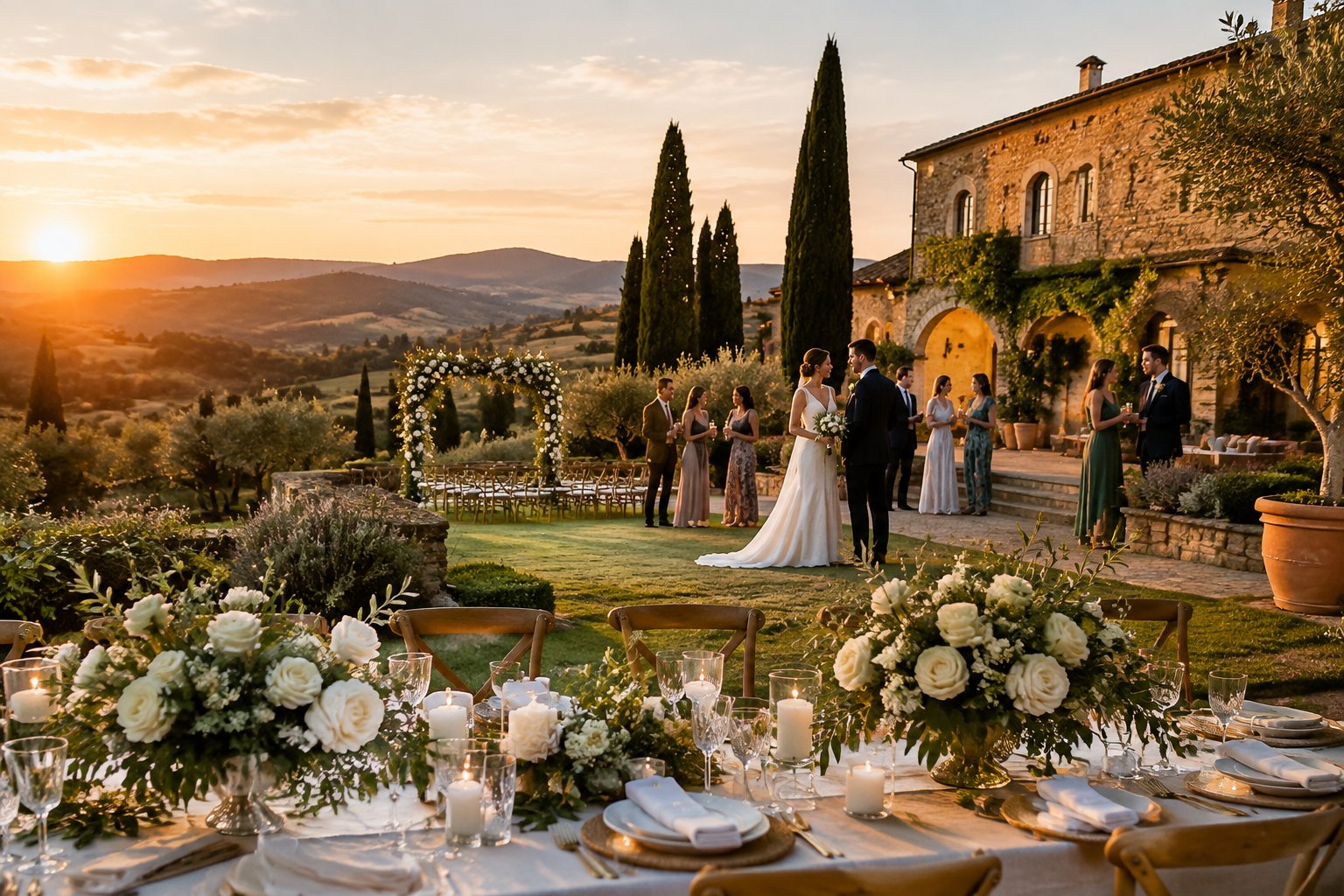
What Does All-Inclusive Actually Cover?
An all-inclusive package in Italy usually combines the venue, catering, drinks, basic rentals, event coordination, and selected wedding services under one agreement. The exact meaning changes from one property to another, so your quote should list quantities, service hours, vendor names, taxes, and upgrade costs.
Italy wedding packages all inclusive can suit couples planning from the United States because one local team can coordinate venue access, suppliers, timing, and guest logistics. A wedding planner can also help with language, local rules, and decisions that are difficult to manage from another country.
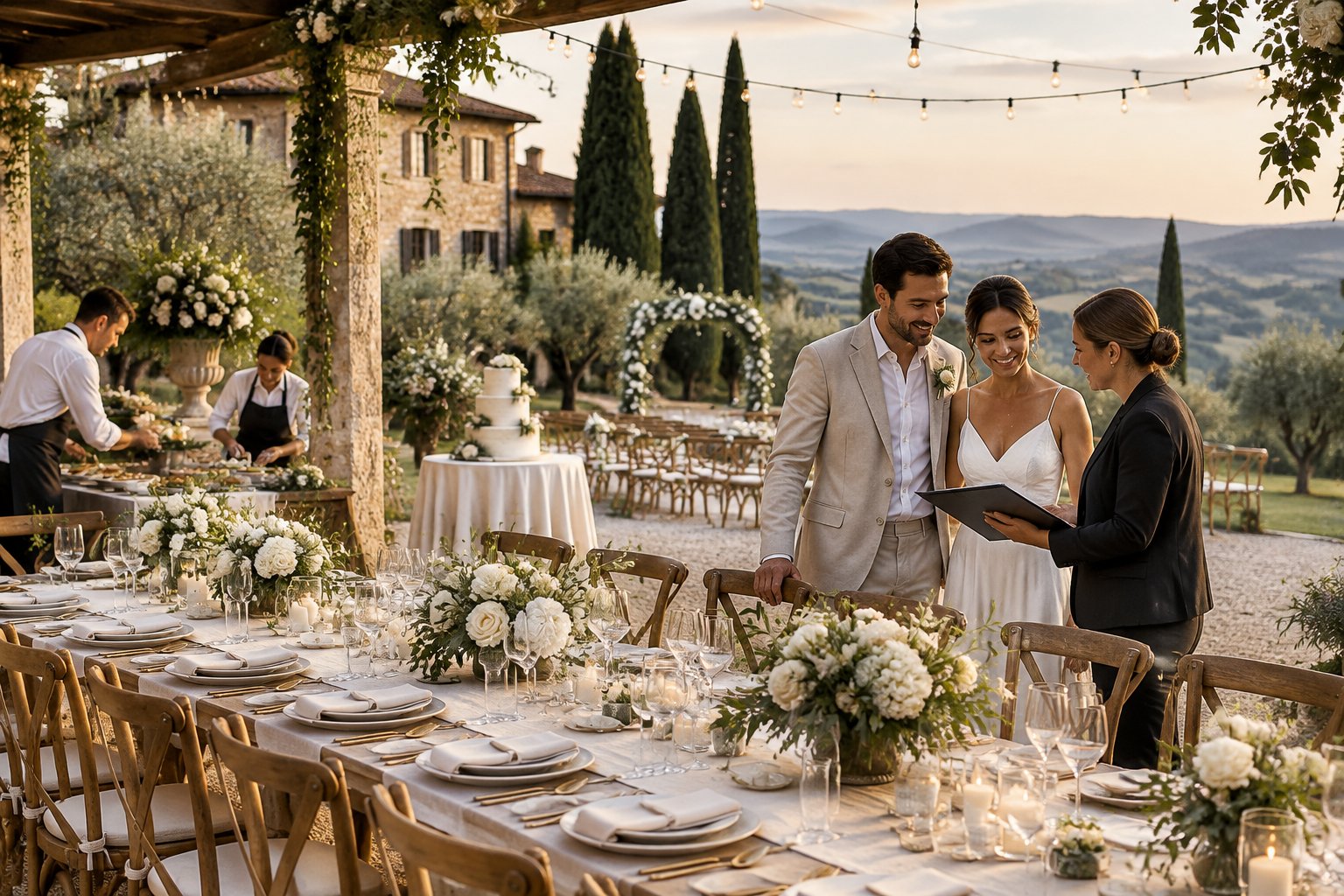
Core Inclusions to Expect From a Venue Package
A venue package may include:
- Ceremony and reception spaces
- Tables, chairs, linens, and basic tableware
- Catering and selected wines
- Aperitivo service
- Basic floral arrangements
- Bridal bouquet and boutonniere
- Wedding cake
- Sound equipment
- DJ or ceremony musicians
- Event staffing
- Wedding planning or day-of coordination
- Guest rooms at properties with on-site lodging
Some multi-day packages add welcome dinners, breakfasts, farewell brunches, transportation, and group activities. Ask whether the package covers the entire guest count or sets limits for food portions, open-bar hours, floral stems, and entertainment time.
Common Exclusions That Change the Final Price
Your starting quote may leave out:
- Photography and videography
- Hair and makeup
- Premium liquor or extended bar service
- Larger floral installations
- Specialty lighting
- Imported decor
- Guest transportation
- Accommodation
- Civil ceremony fees
- Document translations and legal assistance
- Service charges, taxes, and overtime
A scenic venue with distant rooms can also add shuttle costs. Historic properties may charge extra for setup, cleanup, generators, sound limits, or furniture brought from outside.
Request a complete price sheet before you compare Italy wedding packages.
How Venue-Led Packages Differ From Planner-Led Packages
A venue-led package starts with one property and its preferred services. You select from defined menus, decor choices, timing options, and approved vendors. This format gives you a faster path to booking and a clearer starting price.
A planner-led package begins with your priorities. The wedding planner may source the venue, build a supplier team, arrange guest travel, manage legal steps, and shape the design around your story.
You gain more choice in photography, flowers, entertainment, and food, with more decisions to make along the way.
How to Choose the Right Setting for Your Celebration
The right wedding venue matches your guest experience, design style, travel plan, and weather needs. Think about privacy, access, indoor space, lodging, music rules, and the time guests will spend moving around the property before you focus on decor.
Tuscany wedding packages appeal to couples who want countryside views, local food, and relaxed multi-day events. Coastal, lakeside, and city venues create different travel patterns and price structures, so your setting should support the entire celebration.
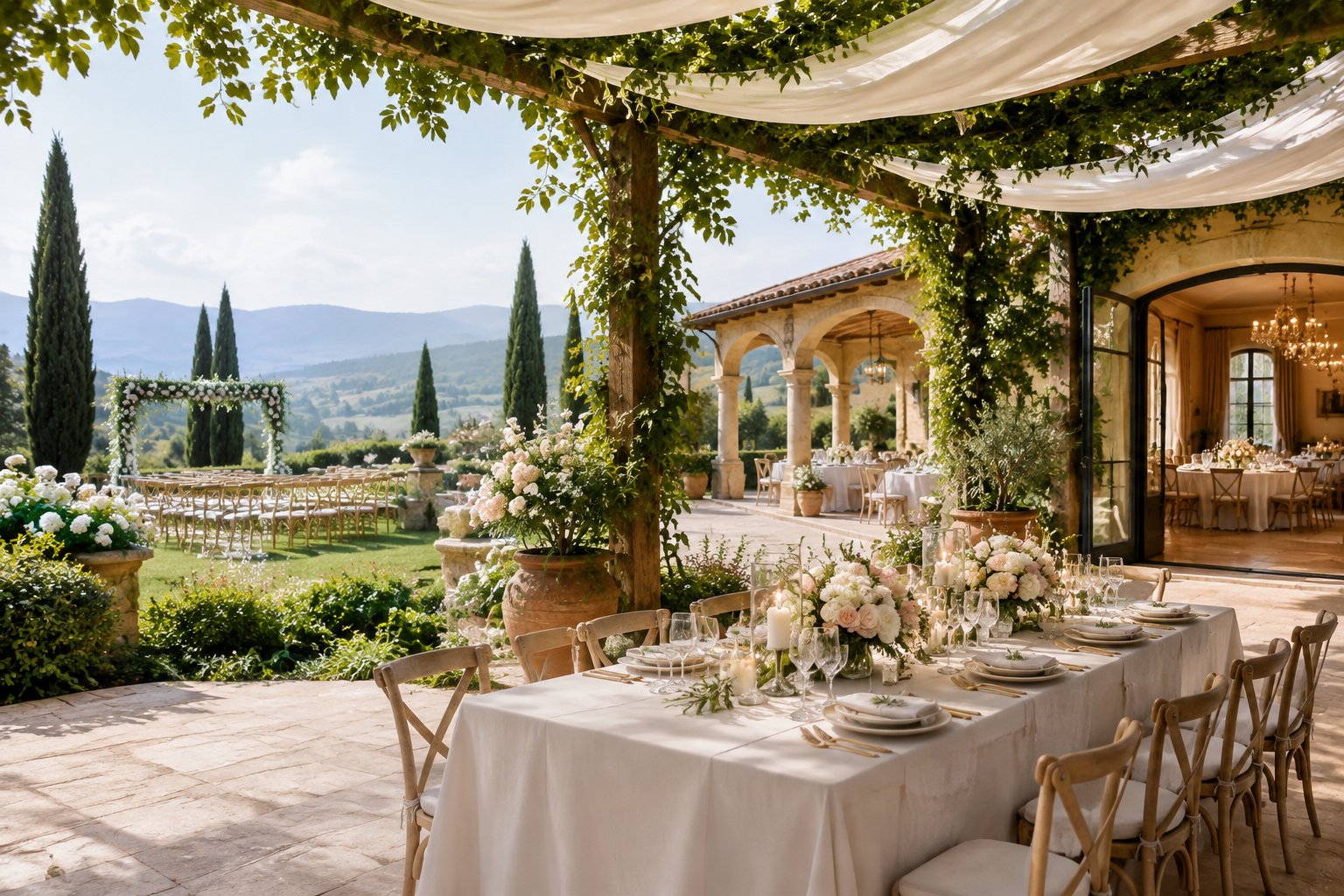
Tuscan Villas, Farmhouses, and Vineyard Estates
Tuscan villas and farmhouses offer olive groves, gardens, stone buildings, and wide views across the countryside. A vineyard wedding gives you a strong sense of place, especially when dinner features regional wine and seasonal food.
Ask how many guests can stay on-site and whether the property permits outside suppliers. Check the indoor backup space, distance from the nearest airport, coach access, and music curfew.
Some rural venues need a shuttle plan because taxis are limited after dinner.
Lakes, Coastlines, and Historic City Properties
Lake Como, Lake Garda, the Amalfi Coast, Portofino, and the Italian Riviera provide water views and a polished atmosphere. City properties in Rome, Florence, Venice, and other historic centers place you near culture, hotels, and restaurants.
Waterfront settings need a careful wind and weather plan. City venues require attention to loading access, guest transfers, noise rules, stairs, and nearby accommodation.
Ask whether boats, terraces, or landmark rooms carry separate fees.
Castles, Borgos, and Exclusive-Use Retreats
Castles and borgos create a private world for your wedding celebration. Exclusive use gives you control over guest movement, shared meals, and the timing of welcome events.
Some properties include rooms, while others provide only event space. Review the property’s real capacity for dining, dancing, catering, restrooms, and rain coverage.
Historic buildings also need clear plans for deliveries, lighting, sound equipment, accessibility, and guest transportation.
What to Check Before Booking a Wedding Venue
Use this checklist during a site visit or video call:
- Maximum seated capacity for your guest count
- Indoor Plan B with equivalent capacity
- Accommodation on-site and nearby
- Airport transfer time
- Coach and delivery access
- Music end time and sound limits
- Catering rules and preferred suppliers
- Furniture, lighting, and restroom facilities
- Setup and cleanup windows
- Deposit, cancellation, and payment terms
- Extra fees for taxes, overtime, and staffing
What Will an Italian Wedding Package Cost?
For 2026, a destination wedding in Italy often falls between €15,000 and €70,000 for the main celebration, with luxury and exclusive-use events reaching €70,000 or more. Your guest count, region, season, accommodation, and level of customization shape the final figure.
A package priced per person may exclude venue hire, lodging, transportation, legal fees, or design upgrades. A weekend retreat may look expensive at first while including rooms and several meals that you would otherwise arrange separately.
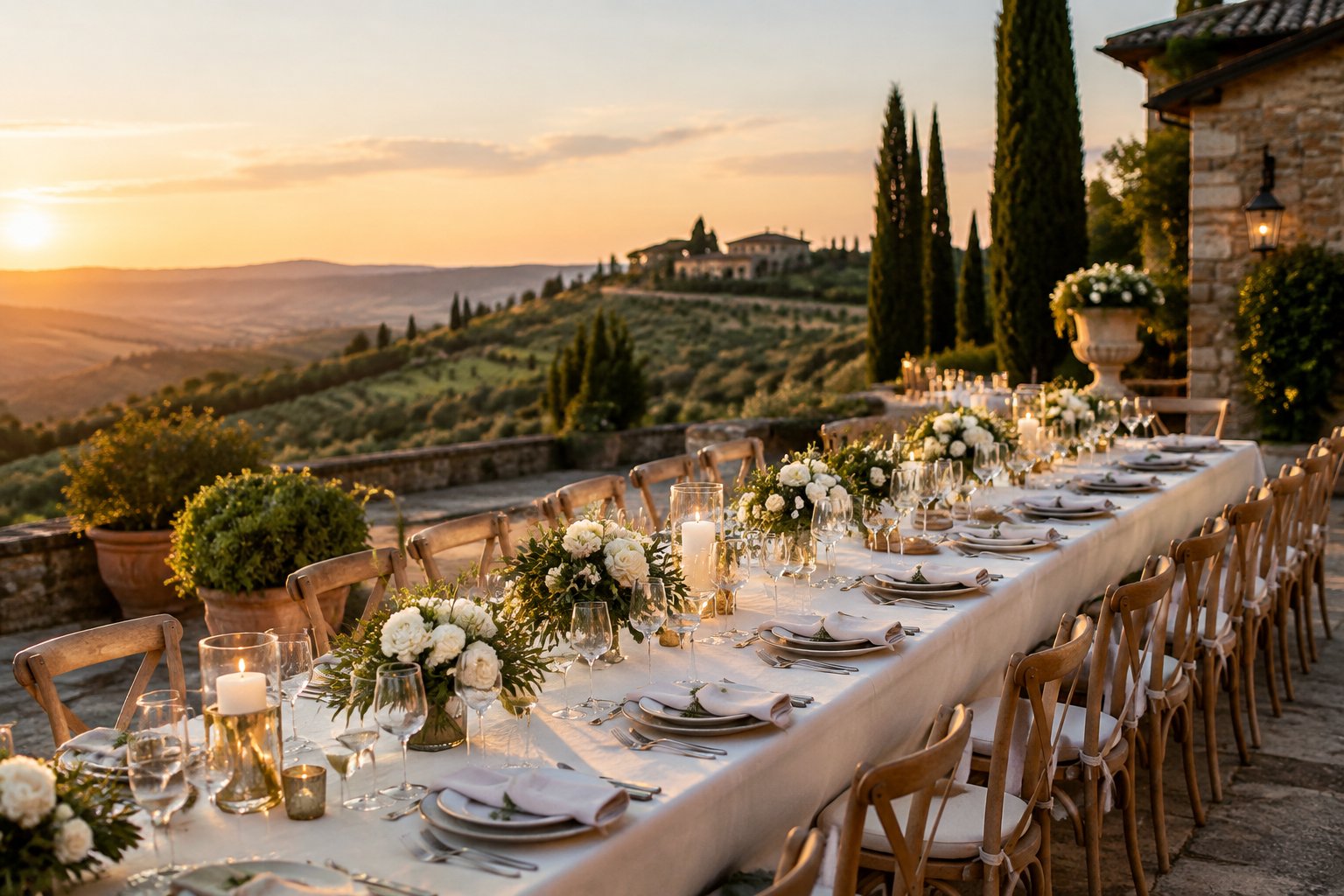
Typical Budget Ranges by Guest Count
Use these figures as planning starting points:
| Guest count | Indicative celebration budget |
|---|---|
| 20–40 guests | €15,000–€30,000 |
| 50–80 guests | €25,000–€50,000 |
| 90–130 guests | €40,000–€70,000+ |
These ranges can include venue hire, catering, photography, flowers, music, planning, and core rentals. Accommodation, guest flights, and personal attire may sit outside the package.
How Location, Season, and Day of the Week Affect Pricing
Lake Como, the Amalfi Coast, and exclusive Tuscan estates command higher prices when demand is strong. Peak summer weekends also carry higher venue fees and minimum spends.
A weekday or shoulder-season date can reduce the venue cost and improve availability. Ask for quotes across several dates before you set your wedding schedule.
Confirm whether the rate includes VAT, service charges, setup days, and ceremony fees.
Accommodation, Multi-Day Events, and Guest Travel Costs
A multi-day destination wedding adds welcome drinks, group meals, breakfasts, activities, rooms, and transport. Guests also need to budget for flights, hotels, local travel, and time away from work.
On-site lodging can make the weekend easier to manage and give you a private setting for shared events. If the property sleeps only part of your group, price nearby hotels and shuttle routes before signing.
How to Compare Quotes Without Hidden Surprises
Create one comparison sheet with these columns:
- Venue hire
- Catering per guest
- Beverage package
- Rentals and linens
- Flowers and decor
- Photography and video
- Entertainment
- Planning and coordination
- Transportation
- Accommodation
- Taxes and service charges
- Overtime and contingency funds
Ask each venue to price the same guest count, meal format, bar hours, and event schedule. Request written confirmation for every item described as included.
Planning the Ceremony and Reception in One Place
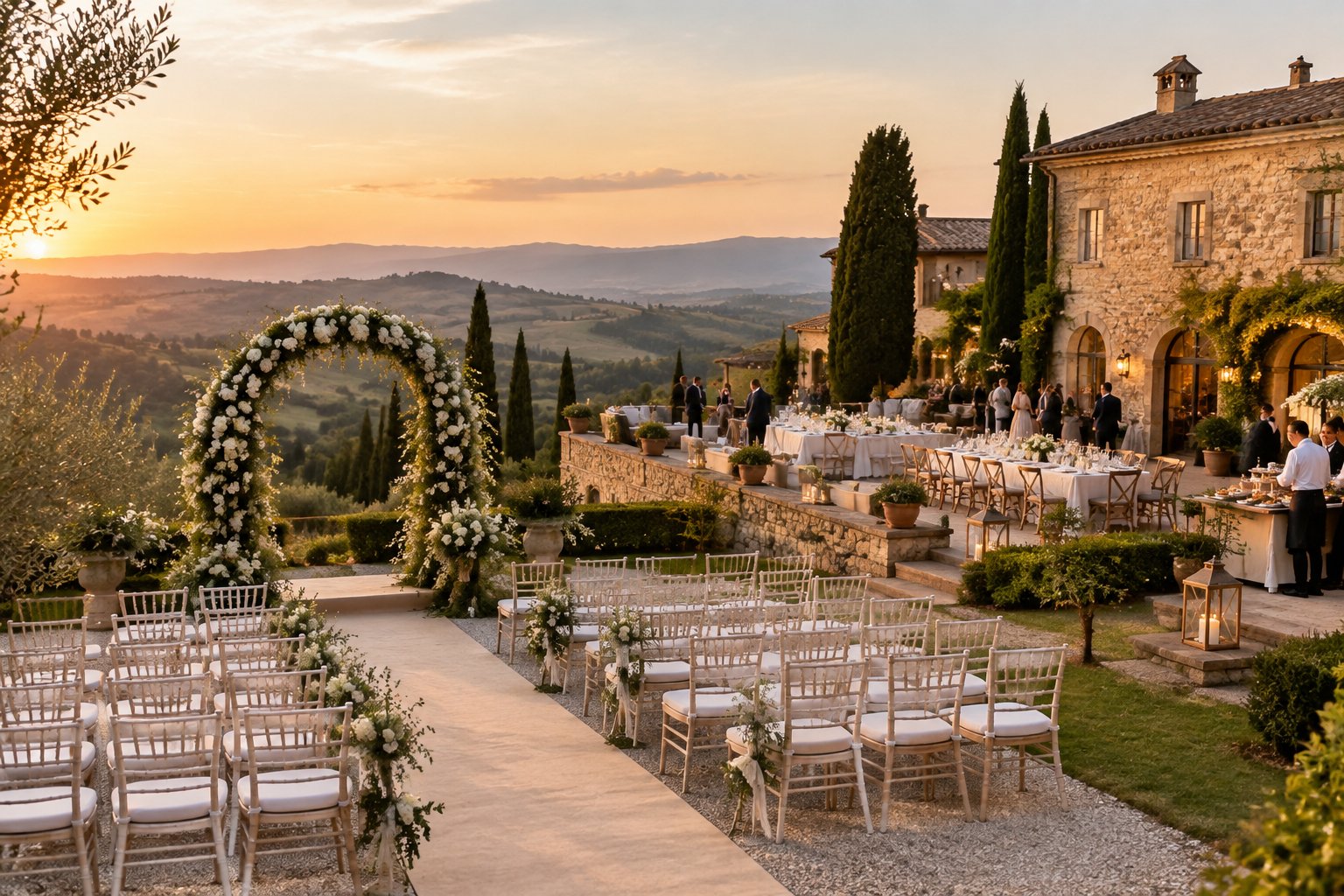
Keeping the wedding ceremony and wedding reception at one property reduces guest movement and makes the timeline easier to manage. You can still create distinct spaces for vows, aperitivo, dinner, dancing, and late-night drinks.
Your ceremony style, menu, wedding theme, and guest needs should guide the layout. Check how long it takes to move between spaces and what happens if rain, heat, or wind changes the plan.
Civil, Religious, and Symbolic Ceremony Options
A civil ceremony requires local paperwork, approved locations, translations, and fees set by the relevant municipality. Your planner can help identify the required documents and timeline for a legal marriage in Italy.
A religious ceremony follows the rules of the chosen faith and place of worship. A symbolic ceremony gives you the broadest creative freedom and works well for couples who complete the legal marriage at home.
Ask whether the venue has a licensed ceremony area and an indoor alternative.
Building an Italian Reception Menu and Drinks Experience
Italian wedding menus often begin with an aperitivo featuring regional cheeses, cured meats, crostini, fried bites, and sparkling wine. Dinner can include handmade pasta, seasonal vegetables, local meat or fish, and regional desserts.
Give your caterer guest dietary needs early. Ask about children’s meals, vegetarian courses, allergy procedures, wine service, cocktail options, water, coffee, and bar duration.
For menu inspiration, browse these Italian wedding menu ideas.
Designing a Wedding Theme That Fits the Venue
Start with the property’s architecture, landscape, and natural colors. Olive branches, linen, candlelight, local ceramics, and seasonal flowers complement a Tuscan estate. A lakeside villa may suit polished glassware, soft blue accents, and refined floral lines.
Your design should support guest comfort as well as photos. Provide shade during warm afternoons, lighting along paths, comfortable seating, and flooring where gravel or grass affects movement.
From Aperitivo to the Wedding Cake
A smooth reception timeline allows guests to move from ceremony to aperitivo without a long pause. A sample flow might include:
- Ceremony
- Family and couple portraits
- Aperitivo with music
- Dinner
- Toasts and speeches
- First dance
- Dancing
- Dessert and wedding cake
- Late-night food
Confirm who cuts and serves the wedding cake, when coffee is offered, and whether the venue supplies a traditional millefoglie, a tiered cake, or a custom design.
Should You Choose a Package or a Bespoke Wedding?
Choose a package when you want a defined plan, fewer supplier decisions, and stronger cost control. Choose a bespoke wedding when your design, guest experience, or venue vision requires custom sourcing and detailed planning.
Your guest count also affects the choice. A smaller event can fit neatly into a ready-made package, while a larger celebration needs more coordination for transport, timing, staffing, and venue flow.
When a Ready-Made Package Is the Better Fit
A ready-made package suits you when:
- You want a clear starting price
- Your guest list is fairly small
- You like the venue’s preferred suppliers
- You value a short planning timeline
- You are comfortable choosing from set menus and decor options
- You want one team to manage the wedding day
Review the package limits before paying a deposit. A low starting price may cover basic flowers, short photography coverage, selected wine, or a limited bar.
When a Bespoke Wedding Offers More Value
A bespoke wedding gives you room to shape the menu, guest activities, floor plan, floral design, entertainment, and lodging plan. It suits couples who have a distinct creative direction or want a multi-day Italian wedding with several locations and experiences.
A planner can divide the budget according to your priorities. You might invest more in photography, live music, guest transportation, or a signature dinner while keeping decor focused on the venue’s existing character.
Questions to Ask Before Signing a Contract
Ask these questions in writing:
- What does “all-inclusive” cover in exact quantities?
- Which vendors are included and who employs them?
- Can you choose outside suppliers?
- How many planning meetings and coordination hours are included?
- What happens if the weather changes?
- Does the fee include setup, cleanup, furniture, lighting, and taxes?
- Are lodging and guest meals part of the price?
- What are the payment, cancellation, and postponement terms?
- When do overtime and extra guest charges apply?
- Who is your point of contact during the wedding?
A package or bespoke plan should leave you with a clear schedule, full cost breakdown, supplier responsibilities, and backup plan before you sign.