
All-Inclusive Wedding Venues Long Island: A Planning Guide
Choosing an all-inclusive wedding venue on Long Island gives you one coordinated place for your ceremony, reception, catering, and event support. For couples who want a streamlined plan and clear package pricing, an all-inclusive wedding venue with in-house catering, a dedicated event manager, and ceremony space is the strongest starting point.
You can also find elegant estates, waterfront properties, vineyards, country clubs, and banquet halls across Nassau and Suffolk Counties.
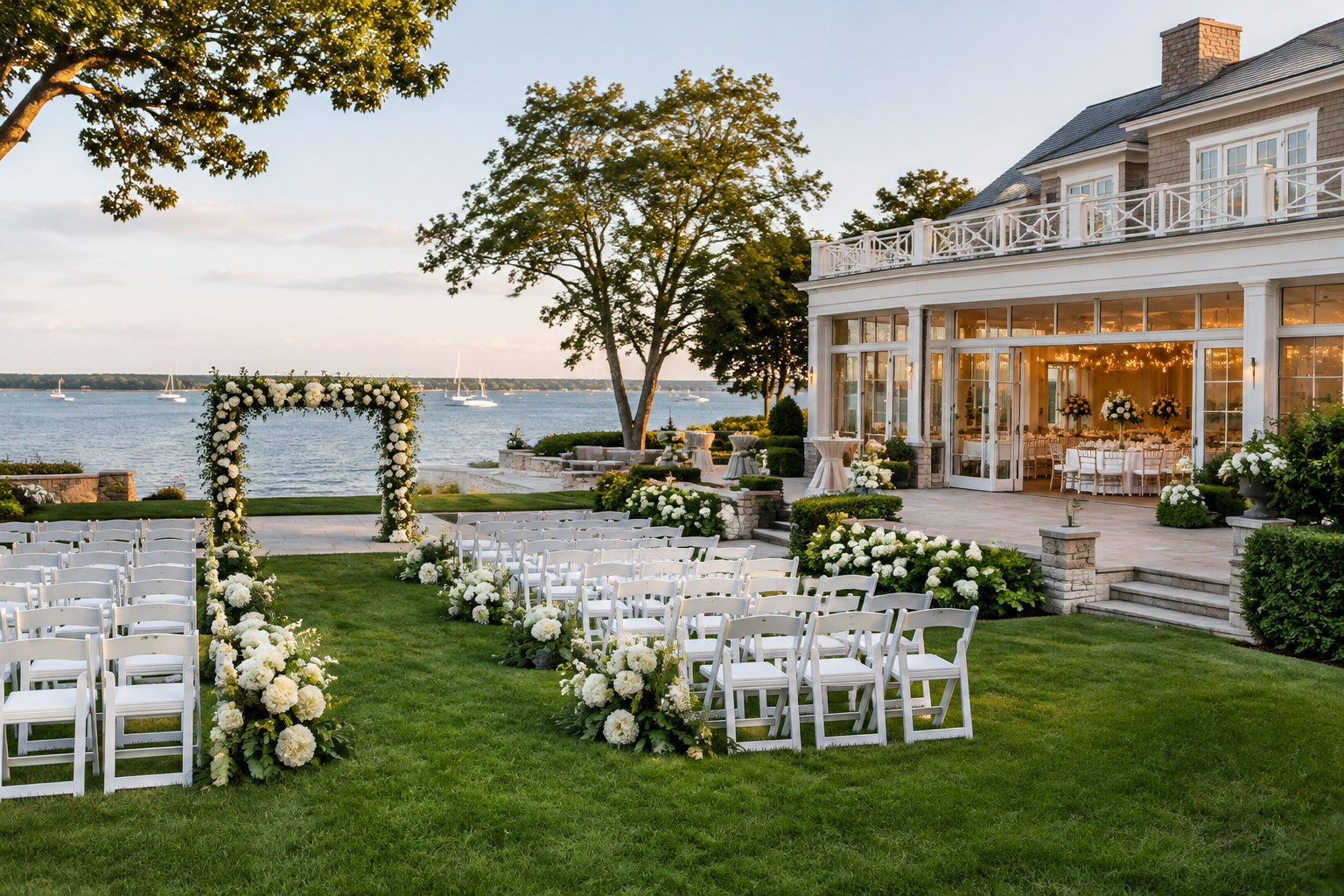
The word “all-inclusive” covers different package levels. One venue may include food, bar service, tables, linens, and staffing, while another adds photography, music, floral design, or a cake.
Ask for a written package and a full estimate before you compare locations. When you are ready to tour, use this guide to all-inclusive wedding venues on Long Island to narrow your search and plan your questions.
What Does an All-Inclusive Package Actually Include?
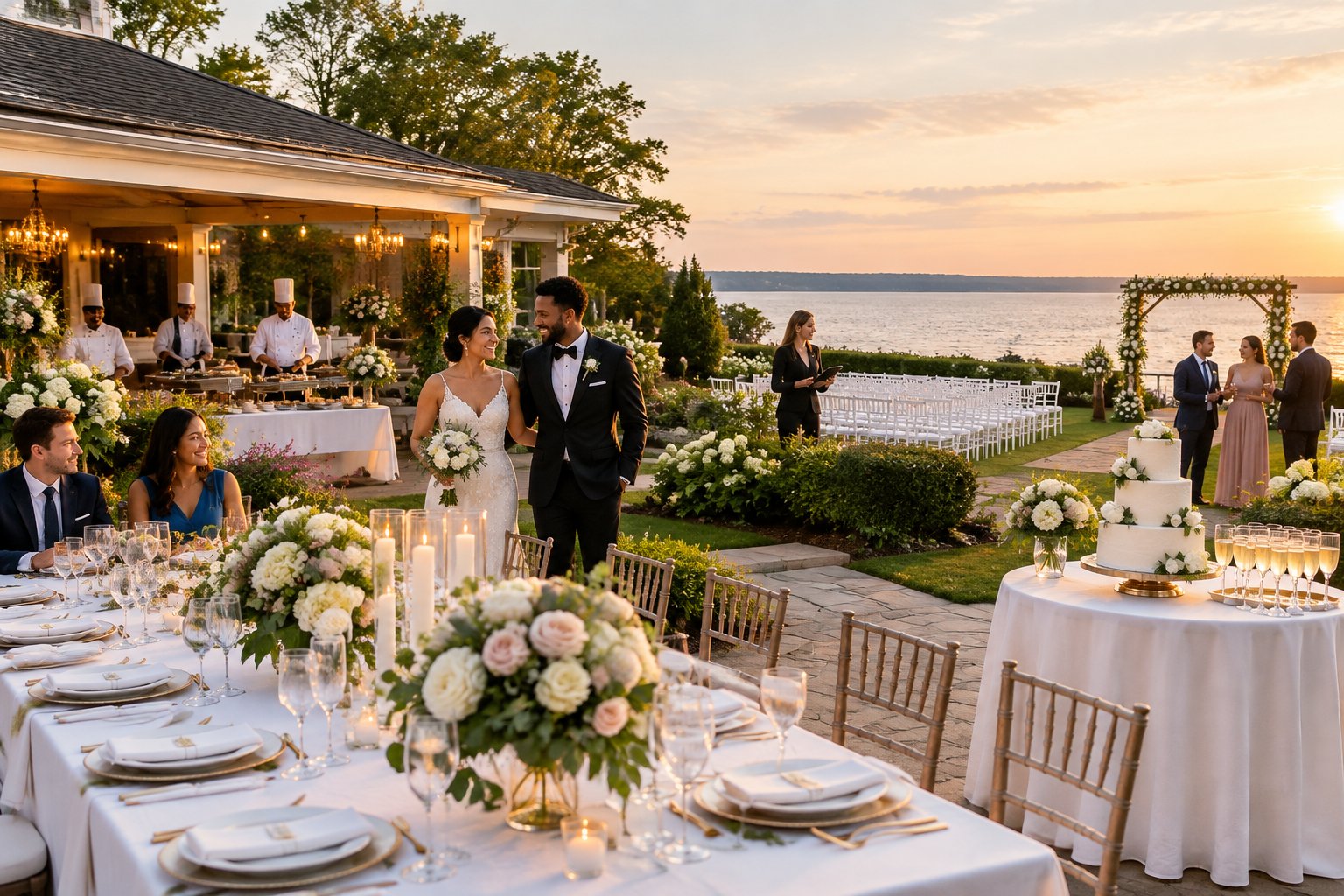
An all-inclusive wedding package brings the main parts of your wedding ceremony and reception into one coordinated agreement, with the exact services set by the venue’s contract. Food, beverage service, rentals, staffing, and event management form the core, while photography, entertainment, and floral work vary by property.
Core Inclusions for the Ceremony and Reception
A strong package may include:
- Ceremony space, reception room, cocktail hour, and dinner service
- In-house catering with a plated, buffet, or family-style menu
- Open bar options, wine service, soft drinks, and coffee
- Tables, chairs, linens, china, glassware, and standard table arrangements
- Bridal suites for getting ready
- A maître d’, bridal attendant, banquet captain, and waitstaff
- Basic setup and cleanup
- Cake cutting, dessert service, and access to a menu tasting
- Event coordination from planning meetings through the wedding day
Some Long Island wedding packages also include floral design, centerpieces, invitations, a DJ, photography, or a wedding cake. Treat each item as a contract detail.
A venue’s phrase “all-inclusive wedding package” does not create the same list of services at every property. Ask whether the package supports cultural traditions and family preferences.
A venue might accommodate a family recipe, specialty menu, or rehearsal dinners through a custom proposal.
What Is Commonly an Upgrade or Separate Expense
Popular upgrades include premium liquor, signature cocktails, extra cocktail hour stations, a Viennese hour, upgraded linens, specialty table arrangements, enhanced floral design, lighting, a photo booth, and extended reception time.
You might also pay separately for:
- Ceremony fees or chair setup
- Overtime for the reception or getting-ready room
- Vendor meals
- Cake or dessert from an outside baker
- Transportation and shuttle service
- Valet parking
- Ceremony musicians, a band, or upgraded DJ coverage
- Photography, videography, invitations, and attire
- Service charges, sales tax, gratuity, and administrative fees
Request a line-by-line estimate that shows the base price, upgrades, taxes, service fees, and payment schedule. This makes a lower starting quote easier to compare with a more complete proposal.
How Preferred Vendors and Flexible Vendor Programs Work
A preferred vendor list gives you approved professionals for photography, entertainment, floral design, rentals, and décor. Venues use these lists to protect service standards and simplify communication on the wedding day.
A flexible vendor program gives you more choice. Confirm whether you can bring your own vendors, whether they must carry liability insurance, and whether an outside-vendor fee applies.
Ask who handles setup, teardown, delivery, and cleanup for each vendor. If the venue requires specific vendors, review their portfolios and contracts before signing.
If you can choose freely, reserve key vendors early because popular Long Island dates fill quickly.
How Much Do Long Island Wedding Packages Cost?
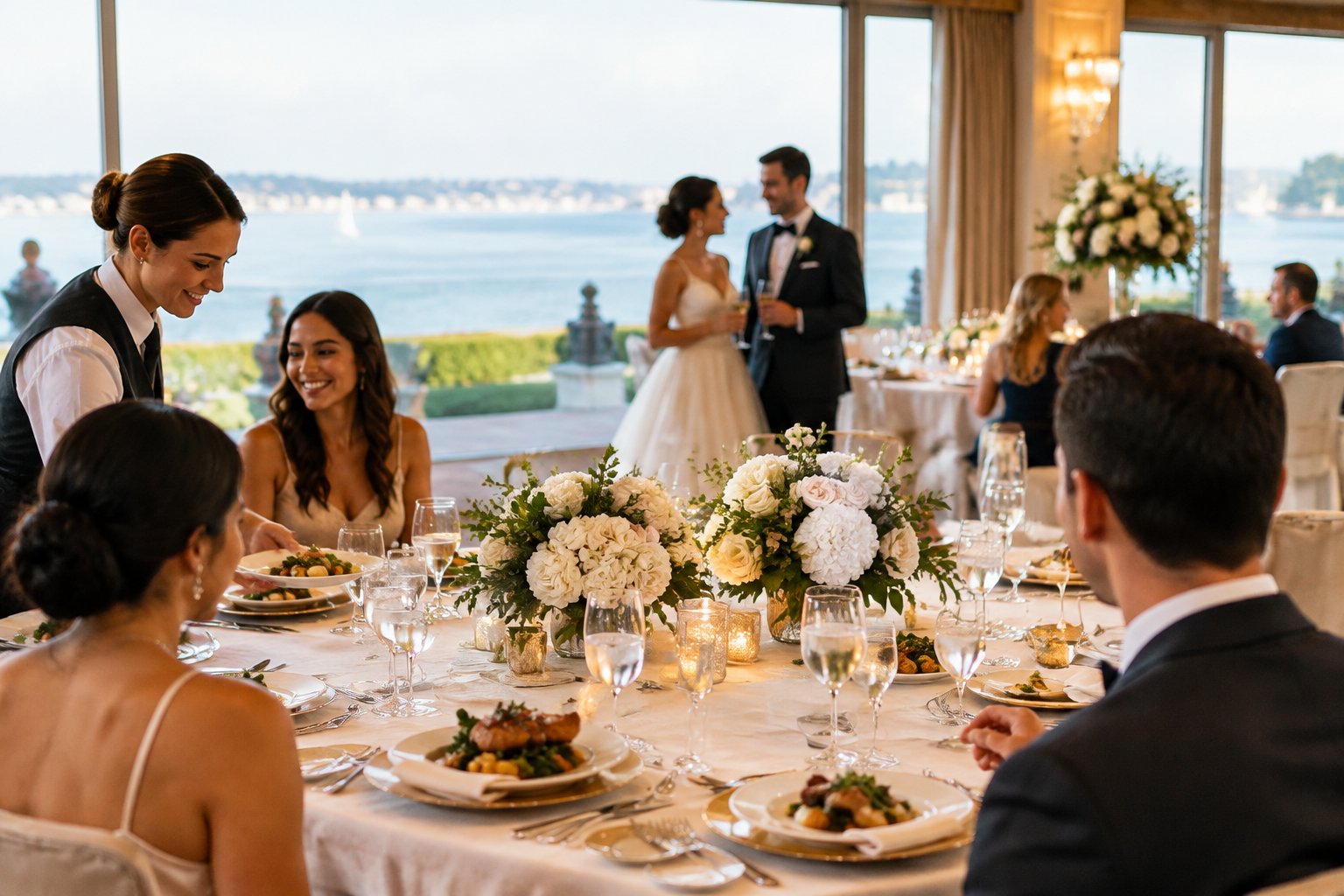
Long Island all-inclusive wedding packages commonly fall around $110 to $165 per person at the value-focused end, while premium dates and luxury properties can exceed that range. Site-fee venues add a separate catering and rental budget, so the same guest count can produce a much higher total.
How Guest Count, Date, and Venue Style Affect the Quote
Guest count drives a per-person proposal. A 150-person reception at $130 per person creates a $19,500 base before tax, gratuity, and add-ons.
Ask about the minimum guest count so you do not pay for unused seats. Saturday weddings in June, September, and October command strong demand, while Friday, Sunday, weekday, and winter dates often provide more pricing flexibility.
A waterfront wedding venue, mansion estate, or exclusive-use property may charge a premium for its setting and privacy. Banquet halls and country clubs often bundle the wedding ceremony, cocktail hour, dinner, bar, and service into a per-person rate.
Estate properties may charge a site fee, then require separate catering, rentals, staffing, and event coordination.
Fees and Contract Terms to Confirm Before Booking
Review these details before you pay a deposit:
- Site fee or per-person minimum
- Ceremony fee and outdoor setup charge
- Sales tax and service charge
- Gratuity recommendations or required gratuity
- Premium bar and specialty food pricing
- Overtime and early-arrival fees
- Vendor meals and outside-vendor charges
- Deposit, installment dates, and final payment deadline
- Cancellation, postponement, and force majeure terms
- Damage deposit, insurance, parking, and cleanup rules
New York sales tax and gratuity can add a significant amount to food and beverage costs. Request the final estimated total, not only the menu rate.
How to Compare Proposals on an Equal Basis
Build one comparison sheet with the same guest count, date, meal format, bar level, ceremony plan, and service hours for every venue. Then place each proposal into these categories:
| Cost category | What to compare |
|---|---|
| Venue | Site fee, room, ceremony space |
| Food | Cocktail hour, entrée, dessert |
| Bar | Beer and wine, standard open bar, premium options |
| Rentals | Tables, chairs, linens, china |
| Staffing | Maître d’, attendants, servers |
| Extras | Floral design, DJ, photo, upgrades |
| Fees | Tax, gratuity, service charges |
A $140 quote with tables, ceremony space, and premium bar may cost less than a $115 quote that excludes those items. Compare the complete wedding-day total and the services attached to it.
Which Setting Fits Your Wedding Vision?
The setting should match your guest experience, photo style, ceremony plan, and preferred level of venue support. Long Island gives you historic estates, waterfront properties, vineyards, gardens, conservatories, country clubs, and classic catering halls.
Mansion Estates and Historic Properties
A mansion wedding venue creates a formal backdrop with grand entrances, historic rooms, landscaped grounds, and portrait locations. Options associated with this style include Oheka Castle, Sands Point Preserve, Bourne Mansion, Westbury Manor, The Mansion at Oyster Bay, The Mansion at West Sayville, The Mansion at Timber Point, and The Mansion at Glen Cove.
These properties suit black-tie weddings, garden ceremonies, and receptions built around architecture. Ask about guest capacity, exclusive use, catering rules, parking, and indoor ceremony space.
Some mansion venues provide all-inclusive coordination, while others work through a site fee and outside catering model.
Waterfront, Beach, and Yacht Club Celebrations
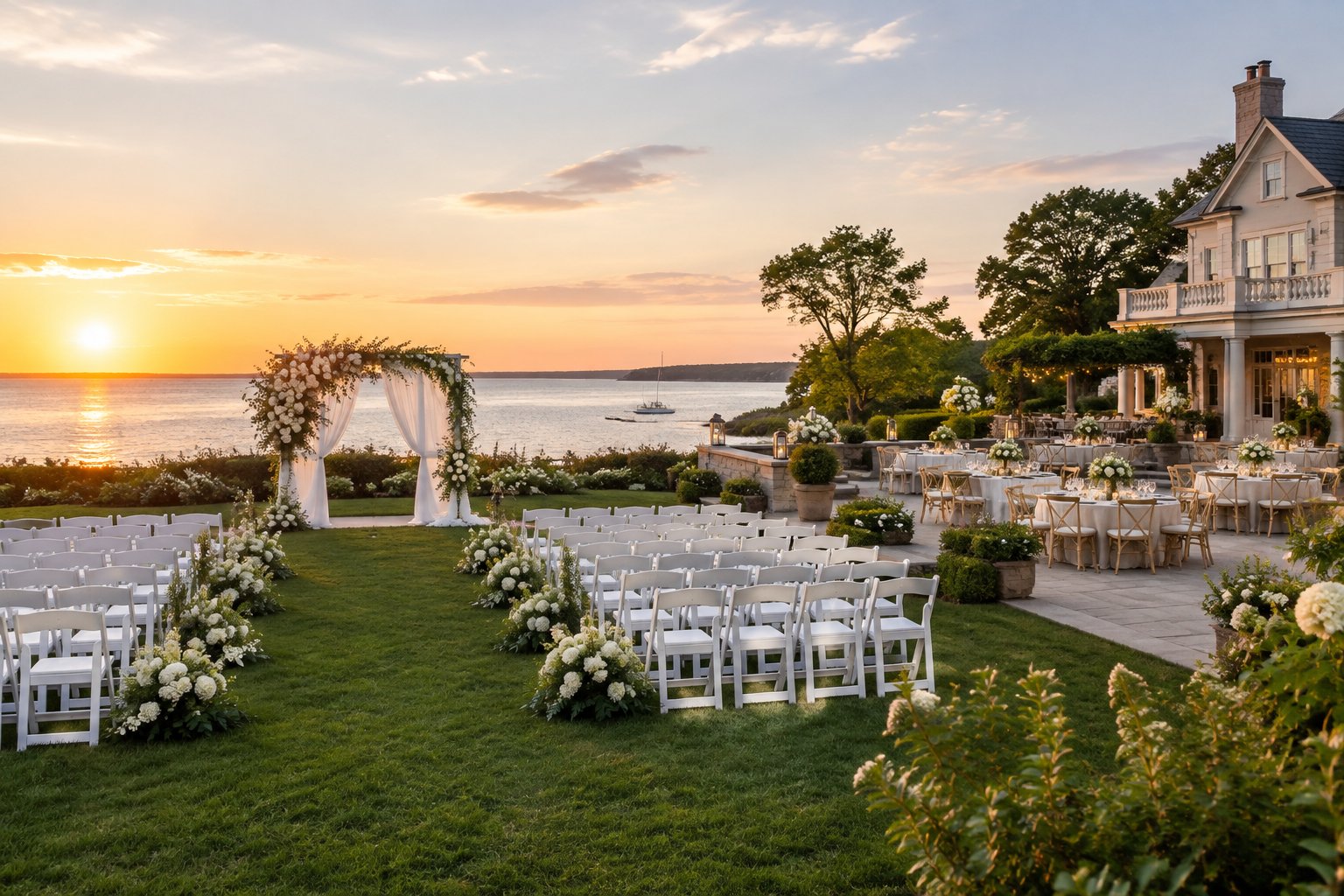
A waterfront wedding venue places your ceremony or reception beside Long Island Sound, the Great South Bay, or Peconic Bay. An oceanfront wedding venue or beach property adds open views, sunset portraits, and a relaxed coastal mood.
Look at The Crescent Beach Club, The Bayview, Swan Club on the Harbor, New York Beach Club, and Peconic Bay Yacht Club for waterside styles. Ask about wind, tides, accessibility, sound limits, and the rain plan.
A gazebo, dock, or lawn may look perfect during a tour, so confirm how the space functions during cocktail hour and guest seating.
Vineyards, Gardens, and Conservatories
A vineyard wedding gives you rows of vines, natural scenery, and a relaxed reception atmosphere. The Vineyard at East Wind combines vineyard character with wedding infrastructure, while gardens and conservatories offer greenery in a controlled setting.
Flowerfield, The Barn at Old Bethpage Village Restoration, and East Wind provide different approaches to garden-centered celebrations. Ask whether the ceremony, cocktail hour, and reception use separate spaces.
Confirm the walking distance, lighting, restroom access, and weather plan for each transition.
Country Clubs and Classic Catering Halls
A country club wedding venue offers established event staffing, dining operations, parking, and indoor reception spaces. Consider The Old Field Club, Nissequogue Golf Club, Stewart Manor Country Club, Heritage Club at Bethpage, and The Old Field Club for classic country-club settings.
Classic banquet halls can support larger guest counts with structured wedding packages and in-house catering. Larkfield, Leonard’s Palazzo, Three Village Inn, and Flowerfield represent the range from formal ballroom receptions to garden-focused celebrations.
Ask how many events take place on the same day and how your guests move between shared areas.
Long Island Venues to Tour by Area and Experience
Tour by geography after you define your guest count and setting preference. Nassau and the North Shore offer convenient estate and harbor options, Suffolk brings waterfront and garden properties, and the North Fork adds vineyard scenery and destination-style amenities.
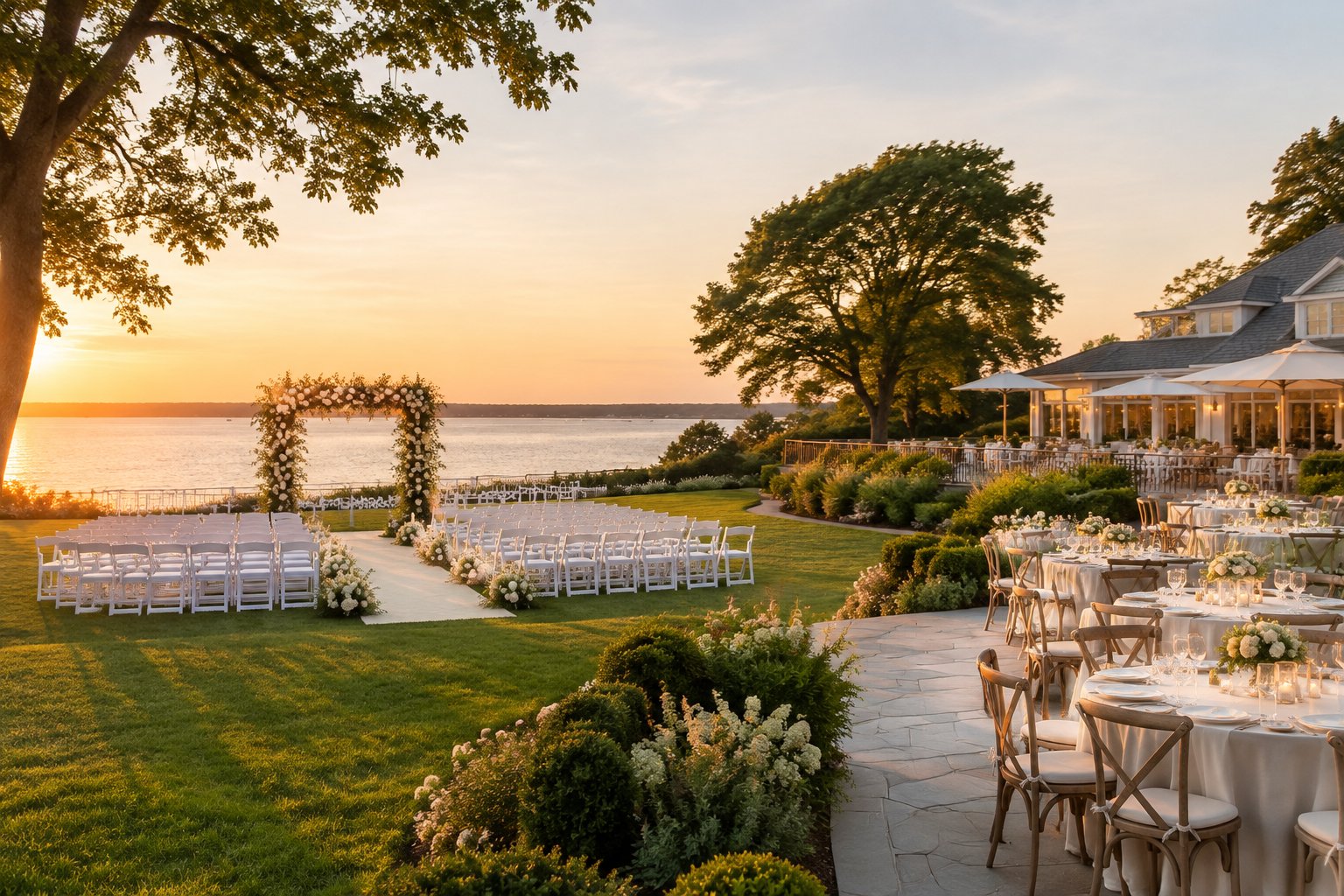
North Shore and Nassau County Options
Nassau and the North Shore work well when guests are traveling from New York City, Queens, or western Long Island. Tour Leonard’s Palazzo, Jericho Terrace, Larkfield, The Inn at New Hyde Park, The Mansion at Oyster Bay, Westbury Manor, Swan Club on the Harbor, Oheka Castle, and The Old Field Club.
These venues cover large ballroom receptions, mansion estates, harbor views, and classic country-club spaces. During each tour, compare parking, hotel access, ceremony locations, and the distance between the getting-ready room and reception space.
Suffolk County Waterfront and South Shore Options
Suffolk County offers coastal properties along the Great South Bay, landscaped estates, and reception venues with strong outdoor access. Sunset Harbour, East Wind, Atlantis Banquets & Events, the Long Island Aquarium, The Mansion at West Sayville, and The Mansion at Timber Point give you distinct guest experiences.
A venue such as Atlantis Banquets & Events can suit a structured reception with package choices. The Long Island Aquarium creates a memorable setting for couples who want marine exhibits as part of the celebration.
Ask about guest flow, photo locations, accessibility, and the timing of outdoor ceremonies.
North Fork and East End Options
The North Fork and East End suit couples who want a vineyard wedding, waterfront gathering, or weekend atmosphere. East Wind in Wading River, NY, offers The Estate, The Inn, The Vineyard, and The Veranda, along with guest rooms and on-site amenities.
The Vineyard at East Wind and Peconic Bay Yacht Club bring wine-country and coastal character to the planning process. Ask about lodging blocks, guest transportation, seasonal traffic, vendor access, and rehearsal plans.
A North Fork venue can feel like a destination for guests even when the wedding remains within New York.
What Should You Ask During a Venue Tour?
Ask for a complete wedding-day timeline, a written package, and a clear weather plan during every venue tour. The answers should cover ceremony logistics, reception service, staffing, food, décor, accessibility, and every fee attached to your date.
Can the Property Host Your Full Wedding-Day Timeline?
Ask when you can enter the bridal suites, how long vendors have for setup, and whether the wedding ceremony and cocktail hour can happen on the same property. Confirm the transition time between the ceremony, portraits, cocktail hour, and wedding reception.
Check the ceremony capacity, aisle layout, guest seating, sound access, and restroom distance. If you want a gazebo, gardens, or conservatory, ask whether those spaces are included in the package and how long you have access to them.
What Is the Indoor Backup Plan for Bad Weather?
Request a tour of the exact backup room, not a general promise of indoor space. Ask how the room will hold ceremony seating, cocktail hour stations, dinner tables, and dancing.
Confirm the decision deadline for moving indoors and who makes the call. Ask how the venue handles rain, high wind, heat, and severe weather.
Review the backup layout in writing so you know where guests, vendors, and décor will go.
Who Will Manage the Details on the Day?
Ask who serves as your maître d’ and bridal attendant, when you will meet them, and how many events they manage at once. Confirm who cues the ceremony, moves personal items, checks vendors, handles late deliveries, and manages the timeline.
Ask whether the venue staff sets out favors, signs, family displays, table arrangements, and personal décor. Confirm who removes those items and when your vendors can collect them.
If you plan rehearsal dinners, ask whether the venue offers a private space and separate menu.
How to Evaluate Food, Bar, and Guest Experience
Request a sample menu, tasting schedule, portion details, and the price for upgrades. Ask how the in-house catering team handles allergies, vegetarian meals, cultural dishes, children’s meals, and a family recipe.
Clarify the bar brands, service hours, signature drinks, champagne pour, and late-night refreshments. If steak is part of the menu, ask how the kitchen handles preferred doneness for a large reception.
Check table spacing, acoustics, lighting, air conditioning, coat storage, restroom access, parking, and accessibility. These details shape your guests’ comfort throughout the celebration.
When Does a New York Destination Wedding Make More Sense?
A New York destination wedding makes sense when the celebration benefits from hotel rooms, a full weekend itinerary, or a setting that draws guests beyond Long Island. Manhattan, the Hudson Valley, and Upstate New York offer strong choices for couples who value a travel experience alongside the wedding.
Nearby City, Hudson Valley, and Upstate Alternatives
Manhattan options include Andaz 5th Avenue, InterContinental New York Barclay, Millennium Hilton New York One UN Plaza, The Bryant Park Hotel, Hotel Seville NoMad, and Fifth Avenue Presbyterian Church. You can pair a city ceremony with a reception at One If By Land, Two If By Sea, Maxwell Social, or another nearby event space.
The Hudson Valley brings estate scenery and countryside settings through Whitby Castle, Barcelona Lakeside, The Fern Lodge, Treleaven Wines, and The Chapel Restoration.
Upstate choices include Buffalo Niagara Heritage Village, DePenne Resort, Breezy Hill Inn, Mansion on Delaware Avenue, Mirbeau Inn & Spa, The Lake House on Canandaigua, Woodcliff Hotel & Spa, Greek Peak Mountain Resort, The Otesaga Resort Hotel, The Thayer Hotel, Turning Stone Resort Casino, and Altamura Center for the Arts.
Smooth Sailing Celebrations and Francesca’s Touch of Class can help shape a destination-style event, while local properties such as DePenne Resort offer a different pace and setting.
How to Weigh Travel and Overnight Logistics
Count travel time from major airports, train stations, and highways. Then price guest rooms, shuttle service, parking, welcome events, rehearsal dinners, and post-wedding transportation.
Ask whether guests can stay on-site, whether room blocks have pickup requirements, and how far hotels sit from the ceremony and reception. Check the schedule for traffic, seasonal road congestion, and holiday demand.
Use your guest list to guide the decision. A nearby Long Island venue keeps travel easier for local families. A city or upstate destination works well when guests welcome a weekend gathering and the property can keep lodging, meals, and activities close together.