
All-Inclusive Wedding Venues Near the Beach: A Guide
A beach wedding gives you a beautiful setting, while an all-inclusive wedding venue brings the planning into one organized package. You can exchange vows near the water, host your reception in the same area, and let the venue team coordinate many of the details between those moments.
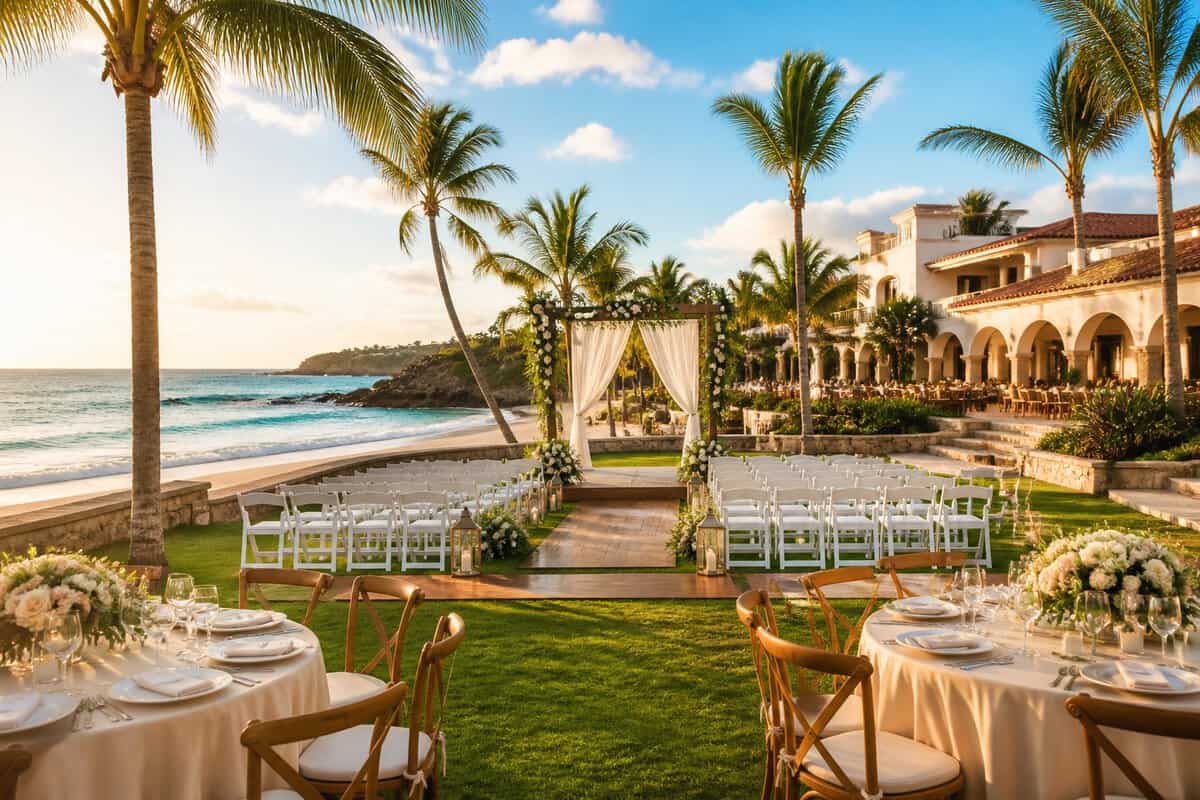
The best package gives you a clear price, a dependable ceremony site, a comfortable reception space, and a named contact who manages the wedding day details. You also need to check what the package leaves out, including photography, permits, guest lodging, transportation, and service fees.
Whether you want a local coastal celebration or a destination wedding, compare each venue by its location, guest experience, weather plan, and contract terms. Browse beach wedding ideas for inspiration, then contact your preferred venues to request current menus, package sheets, and available dates.
What Does All-Inclusive Mean at a Beach Venue?
An all-inclusive beach venue bundles core wedding services into one package and one planning process. Your agreement may cover the ceremony site, reception space, tables, chairs, linens, catering and bar, basic décor, and a wedding coordinator.
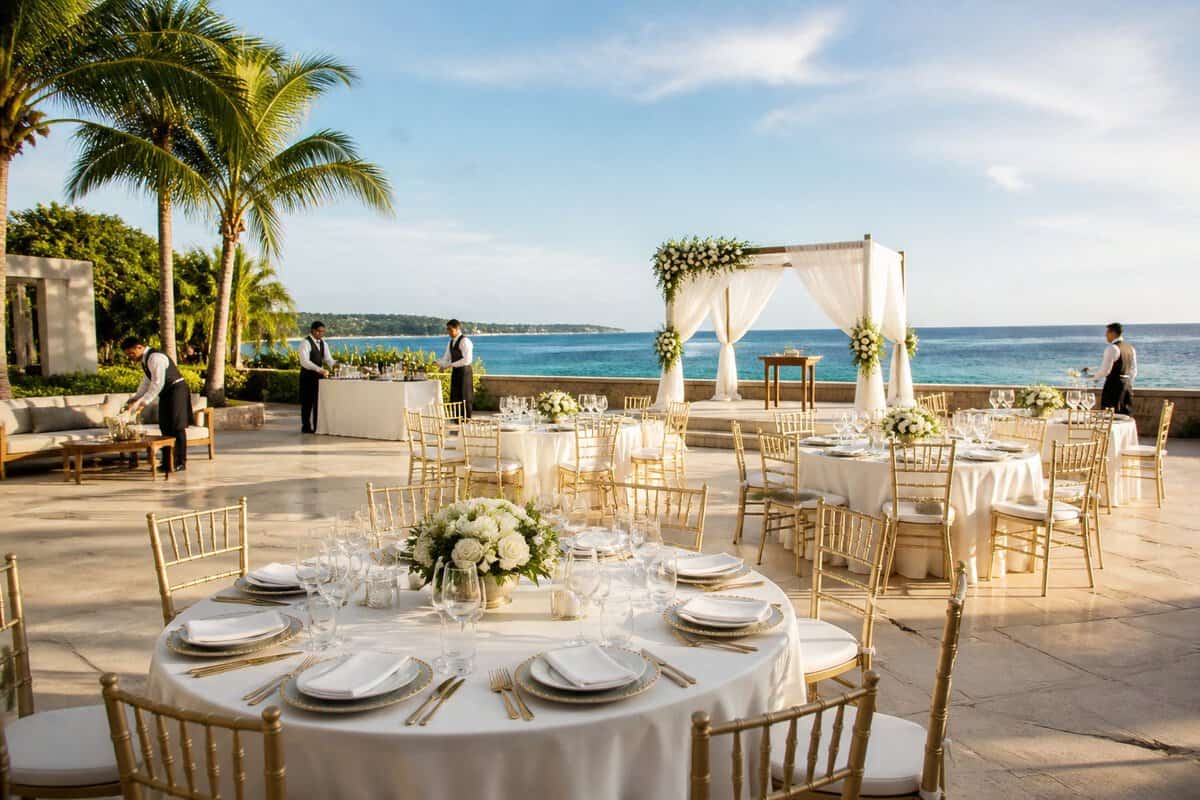
Package names carry different meanings from one beach resort or local venue to another. Read the inclusions line by line, then ask for a complete estimate that includes taxes, service charges, permits, and upgrades.
What Is Usually Included in a Wedding Package?
A wedding package often includes:
- Use of the ceremony site and reception space
- Guest tables, ceremony chairs, dining chairs, linens, and basic place settings
- A set menu or buffet with selected beverages
- Beer, wine, a house bar, or a sparkling wine toast
- Basic centerpieces, ceremony décor, and a wedding cake
- Setup and cleanup
- A wedding coordinator for scheduling and vendor communication
- Sound equipment for the ceremony or reception
A resort package may also include a room block, welcome event, rehearsal space, or meals for the couple. Ask whether the coordinator provides full wedding planning or only manages the venue’s services.
What May Cost Extra Despite the Package Name?
Common add-ons include upgraded spirits, specialty cocktails, premium menu selections, extra reception hours, specialty lighting, larger floral arrangements, photography, videography, live music, and a DJ. Hair and makeup, transportation, guest excursions, favors, and welcome bags also sit outside many packages.
Public beaches may require permits, insurance, cleanup deposits, or parking fees. A private resort may charge for outside vendors, corkage, cake-cutting, late-night food, or room upgrades. Request an itemized quote before you compare venues.
Why Package Details Differ Between Resorts and Local Venues
A beach resort combines lodging, food service, guest activities, and wedding coordination on one property. A local all-inclusive wedding venue may focus on the event itself and work with nearby hotels, rental companies, and transportation providers.
Resort packages often price per guest and connect wedding costs to room nights. Local venues may charge a site fee, food-and-beverage minimum, and separate rates for rentals or services. Ask how each venue handles guest lodging, beach access, setup time, and weather changes.
How Much Do Beach Wedding Packages Cost?
Beach wedding packages often range from about $9,000 to $50,000, with guest count, location, season, and service level driving the final price. Local celebrations may fall near $10,000 to $15,000, while destination weddings frequently reach $30,000 to $35,000 before travel costs.
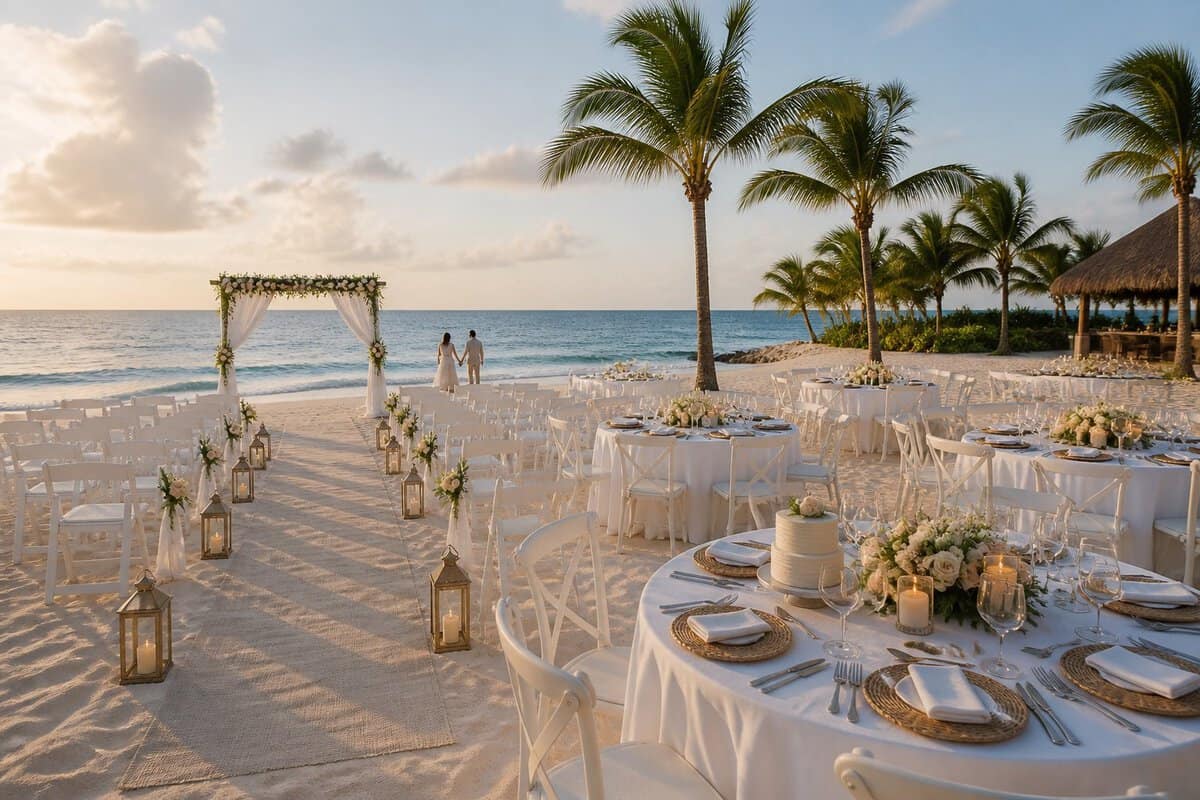
A package price becomes useful only when you know what it includes. Compare the same guest count, menu level, bar service, rental period, and tax treatment for every venue.
Understanding Venue Rental Costs and Food-and-Beverage Minimums
Venue rental costs cover access to the ceremony area, reception room or terrace, restrooms, basic furniture, and the time reserved for your event. Some venues include this fee in a package, while others list it separately.
A food-and-beverage minimum requires you to spend a set amount on meals and drinks. Ask whether the minimum includes tax, service charges, children’s meals, vendor meals, cocktail hour, and late-night snacks. A lower site fee can still lead to a higher total when the minimum is large.
Comparing Intimate, Mid-Size, and Large Celebrations
An intimate wedding with 20 to 50 guests may fit a private terrace, garden, or small beach area. A mid-size celebration with 60 to 120 guests needs clear guest flow between the ceremony, cocktail hour, dinner, and dancing.
A large event requires wider access paths, more restrooms, stronger power service, and a detailed sound plan. Ask each venue for a sample estimate at your expected guest count.
Include the wedding cake, sparkling wine toast, bar hours, rentals, coordinator fee, and overtime so the quotes use the same assumptions.
Budget Items Couples Commonly Miss
Build room in your budget for:
- Beach permits and event insurance
- Transportation and guest lodging
- Photography, videography, and content creation
- Attire alterations, beauty services, and wedding party flowers
- Ceremony musicians, reception entertainment, and sound equipment
- Welcome events, rehearsal meals, favors, and guest activities
- Taxes, gratuities, service charges, overtime, and currency exchange
Use a detailed wedding budget worksheet, and keep a separate line for optional upgrades. You can also compare cheap wedding venue ideas when the venue fee is taking too much of your budget.
Best Coastal Regions to Consider
The best coastal region depends on your guest travel needs, preferred climate, legal requirements, and desired level of resort service. Southern California offers familiar domestic travel, Mexico and the Caribbean Sea create a tropical destination feel, Florida reaches both the Gulf and Atlantic coasts, and Hawaii provides an island setting with strong resort support.

Review flight access, hurricane or storm seasons, local permits, and lodging before you fall in love with a venue’s photos. A beautiful location works best when your guests can reach it comfortably and stay within their budgets.
Southern California: San Diego to Santa Barbara
Southern California offers a wide range of wedding venues along the Pacific. San Diego provides resort hotels, beachfront restaurants, and waterfront estates. Del Mar brings a relaxed coastal style, while Laguna Beach, Newport Beach, and Huntington Beach offer beaches, terraces, and private event spaces.
Santa Barbara suits couples who want Spanish-style architecture, manicured grounds, and ocean views. Ask about marine-layer fog, parking, public beach access, noise rules, and sunset timing. The region’s domestic travel network also helps guests avoid passport planning.
Mexico: Cancun, Los Cabos, and Cabo San Lucas
Cancun places you beside the Caribbean Sea with large resorts, broad beaches, and room blocks designed for destination weddings. Los Cabos and Cabo San Lucas offer desert landscapes, dramatic coastlines, and sunset venues.
Ask about travel transfers, resort credits, outside vendors, legal ceremony requirements, and backup spaces. Confirm whether your package price is in U.S. dollars and whether guest room nights affect your wedding rate.
Florida and the Atlantic Coast
Florida offers many options, from the Florida Keys and Miami Beach to quieter coastal towns. The Florida Keys suit intimate celebrations with a tropical feel, while Miami Beach supports larger events with hotels, restaurants, and nightlife.
Virginia Beach provides Atlantic Ocean venues with broad guest access and a range of local lodging. Delaware also offers coastal settings for couples who want a domestic beach wedding without a tropical resort format.
Check tide patterns, seasonal storms, public beach rules, parking, and noise limits for every Atlantic location.
Hawaii and Other Island Settings
Kaneohe and other areas of Hawaii provide mountain-and-ocean views, lush gardens, and resort venues. Island weddings create a strong destination experience, though flights, shipping, guest lodging, and vendor travel can raise the total cost.
Compare ceremony access, local marriage rules, rain plans, and reception hours. For additional destination inspiration, explore best wedding beaches before narrowing your venue search.
Choosing the Right Setting for Your Celebration
Choose a setting that supports your guest count, ceremony style, reception layout, and weather plan. A marina works well for boat views and sheltered waterfront access, while a beach resort simplifies lodging and guest activities.
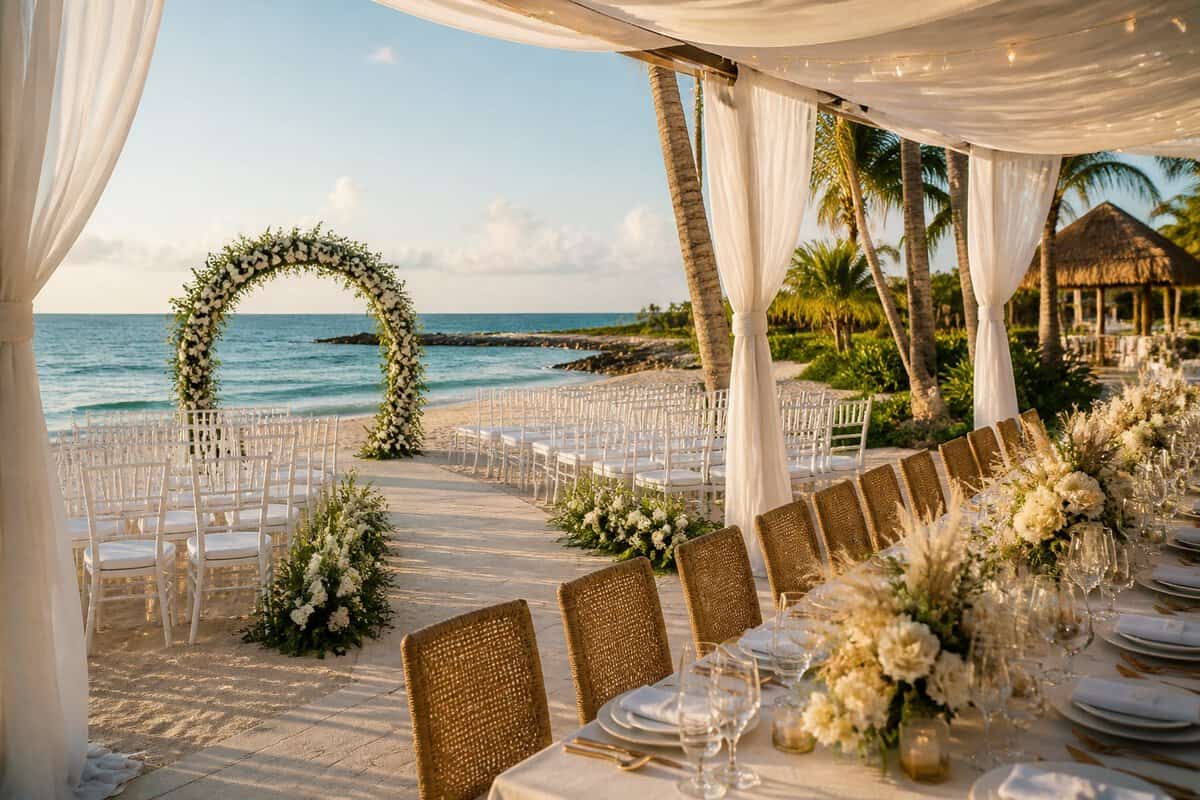
Walk through the property in the order your guests will experience it. Note the distance from parking or rooms to the ceremony site, the path to the reception space, restroom access, shade, lighting, and surfaces that remain easy to use in formal shoes.
Resort, Marina, or Waterfront Estate?
A beach resort offers on-site rooms, food service, recreation, and a dedicated wedding team. It suits destination weddings where many guests need lodging and shared activities.
A marina gives you docks, boats, and views across the bay. Ask about engine noise, public access, wind exposure, and the location of restrooms. A waterfront estate offers more privacy and design freedom, though you may need to arrange rentals, catering, staffing, transportation, and cleanup separately.
Sand Ceremony or Ocean-View Terrace?
A sand ceremony places you close to the water and creates a relaxed coastal experience. Choose firm sand, a clear guest path, shade for older relatives, and a backup area within easy reach.
An ocean-view terrace gives you a stable surface, defined seating, controlled lighting, and easier dinner service. You can still keep the beach atmosphere through ocean-facing vows, coastal flowers, natural textures, and sunset portraits.
How Many Guests Can the Space Comfortably Host?
Capacity should account for the full layout, not only the number of chairs. Your venue needs space for an aisle, ceremony seating, cocktail tables, buffet or plated service, a dance floor, a bar, entertainment equipment, and accessible routes.
Ask for a scaled floor plan at your guest count. Confirm the maximum seated capacity, reception-only capacity, rain-plan capacity, and rules for children, vendors, and mobility devices. Smaller celebrations may benefit from these tips for choosing the perfect venue for a small wedding.
Notable Venue Types and Location Examples
Notable coastal choices include private event properties, resort terraces, waterfront restaurants, marinas, and beach clubs. Your best match will reflect your guest list, desired privacy, travel plans, and preference for a full-service package.
Examples such as Occasions at Laguna Village can guide your research in Orange County, while Monterey Beach Station represents a Central Coast setting. Treat each name as a starting point for current availability, pricing, and package details.
Orange County and Laguna Beach Options
Laguna Beach offers dramatic coastal views, arts-focused surroundings, and intimate event spaces. Occasions at Laguna Village may appeal to couples seeking a polished local venue with a distinct Orange County setting.
Newport Beach and Huntington Beach provide wider venue choices, including waterfront hotels, restaurants, private clubs, and spaces near the sand. Ask about beach access, sunset visibility, parking, nearby lodging, and whether the reception remains private during public beach hours.
San Diego and Del Mar Waterfront Celebrations
San Diego supports resort weddings, harbor celebrations, beachfront restaurants, and private estates. Del Mar brings a smaller coastal atmosphere with ocean views and access to hotels, dining, and scenic photo locations.
Check city permits, trolley or shuttle access, noise limits, and the plan for guests who need step-free routes. A full-service venue can reduce vendor coordination when the ceremony, meal, bar, and cleanup remain under one team.
Monterey and Central Coast Settings
Monterey offers rocky shoreline views, coastal gardens, historic properties, and venues near Cannery Row. Monterey Beach Station can suit couples who want a recognizable seaside setting with nearby guest services.
Central Coast weather can shift during the day, so ask about wind, fog, heaters, tent rules, and indoor capacity. Confirm how far guests must walk between the ceremony and reception areas.
Destination Resort Choices
Cancun and Cabo San Lucas offer large resort campuses with room blocks, restaurants, beach ceremony areas, and dedicated wedding teams. These settings simplify guest logistics when most attendees stay on the property.
Review legal ceremony options, symbolic ceremony requirements, travel transfers, outside vendor rules, and cancellation terms. Ask for a current package in writing, since resort inclusions and seasonal rates change.
Questions to Ask Before You Sign a Contract
Ask specific contract questions about weather, guest logistics, fees, permits, and the services assigned to your wedding coordinator. A clear agreement should state what your all-inclusive wedding venue provides, who performs each task, and how venue rental costs change when plans change.
Bring your guest estimate, preferred date, ceremony style, and reception needs to the consultation. Request answers in writing and save the package version attached to your contract.
What Is the Rain and Wind Backup Plan?
Ask where the ceremony and reception move, how quickly the change happens, and whether the backup space holds your full layout.
Confirm whether tents, heaters, flooring, fans, umbrellas, or extra staffing cost more. Ask about wind limits for arches, candles, hanging décor, and beach furniture.
Find out who makes the weather call and when guests receive the update.
Are Lodging, Transportation, and Guest Logistics Covered?
Confirm whether guest rooms are reserved through a room block, whether the couple receives a room benefit, and whether guests must meet a minimum number of nights.
Ask about airport transfers, parking, shuttles, accessibility, late arrivals, and rehearsal or welcome events.
Destination wedding contracts should also explain cancellation dates, room release deadlines, guest payment terms, and what happens when a guest cancels. A named coordinator should manage the timeline and provide one reliable contact for guest questions.
Which Fees, Permits, and Service Charges Apply?
Request a full cost sheet covering the site fee, catering, bar, rentals, cake, toast, staffing, setup, cleanup, taxes, gratuities, service charges, overtime, and payment processing. Ask whether the venue handles beach permits and event insurance or expects you to arrange them.
Check outside-vendor rules, corkage, cake-cutting, vendor meals, décor installation, power, parking, and damage deposits. Before signing, compare the final estimate with the package description and mark every promised inclusion in the contract.