
All-Inclusive Wedding Venues New Orleans: Packages and Costs
New Orleans gives you a strong choice of all-inclusive wedding venues, especially if you want one team to coordinate the ceremony, reception, food, bar, décor, cake, music, and key logistics. For couples seeking a smaller destination wedding with clear pricing, Baroness at 512 Conti is a strong fit because its published packages include a three-hour reception, ceremony officiant, cuisine, premium bar, cake, décor, DJ, photography, staffing, and tax and gratuity for up to 75 guests.
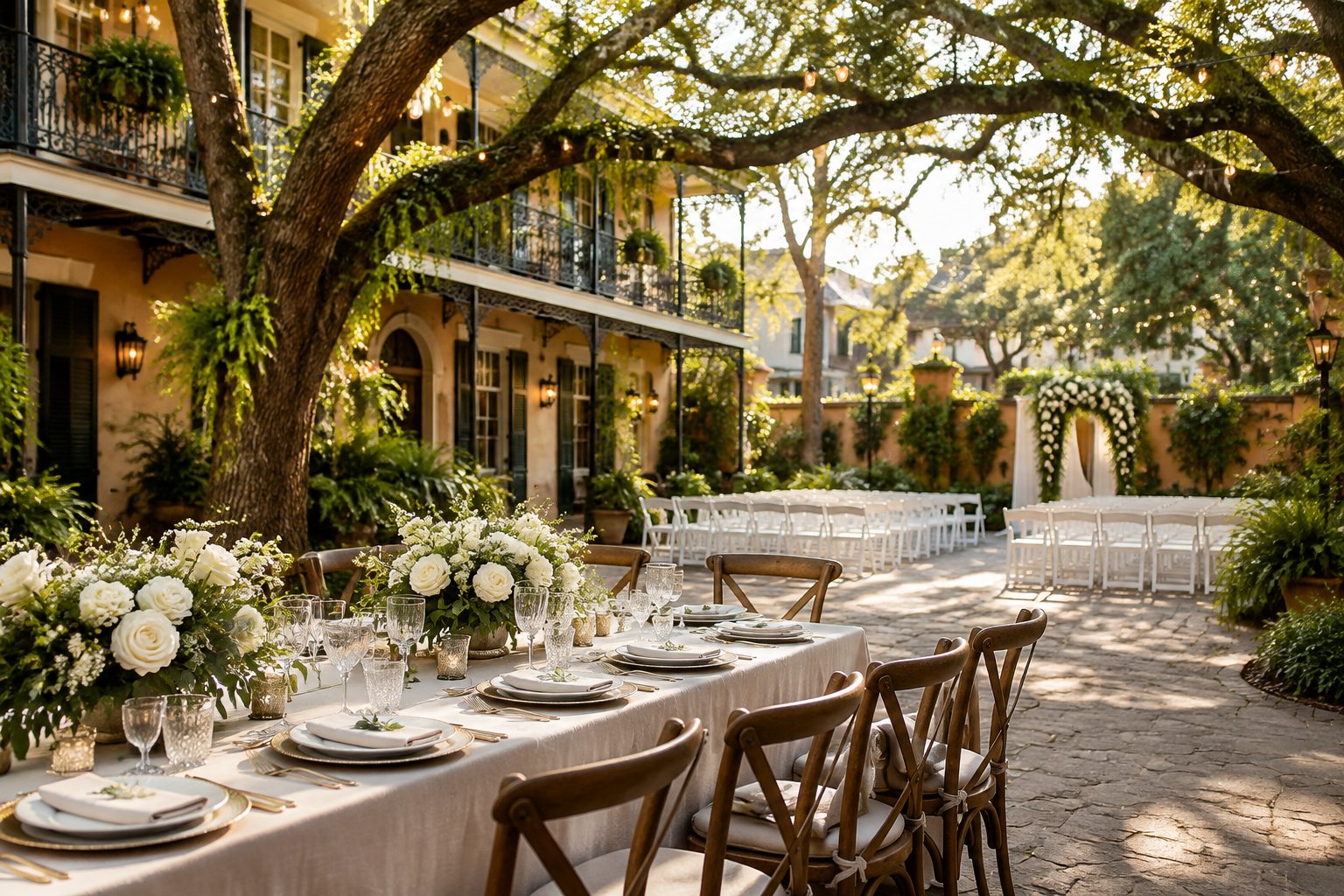
Published package prices give you a useful starting point. Baroness lists $15,800 for up to 50 guests and $17,800 for 51 to 75 guests, with tax, service charges, and gratuity included.
Larger celebrations can reach much higher totals, especially when you add guest meals, expanded bar service, photography, entertainment, florals, transportation, and a second-line parade.
You can compare all-inclusive wedding venues in New Orleans by guest count, setting, package coverage, and contract terms. If you are planning a destination wedding in Louisiana, request an itemized proposal before you reserve your date.
What Does an All-Inclusive Package Actually Include?
An all-inclusive wedding package usually combines venue rental, ceremony and reception space, food, drinks, staffing, and selected vendors into one contract. The exact coverage depends on the venue, guest count, event length, and package level.
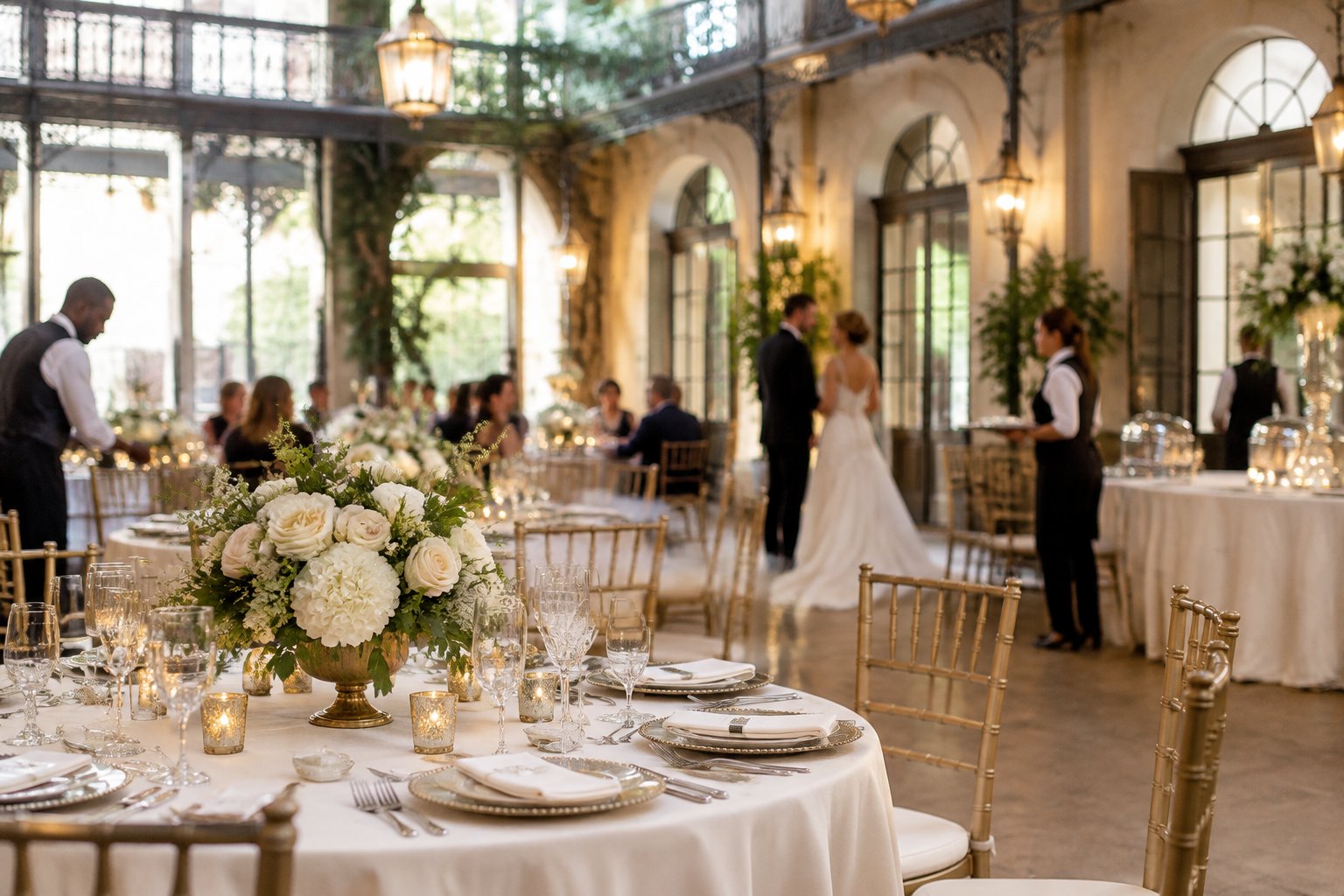
A package can reduce the number of separate contracts you manage, yet the word “all-inclusive” still requires careful review. Ask for the menu, bar list, décor inventory, service hours, vendor names, overtime rates, and every fee in writing.
Venue Rental, Ceremony Setup, and Reception Essentials
Venue rental covers access to the event space for a stated period. Confirm whether setup and cleanup time fall inside that window.
Ceremony coverage can include an officiant, chairs, an altar arrangement, rehearsal coordination, and use of the ceremony site. Reception essentials may include tables, chairs, linens, china, flatware, glassware, staffing, lighting, and a private room or courtyard.
Check whether the ceremony and reception can happen in the same location. A room flip between events can affect timing, staffing, and cost.
Catering, Passed Hors d’oeuvres, and an Open Bar
Catering may use a seated dinner, buffet, food stations, or a cocktail-style format. New Orleans menus often feature local touches such as gumbo, carving stations, seafood, mini muffulettas, or bananas foster.
Passed hors d’oeuvres should be listed by selection, service period, and quantity. Ask whether they are unlimited or limited to a set number per guest.
Open bar coverage needs equal detail. Confirm the brands, beer and wine choices, cocktails, champagne service, mixers, bartenders, glassware, and last-call time. Ask whether premium spirits are included or priced as an upgrade.
Wedding Cake, Décor, Entertainment, and Coordination
A wedding cake package may include a custom design consultation, specific tiers, selected flavors, delivery, cutting, and dessert service. Verify the cost of extra tiers or specialty flavors.
Décor can include centerpieces, candles, linens, ceremony flowers, a bridal bouquet, boutonnieres, an arch, or personalized signage. Inventory limits and seasonal flower substitutions should appear in the proposal.
Entertainment ranges from a DJ and sound system to live jazz, a brass band, or a second-line experience. Coordination may cover planning meetings, rehearsal support, vendor arrivals, timeline management, and cleanup.
What Is Commonly Excluded From Wedding Packages?
Common separate expenses include attire, hair and makeup, guest lodging, transportation, invitations, favors, rehearsal dinner costs, videography, upgraded floral designs, and personal décor.
A second line may also require separate permits, police escorts, band fees, and coordination. Ask whether photography includes digital files, editing, print rights, and a set number of coverage hours. These details can change the value of an attractive package.
How Much Should You Budget for a Bundled New Orleans Wedding?
A bundled New Orleans wedding can range from about $11,000 for a small 50-guest package to $30,000 or more for a 200-guest venue-and-food package, while a full wedding budget reaches higher after photography, attire, flowers, music, and travel.
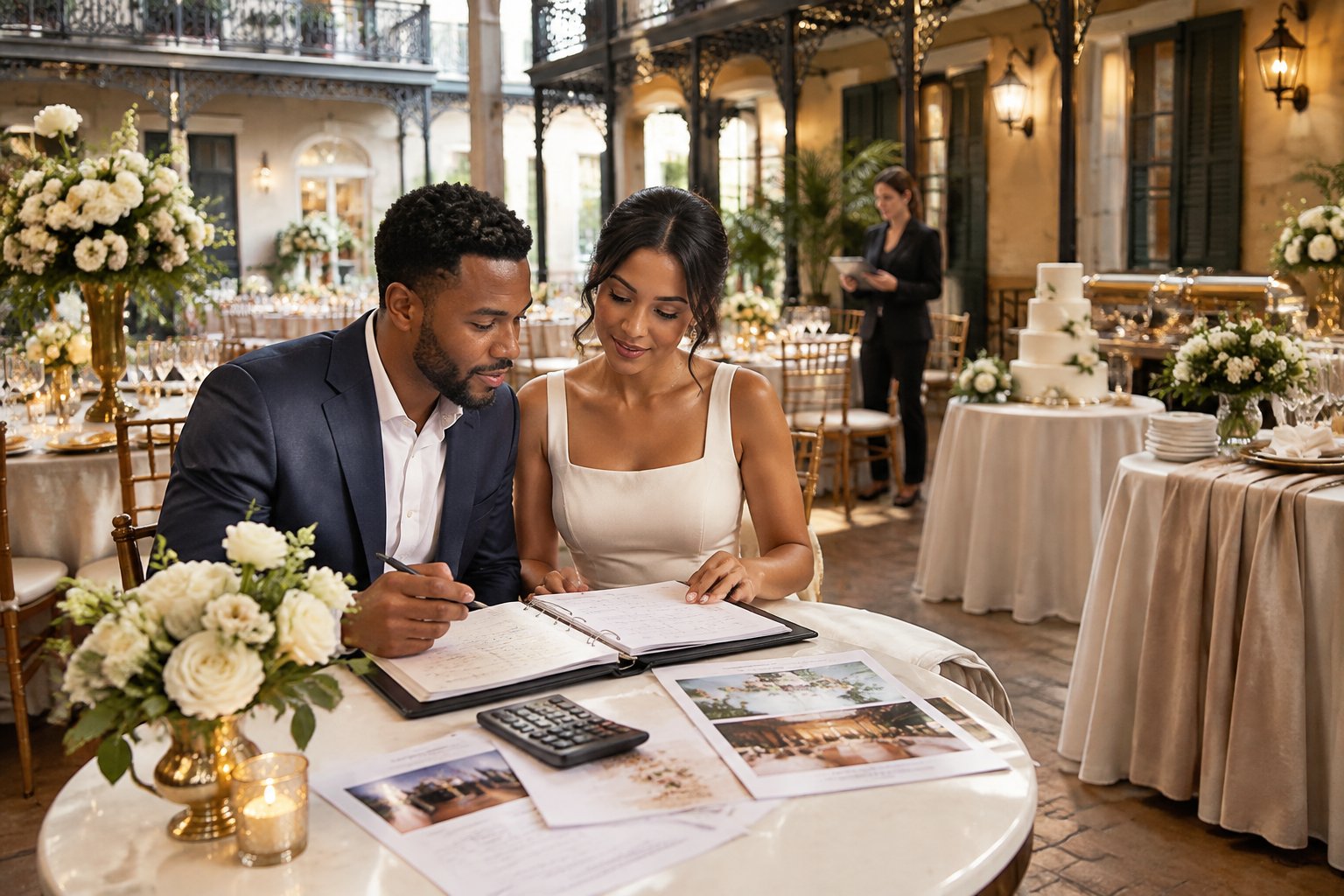
For a broader planning target, local estimates place many 100-guest weddings around $40,000 to $50,000, with larger or more elaborate celebrations rising quickly. Use package pricing as one part of your wedding budget, then add costs that sit outside the venue contract.
Per-Person Pricing vs. Flat-Rate Packages
Per-person pricing connects food, beverages, staffing, and sometimes rentals to your guest count. It helps you see how each additional guest affects the bill.
Flat-rate packages offer a set price for a stated guest range. Baroness, for example, publishes one price for up to 50 guests and another for 51 to 75 guests. A flat rate can make planning easier when you know your guest list, though you should ask how the price changes when you cross the stated limit.
Compare both formats using the same guest count. Request the total for 50, 75, 100, and 150 guests when those capacities are available.
How Guest Count, Date, and Service Hours Change the Cost
Guest count affects meals, drinks, staffing, rentals, cake size, and table arrangements. Date selection also influences demand. Saturday evenings during popular spring and fall periods often carry higher minimums than Friday, Sunday, or off-season dates.
Service hours shape the final invoice through venue access, bar duration, DJ time, overtime, and late-night food. A package with three reception hours needs a separate quote if you want a longer celebration.
Festival weekends, major city events, and high-demand hotel periods can also raise lodging and transportation costs for a destination wedding.
Service Charges, Taxes, and Other Fees to Confirm
Ask whether the quoted price includes sales tax, service charges, gratuity, security, insurance, cake cutting, corkage, setup, cleanup, and overtime. Some venues include these items in a package; others add them after the menu and rental costs.
Confirm payment dates, deposit rules, cancellation terms, postponement policies, and refund conditions. Ask how guest-count changes affect the final payment and when the venue locks your headcount.
Building a Realistic Wedding Budget
Start with your maximum budget and a lower planning target. Reserve a contingency amount for weather changes, guest-count increases, last-minute rentals, and transportation.
A destination wedding checklist should include flights, hotel rooms, airport transfers, welcome events, local activities, and marriage license costs. Keep venue costs, personal wedding expenses, and guest travel in separate columns so the package price does not hide the full event cost.
Which Setting Matches Your Celebration Style?
Choose the setting that fits your guest count, weather plan, and desired mood, then confirm that its package supports both your ceremony and reception needs. New Orleans offers formal ballrooms, historic homes, outdoor courtyards, creative warehouse spaces, and many other event styles.
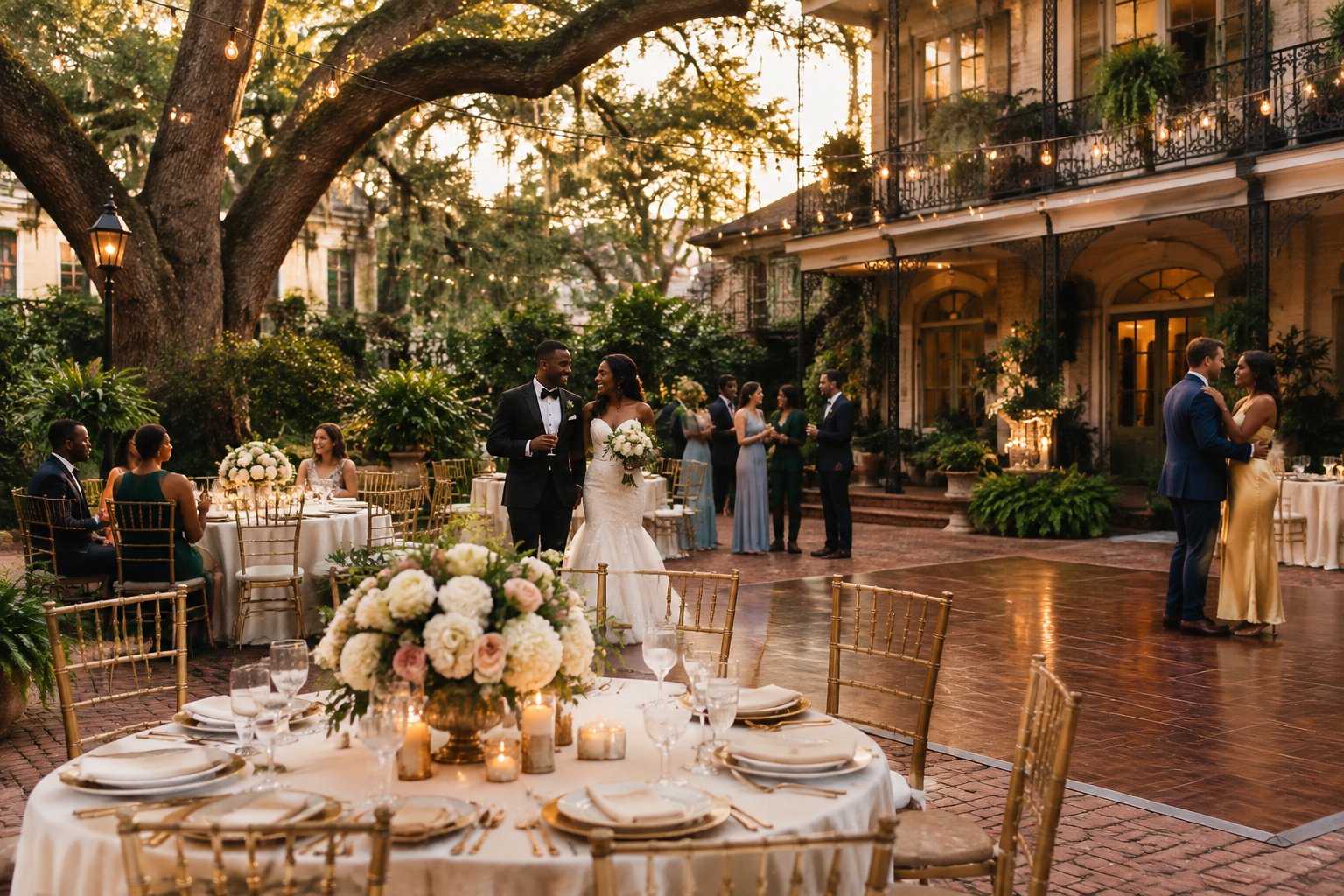
Think about guest movement, restrooms, parking, accessibility, sound limits, rain coverage, and the time needed for setup. A beautiful venue still needs a practical plan for your celebration.
Ballrooms, Banquet Halls, and Hotel Receptions
A ballroom or banquet hall gives you a controlled indoor environment with space for dining, dancing, staging, and weather protection. Hotels add guest rooms, elevators, catering teams, and convenient lodging for out-of-town guests.
Ask about room capacity at your preferred table layout. A space rated for 200 guests may feel crowded with a dance floor, band, buffet, photo booth, or large floral installation.
Historic Mansions, Inns, and Bed and Breakfasts
A mansion, inn, or bed and breakfast creates a residential setting with period details, gardens, porches, and intimate rooms. These properties work well for smaller guest lists and celebrations with a strong sense of place.
Review noise restrictions, event hours, vendor access, parking, and guest-room policies. Historic buildings can have stairs, narrow doorways, fragile surfaces, or limited loading areas that affect your floor plan.
Gardens, Courtyards, Patios, Decks, and Terraces
Outdoor settings highlight oak trees, brickwork, fountains, balconies, and New Orleans greenery. A garden, patio, deck, or terrace can host the ceremony, cocktail hour, dinner, or a late-night lounge.
Your contract should name the rain location and explain when the weather call is made. Confirm power access, lighting, fans or heaters, insect control, restroom access, and the plan for moving guests during a storm.
Lofts, Warehouses, Galleries, Museums, and Breweries
Lofts and warehouses suit modern designs with exposed brick, tall ceilings, concrete floors, and flexible layouts. Galleries, museums, and breweries add distinctive architecture or a creative local identity.
These venues can have special rules for artwork, open flames, sound, food service, alcohol, and installation time. Ask whether tables, chairs, kitchen access, security, and cleanup are included.
Alternatives for Church, Temple, Country Club, Manor, and Vineyard Events
A church or temple can provide a traditional ceremony, while a country club may offer golf-course views, banquet service, and guest-friendly parking. A manor or vineyard gives you a more secluded Louisiana setting with room for outdoor photos and extended celebrations.
An events facility, landmark building, penthouse, or lodge can also match a specific guest experience. Check travel time from New Orleans, nearby lodging, shuttle needs, and the rules for outside vendors before committing.
New Orleans Areas and Notable Venue Options
French Quarter venues suit historic, walkable celebrations, while Garden District, Uptown, Metairie, and warehouse locations give you different mixes of space, capacity, style, and cost.
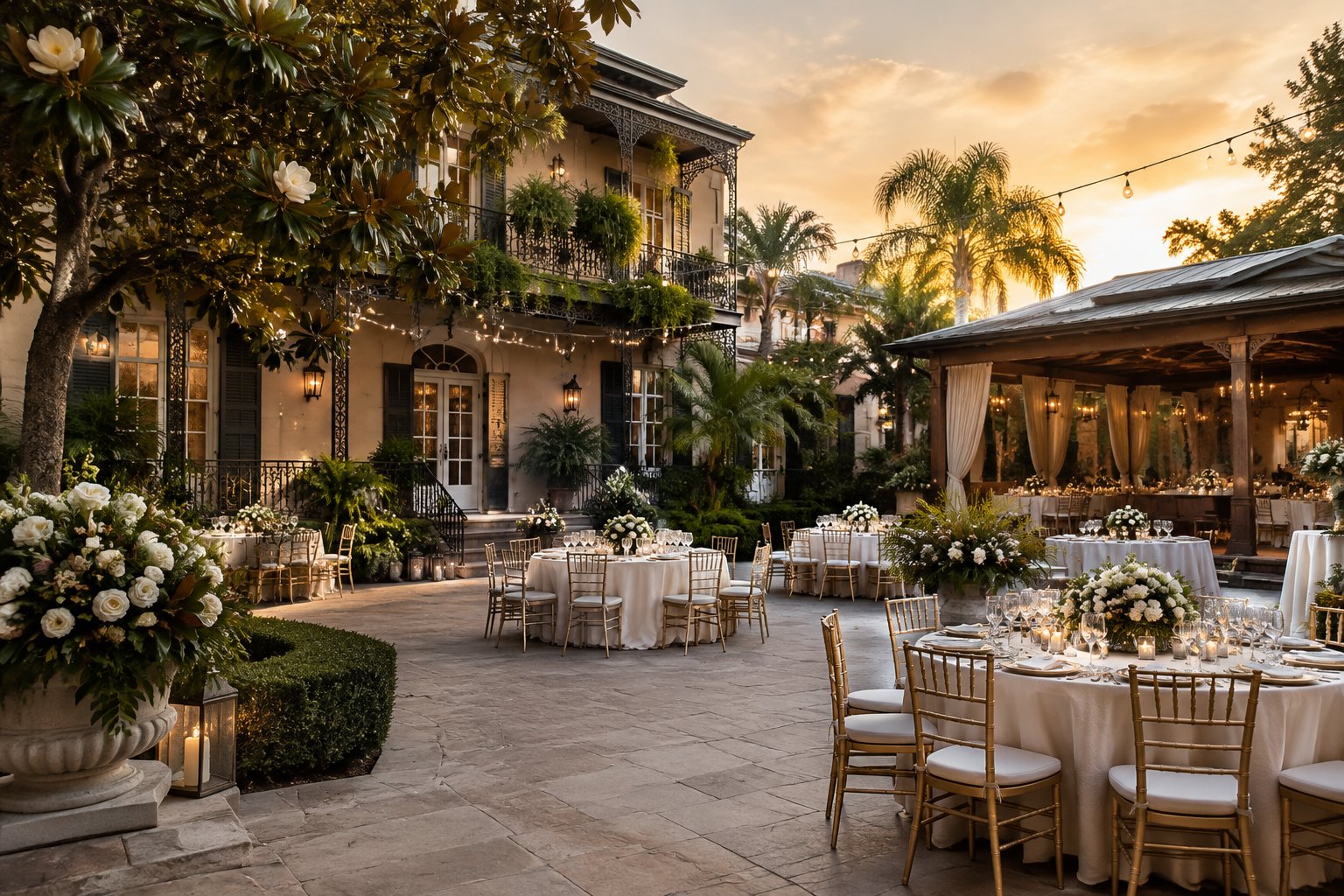
Use the neighborhood as a starting point, then compare the actual package. A venue near Jackson Square may offer a strong destination experience, while a larger venue outside the French Quarter may simplify parking and guest movement.
French Quarter and Riverfront Celebrations
The French Quarter places your guests near Jackson Square, historic streets, restaurants, hotels, and the Mississippi River. The Baroness at 512 Conti offers an indoor space, a courtyard, on-site accommodations, and packages designed for celebrations of up to 75 guests.
Other names you may encounter include Chateau LeMoyne, The Degas House, Margaret Place, The Jaxson, House of Blues, and The Balcony Ballroom. Verify current capacity, package coverage, ceremony options, and event dates directly with each property.
French Quarter celebrations need a clear transportation and noise plan. Street access, pedestrian traffic, parking, and parade logistics can affect vendor arrivals and guest movement.
Garden District and Uptown Estate Experiences
Garden District and Uptown venues create a classic New Orleans look through historic homes, mature trees, porches, and landscaped grounds. Southern Oaks and Degas House are examples of the estate-style experience couples may consider.
The Balcony Ballroom also serves couples seeking a reception-focused package with food, service, and event support. Ask whether your proposal includes ceremony space, room access, décor, cake, bar service, and coordination.
Review heat, humidity, rain coverage, and guest transportation when your plan includes outdoor areas.
Large-Guest Celebrations in New Orleans and Metairie
Larger weddings need strong catering flow, restrooms, parking, loading access, and a floor plan that leaves room for dancing. The Moore offers a 5,100-square-foot ballroom in the Greater New Orleans area, with exposed brick, chandeliers, and a large bar.
Other options to research include Livaudais Hall, The Jaxson, Race & Religious, and larger banquet facilities in New Orleans and Metairie. Confirm seated capacity, cocktail capacity, minimum guest counts, and food-and-beverage minimums.
Intimate Historic and Outdoor Gatherings
Smaller celebrations can make better use of courtyards, historic rooms, gardens, terraces, and boutique lodging. Paradigm Gardens and Derbès Mansion represent the type of intimate setting that appeals to couples who want a personal atmosphere.
Ask whether the venue has a minimum spend for small weddings. A compact guest list may still require a room rental, staffing minimum, or food-and-beverage commitment.
How Do You Compare Proposals and Book With Confidence?
Book with confidence by comparing itemized proposals line by line and confirming capacity, vendor rules, weather plans, payment terms, and license logistics before you sign. A polished brochure cannot answer contract questions about overtime, cancellations, or outside services.
Bring your guest estimate, preferred date range, ceremony plan, reception style, and budget target to every venue call. Request the same information from each venue so the proposals are easy to compare.
Questions to Ask a Wedding Venue Before Signing
Ask these questions in writing:
- What does the package include for the ceremony and reception?
- How many hours include setup, event time, and cleanup?
- What guest count does the quoted price cover?
- Which taxes, service charges, gratuity, and security fees are included?
- What menu, bar, cake, décor, and entertainment choices are included?
- Which vendors does the venue require or approve?
- What happens if your guest count changes?
- What are the deposit, payment, cancellation, and postponement terms?
- What insurance does the venue require?
- Who manages the event timeline on the wedding day?
Request a sample floor plan and a complete payment schedule with the proposal.
Vendor Rules, Outside Services, and Upgrade Terms
Some venues provide an in-house team, while others work with preferred vendors or allow outside professionals. Ask about photographers, videographers, caterers, bartenders, DJs, bands, florists, planners, and rental companies.
Clarify outside-vendor fees, delivery windows, insurance requirements, cleanup duties, and approval rules. Every upgrade should show its price, tax treatment, service charge, and deadline for selection.
Ask who owns personal décor after the event and who packs items for pickup.
Weather Plans, Accessibility, Lodging, and Transportation
A New Orleans weather plan should identify a specific indoor room or covered area, the decision deadline, and the staff responsible for moving décor and guests. Ask about air conditioning, fans, backup power, flooring, and storm-related postponement terms.
Check step-free entrances, accessible restrooms, elevator access, seating options, and paths between ceremony and reception spaces. Destination guests also need nearby hotels, airport transfers, parking, rideshare access, and shuttle timing.
Marriage License Steps for Destination Couples
Louisiana marriage license requirements can change, so confirm current rules with the parish clerk where you plan to marry. Ask about identification, fees, application timing, waiting periods, officiant rules, and how the completed license is returned.
Your venue or officiant may help with filing, yet you remain responsible for meeting the legal requirements. Build license tasks into your destination wedding checklist and leave time for document corrections.
When to Expand Your Search Beyond New Orleans
Expand your search to Baton Rouge, Shreveport, Metairie, Covington, or Mandeville when you need more parking, a larger venue, lower lodging pressure, or a different price range. Compare travel time, guest transportation, hotel supply, and the New Orleans atmosphere you want to preserve.
A nearby venue can still support a New Orleans-inspired celebration through local food, jazz, brass music, historic décor, and a planned visit into the city. Request a full proposal before judging the location by its rental price alone.