
All-Inclusive Wedding Venues: Pros and Cons Explained
All-inclusive wedding venues appeal to couples who want fewer moving parts, clearer coordination, and a more predictable planning experience. One package might combine the ceremony site, reception, catering, bar service, rentals, décor, and day-of support under one contract.

The trade-off comes through in creative control, vendor choice, and package pricing. The best venue is the one that protects our wedding vision while fitting the wedding budget and the amount of planning work we want to handle.
As we compare all inclusive wedding venues pros and cons, we can request itemized proposals, ask about fees, and identify which details matter most to us. A thoughtful conversation with each venue team will make the next decision easier.
What an All-Inclusive Package Actually Covers
An all-inclusive wedding package bundles the venue and several core services into one coordinated agreement, though each venue defines “all-inclusive” differently. The package price might include the ceremony space, reception space, food, beverages, rentals, and coordination, while premium details remain separate.
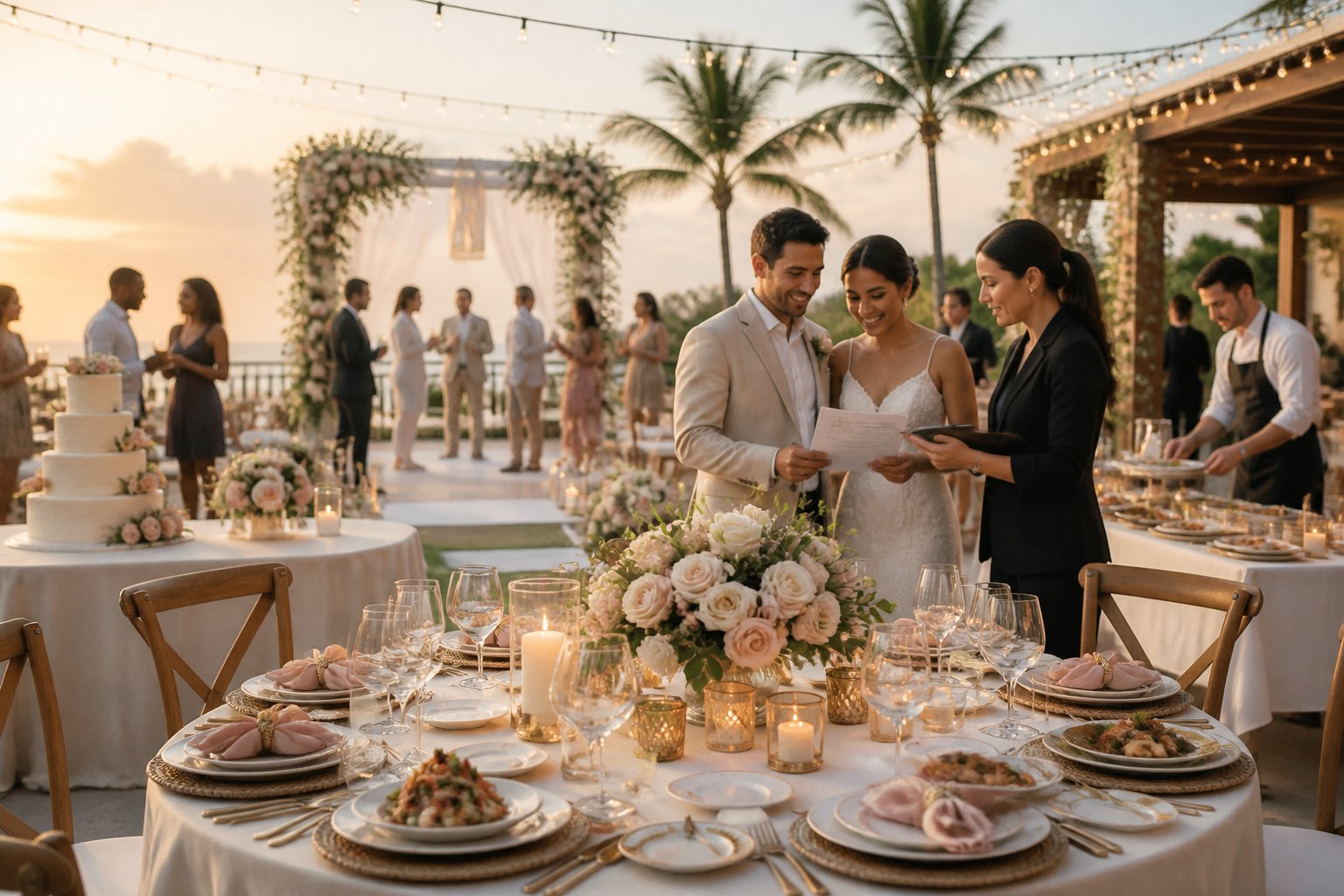
Before comparing prices, we should request the complete inclusion list and the current upgrade menu. The difference between a basic package and a fully styled celebration can be substantial.
Core Inclusions to Expect
A full-service all-inclusive wedding package frequently includes:
- Venue rental for the ceremony and reception
- In-house catering, from appetizers through the main meal
- Bar service with defined beer, wine, or liquor options
- Tables and chairs
- Linens, table settings, and place settings
- Basic centerpieces or table décor
- Setup and teardown
- A venue coordinator
- A wedding cake or dessert option
Some wedding packages include a cocktail hour, sound equipment, a DJ, getting-ready rooms, or overnight accommodation. Resort packages for destination weddings may also include a ceremony arch, bouquet, boutonniere, officiant, toast, and honeymoon-room amenities.
Common Exclusions and Optional Add-Ons
The word “all-inclusive” does not guarantee that every wedding expense sits inside the base price. Photography, videography, upgraded floral arrangements, specialty lighting, entertainment, premium bar selections, stationery, transportation, and guest lodging frequently require separate arrangements.
Legal destination weddings can add officiant fees, licenses, translations, and document processing. We should also look for service charges, gratuities, taxes, overtime charges, extra-guest fees, and delivery or vendor-access fees in the contract.
How Local and Destination Packages Differ
Local all-inclusive wedding venues often focus on the event itself, including the event space, meal service, rentals, and coordination. Guests arrange their own travel and accommodation unless the venue operates as a hotel.
Destination wedding packages frequently connect the celebration with a room block or minimum stay. The wedding fee and each guest’s resort stay are separate costs, and base packages often cover a limited guest count. We should confirm whether private reception dining, legal ceremonies, airport transfers, and outside vendors are included.
The Biggest Advantages of Bundling Your Wedding
Bundling wedding services reduces vendor research, consolidates communication, and creates a clearer planning structure. The strongest benefits appear when our guest count, design preferences, and service expectations align with the venue’s preset options.
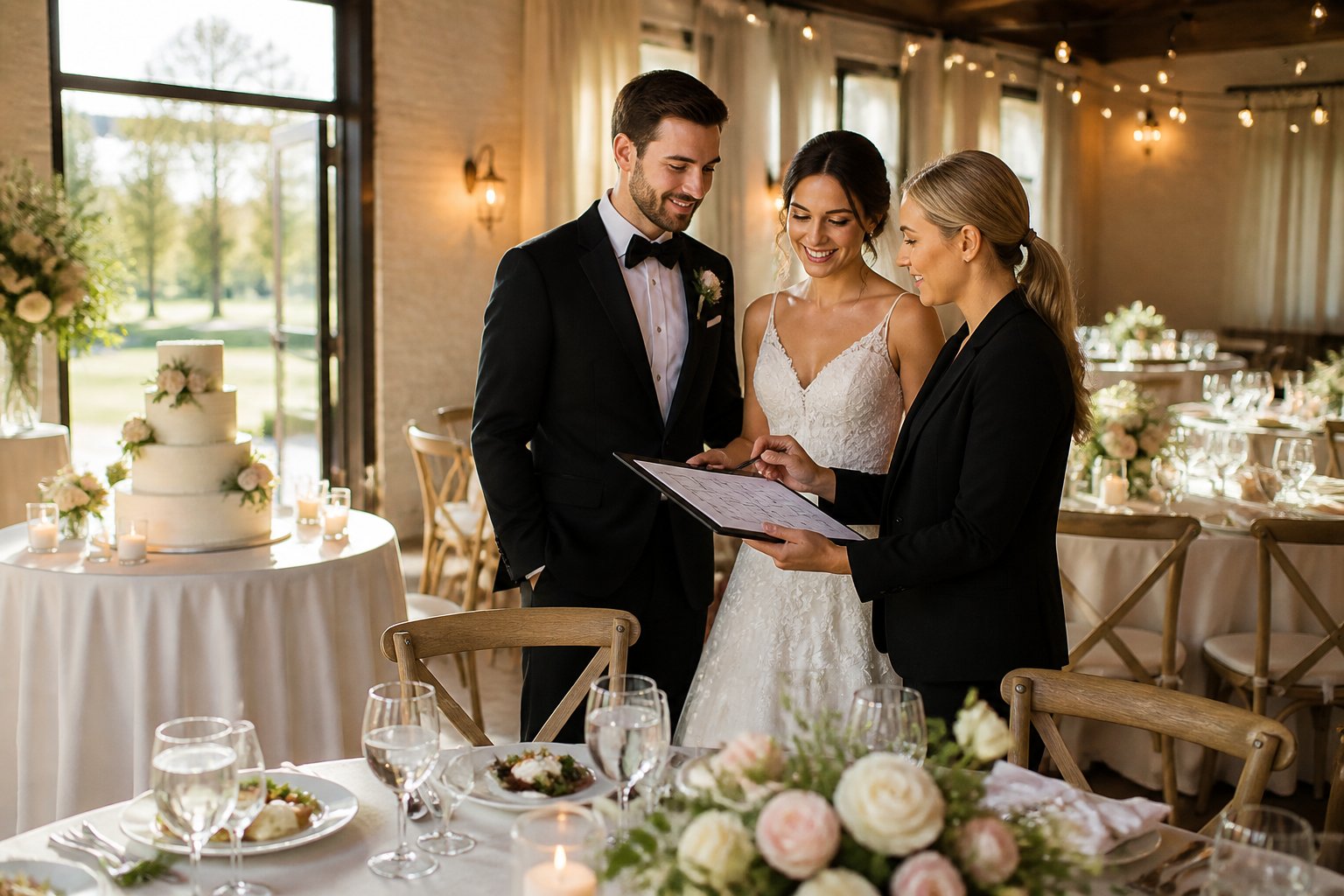
A package also gives us one place to review deadlines, menu selections, rental details, and payments. That structure can feel especially helpful during the final weeks, when small decisions arrive quickly.
Less Vendor Management and Planning Stress
An all-inclusive venue reduces the number of wedding vendors we need to research and book. The venue may already have catering staff, bartenders, rental inventory, setup crews, and a preferred entertainment list.
That existing system saves time during planning and on the wedding day. We can direct questions to a wedding coordinator who knows the property, loading areas, floor plans, and event procedures.
Couples who want a smaller celebration may also appreciate the simpler structure. Our guide to the pros and cons of a small wedding offers additional planning context for intimate guest lists.
More Predictable Costs and Easier Coordination
A bundled proposal makes it easier to connect the guest count with food, beverages, rentals, and staffing. The payment schedule also creates defined milestones, which helps us organize cash flow.
The venue team coordinates timing between the ceremony, cocktail hour, meal service, speeches, and entertainment. Many packages also include a rain plan, setup, cleanup, and a designated contact for the event day.
Predictability still requires careful review. We should compare the package’s included quantities, menu tiers, bar hours, staffing levels, and additional charges before treating the quoted total as our final wedding budget.
Why It Can Work Well for Destination Celebrations
All-inclusive packages are well suited to destination weddings because local venue teams already understand the property and regional logistics. Guests can book rooms, meals, and activities through one resort environment.
A destination wedding coordinator can also manage details that are difficult to arrange from home, including ceremony setup, local rentals, vendor arrival, and weather adjustments. Guests receive a more organized experience when key events happen on-site.
We should confirm room-night requirements, guest caps, cancellation policies, and whether the wedding package is separate from resort accommodation.
The Trade-Offs That Can Affect Your Wedding Vision
All-inclusive venues exchange planning convenience for defined choices, so couples with highly specific design or vendor preferences need to inspect the boundaries early. Package rules can affect floral design, photography, entertainment, timing, and the way the reception feels.
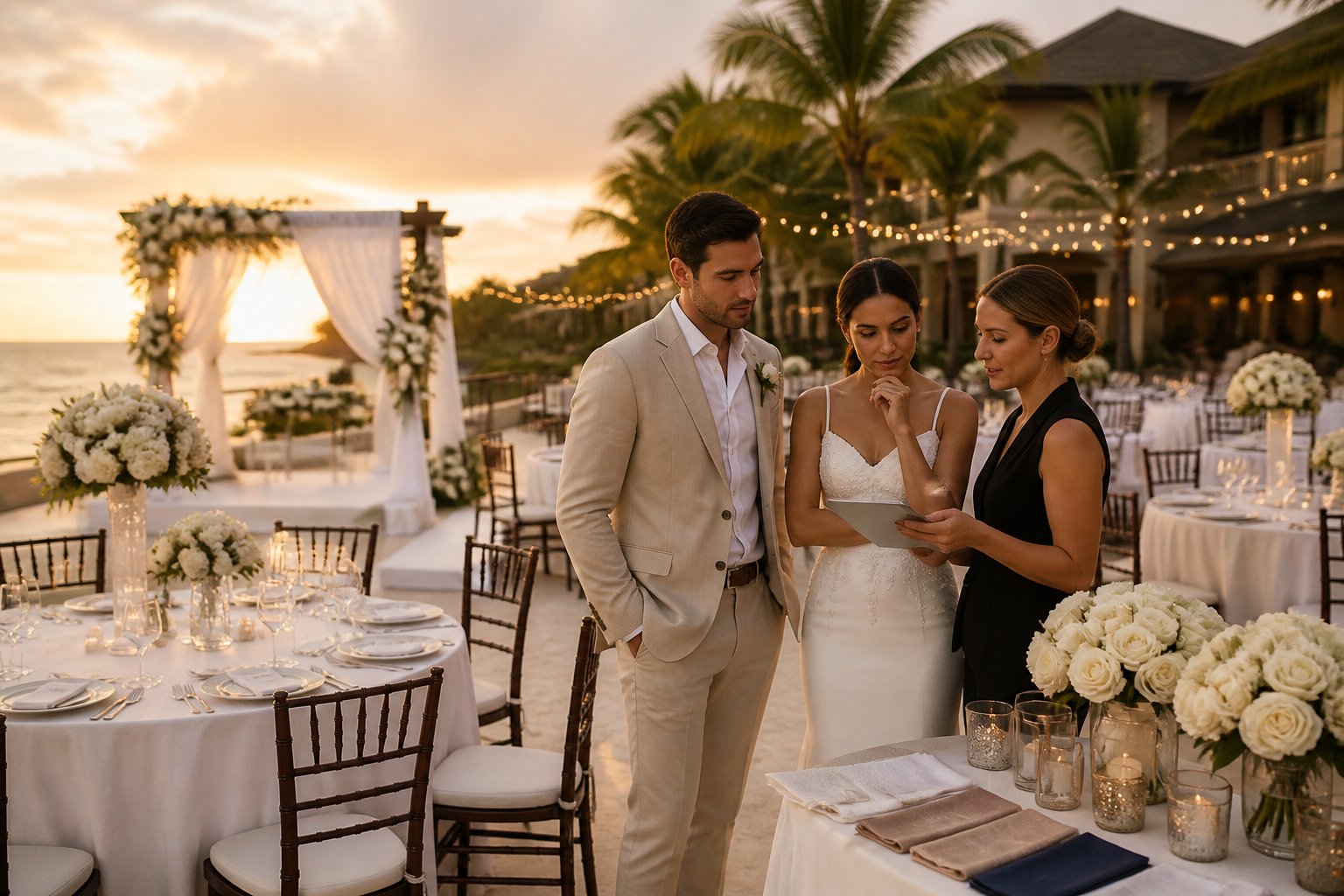
Our best planning conversations focus on the details we would regret sacrificing. Those priorities deserve written confirmation before we pay a deposit.
Limited Creative Control and Personalization
Packages often offer a curated selection of menus, linens, table settings, centerpieces, cakes, and floral arrangements. That approach keeps execution efficient, though it can limit unusual color palettes, cultural elements, custom layouts, or highly personalized décor.
We should ask to see complete galleries of real weddings at the venue. A sample centerpiece may represent a premium upgrade, while the base package uses a smaller arrangement or a different vessel.
A venue can still support a beautiful wedding vision when its style matches ours. The key is separating included design elements from inspiration images.
Preferred Vendors and Outside Vendor Fees
Preferred vendors help venues maintain quality standards, insurance compliance, delivery procedures, and scheduling control. Their involvement also reduces the coordination burden for the venue team.
Outside vendor policies vary widely. A photographer, florist, baker, or band from our preferred list might require approval, insurance documentation, delivery restrictions, or outside vendor fees. Some venues prohibit outside catering or alcohol altogether.
We should request the preferred-vendor list and ask whether we can bring our own photographer or florist. If outside access costs several hundred dollars, that charge belongs in the comparison from the start.
When Package Upgrades Reduce the Value
An entry-level package can look attractive until we add the features that define our wedding vision. Upgrading the menu, bar, florals, cake, lighting, entertainment, or guest count can move the total close to a custom venue proposal.
Service charges, gratuities, taxes, and overtime charges also affect the final amount. Ask the venue to price our preferred upgrades in writing, including per-person rates and applicable fees.
A package delivers strong value when its included services match our priorities. If every meaningful detail requires an upgrade, an a la carte plan may offer better control over our spending.
How to Compare Package Prices With a DIY Venue
An all-inclusive wedding should be compared with the full cost of a DIY venue, including rentals, staffing, catering, coordination, setup, cleanup, and fees. A lower venue rental alone does not show the complete difference.

We can create two itemized budgets using the same guest count, menu level, bar hours, design standard, and reception length. That method exposes which option fits our finances and available planning time.
Calculate the True Per-Guest Cost
Start with the package total and divide it by the number of included guests. Then add known taxes, service charges, gratuities, upgrades, and overtime to produce a more realistic per-guest figure.
For a DIY venue, combine the venue rental with catering, rentals, staffing, décor, coordination, delivery, setup, cleanup, and bar service. Divide that complete estimate by the same guest count.
The comparison should use equivalent hospitality. A plated meal with full bar service cannot be fairly compared with a drop-off buffet and beer-only arrangement.
Account for Fees, Minimums, and Upgrades
Ask whether the venue imposes food-and-beverage minimums, room minimums, minimum guest counts, or required service packages. Confirm the price for each additional guest and the hourly rate after the contracted end time.
Service charges and gratuities can apply to catering, bar service, rentals, or the full package. Taxes may be calculated after those charges, so the venue should show the math in its proposal.
We can mark every item as included, optional, required, or unavailable. That four-part review makes hidden assumptions easier to spot.
Compare Equivalent Services Before Deciding
A DIY plan offers broad vendor flexibility and creative control, while an all-inclusive venue offers centralized coordination and a defined operating system. The right comparison includes the time we will spend sourcing vendors, reviewing contracts, arranging deliveries, and managing the wedding day.
| Criteria | All-Inclusive Venue | DIY Venue |
|---|---|---|
| Main contract | One venue agreement | Multiple vendor agreements |
| Vendor choice | Limited or preferred list | Broad flexibility |
| Coordination | Often included | Hired separately |
| Upfront clarity | Strong after itemization | Varies by vendor |
| Creative control | Package-dependent | High |
| Setup and cleanup | Often included | Separate staffing |
Our DIY wedding cost guide can help us test whether the added flexibility justifies the extra coordination.
Questions to Ask Before You Sign a Contract
A contract review should confirm every service, fee, deadline, and contingency that affects our wedding day. Verbal promises from a tour or sales call belong in the written agreement before we sign.
A practical venue checklist includes:
- What does the base package include by quantity and service level?
- Which menu, bar, rental, décor, and cake choices carry upgrade fees?
- Are taxes, service charges, gratuities, and overtime charges included?
- Who serves as the wedding coordinator, and what does that role cover?
- Does the coordinator manage outside vendors and the event timeline?
- What is the payment schedule, and which payments are refundable?
- What rain plan applies to the ceremony and reception?
- Can the event space support our guest count and floor plan?
- What are the outside vendor fees and insurance requirements?
- How much vendor flexibility does the venue allow?
What Does the Base Price Include?
The base price should identify the ceremony space, reception space, venue rental period, catering style, bar duration, rentals, staffing, setup, cleanup, and décor quantities. We should also ask whether the quoted price applies to a specific guest count or minimum spend.
Request a sample invoice that includes taxes and service charges. This reveals the final billing format more clearly than a brochure package summary.
Who Coordinates the Day and Manages Vendors?
A sales contact, planning contact, and day-of coordinator can be three different people. Ask when the assigned wedding coordinator becomes involved, how many events they manage at once, and who handles vendor arrivals, setup, timeline changes, and emergencies.
If a separate wedding planner is required, include that cost in the wedding budget. Our guide on what to know before talking to a wedding planner can help us prepare for that conversation.
What Happens if Weather or Timing Changes?
The rain plan should name the backup event space, decision deadline, setup process, and any additional charge. We should confirm whether the alternate space accommodates the same guest count and décor plan.
Ask how the venue handles delays, extended reception hours, vendor overtime, transportation problems, and an earlier ceremony move. Written procedures reduce confusion when the schedule changes.
Choosing the Package That Fits Your Priorities
The right all-inclusive wedding venue matches our preferred balance of convenience, customization, cost control, and personal involvement. Couples who value a streamlined plan may accept a smaller vendor list, while couples with a highly specific wedding vision may prefer an a la carte venue.
We can rank our priorities before touring:
- Set a realistic wedding budget and target guest count.
- Identify three details we want protected, such as food quality, photography, or floral design.
- Decide which planning responsibilities we want the venue to handle.
- Request itemized proposals from venues with comparable services.
- Review fees, upgrade prices, vendor policies, and cancellation terms.
- Select the package that supports our priorities without paying for features we will not use.
The wedding expenses prioritization guide can help us separate essential experiences from attractive extras. A strong package leaves room for the details we care about and gives us a clear plan for everything else.
Frequently Asked Questions
Are all-inclusive wedding venues actually cheaper?
All-inclusive wedding venues can cost less after we include catering, rentals, staffing, coordination, setup, cleanup, and service fees. The package offers the strongest financial value when its included services match our needs and we avoid extensive upgrades.
What is usually not included in an all-inclusive wedding package?
Photography, videography, premium floral design, specialty entertainment, upgraded cakes, stationery, transportation, legal ceremony costs, and guest accommodation frequently sit outside the base package. Taxes, gratuities, service charges, and overtime charges also require careful review.
Can I use my own photographer or florist at an all-inclusive venue?
Some venues allow outside photographers or florists with approval, insurance requirements, delivery rules, and outside vendor fees. We should obtain the policy and exact charges in writing before booking an outside professional.
Are all-inclusive wedding venues a good choice for destination weddings?
All-inclusive venues work well for destination weddings when we want on-site coordination, guest accommodations, and simplified local logistics. We should confirm room-block requirements, guest limits, legal fees, private reception costs, and resort charges before selecting a package.
How much should I budget for an all-inclusive wedding venue?
The required budget depends on location, guest count, meal and bar selections, event length, design, and package tier. We should request a proposal showing the base price, per-person charges, upgrades, taxes, service charges, gratuities, and overtime so the budget reflects the complete celebration.