
All-Inclusive Wedding Venues United States Guide
Choosing among all-inclusive wedding venues United States couples can simplify your plans by placing the venue, food, rentals, and event support under one coordinated package. You get fewer contracts to manage, clearer pricing, and a team familiar with the space.
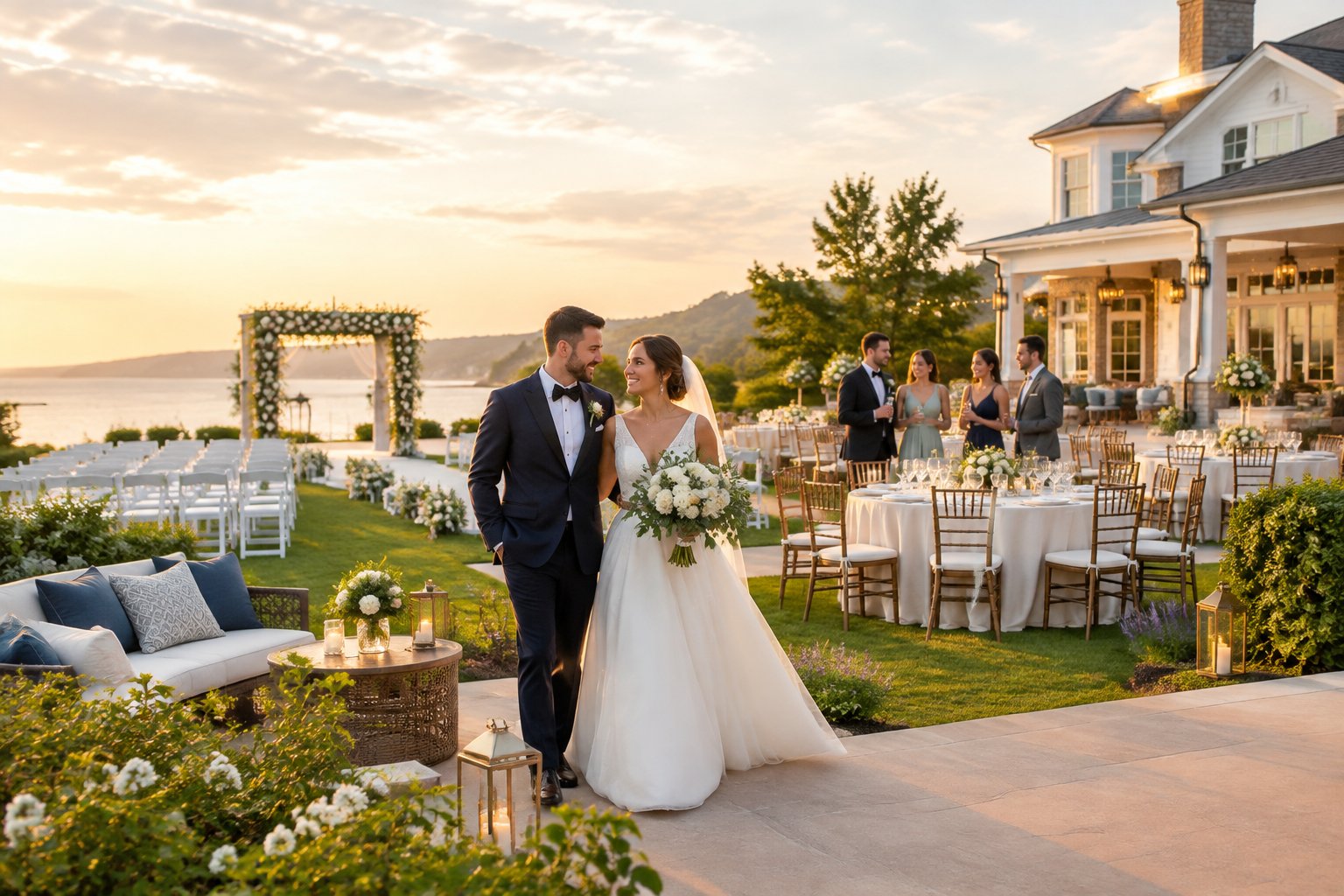
The right all-inclusive wedding venue also needs to match your guest count, preferred setting, menu style, travel plans, and budget. A resort may suit a destination wedding with overnight stays, while a vineyard, ballroom, private estate, or wedding house rental may give you a more local and personal celebration.
As you compare wedding venues, ask for a complete written estimate that includes required fees and guest costs. You can also explore Wedgewood Weddings for customizable all-inclusive packages designed to reduce planning work while keeping your celebration personal.
What Does All-Inclusive Really Mean?
An all-inclusive wedding venue combines the event space with several core wedding services, such as catering, rentals, beverages, and coordination, under one package or contract. The exact meaning changes by venue, so you need an itemized list before booking.
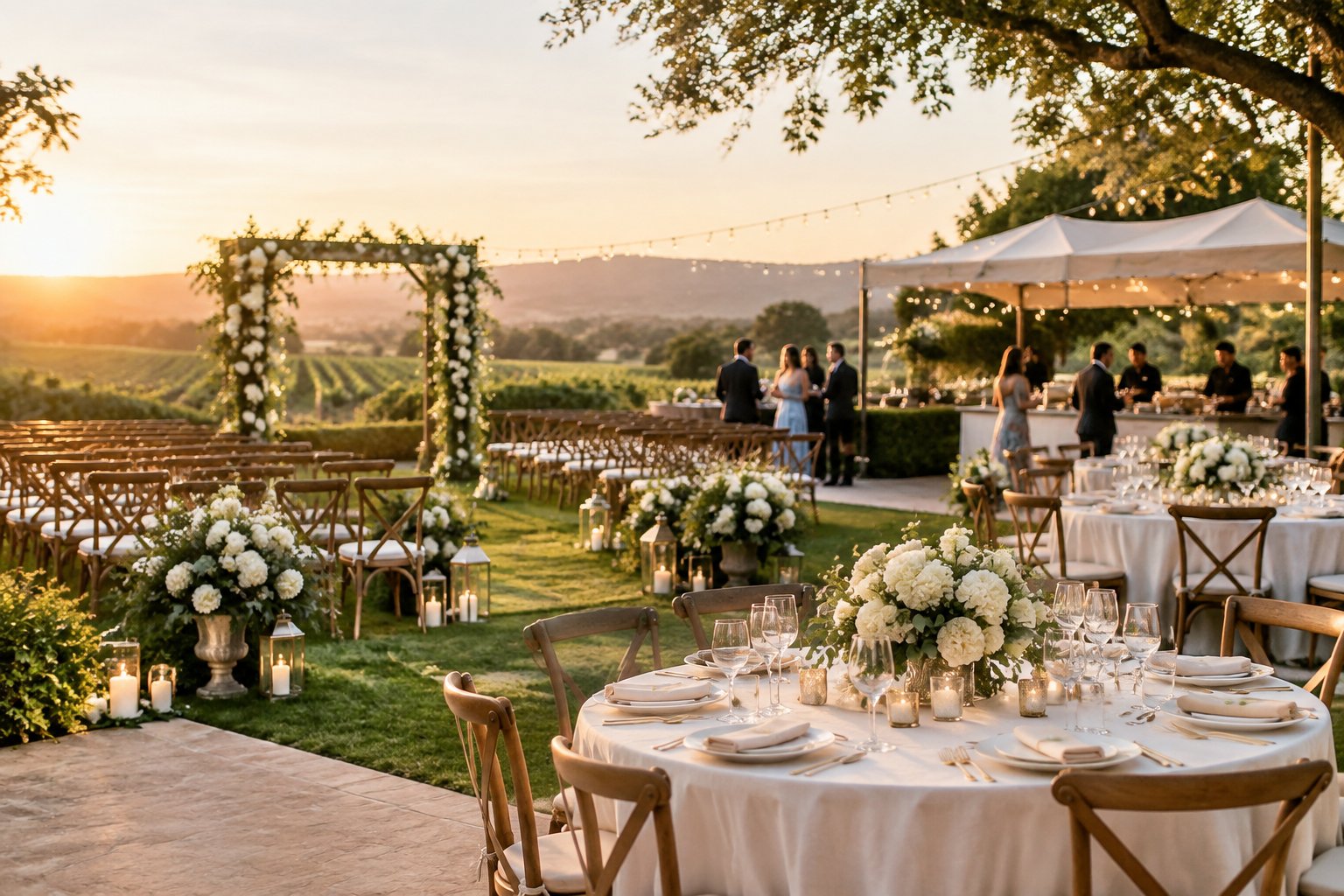
A package can cover your wedding ceremony and reception, cocktail hour, meal service, tables, chairs, linens, centerpieces, and basic event coordination. Some all-inclusive venues add a bridal suite, wedding cake, dj, photo booth, or live entertainment.
Others provide a preferred vendor list and leave several services for you to arrange.
Common Package Inclusions
Review each package for these possible inclusions:
- Ceremony and reception spaces
- Catering and beverage service
- Cocktail hour food and drinks
- Tables, chairs, linens, and place settings
- Centerpieces or décor selections
- Wedding cake or cake credit
- Bridal suite or getting-ready room
- Wedding coordinator and event coordination
- Dj, photo booth, or live entertainment
- Setup and breakdown
- Parking and basic furniture
Ask whether the package covers your full guest count, service staff, cake cutting, gratuity, and ceremony fees. A low package price can change after required upgrades are added.
What Is Usually an Additional Cost?
Common extra charges include premium menu selections, upgraded bar service, custom florals, specialty rentals, additional décor, extended hours, transportation, photography, videography, and entertainment upgrades. Taxes, service charges, gratuities, and event insurance can also sit outside the advertised price.
Legal marriage requirements bring another possible cost. Ask about officiant services, marriage license support, document fees, and ceremony requirements in your chosen state.
Venue Coordinator vs. Wedding Planner
A venue coordinator works for the property and focuses on its spaces, staff, schedule, and house rules. A wedding planner works for you and manages broader wedding planning services, vendor communication, design choices, guest logistics, and decisions across the planning process.
Some all-inclusive wedding packages include a planning meeting and wedding-day coordinator. That support can be helpful for a straightforward celebration. A full wedding planner gives you more planning time and broader guidance, especially for a large guest list, destination wedding, multi-day event, or complex cultural program.
How Much Do Full-Service Packages Cost?
Full-service wedding packages in the United States often range from about $10,000 to $60,000, with guest count, location, season, and package depth driving the final wedding budget. Treat that range as a planning reference and request a quote for your date and guest count.
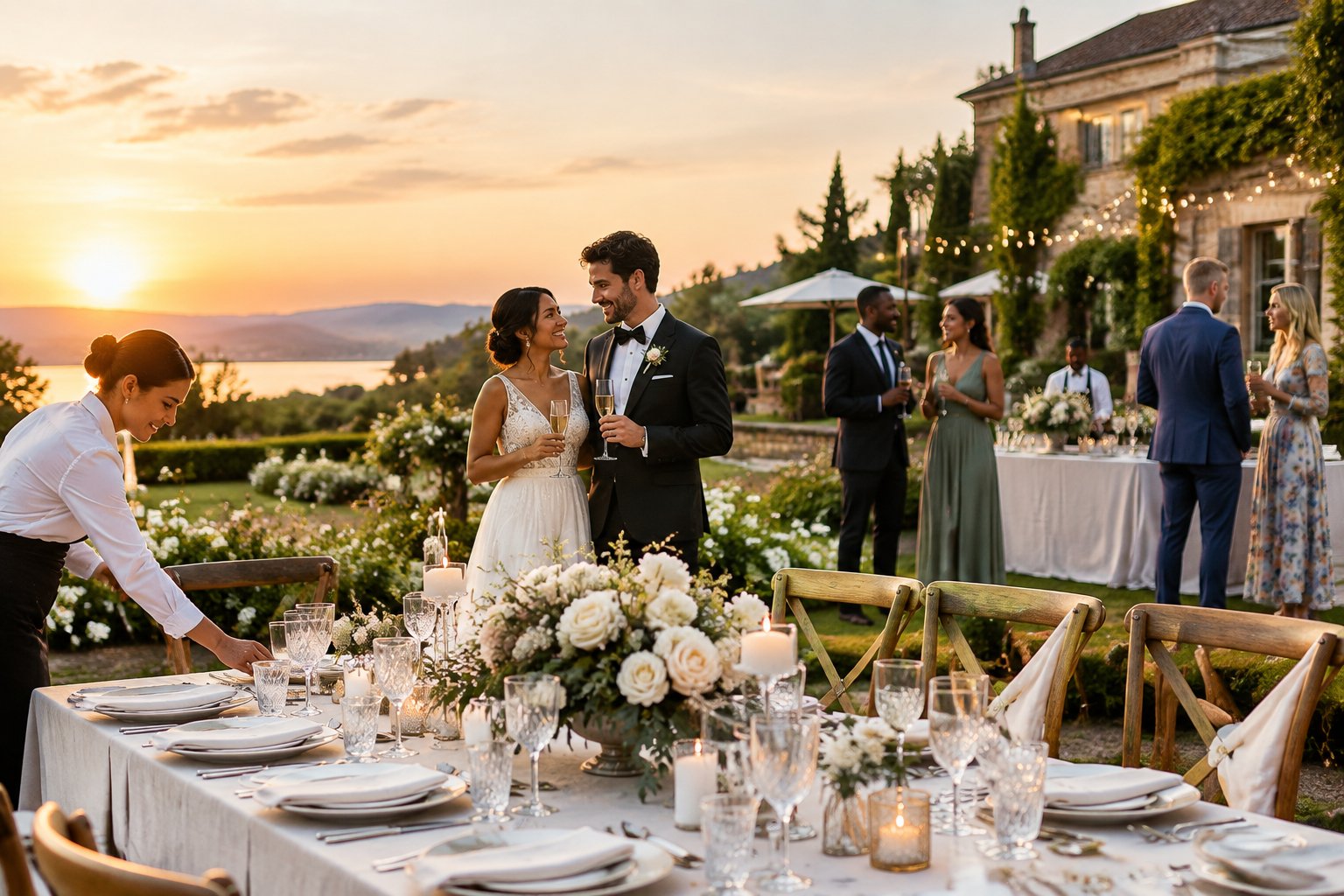
A package with catering, linens, centerpieces, bar service, and coordination can look expensive beside a venue-only rental. Compare the complete cost of each option, including every vendor and required fee.
Per-Person Pricing vs. Flat-Rate Packages
Per-person pricing grows with your guest list. It often includes catering, beverages, rentals, staffing, and meal service, making it useful when you want a clear cost per guest.
Flat-rate packages charge a set amount for a defined group size or service tier. Resort wedding packages may include a ceremony setup for a guest limit, with extra charges for larger groups. Ask what happens when your guest count changes and whether the quote includes children, vendors, and wedding party members.
Fees That Change the Final Wedding Budget
Check every proposal for:
- Taxes and service charges
- Gratuities and staffing fees
- Event insurance
- Ceremony or reception site fees
- Food and beverage minimums
- Cake cutting and corkage
- Overtime and late-night charges
- Setup, breakdown, and delivery
- Room blocks or lodging requirements
- Extra guests and vendor meals
Centerpieces, linens, and catering upgrades can also change the total. Request the venue’s current menu, rental list, payment schedule, and tax rate in writing.
How to Compare Venue Proposals
Put each proposal into the same format. Record the venue fee, guest count, catering rate, beverage package, included rentals, coordination, taxes, service charges, and optional upgrades.
Then calculate the estimated total and the cost per invited guest. Mark every item as included, required, optional, or not offered. Ask the venue to confirm the final estimate for your exact date before you compare it with another property.
Which Venue Style Fits Your Celebration?
Hotels, resorts, ballrooms, vineyards, beaches, golf courses, restaurants, and private estates each create a different guest experience and planning structure. Choose the setting that supports your travel needs, celebration style, and desired level of privacy.
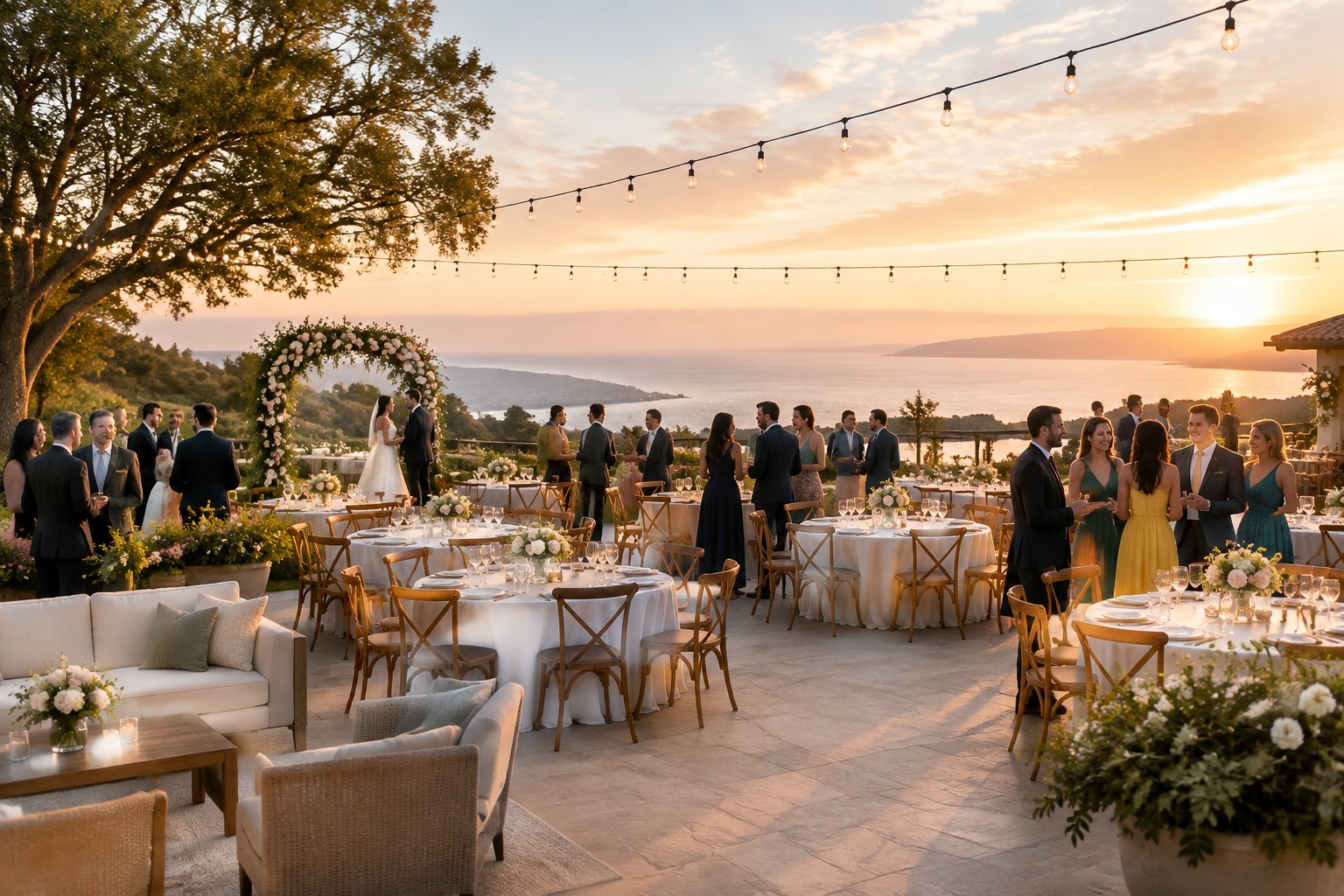
Think about ceremony flow, meal service, weather protection, parking, accessibility, music rules, and overnight guest accommodations before you fall in love with the décor.
Hotels, Resorts, and Ballrooms
Hotels and resorts work well when you want luxury accommodations, meeting spaces, dining, and guest services in one property. Ballrooms provide weather protection, built-in lighting, large dance floors, and seating plans suited to bigger receptions.
Ask about room blocks, food and beverage minimums, guest parking, elevators, noise limits, and the distance between guest rooms and event spaces.
Vineyards, Wineries, and Restaurants
Vineyards and wineries offer scenic grounds, tasting experiences, and menus that highlight the region. Restaurants bring an established kitchen, trained service staff, and a dining-focused atmosphere.
Confirm whether the property hosts ceremonies, offers private dining, permits outside desserts, and has an indoor backup space. Review the beverage policy carefully, including wine selections, bar hours, and corkage fees.
Beach, Mountain, and Golf-Course Settings
A beach wedding creates a relaxed coastal mood, while mountain venues provide dramatic views and seasonal appeal. Golf courses offer landscaped grounds, clubhouses, paved access, and reception spaces for a range of guest counts.
Outdoor venues require a clear rain, wind, heat, and transportation plan. Ask about permits, shade, restrooms, sound limits, insect control, and guest mobility across the property.
Private Estates and Wedding House Rentals
Private estates and wedding house rentals give you more privacy and room for a wedding weekend. Some include kitchens, multiple gathering areas, pools, fire pits, and on-site lodging.
Review occupancy rules, event permits, cleaning charges, security deposits, vendor access, quiet hours, and insurance requirements. Confirm that the property is approved for weddings and can legally host your planned guest count.
Top U.S. Regions for a Destination Wedding
California, Hawaii, Colorado, New England, the Blue Ridge Mountains, and Oregon offer strong destination wedding locations for couples who want memorable scenery with domestic travel. Each region brings different weather, travel times, venue styles, and guest activities.
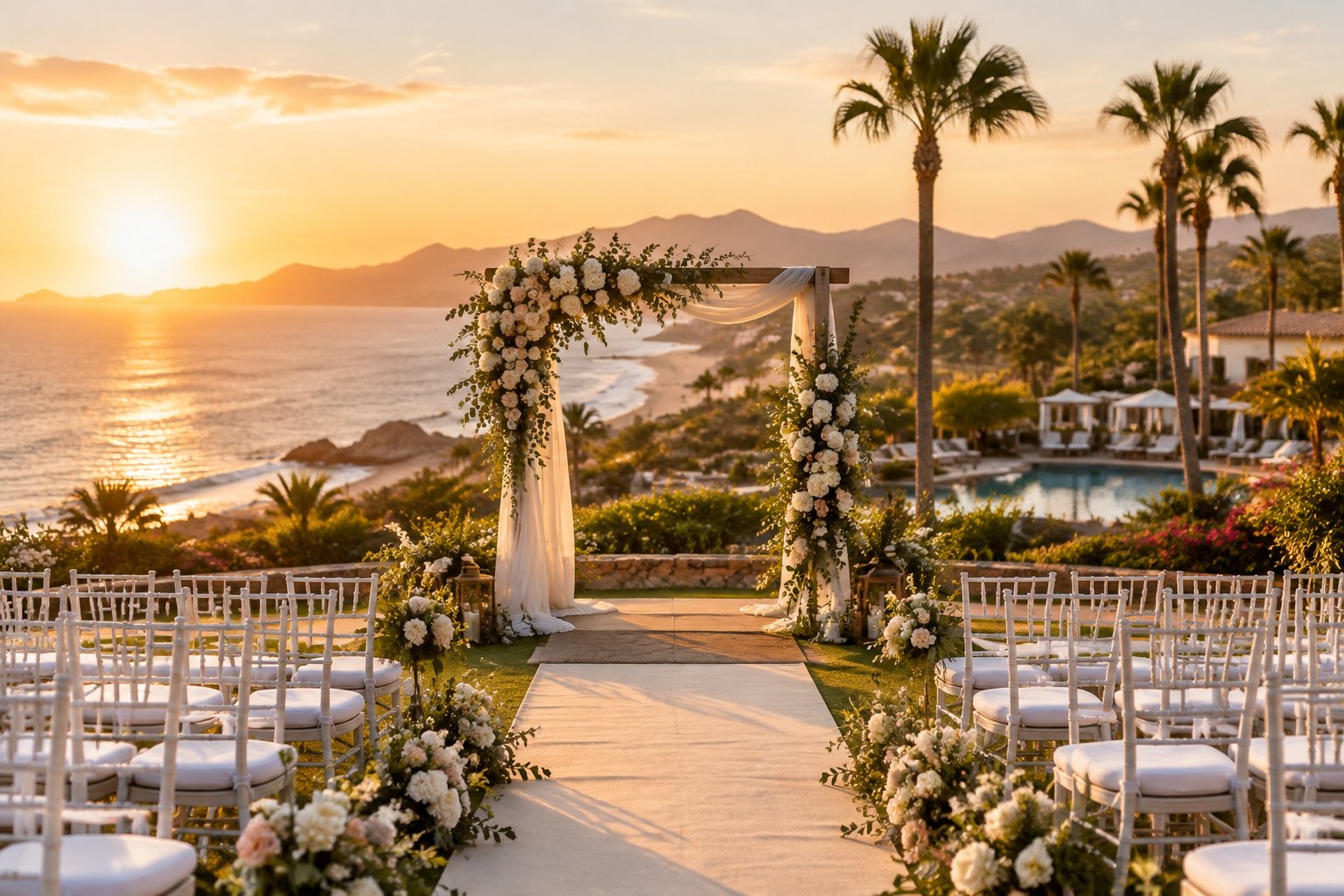
A stateside destination wedding can reduce travel barriers for guests while giving you a clear sense of place. Check seasonal conditions, airport access, local marriage rules, and nearby lodging before you reserve a date.
California Wine Country and Coastal Escapes
Napa Valley suits vineyard celebrations, wine-focused meals, and elegant outdoor receptions. San Diego offers beaches, hotels, gardens, and mild coastal weather. Big Sur brings rugged scenery and intimate estate settings.
California destination wedding venues can carry higher costs in popular areas. Ask about travel between ceremony and reception, wildfire or weather policies, guest transportation, and lodging capacity.
Hawaii and Tropical Beach Celebrations
Hawaii wedding venues offer beaches, gardens, ocean views, and resort experiences across Maui, Oahu, Kauai, and the Big Island. Haiku Gardens provides a lush setting for couples drawn to tropical greenery and outdoor ceremonies.
Plan for flight costs, island transportation, guest room rates, seasonal rain, and local legal requirements. A resort package can connect ceremony services with dining and accommodations, while a private venue can give you more control over vendors and design.
Colorado and Rocky Mountain Getaways
Colorado Springs offers mountain views, outdoor spaces, and access to Rocky Mountain activities. Mountain destination weddings suit couples who want scenic portraits, lodge-style receptions, and a full guest getaway.
Review elevation, road access, weather changes, heating, accessibility, and indoor backup spaces. The Little Nell in Aspen represents the luxury resort style, with premium accommodations and a mountain-town setting.
New England, the Blue Ridge Mountains, and the Pacific Northwest
New England venues range from coastal inns to historic estates. Cliff House Maine delivers a seaside resort atmosphere, while The Beach House suits couples looking for a relaxed coastal setting.
The Blue Ridge Mountains provide forests, ridgelines, and rustic estate venues across states such as North Carolina, Virginia, and Georgia. Oregon adds vineyards, forests, coastlines, and lodge settings.
Compare peak-season rates, rain plans, airport distance, and lodging before choosing your destination wedding venue.
Planning a Multi-Day Wedding Experience
A destination wedding weekend works best when lodging, event spaces, meals, and guest activities connect through one clear plan. You can use a welcome gathering, wedding day, and farewell brunch to give guests more time together.
An all-inclusive wedding venue can reduce transfers and vendor calls when it supports multiple events. Properties such as Orlando Lakefront Estate offer a private-estate model, while Wedgewood Weddings focuses on coordinated wedding-day packages across its venue group.
Choosing Lodging and Managing Room Blocks
Start by estimating how many guests need rooms and how long they will stay. Compare room blocks at hotels and resorts with private properties that include luxury accommodations on-site.
Read the room-block agreement for release dates, attrition terms, deposits, minimum stays, parking, breakfast, and accessible rooms. Give guests clear booking instructions and a deadline that leaves time to adjust the reservation.
Building a Destination Wedding Weekend Timeline
Create a schedule with travel time and rest periods included.
- Thursday or Friday: Guest arrivals, check-in, and a welcome dinner
- Wedding day: Getting ready, wedding ceremony, cocktail hour, reception, and late-night gathering
- Next morning: Farewell brunch, checkout, and optional local activity
Assign one person to answer guest questions so you can stay focused on the celebration. Keep outdoor activities flexible when weather or transportation could change.
When an All-Inclusive Resort Is the Better Fit
An all-inclusive resort fits couples who want rooms, meals, activities, ceremony services, and guest support in one destination. Family-friendly resorts work well for mixed-age groups, while adults-only properties create a quieter atmosphere.
Ask whether the wedding package is separate from each guest’s room and resort charges. Confirm guest minimums, ceremony limits, private reception costs, vendor access, and upgrade pricing before you book.
Questions to Ask Before You Sign
Ask for a complete written proposal and contract that spell out inclusions, required vendors, fees, timing, weather plans, and cancellation terms. Clear answers protect your wedding budget and help you compare venues fairly.
Bring your guest count, preferred date, ceremony style, meal preferences, and lodging needs to every conversation. Request updates in writing when the package or pricing changes.
Vendor Flexibility and Menu Policies
Ask whether you must use the preferred vendor list and which vendors you can select independently. Confirm outside vendor fees, delivery rules, insurance requirements, setup access, and vendor meal pricing.
For catering, ask about tastings, menu substitutions, dietary needs, children’s meals, alcohol service, cake cutting, late-night food, and bar duration. Find out which décor items, linens, centerpieces, rentals, and lighting are included.
Weather, Access, and Event-Time Rules
Ask for the exact rain plan and the deadline for moving an outdoor wedding ceremony indoors. Confirm whether the backup space carries an extra fee and whether it fits your guest count and reception layout.
Review access for guests with disabilities, parking, shuttles, restrooms, power, load-in, setup time, breakdown time, music limits, and end-of-event rules. Ask who makes weather decisions and how the venue communicates changes.
Contracts, Deposits, and Cancellation Terms
Check the deposit amount, payment dates, refund rules, postponement policy, cancellation schedule, force majeure language, and date-change fees. Ask whether your deposit is transferable and whether vendor payments follow the same terms.
Confirm taxes, service charges, event insurance, overtime, damage deposits, and required wedding planner or wedding coordinator services. Make sure the contract names the spaces included for your ceremony and reception, the guest count used for pricing, and every service promised in your final proposal.