
And S Flowers Wedding: Bouquets, Styles, and Ordering
Your wedding flowers set the mood, appear in your most treasured photos, and help tie your ceremony and reception together. For an And S Flowers wedding, start with a clear floral plan that covers your personal flowers first, then adds ceremony and reception pieces within your budget.
Fresh flowers, thoughtful bouquets, and well-placed arrangements create a polished look without requiring every surface to be covered.
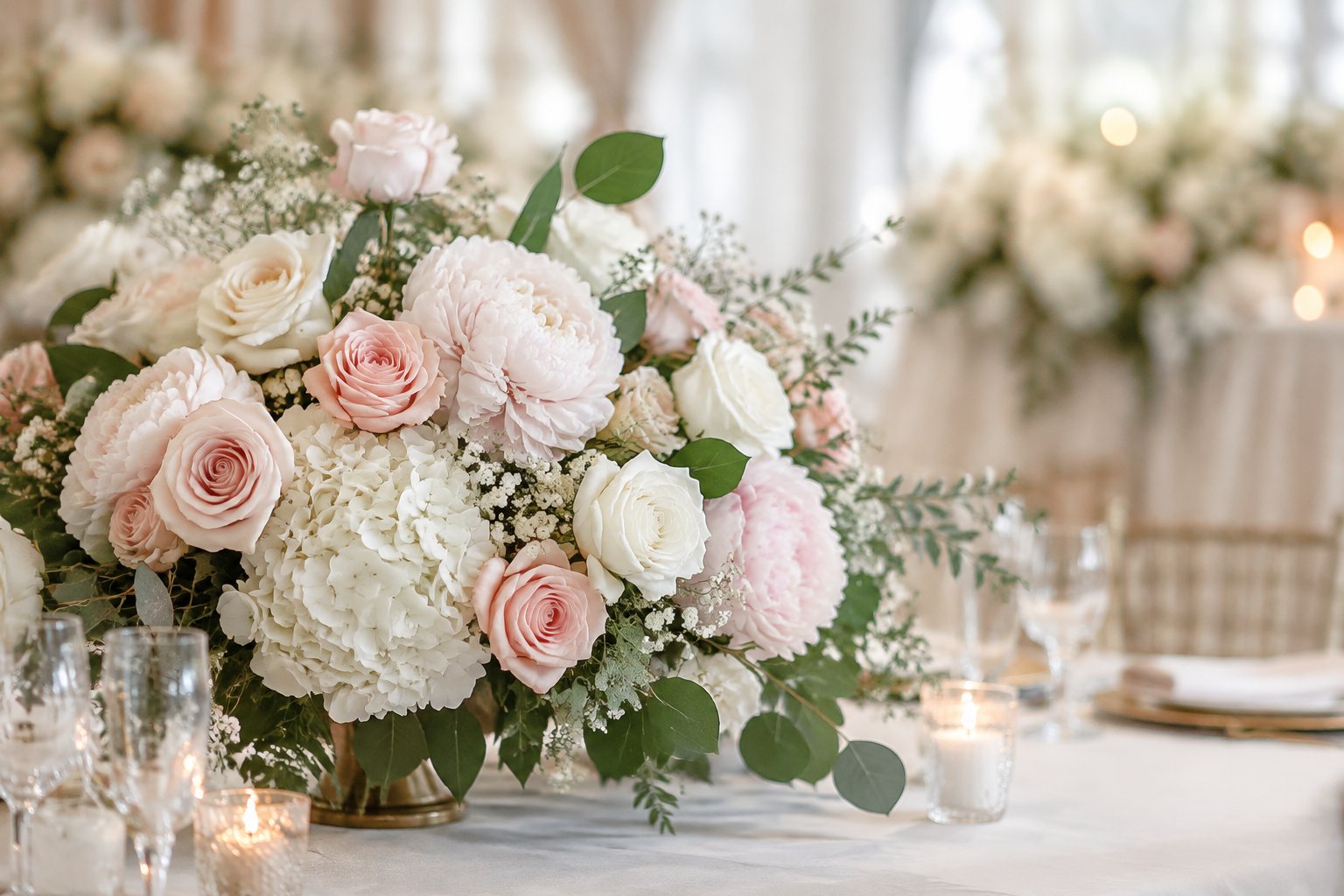
Choose blooms that suit your wedding date, venue, clothing, and color palette. If you are ready to turn your ideas into a practical order, connect with And S Flowers to discuss your wedding vision and floral needs.
Choose the Wedding Flowers You Actually Need
Start with personal flowers, then prioritize the ceremony focal point and reception areas your guests will use most. This approach gives you a complete floral design while keeping your order focused.
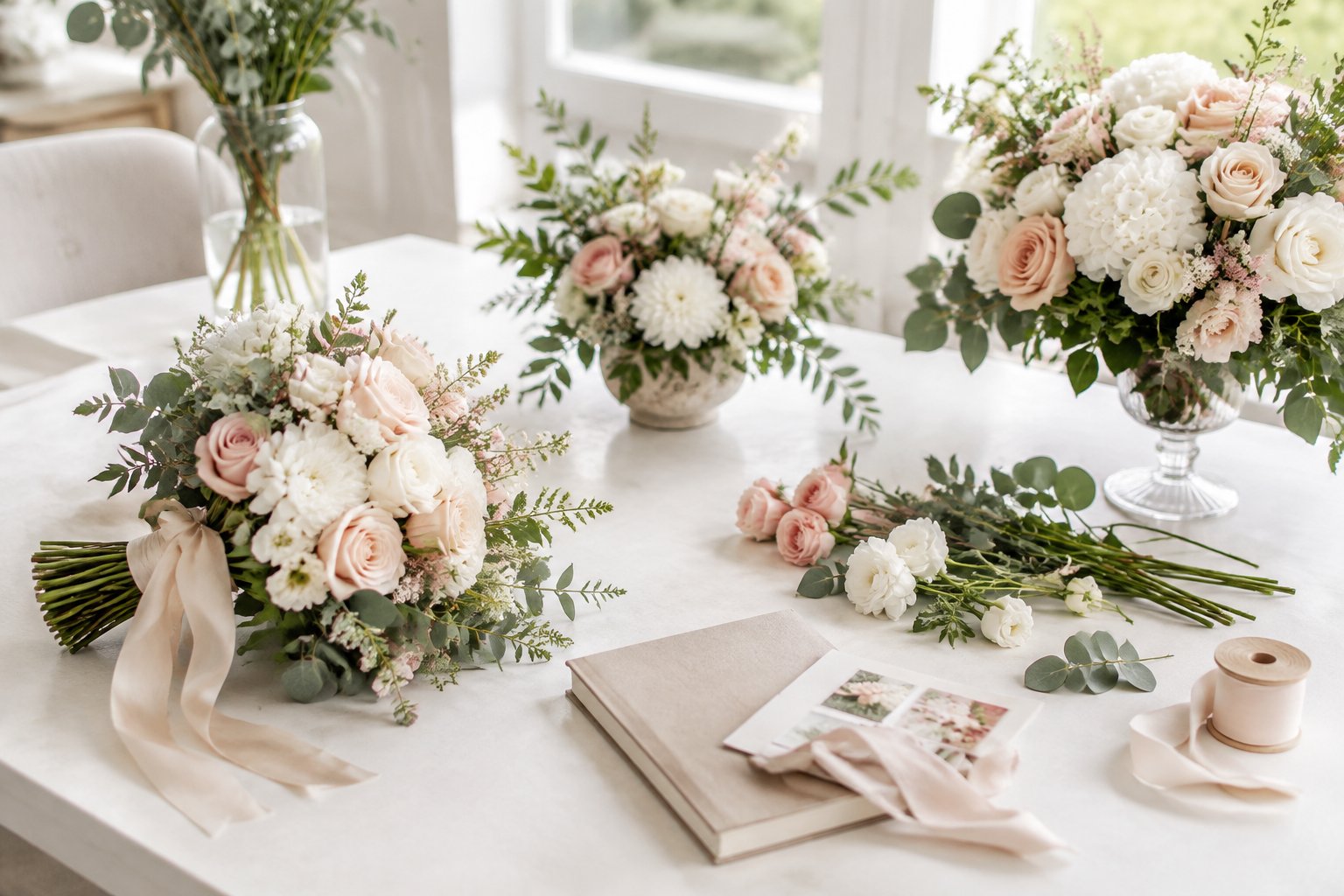
Wedding-Party Flowers and Personal Pieces
Your bridal bouquet deserves close attention because it appears throughout portraits and the ceremony. Coordinate bridesmaid bouquets with its colors and flower types, then scale their size or detail to fit your budget.
Personal pieces may also include:
- Boutonnieres for the groom, wedding party, family members, or officiant
- Corsages for parents and honored guests
- A small flower-girl bouquet or loose petals
- Floral accents for hair, a guest book, or the cake
Choose one main flower for a unified look, then vary the supporting blooms or greenery across each arrangement.
Ceremony and Reception Floral Priorities
For the ceremony, choose the focal area guests will see during the vows. An arch arrangement, altar design, or two large aisle pieces can create strong visual impact.
Smaller aisle markers add detail when they fit your budget and venue rules.
For the reception, prioritize table centerpieces, the sweetheart table, and the cake or welcome table. Event flowers placed in high-visibility areas give you more value than spreading small arrangements across every available surface.
Ask whether ceremony pieces can be moved to the reception after the vows.
How to Match Flowers to Your Color Palette
Build your palette with one main color, one supporting shade, and a neutral or green accent. White and blush create a soft romantic style, while jewel tones bring depth to fall celebrations.
Bright coral, yellow, or orange flowers suit sunny outdoor events.
Bring fabric swatches, invitation colors, and venue photos to your florist. Flowers can look different under indoor lighting, outdoor sun, or candlelight, so review the palette in the setting where your wedding will take place.
Build a Cohesive Bouquet Style
Choose one bouquet design direction and repeat its key features across your wedding bouquets. Flower shape, stem length, color balance, and greenery create a consistent style even when each arrangement has a different purpose.
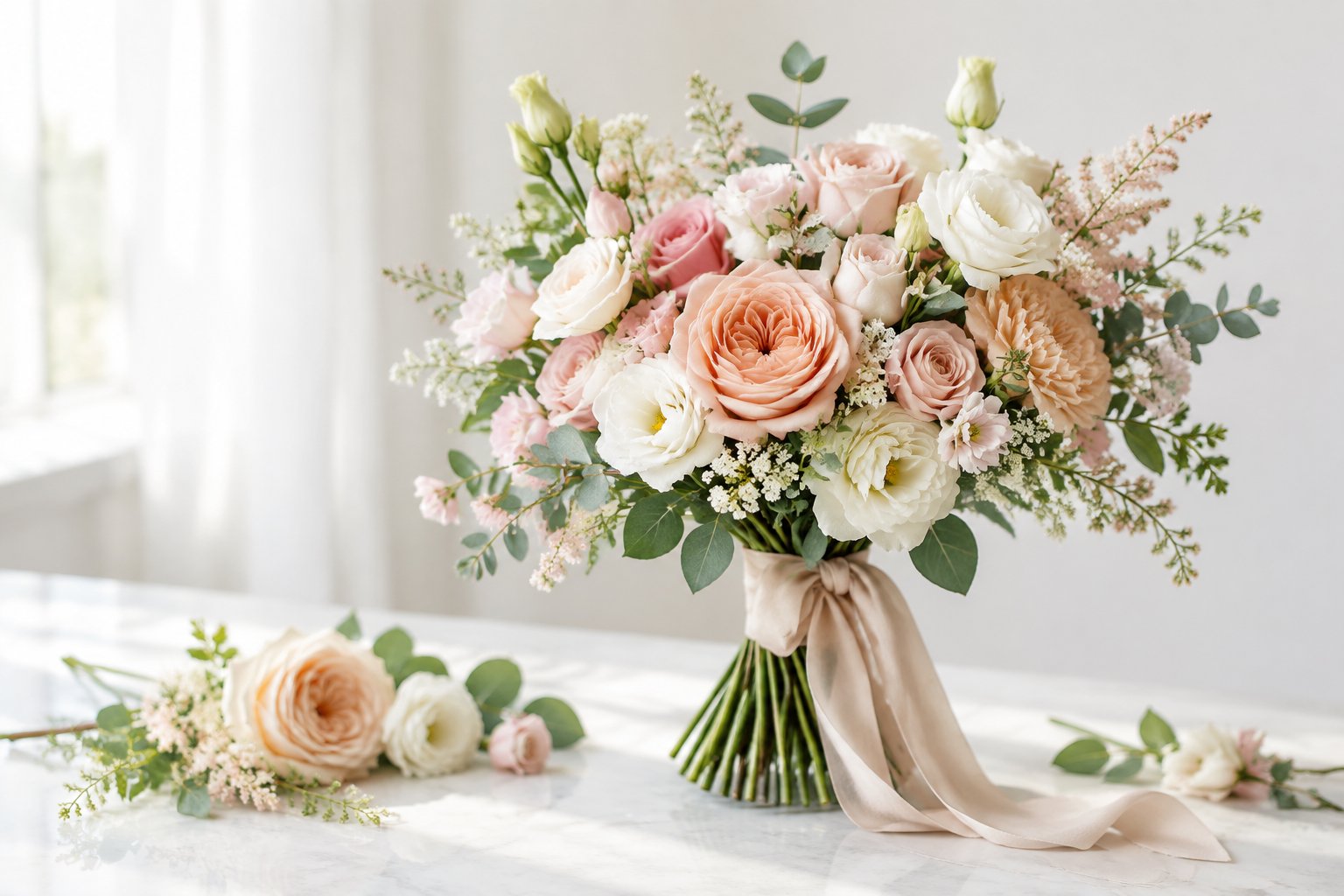
Classic, Garden-Inspired, and Modern Designs
Classic wedding bouquets use balanced shapes and familiar flowers such as roses. A round bouquet with even edges suits formal attire and traditional venues.
Garden-inspired designs feel loose and layered. Combine open roses, airy filler flowers, and trailing foliage for a freshly gathered look. These bouquets work well with outdoor venues, soft fabrics, and relaxed ceremonies.
Modern bouquets use fewer flower types, stronger lines, or unusual color blocks. A compact arrangement of white blooms, sculptural greenery, or a single flower variety creates a clean statement.
Choosing a Bridal Bouquet Shape
A round bouquet gives you a neat, timeless profile. A hand-tied bouquet feels natural and works with many wedding dress shapes.
A cascading bouquet creates length through trailing flowers and foliage, making it a strong choice for dramatic gowns or grand venues.
Consider the bouquet’s weight and handle size before ordering. You should be able to carry it comfortably through portraits, vows, and greetings.
How Greenery Changes the Overall Look
Eucalyptus adds a soft blue-green tone and a flowing shape. Its rounded leaves suit romantic and garden designs, while longer stems create movement around the bouquet edges.
Use greenery for fullness, texture, and color balance. Fine foliage creates an airy finish, broad leaves add structure, and trailing stems make a compact bouquet feel more organic.
Ask your florist to show you how the greenery will affect the bouquet’s width and weight.
Which Flowers Work Best for a Wedding?
Roses, ranunculus, orchids, hydrangeas, and anemones give you a flexible mix of romance, volume, structure, and contrast. Select them by season, availability, venue conditions, and the texture you want in your arrangements.
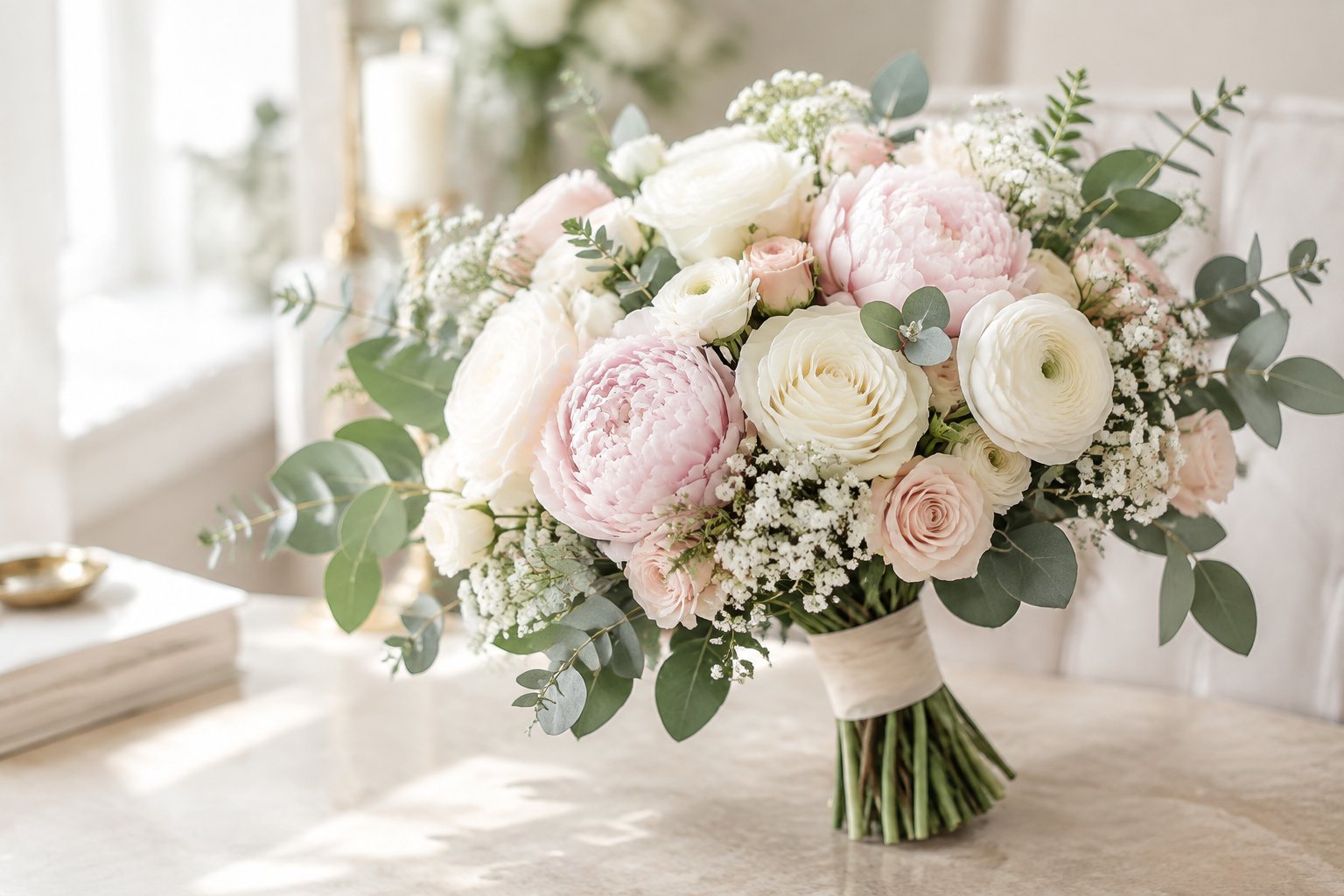
Romantic Roses and Ranunculus
Roses offer many colors, sizes, and shapes, including standard, spray, and garden varieties. They work in bridal bouquets, ceremony installations, and reception centerpieces.
Ranunculus brings tightly layered petals and a delicate shape. Use it as a focal flower in a romantic bouquet or as a smaller accent among roses and foliage.
Its detailed petals add interest without making the arrangement feel heavy.
Statement Orchids and Hydrangeas
Orchids create a sleek, sculptural look in modern bouquets and ceremony designs. White orchids suit minimalist palettes, while purple, pink, or yellow varieties add a stronger color note.
Hydrangeas provide fullness and a soft rounded form. They help fill centerpieces and floral installations, making the arrangement look abundant.
Their colors include white, blue, pink, purple, and green, though availability varies by season and supplier.
Using Anemones for Contrast and Texture
Anemones bring a clear center that draws attention within a bouquet. White petals with a dark center create crisp contrast, while berry, red, and purple varieties add richer color.
Pair anemones with roses, ranunculus, or eucalyptus for a layered design. Protect these delicate blooms from harsh heat and direct sun during delivery, setup, and outdoor portraits.
How Much Do Wedding Flowers Cost?
Most U.S. couples spend about $2,800 on wedding flowers, with actual budgets ranging from roughly $900 to $4,800 based on scale, location, season, and design choices. Use that range as a planning guide, then request a detailed quote for your venue and guest count.
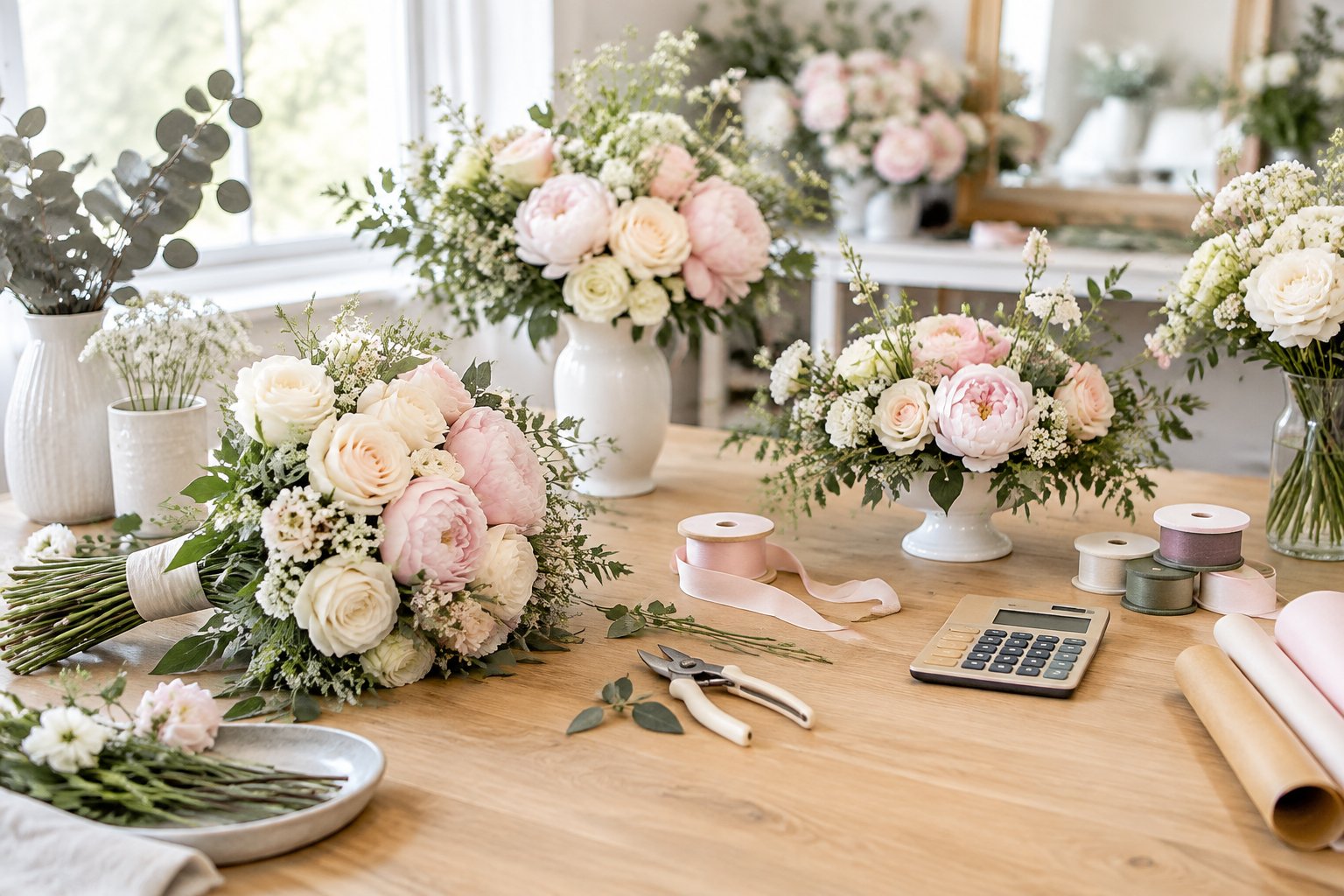
What Drives the Price of Floral Arrangements
The flower variety affects the cost per stem. Out-of-season, imported, or premium blooms raise the material cost.
The size and number of arrangements also shape the quote.
Labor includes sourcing, flower conditioning, design, packing, delivery, and venue setup. Large arches, hanging pieces, tall centerpieces, and multi-location deliveries require more time and staff.
Greenery adds volume and texture, while ceremony pieces that move to the reception help you use each arrangement for more of the day.
Typical Costs for Bouquets and Boutonnieres
A bridal bouquet often costs more than a bridesmaid bouquet because it uses more flowers, premium varieties, or complex design work. Bridesmaid bouquets can share the same core flowers in a smaller size.
Boutonnieres use fewer stems, yet the price includes careful wiring, taping, finishing, and delivery. Ask for itemized pricing across the bridal bouquet, bridesmaid bouquets, boutonnieres, and larger floral arrangements.
Where to Save Without Losing Visual Impact
Choose flowers available during your wedding season and let your florist suggest close alternatives. Use greenery to add volume, then reserve premium blooms for the bridal bouquet or ceremony focal point.
Reuse aisle arrangements at the reception, move an arch piece behind the sweetheart table, or place ceremony flowers near the cake table. Small bud vases and candles can reduce the number of large centerpieces while keeping tables inviting.
For more planning detail, compare your priorities with this guide to how much should I spend on my wedding flowers.
Order Options: Florist, Pre-Made, or DIY
Full-service floral design suits couples who want professional sourcing, design, delivery, and setup; pre-made collections simplify ordering; bulk flowers suit couples with time, helpers, and floral skills. Choose the option that matches the complexity of your event and the amount of work you want on wedding week.
When Full-Service Floral Design Is Worth It
A full-service florist handles flower conditioning, arrangement design, delivery, placement, and venue coordination. This option helps when you have an arch, multiple event flowers, tight setup windows, or ceremony and reception locations that require a floral flip.
It also gives you one person to manage substitutions caused by weather or availability. Ask what the proposal includes, including containers, delivery, setup, breakdown, taxes, and rental returns.
What to Expect From Pre-Arranged Wedding Collections
Pre-arranged collections offer set bouquet styles, matching boutonnieres, and coordinated centerpieces. They work well for smaller weddings or couples who want a clear ordering process with fewer design decisions.
Review the flower substitutions, color choices, delivery date, size of each piece, and setup responsibilities before paying. Confirm whether the flowers arrive fully arranged or need hydration and placement when they arrive.
Is Buying Bulk Flowers Right for You?
Bulk flowers give you control over flower types, quantities, and the final design. They work best when you have a cool storage area, clean buckets, floral tools, and several reliable helpers.
Fresh flowers need processing after delivery, including trimming stems, removing damaged foliage, and placing them in clean water. DIY also requires time for bouquets, boutonnieres, centerpieces, transport, and setup.
A hybrid plan lets you buy bulk flowers while hiring help for assembly or venue installation.
Plan Delivery, Setup, and Flower Care
Finalize your floral plan weeks before the wedding and confirm every delivery, storage, and setup detail with the venue. Your flowers stay in better condition when the timeline accounts for hydration, travel, temperature, and access.
When to Finalize Your Flower Order
Start florist conversations eight to twelve months before a popular wedding date. Finalize flower choices, quantities, colors, and design details after confirming your venue and wedding schedule.
Place a detailed flower order about three to four weeks before the wedding when working with a bulk supplier, while full-service florists may reserve flowers earlier through the design proposal. Confirm the final count of bouquets, boutonnieres, ceremony flowers, and reception pieces.
Coordinating Venue Delivery and Setup
Give your florist the venue address, loading instructions, access window, floor plan, ceremony time, and contact information for the coordinator. Confirm whether tables will be dressed before floral setup and whether the venue allows candles, hanging pieces, or installations.
Professional teams often arrive one and a half to two hours before the ceremony for a standard wedding. Larger designs need more time.
If your ceremony and reception use separate locations, allow time for travel and moving arrangements between spaces.
Keeping Fresh Blooms Wedding-Ready
Store fresh flowers in a cool, ventilated area away from direct sun, heaters, and fruit. Keep stems in clean water and follow the supplier’s care instructions.
Personal flowers should remain hydrated until they are needed, then stay in a cool area between photos and the ceremony. Outdoor heat speeds wilting, so plan shaded holding areas and limit the time flowers spend in direct sunlight.
Share your rain plan and venue temperature details with the florist before delivery.