
And S Wedding Cake: Flavors, Designs, and Ordering
A wedding cake gives you a centerpiece, a dessert, and a memorable cake-cutting moment in one choice. The best And S wedding cake for most couples is a custom tiered cake with two complementary flavors, buttercream icing, and professional delivery arranged around your guest count. That format gives you room to match your wedding style while keeping servings easy to plan.
Start with your guest list, serving style, budget, and venue conditions. Then schedule a tasting so you can judge the cake’s flavor and texture before choosing its final design. If you are planning a celebration in Queens or need delivery beyond the local area, ask your baker about transport, setup, and storage when you request a quote.
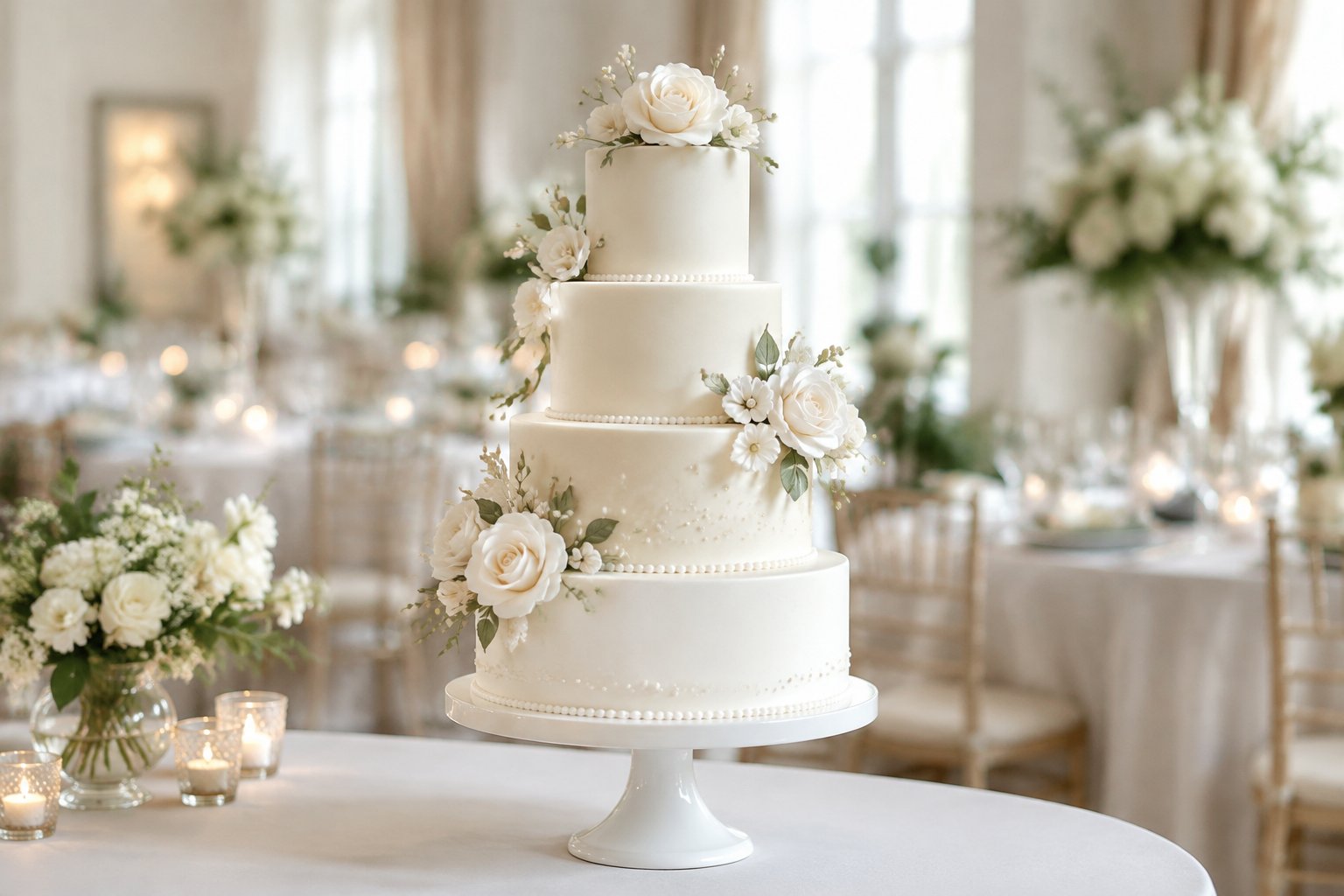
How to Choose the Right Cake Size and Format
Choose a tiered cake by estimating servings for about 75 to 85 percent of your guests, then adjust for other desserts and your serving plan. Your baker can turn that estimate into the right tier sizes, a layer cake, cupcakes, or a combination of custom cakes.
The shape and height should also suit the venue. A tall cake adds presence in a large room, while a compact design feels balanced at an intimate reception.
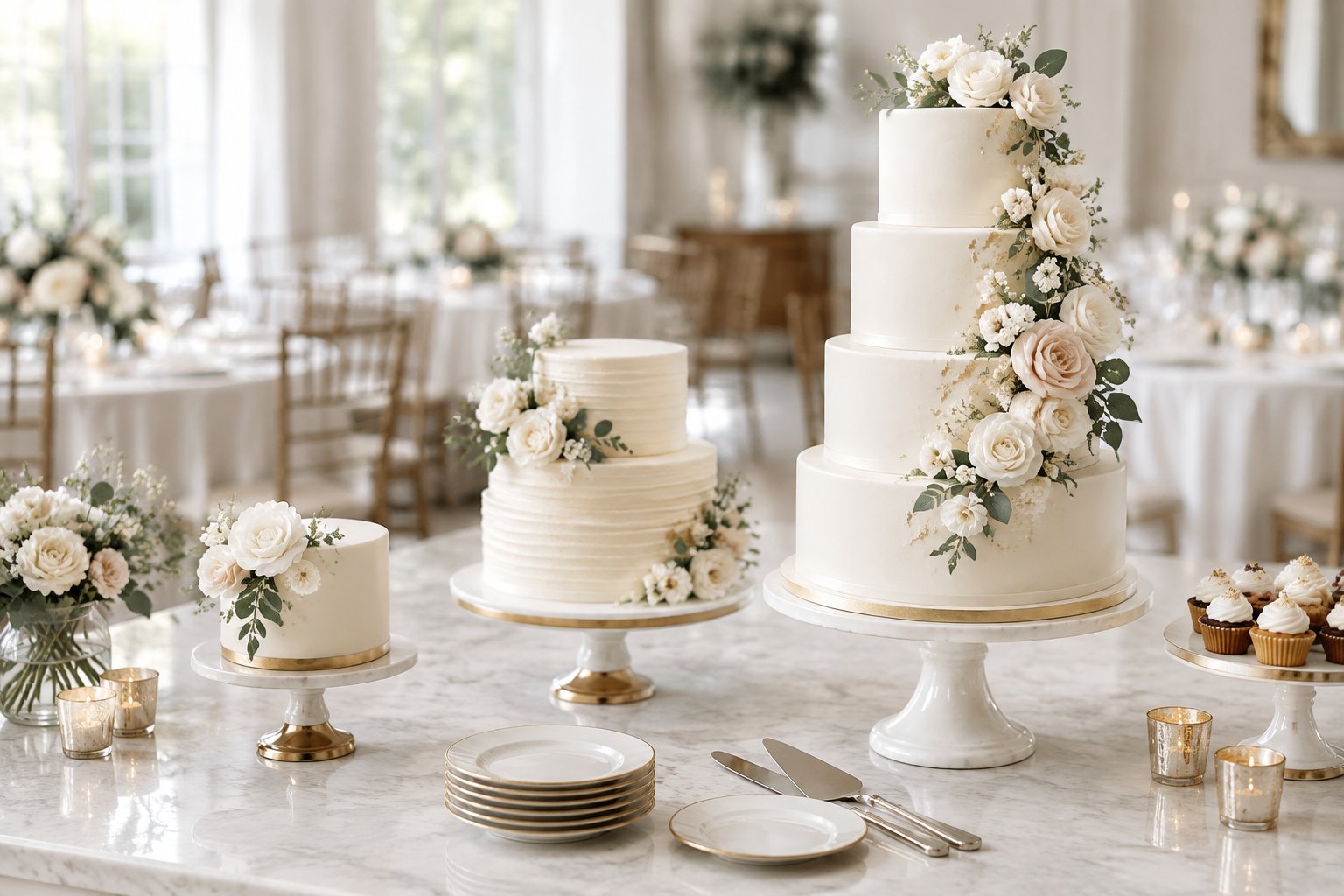
How Many Servings Does a Tiered Cake Provide?
A round 6-inch tier serves about 12 guests, an 8-inch tier about 24, a 10-inch tier about 38, and a 12-inch tier about 56. A 6-inch, 8-inch, and 10-inch combination provides roughly 74 servings, which suits a wedding with about 90 to 100 guests when other desserts are available.
Ask your baker whether servings follow a standard wedding slice of about 1 by 2 inches or a larger party portion. Include the top tier separately if you plan to preserve it for your first anniversary.
Should You Add Sheet Cakes or Cupcakes?
Sheet cakes help you serve a larger guest count without adding height or elaborate decoration to the display cake. Your venue team can cut them in the kitchen and serve the portions discreetly.
Cupcakes offer easy portion control and give guests a choice of flavors. They also work well for casual receptions, outdoor celebrations, or dessert tables. Confirm whether your venue charges a cake-cutting fee for sheet cakes or cupcakes.
Choosing a Cutting Cake for a Small Reception
A small layer cake or two-tier cake suits a reception with fewer guests. Choose a cutting cake that gives you enough portions for the people who want dessert while keeping the design proportional to the table and room.
If you want a taller look, ask about decorative dummy tiers paired with a smaller edible cake. Your baker can create a polished display while a separate sheet cake supplies additional servings.
Wedding Cake Flavors, Fillings, and Frosting
The strongest flavor plan pairs a familiar cake with one bright or rich filling and a frosting that supports the texture. Vanilla cake, white cake, chocolate cake, and red velvet cake give you dependable starting points, while lemon curd, raspberry preserves, or fresh berries add contrast.
At a tasting, sample each flavor as a complete slice. A filling that tastes balanced by itself may feel sweeter once combined with cake and buttercream icing.
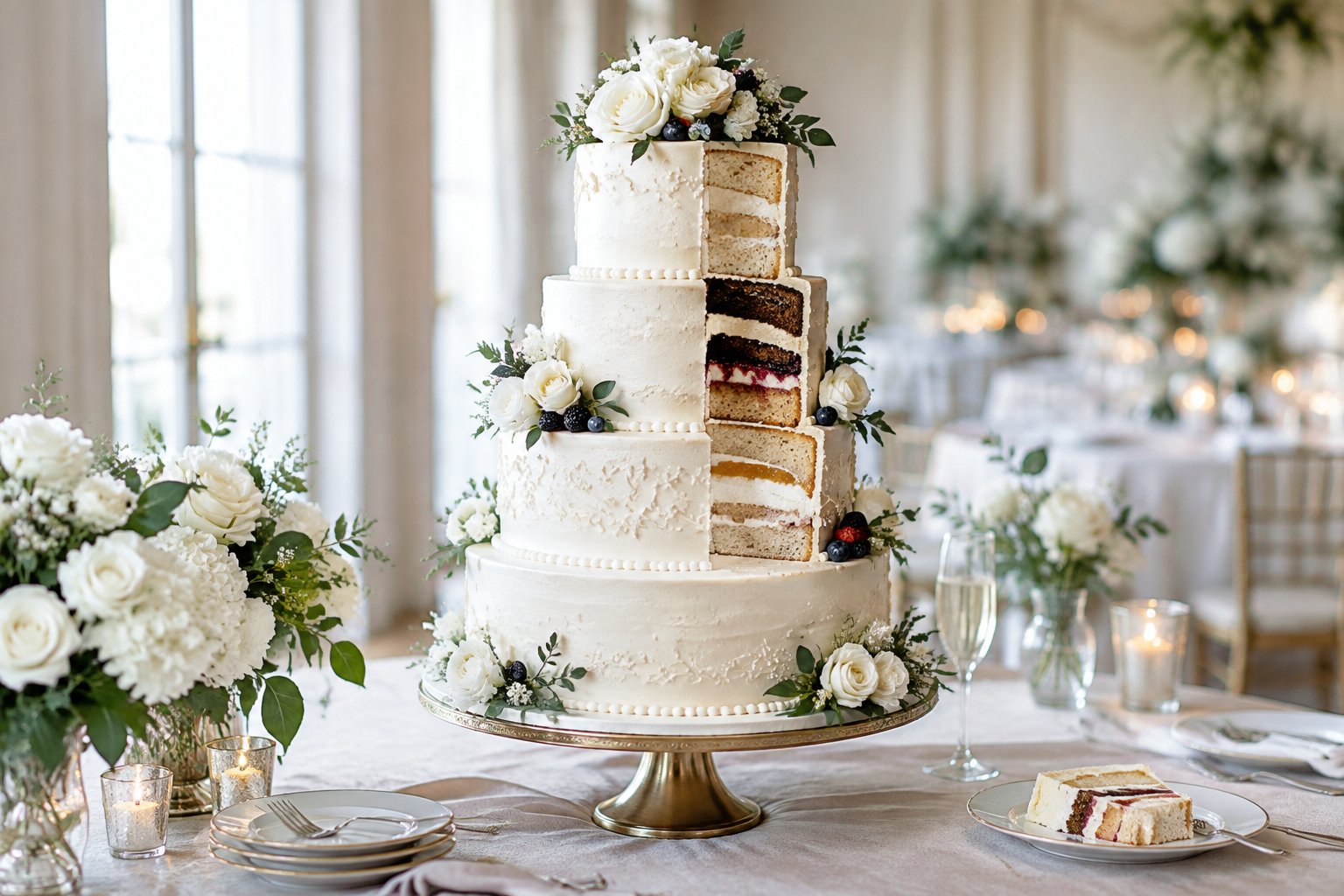
Classic Vanilla and White Cake Combinations
Vanilla cake pairs well with raspberry preserves, lemon curd, strawberry filling, or vanilla buttercream. White cake has a light crumb and works with delicate fillings, including berries and whipped cream.
Ask about the difference between a white cake made with egg whites and a vanilla cake made with whole eggs. Egg whites create a pale color and soft texture, while whole eggs bring a fuller flavor and deeper color.
Chocolate Cake and Red Velvet Cake Options
Chocolate cake suits guests who prefer a rich dessert. Pair it with chocolate buttercream, raspberry preserves, salted caramel, or a light vanilla filling to balance its depth.
Red velvet cake brings cocoa flavor and a striking color. Cream cheese frosting is a classic match, while buttercream offers a smoother finish and a milder sweetness.
Fruit Fillings That Add Brightness
Lemon curd brings sharp citrus flavor to vanilla or white cake. Raspberry preserves add tartness to chocolate, almond, or vanilla layers.
Blackberries provide a deeper berry note and pair well with lemon or vanilla. Fresh fruit and fruit fillings need careful temperature control, especially when the reception takes place outdoors or during warm weather.
Buttercream Icing vs. Other Finishes
Buttercream gives you a soft, creamy finish and works well with piped borders, textured swirls, and rustic designs. Buttercream icing also lets the flavor of the cake and filling remain prominent.
Fondant creates a smooth surface for sharp edges, painted details, and sculpted decorations. Whipped frosting feels light and airy, though fillings made with heavy cream require refrigeration and careful timing. Ask your baker how each finish will hold up at your venue.
Wedding Cake Design Ideas That Fit Your Celebration
Your wedding cake design should connect with the venue, flowers, table styling, and formality of the event. A simple buttercream finish suits a garden gathering, while sharp tiers, metallic details, or sculpted shapes fit a formal ballroom.
Bring your baker a few color references and fabric, invitation, or floral details. A focused design brief helps keep the cake cohesive and prevents too many decorative elements from competing for attention.
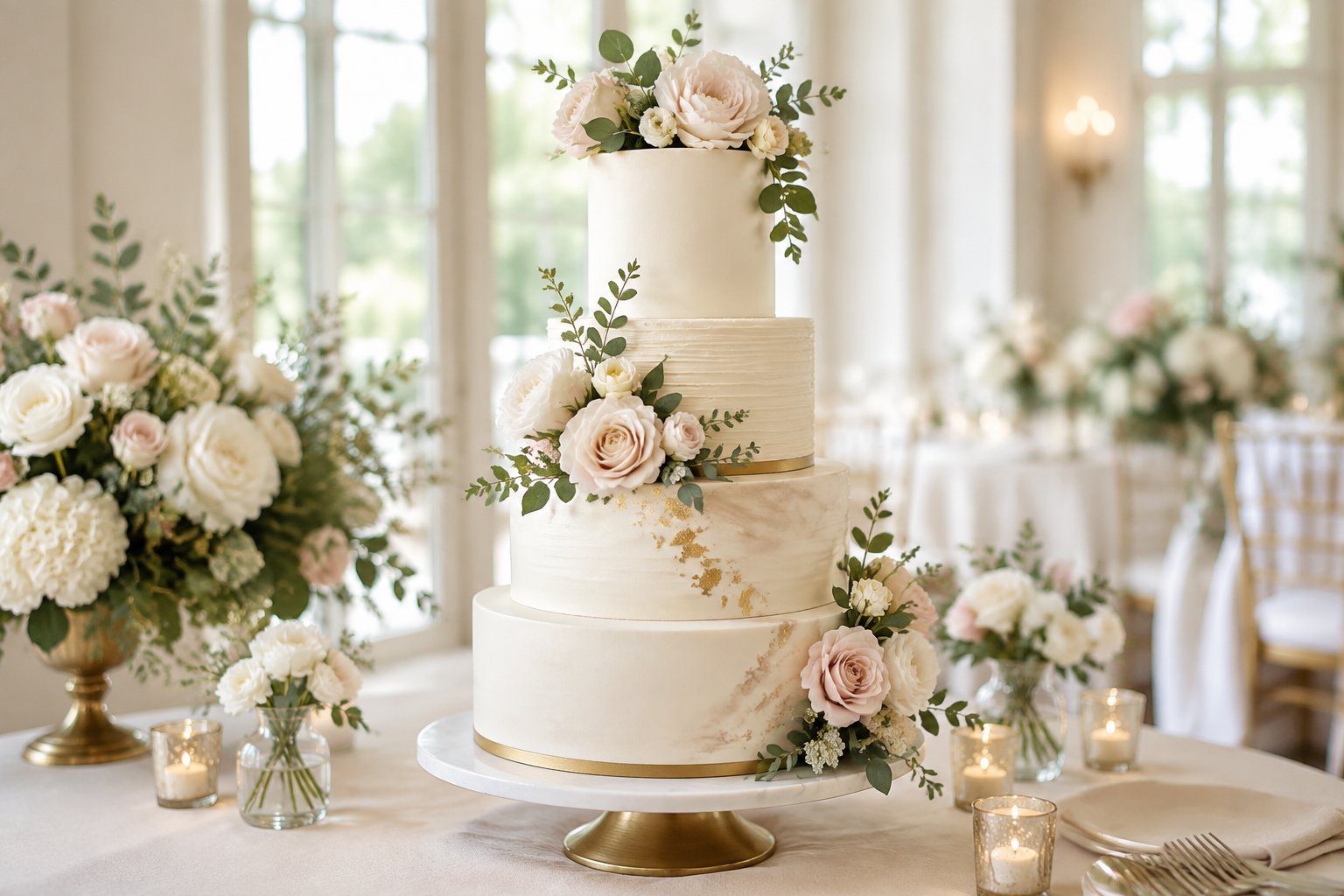
Selecting a Style That Matches Your Venue
A white tiered cake with delicate piping works in a classic ballroom or historic venue. Textured buttercream, soft colors, and fresh greenery suit a garden or barn setting.
Modern venues pair well with clean edges, geometric tiers, monochrome icing, or a restrained metallic accent. Consider the cake table location, ceiling height, lighting, and background so the design photographs clearly.
Using Fresh Flowers Safely and Beautifully
Fresh flowers bring color and natural texture to a cake. Ask your florist and baker to confirm that every flower is safe for food contact, since some popular blooms are toxic.
Your baker can place flowers on food-safe barriers or use floral picks that keep stems separate from the cake. Keep bouquets free of soil, sap, pesticides, and loose petals. Provide the flower list well before the wedding so the baker can plan placement.
For more inspiration, explore these wedding cakes with flowers ideas.
Cake Toppers, Stands, and Finishing Details
A cake topper adds personality without changing the entire design. Choose initials, a date, a short phrase, or a small sculptural piece that fits the cake’s scale.
A cake stand lifts the display and frames the tiers. Confirm who supplies it, whether it fits the cake board, and how it will return after the reception. Other finishing details include ribbon, edible pearls, pressed textures, painted accents, and piped borders.
What Does a Custom Wedding Cake Cost?
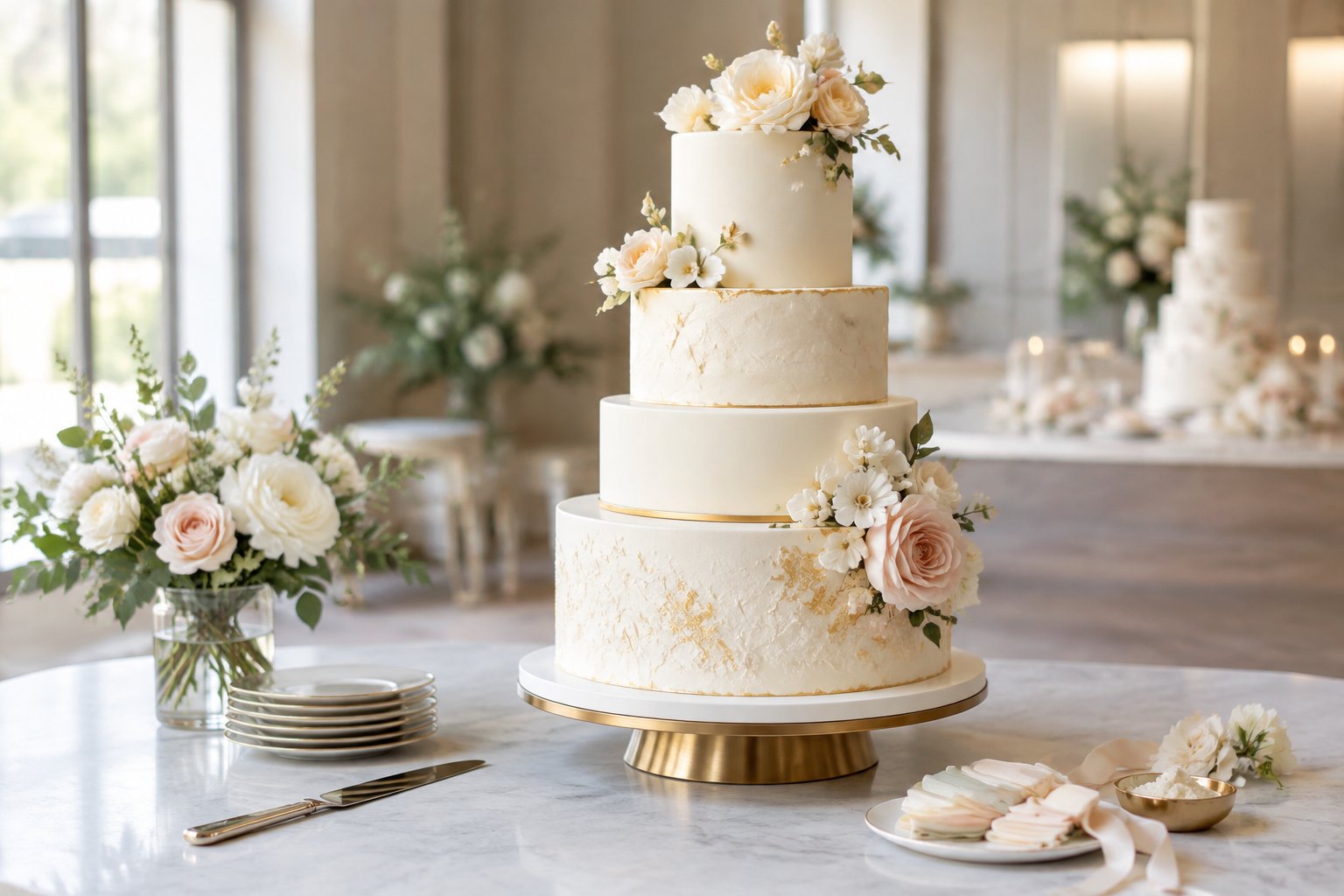
A custom wedding cake in the United States often costs about $300 to $700, with elaborate designs reaching $1,500 or more. Your guest count, decoration, bakery type, specialty fillings, delivery distance, and venue fees shape the final quote.
Request an itemized estimate that lists servings, flavors, icing, decoration, delivery, setup, stand rental, and any cake-cutting fee. Comparing complete quotes gives you a clearer budget than comparing base prices alone.
What Affects the Price Per Slice?
Standard custom cakes often fall near $3 to $8 per slice. Specialty studios, fondant finishes, hand-painted details, sugar flowers, sculpted decorations, and premium fillings raise the price.
A larger cake also requires more boards, supports, labor, and transport planning. Ask whether the quote includes delivery and setup. Your venue may charge a separate cake-cutting fee of about $2 to $5 per slice.
Ways to Create a Polished Look on a Budget
Use a smaller decorated cutting cake with sheet cakes prepared for kitchen service. A smooth buttercream finish costs less than extensive fondant work and gives you a clean canvas for flowers or a topper.
Limit the design to one focal detail, such as piping, fresh flowers, or metallic accents. Choosing two flavors across the tiers also keeps production more manageable than ordering a different flavor for every layer.
More practical ideas appear in this guide to how to save money on a wedding cake.
When to Book Your Cake Baker
Book your baker six to twelve months before the wedding, especially for a popular date or a complex design. This gives you time for a consultation, tasting, revisions, and venue coordination.
Reserve the date with a deposit and confirm the final guest count, flavors, design, delivery address, and setup window several weeks before the event. Send the baker any updated venue rules, floral plans, or rental details.
Delivery, Setup, and Storage Considerations
Professional delivery and setup protect a tiered cake from shifting, temperature changes, and last-minute assembly problems. Arrange a clear delivery window, a stable table, venue access, refrigeration details, and a named contact for handoff.
Cakes with cream, fruit, or soft fillings need temperature control. Ask your baker how long the finished cake can remain at the venue and where it should wait before the reception.
Why Professional Delivery Matters for Tiered Cakes
Tiered cakes carry significant weight and rely on internal supports, boards, and careful balance. A trained delivery team can transport the tiers on a level surface, finish assembly at the venue, and place decorations after the cake is stable.
Plan delivery about one to three hours before the reception when the venue and cake design allow it. Confirm the exact setup location before the baker arrives.
What to Know About Nationwide Delivery
Nationwide delivery requires careful packaging, timing, and temperature planning. Ask whether the cake travels fully assembled, in separate tiers, or as components that require local finishing.
Confirm the carrier, arrival date, tracking process, delivery insurance, storage instructions, and support contact. A bakery may ship a durable cake design successfully while delicate buttercream, fresh fruit, or tall tiers need a different plan.
Handling Frozen Cakes and Dry Ice
Frozen cakes need clear thawing instructions so condensation does not damage the finish. Keep the package sealed during the first stage of thawing, then follow the baker’s timing for refrigeration and serving.
Dry ice can keep shipped desserts cold, yet it requires ventilation and careful handling. Never place dry ice in an airtight container or touch it with bare skin. Follow the bakery’s instructions and keep it away from children, pets, and guests.
Local Delivery Options in Queens
For a Queens wedding, confirm the delivery zone, fee, parking access, elevator rules, and venue loading instructions. Share the venue’s contact name and the time the cake table will be ready.
Ask whether the baker will assemble a tiered cake on-site and place fresh flowers or the cake topper. Keep the cake in a cool, secure location until service, with staff assigned to protect the table from traffic.
A Notable Historic Wedding Cake to Try
A historic wedding cake concept pairs a light vanilla sponge with raspberry preserves and buttercream, creating a familiar flavor profile with a bright fruit center. The style also works well for bakeries that offer nationwide delivery and temperature-controlled shipping.
Use the historic reference as inspiration for flavor and presentation, then confirm current availability, delivery terms, and storage instructions with Montilio’s.
Montilio’s JFK Wedding Cake
Montilio’s JFK Wedding Cake is associated with a classic wedding-cake style built around vanilla sponge, raspberry preserves, and buttercream. Its traditional flavor structure suits couples who want an elegant cake with broad guest appeal.
Ask about tier sizes, serving counts, design options, delivery coverage, setup, and lead time. If the cake travels, confirm how it is packed and whether dry ice is included or required.
Vanilla Sponge With Raspberry Preserves and Buttercream
Vanilla sponge keeps the flavor light and tender, while raspberry preserves add tartness between the layers. Buttercream brings a smooth, creamy finish that supports both the fruit and the cake.
Request a tasting before placing the order, especially if you are choosing between buttercream styles. Confirm refrigeration needs, delivery timing, and the best serving temperature so the preserves and frosting keep their intended texture.