
Q and U Wedding: A Memorable Phonics Celebration
A Q and U wedding is a playful kindergarten phonics celebration that helps children remember the spelling pattern qu. For a classroom-friendly activity, pair a short letter ceremony with hands-on word practice because students see, say, read, and write the pattern in one memorable lesson.

In English, q is usually joined by u in words such as queen, quilt, quarter, and quick. Turning that spelling rule into a celebration gives students a fun reason to notice the letters working together. Gather a few simple props, invite families to share in the joy, and let the class practice qu through play.
What Is a Q and U Wedding?
A Q and U wedding is a pretend classroom ceremony that celebrates how q and u work together to form the qu spelling pattern in phonics. The wedding of q and u gives children a story they can remember while they practice sounds, words, and letter relationships.

Why Q Is Usually Followed by U
In many English words, q appears with u immediately after it. Together, qu frequently represents the sound /kw/, as in queen, quilt, and quarter. The u supports q as part of the spelling pattern, so children learn to look for the pair when they read and write.
Use careful language with young learners because English has exceptions and words borrowed from other languages. A classroom rule such as “q and u stay together in many words” gives students a useful starting point without asking them to memorize an absolute rule.
How the Celebration Supports Phonics Learning
The q and u wedding ceremony connects movement, speaking, listening, reading, and writing. Children might carry letter signs down an aisle, repeat the /kw/ sound, match picture cards to words, and write a short sentence using a qu word.
Keep the ceremony brief so the learning stays central. Repeated phrases such as “Q and U go together” give students a verbal cue, while word cards and picture sorts show how the pattern appears in print.
How to Plan the Classroom Celebration
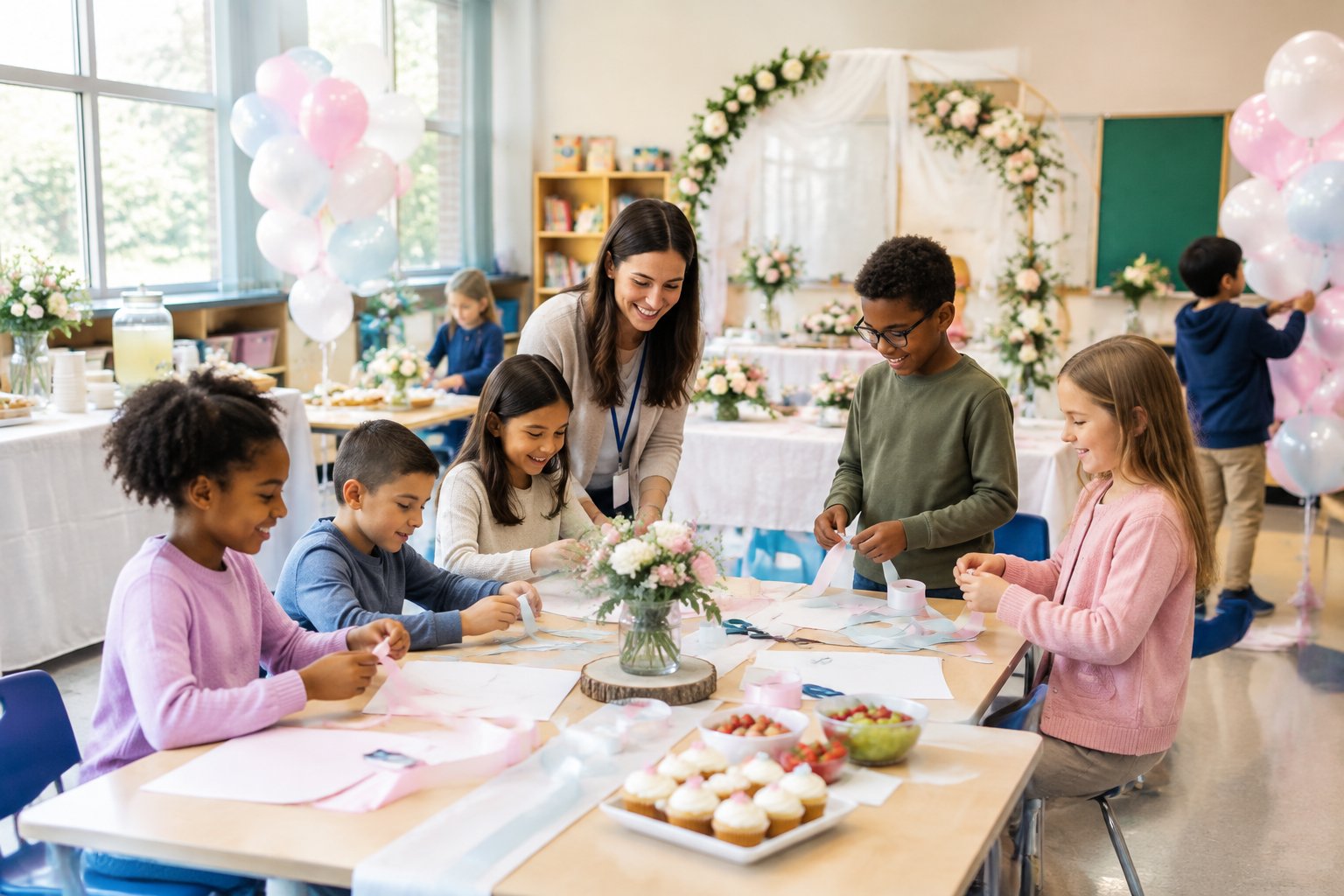
Plan the event as a short kindergarten literacy lesson with a playful theme, clear roles, and materials you already have. Bunting, paper letters, simple invitations, and a few qu word cards create a festive setting without a large budget.
Choose a Wedding Theme or Friendship Celebration
A wedding theme gives the lesson a memorable story, while a friendship celebration offers a welcoming option for every classroom. You can call the event “Q and U’s Letter Friendship Party” and keep the same phonics activities, decorations, and word practice.
Choose a tone that fits your students and school community. Use hearts, stars, or colorful paper chains instead of bridal symbols if you want a broader classroom theme. Place large Q and U signs at the front of the room so students can see the focus letters throughout the event.
Assign Student Roles
Give each child a meaningful job connected to the learning goal. Possible roles include:
- Q and U letter carriers
- Officiant or ceremony reader
- Word-card helpers
- Aisle decorators
- Invitation designers
- Qu word readers
- Reception hosts
Let children work in pairs when a role requires reading or public speaking. You can also rotate jobs during a multi-day activity so every student participates.
Send Invitations to Families
Send a short invitation that explains the classroom purpose and lists the date, time, and any requested materials. Invite families to help children practice a few qu words at home, such as queen, quilt, quick, or quiet.
Keep the request optional and low-cost. A handwritten response, a drawing of a qu word, or a paper decoration gives families an easy way to join the celebration.
Prepare the Ceremony and Letter Vows
Prepare a brief q and u wedding ceremony with a welcome, letter promises, word examples, and a closing pronunciation practice. Paper crowns, bunting, and large letter cards help children follow the ceremony while keeping attention on phonics.

Write Simple Q and U Vows
Use short lines that children can repeat together. For example:
- “I am Q, and I choose U as my letter partner.”
- “I am U, and I will stand beside Q in many words.”
- “Together, we make the spelling pattern qu.”
- “We promise to help readers hear and see /kw/.”
Have the class repeat each line after the reader. You can place the vows on chart paper with the letters Q, U, and QU in large print.
Create an Aisle, Props, and Decorations
Use two rows of chairs to create an aisle, then decorate the walls with paper bunting made from Q and U shapes. A queen crown works well for Q, while a blue or yellow sash gives U a clear visual identity.
Add props that support word learning:
- A bouquet made from qu word cards
- A small quilt square display
- A paper quarter
- Picture cards for queen and quilt
- A sign that reads “Q and U stick together”
Avoid fragile or distracting decorations. Leave enough open space for children to move, point to letters, and read cards.
Make the Qu Sound Part of the Script
Build repeated sound practice into every stage of the ceremony. After each word card, have the class say the beginning sound in queen, quilt, or quick, then identify the letters that spell it.
A simple script might include this exchange:
Officiant: “What letters make this pattern?”
Class: “Q and U!”
Officiant: “What sound do we hear in queen?”
Class: “/kw/!”
Use clear pronunciation and connect the spoken sound to the printed word each time.
Add Hands-On Qu Word Activities
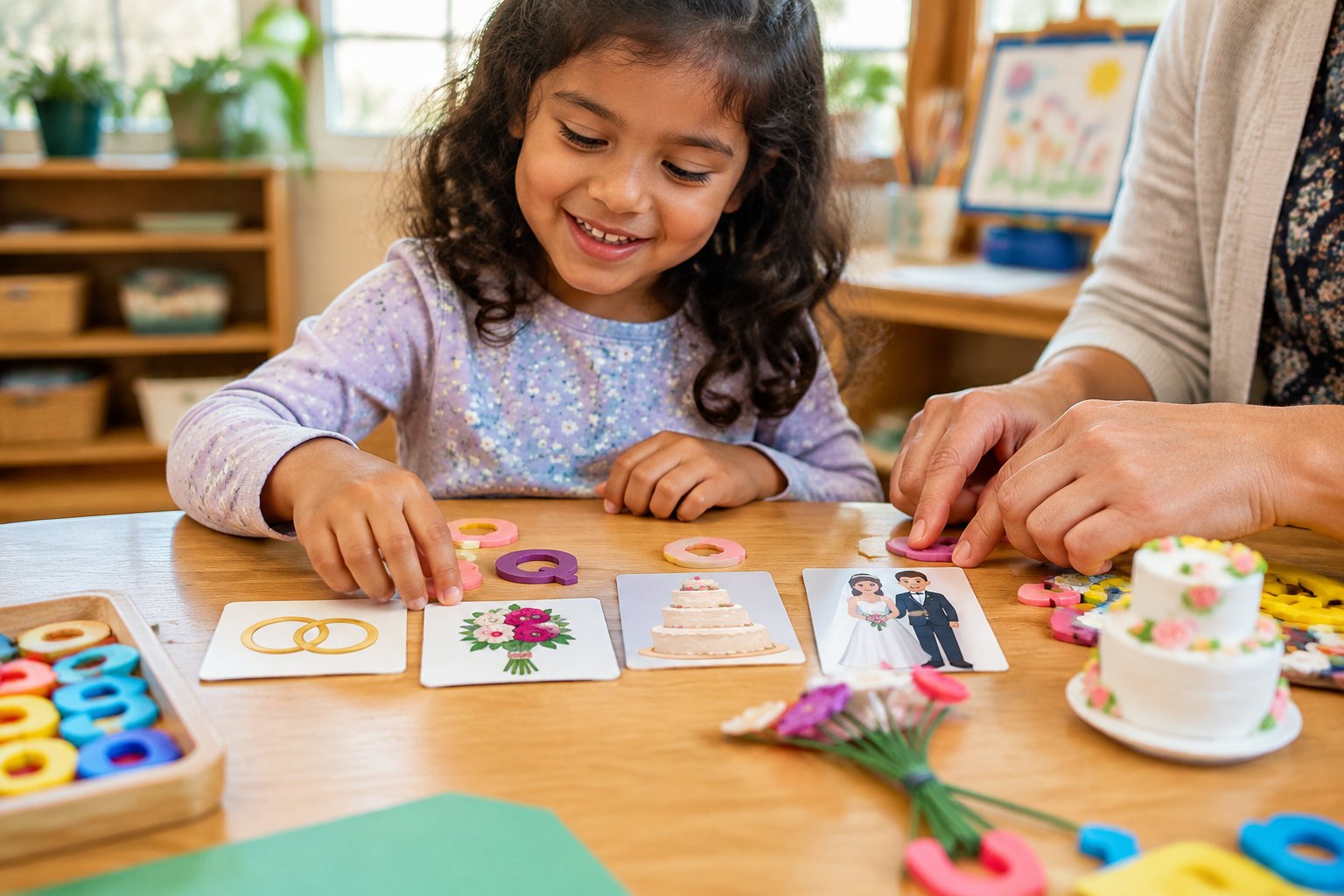
Hands-on activities turn the celebration into lasting phonics practice. Let students sort, build, read, and write qu words so the pattern moves from the ceremony into independent literacy work.
Build a Class Qu Word Chart
Create a chart with three columns: Word, Picture, and Sentence. Add words such as queen, quilt, quarter, quack, quick, and quiet as students suggest them.
Invite children to draw a matching picture or use prepared cards. Read each word together, circle qu, and ask students to identify the position of the pattern. Keep the chart available for later reading and writing practice.
Use Picture Sorts to Compare Qu and K Sounds
Give students picture cards for words beginning with qu and words beginning with k, such as queen, quilt, key, and kite. Students place each card under a QU or K heading.
Ask children to say each word before sorting it. This activity helps them attend to the first sound and the letters that represent it. Include a few words where the sound or spelling requires discussion, and guide students to use the printed word as evidence.
Practice Reading and Writing Qu Words
Set up a word-building station with letter tiles. Students can make quick, quack, or quit, read the word aloud, and copy it into a notebook. Add sentence frames such as “The queen has a ___” or “I see a ___.”
For a keepsake, let each child create a mini Qu Word Book. Each page can include one word, a drawing, and a sentence dictated to an adult or written independently.
Wedding Gifts, Reception Treats, and Keepsakes
Choose gifts and reception activities that give students another chance to read or use qu words. A word-themed favor, a small snack, and a class-made keepsake extend the lesson after the ceremony ends.
Choose Qu-Themed Wedding Gifts
Use inexpensive gifts that connect directly to vocabulary. Children can make a paper queen crown, decorate a quilt square, or receive a “quarter” card with a qu word printed on it.
For broader wedding gift inspiration, browse these wedding keepsake ideas and adapt the concept for classroom use. A class quilt made from student-designed squares creates a display that combines art, community, and spelling practice.
Plan a Simple Classroom Reception
Serve easy snacks that fit school rules and family needs. Cupcakes, fruit, crackers, or water work well, with table signs labeled queen, quilt, quick, and quarter.
Place a word card at each seat and ask students to read it before eating. You can add a short “dance” in which children move when they hear a qu word in a teacher-led call-and-response.
Send Thank-You Notes With Qu Words
Have students write or dictate thank-you notes to families, helpers, or another class. Encourage each child to include one qu word, such as “Thank you for the quilt square” or “Thank you for the queen crown.”
Display the notes for a day, then send them home. If writing is still emerging, let children draw a picture, trace a word, and dictate the rest of the message.
Keep the Event Inclusive and Easy to Adapt
Keep the activity welcoming by offering a friendship theme, flexible roles, and multiple ways to participate. A short, accessible celebration gives every child a path into phonics practice.
Use a Friendship Celebration Instead of a Wedding
A friendship celebration preserves the letter-pair story while avoiding a marriage theme. Call the event “Q and U’s Word Friendship Party” and use language such as “Q and U work together in many words.”
This format also supports students who prefer quieter activities. Children can make friendship bracelets from paper strips, create shared word cards, or read a group promise about helping each other learn.
Scale the Activity for Time, Budget, and Class Size
For a 15-minute lesson, display Q and U, read three word cards, repeat the sound, and complete one quick sort. For a longer event, add invitations, student roles, a craft, and a reception.
Use recycled paper, classroom letter tiles, and hand-drawn signs to keep costs low. In a large class, assign several word-card readers and run sorting stations so every child has an active task.
Connect the Celebration to Kindergarten Standards
Connect the event to kindergarten goals for letter-sound knowledge, phonological awareness, decoding, and early writing. Ask students to name the letters, produce the beginning sound, read familiar qu words, and write or dictate a sentence.
Record evidence with a quick checklist:
- Identifies Q and U
- Locates qu in a printed word
- Says the beginning sound
- Reads a familiar qu word
- Writes or dictates a sentence
Use the checklist to plan follow-up practice for students who need more support with sound matching or word recognition.