
Are Save the Dates Necessary? Understanding Their Importance for Your Event
As you plan your wedding, you might wonder about the importance of sending save-the-dates. While you don’t have to send them, they are highly encouraged, especially for destination weddings or events on holiday weekends. These cards help your guests save the date early, ensuring they can clear their schedules to celebrate with you.
Think of save-the-dates as a friendly reminder for your loved ones. They keep everyone in the loop about your special day without the full details that an invitation provides. By sharing the date and location early, you create excitement and help your guests make travel plans if needed.
So, are save-the-dates necessary? They are not required, but they can certainly enhance your wedding planning experience. By considering them, you make it easier for your friends and family to be there for your big day.
The Role of Save the Dates in Wedding Planning

Save the dates play an important part in your wedding planning journey. They not only announce your wedding date but also help set the tone for your big day. Understanding how they fit into your engagement and the etiquette around them can make the process smoother.
Setting the Scene with Engagement and Timeline
When you get engaged, the excitement begins. Sending out save the dates is one of the first steps in your wedding planning timeline. This card gives your guests an early heads-up about your wedding date.
Key points to consider:
- Timing: Aim to send save the dates about 6 to 8 months before your wedding.
- Guests’ Plans: This is particularly important for holiday or destination weddings when guests may need to book travel or accommodations.
Your save the date should include your names, the wedding date, and the location if confirmed. This sets the scene for what’s to come and builds excitement among your loved ones.
Understanding Save the Date Etiquette
Knowing the right etiquette for sending save the dates can help avoid any confusion. Unlike formal invitations, these cards serve a different purpose.
Important etiquette tips:
- Include Everyone: Send save the dates to anyone you plan to invite to the wedding.
- Communication: If you have a larger guest list, consider sending electronic save the dates for quicker delivery.
- Follow-Up: Your save the date is just a heads-up. Make sure to send formal invitations closer to the date with more details.
Following these guidelines ensures your guests feel informed and valued from the start of your wedding planning.
Crafting Your Save the Date Cards

Creating save the date cards is an exciting part of your wedding planning. You have many options to consider, from the type of card to the photos you might want to use. Here’s what you need to know.
Deciding on Digital or Physical Cards
When deciding on save the date cards, consider whether you want digital or physical options.
Digital save-the-dates are becoming popular for their convenience. You can easily share them via email or social media. They often allow you to add fun elements like animations or music.
On the other hand, physical cards can serve as beautiful wedding stationery. They can be more personal and tangible, making them ideal for keepsakes. Many couples enjoy sending out cards that recipients can display.
Think about your budget, the style you envision, and how quickly you want to inform your guests. Regardless of the type you choose, just remember to include essential details like the wedding date and location.
Incorporating Engagement Photos
Using your engagement photos can make your save the date cards special and unique. Choose a few favorites that capture your personality as a couple. You can use a single image as the focal point or create a collage.
Include a short message alongside your photo, like “Save the Date” followed by your wedding date. Make sure the text is legible against the background. You want your guests to easily spot the important details.
If you’re going digital, consider using photo editing tools to enhance your images. For printed options, ensure high-quality prints that show off the beauty of your pictures. This personal touch will make your cards more memorable for your loved ones.
Managing Your Guest List and RSVPs
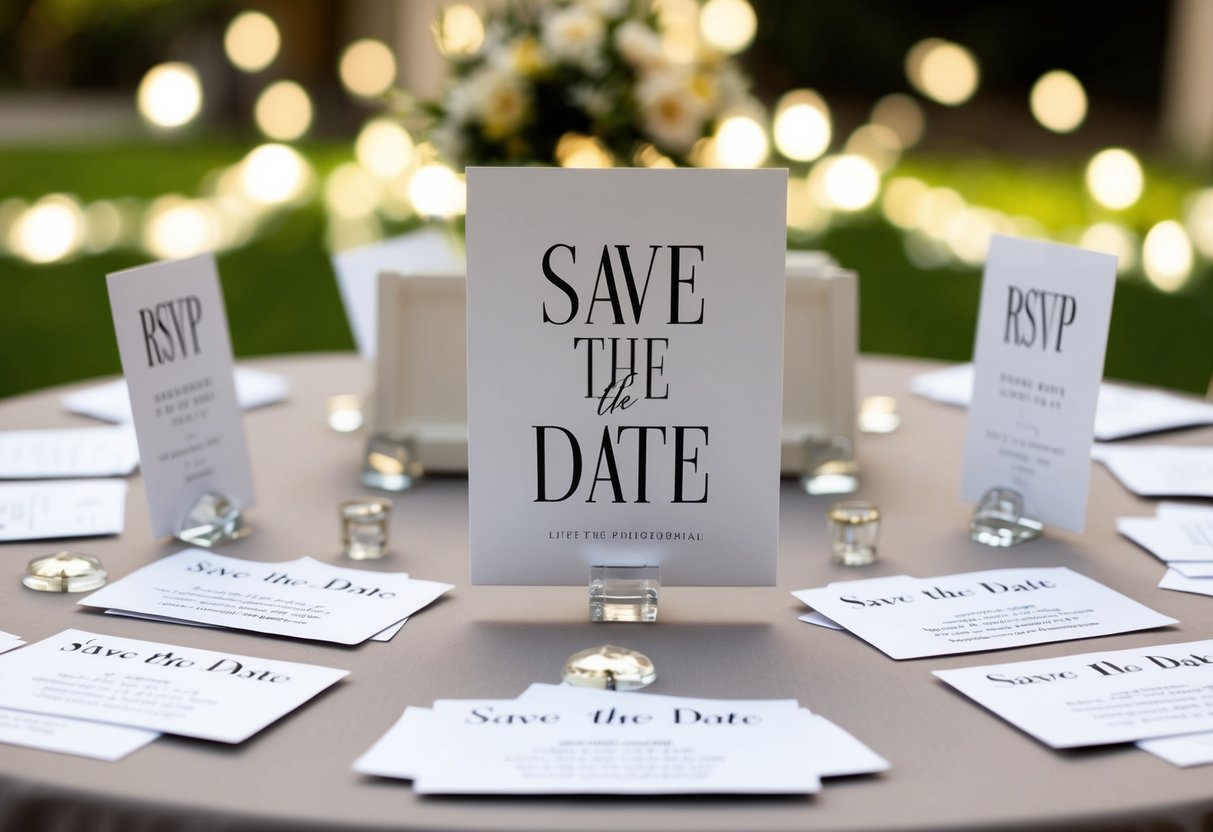
Creating and managing your guest list is an important part of wedding planning. It helps you stay organized while ensuring your guests receive timely information. Being proactive about gathering mailing addresses and encouraging RSVPs can make this process easier.
Gathering Mailing Addresses Early
Collecting mailing addresses early is key to keeping things on track. Start by reaching out to family and friends for their addresses. You can keep this information in a simple spreadsheet to stay organized.
Consider using a wedding website to collect addresses as well. This allows guests to input their own details. You might also send a friendly email or message to ask for missing addresses. Gathering this information ahead of time reduces stress later.
Make sure to double-check the addresses to avoid any delivery issues. Accuracy is important to ensure your save-the-date cards and invitations arrive on time.
Encouraging Prompt RSVP Responses
Encouraging prompt RSVPs helps you finalize your wedding guest list. When you send out your save-the-dates, let guests know how and when to respond. Include a clear deadline for RSVPs to guide their responses.
Using a wedding website can make RSVPs easier. Guests can reply online, and you can easily track their responses. This saves time and keeps you organized.
You can also send a friendly reminder message as the RSVP deadline approaches. This can help nudge those who haven’t responded yet. Expressing excitement about their presence can motivate them to reply promptly.
Coordination for Destination Weddings

Planning a destination wedding requires special attention to timing and clear communication about your wedding location. These factors help ensure your guests can comfortably make travel arrangements and understand what to expect.
Timing and Travel Considerations
When you set a date for your destination wedding, think about how far in advance you can send out save-the-dates. Aim for at least 9 to 12 months ahead, especially if your wedding is in a popular location or during peak travel seasons. This timing gives your guests ample opportunity to book flights and accommodations.
Also, consider local holidays and events that might affect travel. Your wedding could coincide with busy tourist seasons, making it harder for guests to find affordable options. Include the date range or specific date on your save-the-dates so everyone knows when your wedding will take place.
Conveying Important Location Information
Your save-the-dates should provide essential details about the wedding location. This includes the name of the venue and any nearby attractions that might interest your guests.
If you have a wedding website, mention it on your save-the-date cards. This is a great way for guests to get more information about travel arrangements and accommodations.
You can also update them on things like dress codes and transportation options as the date approaches.
Finally, let guests know that a formal invitation will follow. This helps them understand that they will receive more details soon, keeping excitement high for your special day.