
Are Wedding Block Rooms Cheaper? What Couples Should Know
A wedding hotel room block often lowers the rate your guests pay, especially for a peak wedding weekend, while also holding rooms near your venue. The savings are not automatic. You need to compare the group rate with public hotel pricing, check added fees, and choose contract terms that fit your guest count.
Yes, wedding block rooms are often cheaper for guests when the negotiated rate beats the hotel’s public price and the block has no extra fees. A courtesy block gives you a low-risk way to secure that value because guests pay for their own rooms and unused rooms return to the hotel after the cutoff date.
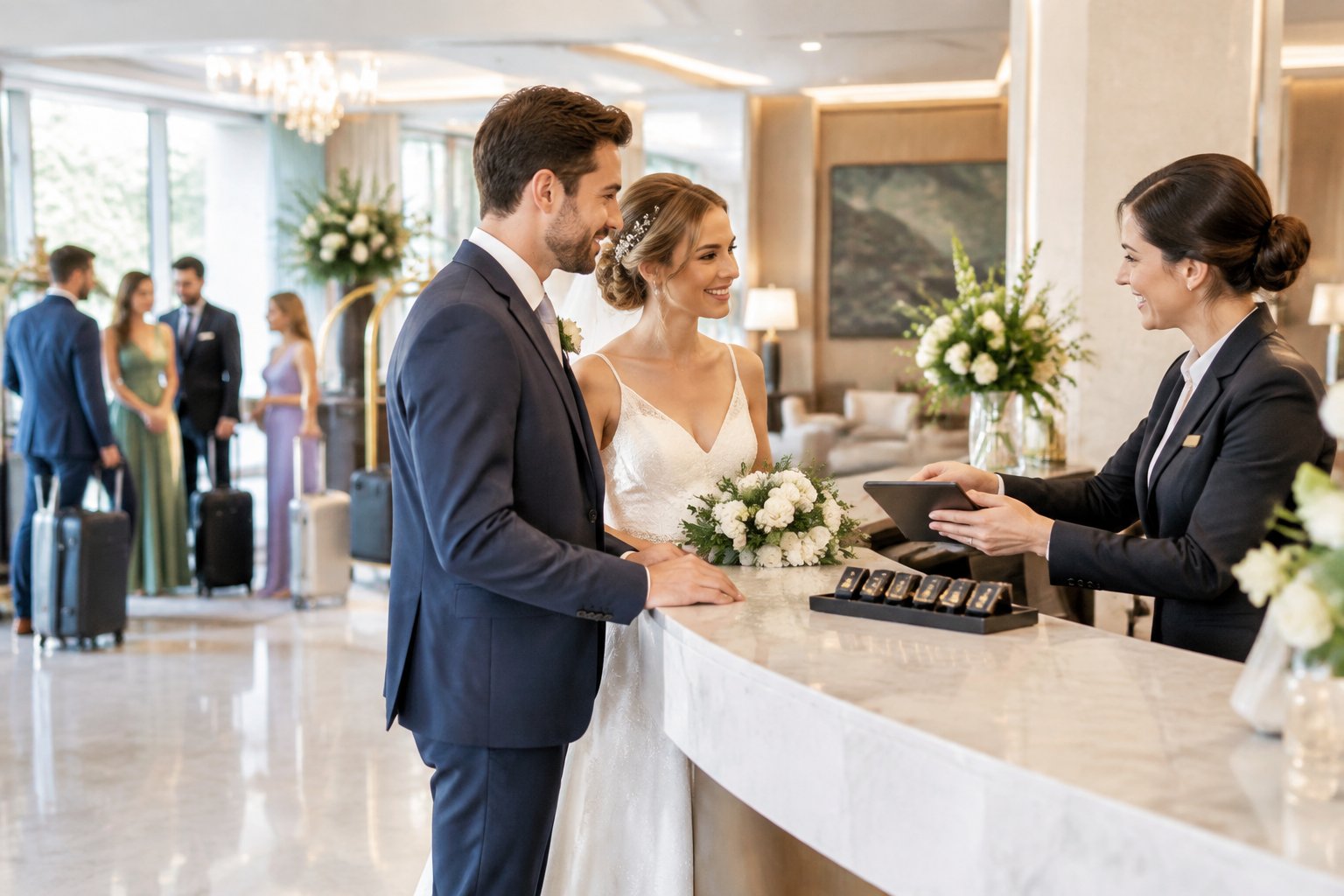
Start by asking for the full nightly cost, the booking deadline, cancellation rules, and any resort or parking charges. You can also compare lodging choices with these wedding tips for guests as you plan a comfortable wedding weekend.
Contact the hotels serving your venue early, request written terms, and share the booking details once you find a useful rate.
The Short Answer: When a Block Saves Money
A wedding room block saves money when its locked group rate is lower than the comparable public rate after taxes and fees. Savings are most likely during peak season, when hotel rates rise as rooms fill.

A block also adds value by protecting access to rooms near the wedding venue. Read the cancellation terms closely, since a low nightly rate loses value if guests face rigid payment rules or extra charges.
Why a Locked Group Rate Can Protect Guests From Price Increases
A group rate stays in place for the dates and room types named in your agreement. That gives guests a known price while hotel pricing rises with demand for holidays, festivals, graduation weekends, or peak wedding season.
Ask the hotel whether the rate is fixed through the booking cutoff and whether guests can cancel under the same policy as regular reservations. Include the rate, taxes, fees, and cutoff date in your wedding website details.
Why the Same Hotel Room May Cost Less Online
Public hotel rates change throughout the day. A sale, loyalty offer, advance-purchase rate, or mobile promotion may make the same room cheaper than the wedding block rate at a given moment.
Ask whether the hotel will match a lower public rate or add best-available-rate protection to the agreement. Guests should compare the same room type, dates, occupancy, cancellation policy, taxes, and fees before choosing a booking channel.
Comparing Total Price Instead of the Nightly Rate
Compare the complete stay, including:
- Room rate and taxes
- Resort or destination fees
- Parking and internet charges
- Breakfast costs
- Cancellation and change rules
- Transportation costs to the venue
A room that costs $15 more per night may reduce rideshare expenses or include breakfast. Write down the total for the full wedding weekend so your guests can make a fair comparison.
What a Wedding Hotel Block Actually Guarantees
A wedding hotel block reserves a set number of rooms at agreed terms for a limited booking period. It supports lodging near the wedding venue, though the exact room supply, rate, and financial responsibility come from the hotel agreement.

Your agreement should identify the room types, nightly rates, cutoff date, booking method, cancellation policy, and release terms. Ask how the hotel handles guests who book outside the block and whether those reservations count toward your room pickup.
Availability Near the Wedding Venue
A block helps reserve rooms in a location your guests can reach easily. This becomes valuable when nearby hotels sell out during wedding season or when your venue sits far from major lodging areas.
Choose a hotel within a practical drive of the ceremony and reception. Ask about shuttle service, parking, accessibility, and transportation after late-night events.
If one property cannot meet your needs, request blocks at nearby hotels with different price levels.
Convenience for Travel and Group Events
Keeping guests at one hotel simplifies transportation and communication. Your wedding party can meet there, and guests can reach a rehearsal dinner, welcome gathering, or post-reception shuttle with fewer travel details.
Ask whether the hotel offers a hospitality suite, meeting space, welcome bag delivery, early check-in, or late checkout. Put every promised amenity in writing, including fees and eligibility rules.
When Alternative Accommodations Make More Sense
Alternative accommodations fit guests who need kitchens, longer stays, pet-friendly rooms, or a lower price per person. An Airbnb can work well for families or groups who plan to share a house.
Give guests a clear choice between the hotel block, nearby hotels, and alternative accommodations. Explain transportation limits and remind guests to check cancellation policies, cleaning fees, service charges, and travel time before booking.
Courtesy Blocks vs. Contracted Blocks
A courtesy block reduces your financial risk, while a contracted room block can provide firmer inventory and stronger concessions in exchange for a minimum commitment. The right choice follows your expected room demand and tolerance for liability.

Read every hotel room block agreement before signing. Focus on the number of rooms, room nights, deposit, cutoff date, cancellation terms, attrition clauses, and resale language.
How a Courtesy Block Limits Financial Risk
A courtesy block holds rooms for your guests without requiring you to buy unused rooms. The hotel releases unbooked rooms after the cutoff date, subject to the terms in the agreement.
This option suits smaller weddings, uncertain attendance, and dates when guests have several lodging choices. Confirm that the hotel will hold the stated room count and rate until the cutoff, since the agreement controls those details.
What a Minimum Commitment Requires
A contracted block requires you to promise a set number of room nights or a percentage of the block. If bookings fall below that minimum, an attrition clause may charge you for some unused rooms.
Ask whether the hotel measures pickup per night or across the full stay. Also ask whether rooms booked under a different rate code count toward the commitment and whether taxes, fees, and damages are included in any charge.
When a Contracted Room Block Is Worth Considering
A contracted block can fit a destination wedding with strong demand, a large out-of-town guest list, or a venue-hotel partnership. It becomes more attractive when the hotel offers a lower rate, a complimentary room, a suite upgrade, or useful event space.
Choose this structure only after you have a reliable room estimate. Request a review date that lets you reduce the block before the final cutoff if bookings trail your forecast.
How to Avoid Attrition Penalties
You avoid attrition penalties by setting a conservative block, negotiating flexibility, and tracking pickup before the hotel’s cutoff date. Your goal is to match the contract with the rooms your wedding guests are likely to book.

Keep a written record of every reservation report, release date, and conversation with the hotel. Ask for updates by room type and night because a block can fill on Saturday while remaining weak on Thursday or Friday.
Estimate Rooms Conservatively
Count guests who need lodging, then estimate how many will share rooms and how many will choose the block. Account for family homes, vacation rentals, loyalty programs, work schedules, and guests who live nearby.
Start with the number you can support from your guest list and travel survey. You can ask the hotel to add rooms if pickup is strong, while an oversized contracted block creates avoidable risk.
Negotiate Allowable Shrinkage and a Resale Provision
Request allowable shrinkage so a stated percentage of rooms can remain unbooked without a charge. Ask for a resale provision that credits you when the hotel sells released rooms to other customers.
Clarify whether the hotel must attempt to resell the rooms and how it will calculate the credit. Ask for a room-block review before the cutoff, plus permission to release rooms in stages.
Track Bookings Before the Cutoff Date
Send the booking link as soon as your wedding website and save-the-date information are ready. Review pickup every few weeks, then contact the hotel when bookings lag or demand grows.
At least one month before the cutoff, request a written report showing booked rooms, remaining inventory, room nights, and projected attrition. Remind guests of the deadline without pressuring them to use the block.
How to Negotiate a Better Value for Guests
You improve the value of a hotel block by negotiating the complete guest package, not only the room rate. Fees, upgrades, flexible policies, and convenient services can change the cost of the whole wedding weekend.
Ask for each concession in the written agreement. A hotel block service or travel management platform can help organize hotel requests, compare responses, and send guests to a clear booking engine.
Ask for Fees and Perks in Writing
Request a list of all mandatory charges before you approve the block. Ask about resort fees, parking, Wi-Fi, breakfast, pet charges, early check-in, late checkout, and welcome bags.
You can also request a complimentary room for the couple, a suite upgrade, a bridal suite, or a hospitality suite. Confirm whether the perk requires a certain pickup level and whether the hotel charges for setup, delivery, or cleaning.
Request a Rate Review or Best-Available-Rate Protection
Ask the hotel to review the group rate if its public price falls below your contracted rate. Best-available-rate protection can help guests receive the lower price while keeping the block active.
Compare room types and cancellation terms before accepting a lower public rate. A nonrefundable sale rate may look cheaper while giving guests less flexibility.
Get Quotes From More Than One Hotel
Request written quotes from hotels near the venue at different price points. Share your dates, estimated room nights, preferred room types, transportation needs, and expected wedding events.
Use competing quotes to ask for a lower rate or stronger concessions. Compare the full guest cost, location, contract liability, and included services before selecting the property.
When and How to Share Lodging Details
Share hotel details when guests begin planning travel, often nine to twelve months before a peak-season wedding. Early information gives guests time to reserve rooms before the block cutoff and helps you see whether the room count matches demand.
When to Reserve Rooms for a Peak-Season Date
Start contacting hotels nine to twelve months before the wedding. Begin earlier for holiday weekends, major city events, destination weddings, or large guest lists.
Secure the block before sending save-the-dates when possible. If your date falls in a high-demand market, ask hotels about inventory and rates as soon as you confirm the venue.
How to Present the Booking Link and Cutoff Clearly
Add an accommodations page to your wedding website and include the hotel name, address, room rate, booking link or group code, cutoff date, cancellation policy, and transportation details.
You can also add the information to a save-the-date insert and invitation details card. State that rooms are held until the cutoff or while inventory lasts, whichever applies under your agreement.
How to Give Guests Flexible Choices
Offer the room block as a helpful option and list nearby hotels or an Airbnb option for guests with different budgets and needs. Include estimated travel time, parking information, shuttle details, and any key fees for each choice.
Let guests choose where they stay and remind them to confirm their own reservation. Keep your wedding website updated when the block fills, the cutoff passes, or the hotel adds more rooms.