
Are Wedding Welcome Bags Necessary? When They’re Worth It
Wedding welcome bags are optional, yet they are worth the effort when you have out-of-town guests staying for a destination wedding or a full wedding weekend. They give travelers useful supplies, local flavor, and clear details as soon as they arrive.
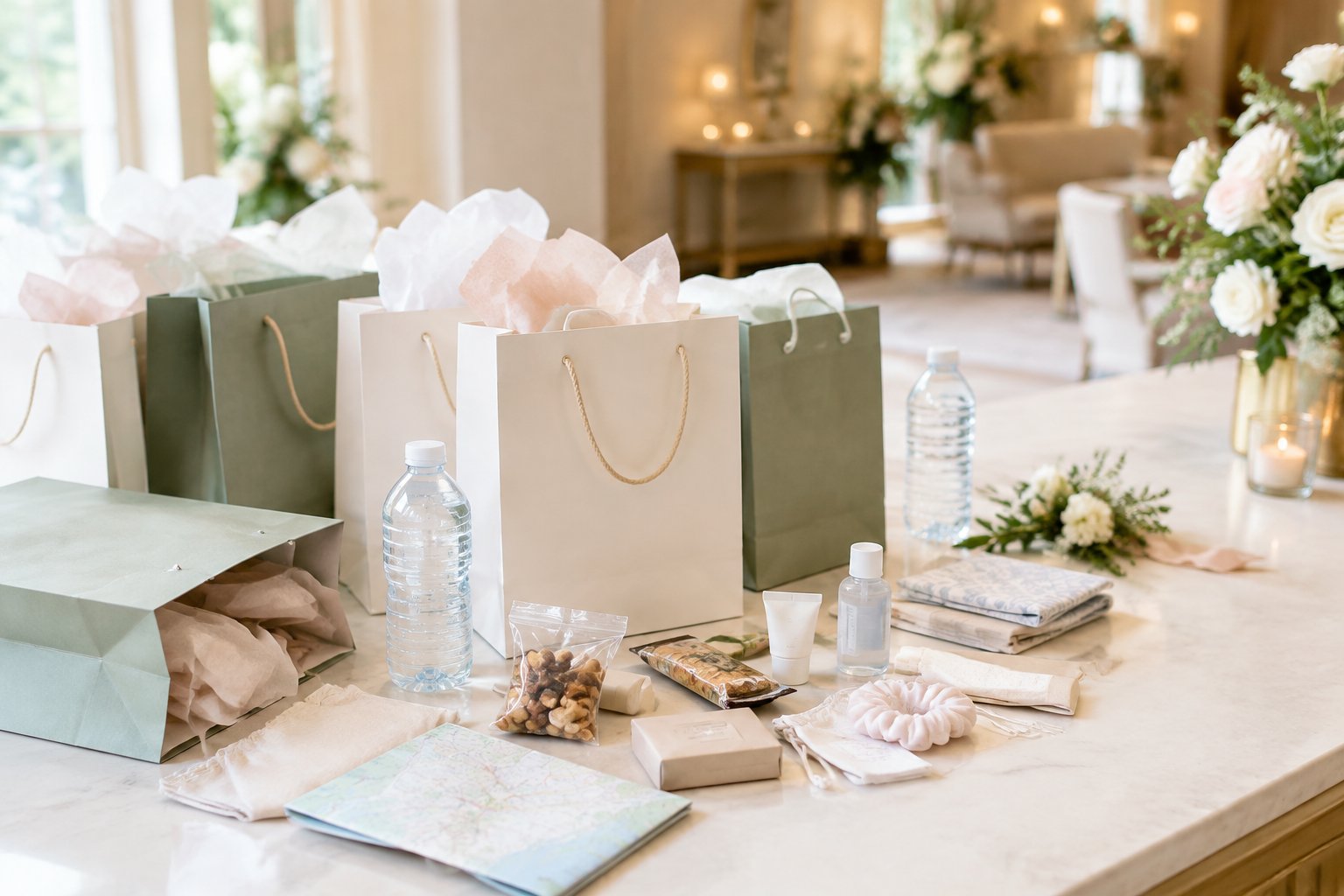
You do not need to provide a bag for every wedding guest. A small welcome note, event schedule, and a few snacks can create the same warm feeling with less cost and packing work.
If you decide to make bags, focus on what guests will use during their stay. You can find more inspiration in these wedding welcome bag ideas and choose a style that fits your celebration.
The Short Answer: Optional, but Often Thoughtful
Wedding welcome bags are a kind gesture, not a wedding requirement. They make the most sense when hotel guests have traveled for your wedding weekend and need quick access to refreshments, directions, and event details.
A useful bag does not need to look expensive. A few practical supplies and a personal note can feel more meaningful than a large collection of wedding favors.
Consider your guest list, budget, and available help before you commit.
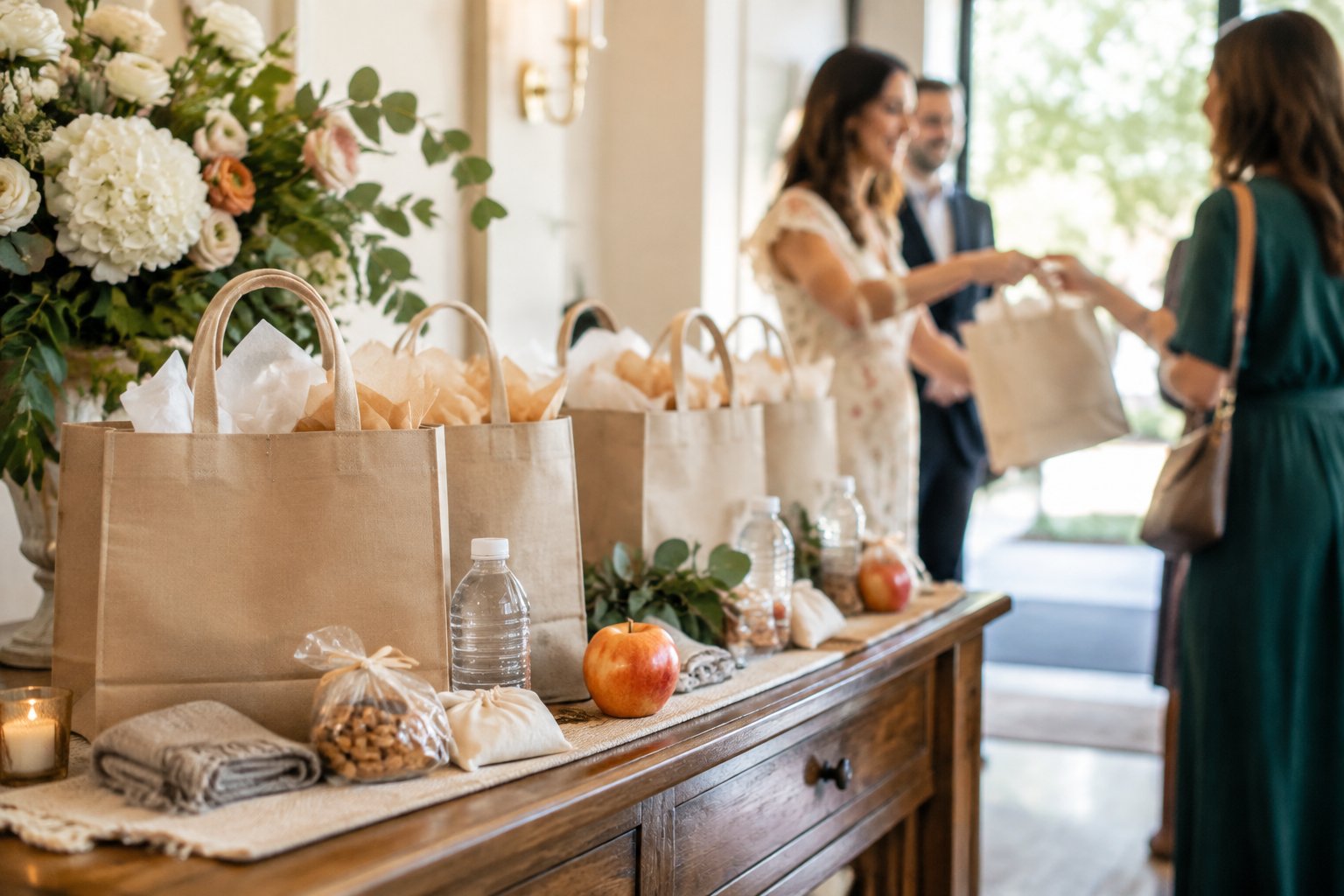
When Welcome Bags Add Real Value
Welcome bags help guests settle in after a long trip. They are especially helpful when:
- Most guests are traveling from another city or state.
- Your wedding lasts several days.
- Guests are staying at a hotel block.
- Your venue is in an unfamiliar area.
- You want to highlight local businesses or treats.
A bag can also reduce repeated questions by including shuttle details, addresses, dress codes, and timing for each event.
When It Makes Sense to Skip Them
Skip physical bags when they would strain your budget, create packing stress, or duplicate information guests already have. Local guests who return home each night may have little use for a hotel package.
You can also skip them when your hotel charges high delivery fees or when guests are spread across several properties. A digital guide, welcome station, or note at the first event can cover the same basic needs.
Who Should Receive a Welcome Bag?
Give one bag to each hotel room, couple, or family unit. This approach keeps the cost manageable and provides shared supplies without leaving guests with excess items.
Prioritize out-of-town guests who are staying overnight. If you want to include local guests, offer a smaller version at the welcome event.
What Makes a Welcome Bag Useful?
A useful welcome bag combines immediate comforts with information guests need before the first event. Start with food, water, and basic care items, then add a personal message and a clear schedule.
Choose sealed, shelf-stable products and label items that contain common allergens. Ask your hotel about room delivery rules before you buy anything in bulk.
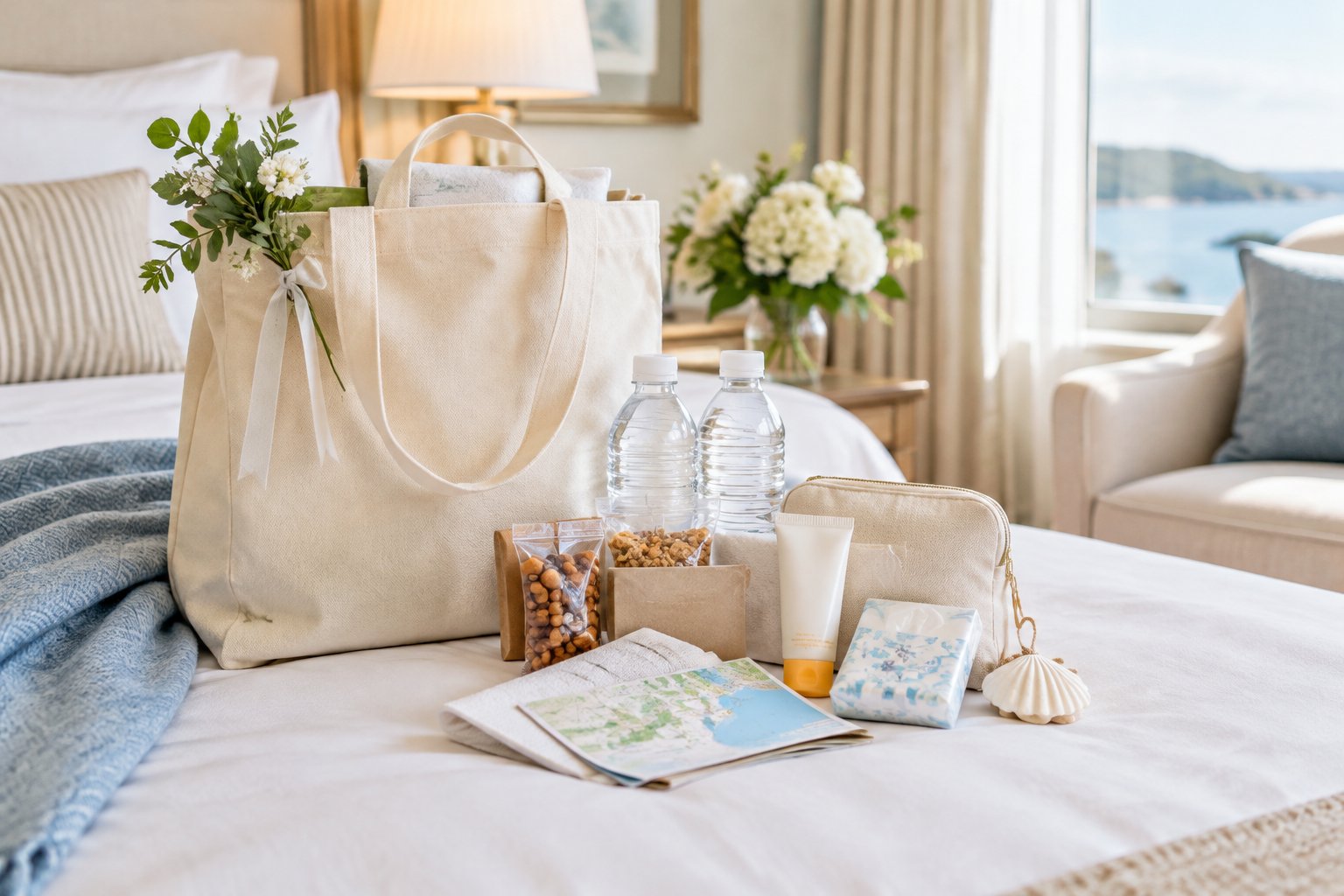
Core Essentials for Every Bag
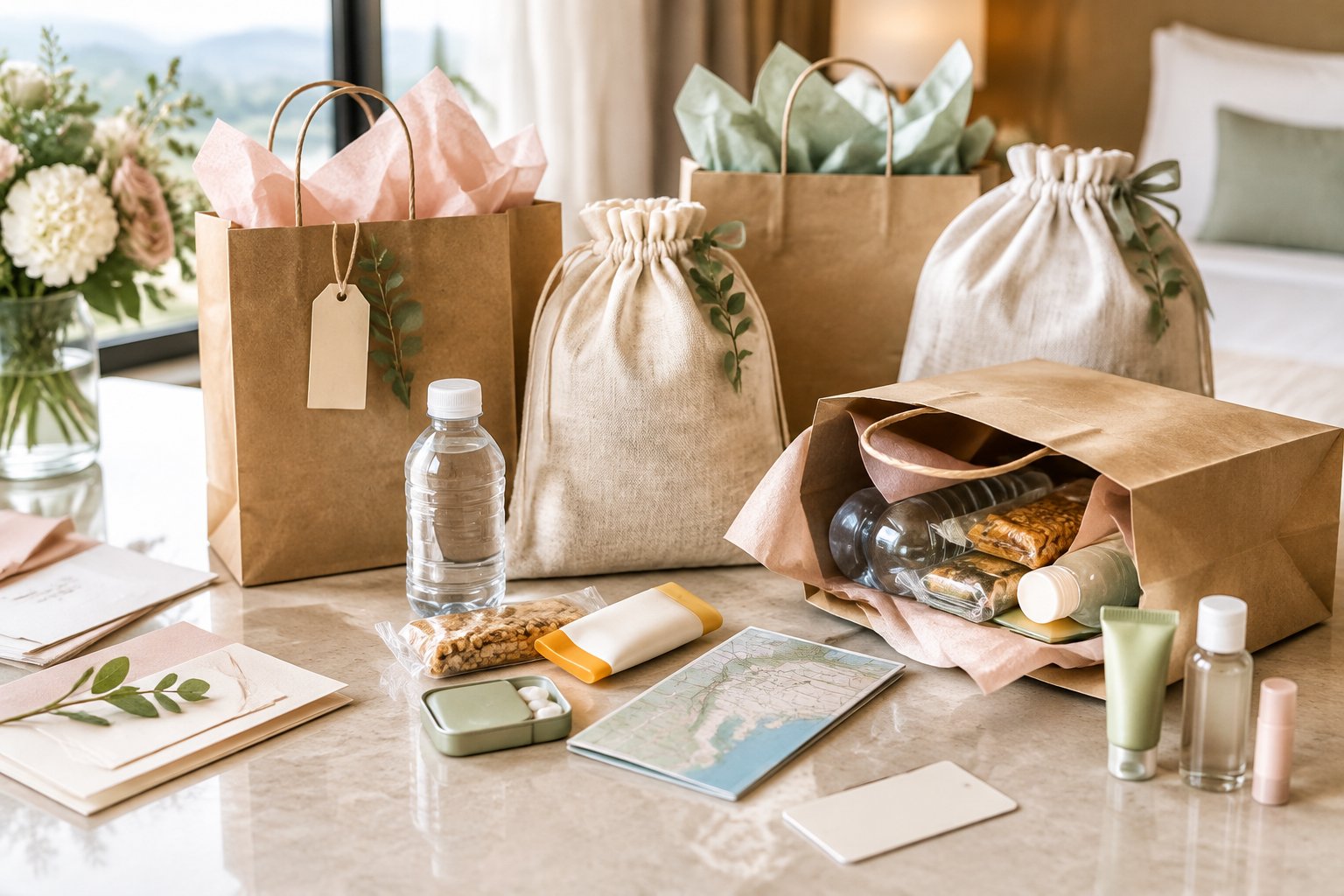
Build each bag around items guests can use soon after checking in:
- Bottled water or reusable water bottles
- Sweet and savory snacks
- Mints
- Hand sanitizer
- Travel-sized toiletries
- Lip balm or tissues
- A welcome note or thank-you note
- A printed wedding itinerary
If you include pain reliever, place it in its original packaging and add a note advising guests to follow the label directions. A few travel toiletries can help when luggage arrives late.
Travel and Recovery Extras
Travel and recovery items work well for a long wedding weekend. A small hangover kit or recovery kit might include electrolyte packets, coffee, mints, tissues, and a snack.
You can add bath products or other travel-sized toiletries for a more polished feel. Offer nonalcoholic choices for guests who do not drink, and consider separate options for allergies, children, or special diets.
Information Guests Need Right Away
Place the information card near the top of the bag. Include:
- The wedding venue address
- The schedule of events
- Shuttle pickup times
- Dress codes
- Contact details for urgent questions
- Nearby restaurants, coffee shops, and pharmacies
A QR code can lead to your wedding website or a live schedule, while the printed card remains useful when guests have limited phone service.
How Should You Tailor Bags to the Destination?
Tailor each bag to the destination’s weather, culture, and travel needs. A small selection of local treats plus location-specific comfort items gives guests a stronger sense of place.
Keep the contents light enough for guests to carry and pack. Select items that support their stay, then remove anything that creates clutter.
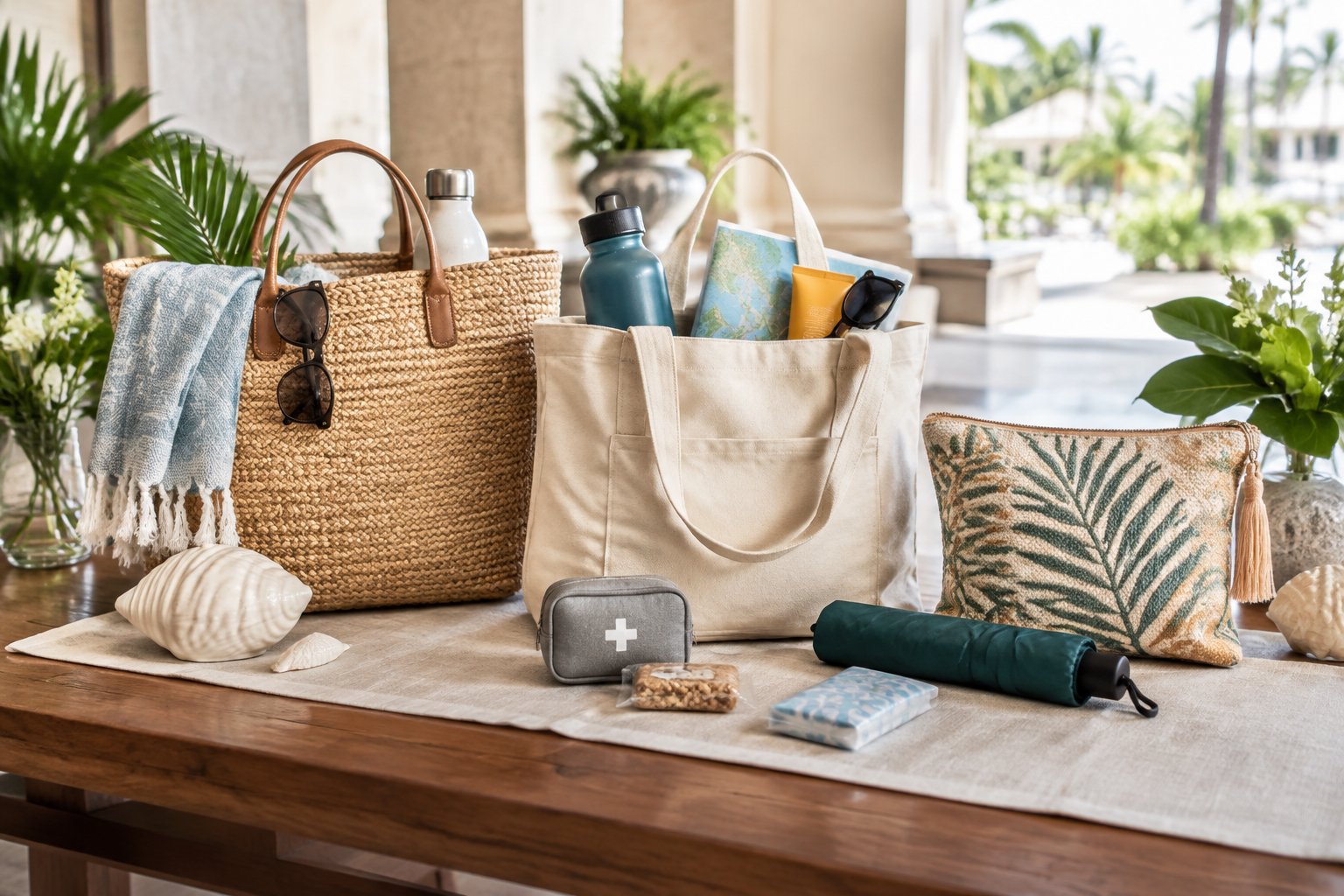
Add Local Flavor Without Adding Clutter
Choose one or two local items, such as local snacks, chocolate, cookies, coffee, or a small bottle of local wine. Champagne or craft beer can work when the hotel allows alcohol and you provide alternatives for guests who do not drink.
A short card explaining the maker or neighborhood adds meaning without taking up much room. Buying from local businesses also supports the place hosting your celebration.
Choose Weather-Appropriate Items
Match supplies to the forecast and setting:
- Sunscreen and sunglasses for a sunny beach or outdoor event
- Fans for hot, humid weather
- Pashminas or hand warmers for cool evenings
- Comfortable shoe protectors for grass
- Bug spray for outdoor locations
Pack only items that fit the season. A weather-specific item guests can use during the weekend earns more appreciation than a generic souvenir.
Make Navigation Easy for Visitors
Include a local guide, destination guides, or a local map with the wedding venue, hotel, shuttle stops, and nearby essentials marked. Add walking times and simple transportation notes for guests who do not know the area.
A short list of local attractions gives visitors ideas for free time. Include addresses and operating details when available, especially for places guests might visit between wedding events.
How Much Do Wedding Welcome Bags Cost?
Wedding welcome bags can cost about $5 to $25 per room for basic supplies, with premium gifts raising the total. Your final price depends on the container, delivery fees, local products, and the number of keepsakes you include.
Set the budget before shopping. Reserve part of it for hotel handling charges, extra bags, and last-minute replacements.
Set a Per-Room Budget
Count the rooms in your hotel block, then multiply that number by your planned budget. A basic package may include a paper bag, water, snacks, an itinerary, and one local treat.
Tote bags cost more than kraft bags, and personalized packaging adds production time. Delivery fees can also apply, so ask the hotel for its current rate before placing orders.
Choose One Bag per Room or One per Guest
One bag per room works well for couples and families sharing supplies. It also keeps your costs lower and reduces the number of packages the hotel must store.
Give one per guest when the contents are personal, such as individual toiletries, child-friendly items, or separate dietary options. Add a few extra bags for late bookings and room changes.
Spend on Useful Items Before Keepsakes
Put your first dollars toward water, snacks, the itinerary, and weather-related supplies. Then consider a small keepsake such as luggage tags, a candle, or a bottle opener.
Souvenirs should be easy to pack and useful after the wedding. A compact item with a local connection has more staying power than a bulky favor.
How to Assemble and Deliver Them Without Stress
Smooth delivery starts with hotel coordination and a packing plan. Confirm the number of rooms, delivery window, storage rules, and fees before you order supplies.
Keep your wedding theme and wedding style visible through colors, labels, or a note. The contents can stay practical while the presentation feels connected to your celebration.
Coordinate Delivery With the Hotel
Ask the hotel whether staff will place bags in rooms or hand them to guests at check-in. Provide a guest room list only through the approved hotel process, and label each box clearly.
Confirm the delivery date, contact person, storage location, and per-bag fee. If guests are staying at several hotels, assign one helper or coordinator to each property.
Time Orders and Packing Carefully
Order nonperishable supplies several weeks ahead. Check every delivery against your list, then assemble the bags one or two days before guests arrive.
Create a packing station with separate piles for bags, paper goods, snacks, drinks, and personal notes. Pack a sample first so you can check the weight, appearance, and available space.
You can source containers and supplies through Amazon or Etsy, then compare shipping dates before purchasing. Keep a few spare items for damaged packages or unexpected rooms.
Use Reusable or Low-Waste Packaging
Select reusable totes, recyclable paper bags, or boxes that guests can repurpose. Avoid excessive tissue, plastic wrapping, and heavy containers that create extra waste.
Buy larger packs when the items will be used, and choose refillable bottles when practical. A small, well-packed bag reduces waste while keeping the welcome personal.
Simple Alternatives to Physical Welcome Bags
You can welcome guests warmly without preparing physical bags. A digital guide, arrival treat, or hotel display delivers helpful information with less cost and assembly work.
Choose the option that fits where guests stay and how they move through the wedding weekend. Make sure every guest can access the details without needing a special app.
Send a Digital Local Guide
Create a mobile-friendly local guide with hotel details, transportation, restaurants, local attractions, and event times. Add a downloadable map and a contact number for urgent questions.
Send the guide several days before arrival, then share updates if plans change. A printed one-page schedule can support guests who prefer paper.
Offer a Small Arrival Treat
Place a welcome note and a few snacks at the first gathering. You can add bottled water, local cookies, or another easy-to-carry treat.
This option works well when guests stay at different hotels or when the wedding venue controls guest access. Give one item to each guest or room based on your budget.
Create a Welcome Station at the Hotel
Set up a table during a welcome event with a local guide, destination guides, maps, snacks, and bottled water. Add a sign with pickup instructions so guests know what they can take.
Assign a trusted person to greet arrivals, answer basic questions, and restock supplies. This approach creates face-to-face hospitality without hotel room delivery.