
Are Wedding Welcome Bags Worth It? A Practical Guide
Are wedding welcome bags worth it? Yes, wedding welcome bags are worth the cost for couples hosting a destination wedding or weekend celebration because they help out-of-town guests settle in and feel appreciated as soon as they arrive. They are less useful for a one-day local wedding where most wedding guests return home the same night.
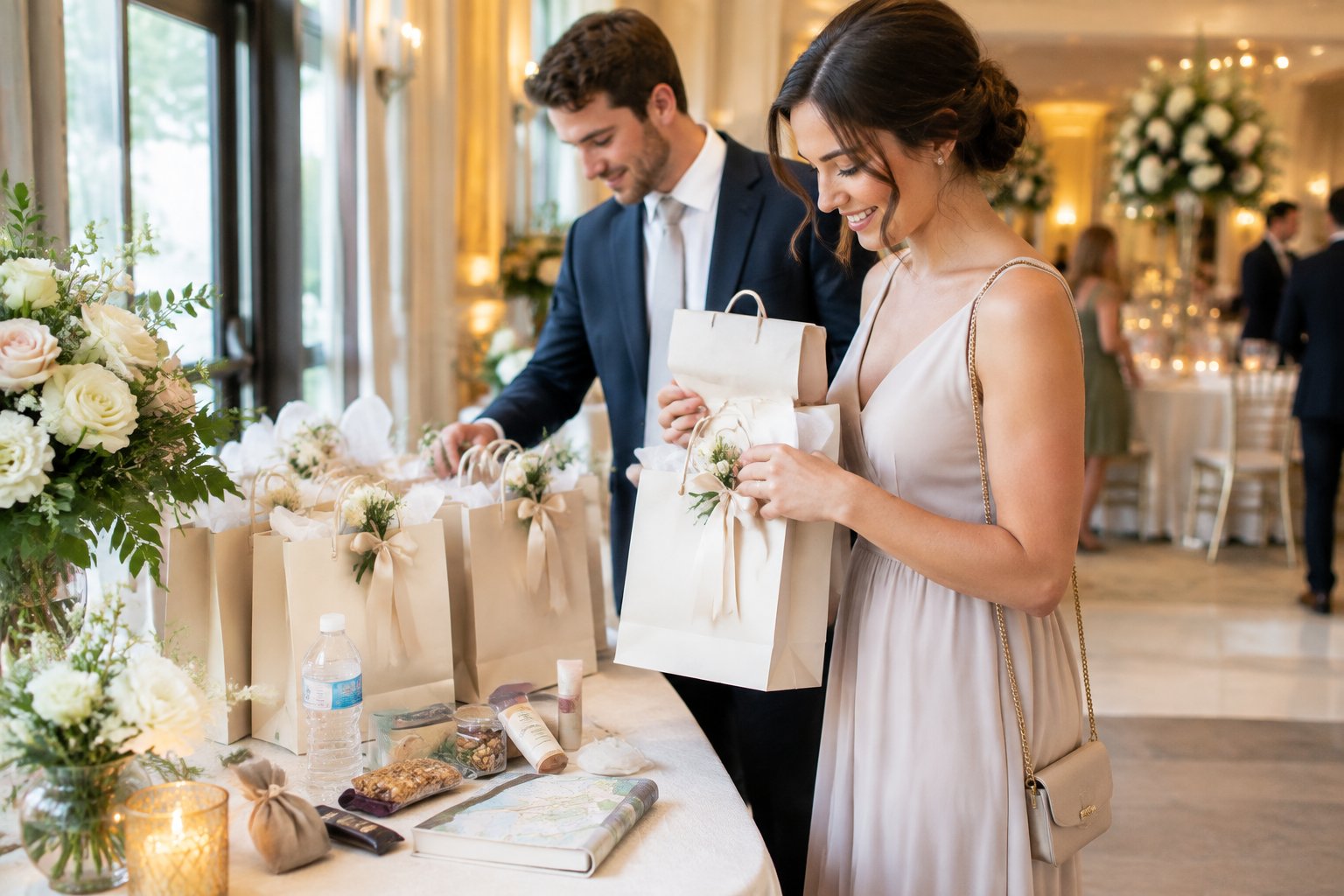
A welcome bag can be as simple as water, snacks, a welcome note, and a wedding weekend itinerary. You do not need to fill it with expensive gifts. A few useful items, one local touch, and clear event details create a warm arrival experience without adding unnecessary work.
If you are planning a celebration with overnight guests, use the ideas below to decide whether welcome bags fit your budget and schedule, then explore these wedding welcome bag ideas for more inspiration.
When Welcome Bags Deliver Real Value
Welcome bags deliver the most value when guests travel, stay overnight, and attend several wedding festivities. They give out-of-town guests practical help while introducing them to the wedding location.
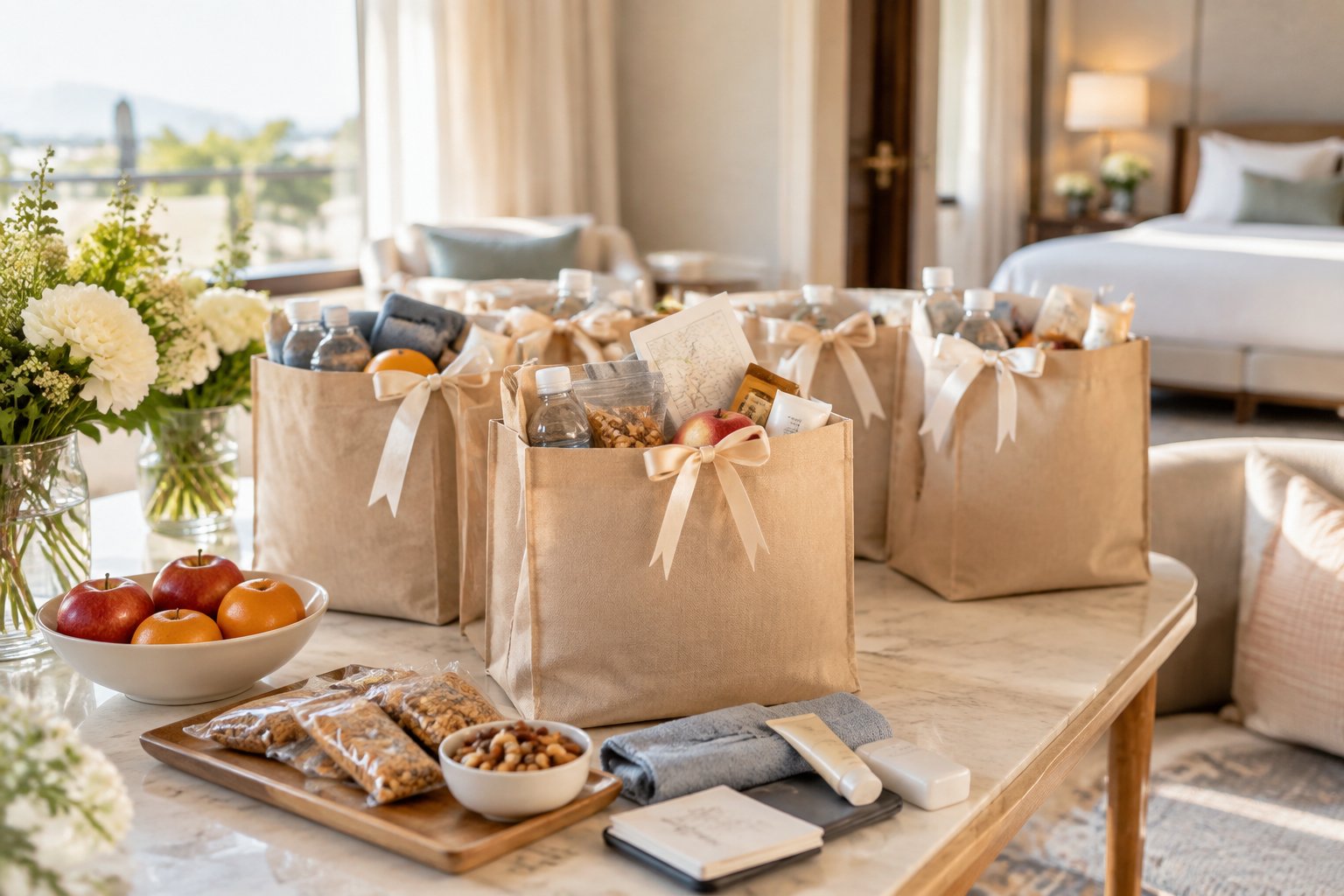
A destination wedding creates a clear reason to offer one. Guests may need directions, food between events, local recommendations, and supplies for changing weather. A welcome bag also gives you a personal way to thank them before the welcome party or ceremony begins.
Who Benefits Most From a Welcome Bag?
Out-of-town guests staying in a hotel or vacation rental receive the greatest benefit. They can use bottled water after traveling, snacks before the next event, and a welcome letter that explains the wedding weekend schedule.
Guests attending a destination wedding also appreciate local guidance. Add a small map, restaurant suggestions, transportation details, or a note about nearby attractions. If the group includes children, older relatives, or guests with mobility needs, include details that make the wedding location easier to navigate.
You can focus on guests staying in the room block if your budget is limited. The wedding party and close family members also deserve priority when they are arriving early to help with wedding festivities.
When a Simple Welcome Letter Is Enough
A welcome letter works well when guests already know the area, the wedding lasts one day, or your budget has little room for extras. Place the letter at the hotel desk, in a rental home, or at the welcome party with the key schedule and contact details.
Include check-in information, ceremony and reception addresses, shuttle times, dress guidance, and an emergency contact. You can add a digital destination guide or restaurant list through your wedding website. This approach gives guests useful information without the cost of packaging and delivery.
What Should a Useful Bag Include?
A useful bag starts with items guests can consume or use during the wedding weekend. Prioritize hydration, easy snacks, event details, and one personal or local detail before adding decorative extras.
The Core Essentials Guests Will Use
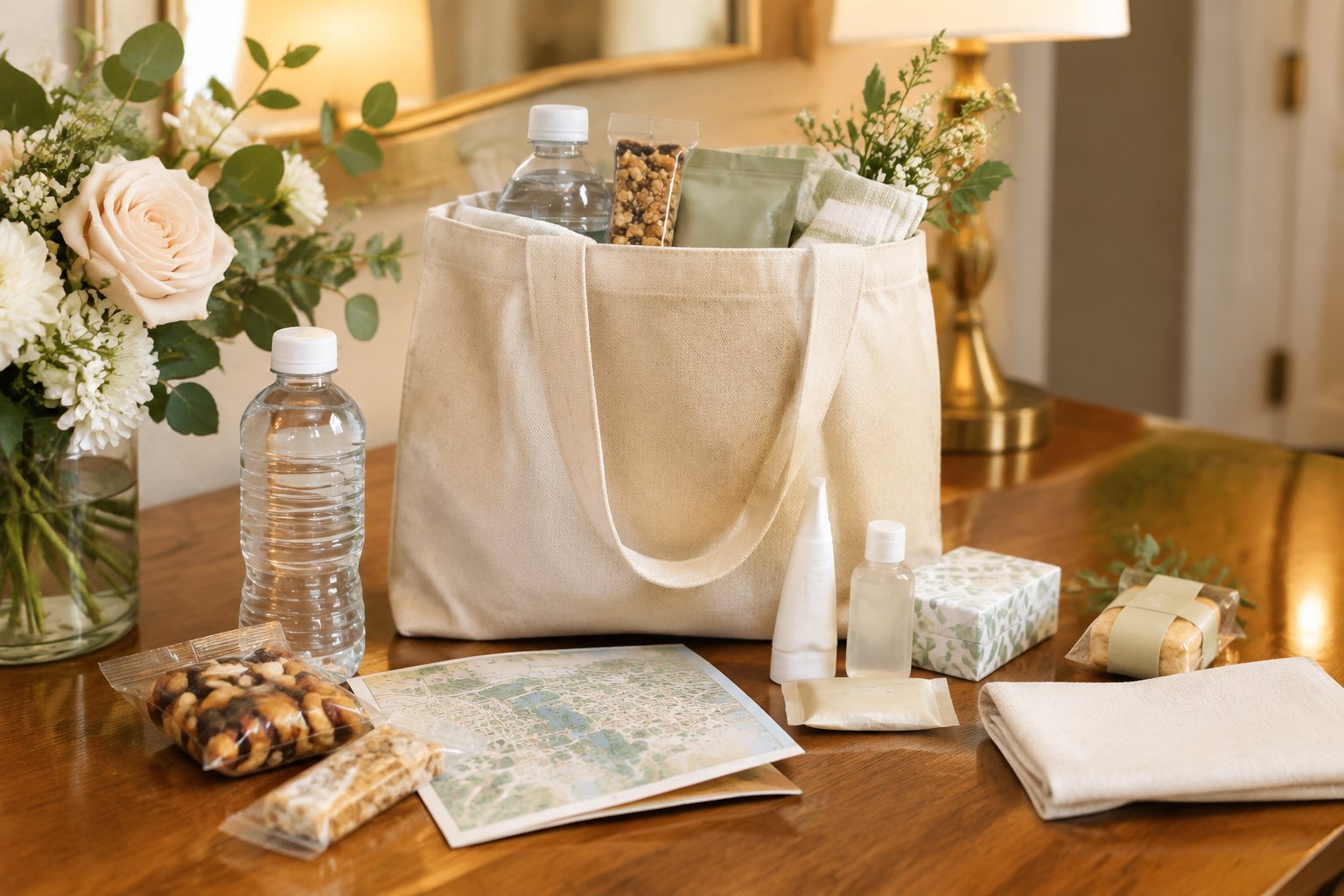
Build your welcome bag essentials around these practical items:
- Bottled water, sparkling water, or reusable water bottles
- Sweet and savory snacks
- A welcome note or handwritten note
- A wedding itinerary with times, addresses, and dress codes
- A map of the area or a short travel guide
- Pain reliever packets and band-aids
- Lip balm and hand sanitizer
Choose individually wrapped snacks that travel well. Popcorn, potato chips, crackers, granola bars, and cookies work for most guests. Label allergy-friendly options and include fresh fruit only when you can keep it cool and deliver it close to check-in.
A welcome note should sound like you. Thank guests for traveling, mention a meaningful detail about the location, and share a way to reach your planning team.
Personal and Local Touches That Add Meaning
One or two local items make the bag feel connected to your celebration. Consider local snacks, local coffee, chocolate, jam, or another treat made near the wedding location. A destination guide with your favorite restaurants and local attractions helps guests enjoy free time.
You can also include a small favor that reflects your relationship or the region. A short note explaining why you chose the item gives it more meaning than a generic logo.
Weather and Recovery Extras to Consider
Choose extras based on the forecast, venue, and reception schedule. A beach celebration may call for sunscreen and sunglasses, while a cool outdoor evening suits pashminas or hand warmers. Fans help at warm summer events.
A small hangover kit or recovery kit can include water, electrolytes, mints, and pain relievers. An emergency kit with band-aids, stain wipes, and safety pins helps with common travel or outfit problems. Keep health products sealed and follow the package directions.
How Much Do Wedding Welcome Bags Cost?
Wedding welcome bags cost about $10 to $35 per room for a thoughtful DIY setup, while premium gift boxes with specialty products and delivery can cost much more. Your container, contents, labor, and hotel fees shape the final total.
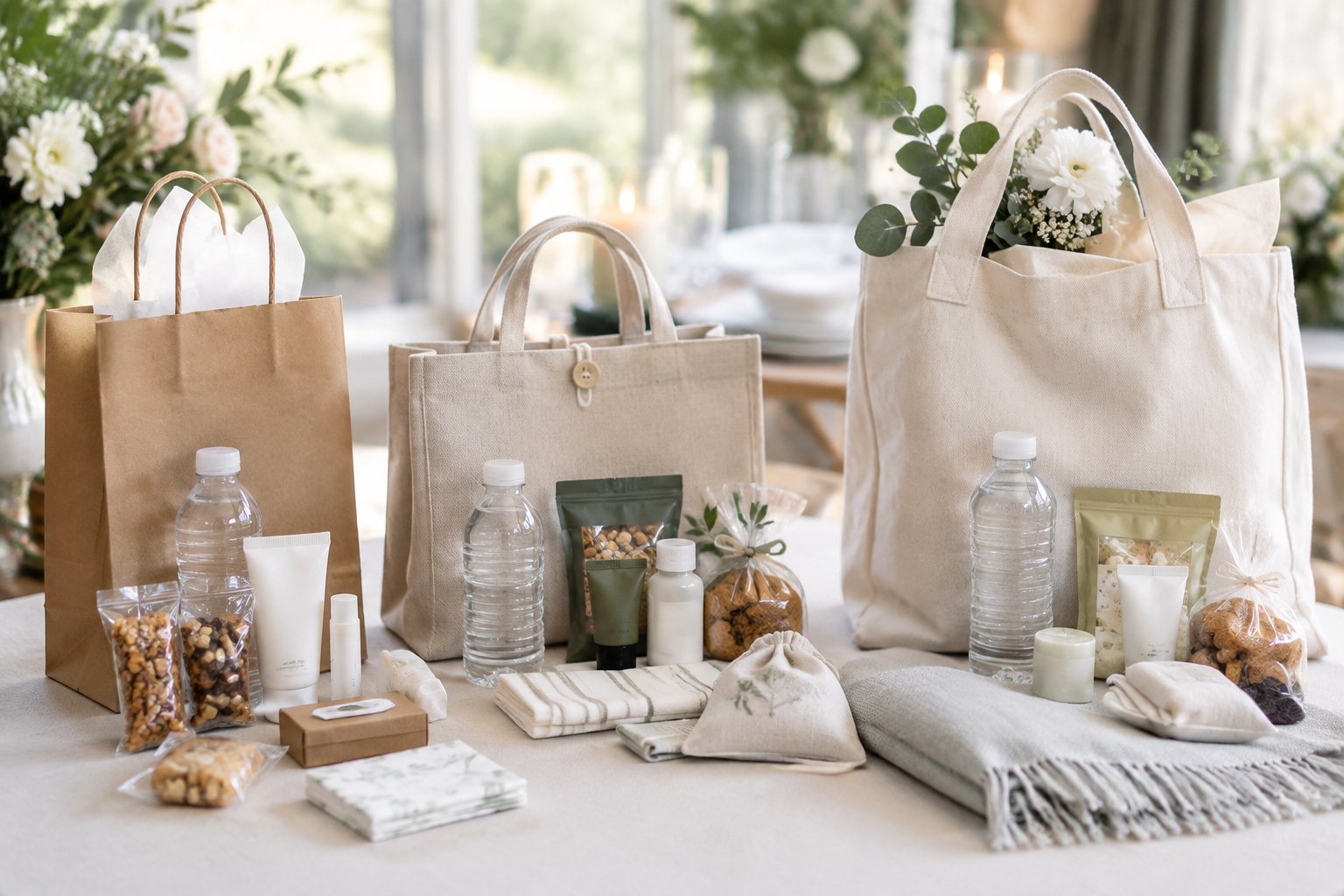
A basic package may include a kraft bag, bottled water, snacks, a printed itinerary, and a note. A mid-range package can add a canvas tote, local treats, comfort items, and one keepsake. Luxury packages may include wine, champagne, craft beer, bath products, or curated gifts.
Setting a Per-Room Budget
Set your budget by room because couples and families share welcome bags. Start with the number of occupied rooms, then add a few extras for late bookings or damaged packages.
A practical planning range looks like this:
- $10 to $15 per room: kraft bag, water, snacks, note, and itinerary
- $15 to $35 per room: reusable tote, local treats, comfort items, and upgraded stationery
- $35 or more per room: premium packaging, specialty beverages, bath products, and keepsakes
Ask the hotel about placement or distribution charges before you finalize the budget. A per-bag fee can change the total more than a small upgrade to the snacks.
Where to Save Without Making Bags Feel Cheap
Buy shelf-stable snacks and water in bulk, then keep the contents focused. A kraft bag with a quality local treat feels more intentional than a costly container filled with filler.
Compare prices on Amazon, Etsy, local shops, and wholesale retailers. Print the welcome note and itinerary together to reduce stationery costs. Choose one useful keepsake, such as a luggage tag or bottle opener, instead of several small favors.
You can also skip custom printing on every item. A well-designed tag, sticker, or ribbon connects the bag to your wedding without raising the price of each product.
When Premium Add-Ons Make Sense
Premium add-ons suit smaller guest lists, destination weddings, and celebrations where guests stay several nights. A bottle of wine or champagne, local craft beer, bath salts, candles, or a polished gift box can create a special arrival moment.
Choose these items when guests have enough time to enjoy them and when your hotel or venue accepts them. Check alcohol rules, guest preferences, allergies, and travel limits before ordering. A smaller package with two excellent items may serve your guests better than a large box packed with products they will leave behind.
How to Match the Bag to Your Wedding
Match the bag to your wedding theme through its color, material, stationery, and local contents. A cohesive design makes a modest package feel intentional.
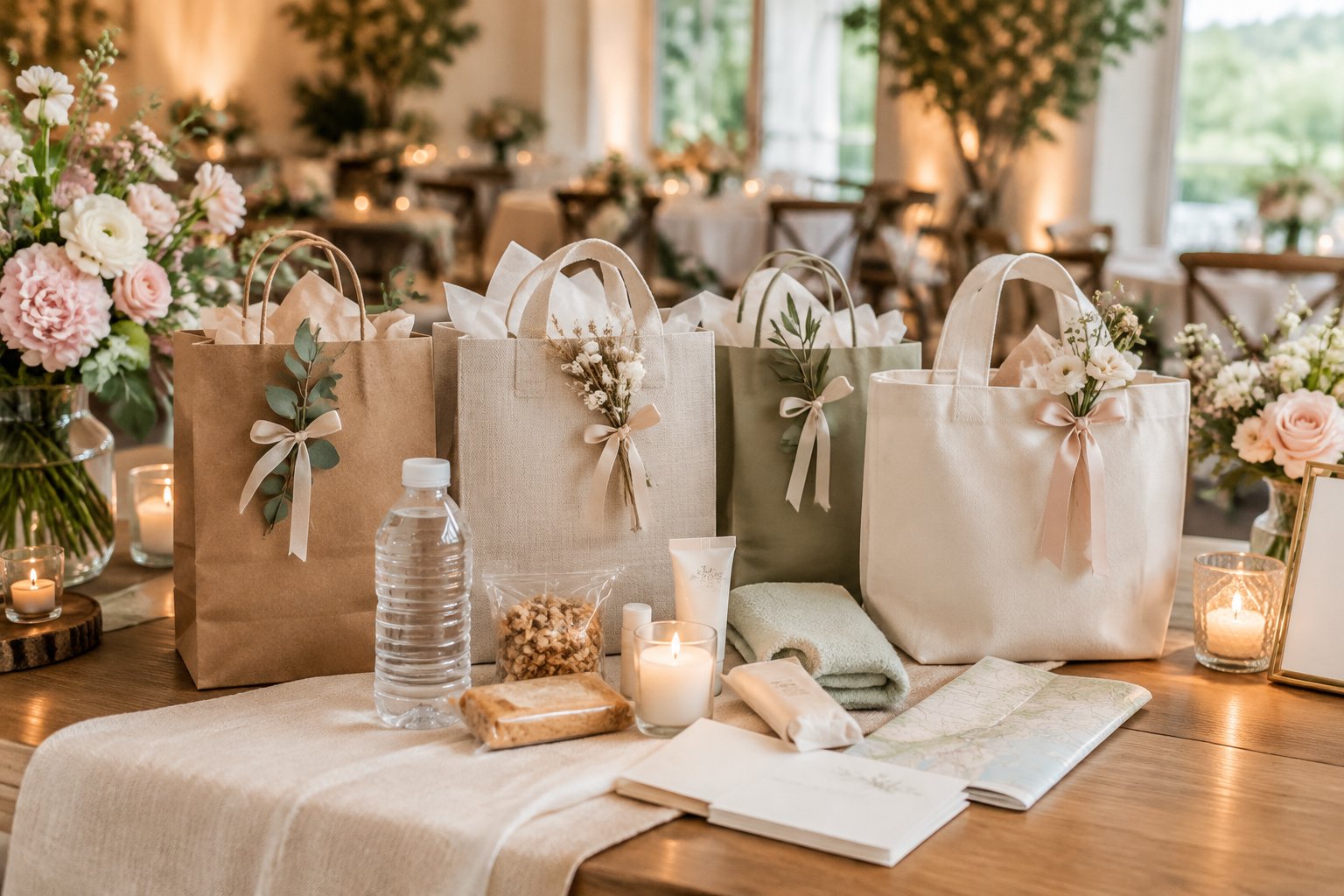
Your packaging does not need to mirror every reception detail. Repeat one or two wedding colors, use the same font family as your invitations, and choose items that suit the location and guest experience.
Using Local Flavor to Make It Memorable
Local treats connect guests to the place where you are celebrating. A coastal wedding could feature saltwater taffy, while a farm setting might call for jam or locally made honey. Add local coffee, chocolate, or another shelf-stable specialty with a short description.
A small card can name the maker and explain why you selected the item. Guests receive a taste of the area and a useful conversation starter for the wedding weekend.
Coordinating Colors, Theme, and Stationery
Use your wedding colors on the welcome note, itinerary, tag, or ribbon. Your wedding stationery provides an easy design guide for paper weight, typeface, and color choices.
For a formal event, gift boxes with a clean printed note create a polished look. Kraft bags suit a casual or rustic setting. Canvas totes work well for beach, outdoor, and destination celebrations. Add bottle openers, luggage tags, or candles when they fit the theme and have a clear use.
Choosing Reusable or Low-Waste Packaging
Choose canvas totes, recycled kraft bags, or welcome baskets that guests can reuse. Avoid oversized packaging and single-use items with no purpose after the weekend.
A reusable tote works especially well when guests need to carry water, maps, or personal items between events. If you choose a gift box, select one that folds flat or stores easily. Keep tags, tissue, and ribbons recyclable when possible, and use refillable containers for items that guests will use throughout the weekend.
How Many Bags Do You Need and How Should You Deliver Them?
Plan one welcome bag for each occupied guest room, then confirm the count with your hotel before delivery. Hotel distribution is the easiest option when many out-of-town guests arrive at different times.
Why One Bag per Room Usually Works Best
One bag per room covers couples, families, and roommates while keeping your budget manageable. Use your room block list to estimate the number, then add several extras for last-minute changes.
Create separate packages only when guests have different needs. For example, a family room might need kid-friendly snacks, while a wedding party suite could receive a shared larger package. Local guests who do not stay overnight do not need a hotel bag, though you can offer a small welcome note or snack at the welcome party.
Hotel Drop-Off and Check-In Delivery Logistics
Contact the hotel’s event or front desk team before ordering. Ask whether staff will place bags in rooms, hand them out at check-in, or keep them behind the desk. Confirm delivery hours, storage space, labeling rules, and any placement fee.
Label each package with the guest’s last name and room number when available. Deliver sturdy boxes one day before arrivals when the hotel approves that schedule. Keep a copy of the room list and designate one contact for changes.
A Timeline for Ordering, Packing, and Backup Supplies
Order bags, printed stationery, tags, and custom items early enough to allow production and replacement. A workable schedule looks like this:
- Six to eight weeks before: confirm the hotel process, choose the container, and set the budget.
- Four to six weeks before: order nonperishable contents, stationery, and wedding itinerary cards.
- Two to three weeks before: confirm room counts, check deliveries, and buy backup supplies.
- One to two days before arrival: pack the bags, add fresh items, and deliver them according to hotel instructions.
Keep extra water bottles, snacks, notes, and bags on hand. Place the wedding itinerary and welcome note near the top so guests see the information first.