
Are You Legally Married If You Use a Celebrant? Key Rules
A wedding celebrant can lead a beautiful ceremony, but that ceremony creates a legal marriage only when the celebrant has authority under the law where you marry and all required paperwork is completed. You are legally married if your celebrant is authorized to solemnize marriages in your state and your marriage license is properly signed and filed.
The title “celebrant” alone does not prove legal authority. A wedding celebrant might conduct a symbolic ceremony, while a marriage celebrant might also hold credentials as a civil officiant, ordained minister, or other person recognized by state law.
Your location controls the answer, so confirm the rules before you book. If you want help creating a personal ceremony, ask your celebrant how they handle the legal requirements and contact your local clerk for confirmation.

The Short Answer: When a Celebrant Ceremony Is Legally Binding
A celebrant ceremony is legally binding when the celebrant has legal authority to solemnize marriages, you meet your state’s marriage requirements, and the completed marriage license is returned for recording. A valid marriage can come from a civil marriage ceremony or a religious ceremony, provided the person leading it is legally recognized.
Your ceremony can include personalized vows, readings, music, and cultural traditions. The legal authority comes from state law, the valid license, the required declarations, and the proper filing process.
What Makes a Valid Marriage?
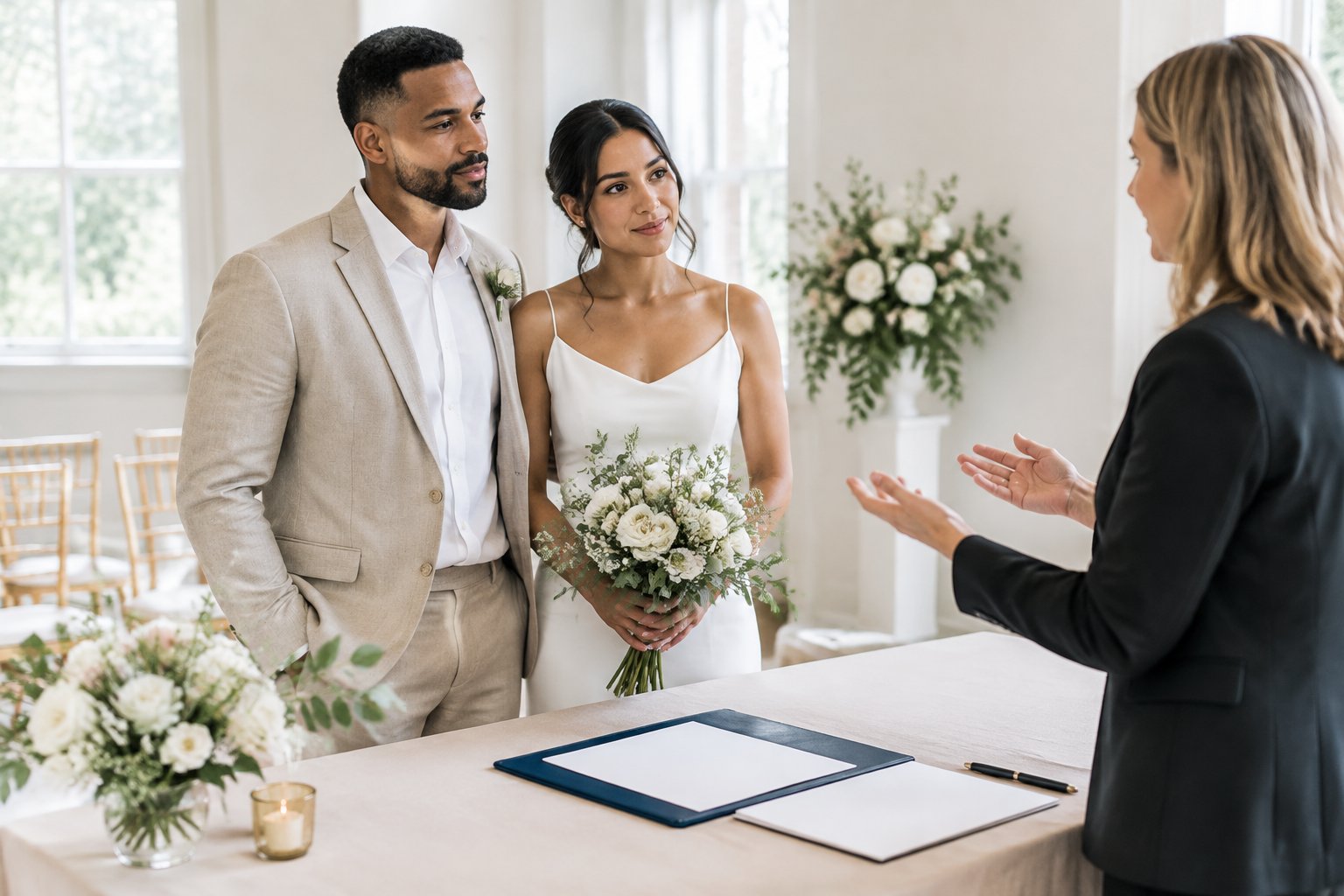
A valid marriage requires more than a ceremony that looks official. You and your partner must meet eligibility rules such as age and consent requirements. You also need a marriage license issued by the proper local office.
The person performing the ceremony must have legal authority to solemnize marriages in the place where the ceremony occurs. Depending on your state, that person could be a civil celebrant, judge, justice of the peace, religious officiant, or another authorized official.
The license must be completed with the required signatures. Some states require witnesses, specific wording, or a waiting period. Once the officiant or another authorized person files the document, the government records the marriage and issues a marriage certificate.
Why a Meaningful Ceremony May Not Be a Legal Marriage
A ceremony can carry deep personal meaning without creating a legal marriage. This happens when the celebrant lacks legal authority, the couple never obtains a marriage license, or the paperwork is not completed and filed as required.
A symbolic ceremony may still include vows, rings, a pronouncement, and family traditions. Those elements express your commitment, while the legal process gives the relationship recognition for matters such as taxes, inheritance, insurance, and medical decisions.
The Legal Requirements That Must Be Met
Your marriage becomes legally recognized when you follow the marriage laws for the location of the ceremony, use a valid marriage license, complete the required signatures, and file the paperwork on time. The details come from your state and local government.
The office handling the process might be a county clerk, city clerk, town clerk, registry office, or department of health. Ask that office about deadlines, fees, identification, waiting periods, witnesses, and certified copies before your ceremony date.
Getting a Marriage License Before the Ceremony
Apply for the marriage license through the office named by your local rules. You might need government identification, proof of age, divorce records, or other documents. Both partners may need to appear in person.
Check the license expiration date and any waiting period. A license issued in one state might not authorize a ceremony in another state, and a ceremony held after the license expires might not satisfy the law.
Give your celebrant a copy of the local instructions. Ask who must sign the license and whether the celebrant needs registration, proof of ordination, or other credentials before the ceremony.
Signing and Filing the Marriage Certificate
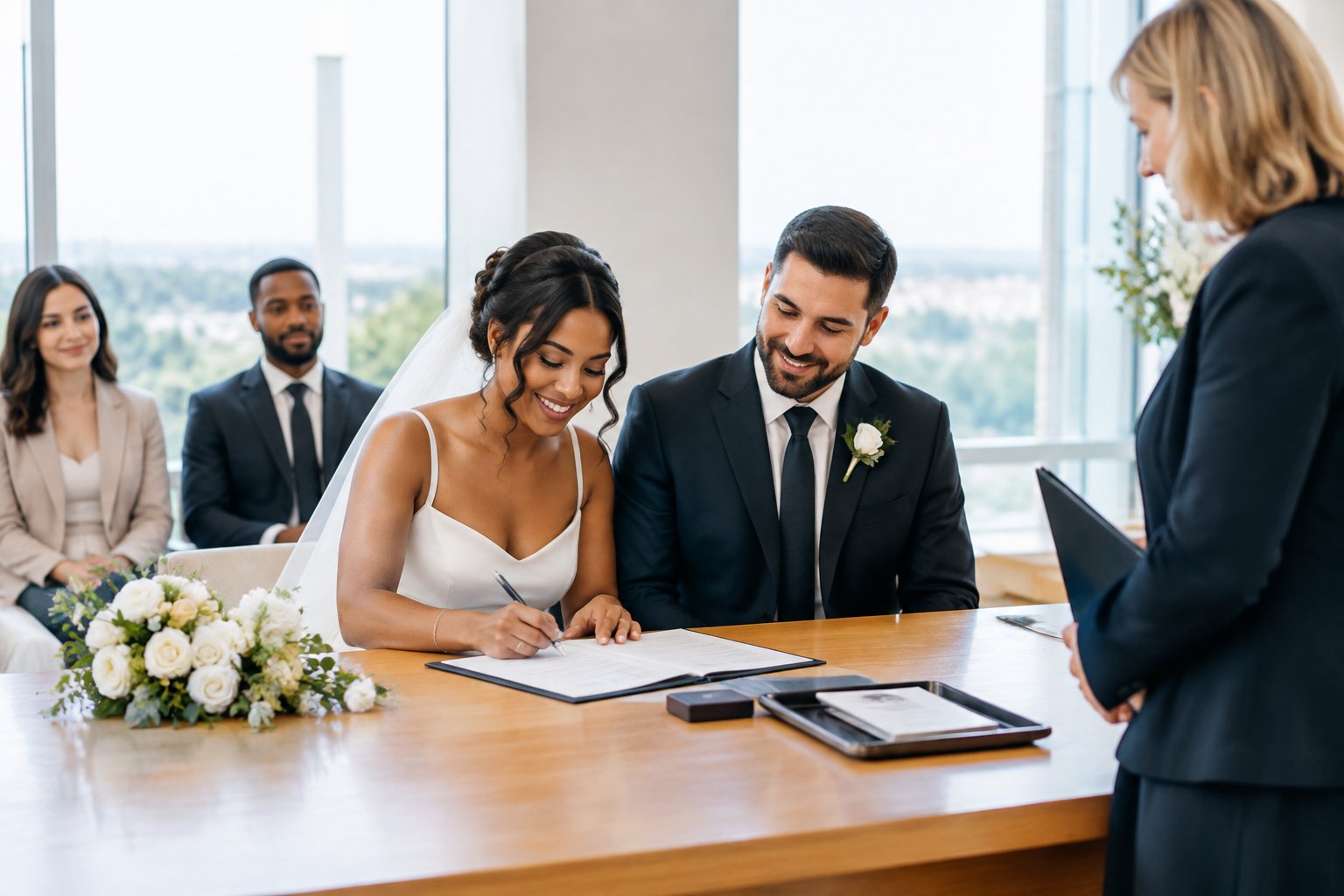
After the ceremony, the required people sign the marriage document. The celebrant often has responsibility for returning it to the issuing office within a stated deadline.
A marriage certificate is the government record showing that the marriage was registered. It is different from the license, which gives you permission to marry. Request certified copies after filing if you need proof for a name change, benefits, immigration paperwork, or financial accounts.
Do not assume that a signed document has been recorded. Ask the clerk when filing is complete and how you can order certified copies.
Witness, Waiting-Period, and Location Rules
State and local rules can require witnesses, a waiting period, a specific ceremony location, or a particular form of declaration. Some jurisdictions allow a couple to marry without witnesses, while others require one or more.
The law where the ceremony takes place controls the officiant’s eligibility and ceremony requirements. Ask the local clerk about self-solemnization, travel across county lines, license expiration, and filing deadlines before making final plans.
Who Has Authority to Solemnize a Marriage?
A person may solemnize marriage only when state law gives that person authority to perform marriages in the ceremony’s location. A professional title, business name, or online profile does not replace that legal authorization.
Your celebrant might qualify as a civil officiant, civil celebrant, licensed celebrant, religious officiant, or ordained minister. Some states also recognize judges, justices of the peace, notaries public, and other public officials.
Civil Officiants and Public Officials
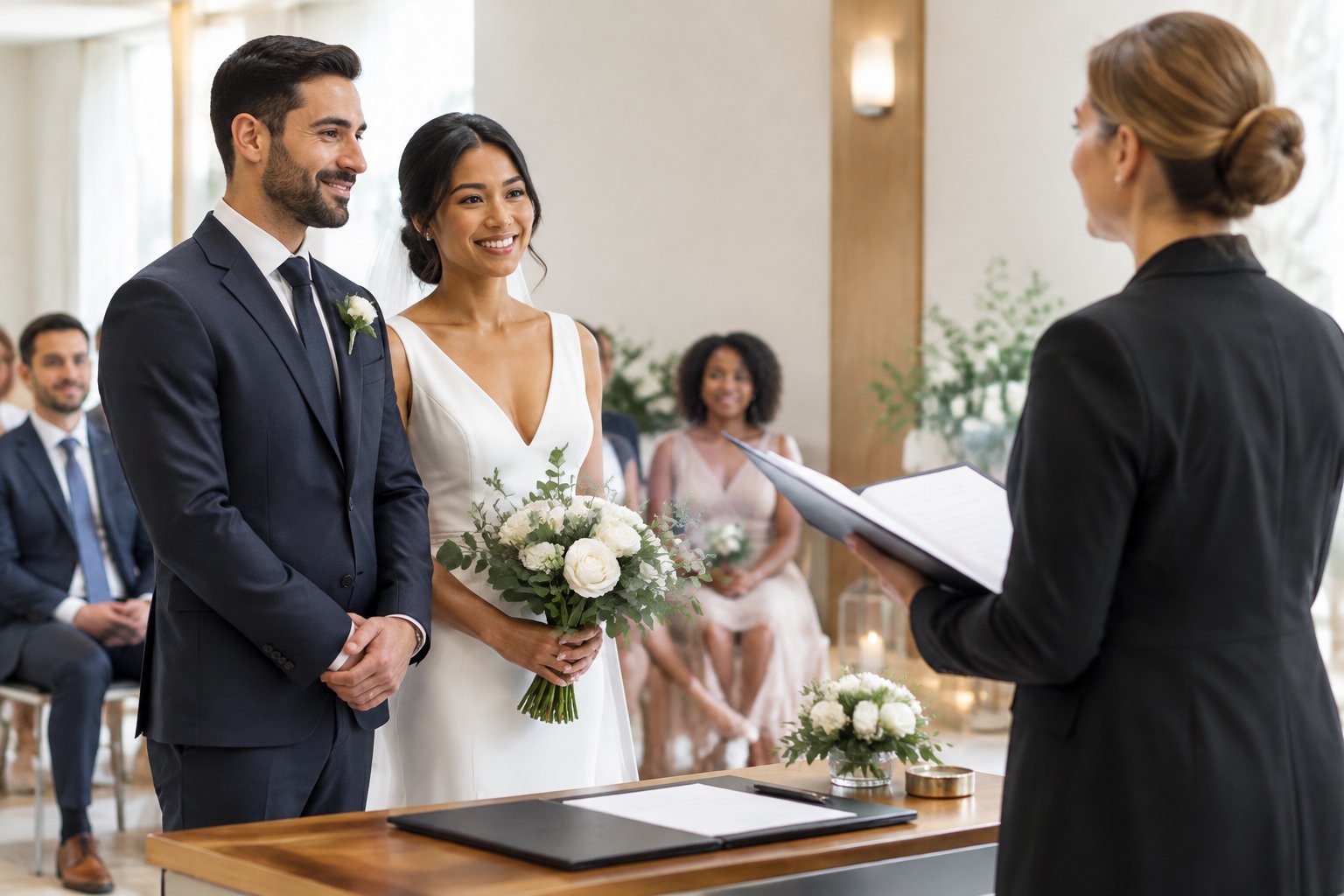
Civil officiants perform nonreligious marriage ceremonies under authority granted by state law. Eligible people can include judges, justices of the peace, magistrates, mayors, clerks, and licensed or registered celebrants.
A notary public has authority to perform marriages in some states. Notary status alone does not create that authority nationwide. A civil celebrant might also need registration with a county or city office.
Ask your clerk whether the person can solemnize a marriage at your ceremony location and whether the person must submit credentials before the wedding.
Religious Officiants and Clergy
A religious officiant may qualify through recognition as a priest, pastor, rabbi, imam, clergy member, ordained minister, or religious leader. State law can define which religious credentials count.
A religious ceremony can be legally valid even when it includes prayers, scripture, or faith traditions. The officiant still must follow the state’s licensing and filing rules.
Your celebrant may have religious ordination along with professional ceremony training. Verify both the ordination and the legal authority connected to that ordination.
Can an Ordained Friend Perform Marriages?
An ordained friend can perform your ceremony when the state recognizes that person’s ordination and any required local registration. Online ordination receives different treatment across the United States.
Some jurisdictions accept ordination from an online ministry. Others require proof of a recognized religious organization, an active ministry, registration, or a different form of authorization. An ordained friend should contact the clerk before agreeing to officiate and keep written confirmation of the requirements.
How to Verify Your Celebrant Before Booking
Verify your celebrant’s legal authority with the local clerk before you sign a contract or send invitations. Ask for the exact legal basis that allows the celebrant to solemnize marriages at your ceremony location.
Credentials can include ordination, an ordination certificate, ordination credentials, a government appointment, or a licensed celebrant registration. The document must be accepted under the law that applies to your wedding.

Questions to Ask About Registration and Local Recognition
Ask your celebrant:
- Are you legally authorized to solemnize marriages in this state and county?
- Which statute, license, appointment, or registration gives you that authority?
- Do you need to register with the county clerk, city clerk, or town clerk?
- Will you complete and return our marriage license?
- Which witnesses, signatures, and deadlines apply?
- Can you provide documents the clerk accepts as proof?
Contact the clerk yourself and provide the celebrant’s full name, credential type, and ceremony location. Written confirmation gives you a clear record of the answer.
What Ordination Credentials Can and Cannot Prove
An ordination certificate can show that a religious organization appointed or recognized the celebrant. It does not automatically prove that every state or local office accepts the ordination for marriage ceremonies.
Check the organization’s name, the date of ordination, and any registration requirement. Ask whether your state recognizes online ordination and whether the celebrant must meet extra conditions.
A professional celebrant can have excellent ceremony skills and still need another authorized officiant for the legal portion. Treat ceremony experience and legal authority as separate questions.
Which Local Office Can Confirm Eligibility?
The office that issues marriage licenses is the best starting point. Depending on your location, that office might be the county clerk, city clerk, or town clerk. A department of health or state vital-records office might handle marriage records after filing.
Tell the office where the ceremony will occur, since the ceremony location usually controls the officiant rules. Ask what proof the celebrant must provide and whether the office will confirm eligibility by email.
Keep the office’s response with your wedding documents. If the clerk directs you to a state agency or court, follow that referral before the ceremony date.
Options When Your Celebrant Cannot Legally Officiate
You can keep your chosen celebrant and create a legal marriage through a separate authorized process. A civil ceremony, legal marriage appointment, or authorized religious ceremony can handle the paperwork while your celebrant leads the personal celebration.
Plan the legal steps early so your marriage license, marriage certificate, witnesses, and filing deadline align with your wedding plans.
Having a Separate Civil Marriage
You can complete a civil ceremony with a judge, justice of the peace, clerk, or another authorized official before or after the celebrant-led marriage ceremony. This approach lets you hold the main celebration at your preferred venue and date.
Bring the required identification and marriage license to the civil appointment. Confirm who files the certificate and when certified copies become available.
Tell your celebrant the legal marriage date if you want the ceremony script and announcements to match your records.
Pairing a Symbolic Ceremony With Legal Paperwork
A symbolic marriage ceremony can include your personal vows, rings, readings, family customs, and a pronouncement from your celebrant. You complete the legal marriage through an authorized officiant and the required license process.
Some couples schedule the legal appointment on a quiet day and reserve the larger celebration for guests. Others complete both parts on the same day, with the authorized officiant handling the legal requirements.
Ask your celebrant how they describe the ceremony so guests receive accurate information about your legal status.
Planning a Church Wedding or Other Religious Ceremony Afterward
A church wedding or other religious ceremony can follow a civil marriage when your faith community permits that arrangement. Your religious leader might require proof of the existing marriage, premarital counseling, or denominational approval.
Speak with the priest, pastor, rabbi, imam, or other religious leader about the ceremony’s legal role. Some religious officiants can solemnize the marriage, while others conduct a blessing or celebration after the legal paperwork is complete.
Confirm the marriage certificate and filing records before setting the religious ceremony date.