
Average Cost of Catering Service for a Wedding: What to Expect
Wedding catering is one of the largest parts of your wedding budget. In the United States, the average cost of catering service for a wedding is about $70 to $200 or more per guest for food, with many couples spending roughly $100 to $150 per guest after choosing a full-service menu. A 100-person reception might cost $7,000 to $15,000 for food and service, while bar packages, rentals, taxes, gratuity, and special requests can raise the final bill.
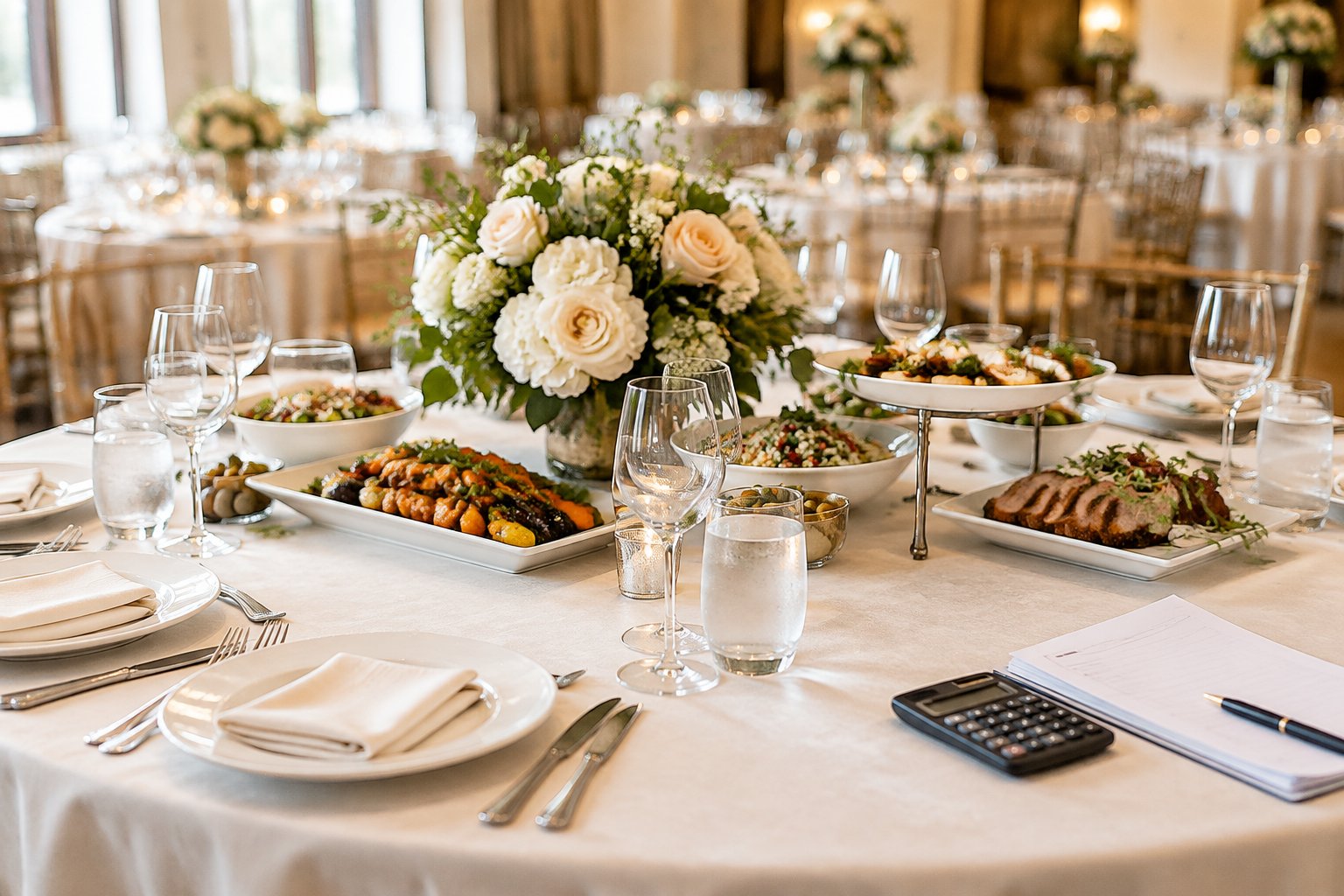
Your wedding catering budget becomes easier to manage when you separate the meal price from the complete event price. Guest count, service style, menu choices, venue rules, staffing, and fees all shape the wedding catering cost.
Use the numbers below to set a working budget, then request detailed quotes from wedding caterers who serve your reception area.
What Is a Realistic Per-Person Price?
A realistic wedding catering cost per person falls between $70 and $200 or more in the United States, with buffet and casual menus at the lower end and formal plated meals with premium service at the higher end. The amount listed in a catering quote might cover food and labor only, so check every inclusion before comparing catering quotes.
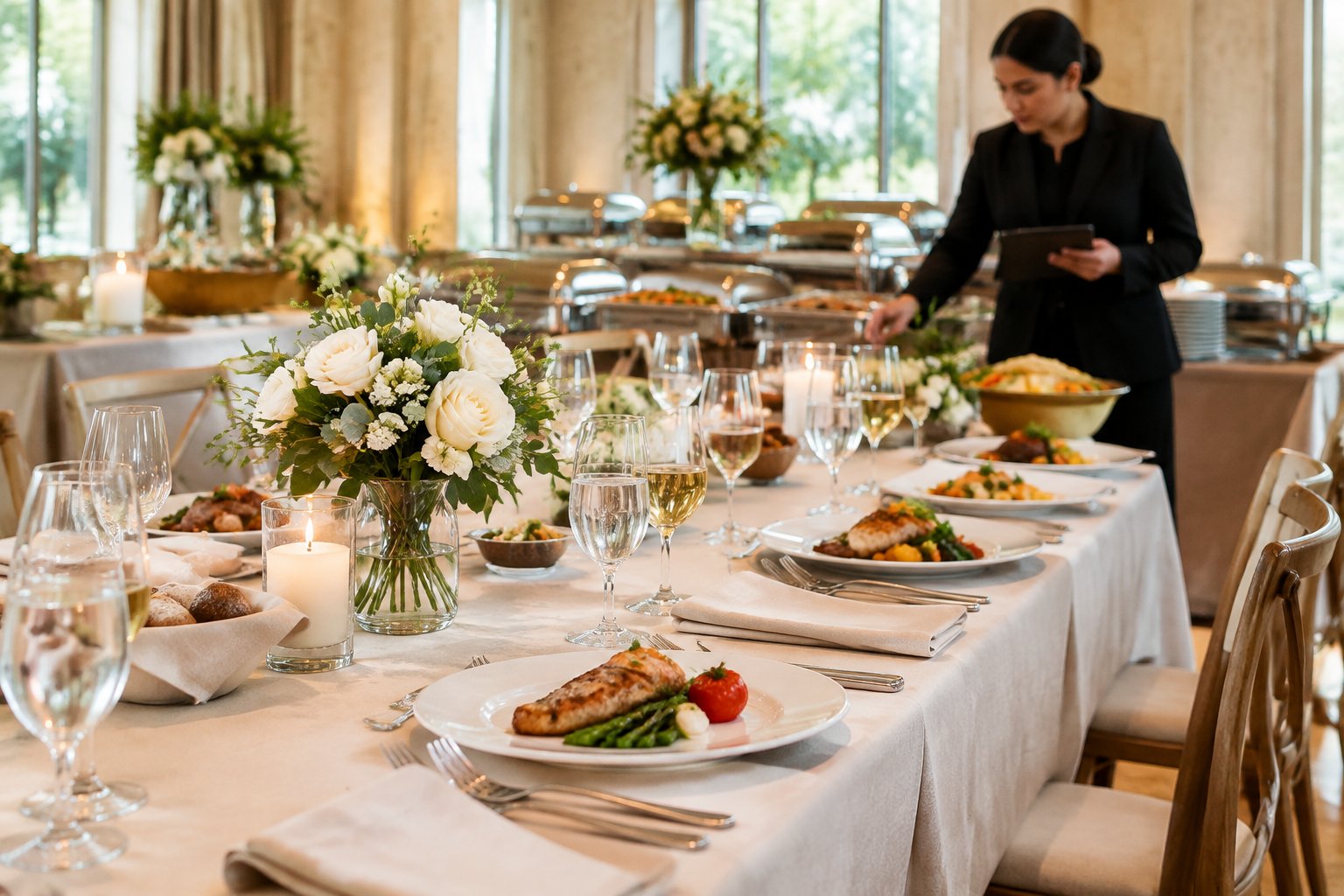
Typical National Ranges for Food and Service
These planning ranges help you create an early wedding catering cost breakdown:
| Service style | Estimated food and service cost per guest |
|---|---|
| Drop-off catering | $20–$50 |
| Food trucks | $30–$75 |
| Buffet service | $55–$110 |
| Family-style service | $65–$125 |
| Plated dinner service | $85–$175 |
| Premium formal plated dinner | $150–$250+ |
Large cities, luxury venues, custom menus, and extended reception hours can push prices above these ranges. A lower quote may include fewer staff members, basic presentation, or food only.
Why Food-Only and All-In Estimates Differ
Food-only pricing covers the menu. An all-in estimate might add servers, bartenders, setup and breakdown, rentals, beverages, service charges, gratuity, and sales tax.
For example, a caterer might quote $85 per guest for dinner. A 100-guest event would start at $8,500. Add a 22% service charge, 8% tax, rentals, and a bar package, and the final invoice could pass $12,000.
Ask whether the proposal includes:
- Hors d’oeuvres and cocktail-hour food
- Nonalcoholic drinks
- Dinner service
- Dessert or cake cutting
- Plates, flatware, glassware, and linens
- Servers and bartenders
- Setup, cleanup, and disposal
For a separate look at meal pricing, compare the costs of a three-course wedding meal.
How to Calculate Catering Cost per Person
Use this formula:
Total catering cost ÷ billable guest count = catering cost per person
Start with the menu price, then add each fixed or percentage-based fee:
- Multiply the food price by your expected guest count.
- Add staffing, bar service, rentals, delivery, and other fixed charges.
- Add service charges and gratuity according to the contract.
- Apply sales tax to the amounts the caterer identifies as taxable.
- Divide the estimated total by the billable guest count.
If your food and labor total $9,000 for 100 guests and fees add $2,250, your estimated cost is $112.50 per guest before any extra charges that are still undecided.
How Guest Count Changes the Total
Guest count drives the total catering bill because most menus use a per-person price, while staffing, rentals, and kitchen logistics create additional cost thresholds. A larger wedding reception raises the invoice, while a small event can carry a higher rate per guest because fixed costs are spread across fewer people.
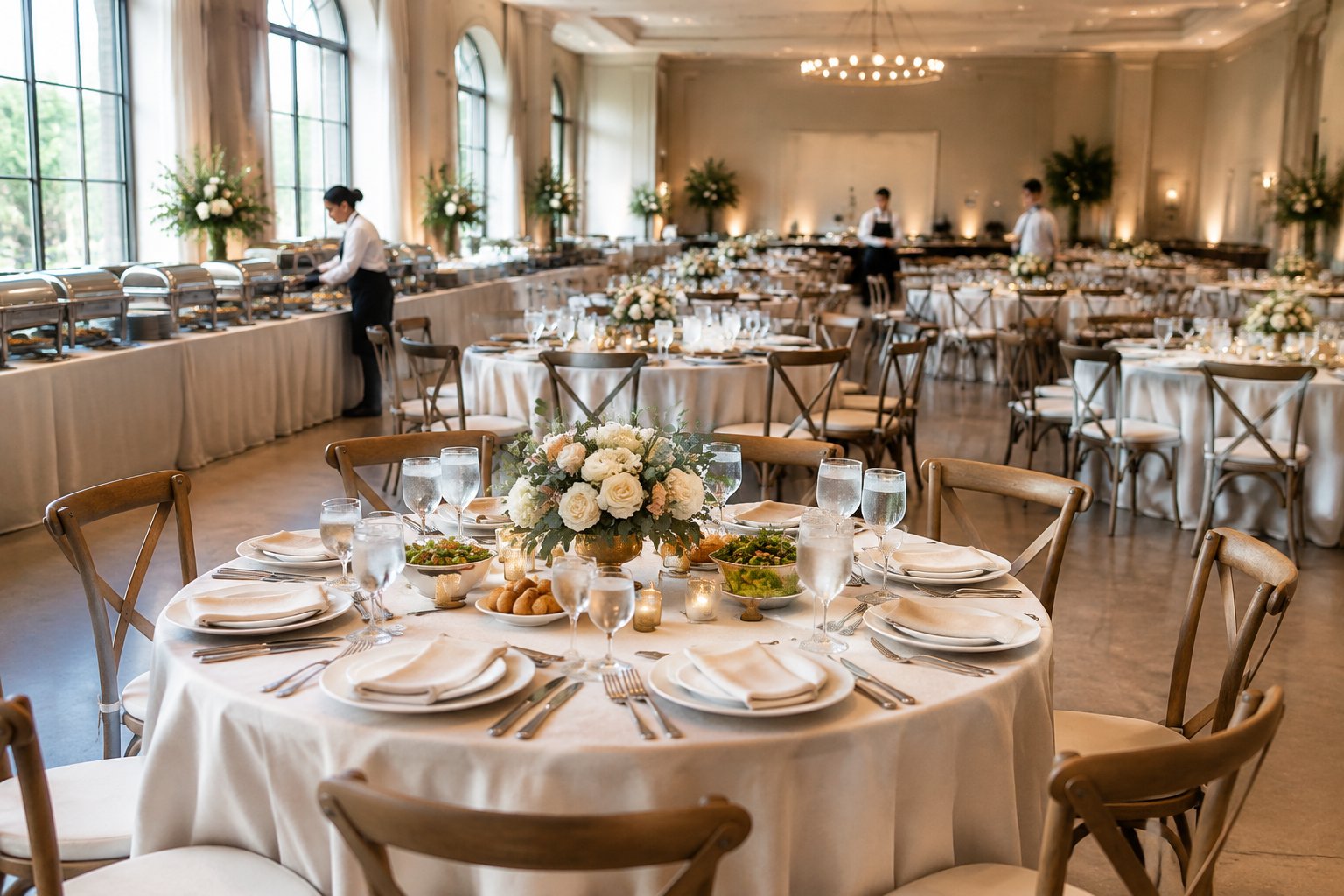
Your guest list calculator should include adults, children with paid meals, the couple, and any required vendor meals. Ask each caterer how the minimum guest count affects your proposal before you sign a contract.
Sample Budgets for 50, 100, and 150 Guests
The examples below use food and service rates of $85, $120, and $175 per guest. They exclude bar service, tax, gratuity, rentals, and special fees.
| Guest count | $85 per guest | $120 per guest | $175 per guest |
|---|---|---|---|
| 50 guests | $4,250 | $6,000 | $8,750 |
| 100 guests | $8,500 | $12,000 | $17,500 |
| 150 guests | $12,750 | $18,000 | $26,250 |
For catering for 150 guests cost estimates, a practical starting range is $12,750 to $26,250 for food and basic service. A full invoice with drinks and fees will be higher.
Why Small Weddings Can Cost More Per Guest
Caterers still need to transport equipment, plan the menu, staff the event, and prepare the kitchen for a 40-person reception. A minimum event charge might apply even when your guest count is below the caterer’s preferred size.
Ask whether the business uses a minimum guest count, minimum food spend, or minimum staffing fee. You can also compare a smaller plated menu with family-style service, which may fit a modest reception more efficiently.
Planning for Vendor Meals and Final Numbers
Photographers, DJs, planners, musicians, and venue staff might need vendor meals during the wedding reception. These meals are often priced separately or offered at a reduced rate, though the contract controls the final amount.
Set a response deadline for guests and give the caterer a final count by the date in your agreement. Confirm how late additions, children’s meals, allergies, and no-shows affect the bill. A clear seating plan helps the team prepare accurate portions and place settings.
Which Meal Service Fits Your Budget?
Buffet service offers a lower-cost full meal for many weddings, while plated dinner service creates a more formal experience with added labor and coordination. Family-style meals, food stations, cocktail receptions, food trucks, and drop-off catering give you more ways to match the menu to your wedding budget.

Your choice affects staffing, rentals, table layout, food portions, and service time. Compare the complete package, including what happens during cocktail hour and dessert.
Buffet vs. Plated Dinner Pricing
Buffet catering often costs $55 to $110 per guest for food and basic service. Guests serve themselves from stations, which reduces plate-by-plate labor, though the caterer still needs staff for replenishment, clearing, and cleanup.
A formal plated dinner often costs $85 to $175 or more per guest. Plated service requires servers, coordinated courses, detailed place settings, and timing for each table. You might also need entrée selections, printed menus, and extra kitchen labor.
| Feature | Buffet service | Plated dinner service |
|---|---|---|
| Typical food and service price | $55–$110 | $85–$175+ |
| Table service | Limited | Full |
| Guest entrée choice | Limited | Possible |
| Staffing level | Moderate | High |
| Best fit | Relaxed receptions | Formal receptions |
Family-Style Service and Food Stations
Family-style service places shared platters on each table. It creates a social meal with table service while reducing the need to serve every plate from the kitchen. Allow enough table space for serving dishes and confirm who refreshes empty platters.
Food stations spread guests across several points, such as a pasta station, carving station, or taco bar. Chef-attended stations add labor and equipment costs, while simpler self-serve stations keep the price closer to buffet rates.
Cocktail Receptions, Heavy Appetizers, and Food Trucks
A cocktail reception with passed appetizers and heavy appetizers may cost $35 to $90 per guest, depending on the number of pieces, menu quality, and service hours. Plan enough food for the reception length, especially when guests will not receive a seated meal.
Food trucks often charge $30 to $75 per guest, with travel, staffing, and service minimums added in some contracts. They work well for outdoor weddings and casual celebrations. Check the venue’s power, parking, weather, and access rules before booking.
Drop-Off Catering for Casual Celebrations
Drop-off catering offers prepared food delivered in disposable or basic serving containers. Prices can start near $20 per guest and rise with larger menus, delivery distance, setup, and staffed service.
You will need a plan for warming food, arranging the buffet, supplying serving tools, clearing dishes, and handling leftovers. This option suits backyard weddings, brunch receptions, rehearsal dinners, and venues that allow outside food without full-service requirements.
What Adds to the Caterer’s Base Price?
Bar service, labor, rentals, venue logistics, and percentage-based fees often add thousands of dollars to the caterer’s base price. Read the proposal line by line so you know which charges apply to every guest and which are fixed event costs.
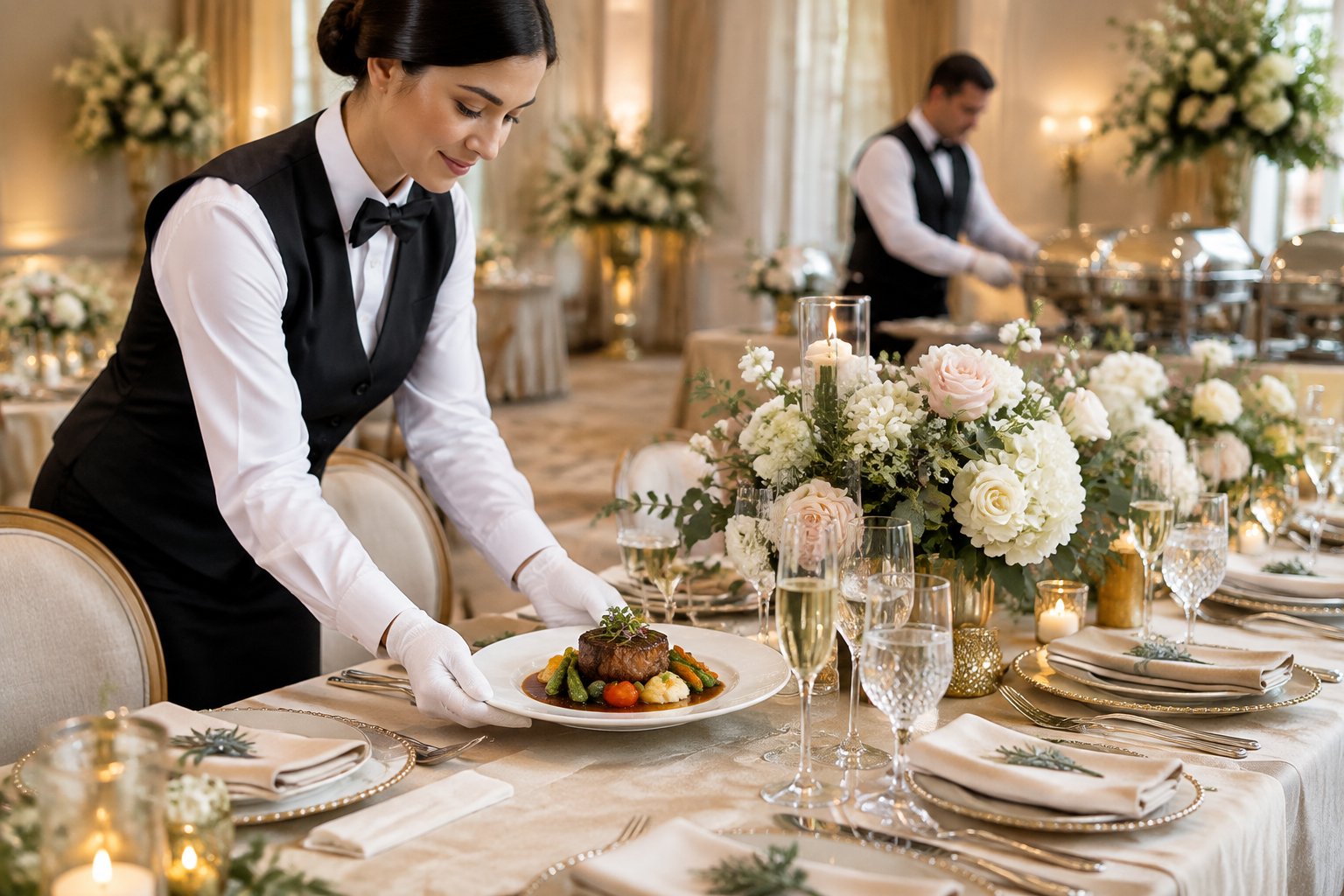
Request an itemized estimate that separates food, beverages, staffing, equipment, delivery, tax, and gratuity. This format makes competing proposals easier to compare.
Bar Packages, Open Bar, and Bartenders
Bar service may include beer and wine, a limited bar, an open bar, or a consumption-based plan. An open bar with premium spirits costs more because you pay for a broader selection, higher beverage costs, additional mixers, glassware, ice, and bartenders.
Signature cocktails add ingredients, preparation time, garnishes, and printed menu details. Ask whether the package includes:
- Bartenders and barbacks
- Alcohol, mixers, ice, and water
- Glassware and bar equipment
- Corkage fees for alcohol you provide
- Last-call service and overtime
A venue might require its own bar team or charge a corkage fee even when your caterer supplies the drinks.
Staffing, Setup, and Equipment Rentals
Service staff may include servers, chefs, bartenders, captains, dishwashers, and cleanup workers. Plated service and remote venues require more labor than a simple buffet in a fully equipped kitchen.
Basic rentals can include tables, chairs, linens, plates, chargers, flatware, glassware, serving pieces, and chafing dishes. Specialty rentals, such as upgraded china, colored linens, lounge furniture, or decorative bars, raise the total.
Setup and breakdown fees cover delivery, loading, room preparation, buffet styling, dish collection, trash removal, and equipment return. Ask whether the venue or caterer handles each task.
Service Charges, Taxes, and Other Common Fees
A service charge often covers administration, planning, staffing coordination, and operational costs. It might be calculated as a percentage of food and beverage charges, and it may not replace gratuity.
Review these possible additions:
- Sales tax
- Gratuity
- Delivery fees
- Overtime charges
- Liability insurance
- Cake-cutting fee
- Cake cutting fee listed under a different contract term
- Corkage fee
- Fuel or travel surcharge
- Rental replacement charges
Ask which fees are taxable and when gratuity is due. A written payment schedule should show your deposit, progress payments, final balance, and adjustment deadline.
What Makes One Menu More Expensive Than Another?
Menu complexity, ingredient quality, labor, location, and venue requirements create the largest price differences between wedding menus. A seasonal lunch with one main course can cost far less than a multi-course dinner with premium proteins, custom stations, and late-night snacks.
Your wedding caterer should explain the cost effect of each major menu choice. Request substitutions when a dish raises the estimate beyond your wedding catering budget.
Menu Complexity and Premium Ingredients
A simple buffet with two entrées and shared sides needs fewer preparation steps than a multi-course formal plated dinner. Premium ingredients such as filet, lobster, specialty cheeses, caviar, and imported seafood raise food costs and may require skilled preparation.
Custom tastings, made-to-order stations, multiple entrée choices, and late-night snacks add prep and service labor. A focused menu with one signature entrée can give guests a polished meal while keeping kitchen work manageable.
Seasonal Menus and Dietary Accommodations
Seasonal ingredients often provide better availability and help your caterer plan purchasing. A seasonal menu built around local produce can also reduce transport and specialty sourcing costs, though premium local products still carry their own price.
Tell the caterer about vegetarian, vegan, gluten-free, dairy-free, kosher, halal, and allergy-related needs early. A few planned dietary accommodations fit into the production plan more smoothly than last-minute individual meals.
Venue Rules, Location, and Reception Timing
Venue requirements shape staffing, equipment, and delivery costs. A site with a full kitchen may reduce equipment needs, while a barn, beach, park, or remote property may require mobile kitchens, generators, extra transport, and longer setup time.
High-cost cities often have higher labor and rental rates. Travel distance adds delivery fees and may require overnight lodging for staff. A brunch wedding, lunch reception, weekday wedding, or Sunday wedding can offer lower menu pricing when the caterer has more availability and the menu uses lighter service.
How to Compare Quotes and Reduce Costs
Compare wedding catering quotes by their full event totals, not by the food price alone. You can lower wedding catering costs by choosing a focused menu, limiting premium upgrades, selecting an efficient service style, and confirming every fee before booking.
Dessert stations, late-night snacks, upgraded linens, and specialty bars can be added after you know the core meal price. Decide which guest experience features deserve room in your wedding catering budget.
Build an Apples-to-Apples Quote Comparison
Create one worksheet for every caterer and enter the same details:
- Guest count and vendor meals
- Cocktail-hour menu
- Dinner menu and dessert
- Beverage package
- Servers, chefs, and bartenders
- Rentals and linens
- Setup, breakdown, and cleanup
- Delivery and travel
- Service charge, gratuity, and sales tax
- Deposit, payment dates, and cancellation terms
Calculate the final estimated total and divide it by the same guest count. A $90 food quote may cost more than a $105 quote when the first proposal excludes rentals, staffing, or bar service.
Cost-Saving Choices That Guests Still Enjoy
Choose one standout entrée with well-prepared sides instead of several premium selections. Buffet or family-style service can reduce plate-by-plate labor, while a seasonal menu may limit costly specialty sourcing.
Other useful choices include:
- Serve beer, wine, and one signature cocktail
- Hold the ceremony and reception at one location
- Use a dessert station in place of plated dessert
- Offer a brunch or lunch reception
- Select standard linens and basic rentals
- Limit passed appetizers to the cocktail hour
- Use a smaller late-night snack menu
- Schedule the wedding during a lower-demand day
Keep enough food for the reception length and guest count. Cutting portions too far creates stress for your caterer and guests.
Questions to Ask Before Booking
Ask each wedding caterer:
- What does the per-person price include?
- Is there a minimum guest count or minimum spend?
- How many servers, chefs, and bartenders will attend?
- Are vendor meals included, discounted, or charged separately?
- Which rentals, linens, plates, chargers, and glassware are included?
- How are service charge, gratuity, and sales tax calculated?
- Are delivery, setup, breakdown, cleanup, and overtime included?
- Does the venue require approved caterers or specific insurance?
- What fees apply to outside alcohol, cake cutting, or dessert service?
- When is the final guest count due, and how are changes priced?
Request the complete contract and a sample final invoice before paying a deposit. For broader planning, use this guide to choose the right wedding caterer and keep your comparison focused on the full price for the service you want.