
Average Cost of Flowers and Decor for a Wedding
The average cost of flowers and decor for a wedding in the United States is about $2,800 for florals alone, while many couples spend $4,000 to $8,000 when they add rentals, lighting, signage, and other decor. A smaller celebration may spend $1,000 to $2,000, while a full-service design with premium flowers and large installations can reach $8,000 or more.
Your wedding flower cost depends on guest count, venue layout, flower season, design style, and labor. A professional florist also charges for flower processing, vessels, delivery, setup, and cleanup.
Set your wedding flower budget before choosing every detail, then give priority to the areas that will appear most in your photos.
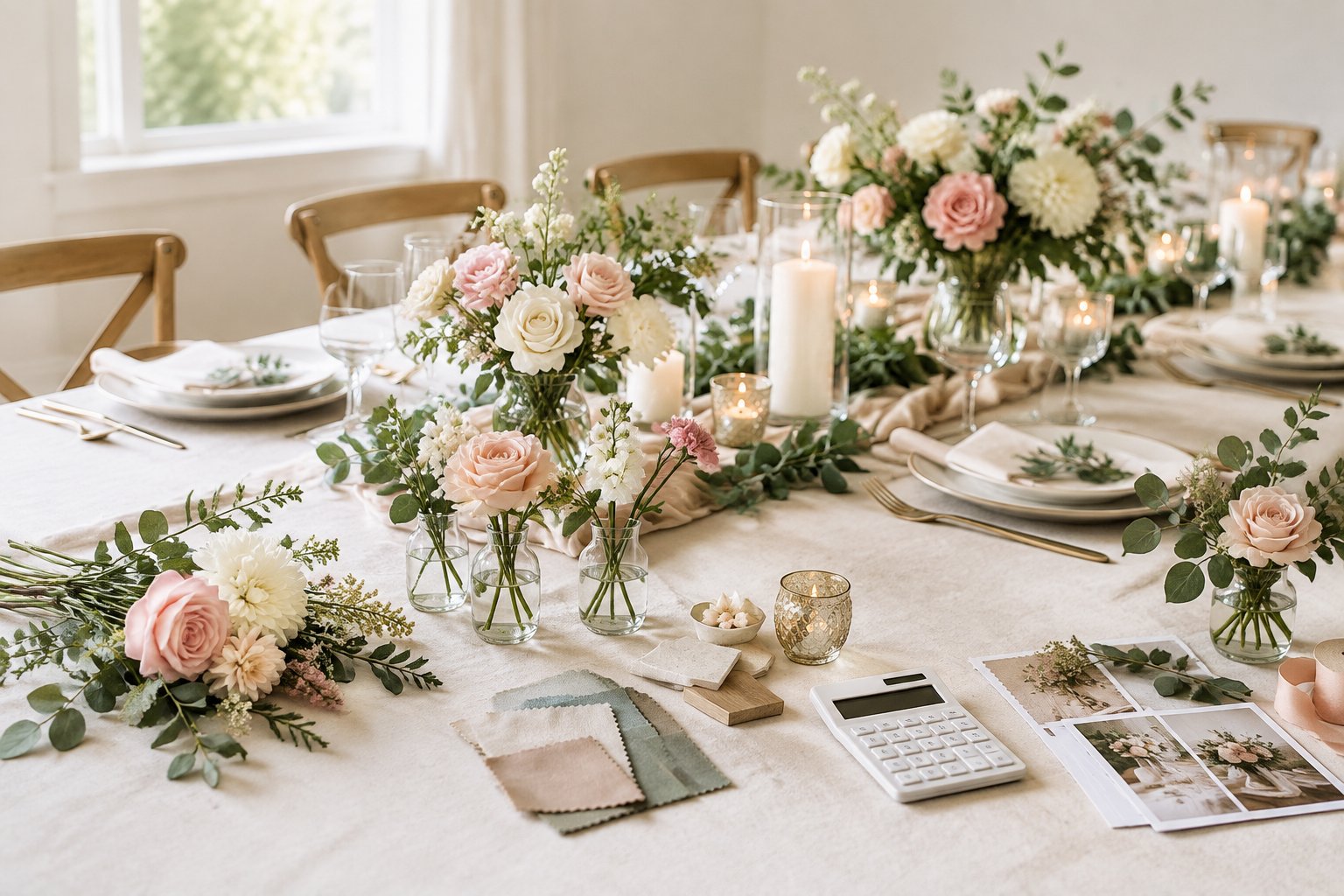
A useful starting point is 8% to 10% of your total wedding budget for flowers and floral decor. If you want a lush ceremony arch, hanging arrangements, premium blooms, or a styled reception, plan closer to 12% to 15%.
You can also compare your plans with this guide to how much you should spend on wedding flowers, then request a detailed quote from a local floral designer.
What Should You Budget for Flowers and Decor?
Plan $2,500 to $5,000 for a common U.S. wedding flower budget, then add $1,000 to $4,000 for non-floral decor and rentals when your venue needs a fuller design. Small weddings with simple arrangements can cost less, while large celebrations with installations can exceed $10,000.
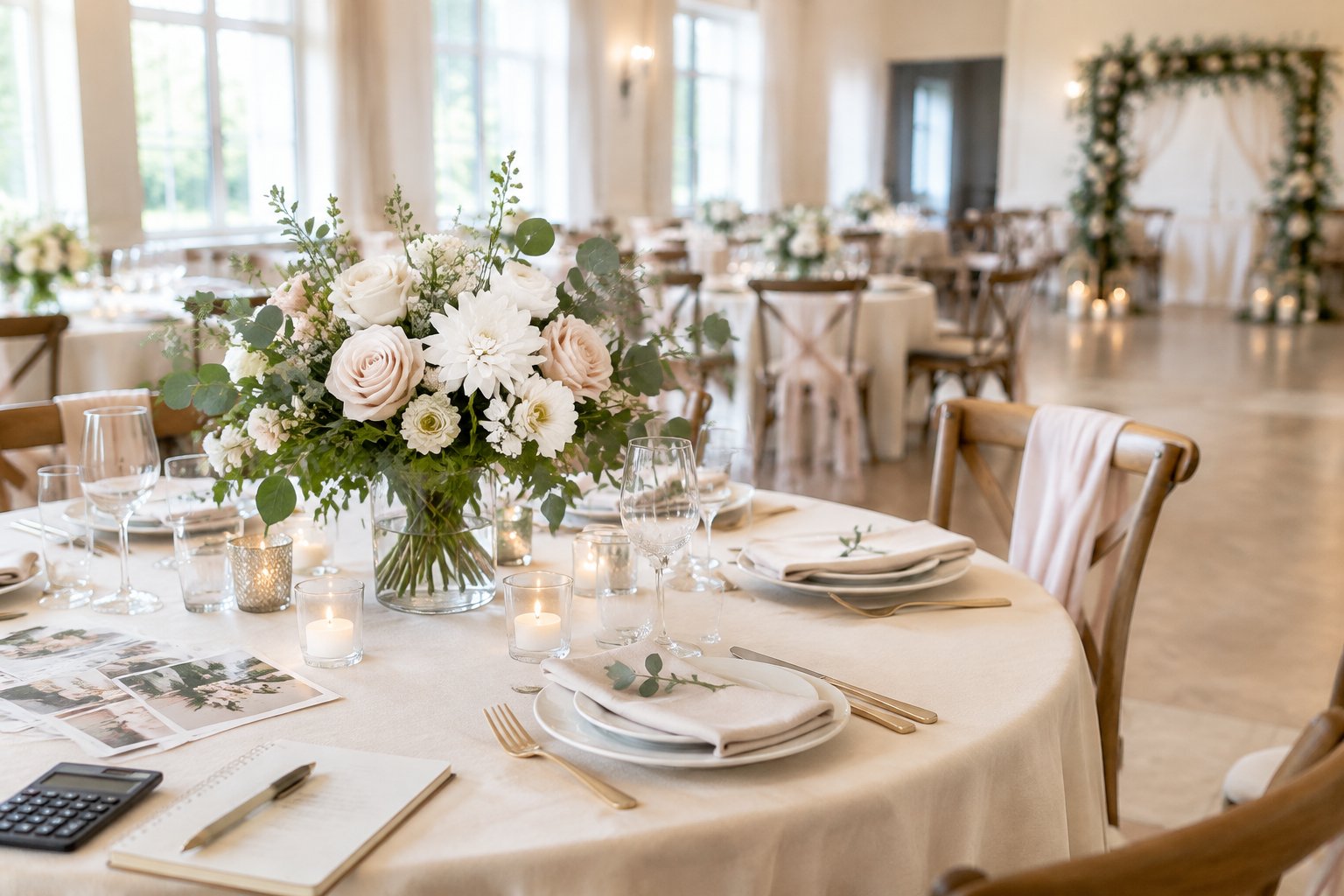
Your guest count, wedding venue, and design goals shape the quote. A professional florist prices the materials and the time needed to source, prepare, arrange, deliver, install, and remove each item.
Typical Spend by Wedding Size and Budget Tier
| Wedding size or design scope | Floral budget | What it may include |
|---|---|---|
| 1 to 50 guests | $1,000 to $2,500 | Personal flowers, small centerpieces, limited ceremony decor |
| 51 to 100 guests | $2,500 to $5,000 | Wedding party flowers, table arrangements, ceremony accents |
| 101 or more guests | $3,500 to $8,000 | More centerpieces, larger ceremony designs, added installation |
| Full statement design | $8,000 and up | Floral arches, flower walls, hanging flowers, premium blooms |
A $1,000 to $2,000 plan can cover a bridal bouquet, boutonnieres, modest bridesmaid bouquets, and simple table flowers. A $2,500 to $5,000 plan gives your florist room for a fuller personal-flower order, ceremony accents, and reception centerpieces.
Budgets above $5,000 support denser designs and larger focal pieces.
How Much of the Total Wedding Budget Should Go to Florals and Decor?
Reserve 8% to 10% of your total wedding budget for florals when flowers play a supporting role. A $25,000 wedding could assign $2,000 to $2,500 to flowers. A $50,000 wedding could set aside $4,000 to $5,000.
Raise the percentage when you want flowers to define the venue. Large arches, floral installations, hanging arrangements, and premium flowers require more product and labor.
A venue with attractive architecture, gardens, or built-in lighting may reduce the amount of added decor you need.
Keep floral and non-floral costs in separate lines. Your floral proposal may include vessels and installation, while your rental company handles linens, furniture, lighting, and dance-floor equipment.
What a Basic, Mid-Range, and Statement Design Budget Can Cover
Basic design, $1,000 to $2,000: You can cover personal flowers, simple bud-vase groupings, and a small ceremony arrangement. Seasonal flowers and greenery help keep the order within range.
Mid-range design, $2,500 to $5,000: You can add bridesmaid bouquets, corsages, reception centerpieces, aisle markers, cake flowers, and a ceremony focal point. Flexible flower choices give the floral designer more ways to match your color palette.
Statement design, $5,000 to $8,000 or more: You can plan for lush centerpieces, a floral arch, upgraded vessels, a styled head table, and additional ceremony or reception installations. A large flower wall or suspended design can push the quote higher.
What Do Wedding Flower Arrangements Cost?
Individual wedding flower arrangements range from about $15 for a boutonniere to $3,000 or more for a large ceremony installation. The size, flower recipe, mechanics, labor, and delivery needs determine the price of each piece.
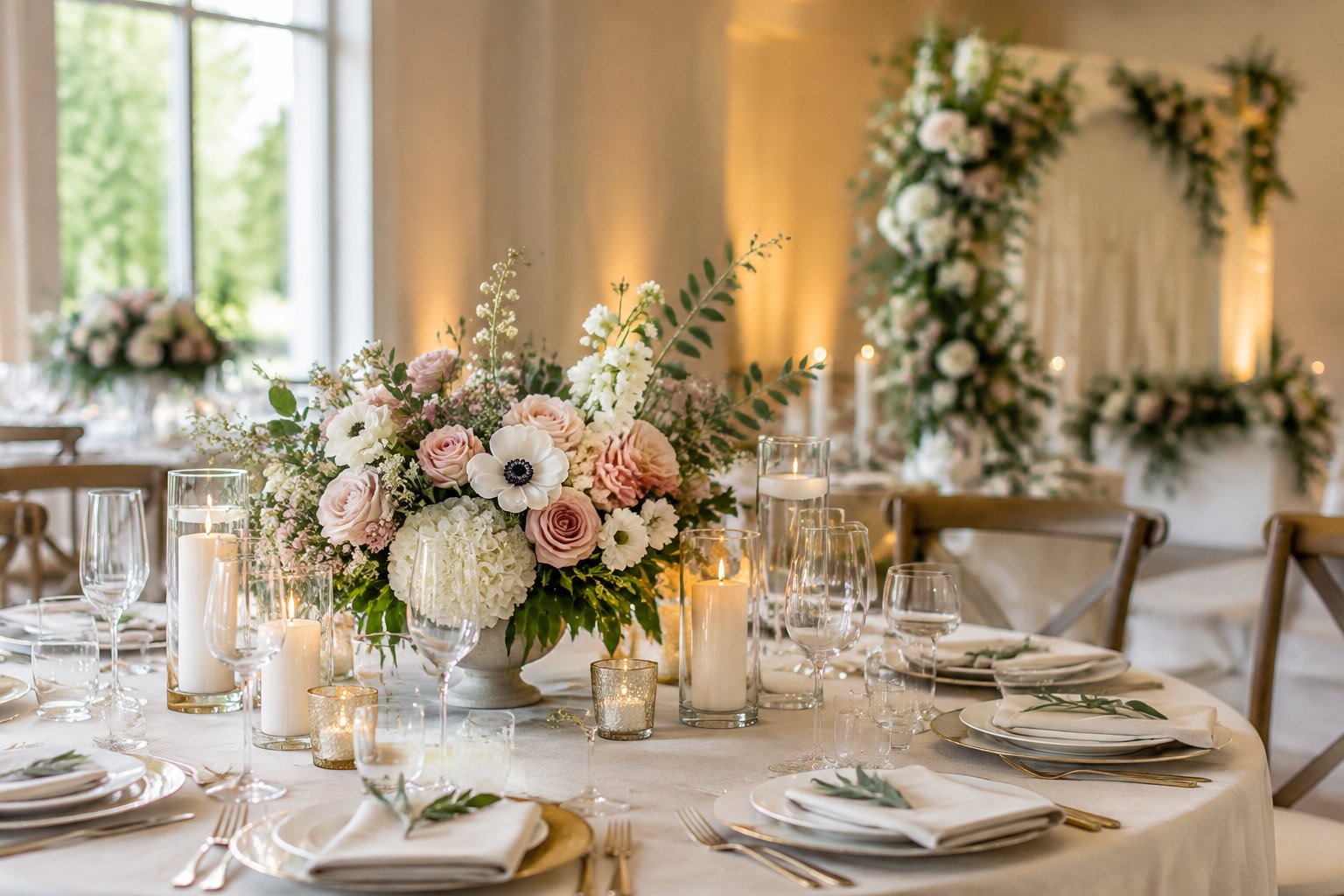
A detailed proposal helps you see which items use the largest share of your wedding flower budget. Protect the pieces with the highest photo value, then scale smaller details to fit your total.
Personal Flowers for the Couple and Wedding Party
Personal flowers commonly cost:
- Bridal bouquet: $250 to $350, with oversized or cascading designs reaching $500 or more
- Wedding bouquet for a second partner: $150 to $300
- Bridesmaid bouquets: $80 to $150 each
- Boutonnieres: $15 to $30 each
- Corsages: $25 to $60 each
- Toss bouquet: $50 to $125
- Flower girl basket: $40 to $100
- Hair flowers: $25 to $150
A bridal bouquet uses more flowers and design labor than a small hand-tied bouquet. Bridesmaid bouquets can follow the same palette with fewer premium stems.
Your florist can also reuse bridesmaid bouquets in reception vases after the ceremony.
Ceremony Flowers and Statement Backdrops
Ceremony flowers range from $30 aisle markers to $5,000 floral arches. A simple arbor arrangement may cost $500 to $1,000, while a lush floral arch with extensive coverage can reach $3,000 to $5,000 or more.
Common price ranges include:
- Aisle markers: $30 to $150 each
- Welcome arrangements: $150 to $500 each
- Altar or arbor arrangements: $500 to $3,000 or more
- Floral arch: $1,000 to $5,000 or more
- Ground arrangements: $150 to $500 each
A single ceremony focal point creates a strong setting for vows and photographs. Ask whether the same structure can move to the reception, since relocation adds labor and timing requirements.
Reception Centerpieces and Tablescapes
Reception centerpieces cost about $100 to $500 each. Low centerpieces and bud-vase groupings use less product, while tall centerpieces require larger vessels, more flowers, and secure installation.
Typical ranges include:
- Bud-vase groupings: $75 to $150 per table
- Low centerpieces: $100 to $250 each
- Tall centerpieces: $250 to $500 or more each
- Sweetheart table flowers: $150 to $600
- Head-table flowers: $400 to $2,000 or more
- Full tablescape florals: $150 to $600 per table
The number of tables drives the total quickly. Long tables may need several arrangements or a continuous floral runner, while round tables can use one central design.
Small Floral Details That Add Up
Small floral details can add several hundred dollars to the order. Include cake flowers, cocktail-hour arrangements, bar flowers, welcome-sign flowers, chair posies, and restroom arrangements in your first estimate.
Rank these details by visibility. Cake flowers and a welcome sign arrangement may create more value than flowers in every secondary space. Your florist can group smaller pieces into a package or use leftover stems where the design allows.
What Does Non-Floral Wedding Decor Cost?
Non-floral wedding decor commonly adds $1,000 to $4,000 for a small or moderate event, with large celebrations reaching $7,000 to $20,000 or more. The biggest cost drivers are lighting, furniture, draping, specialty rentals, and the size of the reception space.
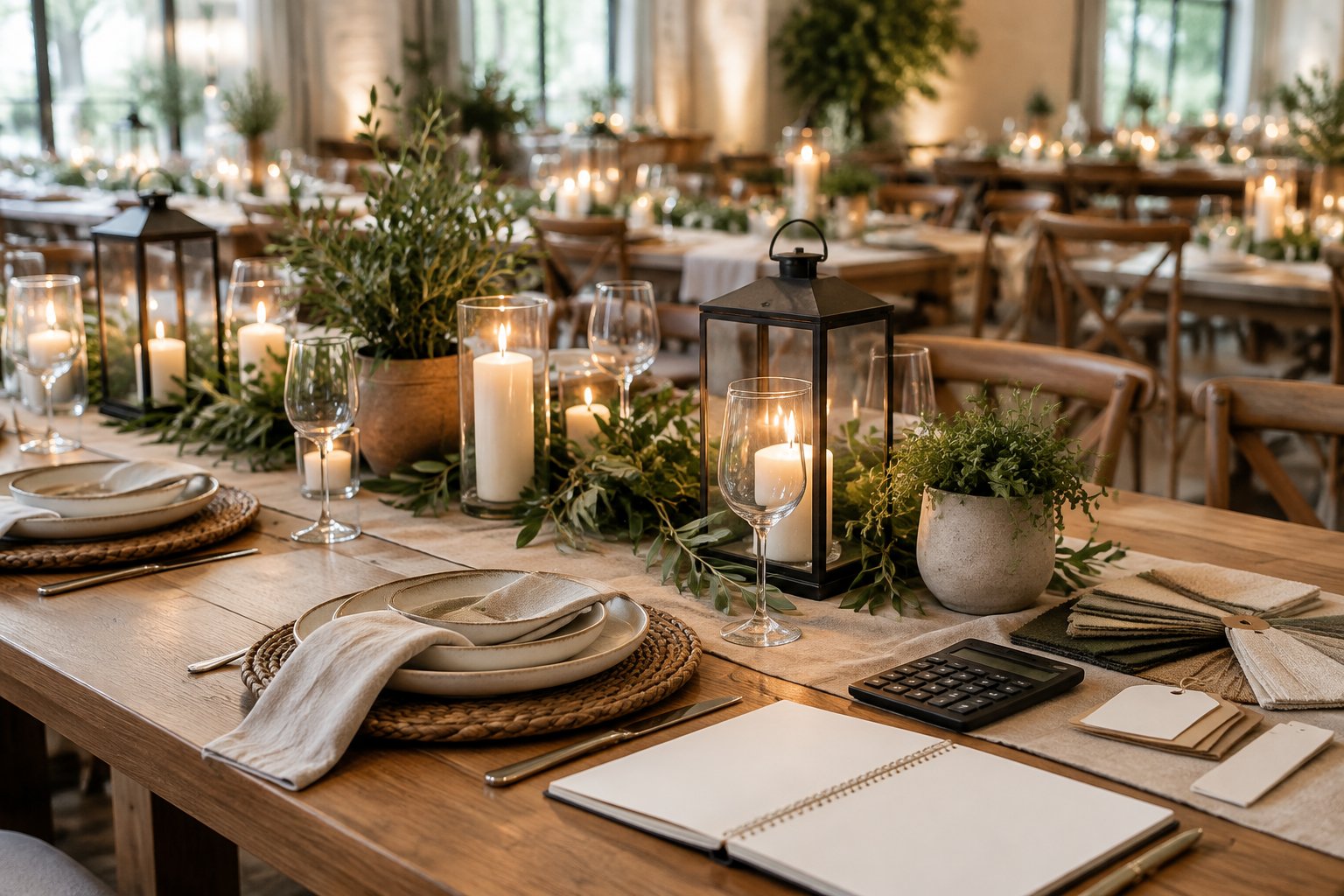
Your venue may include chairs, tables, basic linens, or lighting in its rental package. Review that list before booking outside vendors, then price the remaining table decor and design pieces.
Table Decor, Linens, and Place Settings
Table decor may include candles, chargers, napkin treatments, menus, place cards, table numbers, and decorative vessels. Basic linens may cost $15 to $40 per table, while specialty fabrics and custom textures cost more.
A modest table design can use candles, simple napkins, and a small floral arrangement. Charger plates, colored glassware, layered linens, and custom place settings add rental and handling fees across every guest table.
Ask whether setup, return packing, and cleaning are included.
Lighting, Signage, and Backdrops
Wedding lighting ranges from about $500 for a simple setup to $5,000 or more for extensive uplighting, string lights, chandeliers, or a custom lighting design. Your venue’s power access and ceiling height affect installation time.
A welcome sign may cost $50 to $300, depending on its material and lettering. A custom seating chart, bar sign, or ceremony backdrop adds design and production charges.
Printed pieces cost less than large acrylic, mirror, fabric, or built structures.
Furniture, Draping, and Dance Floor Rentals
Lounge furniture, sweetheart chairs, arches, draping, and specialty tables can add $500 to several thousand dollars. Draping costs rise with fabric length, ceiling height, rigging, and installation labor.
Dance floors often cost $800 to $2,500, with custom patterns or large sizes reaching more. Include delivery, setup, removal, and venue access fees when comparing rental quotes.
A smaller number of well-placed rental pieces can define the guest experience without filling every area.
Which Choices Raise or Lower Your Final Quote?
Your florist quote rises with out-of-season or premium flowers, large guest counts, complex installations, and difficult venue logistics. In-season flowers, locally grown flowers, flexible color choices, and reusable arrangements help control wedding flower costs.
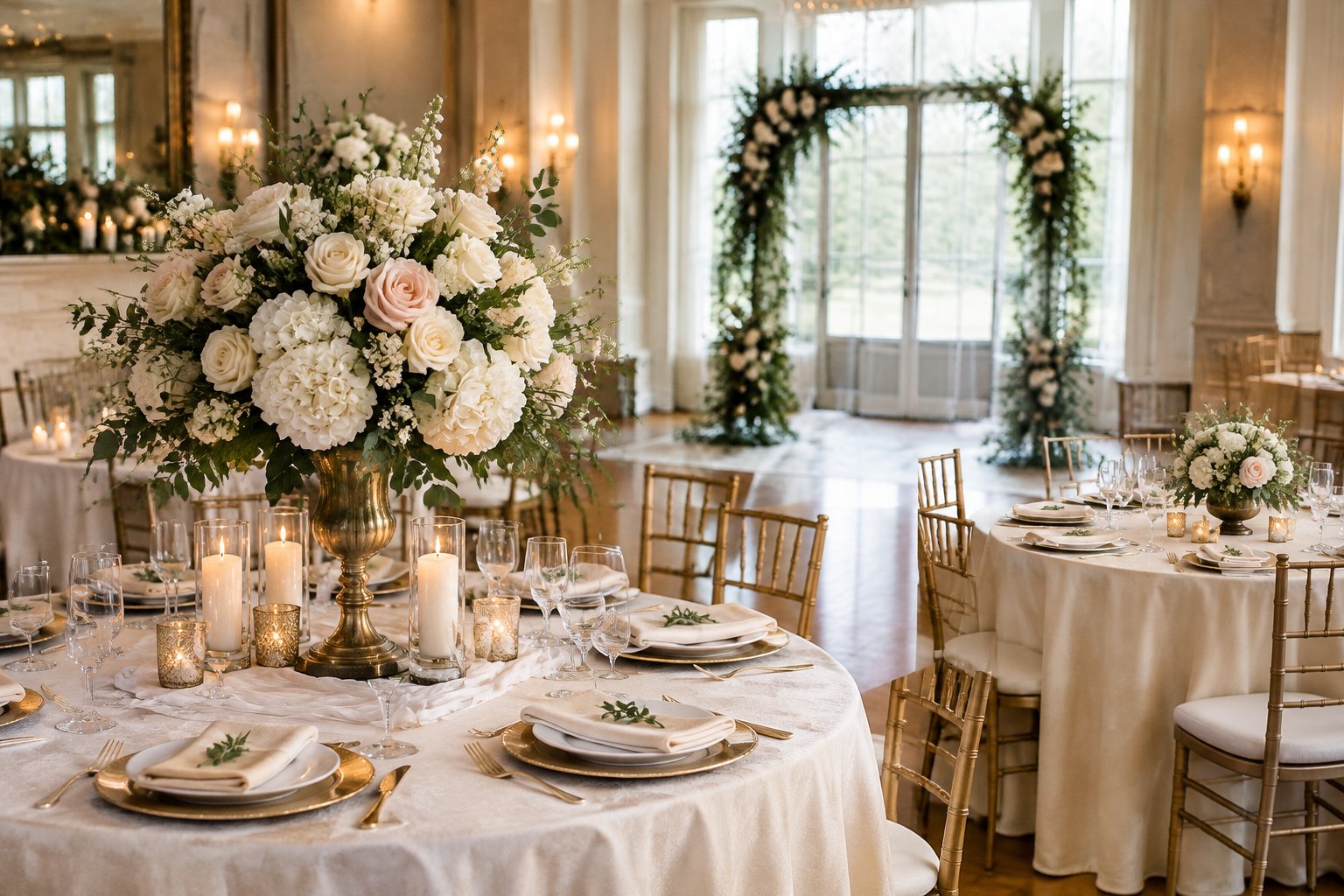
Share your priorities before naming every flower. A skilled wedding florist can preserve your preferred shape and mood while adjusting the flower recipe to fit your budget.
Flower Variety, Seasonality, and Sourcing
In-season flowers cost less to source and give your florist more reliable access. Out-of-season flowers may require special ordering, long-distance shipping, or extra backup stems. Imported flowers also reflect transportation and supply costs.
Premium flowers such as peonies, garden roses, orchids, lily of the valley, gardenias, and anemones often cost more per stem. Standard roses, hydrangeas, carnations, daisies, chrysanthemums, alstroemeria, and seasonal filler flowers provide volume at a lower price point.
Your wedding date affects the available flower list. Depending on the season, your florist may recommend dahlias, ranunculus, lisianthus, tulips, calla lilies, lilies, amaryllis, flowering branches, or locally grown foliage.
Flexibility across several varieties gives the designer room to manage the florist quote.
Guest Count, Venue Logistics, and Design Complexity
Each guest table adds another centerpiece, set of vessels, and installation task. Larger guest counts increase the order even when the design per table stays the same.
Venue logistics also affect labor. A ballroom with a nearby loading area is easier to service than a remote venue with stairs, long walking paths, limited parking, or a short setup window.
Delivery, stairs, elevator access, refrigeration, breakdown, and return transport should appear in the proposal.
Complex designs cost more because they require extra mechanics and construction time. Cascading bouquets, hand-wired details, tall structures, flower walls, ceiling treatments, and suspended floral installations all increase labor.
What a Florist Quote Includes Beyond Fresh Flowers
A complete proposal may include:
- Flower sourcing and backup stems
- Processing, hydration, and refrigeration
- Design labor and mechanics
- Vessels, structures, candles, or rental pieces
- Delivery and venue access
- Setup, installation, and strike
- Taxes, service charges, and rental deposits
Ask your florist to label each charge. Confirm whether breakdown service, rental returns, tax, and gratuity are included.
A lower stem price can still produce a higher total when labor and delivery appear as separate fees.
How Can You Save on Flowers and Decor Without Losing Impact?
You can reduce your wedding flower budget by concentrating flowers in photographed areas, choosing seasonal blooms and greenery, and moving ceremony pieces to the reception. Selective design gives you a polished look while limiting the number of arrangements your florist must build.
Prioritize the Most Photographed Areas
Focus first on the bridal bouquet, ceremony backdrop, sweetheart table, guest tables, and welcome area. These locations appear in portraits and guest photos throughout the day.
Use candles, textured linens, signage, or attractive venue features in spaces that do not need flowers. A strong entrance arrangement can create more impact than several small arrangements scattered through low-traffic areas.
Choose Cost-Effective Blooms and Greenery
Ask for a flower recipe built around in-season flowers and locally grown flowers. Greenery such as eucalyptus, ferns, ruscus, and Italian ruscus adds movement and volume with fewer premium stems.
Baby’s breath, carnations, daisies, sunflowers, chrysanthemums, alstroemeria, and zinnias can create color and fullness at manageable prices. Standard roses offer a familiar shape at a lower cost than garden roses. Let your florist substitute within the same color family if a preferred flower becomes expensive.
Repurpose Ceremony Flowers for the Reception
Design ceremony pieces with a second location in mind. An aisle arrangement can move to the bar, welcome table, or sweetheart table. A ceremony arch can frame the reception entrance or head table when the structure and schedule allow.
Assign a person or vendor to move the flowers. Relocation requires containers, transportation, and labor, so include that service in your proposal before the wedding day.
When Silk Flowers or Potted Plants Make Sense
Silk flowers work well for installations, bouquets prepared far in advance, and designs exposed to heat. Compare quality, rental fees, shipping, storage, and return requirements before choosing them.
For more planning detail, review how much you should spend on fake wedding flowers.
Potted plants suit an outdoor ceremony, lounge area, or venue entrance. Ferns, herbs, small trees, and flowering plants can serve as decor during the event and remain useful afterward.
Fresh flowers still provide a natural scent and texture, so a mixed plan can place fresh arrangements in key photographs and potted or silk pieces in larger background areas.