
Average Cost of Men’s Wedding Band: 2026 Pricing Guide
A men’s wedding band in the United States costs about $600 to $1,500 in 2026, with a practical midpoint near $1,000 for a solid gold style. Simple alternative-metal bands can cost under $500, while wider gold rings, platinum, diamond accents, and custom work can push the wedding band cost beyond $2,500.
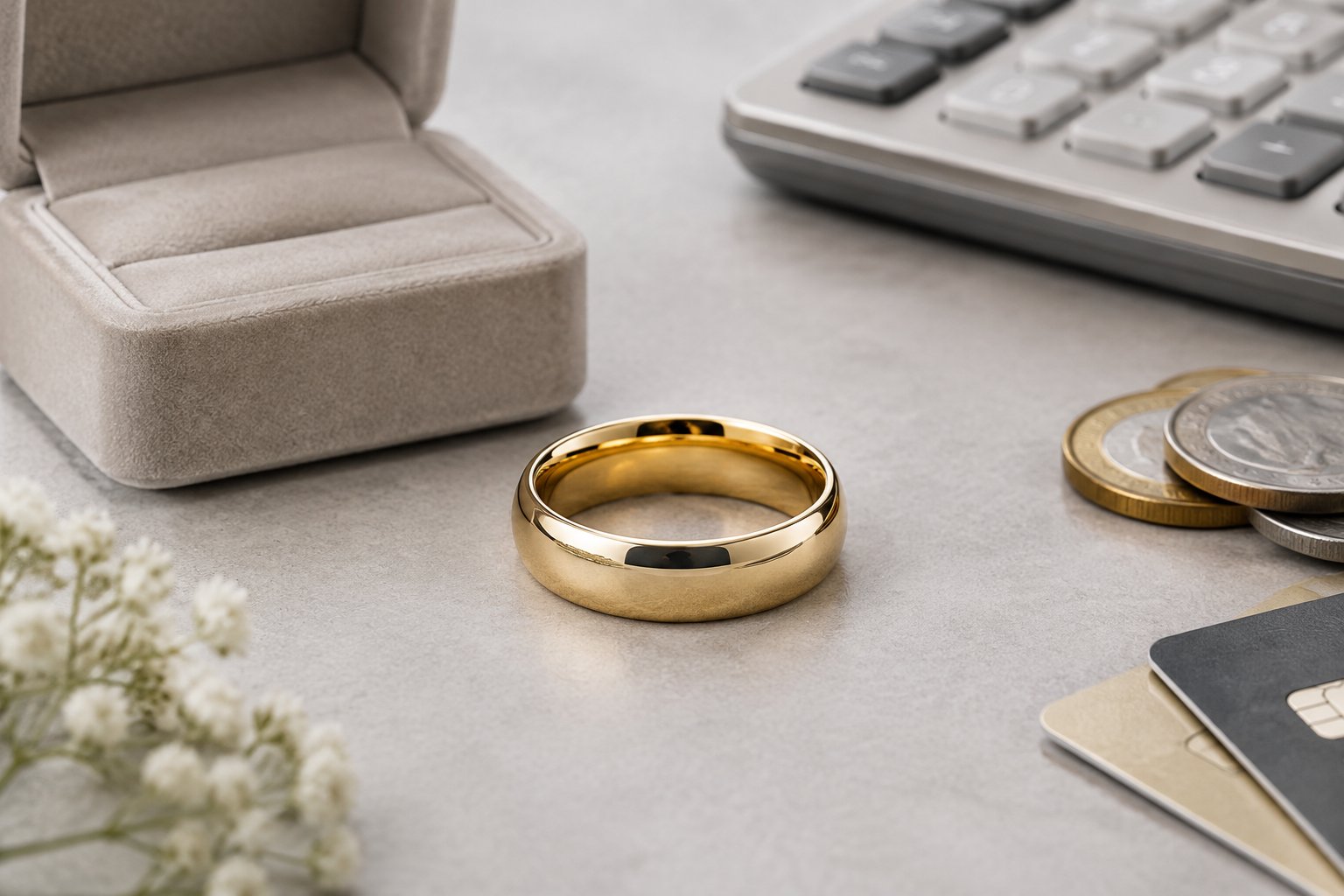
Your budget should leave room for the details that affect fit, durability, and maintenance. A plain 14k gold band gives you a traditional choice, while tungsten, titanium, and other alternative metals offer a lower entry price with a different resizing experience. If you want help setting a ring budget alongside your wedding expenses, you can also review this guide to how much should a man spend on a wedding ring.
The 2026 Price Snapshot
The average cost of a men’s wedding band in 2026 is about $600 to $1,500, with many shoppers landing close to $1,000. Your final price follows the ring’s metal, width, finish, stone setting, brand, and customization.
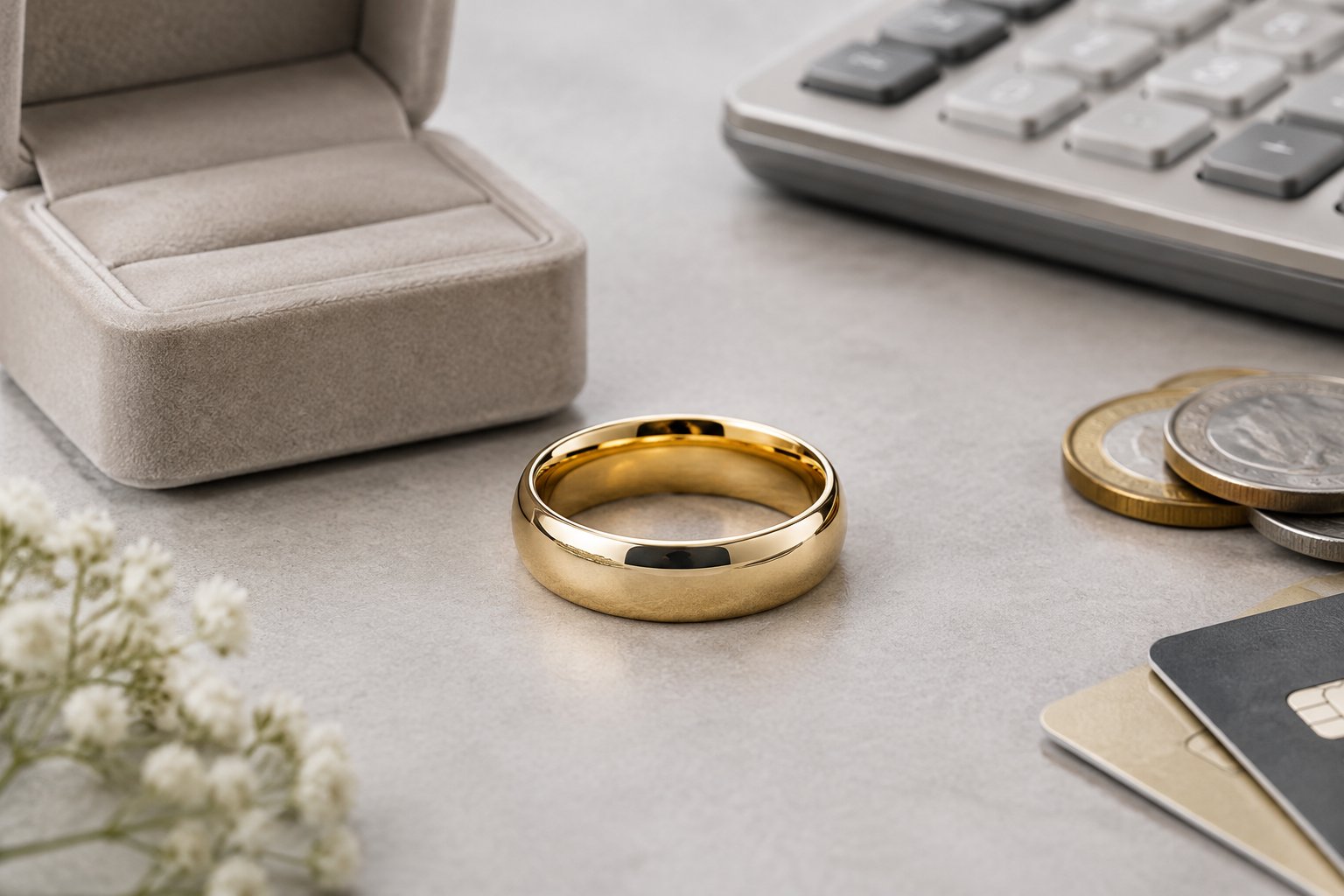
What Most Shoppers Actually Spend
A useful 2026 budget guide looks like this:
- Under $500: Titanium, tungsten, stainless steel, sterling silver, and slim plain bands
- $500 to $1,500: Most 14k gold bands, wider designs, comfort-fit rings, and modest diamond details
- $1,500 to $3,000: Heavy gold bands, platinum styles, custom finishes, and larger diamond accents
- Above $3,000: Premium platinum, substantial diamond bands, designer pieces, and one-of-a-kind work
The average can sit above the price paid by many shoppers because a few expensive rings raise the mean. A median price, which represents the middle purchase, often gives you a clearer sense of what a typical buyer spends.
Why Published Averages Can Differ So Much
Retailers and surveys count different products. One figure might include simple tungsten bands, while another includes platinum rings with natural diamonds.
Ring width also changes the amount of precious metal used, especially in larger sizes. Sales, online pricing, custom orders, taxes, engraving, and resizing policies create more variation.
Compare rings with the same metal purity, width, finish, stone type, and service terms before treating two prices as equal.
What Drives the Final Price
Metal choice creates the largest price difference, while width, design complexity, stones, and custom work determine how far your ring moves from its basic price. A narrow plain band and a wide detailed band can look similar online while carrying very different production costs.
How Metal Choice Changes the Budget
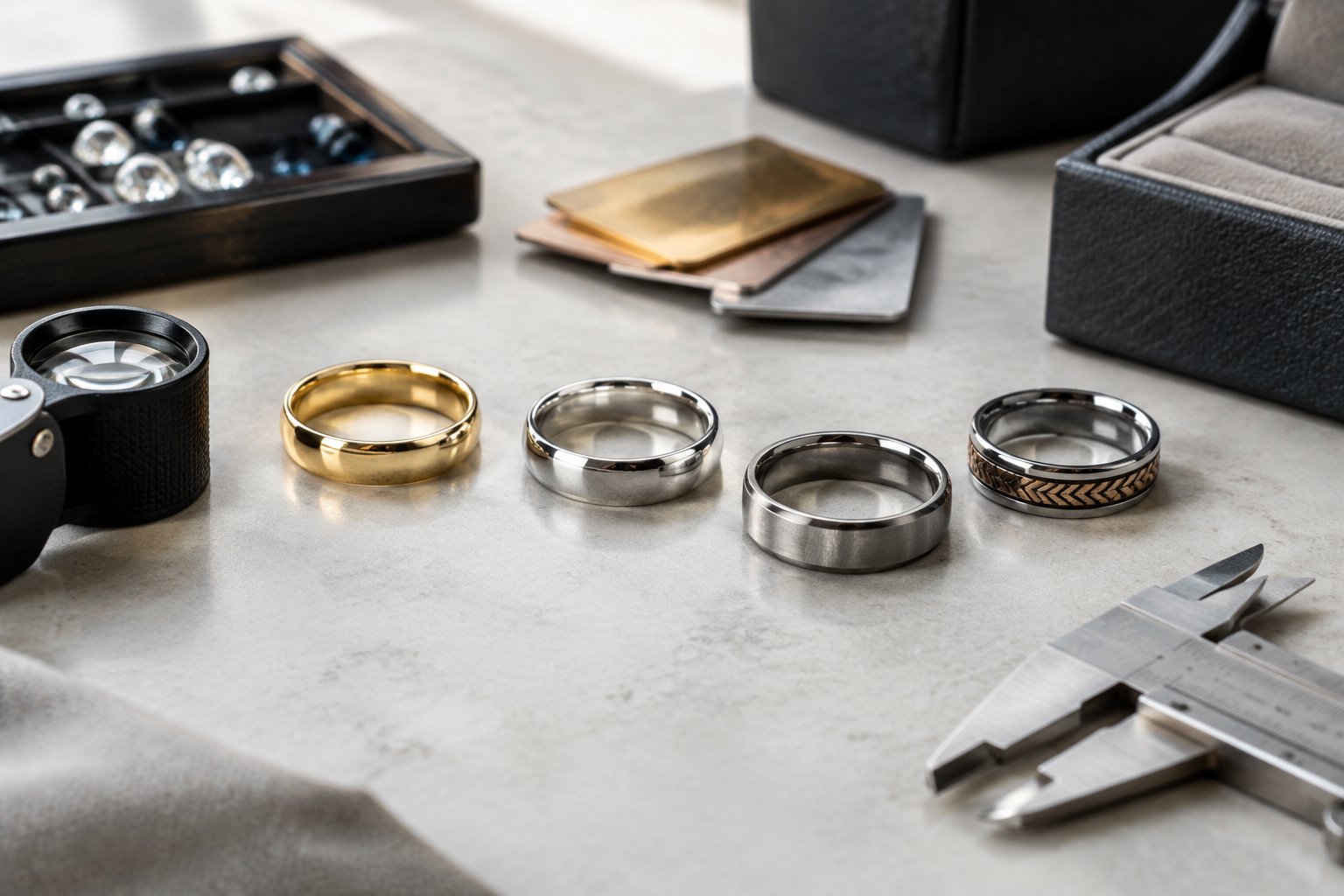
14k gold offers a strong balance of durability, color, and price. A 14k white gold ring carries a bright look and may require rhodium plating over time.
Yellow gold shows its natural warm color, while rose gold gets its blush tone from the alloy blend. Platinum costs more because it is dense and highly pure.
Alternative metals such as tungsten, titanium, cobalt, and tantalum often start at lower prices and suit shoppers who want a modern appearance or high scratch resistance. Metal price also reflects ring weight.
A wide 8mm band uses more material than a slim 4mm band, so two rings made from the same 14k gold can differ by hundreds of dollars.
How Width and Design Complexity Add Cost
Every extra millimeter adds material and affects the work required to shape and finish the band. A comfort-fit interior, beveled edge, two-tone construction, milgrain border, or hand-applied hammered finish adds labor.
A plain polished band has fewer production steps. Brushed, matte, and hammered finishes create texture and hide some daily marks, though they need periodic refinishing when the surface wears.
What Diamond Accents and Custom Details Add
Diamond accents raise the price according to carat weight, cut quality, color, clarity, setting style, and the number of stones. Lab-grown diamonds provide another way to add sparkle at a lower purchase price than comparable natural diamonds.
Engraving, custom sizing, special inlays, and a made-to-order shape add labor and may affect return eligibility. Ask whether the quoted price includes the stones, setting, engraving, shipping, taxes, and any future service.
What Each Budget Level Can Buy
A budget under $500 covers practical everyday bands, $500 to $1,500 opens the widest range of gold choices, and premium budgets support heavier materials and custom details. Set your limit before browsing so the style you choose supports your finances as well as your ceremony.
Under $500: Practical Everyday Options
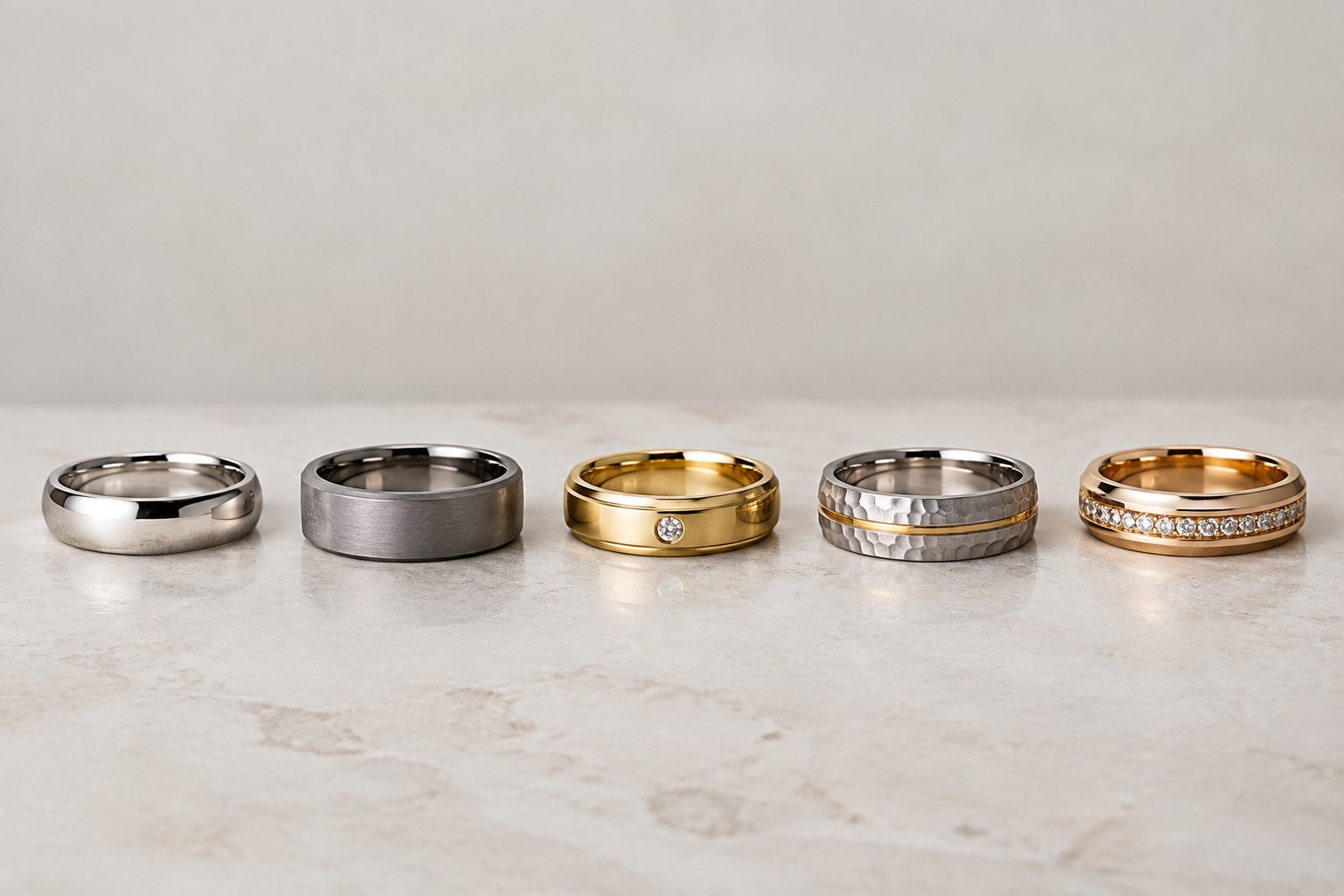
You can find durable men’s wedding bands in tungsten, titanium, cobalt, stainless steel, and sterling silver within this range. Many feature brushed surfaces, black finishes, inlays, or simple engraved details.
This budget also includes some slim gold-plated or lightweight gold designs. Check the product description carefully for solid gold content, since plating wears differently from a solid precious-metal band.
Choose this range when you want a clean daily ring, prefer a low replacement cost, or need a material suited to active work. Confirm the sizing policy before purchase because some alternative metals have limited resizing options.
$500 to $1,500: The Gold Sweet Spot
This range gives you access to many 14k yellow gold, white gold, and rose gold bands. You can also choose wider profiles, comfort-fit interiors, textured finishes, and small diamond accents.
A plain 14k gold band often gives you the strongest balance between classic style and manageable cost. White gold adds a bright finish but needs future rhodium plating to maintain that appearance.
Compare the ring’s gram weight, width, warranty, and resizing terms. A lower price may reflect a lighter band, while a slightly higher price may include better construction or more useful aftercare.
When a Premium Band Is Worth the Spend
A premium band makes sense when you value a heavy gold profile, platinum’s density, a custom design, or a significant diamond feature. It also suits you when the ring will carry sentimental details that justify the added craft time.
Spend more for a feature you will notice and use, such as a comfortable fit, durable construction, or a meaningful engraving. A premium label alone does not determine value, so review the metal purity, stone documentation, service plan, and return terms.
Where to Shop and Compare Value
Online specialists often offer broad selection and competitive prices, while local and independent jewelers add hands-on fitting and personal service. Compare the full purchase package, including sizing, returns, warranty coverage, shipping, and future maintenance.
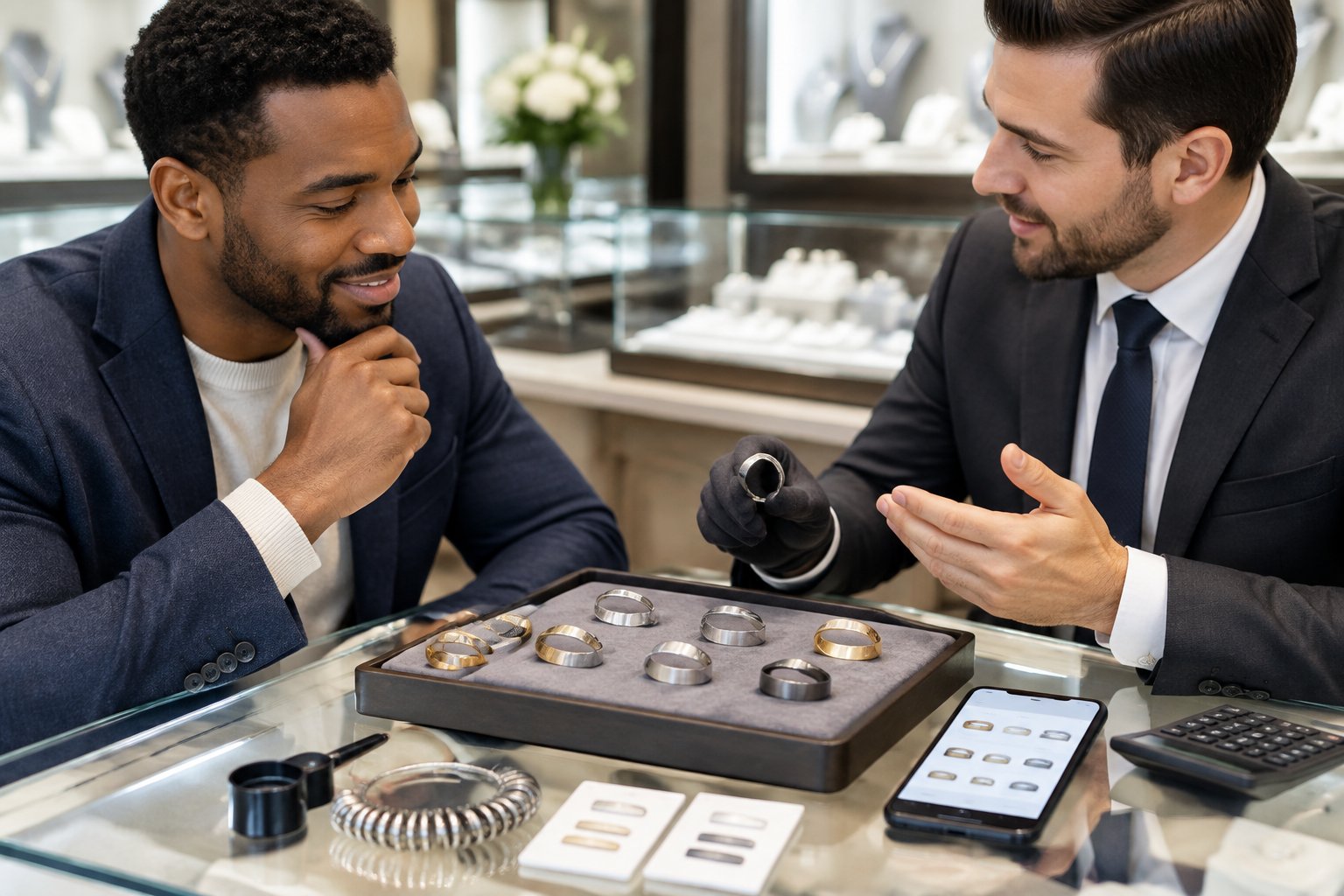
Online Specialists vs. a Local Jeweler
Blue Nile offers men’s wedding bands in gold, platinum, tungsten, diamonds, and other materials, with filters for width, size, and style. James Allen provides a large online selection and engraving options.
Online shopping helps you compare many prices quickly, though you need accurate sizing and a clear return policy. A local jeweler lets you feel different widths, test comfort-fit interiors, and discuss resizing face to face.
Ask for the metal weight, warranty terms, turnaround time, and written pricing for engraving or future repairs before ordering.
Marketplaces, Chain Stores, and Independent Jewelers
Etsy includes handmade and custom bands from individual sellers. Review the seller’s metal stamps, customer photos, return rules, and production timeline before paying.
Jared offers online shopping and physical stores, which helps you combine selection with in-person service. Manly Bands focuses on men’s styles across precious and alternative metals.
Alibaba lists factory and wholesale products, so verify materials, seller credentials, shipping charges, import costs, and return arrangements with extra care. Independent jewelers may provide custom design work and direct communication with the person making or sourcing your ring.
Their quotes can include more consultation and aftercare, which belongs in your comparison.
How to Compare Similar Bands Fairly
Use the same checklist for every ring:
- Metal type and purity, such as 14k gold or platinum
- Width, thickness, ring size, and approximate weight
- Finish, interior shape, inlays, and stone details
- Engraving, shipping, taxes, and return fees
- Resizing, warranty, cleaning, and repair services
A $900 14k gold band should be compared with another 14k gold band of similar width and weight. Comparing it with a thin tungsten ring gives you a price difference without a like-for-like value comparison.
Fit, Resizing, and Long-Term Ownership Costs
A ring’s long-term cost includes sizing, finish care, repairs, insurance, and the retailer’s exchange policy. Confirm these details before purchase, especially when choosing an alternative metal or a white gold finish.
Which Metals Can Be Resized
Gold and platinum bands can be resized by a skilled jeweler in many cases. The process becomes more complex when a ring has stones, intricate patterns, internal grooves, or a full-circle design.
Many alternative metals, including tungsten and some ceramic styles, have limited resizing options because the material cannot be stretched or cut in the same way. A lifetime size exchange gives you another path when the original ring cannot be altered.
Why a Lifetime Size Exchange Matters
A lifetime size exchange lets you send the ring back for a different size under the seller’s stated conditions. Check whether the benefit covers labor, shipping, engraving, damaged finishes, and price differences.
Your finger size changes with temperature, activity, and time. Measure at the end of the day when your hands are warm, and try the same width and interior shape you plan to buy.
Maintenance, Rhodium Plating, and Insurance
Clean your band with mild soap, warm water, and a soft cloth unless the jeweler gives you different care instructions. A white gold ring may need rhodium plating when its bright surface starts to show the warmer tone of the gold beneath.
A hammered finish, brushed surface, or black coating can change with wear and may need refinishing. Ask how the finish is restored before choosing it for daily use.
Add the ring to your homeowners or renters insurance policy, or consider a jewelry policy that covers loss, theft, and damage. Keep your receipt, appraisal, metal details, and photographs in a secure place.
How to Choose a Band That Fits Your Life
Choose the metal, width, finish, and care plan around your daily routine, then check that the band works with your engagement rings and other jewelry. Your best choice should feel comfortable during work, exercise, travel, and ordinary home tasks.
Matching Metal and Finish to Daily Wear
14k gold works well for a classic ring that you can maintain and resize through a jeweler. Yellow gold shows a warm tone, white gold gives you a cooler appearance with periodic rhodium plating, and rose gold adds a subtle pink color.
A hammered finish hides small surface marks and gives a handmade look. Brushed and matte surfaces create a softer reflection, while polished metal delivers more shine and shows scratches more clearly.
If your work involves heavy tools, chemicals, or repeated impacts, remove the ring when safety requires it. Select a profile that does not catch on clothing, and choose a comfort-fit interior if you plan to wear the band all day.
Coordinating With Engagement Rings
Match the band to your engagement rings by comparing metal color, width, profile, and finish. A white gold band pairs naturally with a white gold engagement ring, while mixed metals create a deliberate contrast when the colors and shapes look balanced.
A straight band may sit neatly beside a raised engagement ring. A contoured or curved design can follow a lower setting and reduce gaps. Bring the engagement ring when shopping in person, or compare detailed measurements and photographs online.
A Simple Final Buying Checklist
Before you place the order, confirm:
- The solid metal type, purity, width, thickness, and ring size
- The finish, comfort-fit shape, stones, inlays, and engraving
- The total price after shipping, taxes, and customization
- The return period and whether engraving changes eligibility
- The resizing or lifetime size exchange terms
- The warranty, care instructions, and insurance documentation
Order early enough for sizing or exchanges before the wedding. Keep the receipt and product details with your other important wedding documents.