
Average Cost of Wedding Band: 2026 Price Guide
For most couples in the United States, the average cost of a wedding band in 2026 is about $500 to $2,000 per ring, or $1,200 to $3,500 for a pair. A plain 14K gold band sits near the lower end, while wider platinum rings, diamond bands, and custom designs raise the price.
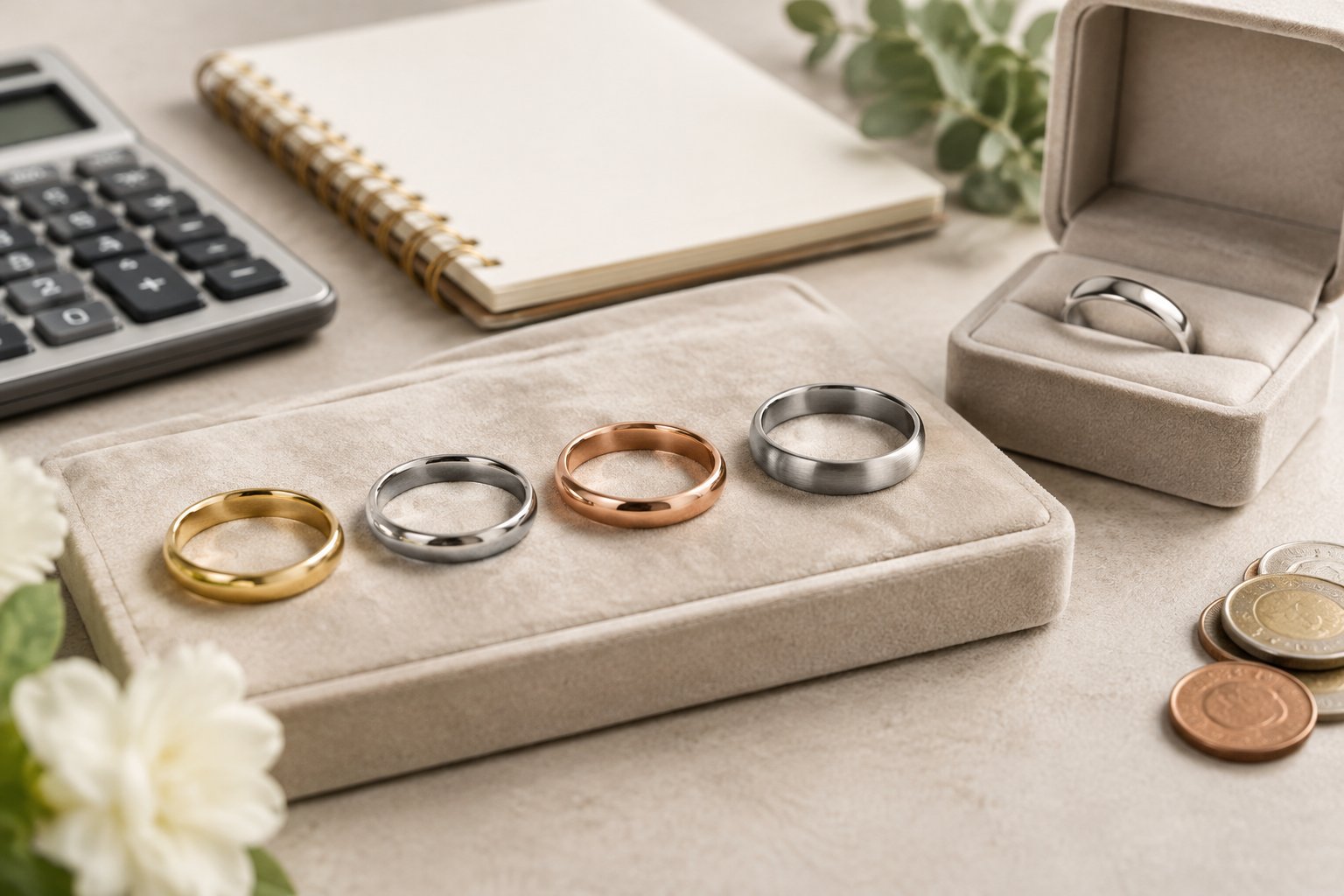
Your wedding band cost depends on metal purity, ring width, diamond coverage, craftsmanship, and retailer pricing. A modest band can fit comfortably into a practical wedding budget, while an eternity band with natural diamonds can cost several thousand dollars.
Set your spending limit before you browse, then compare rings with similar metals, widths, and stone details. If you are still shaping your wedding budget, how to make a realistic wedding budget can help you place the ring purchase alongside your other priorities.
What Does a Wedding Band Typically Cost in 2026?
A wedding band costs about $300 to $2,500 per ring for many mainstream styles in 2026, with premium custom and diamond designs reaching $5,000 or more. The average wedding ring cost becomes easier to judge when you separate a couple’s two bands from women’s and men’s wedding bands.
Average Cost for a Couple’s Two Bands
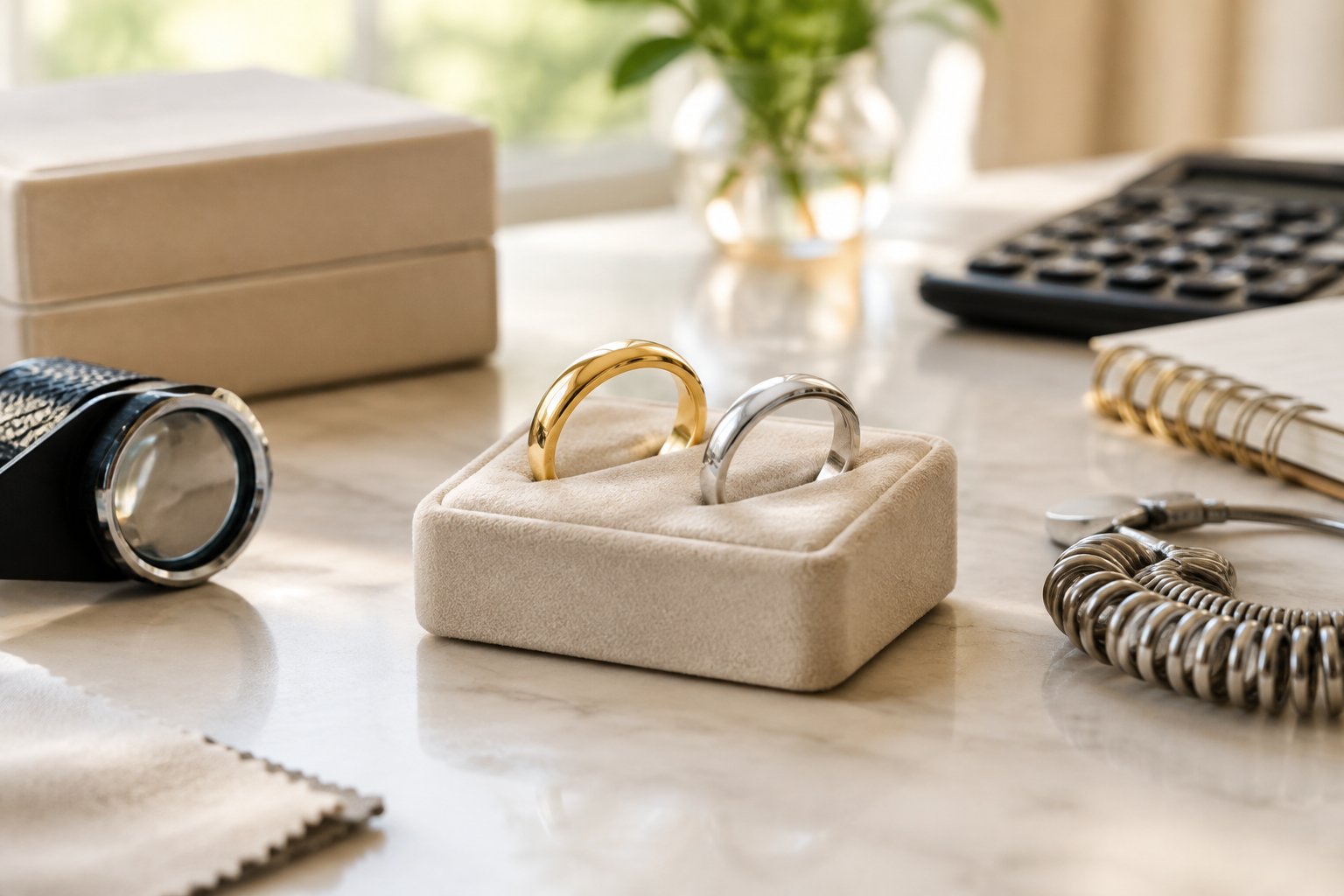
Many couples budget $1,200 to $3,500 for two wedding bands. A plain 14K gold pair may cost close to $800 to $1,500, while diamond accents, wider profiles, or platinum can move the pair above $3,000.
A couple buying different styles may spend around $700 on one band and $1,500 on the other. Matching sets can make comparison easier, though matching is optional.
Average Women’s Wedding Band Cost
Women’s wedding bands often cost $500 to $2,500. Slim plain gold bands can start near $300, while pavé, channel-set, and eternity designs command more because they use additional metal, stones, and setting work.
A band designed to sit flush with an engagement ring may also cost more when it requires a curved shape or custom measurements.
Average Men’s Wedding Band Cost
Men’s wedding bands commonly cost $300 to $1,500. A narrow 14K gold band or alternative-metal ring sits near the lower end, while a wide gold, platinum, or diamond-accented men’s wedding band reaches the higher end.
Comfort-fit interiors, brushed finishes, mixed metals, and hand-finished details affect the price along with the raw material.
Why Published Averages Differ
Published wedding band prices measure different mixes of shoppers. One average may include simple silver and tungsten rings, while another counts diamond bands and platinum designs.
Retailer promotions, ring size, gold market prices, labor, branding, and customization also shift the number. Treat an average as a planning range, then compare rings with the same metal type, width, stone coverage, and finish.
How Wedding Band Style Changes the Price
Style can move a wedding band from a few hundred dollars to several thousand because each design uses a different amount of metal, stone coverage, and labor. Plain bands offer the clearest path to a lower price, while full diamond coverage and detailed engraving increase both materials and production time.
Plain Metal Wedding Bands
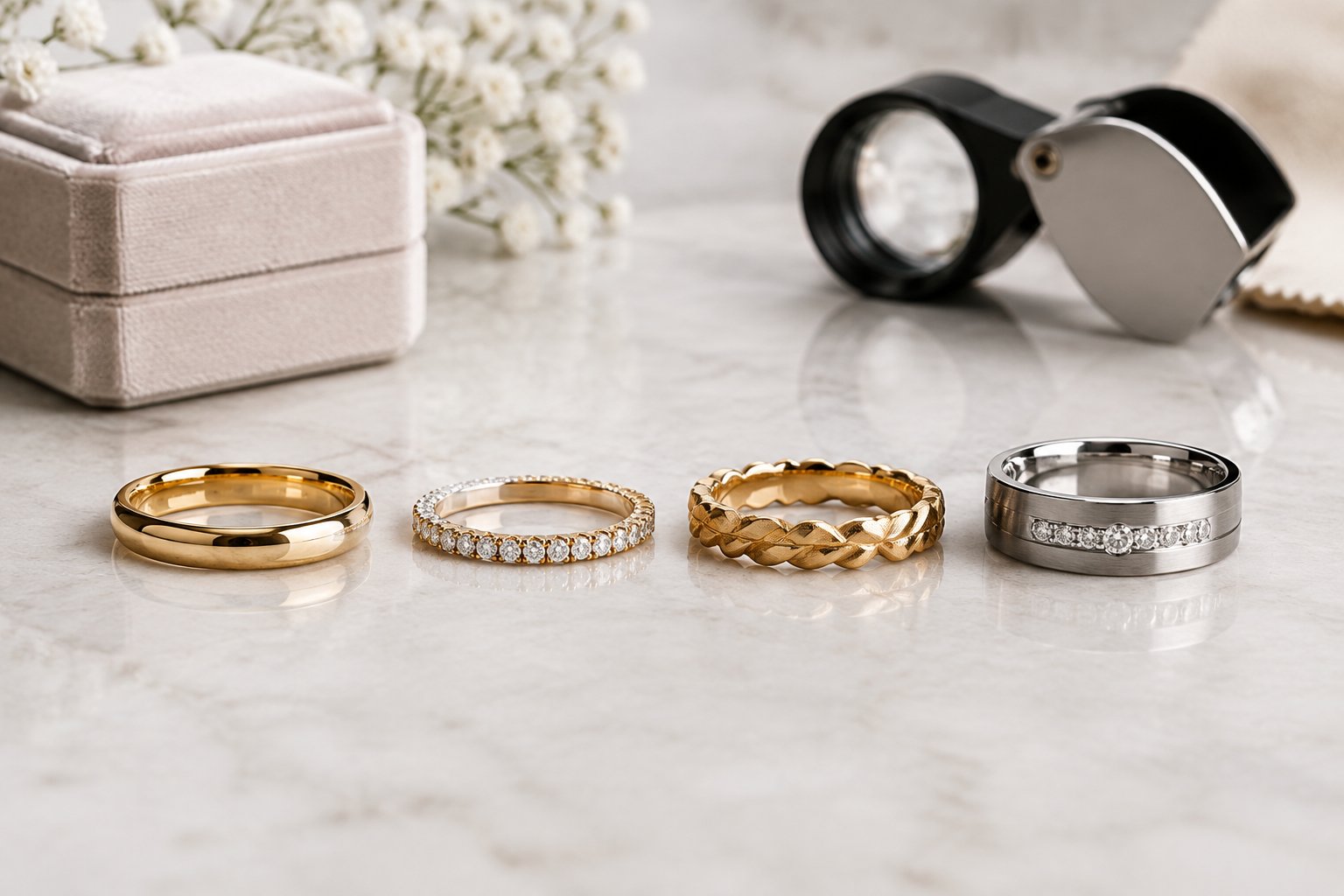
Plain wedding bands are the most budget-friendly choice in precious metals. A simple 14K gold band often falls around $300 to $1,000, depending on width, size, weight, and finish.
A platinum version may cost $700 to $2,000 or more. Hammered, milgrain, beveled, and two-tone finishes add labor and detail without requiring diamonds.
Diamond Wedding Bands
Diamond wedding bands often cost $800 to $5,000, with luxury designs reaching beyond that range. The number of stones, total carat weight, setting style, diamond quality, and metal determine the final price.
A narrow band with small diamond accents keeps the cost controlled. A wide band with larger stones and full coverage requires a larger budget.
Half-Eternity vs. Full Eternity Bands
A half-eternity band places stones across the visible front portion of the ring. It commonly costs less than a full eternity band because it uses fewer diamonds and simplifies future sizing.
Full eternity bands carry stones around the entire circumference. This creates continuous sparkle, though it raises the diamond and setting cost. Full coverage also requires careful sizing because resizing a stone-set ring is more complex.
Custom and Hand-Engraved Designs
Custom engraving may add roughly $50 to several hundred dollars, depending on the lettering, placement, and technique. Hand engraving costs more than standard machine engraving because an artisan cuts the design directly into the metal.
A fully custom band can reach $2,000 to $10,000 or more when it includes original design work, unusual metal combinations, intricate details, or significant diamond coverage. Ask for a written quote that separates design, labor, stones, and finishing.
Which Materials Fit Your Budget and Lifestyle?
Your metal type and ring width shape both the price and the way your band performs each day. 14K gold gives you a durable precious-metal option, while alternative metals suit active routines and tighter budgets.

14K Gold vs. 18K Gold
14K gold contains less pure gold than 18K gold, which makes it harder and more affordable for daily wear. A 14K band often costs $300 to $1,500, depending on weight and design.
18K gold has a richer color and higher gold content. Its price often starts around $500 and rises with width, weight, and details. It is softer than 14K gold, so your lifestyle and finish preference should guide the choice.
White Gold, Yellow Gold, and Rose Gold
White gold, yellow gold, and rose gold can share similar base pricing when they have the same karat, weight, and design. White gold receives a bright rhodium coating that requires periodic renewal as the surface wears.
Yellow gold offers a warm traditional look. Rose gold gets its pink tone from copper in the alloy. Compare the same karat and band width when judging price across colors.
When Alternative Metals Make Sense
Alternative metals such as tungsten, titanium, cobalt, and tantalum can cost about $100 to $800. They suit you if you want a durable, low-maintenance band with a modern appearance.
Tungsten resists scratches and feels substantial. Titanium feels light and works well for active wear. Ask about sizing and replacement policies before buying because many alternative-metal bands have limited resizing options.
How Band Width Affects Cost
A wider band uses more metal, so ring width has a direct effect on price. Moving from a 4-millimeter band to an 8-millimeter band can raise the cost substantially, especially in gold or platinum.
Width also changes comfort and appearance. Try several widths in your size, and allow extra room for a wide band when a jeweler checks the fit.
How Diamonds Affect Wedding Band Prices
Diamonds raise wedding band prices through their total carat weight, quality, origin, setting, and coverage. A small accent band may cost under $1,000, while a full eternity band with high-quality stones can exceed $10,000.
Lab-Grown Diamonds vs. Natural Diamonds
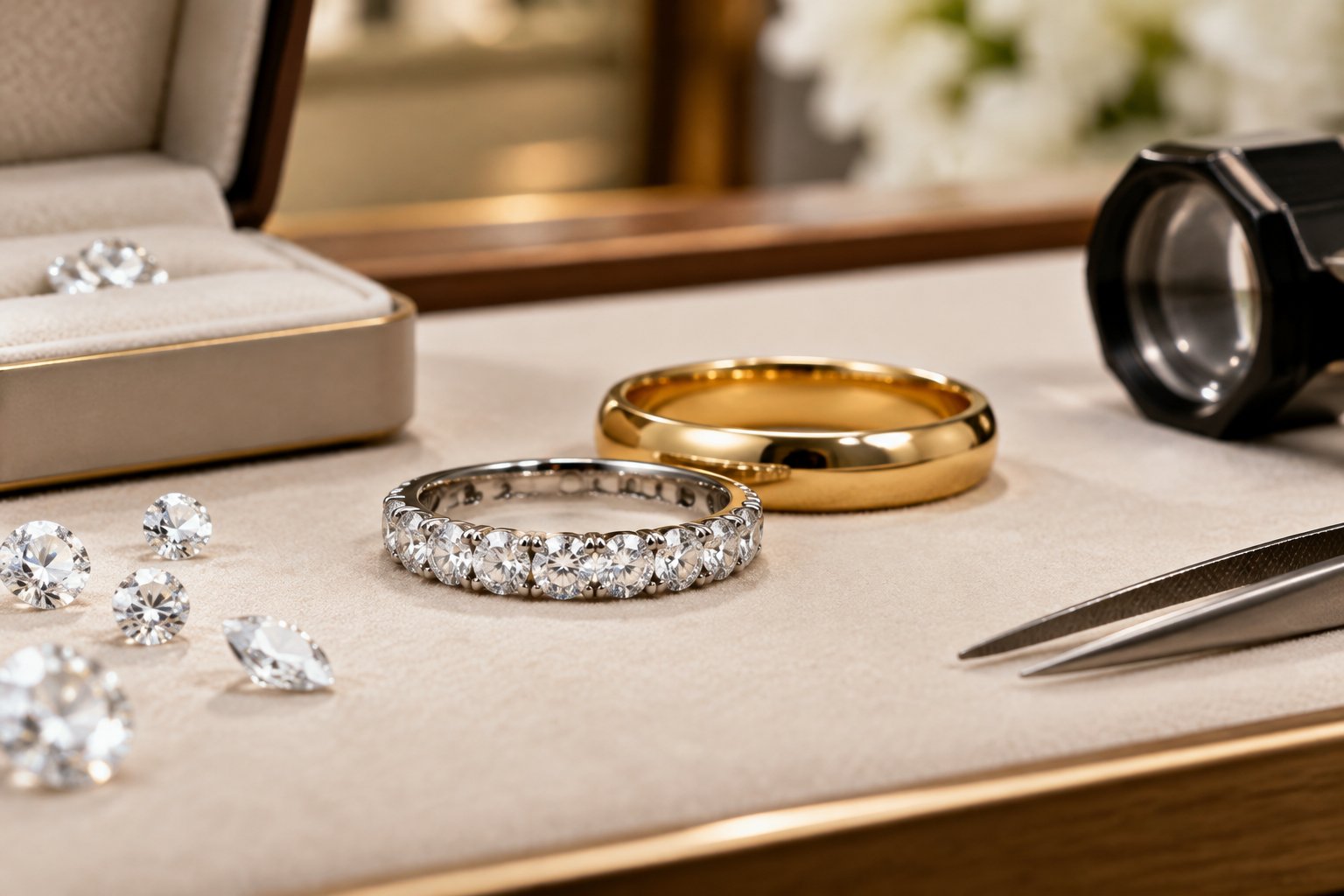
Lab-grown diamonds and natural diamonds have the same crystal structure and visual properties when they share comparable grading details. Lab-grown diamonds often cost 30% to 60% less, giving you more total carat weight for the same budget.
Natural diamonds carry a mined origin and traditional rarity. Your choice comes down to the story, sourcing preference, and price point you value. Ask for grading documentation and compare cut, color, clarity, and carat weight across similar stones.
Understanding Diamond Quality in Small Stones
Small diamonds still affect price through cut, color, clarity, and total carat weight. In a band, consistent size and matching color help create an even look across the row.
You do not need the highest clarity grade for every small stone. Prioritize a lively cut and a color range that looks consistent beside the metal. Prong, channel, and pavé settings also change labor costs and the band’s maintenance needs.
Choosing a Band That Complements an Engagement Ring
Bring your engagement ring when you shop for the band. A curved or contoured design may fit closely around the center setting, while a straight band creates a separate visual line.
Match the design language and profile before matching every detail. A plain band can frame a detailed engagement ring, while diamond accents can carry its sparkle across the set. Include the engagement ring cost in your larger jewelry plan so the band purchase does not disrupt other wedding expenses.
How to Set a Realistic Wedding Band Budget
A realistic wedding band budget starts with a dollar limit you can pay comfortably, then assigns that amount to metal, width, stones, customization, taxes, and possible resizing. For many couples, $1,200 to $3,500 covers two quality bands with room for style choices.
Budget Ranges From Simple to Premium
Use these ranges as planning points:
- Entry level, $200 to $800 per pair: sterling silver, stainless steel, titanium, tungsten, or narrow gold bands.
- Mid-range, $800 to $2,500 per pair: 14K gold, 18K gold, modest diamond accents, or wider alternative-metal designs.
- Premium, $2,500 to $6,000 per pair: platinum, detailed gold bands, larger diamond coverage, or custom work.
- Luxury, $6,000 and above: full eternity bands, high total carat weight, rare gemstones, and complex custom designs.
Add sales tax, engraving, insurance, and resizing to your wedding band budget when those costs apply.
Where to Save Without Sacrificing Daily Wear
Choose 14K gold for a balance of durability and precious-metal appeal. Reduce diamond coverage by selecting a half-eternity band or a few well-placed diamond accents.
You can also save by choosing a standard profile, a common ring size, or lab-grown diamonds. Keep the inner surface smooth, confirm the setting quality, and select a width that feels comfortable for long wear.
When to Buy and How to Compare Retailers
Start shopping two to four months before your ceremony. This gives you time for sizing, engraving, custom production, shipping, and any adjustments.
Compare James Allen, Blue Nile, local jewelers, and other established retailers using the same checklist: metal karat, ring width, total diamond weight, stone origin, grading paperwork, warranty, return period, resizing terms, and taxes. Save each quote so you compare equivalent bands instead of headline prices.