
Average Cost of Wedding Flowers Ireland: 2026 Guide
For most couples, the average cost of wedding flowers in Ireland in 2026 falls between €1,500 and €4,500, with smaller celebrations near the lower end and fuller floral styling reaching €6,000 or more. Your final wedding flower costs depend on guest numbers, bridal party size, flower varieties, ceremony décor, reception styling, delivery, and setup.
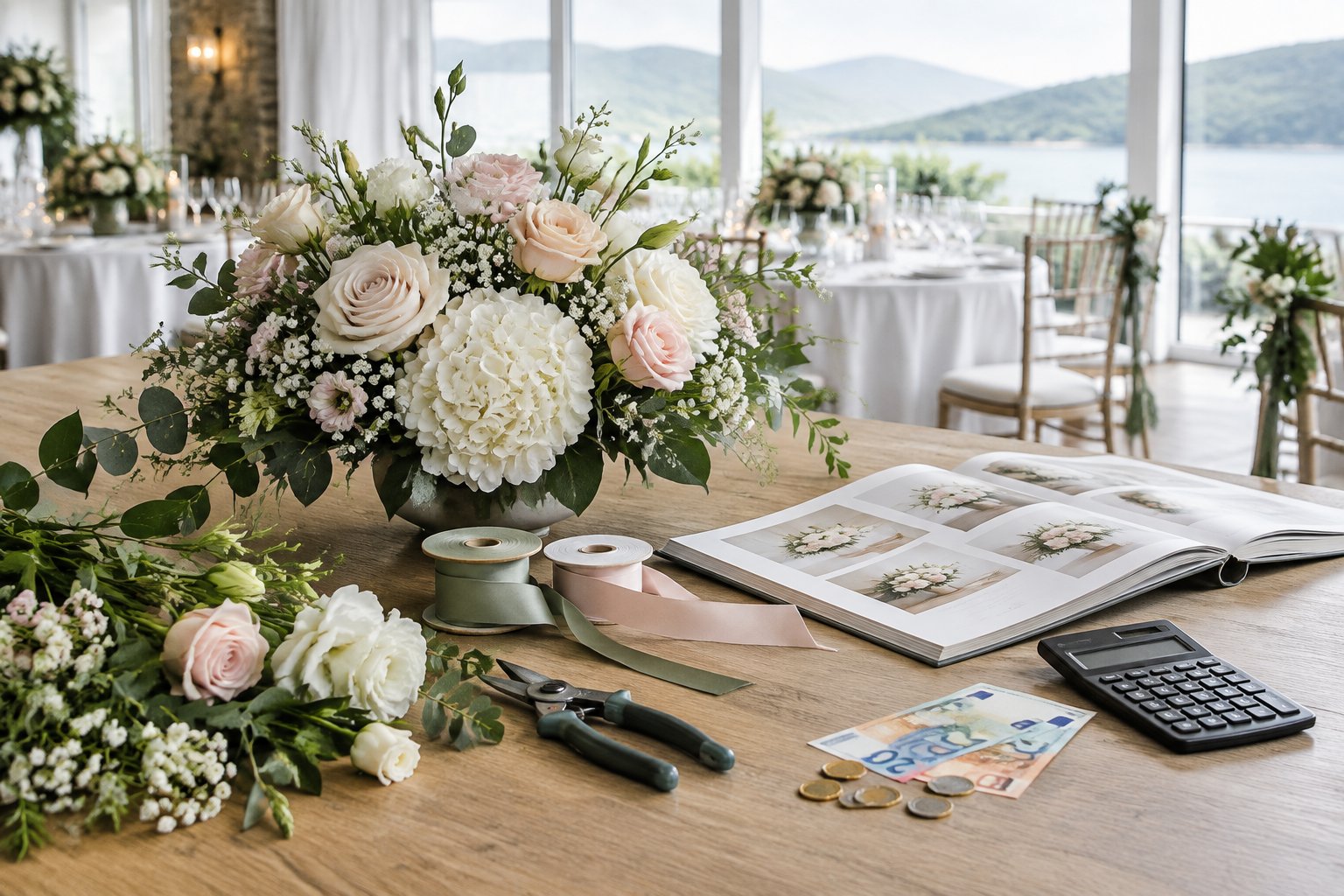
A bouquet-only package may cost under €1,000, while a complete design with ceremony flowers, table centrepieces, floral arches, and venue styling needs a larger budget. Asking for a detailed quote that separates flowers, labour, delivery, and installation helps you compare options clearly.
Set your preferred budget before your consultation, then contact a wedding florist early to secure seasonal flowers and your date.
What Is a Realistic Wedding Flower Budget in Ireland?
A realistic wedding flower budget in Ireland is €1,500 to €4,500 for many couples, while luxury floral design can reach €6,000 or more. The amount covers the flowers and the work required to design, prepare, transport, install, and collect them.
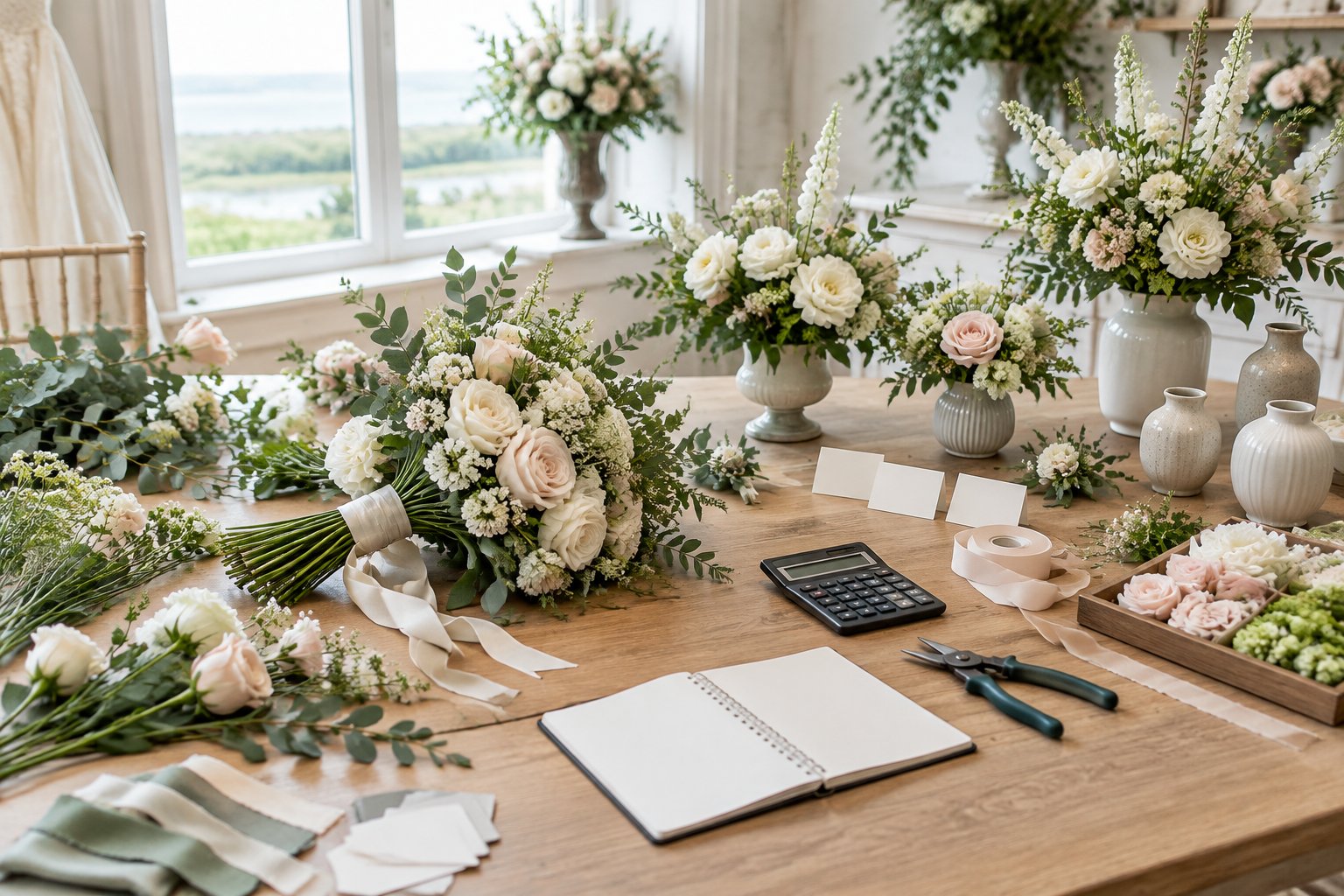
Your florist’s minimum order, venue location, flower choices, and design brief all shape the quote. A useful starting point is to reserve about 8% to 12% of your wedding budget for flowers, then adjust that figure around your priorities.
Typical Spend for Small, Medium, and Luxury Weddings
| Wedding style | Approximate flower budget | What it may include |
|---|---|---|
| Small or simple | €1,500–€2,500 | Bridal bouquet, a few bridesmaid bouquets, buttonholes, and limited ceremony or table flowers |
| Medium styling | €2,500–€4,500 | Personal flowers, ceremony arrangements, reception flowers, and several table centrepieces |
| Luxury floral design | €4,500–€8,000+ | Large installations, premium flowers, abundant reception styling, and detailed venue transformation |
These figures are planning ranges rather than fixed rates. A small guest list with a dramatic floral arch may cost more than a larger wedding using bud vases and foliage.
How Your Guest Count and Wedding Party Affect the Total
Guest numbers affect the number of table arrangements, while your wedding party affects personal flowers. Each bridesmaid adds a bouquet, and each member of the wedding party may need a buttonhole or corsage.
Venue size also changes the cost of wedding flowers. A large ceremony room needs more volume to look balanced, while a smaller space may need fewer arrangements.
Share your guest count, table plan, ceremony layout, and wedding party numbers before requesting a quote.
What Do Individual Wedding Flower Items Cost?
Individual wedding flower items range from about €20 for a simple buttonhole to €1,500 or more for a large floral arch. A complete quote combines these pieces with design time, delivery, setup, and any hire charges.
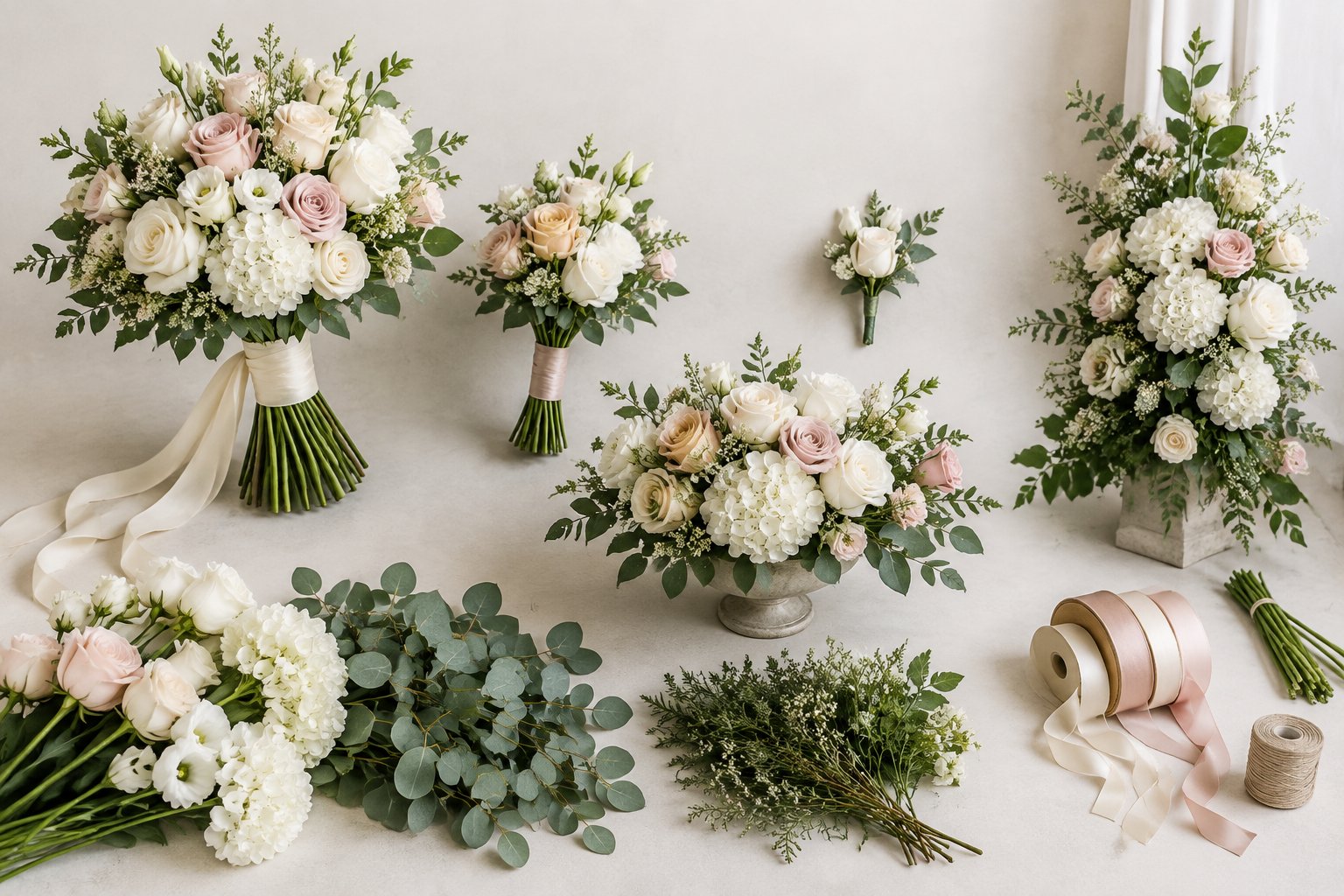
Prices rise with flower quantity, premium varieties, complex construction, and custom colour requests. Florist price lists also use starting prices, so your final design needs a tailored quote.
How Much Does a Bridal Bouquet Cost?
A bridal bouquet costs about €125 to €350 for many styles. A simple foliage design or seasonal hand-tied bouquet sits near the lower end, while a large meadow design, wired shower bouquet, or bouquet filled with premium flowers costs more.
Common starting points include:
- Foliage bouquet: €125–€175
- Seasonal mixed bouquet: €145–€250
- Rose-focused bouquet: €195–€345
- Peony, hydrangea, and premium mixed bouquet: €295–€395
- Specialty shower bouquet: €495 and upward
Shape, stem count, flower size, and wiring all affect the final price.
What Do Bridesmaid Bouquets, Buttonholes, and Corsages Cost?
Bridesmaid bouquets cost about €85 to €195 each, depending on their size and flower selection. Matching the bridal bouquet creates a unified look, while smaller seasonal bouquets keep the price lower.
Buttonholes and boutonnieres start around €5 to €30 each, with detailed wired designs reaching about €50. Corsages cost about €25 to €50, depending on whether you choose a wrist design, pin-on style, or more detailed construction.
Include parents, readers, ushers, page boys, and other important guests in your quantity list.
How Much Do Ceremony and Church Flowers Cost?
Ceremony flowers often cost €150 to €1,500 or more, depending on the number and scale of arrangements. A pair of altar arrangements or pedestal arrangements may start around €75 to €245 each, while a floral arch can begin near €1,500.
Church flowers may include:
- Altar arrangements
- Pedestal arrangements
- Pew ends from about €25 each
- Aisle flowers
- Chair or entrance flowers
- Unity arrangements
Ask whether the florist includes permission checks, access time, setup, and removal in the ceremony quote.
What Do Reception Table Arrangements Cost?
Reception table arrangements start around €25 for a jam jar or bud vase design and rise to €150 or more for a full centrepiece. Compotes, candles, hired stands, and elevated designs add to the cost.
A reception package may include:
- Bud vases: about €25 each or grouped by table
- Jam jars: about €25 each
- Compote arrangements: about €90–€150
- Top table arrangements: about €150 and upward
- Large or elevated centrepieces: €150–€300 or more
Your table shape, guest count, venue rules, and preferred height determine how many arrangements you need.
Which Floral Choices Increase the Final Price?
Premium flowers, imported blooms, large installations, and labour-heavy designs create the biggest increases in wedding flower costs. Your florist also needs to account for flower availability, stem waste, mechanics, transport, and installation time.
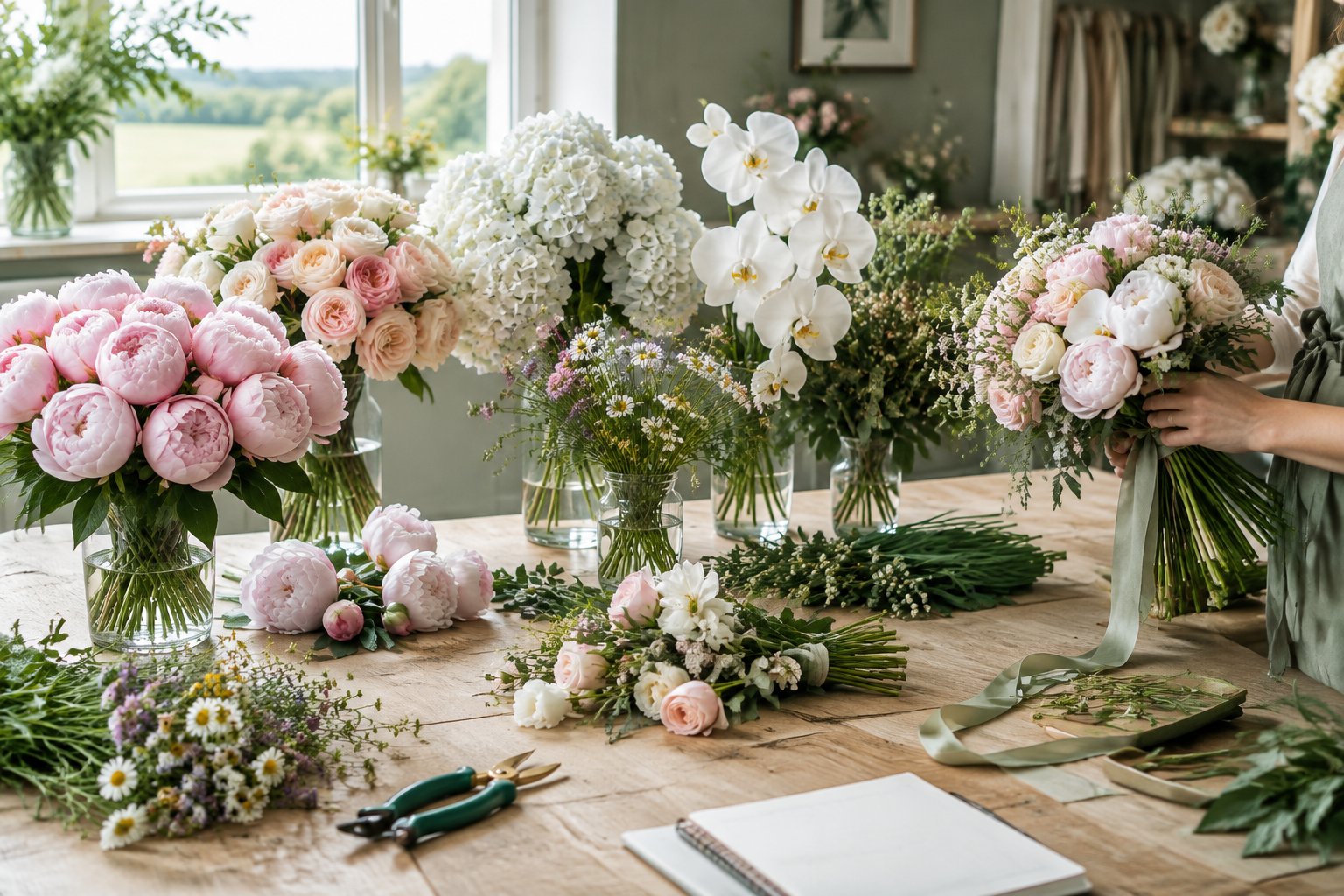
A clear brief helps you choose where to spend. You might invest in the bouquet and ceremony focal point, then use simpler designs across guest tables.
Why Premium Flowers and Imported Blooms Cost More
Peonies, orchids, large-headed roses, garden roses, and ranunculus carry higher wholesale prices than many standard seasonal flowers. Their availability may also depend on growing conditions and import schedules.
Premium flowers increase the quote through both price and quantity. A design with a few large blooms still needs supporting flowers, foliage, and mechanics to look full.
Roses offer a wide price range, while eucalyptus and Irish eucalyptus add texture at a lower cost than some premium blooms.
Irish-grown flowers can provide a distinctive local look, especially during their growing season. Your florist can suggest fresh flowers with similar colour, shape, or movement when a named variety exceeds your budget.
How Seasonality Changes Your Quote
Seasonal flowers give you more choice at their natural supply point and help your florist plan a reliable recipe for each arrangement. Summer flowers, autumn foliage, and locally grown stems create different colour palettes across the year.
A specific out-of-season flower may require importing, sourcing from several suppliers, or accepting limited availability. Flexible flower choices help your florist protect the design if a crop changes or a shipment arrives late.
Ask for a seasonal substitution list that names the flower types, colours, and textures your florist would use.
Why Large Installations Require More Labour and Planning
Floral arches, pedestal arrangements, aisle flowers, and pew ends need more than loose stems. Your florist may need frames, floral foam, wiring, water sources, weights, ladders, transport crates, and extra setup time.
Large installations also involve venue access and safety planning. A team may need to arrive several hours before guests, secure the structure, and return after the reception to collect hired items.
Request separate prices for flowers, construction, delivery, installation, breakdown, and collection so you can see what drives the quote.
What Are You Paying a Wedding Florist For?
Your wedding florist charges for creative planning, flower sourcing, preparation, design, logistics, and venue service as well as the flowers themselves. The service turns a list of stems into a coordinated floral styling plan that works in your venue.
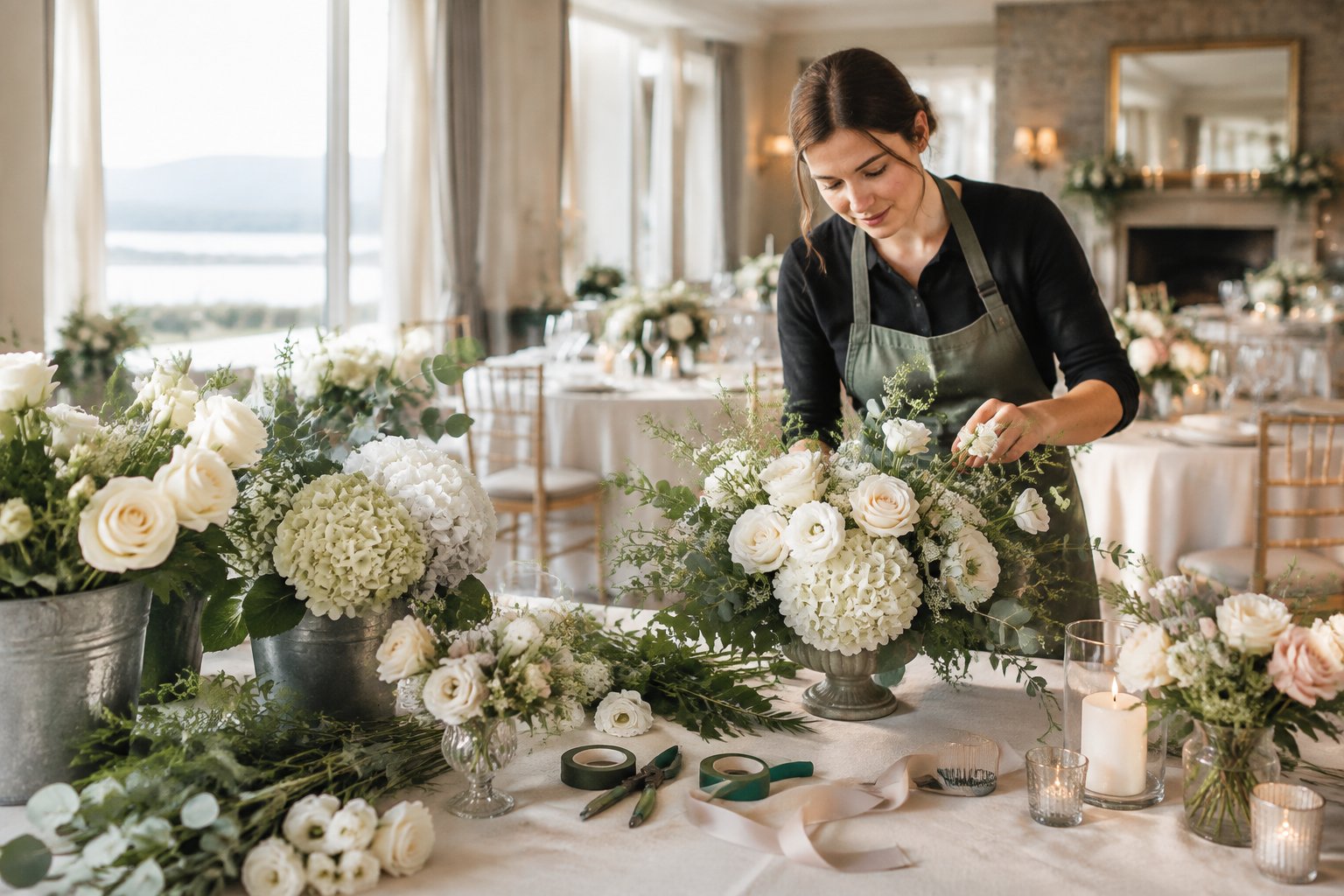
A quote should show which services are included and which costs depend on travel, access, hired items, or the complexity of your reception styling.
Design, Sourcing, Conditioning, and Floral Styling
Your florist translates your colour palette, venue, dress style, and priorities into a design plan. They source flowers, check availability, order the required quantities, and prepare the stems before arranging them.
Conditioning includes trimming, feeding, hydrating, and storing flowers at the right temperature. Floral styling then covers the construction of bouquets, buttonholes, ceremony arrangements, and reception pieces.
Wirework, arches, hanging flowers, and other detailed work require extra preparation.
A consultation fee may apply, and some florists credit that fee against your final order when you meet their minimum spend.
Delivery, Venue Setup, Repurposing, and Collection
Delivery covers moving delicate flowers and equipment to the venue. Setup includes placing arrangements, styling tables, dressing ceremony features, and checking that each installation is secure.
Repurposing involves moving ceremony flowers to the reception after the service. This service needs a clear timetable, suitable transport, and someone with access to both spaces.
Collection covers the return of vases, stands, arches, and other hired items after the event. Ask whether travel mileage, parking, waiting time, breakdown, and collection appear as separate charges.
How Can You Make Your Flower Budget Go Further?
You can stretch your flower budget by reusing ceremony flowers, concentrating detail in high-impact areas, and choosing flexible seasonal designs. These decisions reduce duplicate work while keeping the visual focus where guests spend time.
Reuse Ceremony Flowers at the Reception
Plan ceremony flowers so they can move safely after the service. Pedestal arrangements can frame the top table, aisle flowers can decorate the cake table, and a ceremony arch can become a backdrop for the reception.
Confirm the moving plan before booking. Your florist needs to know the distance between spaces, the time available, and who will supervise the transfer.
Some installations need a dedicated team or vehicle, so include that service in the quote.
Prioritise High-Impact Areas Over Every Table
Choose one or two statement areas, such as the ceremony entrance, top table, cake table, or seating chart. Use bud vases, small compotes, or candle-led designs on guest tables to create a finished look with fewer stems.
A smaller number of full arrangements can give a stronger result than thin coverage across every surface. Match the scale to your venue so the focal flowers remain visible in photographs and during the reception.
Choose Flexible Seasonal Designs Without Losing Style
Give your florist a colour palette, preferred shape, and mood instead of requiring one exact flower. Seasonal flowers and Irish-grown flowers can then guide the final selection while preserving the look you want.
Greenery, Irish eucalyptus, textured foliage, and locally available blooms add movement to bouquets and table centrepieces. Ask for two versions of your proposal: one with your first-choice flowers and one using flexible seasonal substitutions.