
Average Cost of Wedding Photography Packages: What to Expect
For most U.S. couples, the average cost of wedding photography packages falls between $2,500 and $6,500, with many standard packages priced near $3,000 to $4,000. Shorter ceremony coverage can start around $1,000, while premium and luxury services can reach $10,000 or more.

The Knot 2025 Real Weddings Study offers a national benchmark near $3,000, while local wedding photographer prices vary by coverage hours, location, experience, editing, staffing, and included products. A quote with fewer hours and digital files serves a different need than a full-day collection with a second photographer and album.
Set your target range beside your wedding priorities, then request complete proposals from photographers whose work fits your style. Reviewing detailed options through The Knot or WeddingWire can help you compare local pricing, and a consultation gives you a clearer estimate for your date.
What Couples Typically Pay for Coverage
Most U.S. couples should budget $2,500 to $4,500 for standard wedding photography coverage, while shorter packages may cost $1,000 to $2,500 and premium services can exceed $10,000. Your wedding photography cost reflects the time spent planning, photographing, editing, and delivering your images.

National Benchmarks and Realistic Price Ranges
The average wedding photography cost sits near $3,000 as a national planning marker. That figure combines different regions, celebration sizes, coverage lengths, and service levels, so your local quote can fall well above or below it.
A practical range looks like this:
| Photographer level | Common price range | Typical inclusions |
|---|---|---|
| New or part-time | $1,000–$2,500 | Four to six hours, one photographer, edited gallery |
| Established professional | $2,500–$6,000 | Six to eight hours, planning support, digital images |
| Experienced or premium | $5,000–$10,000+ | Eight to ten hours, added staff, albums or fine-art products |
| Luxury or destination | $10,000+ | Tailored service, multi-day coverage, travel support |
Major cities such as New York, Los Angeles, San Francisco, and Miami often have higher wedding photographer rates because of operating costs and demand. A weekday or off-season date can offer more availability and a lower quote.
How Costs Differ by Package Tier
An entry-level collection focuses on essential coverage. You might receive ceremony and portrait coverage, a private gallery, and edited digital images from one professional wedding photographer.
A mid-range collection often includes six to eight hours, timeline support, full gallery delivery, and an engagement session. Some photographers add a second shooter or album at this level.
Premium wedding photography packages extend coverage and deliver more products. They can include ten or more hours, multiple photographers, rehearsal dinner photography, custom albums, parent albums, canvas prints, and detailed retouching.
What an Hourly Rate Can and Cannot Tell You
The wedding photographer cost per hour commonly falls between $200 and $500, with local markets and experience creating a wider range. An hourly quote works well for an elopement, courthouse ceremony, or short portrait session.
Your wedding photographer cost also includes work outside the event. Planning meetings, travel, equipment preparation, image culling, editing, gallery setup, album design, insurance, and file storage all contribute to the price.
Before comparing wedding photographer prices, ask whether the quote includes:
- Continuous coverage or separate time blocks
- Edited images and download access
- Overtime pricing
- Travel within the service area
- A second photographer
- Gallery hosting and storage
- A specific delivery timeline
What Is Included in Each Package Level?
A complete wedding photography package should state the coverage hours, photographer count, edited digital images, gallery access, image rights, delivery timeline, and every physical product. Reading each item helps you compare wedding photography packages at the same service level.

Coverage time shapes the amount of your day that gets documented. Products and rights shape what you can keep, print, share, and display after the wedding.
Essential Coverage for Elopements and Small Weddings
A smaller collection may include two to six hours with one photographer. This level suits an elopement, courthouse ceremony, micro-wedding, or celebration held in one location.
You might receive:
- Ceremony and couple portraits
- Family and wedding-party photos
- A selection of edited digital images
- An online gallery
- Personal printing rights or a print release
Ask whether getting-ready photos, details, reception events, and travel between locations fit within the selected hours. A short package can work well when your timeline has few locations and limited formal events.
Standard Collections for a Traditional Wedding Day
A standard collection often provides six to eight hours of wedding day coverage. That time can include details, preparation, a first look, portraits, the ceremony, family photos, reception events, and early dancing.
Common inclusions are:
- One professional wedding photographer
- Edited digital images
- A private online gallery
- Download access
- Personal printing rights
- Timeline planning
- A stated editing and delivery schedule
Check whether the package lists a minimum image count or an estimated range. Ask about color correction, black-and-white images, retouching, sneak peeks, and gallery storage.
Premium and Luxury Collections
Premium and luxury wedding photography packages provide more coverage, staffing, planning, and physical products. They can include eight to ten hours or more, a second photographer, engagement photos, rehearsal dinner coverage, and custom album design.
Physical products may include:
- A wedding album
- Parent albums
- Canvas prints
- Framed wall art
- Fine-art prints
- A print release
Confirm the album size, page count, cover materials, design revisions, shipping, and ordering deadline. A print release grants personal permission to print and share finished images, while copyright remains with the photographer unless the contract states otherwise.
Which Details Raise or Lower Your Quote?
Your quote rises with peak dates, longer coverage, greater experience, complex logistics, added photographers, and travel. A clear proposal connects each charge to a specific service or requirement.
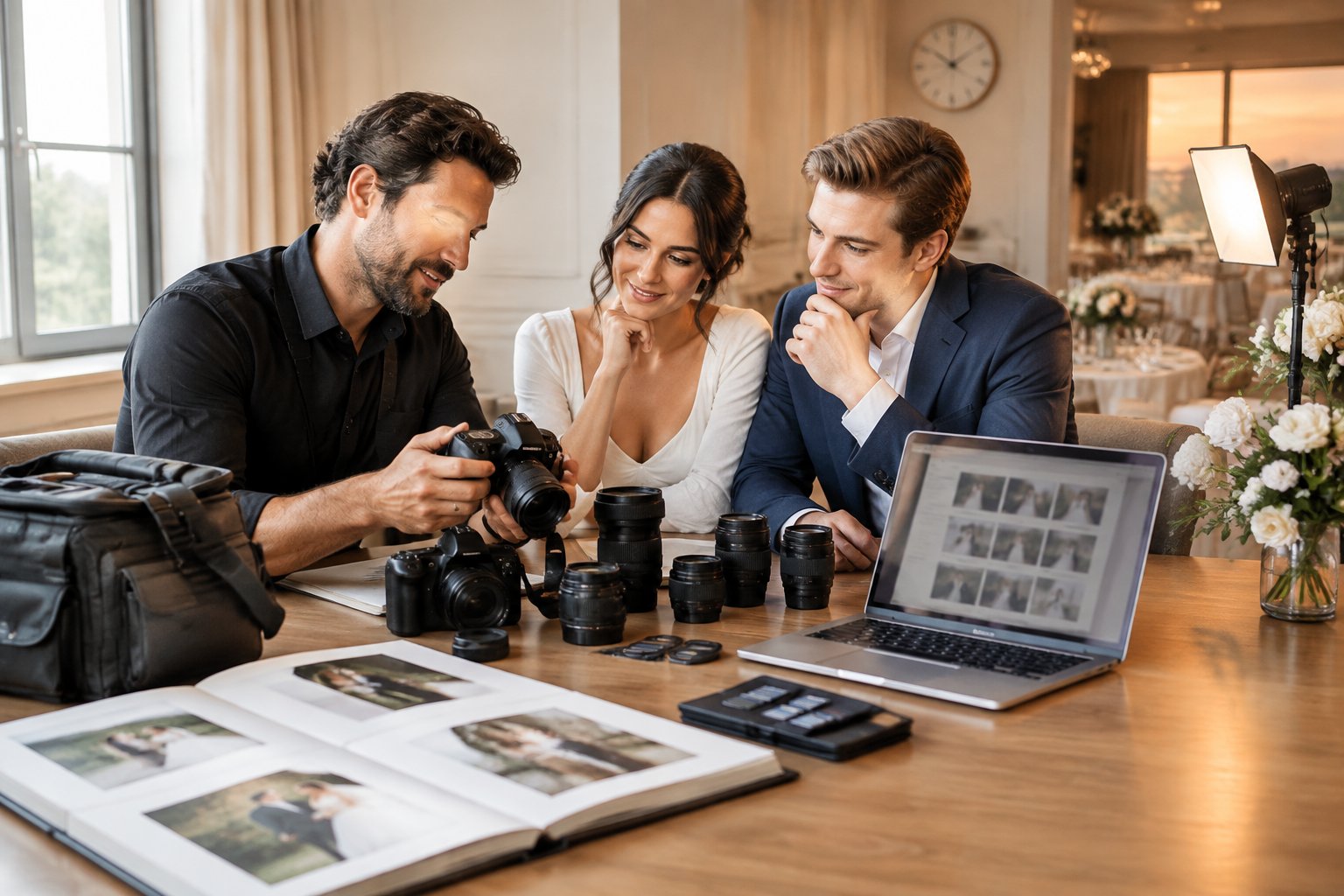
Your date, venue plan, guest count, and preferred wedding photography style give a photographer the information needed to price the work accurately.
Location, Season, and Weekday Dates
Large cities often have higher wedding photography pricing because studios face higher rent, insurance, labor, and business costs. Rural markets can have lower rates, though limited local availability and long travel distances affect quotes.
Saturday dates in late spring, summer, and early fall attract strong demand. A weekday wedding, Friday celebration, Sunday event, or off-season date can give you more date choices and support a lower rate.
Experience, Style, and Reputation
A photographer experience level affects both creative skill and event management. Established wedding photographers bring systems for backup equipment, file handling, low-light receptions, weather changes, family portraits, and timeline delays.
Wedding photography styles also affect editing and planning time. Documentary coverage emphasizes natural moments, while editorial work may involve more direction, lighting, and detailed retouching. Review a full wedding gallery in your preferred wedding photography style so you can assess consistency beyond social media highlights.
Membership or recognition through groups such as Fearless Photographers can help you discover photographers whose work matches a documentary or creative style. Treat credentials as one part of your review, alongside full galleries, reviews, contract terms, and backup plans.
Hours, Guest Count, and a Second Photographer
More coverage hours increase shooting and editing time. Eight to ten hours can cover preparation through reception events, while a shorter booking may focus on the ceremony and portraits.
Guest count affects family groupings, room coverage, table photos, and the time needed for formal portraits. A second shooter or second photographer helps when partners prepare in separate locations, venues have multiple rooms, or guests gather across a large space.
Ask whether the second photographer works for the full booking or selected hours. Confirm who will photograph your wedding, how their images are edited, and whether the contract names them.
Travel for Destination Celebrations
A destination wedding photographer may charge for flights, lodging, rental cars, mileage, meals, travel days, or assistant travel. Local travel may be included within a defined service area.
Request an itemized travel estimate before signing. Confirm whether travel time counts as coverage, who books lodging, and how flight delays or weather changes affect the agreement.
Add-Ons That Change the Final Investment
Add-ons increase your final wedding photography cost when they add shooting time, editing, staff, products, or faster delivery. Choose them according to the moments and keepsakes you plan to use.
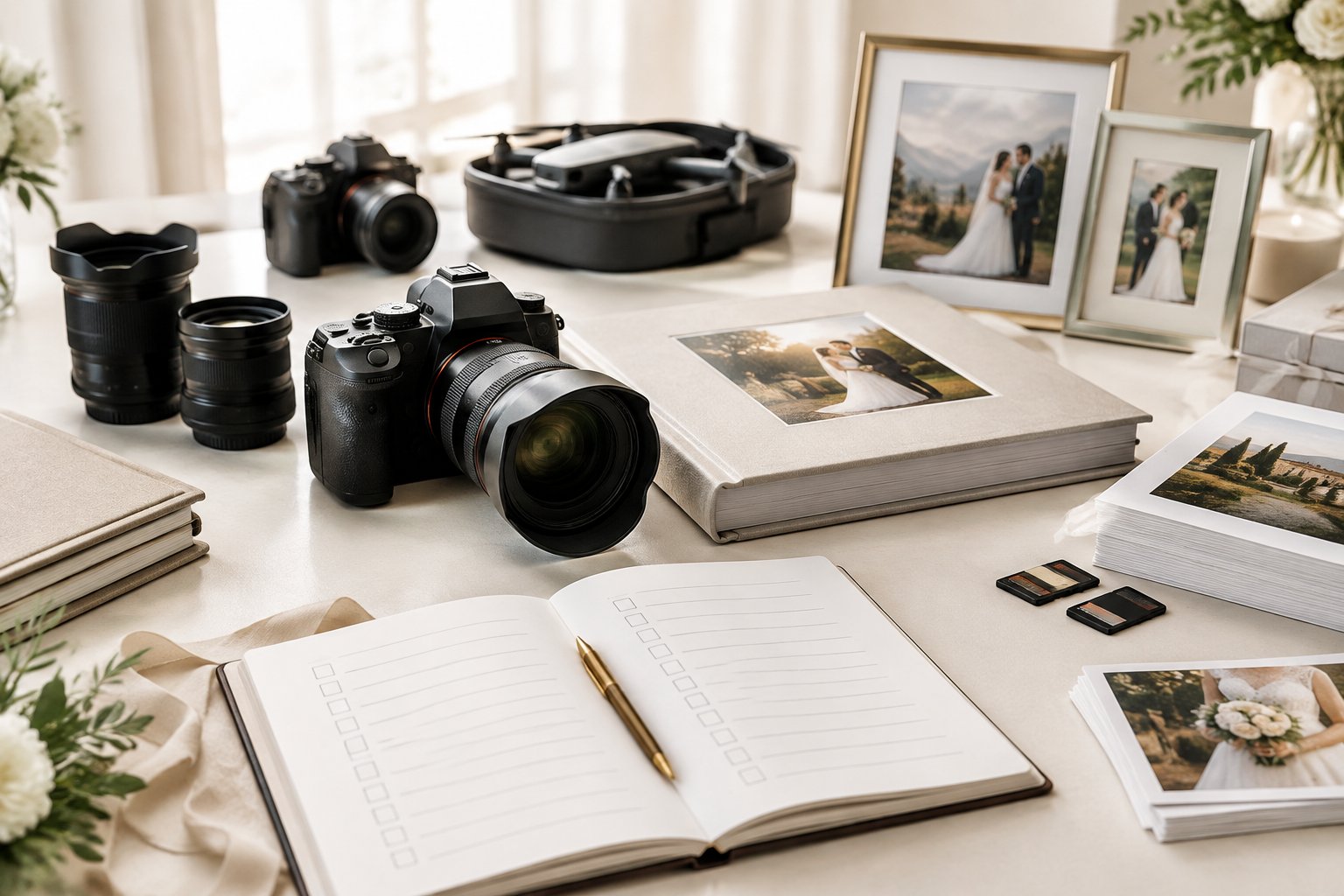
Ask for each extra in writing, including its price, deliverables, turnaround, taxes, shipping, and cancellation terms.
Engagement and Pre-Wedding Portrait Sessions
An engagement session gives you practice with posing and direction before the wedding. You can use the finished engagement photos for save-the-dates, invitations, announcements, or a wedding website.
Bridal portraits provide dedicated time for the dress, hair, makeup, and details. Ask about session length, locations, outfit changes, edited image delivery, and travel limits.
Extra Event Coverage and Extended Hours
Extra hours extend your wedding day coverage into late dancing, a grand exit, or cultural traditions. Rehearsal dinner coverage adds a separate event with its own travel, shooting, and editing time.
Ask whether extended hours are billed in one-hour blocks and whether overtime requires approval. For rehearsal dinner photography, confirm the number of hours, photographer assigned, gallery delivery, and included image rights.
Albums, Prints, and Digital File Requests
Albums turn selected images into a physical story of your day. Parent albums offer smaller copies for family, while canvas prints and wall art provide display options for your home.
Edited digital images usually include the photographer’s standard color and exposure adjustments. Raw files are original camera files and follow a separate policy. Ask whether raw files are included, available for purchase, or excluded.
Confirm whether a print release covers personal printing and sharing. Also check the online gallery’s storage period, download process, backup advice, and delivery format.
Fast Delivery and Photo Booth Options
Rush delivery reduces the wait for sneak peeks or a finished gallery. A photographer might charge a flat fee or a percentage of the package for a faster editing schedule.
A photo booth rental can include a backdrop, props, attendant, digital gallery, and prints. Check setup time, power needs, space requirements, attendant hours, and travel fees.
Videography coordination can also affect planning when photo and video teams share ceremony space, timelines, or movement paths. Ask whether the teams have worked together and how audio, lighting, and guest access will be managed.
How to Build a Photography Budget You Can Trust
Start with 10% to 12% of your total wedding budget for photography, then adjust that amount to match your coverage needs and the value you place on albums, portraits, and full-day storytelling. With a $30,000 wedding budget, that starting range equals about $3,000 to $3,600 before travel, albums, or special coverage.
A practical budget includes the package, likely add-ons, taxes when applicable, travel, and vendor meals. Build those costs into your first estimate so the final balance does not surprise you.
Match Coverage Hours to Your Actual Timeline
Write down when photography needs to begin and end. Include hair and makeup, details, separate preparation locations, a first look, family photos, ceremony, cocktail hour, reception events, and your planned exit.
A timeline with one venue and a short reception may fit six hours. Separate locations, a large family list, cultural traditions, or a late send-off can call for eight to ten hours or a second photographer.
Request a custom quote when your schedule falls between package levels. Paying for unused hours leaves less room for the images or products you care about.
Compare Proposals on Value Rather Than Price Alone
Compare proposals with the same coverage length, photographer count, edited image delivery, rights, travel terms, and product list. A lower starting price can change after you add an album, extra hours, or a second shooter.
Ask each photographer for:
- A full recent wedding gallery
- The name of the lead photographer
- Estimated image delivery
- Backup equipment and file procedures
- Insurance information
- A replacement plan for illness or emergencies
Style fit belongs in the comparison. A photographer’s portfolio should show preparation, family portraits, ceremony moments, indoor reception lighting, and dancing in a consistent way.
Review Contract Costs Before You Book
Your contract should list the date, coverage start and end times, payment schedule, cancellation terms, overtime rate, travel fees, deliverables, editing timeline, and image rights.
Check whether sales tax, album shipping, gallery storage, vendor meals, and venue requirements are included. Confirm who pays for vendor meals when the photographer or second photographer works through a meal period.
Read the replacement and force-majeure terms carefully. Ask for written answers to any pricing or delivery promise that does not appear in the contract.
Save Without Sacrificing the Moments That Matter
Choose a weekday, Sunday, or off-season date if your venue and guests allow it. Shorten coverage to focus on the parts of the day you value most, or select digital delivery first and order albums later if the photographer permits it.
A smaller guest list and one venue can reduce timeline complexity. You can also skip products you will not display, request a package without an engagement session, or add a second photographer only for the hours when locations overlap.
Keep enough coverage for the moments you want preserved. Then ask for an itemized proposal that shows exactly how each choice changes the price.