
Average Cost to Resize a Wedding Band: 2026 Prices
A wedding band resize costs about $40 to $150 in the United States in 2026, with a plain gold band at the low end and platinum or stone-set designs at the high end. Sizing down often costs less than sizing up because the jeweler removes metal instead of adding it.
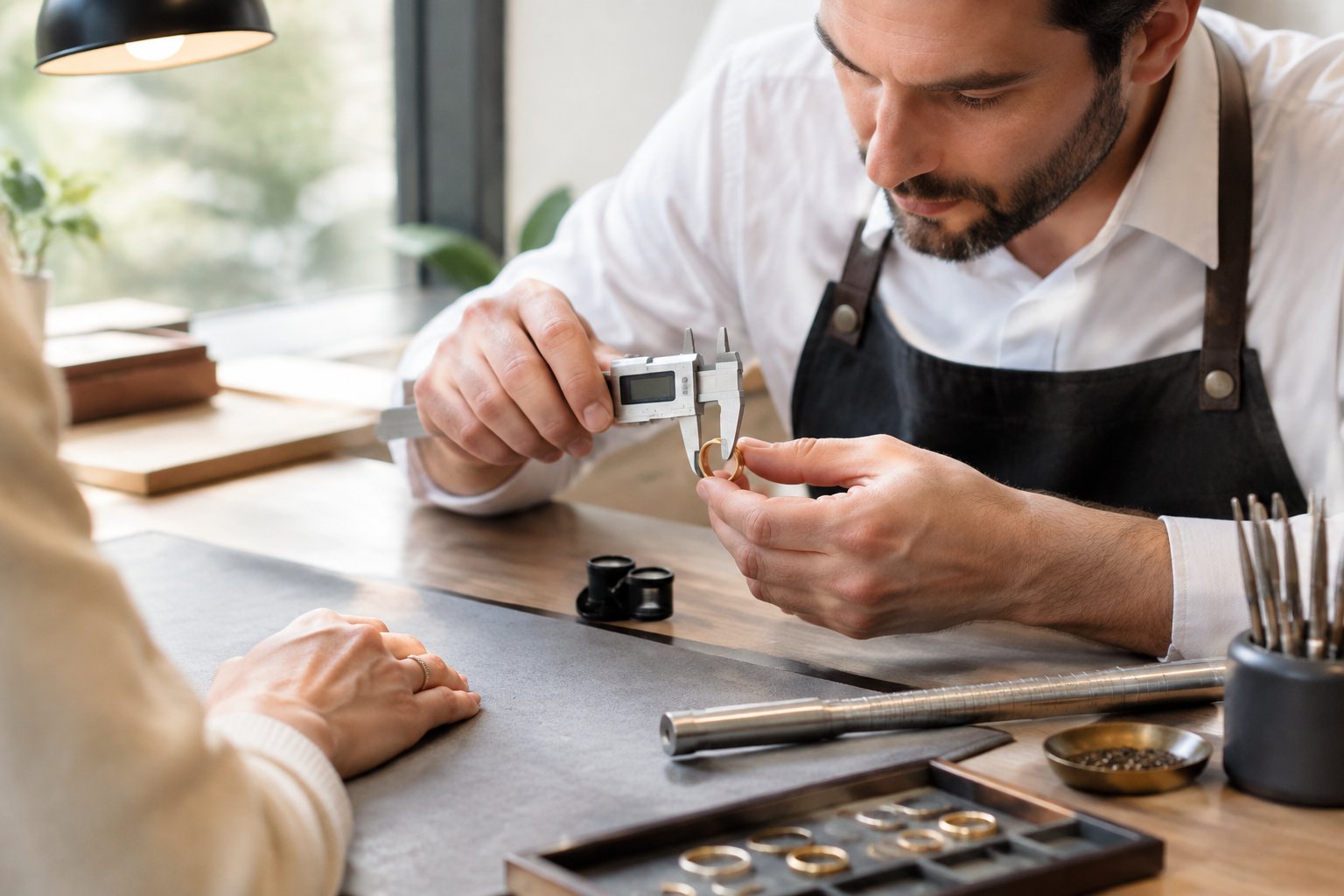
Your final quote depends on the metal, karat, band width, number of sizes, and setting style. Weight changes, temperature, and natural finger swelling can affect ring fit, so measure your finger more than once before approving the work.
A professional jeweler can confirm your ring size and explain whether wedding ring resizing is safe for your design. If you want a precise estimate, bring your band to a trusted local jeweler for an inspection and written quote before any work begins.
What You Can Expect to Pay in 2026
In 2026, the cost to resize a wedding ring is usually $40 to $150 for a standard band, while complex stone-set or platinum work can reach $300 or more. Your ring resizing cost rises with wider bands, larger size changes, difficult settings, and extra finishing.
Typical Price for Sizing Down
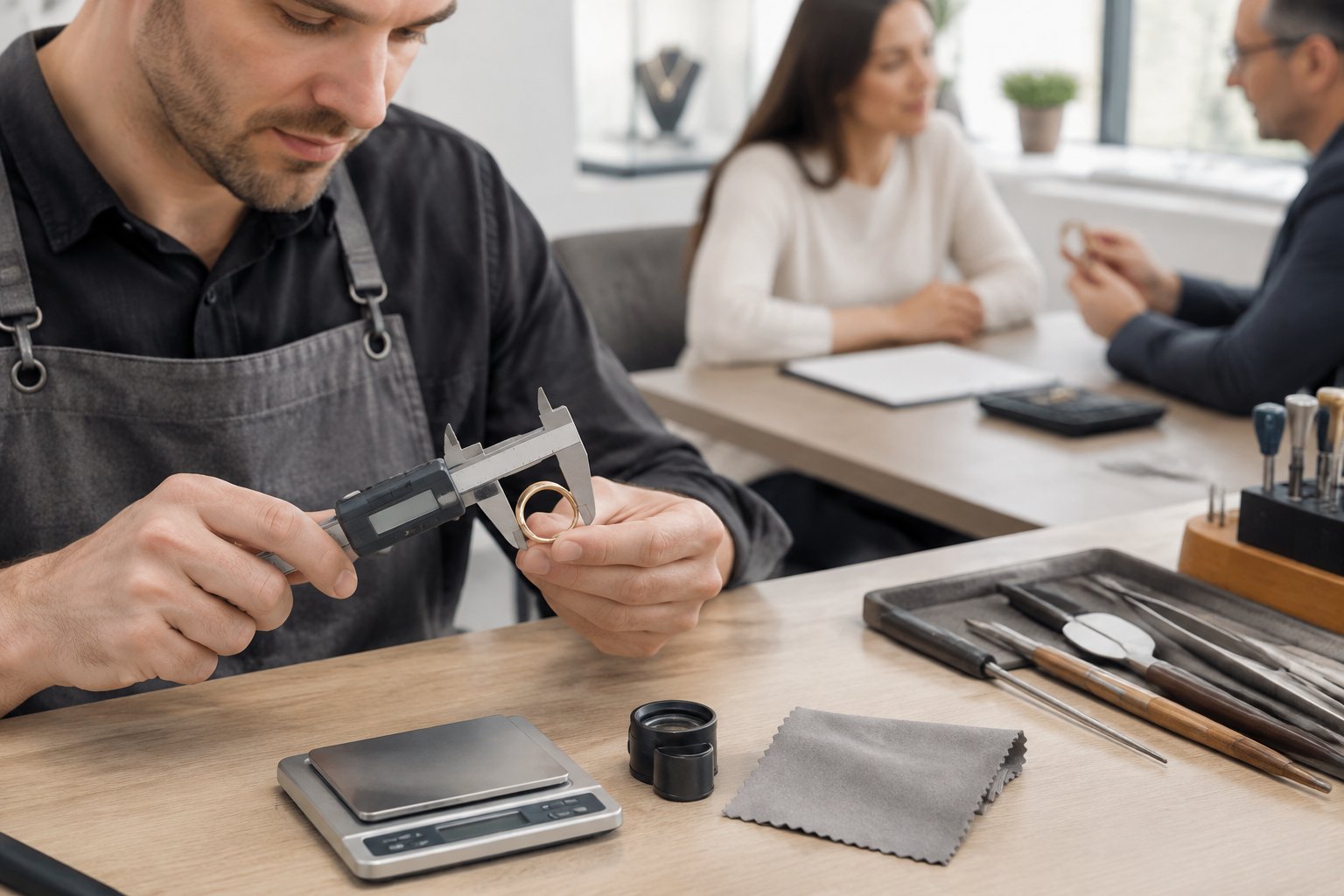
Sizing down a plain silver or gold band often costs $40 to $80. A jeweler cuts a small section from the lower part of the band, joins the ends, reshapes the ring, and polishes the surface.
A simple 14k or 18k gold band with a one-size adjustment may fall near $50 to $100. Platinum rings start higher because the metal requires specialized handling. Engraving, unusual finishes, and prior repairs can add labor.
Typical Price for Sizing Up
Sizing up a wedding band commonly costs $60 to $150. A minor increase may involve stretching a plain band, while a larger change requires cutting the shank and adding matching metal.
The added metal affects the cost to resize a ring, especially for platinum or a wide gold band. A stone-set design can reach $150 to $300 or more when the jeweler must protect, remove, or reset stones.
When a Simple Job Becomes a Complex Repair
A standard resize becomes a complex repair when the band needs several size changes, contains continuous stones, or has a thin or damaged shank. Antique rings may need extra care because their metal has experienced years of wear and previous repairs.
Ask whether the quote includes cleaning, polishing, rhodium plating, stone checks, and re-engraving. These services may appear as separate charges.
Why Your Quote May Be Higher or Lower
Your ring material, design, width, size change, and jeweler’s location determine whether your quote lands near $40 or moves above $300. A plain, narrow gold band is easier to adjust than a wide platinum ring with detailed stone settings.
How Ring Material and Karat Affect the Price
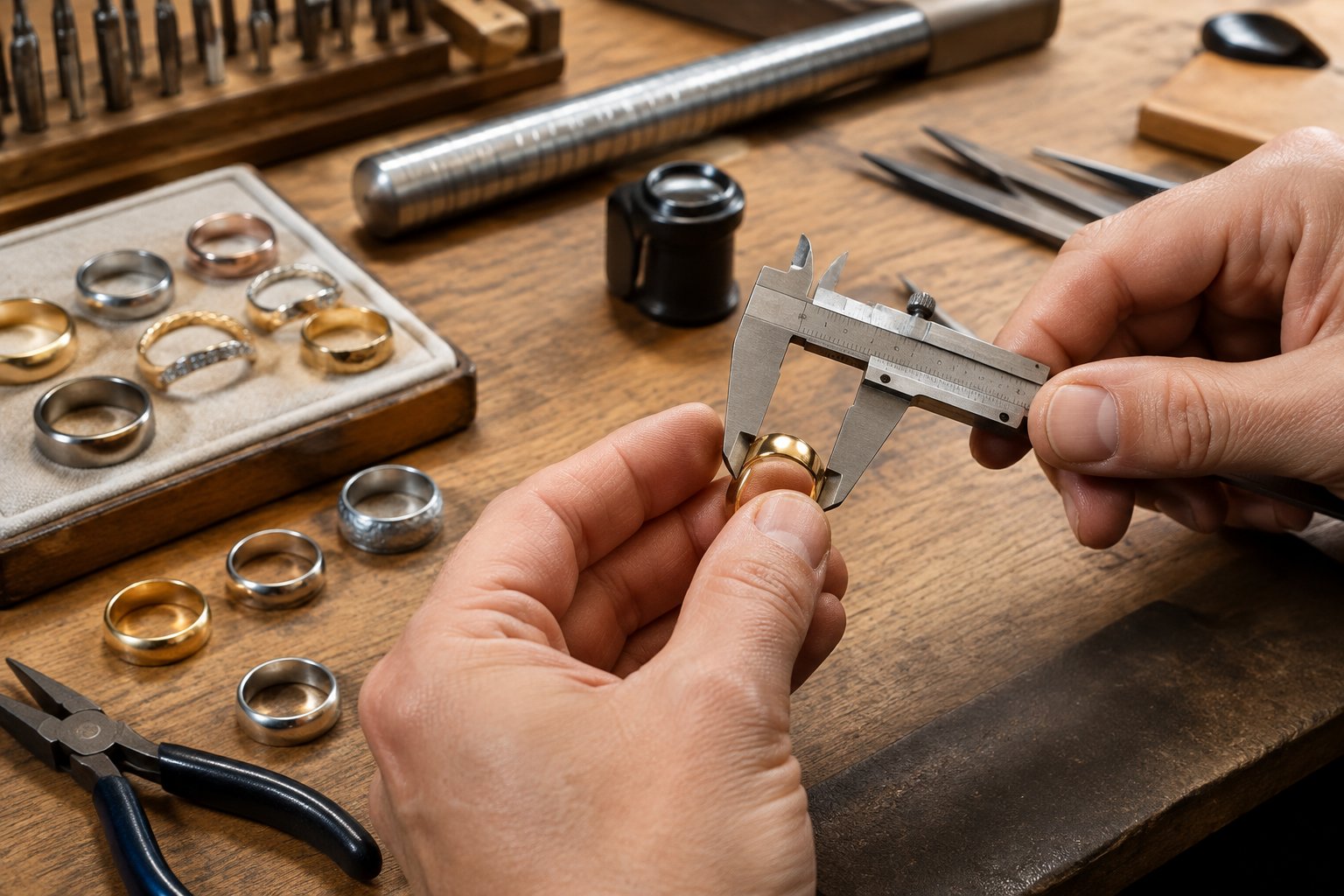
Silver and lower-karat gold rings are often less costly to resize because the material is workable and widely available. 18k gold contains more pure gold than 14k, so added material can raise the price.
Yellow gold, white gold, and rose gold all support professional resizing. White gold may need rhodium plating after the repair to restore its bright finish. Rose gold requires a close match to its copper-rich alloy so the repaired area blends with the rest of the band.
Platinum rings cost more because the jeweler needs specialized tools, matching platinum, and careful heat control. The final quote also reflects the band’s thickness and condition.
How Band Width and Size Change Affect Labor
A narrow band with a half-size adjustment needs less work than a wide band moving two sizes. Wider bands require more metal removal or addition and take longer to round and finish evenly.
Most jewelers treat one or two sizes as a practical range for standard gold and platinum bands. Larger changes can affect the band’s strength, shape, and comfort. The jeweler should inspect the ring before promising a larger adjustment.
How Stone Settings Add Risk and Cost
Stone settings raise the price because heat, pressure, and reshaping can loosen gemstones. Pave settings contain many small stones close together, while a channel setting holds stones between metal walls. Both require careful inspection after resizing.
Channel-set stones may shift if the band loses its shape. A jeweler may need to tighten settings, remove stones, or reset them after the band is adjusted. These steps add labor and increase the ring resizing cost.
Does Your Jeweler’s Location Matter?
A local jewelry store in a high-cost city may charge more for skilled labor, rent, insurance, and specialized equipment. Prices also vary between an independent jeweler and a large retail chain.
Request two or three written quotes for the same work. Compare the repair method, turnaround time, warranty, and included finishing services alongside the price.
How Professional Ring Resizing Works
A professional jeweler first confirms your ring size and examines the band before choosing soldering, laser welding, stretching, or added metal. The process protects the ring’s shape, finish, and stone security.
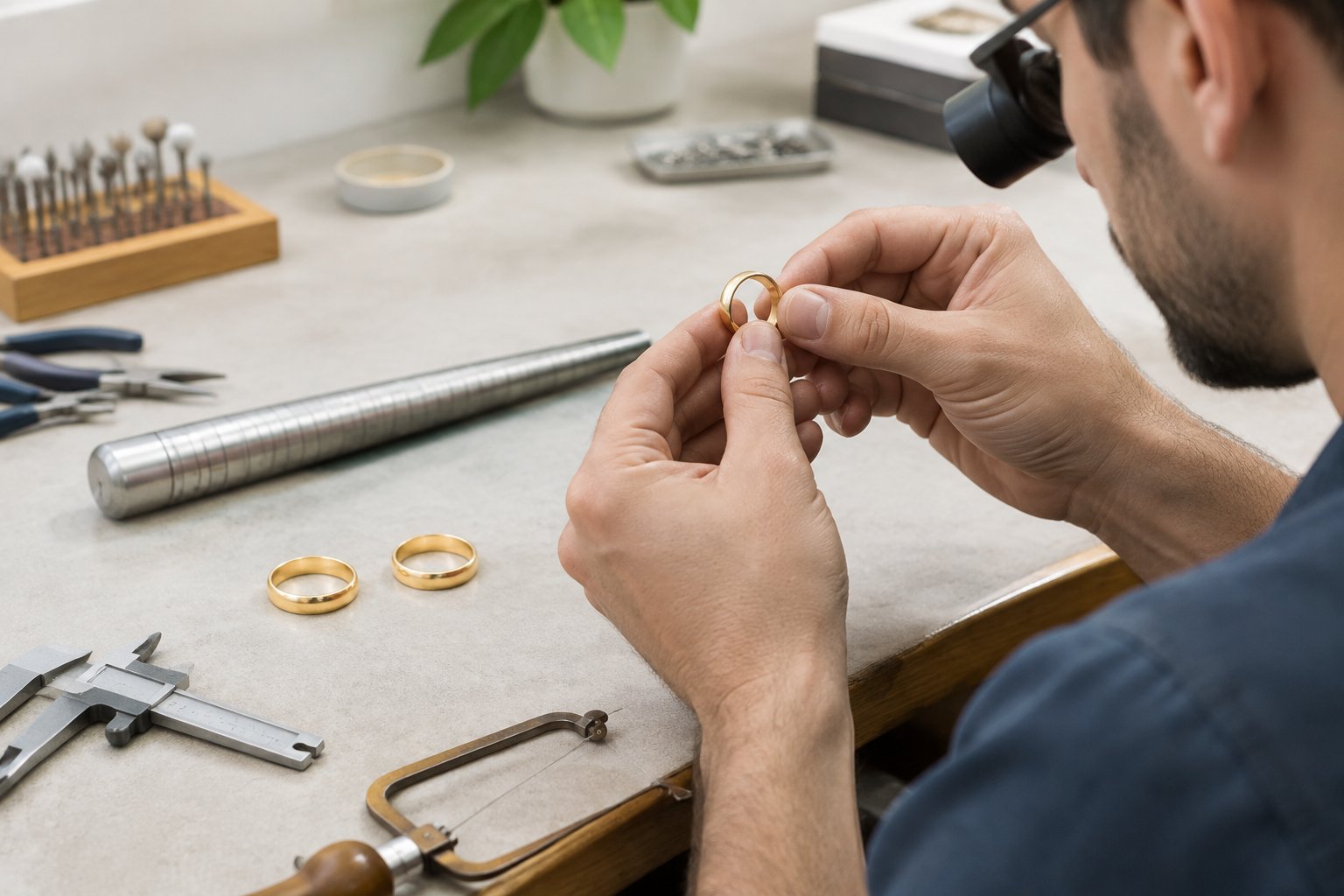
The work method depends on the metal, design, size change, and condition of the ring. A plain band may be completed in a few days, while a stone-set or antique ring can take one to three weeks.
What Happens When a Band Is Made Smaller
To make a wedding ring smaller, the jeweler marks the lower shank and removes a measured section of metal. The ends are brought together and joined with soldering or laser welding.
After the joint is secure, the jeweler rounds the band and removes any visible seam. A careful finish leaves the repaired area smooth and aligned with the original surface.
What Happens When a Band Is Made Larger
A small increase may be possible by stretching a plain gold or platinum band. This method changes the band’s thickness slightly, so it suits only limited adjustments.
For a larger increase, the jeweler cuts the shank and inserts matching metal. The new section must match the original alloy, width, thickness, and finish. Laser welding helps create a controlled joint with less surrounding heat than some traditional methods.
Finishing, Stone Checks, and Re-Engraving
After the size change, the jeweler files, sands, polishes, and cleans the ring. White gold may need rhodium plating to restore its finish.
The jeweler checks each stone, prong, channel, and setting for movement. If the resizing cut affects an inscription, re-engraving may restore the lettering. Ask whether these finishing steps are included in your quote before leaving the ring.
Which Wedding Bands Cannot Be Safely Resized?
Eternity bands, tension settings, many pavé designs, and tungsten rings present serious resizing limits and may need a fitting alternative or ring replacement. The metal and the way stones cover or support the band determine whether adjustment is practical.
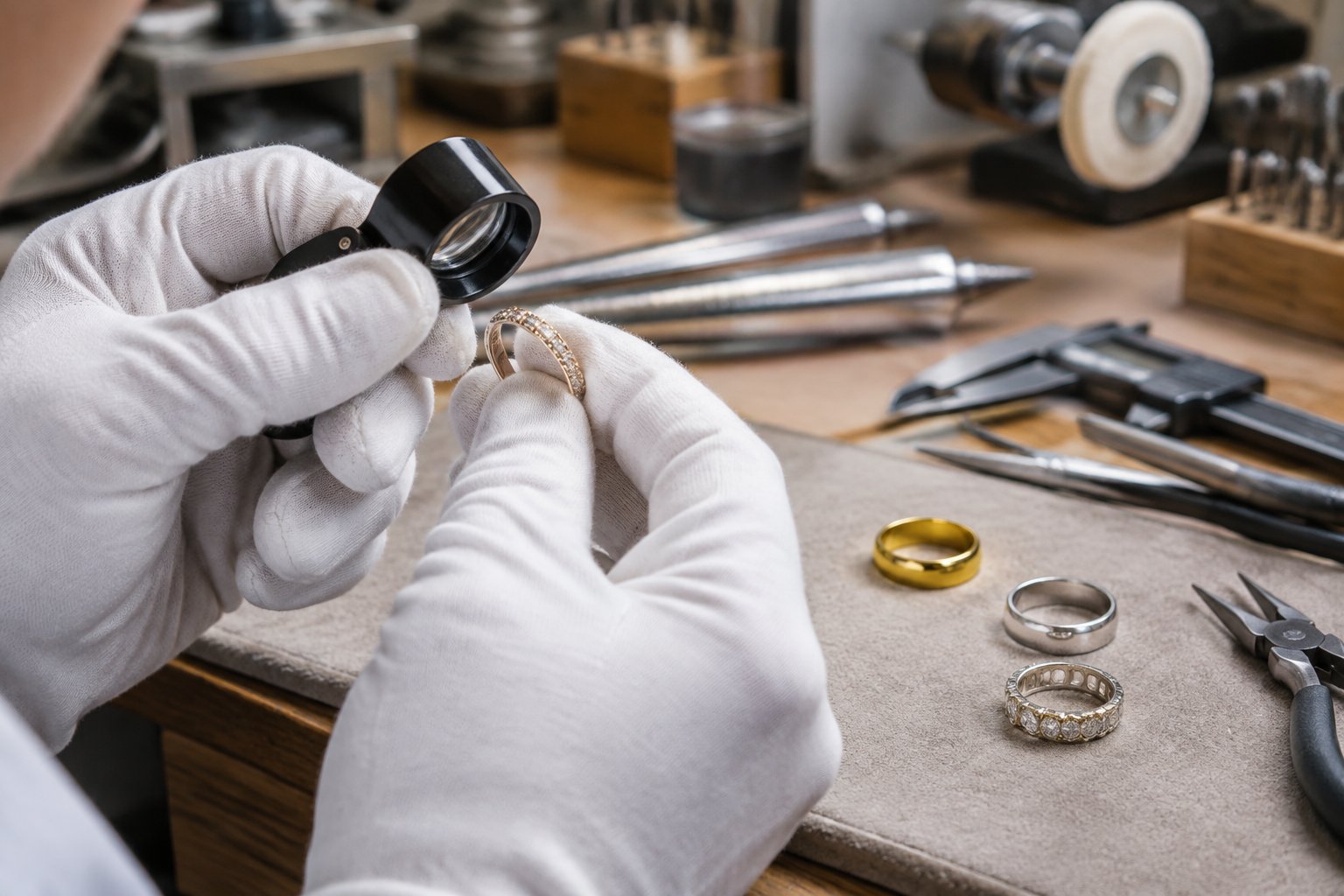
A jeweler should inspect the ring in person before recommending work. Attempting an unsuitable resize can loosen stones, damage the finish, or weaken the band.
Why Eternity Bands Are Usually Not Resizable
Eternity bands have stones set around the full circumference. The continuous pattern leaves no plain section where a jeweler can safely remove or add metal.
Changing the size requires moving stones and rebuilding part of the setting. Some specialists can alter a particular design, though the result may change the stone spacing or appearance. A ring guard or exchange may offer a safer solution.
Challenges With Tension and Pavé Designs
Tension settings hold a gemstone through pressure between the sides of the ring. Resizing changes the band’s measurements and can affect the force holding the stone in place.
Pavé settings place many small stones close together. Cutting, heating, or reshaping the band can loosen those stones. A specialist may recommend a limited adjustment, stone removal, or a new ring, depending on the construction.
Why Tungsten Rings Usually Need Replacement
Tungsten rings are extremely hard and do not respond to traditional cutting, stretching, or soldering methods used for gold and platinum. A jeweler may recommend exchanging the ring for the correct size.
Titanium, ceramic, some stainless steel designs, and rings with wood or resin inlays also have major resizing limits. Check the manufacturer’s exchange policy when you buy a ring made from these materials.
How to Choose a Jeweler and Lower the Risk
Choose a jeweler who inspects your band in person, explains the proposed method, and provides a written quote before touching the ring. Experience with your metal and setting style helps reduce avoidable damage.
Ask whether the work stays on-site, whether the ring is insured while it is in the shop, and whether the finished repair includes polishing and a stone inspection. Take clear photos of the ring before drop-off and request a receipt that records its condition.
What to Ask Before Leaving Your Ring
Use these questions during the consultation:
- What ring size do you recommend after measuring my finger?
- How many sizes can you safely change on this band?
- Will you remove or protect any stones?
- Will you use soldering, laser welding, stretching, or added metal?
- Does the price include polishing, rhodium plating, and stone checks?
- How long will the work take?
- What warranty covers the repair?
- Will the ring stay on-site?
A second opinion is useful for an heirloom, a platinum band, or a design with extensive stone settings.
Local Independent Jewelers vs. Chain Stores
A local jeweler may offer direct access to the person performing the repair and may handle custom work on-site. An independent jeweler can also discuss alloy matching, antique construction, and special finishes in detail.
Stores such as Zales, Kay Jewelers, and Jared may provide convenient service through established retail locations and manufacturer policies. Ask where the repair will take place and whether the quoted price includes shipping, inspection, and finishing.
Temporary Options for a Loose Wedding Band
A ring guard or ring guards can reduce the inside opening of a loose band without permanently changing the metal. Sizing beads placed inside the lower band offer another option, especially when the ring fits well over the knuckle but feels loose at the base.
These solutions work best for a small fit problem or a temporary weight change. Remove the ring if your finger becomes swollen, numb, or painful, then have your size checked by a professional jeweler.