
Average Cost Wedding Flowers: Prices and Budget Tips
Most couples in the United States spend about $2,500 to $5,000 on wedding flowers, with a modest celebration starting near $1,500 and full-service floral design reaching $7,500 or more. Your wedding flower cost covers much more than fresh stems, including design, preparation, delivery, setup, rentals, and cleanup.
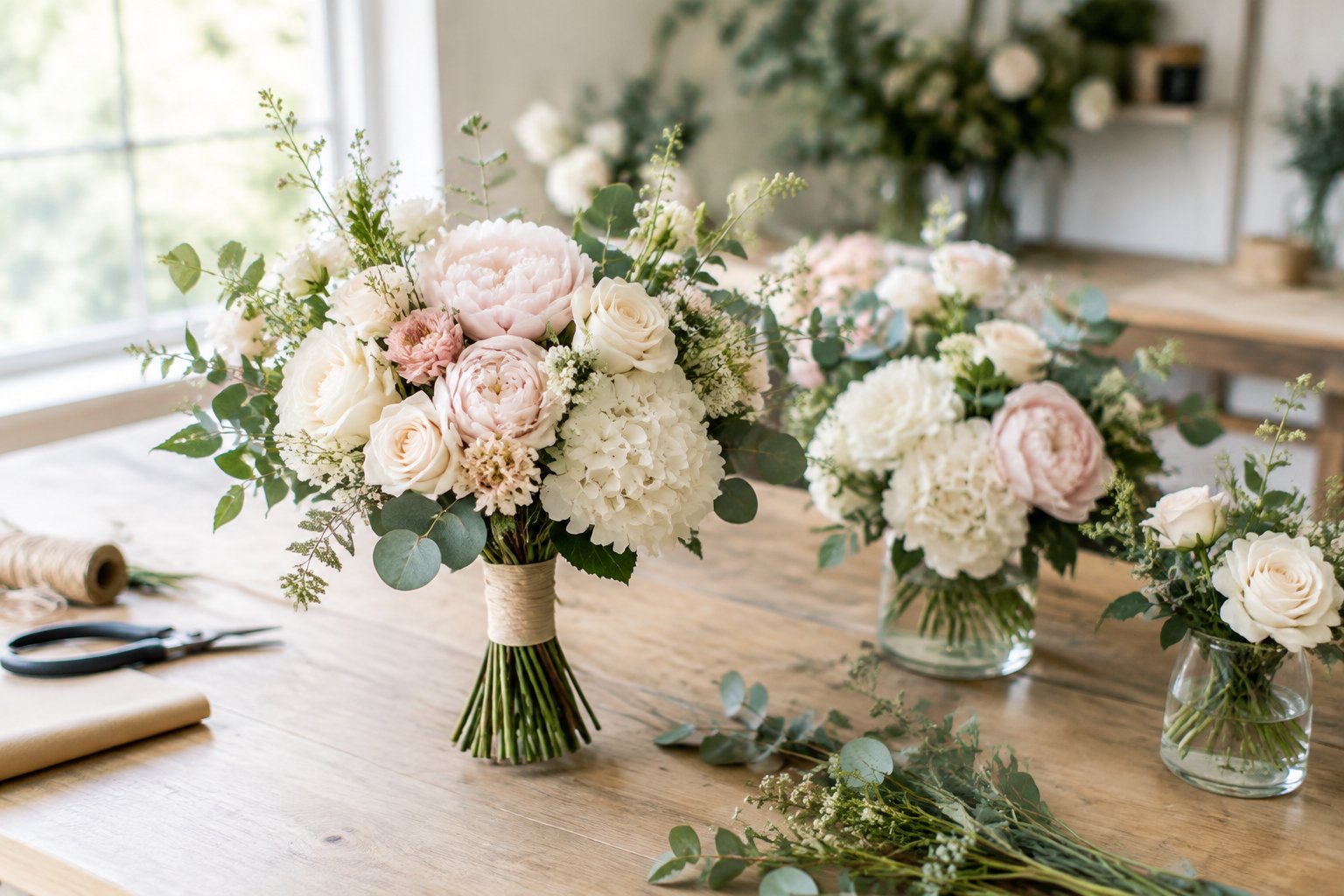
Your average cost of wedding flowers will rise with a larger guest list, premium blooms, elaborate installations, and a venue that requires extra labor. A focused floral plan can keep the average wedding flower cost near $2,000 to $3,500, while a lush floral vision may require $5,000 to $10,000 or more.
Start your wedding flower budget by choosing the moments you want guests to remember, then request quotes that list every service and rental. Comparing proposals with the same details will help you create a floral budget that feels comfortable and clear.
What Couples Typically Spend
Most U.S. couples should plan about $2,500 to $5,000 for wedding flowers, while a smaller celebration may cost less and a large floral design may exceed $10,000. A common starting point is 8% to 10% of your total wedding budget, though your priorities and venue may call for a different share.
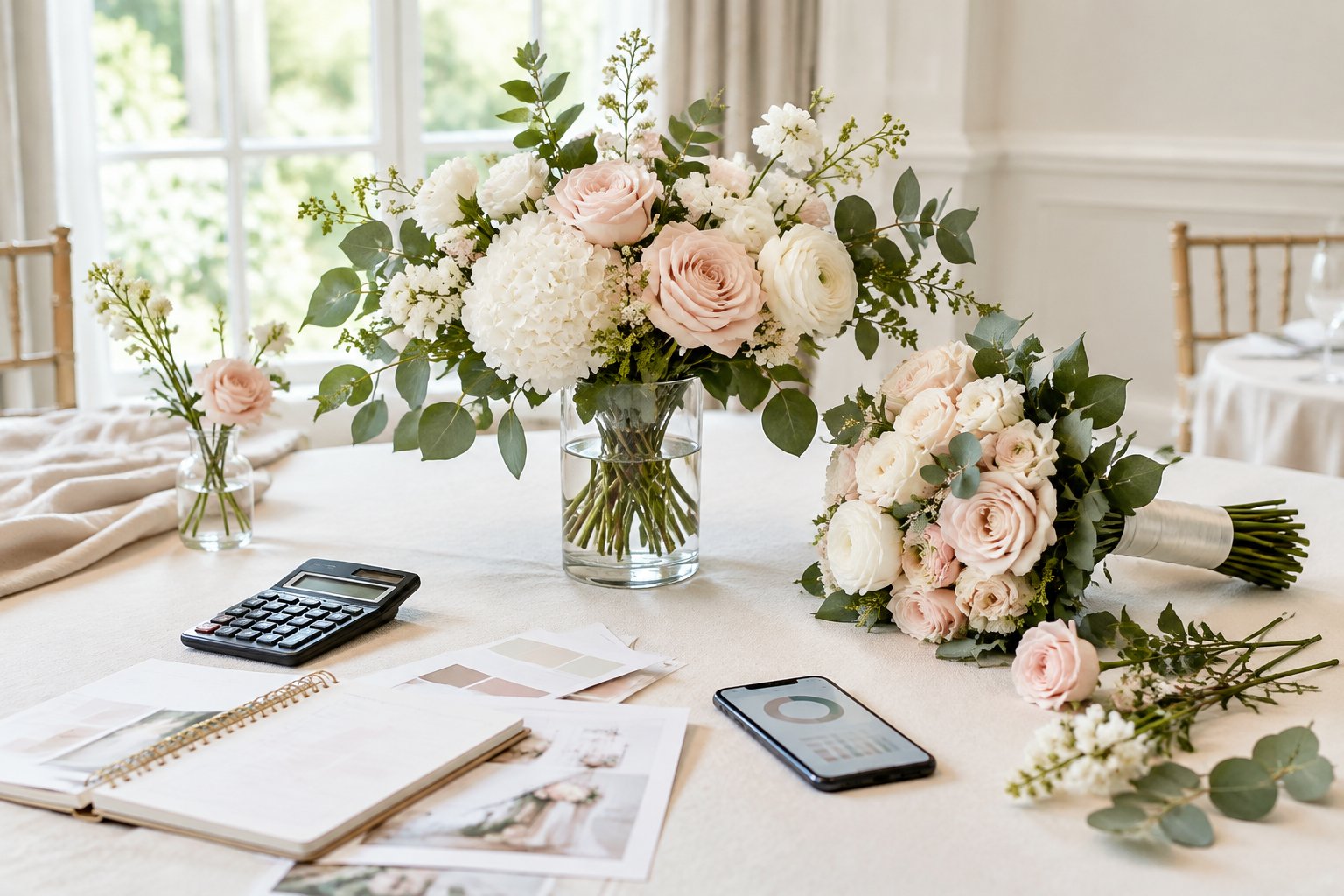
Your wedding venue affects the amount of floral design you need. A garden or decorated ballroom already provides visual interest, while a tent, warehouse, or blank hall needs more flowers to create atmosphere.
A wedding planner can also help you reuse ceremony arrangements at the reception and spot service fees before you sign a contract. Season affects availability and price.
Wedding flowers by season often cost less when you choose seasonal flowers that growers and wholesalers can source easily. Locally grown flowers may support a shorter supply chain, though their price depends on the farm, region, and date.
How Costs Change by Guest Count
Guest count affects your wedding flower costs most through reception tables. More guests require more tables, and each table needs a centerpiece, bud vase grouping, candle arrangement, or another design element.
Approximate planning ranges include:
- Under 50 guests: $1,500 to $3,000
- 50 to 99 guests: $2,000 to $4,000
- 100 to 149 guests: $2,500 to $5,000
- 150 or more guests: $3,000 to $6,000 or more
Many floral expenses stay fixed as your guest count changes. Your bridal bouquet, ceremony arch, delivery route, and design consultation still require work for a small wedding.
A larger guest list spreads those fixed costs across more people, while centerpiece costs rise with each additional table.
How Location and Wedding Season Affect Spending
Major metropolitan areas often have higher florist labor, studio, delivery, and rental costs than smaller markets. Travel distance, parking, venue access, and required delivery windows also affect the quote.
Your date can change the price of specific blooms. Peonies, dahlias, tulips, and garden roses have limited growing seasons in many regions, so imported or greenhouse-grown stems cost more when demand exceeds local supply.
Flexible flower recipes let your florist substitute similar colors and shapes when a preferred variety becomes expensive.
What Is Included in a Florist Quote?
A complete wedding florist quote should show the flowers, design labor, delivery, setup, rentals, and breakdown services that create your finished wedding florals. Ask for quantities, per-item prices, service fees, taxes, and any minimum order before you approve the proposal.
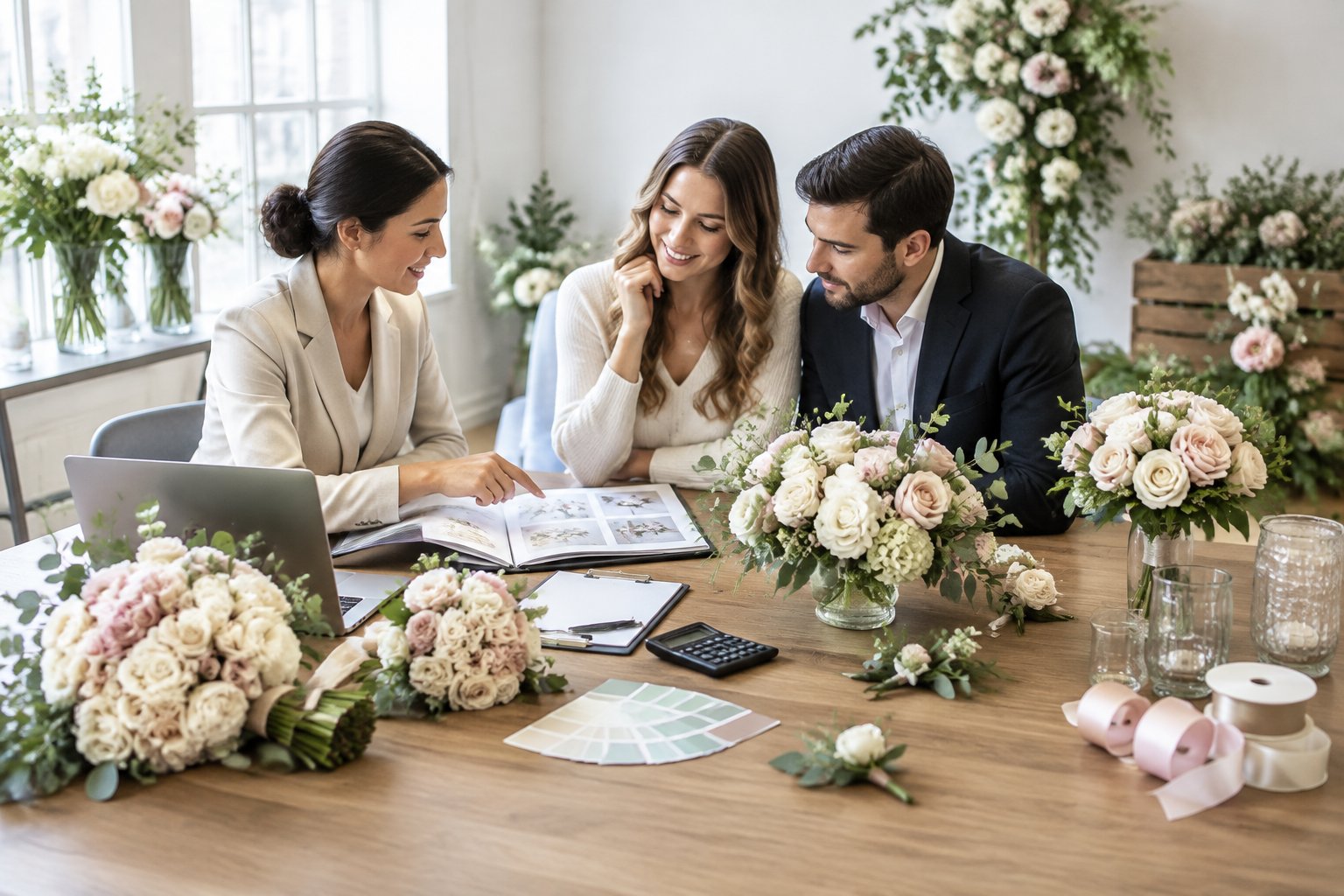
The same flower list can produce very different totals because a professional florist also sources stems, conditions them, designs each piece, transports fragile work, and installs it at the wedding venue. A transparent quote makes those tasks easy to identify.
Personal Flowers for the Wedding Party
Personal flowers may include:
- Bridal bouquet or wedding bouquet
- Bridesmaid bouquets
- Boutonniere or boutonnieres
- Corsages and a wrist corsage
- Flower crowns or flower-girl posies
- Toss bouquet
- Floral accessories for hair or clothing
Confirm who receives each item and whether the price includes specialty wrapping, ribbon, pins, water storage, or delivery to separate preparation locations. A larger wedding party increases both stem use and assembly time.
Ceremony and Reception Floral Design
Ceremony flowers may include altar flowers, aisle arrangements, chair markers, a ceremony arch, or a floral arch. Reception work may include floral installations, a flower wall, floral centerpieces, sweetheart-table flowers, bar arrangements, welcome-table designs, and cake flowers.
Ask whether your florist will move ceremony pieces to the reception. Reusing a focal arrangement can stretch your floral budget, though the proposal should show any added labor, transport, or repurposing fee.
Delivery, Setup, Rentals, and Labor
Delivery charges may reflect mileage, vehicle needs, parking, and the number of locations. Setup costs rise when a team must install a large arch, climb ladders, hang floral installations, or work within a short venue access window.
Your quote may also include rented vases, urns, plinths, stands, arches, candleholders, mechanics, and water containers. Ask about return responsibility, damage deposits, breakdown, and pickup timing.
These details help you compare a full-service quote with a lower flower-only price.
How Much Do Individual Floral Pieces Cost?
Individual wedding floral pieces range from about $10 for a simple boutonniere to several thousand dollars for a large floral arch or installation. Your stem count, arrangement size, flower choice, mechanics, and labor determine where each piece lands within its range.
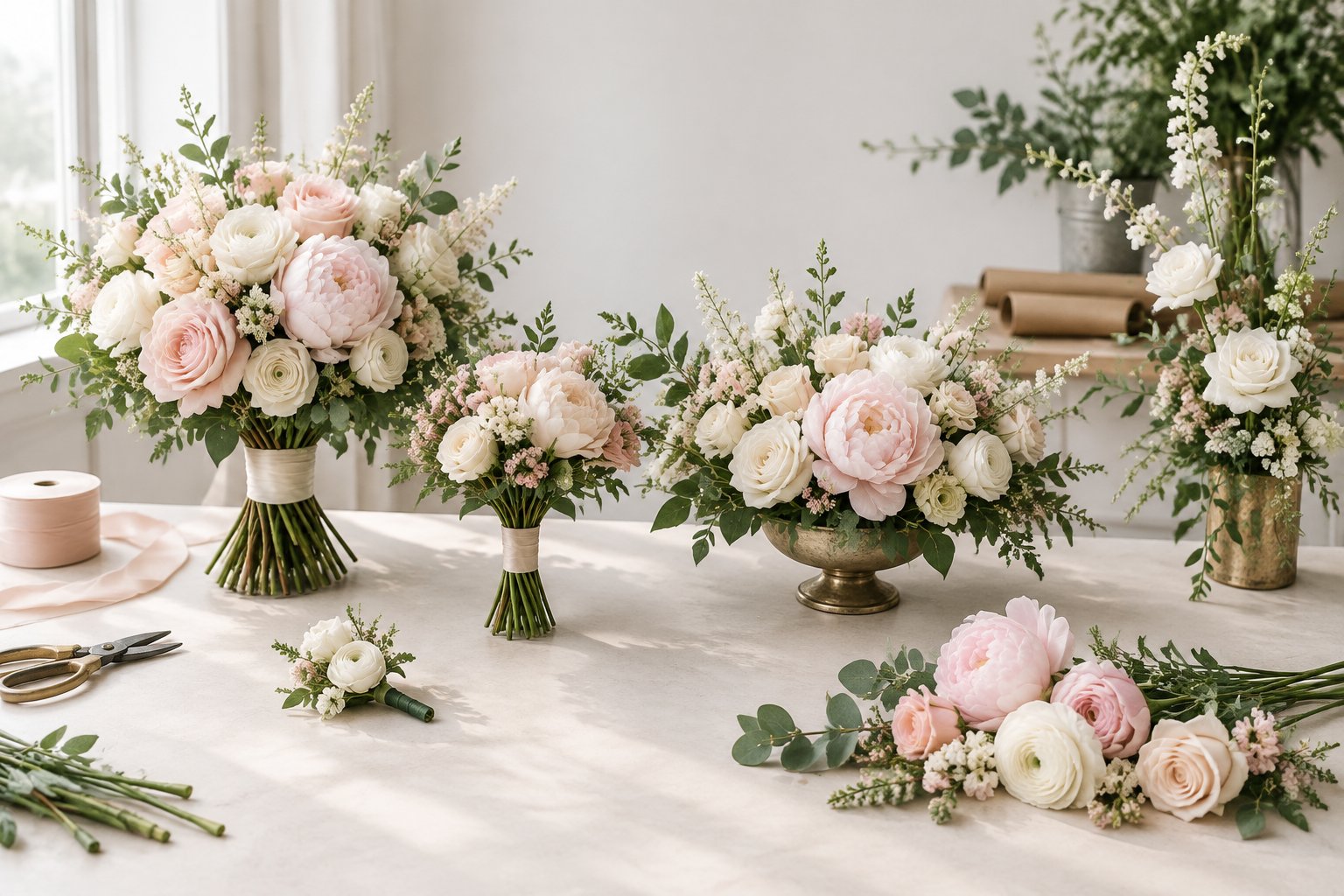
Use these ranges as planning estimates, then request a quote for your design, guest count, location, and date:
| Floral piece | Common U.S. planning range |
|---|---|
| Bridal bouquet | $150–$450 |
| Bridesmaid bouquet | $60–$175 each |
| Boutonniere | $15–$35 each |
| Corsage | $25–$60 each |
| Low centerpiece | $75–$250 each |
| Tall centerpiece | $200–$650 each |
| Ceremony aisle flowers | $100–$600 |
| Floral arch | $500–$4,500+ |
| Cake flowers | $30–$175 |
What Does a Bridal Bouquet Cost?
A bridal bouquet cost commonly falls between $150 and $450. A small hand-tied bouquet with seasonal flowers sits near the lower end, while a large garden-style or cascading design uses more stems, premium blooms, trailing greenery, and extra construction time.
Stem count drives size and fullness. Roses, lisianthus, and greenery can create a compact bouquet with texture, while flowering branches and large blooms need space and careful support.
Ribbon, bouquet pins, special wiring, and delivery also belong in the quote.
How Much Do Centerpieces and Ceremony Arches Cost?
Reception centerpieces often cost $75 to $250 for low designs and $200 to $650 for tall or statement arrangements. The number of tables, vessel style, flower density, and height all affect the total.
A ceremony arch may cost $500 to $4,500 or more once structure rental, mechanics, flowers, installation, and breakdown are included. Asymmetrical floral accents use fewer stems than a fully covered arch.
Repurposing arch flowers at the sweetheart table or reception entrance can reduce the cost of adding a second focal point.
What Drives Floral Pricing Up or Down?
Flower choice, season, arrangement size, labor, access, and design density drive floral pricing more than the name of a single bloom. A florist can balance costly focal flowers with affordable supporting stems while keeping your color palette and style consistent.
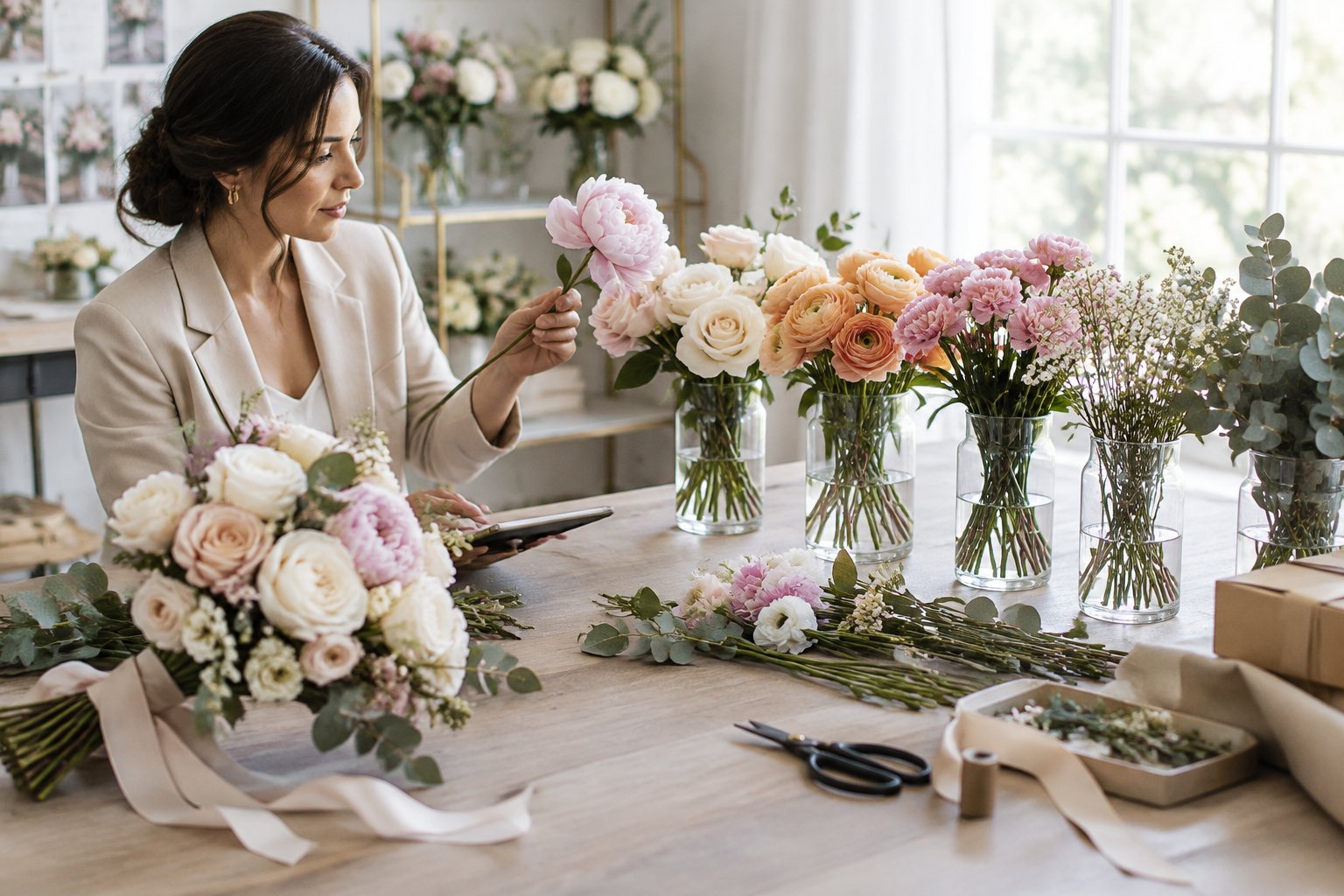
Your proposal becomes more flexible when you share a preferred color range, shape, and mood instead of requiring one exact variety in every arrangement. That approach gives your florist room to respond to market supply and seasonal quality.
Which Flowers Fit Different Price Points?
Affordable flowers can include carnations, daisies, chrysanthemums, alstroemeria, baby’s breath, and some varieties of roses. Eucalyptus and ferns can add movement and volume, though greenery pricing changes by season and region.
Mid-range options include roses, hydrangeas, dahlias, ranunculus, tulips, lisianthus, and lilies. Their cost depends on size, color, growing conditions, and availability on your date.
Premium or supply-sensitive choices often include garden roses, peonies, orchids, calla lilies, and specialty flowering branches. Peonies and garden roses bring a lush look with fewer supporting blooms, yet an all-premium recipe raises the price quickly.
A few premium stems in the bridal bouquet or ceremony focal point can create emphasis without using them everywhere.
Why Design Scale and Labor Matter
A large centerpiece needs more than extra flowers. It may require a stronger vessel, floral foam or mechanics, added preparation, careful transport, and several hours of assembly.
A hanging installation or full flower wall adds structural planning, equipment, venue coordination, and strike labor. Access also shapes labor.
A florist working in a venue with a short setup window may need a larger crew or multiple vehicles. Stairs, long loading paths, restricted parking, and separate ceremony and reception spaces add time to the invoice.
Dense arrangements use more stems and take longer to condition and design. Loose, airy arrangements with negative space reduce material use while keeping an intentional appearance.
Ask your florist to show a low, medium, and high-density version of an important arrangement so you can compare the visual effect and price.
How to Set a Floral Budget That Fits Your Priorities
Set your floral budget by funding personal flowers and one or two high-impact areas first, then add accents as money remains. A $2,500 budget can cover essential personal flowers and reception designs, while $5,000 or more gives you room for larger ceremony work and upgraded centerpieces.
Begin with your total wedding budget, guest count, venue, and preferred level of service. A written list of must-haves helps your florist build a proposal around your priorities instead of filling every possible space with flowers.
Choose One or Two High-Impact Floral Moments
Choose a focal point that appears in photographs and shapes the guest experience. Strong options include a bridal bouquet, ceremony arch, sweetheart table, reception head table, or entry installation.
Keep supporting areas restrained. If you choose a floral arch, use bud vases or petite floral centerpieces at the reception.
If reception tables are your priority, use a simpler ceremony design with aisle markers or two altar arrangements. Ask whether your ceremony flowers can be moved after the vows.
Plan the timing with your planner, venue, and florist so the same arrangement has a clear second location.
Ways to Reduce Costs Without Sacrificing Style
- Choose seasonal flowers and accept close substitutions.
- Use locally grown flowers when they fit your date and region.
- Mix premium focal blooms with carnations, daisies, roses, hydrangeas, or alstroemeria.
- Replace some full centerpieces with bud vases or petite arrangements.
- Use greenery such as eucalyptus and ferns where it adds volume.
- Limit flowers on chairs, bars, restrooms, and cocktail tables.
- Select a venue with gardens, chandeliers, or built-in visual detail.
- Reuse ceremony flowers at the reception.
- Choose one floral focal point instead of decorating every surface.
- Confirm delivery, setup, breakdown, and rental fees before comparing quotes.
DIY, Wholesale, and Silk Flower Trade-Offs
DIY wedding flowers lower design fees and give you control over the stem order, yet they require storage, conditioning, transportation, tools, and reliable helpers. Fresh flowers also need a cool, safe place before the ceremony and a firm setup schedule.
Wholesale flowers can reduce the per-stem price when you order the right quantities. You still need to account for waste, containers, mechanics, refrigeration, design time, and the risk of receiving flowers that differ from your expectations.
Silk flowers offer stable color, flexible timing, and reuse after the wedding. High-quality silk flowers cost more at purchase, and large quantities require time for arranging, packing, and transport.
A mixed plan can place fresh flowers in the bridal bouquet and ceremony focal point while using silk flowers or greenery for selected table decor.