
Average Price for Flowers for a Wedding: 2026 Costs
For most U.S. couples, the average price for flowers for a wedding in 2026 is about $2,500 to $5,000, with many celebrations landing near $2,800 to $3,500. A smaller floral plan may cost around $1,500, while full-service designs with premium blooms, large ceremony pieces, and floral installations can reach $7,500 or more.
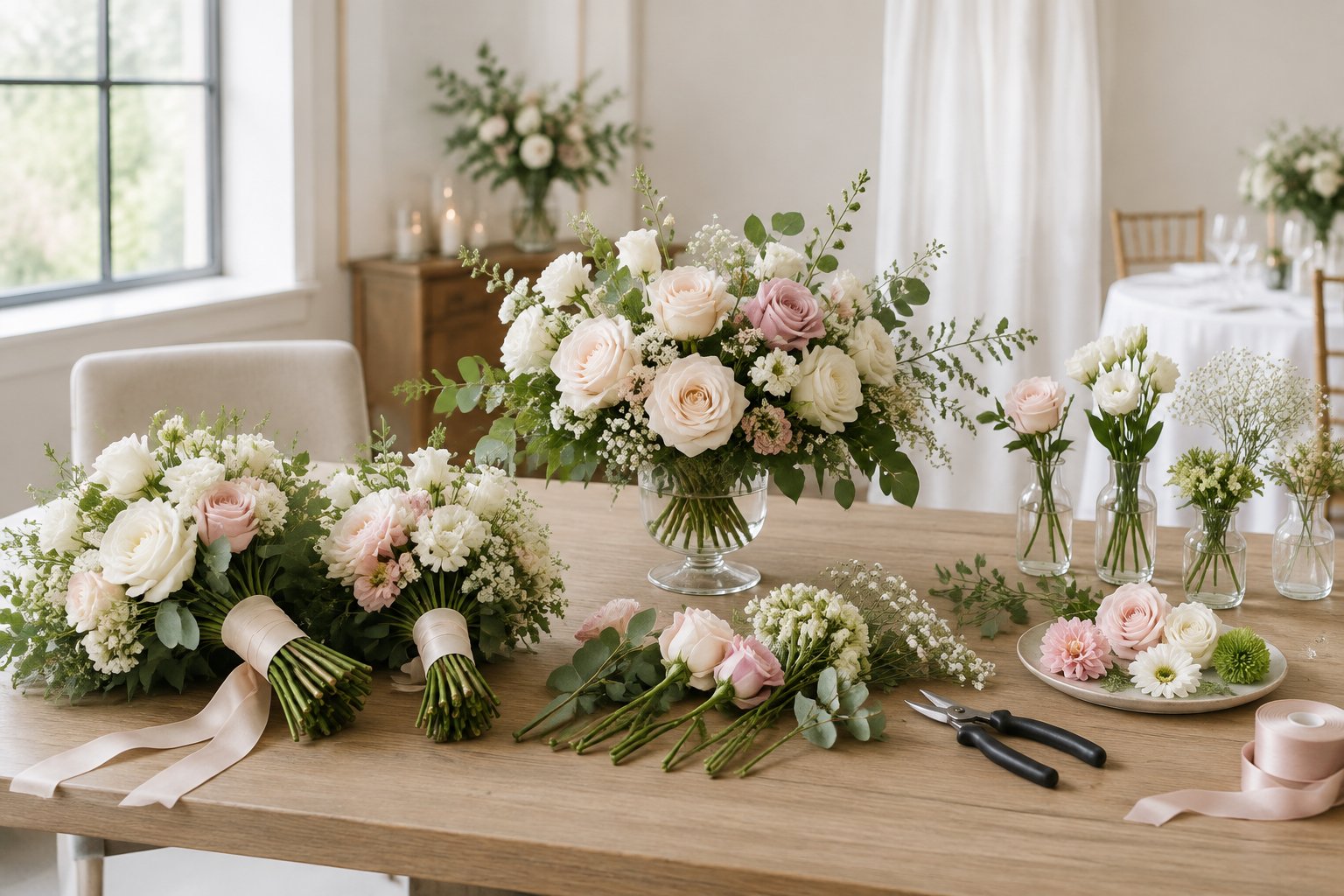
Your total wedding flower cost includes more than stems. Personal flowers, ceremony décor, reception centerpieces, design labor, delivery, setup, rentals, and teardown all shape the final quote.
If you are setting your wedding budget now, use the ranges below to create a practical wedding flower budget and request quotes with clear priorities.
What Most Couples Spend in 2026
Most couples spend $2,500 to $5,000 on wedding flowers in 2026, while a full-service wedding florist cost can reach $5,100 to $7,600 or more for elaborate designs.

Your average wedding flower cost covers several categories, so two weddings with the same guest count can have very different totals. A celebration with bouquets and simple centerpieces may stay near the lower end.
An event with a ceremony arch, lush reception tables, and on-site installation will sit much higher.
Why the National Average Is Only a Starting Point
A national average cost of wedding flowers combines small weddings, large weddings, DIY elements, local pricing, and full-service floral design. It gives you a useful first target, yet your proposal will reflect the exact work your wedding requires.
A modest plan might include:
- A bridal bouquet
- Bridesmaid bouquets
- Boutonnieres and corsages
- Simple ceremony flowers
- Reception centerpieces
A larger wedding flower budget may also include a floral arch, aisle markers, cocktail-hour arrangements, cake flowers, delivery, setup, and teardown. Ask whether each service is included before comparing quotes.
How Guest Count and Location Change the Total
Guest count affects wedding flower costs through table count, wedding-party size, and venue scale. A 120-person reception may require 12 tables, while a 60-person reception may need only six.
That difference can add hundreds or thousands of dollars when each table has a centerpiece. Location changes the wedding florist cost as well. Major metropolitan areas and high-demand wedding venues often have higher labor, delivery, and rental charges.
Travel distance, parking access, loading rules, and venue timing also affect the quote. Your flower choices influence the total at the same time. Imported flowers, out-of-season varieties, and large installations raise the material and labor needs.
How Much of Your Wedding Budget Should Go to Florals?
Plan to spend about 8% to 12% of your total wedding budget on flowers. A $30,000 wedding budget might support roughly $2,400 to $3,600 in florals, while a $50,000 wedding budget might support $4,000 to $6,000.
Use that percentage as a planning guide, then assign money by priority. If photography, food, or entertainment takes a larger share, keep the floral plan focused on the bridal bouquet, ceremony focal point, and selected reception tables.
What Does Each Floral Item Cost?
Individual wedding flower arrangements range from modest personal pieces to large installations priced in the thousands.

Prices vary with flower type, arrangement size, design style, and labor. The ranges below give you a starting point for building a line-item wedding flower budget.
How Much Does a Bridal Bouquet Cost?
A bridal bouquet costs about $150 to $500, with many full, hand-tied designs falling between $250 and $350. A compact bouquet with seasonal flowers costs less than a loose, cascading design filled with premium blooms.
The bridal bouquet cost rises with:
- Peonies, orchids, lily of the valley, or other premium flowers
- A larger size or cascading shape
- Imported or out-of-season flowers
- Complex wiring, trailing vines, or special wrapping
- Labor-intensive floral design
If the bouquet is one of your main photo details, give it a clear budget before choosing flowers. You can also ask your florist to create the same style with in-season roses, garden roses, ranunculus, or carnations.
What Do Bridesmaid Bouquets, Boutonnieres, and Corsages Cost?
Bridesmaid bouquets cost about $65 to $200 each. Smaller bouquets with fewer stems and a simpler shape stay near the lower range.
A boutonniere costs about $15 to $50. A boutonnière with a single rose, greenery, and a clean wrap uses less labor than a detailed design with multiple blooms.
Corsages range from about $35 to $85, depending on whether they are wrist corsages or pin-on designs. Your personal-flower total also includes flowers for parents, grandparents, ushers, or other members of the wedding party when you choose to include them.
What Do Ceremony Pieces Cost?
Ceremony flowers can range from several hundred dollars for aisle markers and a small altar arrangement to $3,000 or more for a full floral arch.
Common starting ranges include:
- Aisle markers: $30 to $150 each
- Altar arrangements: $250 to $1,000 each
- Ceremony arch flowers: $800 to $3,500 or more
- Floral arches with dense coverage: $2,000 to $6,000 or more
- Loose petals: $50 to $250
The structure, mechanics, delivery, installation, and breakdown all affect a ceremony arch price. Ask whether the arch frame is supplied by the florist or rented separately.
How Much Do Reception Centerpieces Cost?
Reception centerpieces cost about $75 to $400 or more per table. A low centerpiece with seasonal flowers and greenery may sit near $75 to $175.
A tall centerpiece, elevated design, or dense floral arrangement can reach $250 to $500 or more. Your table count multiplies this cost quickly. Ten centerpieces at $150 each total $1,500 before delivery, taxes, rentals, or setup.
Discuss the desired price per table with your florist before selecting a design style. You can mix arrangements to stretch the reception budget. Use tall centerpieces on a few focal tables and low centerpieces on the remaining tables, or combine floral centerpieces with candlelight and greenery.
What Do Smaller Floral Extras Cost?
Smaller extras can add $100 to $1,000 or more to your wedding flower cost, depending on quantity. Common items include:
- Cake flowers: $25 to $150
- Flower girl basket: $40 to $150
- Flower girl petals: $25 to $100
- Toss bouquet: $50 to $150
- Hair flowers: $25 to $150
- Cocktail-hour arrangements: $25 to $150 each
- Welcome sign flowers: $75 to $300
Ask your florist to list these pieces separately. You can then remove low-priority items without changing the main ceremony or reception design.
Which Choices Raise or Lower Your Floral Quote?
Your floral quote rises with premium flowers, dense designs, large installations, and added labor, while seasonal blooms and intentional greenery help control the total.

The final price reflects both the flowers and the work required to prepare, transport, install, and remove them. Share your preferred look with reference photos, then ask which substitutions preserve the shape and color palette.
Flower Variety, Season, and Sourcing
Peonies, garden roses, dahlias, ranunculus, orchids, lily of the valley, calla lilies, and amaryllis can raise the cost when availability is limited or demand is high. Standard roses, hydrangeas, lilies, anemones, and seasonal local flowers give your florist more budget flexibility.
Out-of-season flowers and imported flowers may require special ordering, longer shipping, or added handling. Your florist can suggest similar blooms with a close color, texture, or petal shape.
Fresh flowers also vary in durability. Heat-sensitive varieties may require careful timing and refrigeration, which adds planning and handling needs.
Greenery, Arrangement Size, and Design Density
Greenery such as eucalyptus, Italian ruscus, ferns, ruscus, olive branches, and flowering branches can add movement and volume. It does not always cost less than flowers, especially when you request thick garlands or large quantities of premium foliage.
Arrangement size and density have a direct effect on your quote. A compact centerpiece uses fewer stems and less labor. A loose design with open space can create a generous shape with fewer flowers than a tightly packed arrangement.
Tell your florist whether you prefer airy, garden-style, modern, or lush floral design. Those words help connect your visual goal to a realistic stem count.
Labor, Delivery, Rentals, and Installation
Labor includes flower processing, conditioning, arranging, wiring, wrapping, packing, transport, setup, and teardown. Delivery fees also reflect distance, venue access, timing, and the number of spaces involved.
Rentals may include vases, urns, arch structures, stands, candleholders, foam-free mechanics, and containers. Ask for a proposal that separates flowers, labor, delivery, rentals, installation, and taxes.
Venue rules can add work when the florist must use a freight elevator, deliver during a narrow time window, or remove all décor before the event ends.
Why Arches and Large Installations Cost More
A ceremony arch or floral installation costs more because it combines flowers with mechanics, structure, transport, and on-site labor. The florist may need to build sections in advance, secure them to a frame, and return for removal.
Full coverage requires far more flowers than a partial cluster at the top or one-sided arrangement. Suspended flowers, hanging installations, staircase décor, and ceiling pieces also require safety planning and specialized setup.
If you want a dramatic focal point, ask about a partial floral arch, asymmetrical design, or reusable ceremony arrangement. These options place flowers where guests and cameras see them while reducing the total stem count.
Build a Floral Plan for Your Budget
A realistic floral plan starts with your total wedding flower budget, guest count, table count, and highest-priority visual moment.

Give your professional florist a firm spending range and a short priority list. Clear limits help your wedding florist recommend flower varieties, arrangement sizes, and service levels that fit your celebration.
What a Modest Floral Budget Can Cover
A modest floral budget of about $1,500 to $2,500 can cover personal flowers, simple ceremony décor, and restrained reception centerpieces for a smaller wedding.
A sample plan might include:
- One bridal bouquet
- Four to six bridesmaid bouquets
- Boutonnieres and a few corsages
- A small ceremony arrangement
- Simple centerpieces using seasonal flowers and greenery
Choose one ceremony focal point and keep table designs compact. A smaller guest count makes this budget easier to manage because fewer tables need arrangements.
What a Mid-Range Floral Budget Can Cover
A mid-range floral budget of about $2,500 to $5,000 can support personal flowers, ceremony arrangements, and reception centerpieces for many U.S. weddings.
You might include:
- A fuller bridal bouquet
- Coordinated wedding-party flowers
- A ceremony arch accent or altar arrangement
- Centerpieces for eight to twelve tables
- Cake flowers and selected cocktail-hour décor
- Delivery and setup
The number of tables and the size of the ceremony feature determine how much room remains for extras. Set a per-table limit before requesting centerpiece proposals.
What a High-End Floral Budget Can Cover
A high-end floral budget of $5,000 to $10,000 or more supports premium flowers, larger arrangements, and labor-heavy floral installations.
This level may include:
- Premium bridal and wedding-party flowers
- A full ceremony arch
- Large altar arrangements
- Tall reception centerpieces
- Floral ceiling pieces or hanging installations
- Welcome flowers, cocktail-hour décor, cake flowers, delivery, installation, and teardown
Your florist will need detailed venue information for this type of design. Include ceiling height, access times, load-in rules, rental needs, and the exact areas that require flowers.
How to Prioritize One High-Impact Floral Moment
Choose one focal point for the largest share of your wedding flower budget. Strong options include the bridal bouquet, ceremony arch, sweetheart table, head table, or a floral installation behind the dance floor.
Keep supporting arrangements smaller and coordinated. For example, a statement ceremony arch can be moved behind the sweetheart table if the venue permits.
Confirm the relocation plan, labor charge, and timing before adding the design to your contract.
Ways to Save Without Losing the Look You Want
You can reduce wedding flower costs by choosing seasonal flowers, using greenery with purpose, reusing ceremony pieces, and comparing complete florist proposals.
Choose Seasonal and Locally Grown Flowers
In-season flowers usually give your florist better access and more design flexibility. Locally grown flowers can also reduce shipping needs, although prices still depend on the farm, variety, and availability.
Ask which flowers are available during your wedding month. Seasonal options may include:
- Carnations
- Lisianthus
- Chrysanthemums
- Baby’s breath
- Daisies
- Alstroemeria
- Zinnias
- Tulips
- Sunflowers
Use a color palette and flower shape as your guide. Your florist can replace a requested out-of-season bloom with a fresh, in-season option that supports the same style.
Use Affordable Blooms and Foliage Strategically
Affordable flowers create volume when your florist combines them with a smaller amount of premium blooms. Modern carnations, chrysanthemums, lisianthus, baby’s breath, and standard roses can look polished in the right color palette.
Greenery such as eucalyptus, ferns, and olive branches adds movement and texture. Use it to frame arrangements, fill open areas, or create a loose garden shape.
Share inspiration photos and ask your professional florist to keep the color, silhouette, and mood while selecting cost-conscious flowers. This approach gives the designer room to protect your wedding flower budget.
Reuse Ceremony Flowers at the Reception
Repurposing ceremony flowers at the reception can save about $500 to $1,500 when the arrangements are designed for safe relocation. Altar arrangements can move to the sweetheart table, welcome area, or cake table. Bridesmaid bouquets can sit in vases around the reception space.
Your florist may charge labor for moving and resetting flowers. Include the timing and destination of each arrangement in the proposal, especially when the ceremony and reception use separate rooms or venues.
When DIY or Silk Flowers Make Sense
DIY flowers fit a small, simple plan when you have reliable storage, transportation, preparation space, and helpers. A DIY bridal bouquet can cost less in materials, although you still need to account for tools, containers, flower waste, conditioning, and setup time.
Silk flowers work well for hair flowers, toss bouquets, small décor pieces, and arrangements that must be prepared far in advance. High-quality artificial flowers also provide consistent color and easier transport. Check the appearance in person when possible, since texture and finish differ between suppliers.
A wedding florist remains useful for large installations, time-sensitive delivery, ceremony setup, and designs that require professional mechanics.
How to Compare Florist Quotes Confidently
Request itemized proposals from at least two or three wedding florists. Give each florist the same guest count, table count, inspiration photos, wedding date, venue details, and priority list.
Compare:
- Flower varieties and substitutions
- Arrangement sizes and quantities
- Design labor
- Delivery and setup
- Rentals and rental fees
- Installation and teardown
- Taxes and payment schedule
A lower quote may include fewer services or smaller arrangements. Ask each florist what the proposal includes, what could change with flower availability, and how the final wedding flower cost is approved.