
Average Price for Wedding Band: 2026 Cost Guide
For most couples in the United States, the average price for wedding band falls between $500 and $2,000 per ring, with many pairs spending about $1,000 to $3,000 together. A plain 14k gold band sits near the lower end, while platinum, diamonds, full eternity styles, and custom work move the price higher.
Your final wedding band cost also reflects ring width, finger size, metal weight, stone quality, and the jeweler’s craftsmanship. Set your budget around daily wear and your larger wedding plans, then compare the full purchase price, including resizing, taxes, and care. Take a look at what is a good budget for a wedding ring as you begin narrowing your choices.
What Couples Typically Spend in 2026
Most couples spend about $500 to $2,000 per wedding band in 2026, or roughly $1,000 to $3,000 for two wedding rings. Plain bands fall near the lower end, while diamond details, platinum, and custom designs raise the total.
Your budget should reflect the ring’s materials, width, design, and expected wear. A national average gives you a starting point, while a specific quote gives you the useful number.
Typical Cost for One Wedding Band
A basic 14k gold band commonly costs $300 to $900. A wider or heavier style uses more metal and can reach $1,000 to $1,500.
Platinum bands often begin around $700 and move past $2,000 as width and weight increase. Men’s wedding bands made from titanium, tungsten, or another alternative metal can start near $150, while gold, platinum, and diamond styles command more.
Small diamond accents add several hundred dollars or more. Intricate engraving, milgrain edges, hand finishing, and custom shaping also increase the quote.
Expected Total for Two Wedding Rings
A practical combined budget looks like this:
- Simple pair: $600 to $1,500
- Gold pair with diamond details: $1,500 to $3,500
- Platinum or full diamond pair: $3,500 to $8,000 or more
- Custom or luxury pair: $5,000 to $12,000 or more
A matching set does not need identical metals or designs. You can coordinate the finish, profile, or engraving while choosing different widths and stone details for each partner.
How Women’s and Men’s Band Budgets Compare
Women’s bands often cost more when they include several diamonds, a curved profile, or a design made to sit beside an engagement ring. Men’s wedding bands may use more metal because of their width, even with a plain design.
A plain men’s band can cost $300 to $800, while a women’s band with small diamonds often falls between $800 and $1,800. These ranges overlap, so metal weight and stone coverage provide a better pricing guide than gender labels.
Price Ranges by Band Style
Style creates a wide spread in wedding band prices, from about $200 for a basic alternative-metal ring to $10,000 or more for a custom diamond design. Stone coverage, metal weight, and handwork drive the biggest changes.
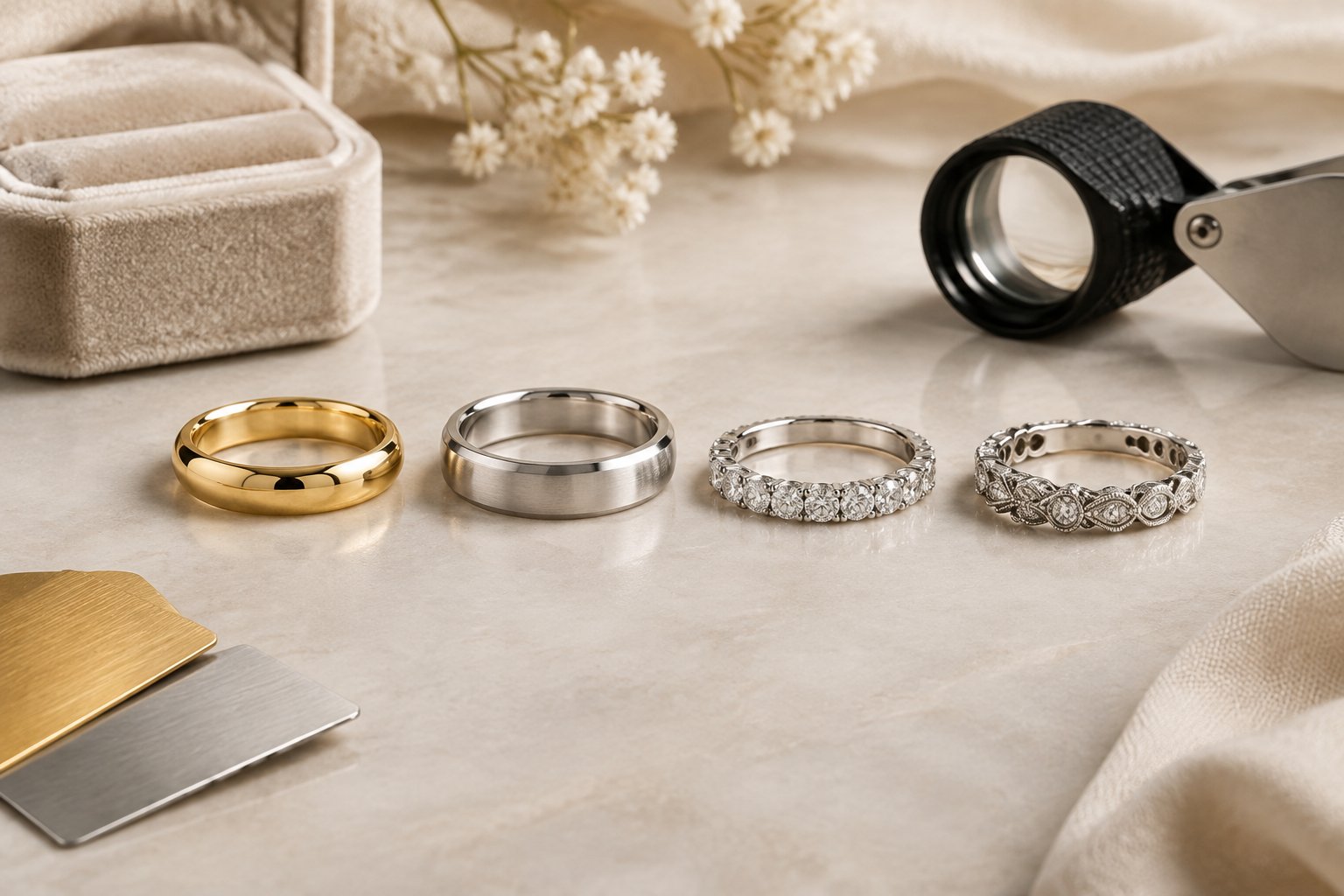
You can keep costs controlled with a simple profile and limited stone coverage. A detailed design brings more visual impact, along with higher material and labor costs.
Simple Metal Bands
Simple metal bands offer the clearest value. Typical price ranges include:
- Sterling silver: $75 to $300
- Alternative metals: $150 to $700
- 14k gold: $300 to $1,000
- 18k gold: $500 to $1,500
- Platinum: $700 to $2,500 or more
A comfort-fit interior, beveled edge, brushed surface, or hammered finish adds a modest design premium. Wider bands and larger ring sizes require more metal.
Diamond Wedding Bands
A diamond wedding band with a few accent stones often costs $700 to $2,500. Designs with diamonds across half the front can reach $1,500 to $5,000, depending on carat weight and metal.
Full diamond coverage raises the price quickly because the ring needs more stones and more setting work. Lab-grown diamonds provide a lower-cost route to the same basic look, while natural diamonds carry a higher material price.
Eternity Bands and Eternity Band Pricing
An eternity band has stones set around the entire ring. Prices commonly begin near $1,500 for small stones in gold and can exceed $10,000 in platinum with larger diamonds.
Sizing requires special care because a full circle of stones limits how much the ring can be altered. If your finger size changes, ask about the jeweler’s exchange and resizing policy before ordering.
Vintage Rings and Custom Designs
Vintage rings range from $500 to several thousand dollars, based on age, condition, maker, metal, and gemstone quality. Antique pieces can also require inspection, restoration, or specialized sizing.
Custom designs often start around $1,500 and rise beyond $5,000. Your price reflects design time, computer modeling or hand drawing, one-off fabrication, special engraving, and stone selection. Ask for a written quote that separates the setting, stones, labor, and finishing.
How Metal Choice Changes the Final Price
Platinum usually costs the most, 18k gold costs more than 14k gold, and alternative metals offer lower entry prices for many men’s wedding bands. Your choice also affects weight, color, durability, repair options, and care.
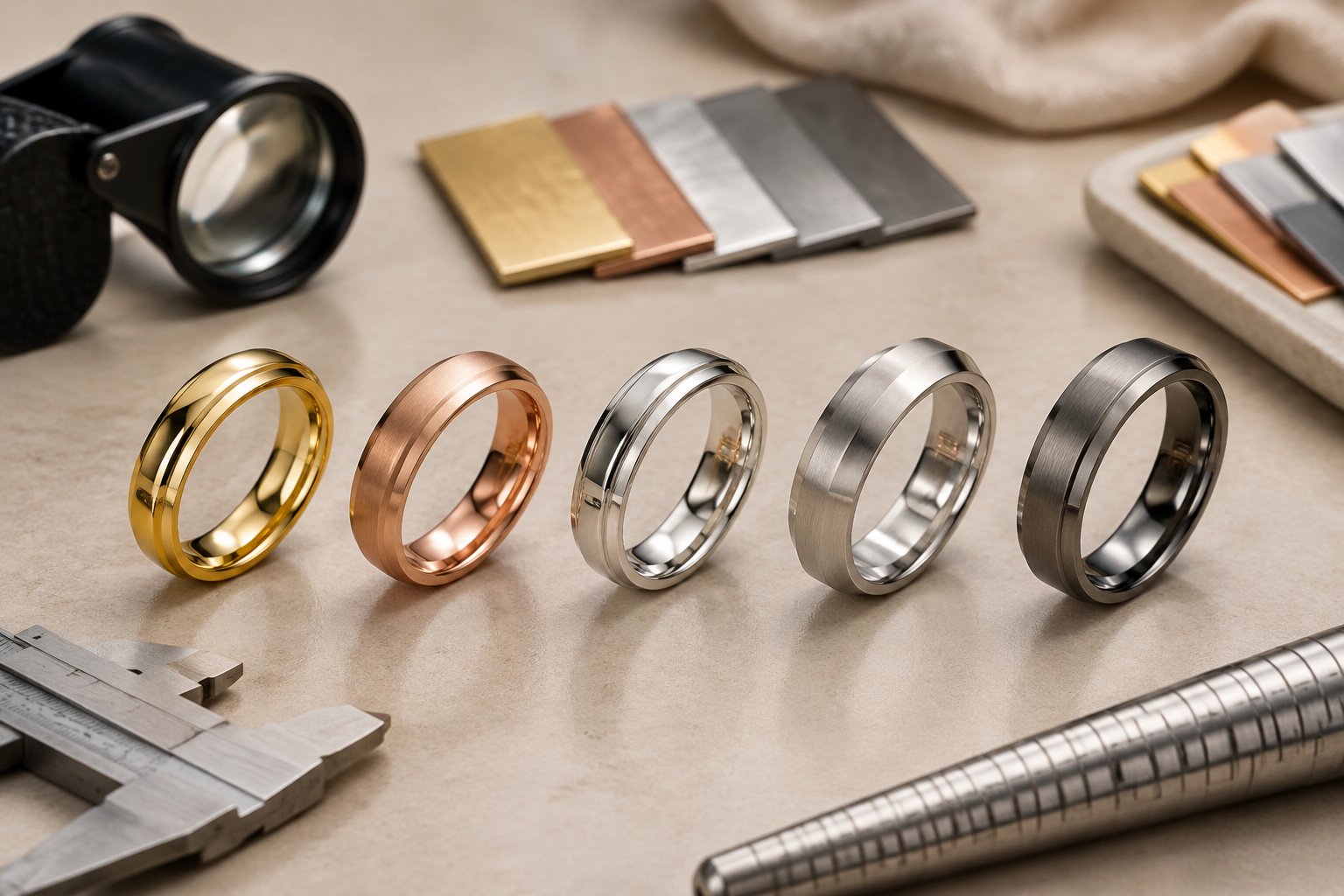
Metal prices change with market conditions, while ring weight changes with width and size. Comparing the metal price alone can miss the effect of construction and finishing.
Platinum vs. Gold
Platinum is dense, naturally white, and highly durable. A platinum band uses more material by weight, which helps explain its higher price. It also develops a soft patina over time that many owners enjoy.
Gold offers more design flexibility and a wider range of prices. A gold band can be polished to a bright finish, textured, engraved, or combined with other colors.
14k Gold vs. 18k Gold
14k gold contains more alloy and less pure gold than 18k gold. It provides a durable choice for daily wear and usually costs less.
18k gold contains a higher share of pure gold, giving it a richer color and a higher material price. It is a strong choice when color depth and gold content rank high on your list.
White Gold, Yellow Gold, and Rose Gold
White gold gets its bright appearance from alloy metals and is commonly finished with rhodium plating. Ask how the jeweler handles future replating and whether that service carries a fee.
Yellow gold keeps its warm color and works across classic and modern designs. Rose gold gets its blush tone from copper in the alloy. All three colors can be made in 14k or 18k gold, with purity and ring weight shaping the cost.
When Alternative Metals Make Sense
Titanium, tungsten, cobalt, and stainless steel offer distinctive finishes and accessible prices. They suit you when scratch resistance, low weight, or a modern look takes priority.
Some alternative metals have limited resizing options. Confirm the fit carefully and review the return policy before purchase, especially for a wide band.
Diamonds, Gemstones, and Setting Details
Stone choice and setting coverage can move a wedding band from under $1,000 to several thousand dollars. The main price drivers are diamond origin, carat weight, color, clarity, gemstone durability, and the labor needed to secure each stone.
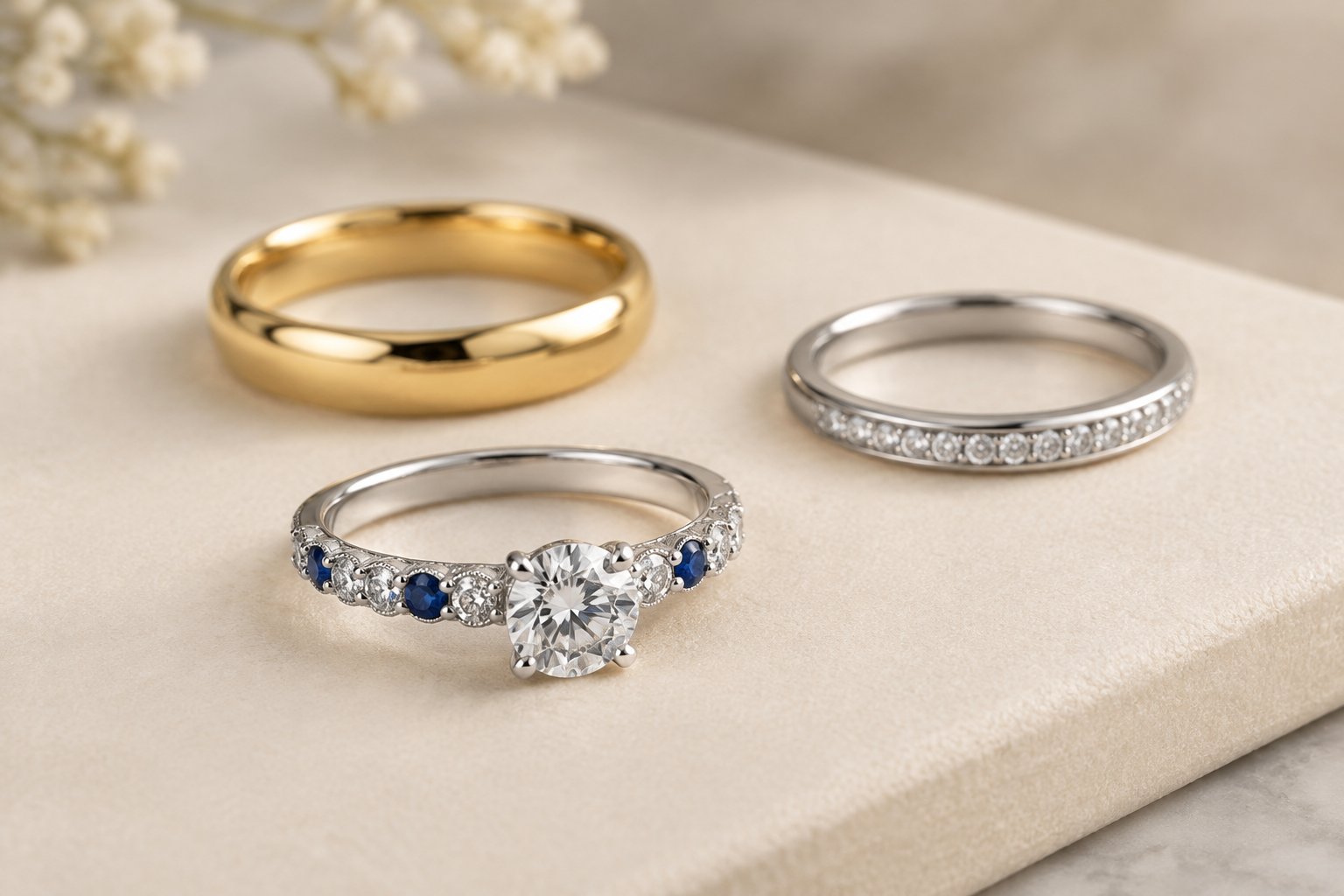
A small number of well-placed stones keeps the design more affordable. Continuous coverage and fine handwork create a richer look with a higher bill.
Natural Diamond vs. Lab-Grown Diamond
A natural diamond forms underground and carries a higher purchase price based on its rarity and grading details. A lab-grown diamond has the same basic crystal structure and can offer more carat weight within a set budget.
Ask for grading information, stone measurements, and the total carat weight. Compare stones by cut quality and appearance, since two diamonds with the same carat weight can look different.
Choosing a Sapphire or Colored Gemstone
Sapphire gives you strong daily-wear durability and comes in colors such as blue, pink, yellow, and white. A colored gemstone can create a personal detail at a lower or similar price to a diamond, depending on the stone.
Ruby, emerald, tourmaline, and other options have different care needs. Ask whether the stone has treatments, how it handles impact, and which cleaning methods the jeweler recommends.
Why Full Eternity Designs Cost More
A full eternity band requires stones around the entire circumference. That increases the number of gems, setting work, matching effort, and finishing time.
The ring also needs accurate sizing before production. A half-eternity or three-quarter design gives you visible stones across the top while leaving more room for future adjustment.
How Custom Work and Ring Width Affect Value
Custom work adds design and production labor to the material cost. Ring width affects the amount of metal, the number of stones, and the time required to shape and finish the band.
A narrow band with a small accent stone can fit a modest budget. A wide band with engraving, mixed metals, and multiple gemstones moves into a higher price range quickly.
Setting a Ring Budget That Fits Your Plans
Set a wedding band budget after accounting for your engagement ring, wedding expenses, savings goals, and expected daily wear. A clear dollar limit helps you compare rings without letting small upgrades change the plan.
Your budget can support a plain gold band, a diamond-accent style, or a custom design. Choose the feature you value most, then keep secondary details flexible.
Wedding Band Cost vs. Engagement Ring Cost
An engagement ring often costs more because it features a center stone and a more complex setting. A wedding band can range from a few hundred dollars to several thousand, depending on its metal and stone coverage.
Keep the two prices separate when planning your wedding ring cost. A band that fits beside the engagement ring may require a curved shape, matching metal, or custom height, which adds to the quote.
How to Budget for a Matching Set
Start with the combined amount you can pay without using money reserved for essential bills or emergency savings. Divide that figure between the engagement ring and wedding bands according to your design priorities.
Reserve part of the budget for:
- Sales tax
- Sizing or resizing
- Engraving
- Insurance
- Professional cleaning
- Future maintenance
A matching set can share a finish or design detail without using the same stone coverage. This gives you visual harmony while keeping each ring suited to its wearer.
Where to Save Without Sacrificing Daily Wear
Save through a narrower band, 14k gold, a partial diamond setting, or a lab-grown diamond. A durable profile and secure setting support daily wear even when the design stays simple.
You can also compare a ready-to-order style with a custom piece, shop during a documented promotion, or choose a gemstone accent. Spend more on fit, construction, and the feature you will notice every day.
Where to Shop and Compare Prices
Compare at least two online retailers and one local jeweler before choosing a wedding band, using the same metal, width, stone coverage, and ring size for each quote. This gives you a useful price comparison and lets you judge service terms alongside the ring itself.
Online retailers such as James Allen and Blue Nile offer broad catalogs for online ring shopping. Local jewelers add hands-on fitting and face-to-face design help.
Comparing Online Retailers and Local Jewelers
Online stores make it easy to filter by metal, width, stone type, and price. Product pages can also show detailed specifications, photos, and available sizes.
A local jeweler lets you try different profiles and finishes before ordering. You can ask about custom work, matching an engagement ring, and long-term service in the same conversation.
Compare the complete price, shipping, taxes, return terms, warranty, and resizing policy. A lower listed price may not produce a lower final cost after those items are added.
What to Check Before Buying Online
Read the metal stamp, ring width, gram weight when provided, stone count, total carat weight, and treatment details. Check whether the photographs show the actual ring or a digital rendering.
Confirm the production timeline and return window before placing the order. Save the product specifications and final invoice so you can verify the ring when it arrives.
Resizing, Warranties, and Long-Term Care
Ask whether the ring can be resized and how many sizes the jeweler supports. Full eternity bands and some alternative metals have limited adjustment options.
Review the warranty for loose stones, manufacturing defects, finish wear, and routine service. Store the ring safely, remove it for harsh chemicals or heavy impact, and schedule professional inspections according to the jeweler’s care instructions.