
Average Price of 3 Tier Wedding Cake: 2026 Costs
A three-tier wedding cake in the United States costs about $600 to $1,200 in 2026, with many standard designs landing near $800. Smaller cakes with buttercream and simple decoration may cost less, while larger custom cakes with fondant, sugar flowers, and premium fillings can exceed $1,500.
Your guest count, design, bakery location, and delivery needs shape the final quote.
A three-tier cake gives you a tall centerpiece with room for multiple flavors. Before you book, ask each baker for the serving count, per-slice rate, delivery charges, setup terms, and rental fees in writing.
A clear quote lets you compare wedding cake prices without surprises and choose a design that fits your celebration.
What Is a Realistic Budget for Three Tiers?
A realistic 3-tier wedding cake cost is $600 to $1,200 for a standard 2026 order, including basic decoration and enough servings for a medium-sized reception. Custom work, premium ingredients, and major-city pricing can push the total higher.
Your final wedding cake pricing should reflect both the cake you eat and the design labor behind it. A bakery may quote by serving, by tier, or as one custom package.
Typical 2026 Price Range
Use these ranges as planning figures:
- $400 to $650: Smaller three-tier cake with buttercream, classic flavors, and light piping
- $650 to $1,000: Mid-range cake with several flavors, textured finishes, fresh flowers, or detailed piping
- $1,000 to $1,800 or more: Large custom cake with fondant, handmade sugar flowers, painted details, sculpted elements, or extensive setup
A quote below $400 may cover a small display cake with limited decoration. A quote above $1,200 often reflects extra servings, custom artwork, specialty ingredients, or a premium designer.
Cost Per Serving and What It Means
Many bakeries price wedding cakes at about $3 to $8 per serving for standard work. Custom designs from established cake designers often start around $8 per serving and rise with labor and detail.
For example, 100 servings at $6 each produce a $600 cake price before delivery, setup, taxes, stand rental, or cutting charges. Ask whether the quoted serving count uses a wedding slice of about 1 by 2 inches and whether the top tier is included.
A low per-serving rate can still produce a high invoice when your cake needs 150 servings. A higher rate may offer better value when it includes premium fillings, multiple flavors, delivery, and venue setup.
Budget, Mid-Range, and Custom Design Examples
| Cake style | Approximate price | What you may receive |
|---|---|---|
| Budget | $400-$650 | Buttercream, simple piping, standard flavors, limited servings |
| Mid-range | $650-$1,000 | More servings, multiple flavors, textured frosting, fresh flowers |
| Custom | $1,000-$1,800+ | Fondant, sugar flowers, hand painting, specialty fillings, detailed setup |
A budget design can look polished when you focus on smooth frosting and one strong accent. A mid-range order gives you more room for flavor variety and decorative texture.
A custom cake suits you when the cake design plays a major role in your reception styling.
How Many Guests Can a Three-Tier Cake Serve?
A three-tier wedding cake serves about 50 to 150 guests, with roughly 74 servings from a common 6-inch, 8-inch, and 10-inch round combination. Larger diameters, square tiers, and kitchen cakes increase the serving count.
Tier size controls your food budget as much as decoration does. Confirm the bakery’s serving chart before choosing a design, especially when your wedding reception includes other desserts.
Common Tier Sizes and Serving Counts
Approximate wedding servings for round tiers include:
- 6-inch tier: 12 servings
- 8-inch tier: 24 servings
- 10-inch tier: 38 servings
- 12-inch tier: 56 servings
- 14-inch tier: 78 servings
Common three-tier combinations include:
| Round tier sizes | Approximate servings |
|---|---|
| 6, 8, 10 inches | 74 |
| 6, 8, 12 inches | 92 |
| 8, 10, 12 inches | 118 |
| 6, 10, 14 inches | 128 |
Square tiers produce more servings at the same width because the edges create less cutting waste. Your baker’s chart should guide the final number because slice size and tier height affect the result.
How to Match Cake Size to Your Guest List
Start with confirmed RSVPs and decide whether cake is the only dessert. If cake is the plated dessert, plan close to one serving per guest.
If you also serve cookies, pie, or a dessert bar, ordering for about 70% to 85% of guests may fit your reception.
A 6-8-10-inch round cake works well for a smaller gathering. For about 100 guests, an 8-10-12-inch cake provides more room, while a 6-8-10-inch display cake paired with kitchen cake keeps the visible design smaller.
Remember to ask how the bakery handles the top tier. Saving it for your anniversary reduces the servings available on the wedding day unless you order an extra cutting cake.
When a Sheet Cake or Cupcake Tower Makes Sense
A sheet cake helps you add servings at a lower cost than enlarging every display tier. The bakery can prepare it in the same flavors and the caterer can cut it in the kitchen.
A cupcake tower works well when you want easy portion control, multiple flavors, or a casual reception style. You still need to budget for a display stand, transport, setup, and enough cupcakes for guests who want seconds.
What Raises or Lowers the Bakery Quote?
The largest price changes come from the amount of decorating labor, the ingredients you select, and the number of servings you need. Buttercream, fondant, flowers, fillings, and toppers each affect the quote.
A simple shape with one finish keeps labor predictable. Hand-shaped decoration, multiple textures, and fragile details require more time and careful handling.
Buttercream Frosting vs. Fondant
Buttercream frosting often costs less because it supports many finishes with standard decorating tools. Smooth buttercream, ruffles, rosettes, and textured frosting create distinct looks without covering the cake in another layer.
Fondant gives you a clean, polished surface for sharp edges, draping, geometric patterns, and painted details. It takes extra preparation and application time, so fondant wedding cake prices often sit above comparable buttercream designs.
Ask whether the quote includes a buttercream base beneath the fondant. The answer affects both the flavor and the amount of frosting used.
Flavors, Fillings, and Premium Ingredients
Vanilla, chocolate, and standard buttercream fillings often fit the base price. Lemon curd, fresh berry compote, praline, mousse, cream cheese filling, and imported chocolate may add a per-serving charge.
You can choose a different flavor for each tier, though multiple batters and fillings add production time. A useful approach is one familiar flavor, one couple’s favorite, and one special flavor that gives guests a new option.
Seasonal fruit may lower costs when it is plentiful and raise costs when it requires special sourcing. Ask whether fruit is fresh, preserved, or prepared as a filling.
Sugar Flowers, Edible Flowers, and Textured Finishes
Fresh edible flowers may have a modest ingredient cost, yet they require safe sourcing and careful placement. Confirm that every flower touching the cake is food-safe and approved for cake use.
Handmade sugar flowers require skilled work and drying time. A small cluster may add hundreds of dollars, especially when each bloom includes wired petals, painted color, or fine veining.
Textured frosting offers a more affordable decorative focus. Pressed patterns, palette-knife strokes, ruffles, and piped borders create visual interest with less modeling work than sugar flowers.
Custom Cake Toppers and Other Design Details
A standard cake topper may cost less than a custom acrylic, wood, metal, or hand-sculpted piece. Ask whether your baker supplies the topper or whether you need to deliver it before the cake date.
Other details that raise the quote include:
- Gold or silver leaf
- Hand-painted artwork
- Fondant lace and pearls
- Multiple colors matched to stationery
- Sugar bows and handmade flowers
- Extra-tall or double-barrel tiers
- Special cake toppers with names, dates, or monograms
Request a separate line for each upgrade so you can remove one detail without redesigning the entire cake.
How Location and Service Fees Affect the Total
Your final cake invoice includes more than cake and frosting because bakery labor, travel, venue access, and equipment all affect the job. A local bakery may charge less for delivery, while a premium designer may charge more for consultation and installation.
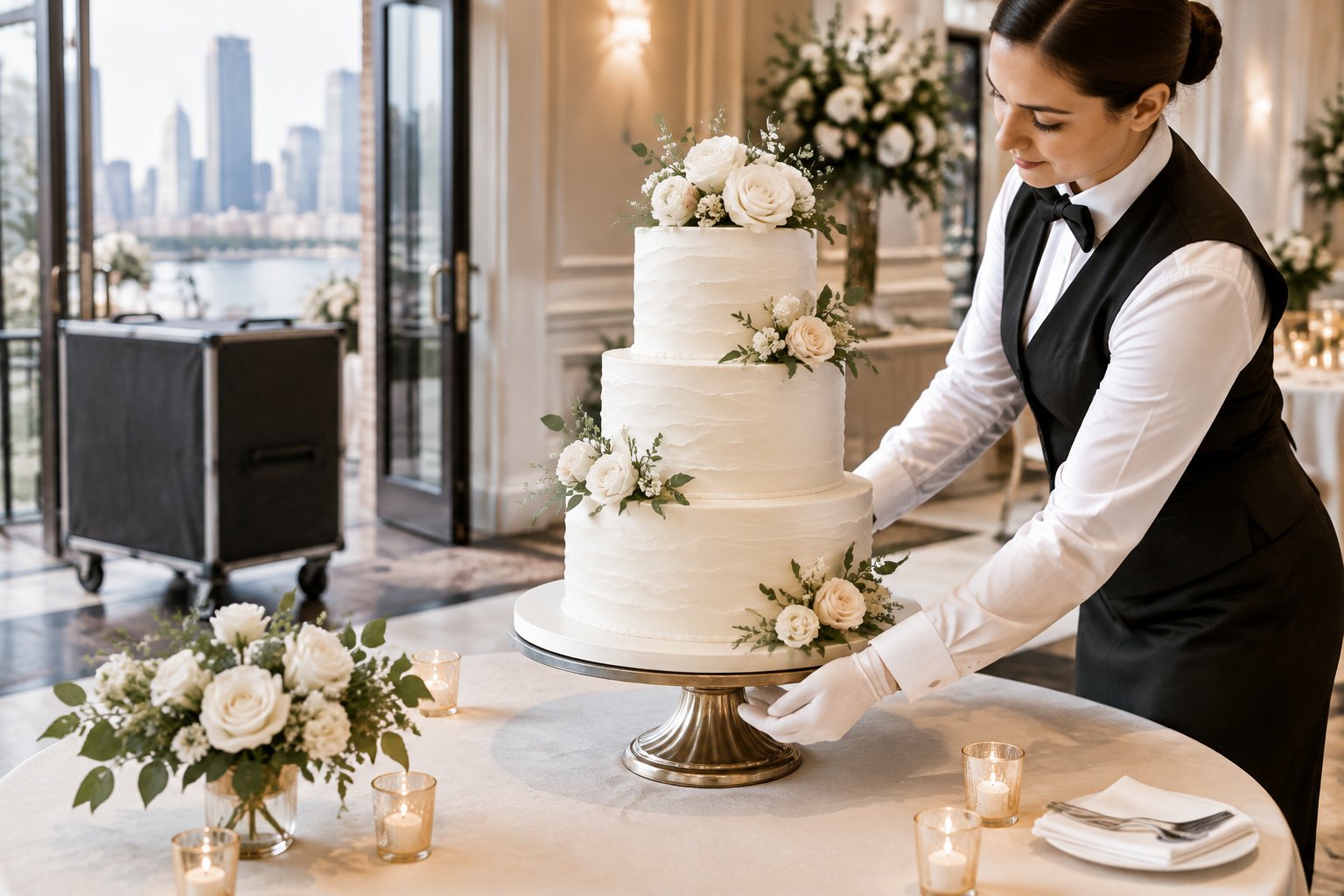
Location also changes ingredient costs, commercial rent, staffing rates, and demand. Compare complete delivered totals from bakeries serving the same venue area.
Local Bakery vs. Premium Cake Designer
A local bakery may offer set designs, standard flavors, and clear per-serving rates. This format suits you when you want a classic cake and a predictable ordering process.
A premium cake designer may offer a custom sketch, tasting appointment, unusual flavor pairings, hand-painted work, and complex installation. The higher fee reflects design time and specialized labor.
| Cost factor | Local bakery | Premium cake designer |
|---|---|---|
| Design process | Set menu or limited custom work | Custom consultation and sketch |
| Flavor choices | Standard menu | Wider specialty menu |
| Decoration | Piping and simple finishes | Handcrafted details |
| Delivery range | Local area | May serve a wider area |
| Price level | Low to mid-range | Mid-range to high-end |
Wedding Cake Delivery and On-Site Setup
Wedding cake delivery often costs $50 to $150 for a nearby venue, with longer routes and difficult access adding more. A baker may transport the tiers separately and stack them at the venue to protect the cake.
Setup fees cover tasks such as placing dowels, arranging flowers, adding the cake topper, leveling tiers, and cleaning the display area. Confirm the delivery window with both the bakery and venue coordinator.
Ask who supplies the table, refrigeration, knife, and serving tools. Your baker may handle the cake while the caterer handles cutting and plating.
Cake Stands, Cutting Fees, and Hidden Charges
A cake stand may be included, sold, or rented with a refundable deposit. Confirm the replacement cost before taking a rented stand home.
Potential extra charges include:
- Delivery and mileage
- Venue setup
- Cake stand rental
- Cutting fees from the venue
- Rush orders
- Additional tasting boxes
- Sales tax
- Special storage or refrigeration
- Flowers supplied by an outside florist
Request an itemized quote with the deposit amount, balance due date, cancellation terms, delivery plan, and rental return instructions.
How to Get More Value From Your Cake Budget
You get more value by choosing the details guests notice most and using the kitchen for extra servings. A focused design, clear comparison, and practical serving plan can reduce your wedding cake cost without making the cake feel plain.
A cake tasting helps you judge flavor and texture before you commit. Bring your guest count, reception menu, inspiration images, venue address, and target budget so the baker can build a useful proposal.
Set Priorities Before the Cake Tasting
Choose your top priorities before meeting the baker. You might value flavor, floral decoration, a certain shape, or enough cake for every guest.
Rank your upgrades in order. If handmade sugar flowers are essential, you might choose buttercream and standard fillings. If flavor variety leads your decision, keep the decoration restrained.
Bring a realistic spending limit and ask what design features fit it. Bakers can often suggest a similar visual effect with piped buttercream, edible flowers, or a simpler topper.
Compare Quotes on an Equal Basis
Compare the same information from every bakery:
- Number of servings
- Tier diameters and heights
- Cake and filling flavors
- Frosting type
- Decoration included
- Delivery distance
- Setup and stand fees
- Taxes and venue charges
A $700 quote may cover only pickup, while an $850 quote may include delivery, setup, and a stand. Compare the delivered total and confirm whether the bakery counts the top tier in the serving estimate.
Ways to Create Height Without Paying for More Cake
You can create a tall display with smaller tiers, a decorated separator, or a raised cake stand. Fresh greenery, flowers, ribbon, and a custom topper also add height around the cake table.
A kitchen cake provides extra servings while the visible cake stays at a manageable size. A cupcake tower can fill the display area and give guests easy portions when the reception style feels less formal.
Ask your baker about double-barrel tiers before booking. They create extra height and may add servings, yet they also require careful support and special cutting instructions.
Questions to Ask Before You Book
Use these questions during your consultation:
- How many servings does this exact tier combination provide?
- Does the price include delivery and on-site setup?
- Which flavors and fillings carry an extra charge?
- Are the cake stand and topper included or rented separately?
- What happens if the venue changes the delivery time?
- How will the cake be transported and assembled?
- When is the final guest count and balance due?
- What is the cancellation and postponement policy?
- Who supplies fresh flowers, and are they safe for cake contact?
- Can you provide an itemized written quote?
A complete quote gives you a reliable budget figure and makes it easier to adjust servings or design details before you place the deposit.