
Average Price Per Head for Wedding Catering Explained
Wedding catering in the United States commonly costs about $70 to $150 per guest, with a useful planning average near $80 to $100 per person for food and basic service. Your final average catering cost rises when you add bar service, rentals, service fees, sales tax, premium ingredients, and extra staffing.
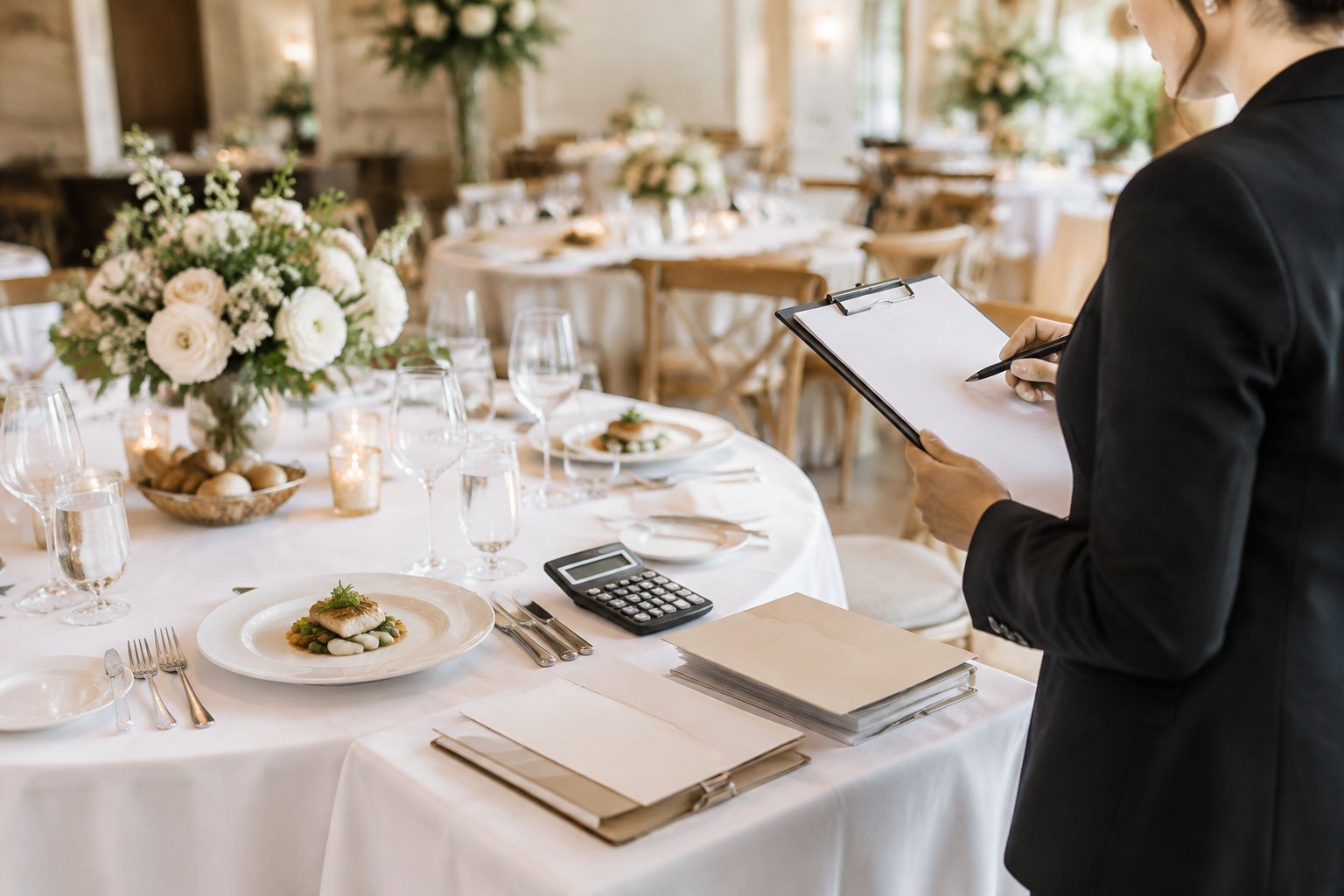
For example, 100 guests at $80 per person creates an $8,000 starting estimate. A full-service reception with appetizers, drinks, linens, rentals, tax, and gratuity may land closer to $11,000 to $15,000. Your location, guest count, menu, and service format shape the final wedding catering cost per person.
Start by requesting itemized wedding catering quotes from local caterers. Compare the same guest count, menu, service hours, and bar plan so you can see the true price clearly and choose a package that fits your celebration.
What Should You Budget Per Guest?
Plan on $70 to $150 per guest for wedding catering, then reserve another 20% to 35% for service fees, tax, rentals, bar service, and gratuity. A casual buffet may fall below that range, while a formal dinner with premium food and full service can exceed it.

Your average wedding cost depends heavily on what the quoted catering per person includes. Ask each caterer to separate food, labor, beverages, rentals, and extra charges before you compare prices.
National Planning Range and Average
A practical national planning point is about $80 to $100 per guest for food and basic service. Budget menus and casual formats may start near $30 to $60 per person, while mid-range wedding catering prices commonly reach $70 to $150.
For 100 guests, the base wedding catering cost might look like this:
- Budget service: $3,000 to $6,000
- Mid-range service: $7,000 to $12,000
- Premium service: $15,000 or more
These figures describe the catering portion of the reception. Your complete event total changes after you add drinks, rentals, taxes, service charges, and vendor meals.
Food-Only vs. Food, Drinks, and Service
Food-only pricing covers the menu and kitchen work. A food, drinks, and service package may include servers, bartenders, setup, cleanup, glassware, linens, and non-alcoholic beverages.
A quote listed at $85 per person could become $110 to $140 per person after a service charge and sales tax. Open bar service can increase the total further, especially when you select premium spirits or extend the service period.
Ask whether the price includes:
- Cocktail hour food
- Dinner service
- Soft drinks, coffee, and tea
- Alcohol and bartenders
- Tables, china, glassware, and flatware
- Setup and breakdown
- Taxes and gratuity
How Location Changes Catering Prices
Location affects labor rates, ingredient costs, delivery time, and rental prices. Major cities such as New York, Los Angeles, San Francisco, and Chicago often price 30% to 50% above national planning figures. Rural markets may offer lower rates, though travel charges and limited vendor choices can change the final quote.
Your venue also affects the price. A site with an equipped kitchen may reduce transport and equipment costs. A remote property that needs a mobile kitchen, extra power, or long-distance delivery can add fees.
What Does the Per-Head Price Include?
A per-head catering price may include food, kitchen labor, servers, setup, and basic service, while rentals, drinks, tax, and gratuity often appear as separate charges. Read the package details before treating the listed rate as your final wedding catering cost.
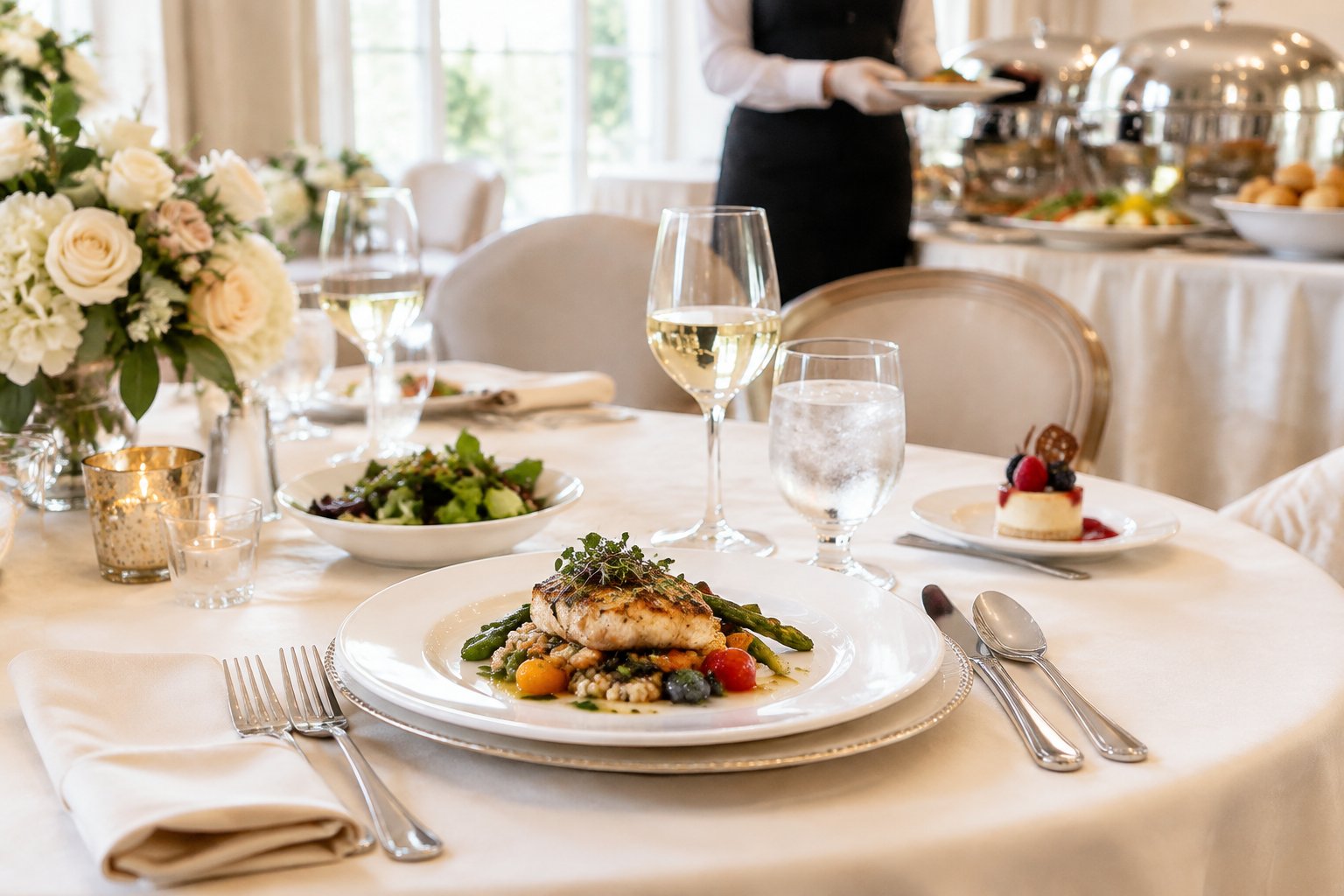
Catering packages differ widely. A professional caterer working from a commercial kitchen may include more equipment and staff than a drop-off company. In-house catering at a hotel or venue may follow a separate fee structure.
Food, Staffing, and Setup
Food usually covers the wedding menu, preparation, cooking, and presentation. Staffing may include chefs, servers, bartenders, captains, and waitstaff.
Service style drives labor needs. Plated dinners require servers to deliver meals to each guest. Buffet service needs staff to replenish food and clear plates. Setup and breakdown may include arranging stations, placing food, cleaning service areas, and removing equipment after the reception.
Ask how many staff members your package includes and how overtime is billed.
Rentals, Linens, and Tableware
Some wedding catering packages include basic plates, flatware, glassware, serving utensils, chafing dishes, and linens. Other wedding caterers rent each item separately.
Your catering quote should identify charges for:
- Guest tables and chairs
- China, flatware, and glassware
- Table linens and napkins
- Serving pieces and warming equipment
- Bars, beverage tubs, and ice
- Specialty rentals
A venue may require specific colors, glassware, or china, so confirm those rules before choosing a package.
Vendor Meals and Dietary Accommodations
Photographers, DJs, planners, videographers, and other vendors who work through dinner may need vendor meals. These meals often cost less than guest meals, yet they still need to appear in the headcount.
Dietary accommodations should also be listed. Vegetarian, vegan, gluten-free, allergy-safe, kosher, and halal meals require planning and sometimes separate ingredients or preparation areas. Give your wedding caterer a final meal count and allergy list by the contract deadline.
How to Read a Catering Quote
A clear catering quote shows the guest count, menu, service hours, staffing, rentals, delivery, taxes, and fees. Look for minimum spending requirements and charges tied to changes in attendance.
Check these details line by line:
- Price per guest and total food charge
- Number of servers and bartenders
- Setup, breakdown, delivery, and cleanup
- Rentals, linens, and tableware
- Vendor meals and special diets
- Service fee, tax, gratuity, and overtime
- Deposit, cancellation, and final-payment rules
Ask for a sample final invoice if the proposal uses broad terms such as “full service” or “package inclusions.”
How Service Style Affects the Final Bill
Buffet catering usually costs less than plated service because it needs fewer servers, while food stations, family-style dining, food trucks, and cocktail receptions price according to their labor and equipment needs. Your choice also shapes guest flow, meal timing, and the formality of the reception.

Choose the format that fits your guest experience and venue layout. A lower menu price can lose its value if the room needs extra attendants, long-distance transport, or specialty equipment.
Buffet Catering and Self-Serve Food Stations
Buffet catering commonly costs about $55 to $100 per person before tax and service fees. Guests choose their portions from one or more serving lines, while staff replenish trays, keep the area clean, and clear tables.
Self-serve food stations may include pasta, salad, carving, or taco bars. Several stations spread guests across the room, yet each station can require its own equipment or attendant. A taco bar may cost less than a staffed carving station with premium meat.
Plated Service and Formal Plated Dinner
A plated dinner commonly costs $80 to $150 or more per person before added charges. Servers deliver each course, manage meal selections, clear plates, and keep the timeline moving.
A formal plated dinner suits black-tie receptions and venues with a structured schedule. The price reflects higher staffing, kitchen coordination, portion control, and the work of serving guests at their tables.
Family-Style Dining
Family-style dining commonly falls near $65 to $115 per person. Servers bring large platters and bowls to each table, and guests pass food among themselves.
This format creates a warm, shared experience with less individual plating. Your tables need enough space for serving dishes, and your caterer must plan enough food to support shared portions.
Cocktail-Style Reception and Food Stations
A cocktail-style reception uses passed hors d’oeuvres, appetizer stations, grazing tables, and small plates in place of a standard dinner. Prices often range from $50 to $95 per person, depending on food volume, menu quality, and staffing.
Interactive food stations such as sushi, carving, pasta, or dessert stations raise labor costs when chefs prepare items to order. Plan enough substantial food for the event length so guests receive a full meal experience.
Food Trucks and Drop-Off Catering
Food truck catering commonly costs $25 to $75 per person, with pricing shaped by the menu, location, minimum charge, and service time. Food trucks work well for outdoor weddings and casual receptions with space for vehicle access.
Drop-off catering can reduce staffing costs when your venue has people who can arrange, serve, and clear the food. Confirm who supplies tables, warming equipment, plates, utensils, and cleanup labor.
How Much Does Catering Cost at Different Guest Counts?
At a planning rate of $80 per person, catering costs about $4,000 for 50 guests, $8,000 for 100, $12,000 for 150, and $16,000 for 200 before fees and extras. Use your confirmed RSVP count for a closer estimate, then add service charges, tax, rentals, drinks, and vendor meals.
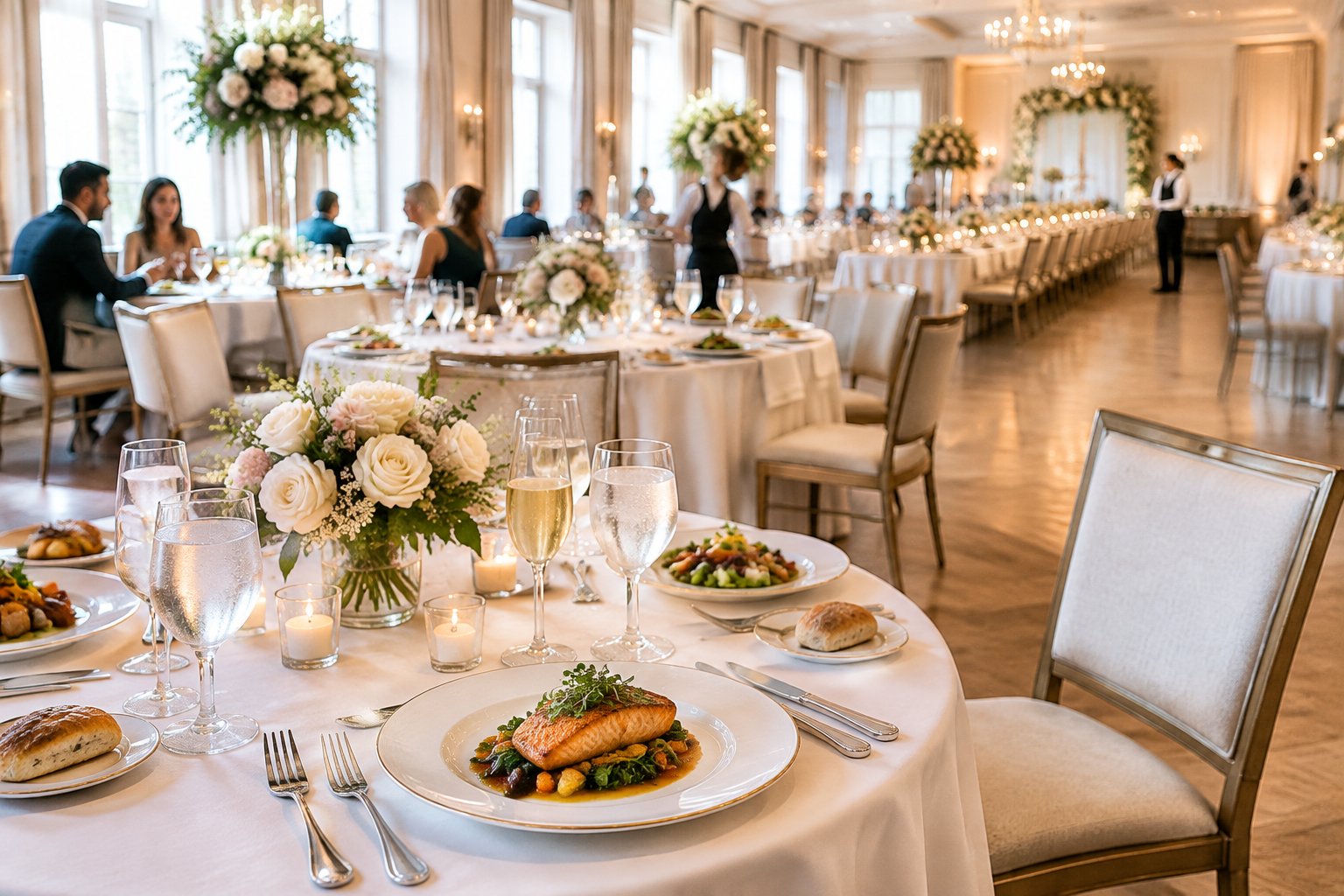
The per-person formula is:
Guest count × catering cost per person = base catering estimate
A guest list calculator helps you compare different attendance levels before you request final proposals.
Estimated Cost for 50 Guests
At $70 to $150 per person, 50 guests create a base estimate of $3,500 to $7,500. A small wedding may carry higher per-person charges when the caterer applies a minimum order or needs a full kitchen crew for a smaller group.
A casual buffet, taco bar, or drop-off meal can keep the starting price lower. Add separate amounts for delivery, rentals, staffing, bar service, and tax.
Estimated Cost for 100 Guests
For 100 guests, the same range creates a base estimate of $7,000 to $15,000. At the $80 planning point, your food and basic service estimate is $8,000.
A 100-person reception may need more servers, longer setup, and extra serving equipment than a smaller event. Ask whether the quote includes cocktail hour food and whether the caterer requires a minimum guest count.
Wedding Catering Cost for 150 Guests
The wedding catering cost for 150 guests may range from $10,500 to $22,500 before added fees. At $80 per person, the base estimate is $12,000.
Your final amount rises with plated service, premium proteins, open bar service, specialty rentals, and additional staffing. Vendor meals also add to the headcount if your photographer, planner, DJ, or other vendors eat onsite.
Catering for 200 Guests Cost
Catering for 200 guests costs about $14,000 to $30,000 at the $70 to $150 planning range. At $80 per person, the base estimate reaches $16,000.
Large receptions benefit from efficient buffet layouts and multiple serving lines. Plated service may need a larger service team, while food stations require careful placement so guests do not crowd one area.
Which Menu and Bar Choices Raise the Price?
Premium proteins, labor-intensive appetizers, specialty desserts, and full bar service produce some of the largest menu-related increases in your catering bill. You can control the total by choosing where to spend, such as upgrading one featured dish while keeping sides and beverages simple.
Menu design also affects kitchen labor. A short menu with shared ingredients is easier to prepare than a highly customized wedding menu with many separate entrees and dietary versions.
Premium Ingredients and Seasonal Menus
Filet mignon, lobster, caviar, specialty seafood, and top-quality imported products raise food costs. Local and seasonal ingredients can support freshness and value when your caterer has reliable access to them.
Ask whether the price includes a guest choice of entrees. Multiple protein options require more preparation and careful meal tracking. A single well-designed entree with appealing sides often simplifies service.
Cocktail Hour Appetizers and Hors d’Oeuvres
Passed hors d’oeuvres and cocktail hour appetizers add labor because servers circulate throughout the room. The number of pieces per guest also changes the price.
A light appetizer plan costs less than a full spread designed to replace dinner. Ask your caterer how many pieces are included per person and whether stationary displays, such as grazing tables, count as separate stations.
Desserts, Cake, and Sweet Add-Ons
A dessert table, dessert bar, chocolate fountain rental, or late-night snack adds food, equipment, and staffing charges. Your wedding cake may carry a separate cake cutting fee, often charged per guest or slice.
Ask whether the caterer will plate and serve an outside cake. Confirm refrigeration, cutting tools, display rentals, and cleanup before you book the cake.
Open Bar, Limited Bar, and Cash Bar
An open bar provides drinks without charging guests at the point of service. A full bar includes liquor, wine, beer, mixers, and bartenders, while a limited bar may offer beer and wine or a short cocktail list.
A cash bar shifts drink costs to guests, though your venue may still charge for bartenders, setup, glassware, and ice. Other pricing models include:
- Signature cocktails: A focused menu built around one or two drinks
- Premium full bar: Top-shelf liquors and expanded selections
- Soft bar: Non-alcoholic beverages, coffee, tea, and mixers
- Single-drink bar: Beer, wine, or one selected spirit
- Consumption bar: Charges based on drinks served
- BYO alcohol: You provide the alcohol and pay any corkage fee
- Private bartender: Staffed service with a separate labor charge
When you bring your own alcohol, confirm liquor liability insurance requirements, storage rules, mixers, ice, and bartender fees.
How to Avoid Surprise Charges and Save Strategically
Request an itemized, all-in catering estimate before signing, including service fees, sales tax, gratuity, rentals, staffing, bar costs, and overtime. A lower menu price does not help if important services appear as separate charges later.
Use the same guest count, menu, service style, and reception hours when comparing catering packages. That approach shows which quote offers better value.
Service Fees, Sales Tax, and Gratuity
Service charges commonly add about 18% to 25% to food and beverage costs. The service fee may cover administration and staffing, while gratuity may remain separate, so ask how the caterer distributes each charge.
Sales tax depends on your state and may apply to food, rentals, service charges, or beverages. Request the dollar amount in the proposal.
Include a 20% to 35% buffer when your early quote lists only food prices.
Questions to Ask Before Signing
Ask your wedding caterer:
- What does the per-person price include?
- Which servers, bartenders, and kitchen staff are included?
- Are setup and breakdown included?
- Are delivery, travel, equipment, linens, and tableware separate?
- How are vendor meals and dietary accommodations priced?
- Does the service fee include gratuity?
- What tax rate applies?
- When does overtime begin?
- Is there a food or beverage minimum?
- How do guest-count changes affect the final bill?
Get each answer in writing and attach the itemized proposal to your contract.
Ways to Lower Costs Without Underserving Guests
Choose a buffet, family-style meal, or focused food station plan when it fits your reception. Limit entree choices, use seasonal ingredients, and offer one signature cocktail with beer and wine.
You can also:
- Serve a filling lunch reception
- Replace expensive passed appetizers with one grazing table
- Select chicken, pasta, or seasonal vegetables over premium seafood
- Use a smaller dessert display with a cutting cake
- Compare packages that include rentals
- Reduce the number of late-night food additions
Keep portions generous and provide clear options for vegetarian, vegan, and allergy-sensitive guests.
Timing and Venue Decisions That Can Help
Friday, Sunday, and off-season weddings may receive lower rates than peak Saturday evenings. A lunch or brunch reception also uses less expensive menu items and may need fewer bar hours.
In-house catering can reduce transportation and equipment charges when the venue has a commercial kitchen. If you choose an outside caterer, confirm loading access, power, refrigeration, cooking space, and cleanup rules before booking the venue.