
Average Wedding Catering Cost for 100 People: 2026 Guide
For 100 guests, wedding catering usually costs about $7,000 to $10,000 for food, service, and common reception extras, with food-only estimates often landing near $4,000 to $8,000. Your final bill reflects the menu, catering style, location, staffing, rentals, bar package, service charges, and sales tax.
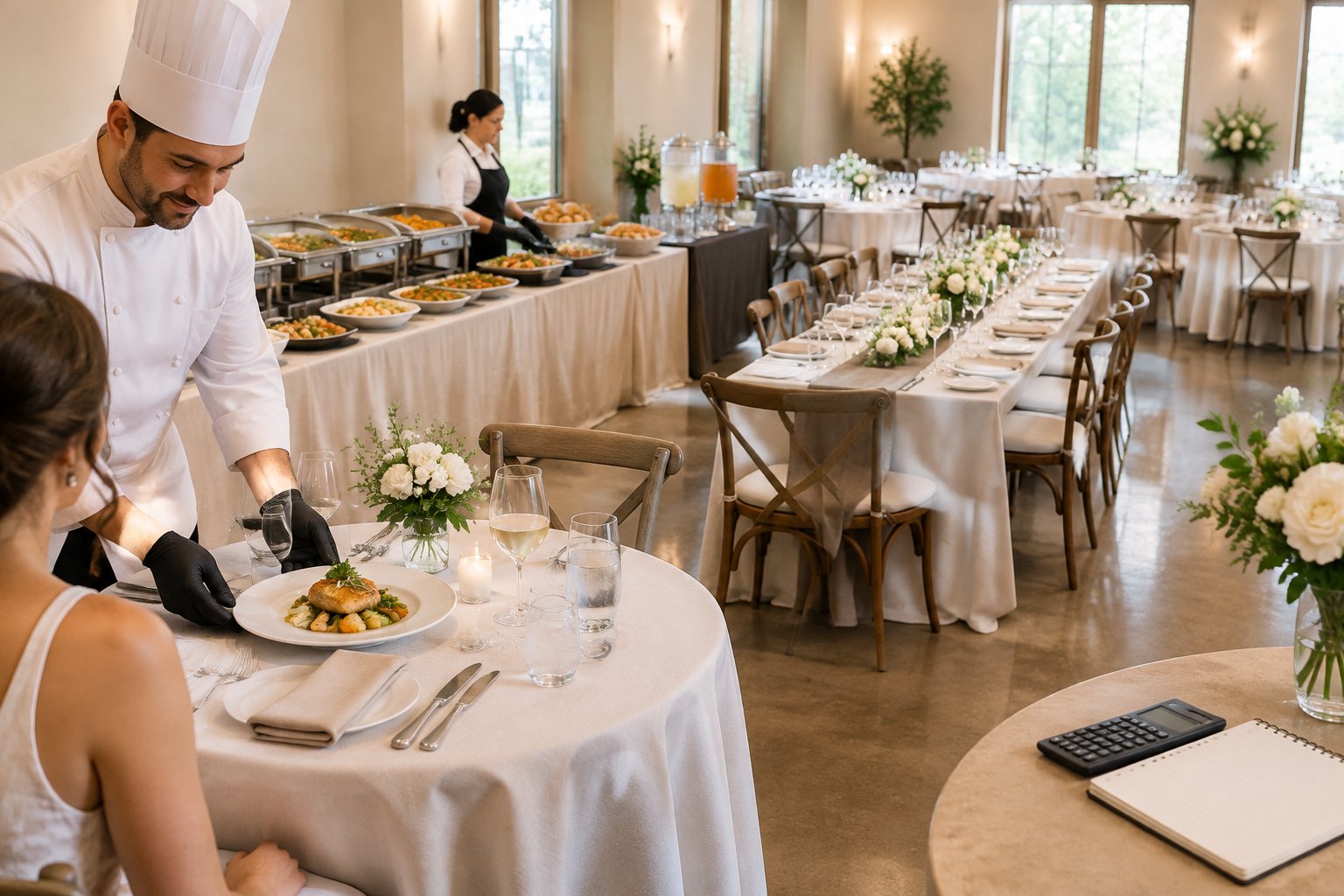
A buffet with beer and wine may fit a modest wedding budget, while plated meals with premium proteins and a full bar can push the price above $15,000. Use the per-person figures below to set a working budget, then request itemized proposals from wedding caterers serving your area.
What Should 100 Guests Cost to Cater?
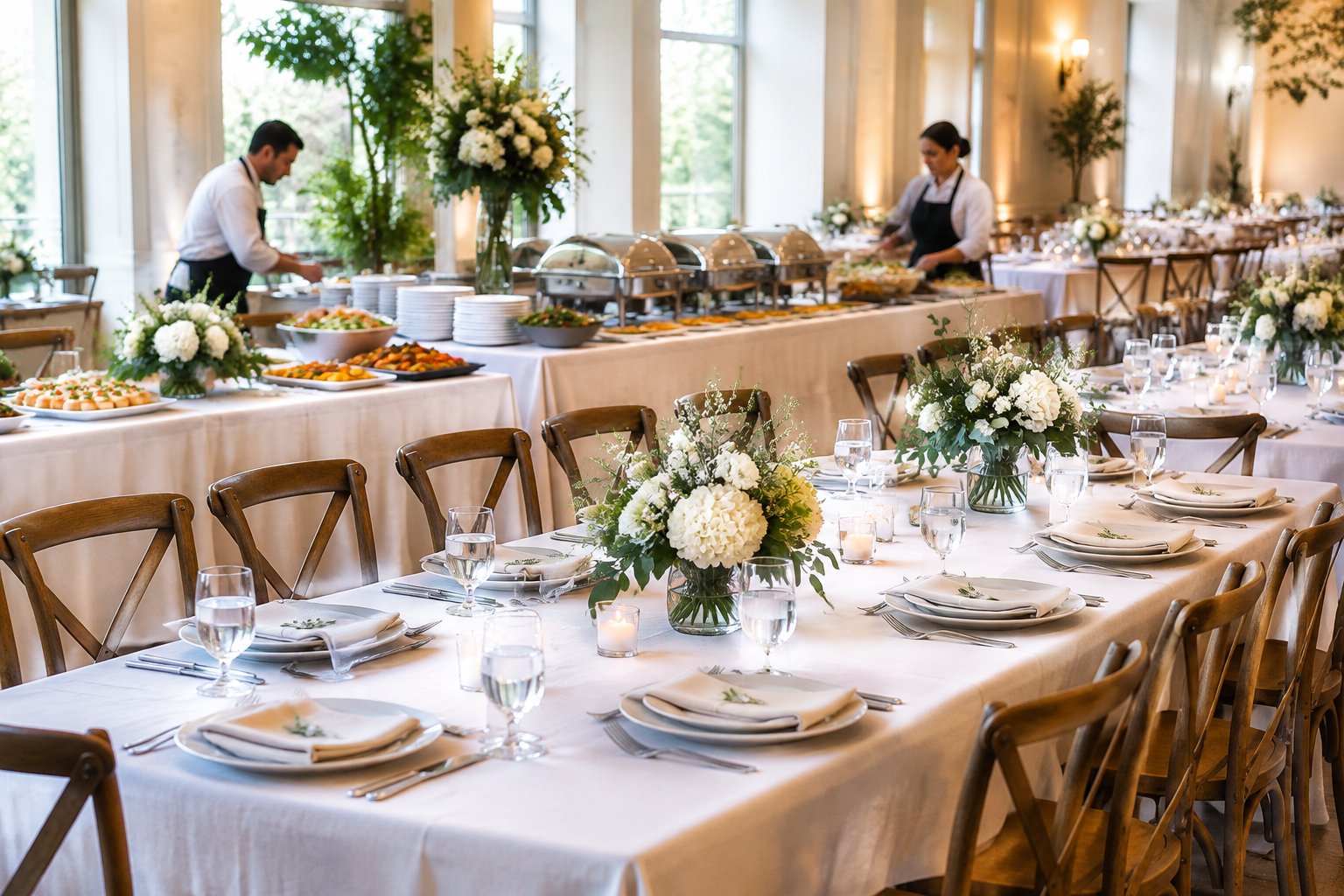
For 100 guests, plan on roughly $40 to $80 per person for food and $70 to $150 per person for a more complete wedding catering package with service and selected beverages. That creates a useful starting range of $4,000 to $15,000 before luxury upgrades and extensive bar service.
Your quote will shift with meal format, guest count, staffing, venue requirements, and local labor rates. A detailed catering budget separates food from service, rentals, drinks, fees, and tax so you know which choices drive the invoice.
Food-Only vs. All-In Reception Estimates
Food-only pricing covers the menu served to your guests. Depending on the menu and service style, catering for 100 people may cost:
- Drop-off or casual catering: $2,500 to $5,000
- Buffet catering: $4,000 to $8,000
- Plated dinner: $5,000 to $10,000
- Premium plated reception: $8,000 to $15,000 or more
An all-in reception estimate adds catering staff, waitstaff, linens, tableware, rentals, bar service, service charges, and sales tax. For many weddings, these additions raise the food-only figure by 20% to 50%.
You can compare your first estimates with a buffet cost for 100 people when a buffet is one of your leading options.
Budget, Mid-Range, and Premium Price Scenarios
A budget catering plan may land near $4,000 to $6,500 for 100 guests. It could include a simple buffet, limited appetizers, disposable or basic tableware, and nonalcoholic drinks.
A mid-range catering plan often falls between $6,500 and $10,000. You might receive a broader menu, staffed buffet or plated service, standard rentals, appetizers, dessert service, and beer or wine.
A premium catering plan can reach $10,000 to $18,000 or more. Premium proteins, chef-attended stations, specialty linens, upgraded rentals, full staffing, and a premium bar package increase the wedding catering cost.
How to Calculate a Per-Guest Starting Point
Start with this basic catering calculator:
Guest count × food price per person = base food estimate
For 100 guests:
- $45 per person = $4,500
- $75 per person = $7,500
- $110 per person = $11,000
Add separate estimates for beverages, rentals, staffing, service charges, and sales tax. Also ask whether children, vendors, and the wedding party receive different rates.
A quote based on 100 invited guests may change when your confirmed headcount arrives.
How Does Catering Style Change the Bill?
Catering style changes the bill through labor, equipment, portion control, guest service, and menu complexity. Buffet catering often keeps labor lower, while plated dinner service requires more coordination and waitstaff.
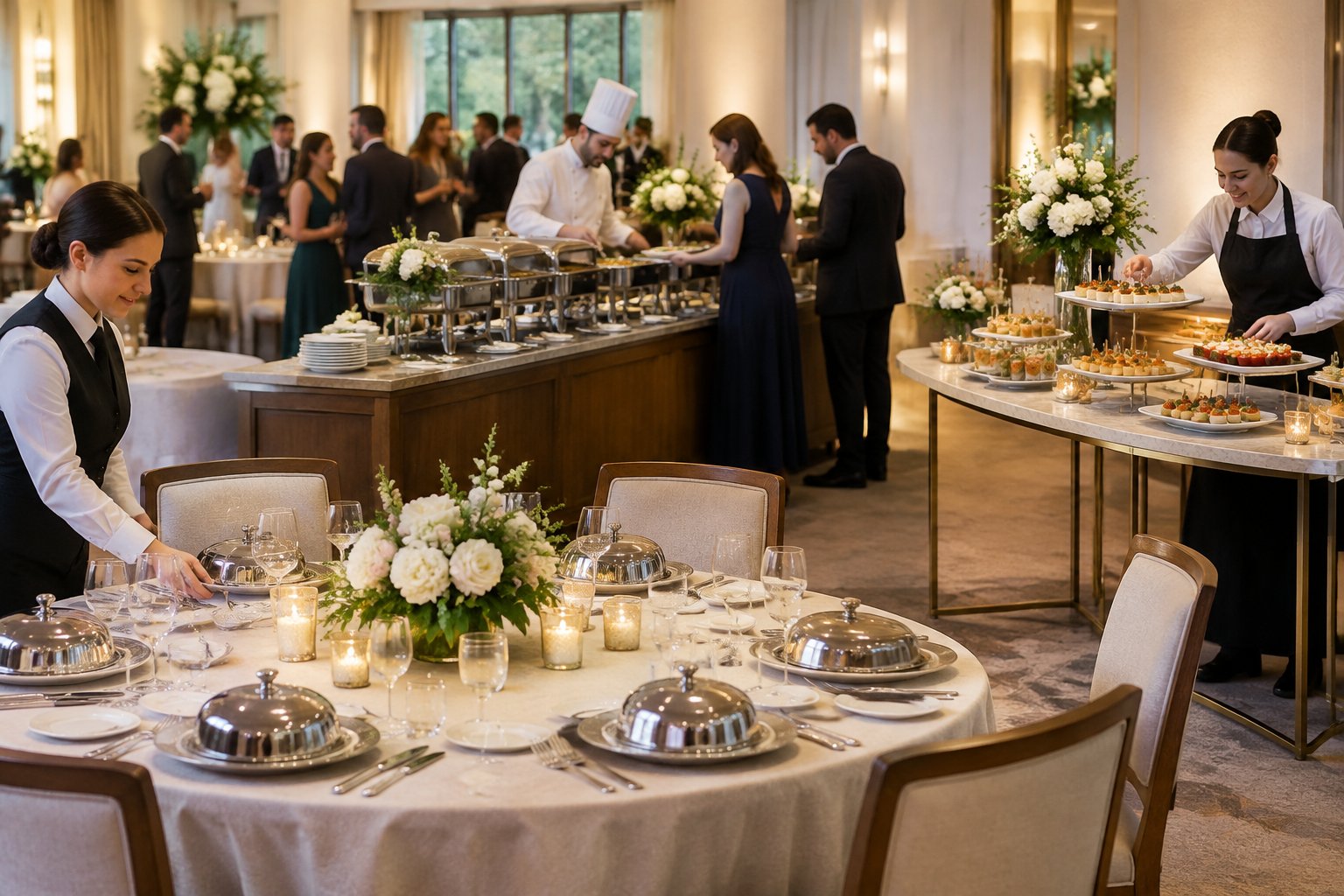
Your reception format also shapes the guest experience. A casual buffet may keep guests moving, while plated meals create a formal schedule with coordinated table service.
Buffet Service and Buffet Catering
Buffet catering for 100 guests commonly costs $4,000 to $8,000 for food and basic service. Guests serve themselves from shared stations, which reduces the number of servers needed at each table.
A staffed buffet adds attendants who replenish food, explain menu choices, and keep the area clean. Ask whether the quote includes chafing dishes, serving utensils, setup, breakdown, and enough food for seconds.
You can reduce the bill by choosing two entrées, seasonal side dishes, and a single salad. Multiple carved meats, chef-attended stations, and late-night refills raise labor and food costs.
Plated Dinner Service and Full-Service Catering
Plated dinner service often begins around $50 per person for a straightforward menu and rises beyond $100 per person for premium selections. Full-service catering includes kitchen work, table setup, servers, clearing, and coordination with the venue.
Each guest may choose from two entrées, or you may offer one main course with a vegetarian alternative. Every additional entrée requires more preparation, meal tracking, and service coordination.
Plated meals suit formal receptions with assigned seating. Build extra time into the reception schedule for courses, clearing, speeches, and transitions.
Food Stations, Family-Style Meals, and Grazing Tables
Food stations create several serving points, such as a pasta station, taco bar, carving table, or dessert display. Prices range widely because each station needs its own ingredients, equipment, décor, and attendant.
Family-style meals place shared platters on each table. They offer a relaxed dining experience and require enough table space, serving pieces, and replenishment.
A grazing table works well for cocktail receptions or an appetizer course. Cheese, fruit, cured meats, breads, and dips create visual appeal, while specialty ingredients and display styling can raise the per-person price.
Cocktail Reception and Drop-Off Catering
A cocktail reception with substantial hors d’oeuvres may cost $30 to $75 per person for food, with staffing and drinks added separately. Plan enough food for the event length, especially when guests will not receive a seated meal.
Drop-off catering can reduce labor costs and suit a backyard or informal venue. You handle setup, serving, replenishment, and cleanup unless those services appear in the contract.
Make the meal plan clear on the invitation. Guests need to know whether they should expect dinner, heavy appetizers, or light refreshments.
What Is Included in a Catering Quote?
A catering quote should list the menu, guest count, staffing, rentals, beverages, fees, tax, and payment schedule as separate line items. A low per-person price becomes less useful when important services appear elsewhere in the proposal.
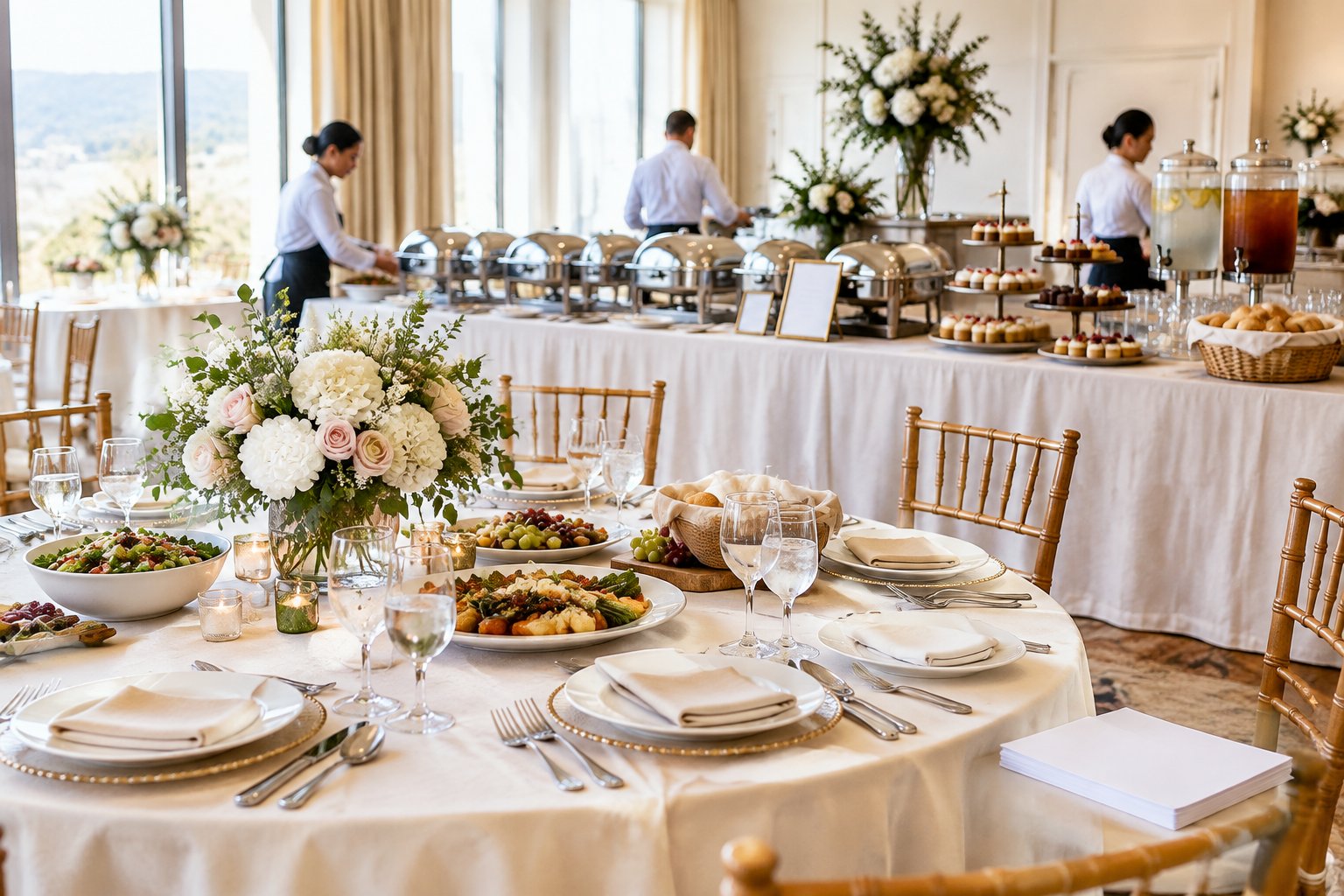
Read each proposal beside the venue contract. Some venues provide tables, chairs, glassware, or a kitchen, while others charge for access and require outside vendors to bring nearly everything.
Catering Staff, Waitstaff, and Buffet Attendants
Staffing may include chefs, kitchen assistants, servers, bartenders, captains, setup workers, and cleanup crews. A staffed buffet needs attendants to monitor food and keep the area presentable.
Ask for the number of servers and bartenders, their arrival time, service hours, overtime rate, and cleanup duties. Confirm whether gratuity is included in the service charge.
Vendor meals also need attention. Photographers, planners, musicians, DJs, and other workers may receive a lower-cost meal, though the caterer may still charge service and tax.
Tableware, Linens, and Specialty Rentals
Quotes may include plates, forks, knives, glasses, serving pieces, tables, chairs, napkins, and standard linens. Specialty linens, chargers, upgraded flatware, glassware, and display pieces cost extra.
Confirm who delivers, sets up, collects, washes, and returns rentals. A venue may charge a separate rental or cleanup fee even when your caterer provides the items.
Request a sample rental list with quantities. One hundred guests may require extra plates for multiple courses, additional glasses for a bar, and spare napkins for spills.
Bar Service, Bartenders, and Beverage Packages
Bar pricing depends on the package and service length. Common options include:
- Beer and wine bar: Beer, wine, sparkling wine, and soft drinks
- Limited bar: A small selection of spirits with mixers
- Full bar: Beer, wine, spirits, mixers, and standard cocktails
- Premium bar: Top-shelf spirits and upgraded wines
- Consumption bar: Charges based on drinks served
Ask whether bartenders, ice, mixers, glassware, water stations, and last-call service are included. A package priced per guest may cover a fixed number of hours, while a consumption bar follows actual use.
Service Charges, Sales Tax, and Common Add-On Fees
Service charges frequently apply to food, drinks, rentals, or the full subtotal. Sales tax depends on your state and local rules. Together, these costs can add thousands of dollars to a 100-person reception.
Review possible add-ons such as:
- Cake cutting fee
- Corkage fee
- Delivery charge
- Setup and breakdown
- Kitchen or venue fee
- Overtime
- Extra bartender
- Specialty rentals
- Vendor meals
- Gratuity
Ask the caterer to show the estimated final total, including every known fee and tax. You can compare that figure with the expected deposit, payment dates, cancellation terms, and guest-count deadline.
Which Choices Raise or Lower Your Catering Price?
Menu complexity, staffing needs, venue restrictions, season, location, and event timing create the largest swings in wedding catering prices. A focused menu and flexible date often reduce the bill while preserving a polished reception.

Small decisions add up across 100 meals. Ask your caterer to price each upgrade separately so you can choose the features guests will notice most.
Menu Complexity, Seasonal Ingredients, and Premium Proteins
Premium proteins such as filet mignon, lobster, lamb, and specialty seafood carry higher food and preparation costs. Imported ingredients and elaborate recipes also require more kitchen labor.
Seasonal ingredients often provide better value because they are easier for local suppliers to source. A menu built around one featured protein, seasonal produce, and familiar sides keeps prep manageable.
Late-night snacks, passed appetizers, dessert displays, and multiple entrée choices add separate food orders. Set a priority list before accepting every enhancement.
Dietary Accommodations and Multiple Entrée Choices
Vegetarian, vegan, gluten-free, kosher, halal, and allergy-aware meals require accurate planning. A small number of clearly labeled alternatives helps the kitchen prepare safely and keeps ordering organized.
Multiple entrée choices raise costs through extra ingredients, cooking steps, labels, and service coordination. A strong vegetarian entrée for everyone may cost less than offering several individual substitutions.
Share dietary details with the caterer before the final count. Ask how meals are labeled, stored, served, and protected from cross-contact.
Venue Rules and In-House Catering
Your wedding venue may require in-house catering or limit the outside wedding caterers you can hire. In-house packages can simplify staffing, kitchen access, rentals, and coordination.
Outside catering may provide more menu freedom, though you might pay for kitchen use, delivery, insurance, equipment, and additional cleanup. Read the venue agreement before signing a caterer.
Ask about preferred-vendor lists, corkage, food truck rules, kitchen access, load-in times, trash removal, and required insurance. Those policies shape the quote before the menu is selected.
Location, Peak Wedding Season, and Event Timing
Large metro areas and high-cost regions often have higher labor and rental prices. Rural locations may have lower menu prices while adding travel, delivery, or lodging fees.
Peak wedding season, Saturday evenings, and holiday weekends create strong demand for caterers. A weekday wedding, Sunday reception, brunch, or lunch may open more affordable options.
Your reception length also affects staffing and bar costs. A six-hour event requires more service time than a four-hour reception, especially when setup and breakdown are billed separately.
How to Keep Catering Within Your Wedding Budget
You can keep catering within your wedding budget by setting an all-in ceiling, selecting a service style early, and comparing proposals line by line. Protect the guest experience with a few high-value choices, then trim upgrades that add labor without improving the meal.
Smart Trade-Offs for a Budget Wedding
A budget wedding benefits from choices that simplify preparation and service:
- Choose a buffet with two entrées and seasonal sides.
- Serve beer, wine, and one signature cocktail.
- Hold the reception during lunch or brunch.
- Use a dessert table or cutting cake with sheet cakes.
- Limit passed appetizers to one short service period.
- Select standard linens and tableware.
- Ask about weekday and off-season pricing.
- Confirm whether the venue allows drop-off catering.
You can find more ideas in this guide to the cheapest way to cater for 100 people. Keep food safety, staffing, and cleanup in the plan when comparing low-cost options.
Where a Mid-Range Wedding Can Add Value
A mid-range wedding can add value through one memorable upgrade, such as a chef-attended station, high-quality entrée, attractive dessert display, or improved bar selection. Choose the feature that fits your reception style and remove smaller upgrades that compete with it.
A staffed buffet gives guests choice while keeping table service costs controlled. A plated meal may be worth the added cost when formal service and a carefully timed reception are central to your plans.
Your menu should also fit the season and venue. A well-prepared regional dish with fresh sides can create a stronger impression than a long menu with several average options.
Comparing Caterer Proposals Without Missing Costs
Place proposals in the same format before choosing a caterer. Compare guest count, food price, staffing, bar hours, rentals, delivery, setup, cleanup, service charge, tax, gratuity, deposit, and overtime.
Ask these questions:
- Is the price based on 100 invited guests or 100 confirmed guests?
- Which services are included in the per-person rate?
- Are vendor meals included?
- Does the quote include cake cutting?
- Who supplies plates, glasses, linens, and serving equipment?
- What happens if the guest count changes?
- When does the final payment become due?
- What costs apply if the event runs late?
An itemized proposal makes affordable catering easier to identify because you can see whether the savings come from the menu, labor, rentals, or omitted services.
Coordinating Catering With Other Major Wedding Expenses
Catering competes with the venue, wedding photographer, entertainment, attire, flowers, rentals, and transportation for the same wedding budget. Set a total spending limit before choosing premium food and bar features.
If photography is a priority, review your wedding photographer cost alongside the catering proposal. A smaller menu upgrade may leave room for longer coverage or a second photographer.
Track deposits and due dates in one budget sheet. Record the base price, estimated tax, service charge, guest-count changes, and remaining balance so the final invoice stays close to your planned amount.