
Average Wedding Catering Cost for 100 Guests
For 100 wedding guests in the United States, plan on about $7,000 to $15,000 for food, service, tax, and gratuity, with premium menus and major-city venues reaching $20,000 or more. Food-only pricing often falls near $70 to $150 per guest, while the service style, bar, rentals, location, and menu complexity shape your final bill.
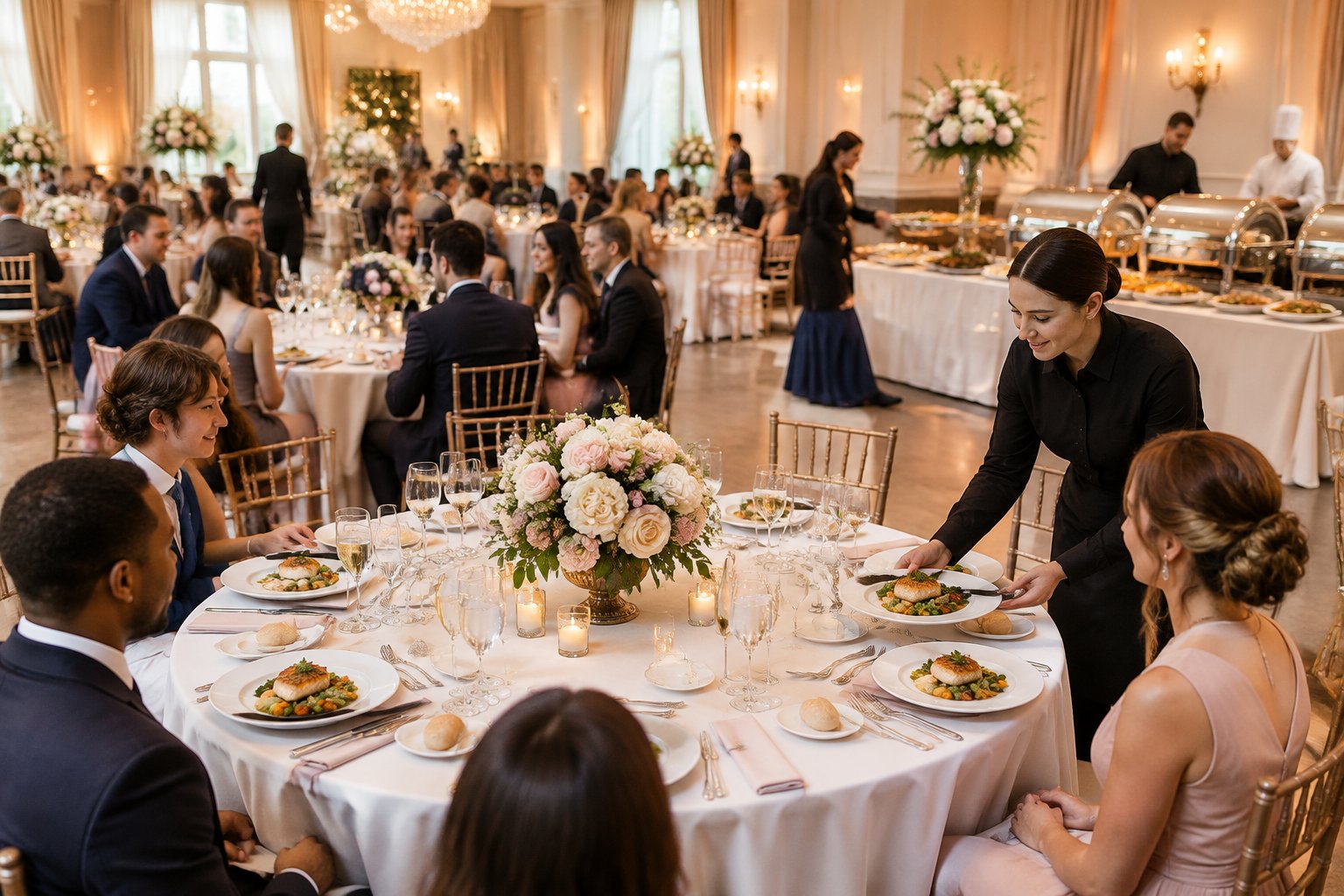
A buffet with beer and wine can keep your wedding catering budget near the lower end. A plated dinner with cocktails, upgraded rentals, and full staffing moves the price toward the upper end.
Your guest count gives you a starting point, while your menu and contract determine the invoice. Request two or three itemized quotes before you book. Comparing each fee side by side helps you choose a package that suits your celebration and protects your budget.
What Should 100 Wedding Guests Cost to Cater?
Catering 100 wedding guests costs about $7,000 to $15,000 in many U.S. markets after food, service charges, tax, and gratuity are included. A lower-cost menu may come in near $5,000, while luxury catering in a large city can pass $20,000.
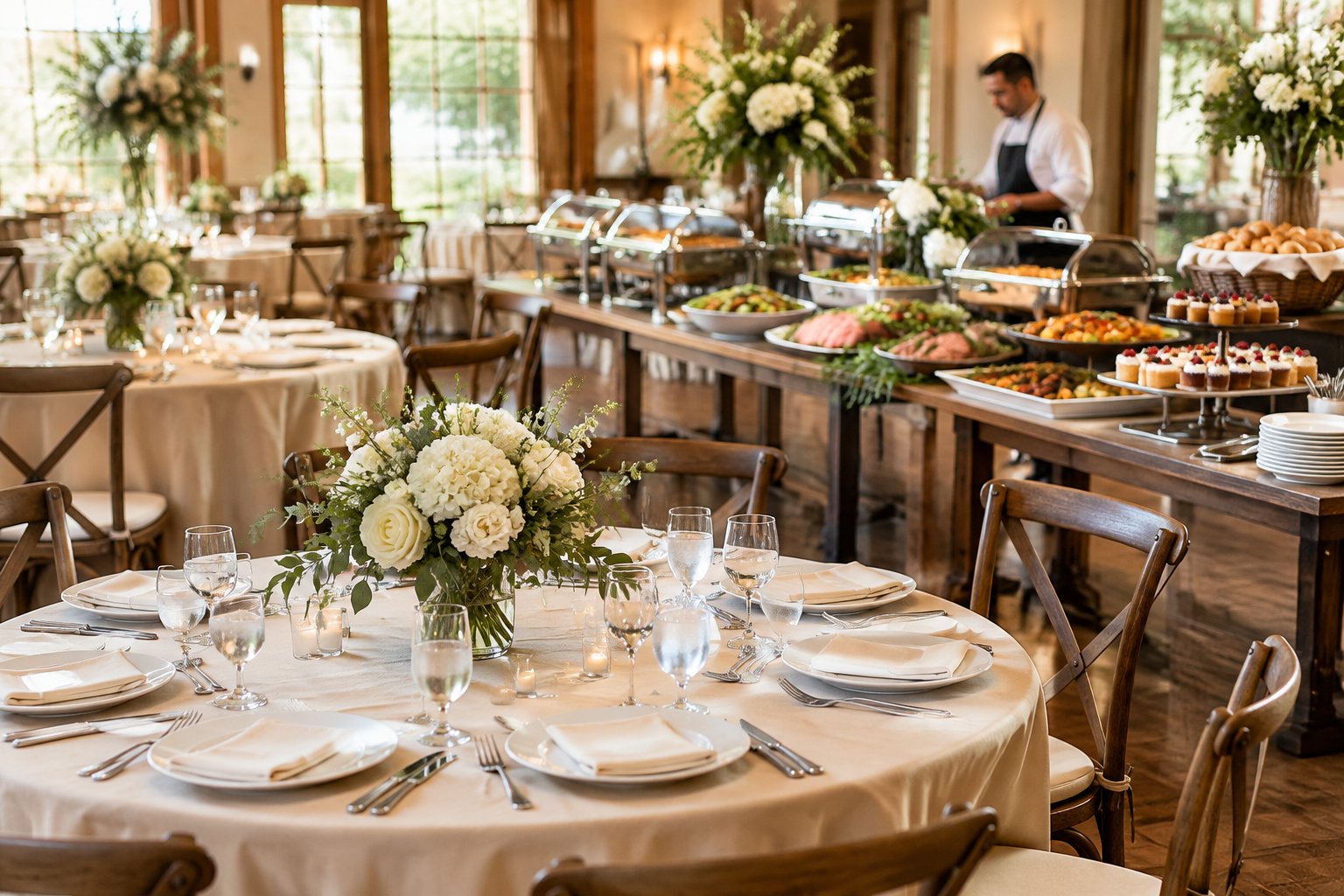
Your catering cost for 100 guests reflects more than the entrée price. Location, reception timing, meal format, staffing, rentals, alcohol, and dietary requests all affect wedding catering prices.
Saturday evening events and major metro areas often sit at the high end. Brunch, lunch, Friday, and Sunday receptions offer more room for affordable catering.
A Realistic National Planning Range
Use these figures for an early wedding food cost estimate:
- Affordable catering: $50 to $75 per guest for a simple buffet, barbecue, pasta menu, or drop-off meal
- Mid-range catering: $75 to $125 per guest for appetizers, a full meal, staffed service, and standard rentals
- Premium catering: $125 to $250 or more per guest for upgraded proteins, elaborate courses, chef-attended stations, luxury service, and specialty beverages
For 100 guests, that equals $5,000 to $25,000 before you account for every possible add-on. A practical working budget for many couples is $7,000 to $15,000 for food and service, with bar costs placed in a separate line until you know what your package includes.
Three Sample Budgets: Affordable, Mid-Range, and Premium
| Budget level | Food and service | Common inclusions | Estimated total after 25% fees |
|---|---|---|---|
| Affordable | $5,000 to $7,500 | Buffet, basic proteins, limited appetizers | $6,250 to $9,375 |
| Mid-range | $7,500 to $12,500 | Full meal, cocktail-hour food, servers, standard tableware | $9,375 to $15,625 |
| Premium | $12,500 to $25,000+ | Plated courses, premium proteins, stations, luxury staffing | $15,625 to $31,250+ |
These examples exclude or limit alcohol because bar packages vary widely. Ask whether your caterer prices food, labor, rentals, tax, and gratuity separately.
How to Calculate the Full Catering Invoice
Calculate the full invoice by multiplying the per-guest food price by the guaranteed guest count, then adding service charges, tax, gratuity, rentals, vendor meals, and a contingency. A $100 per-person quote for 100 guests starts at $10,000, yet the final bill can reach $12,500 or more after added fees.

Your catering calculator should use the number of people who receive food, including eligible vendors. Run separate estimates for buffet, plated, and family-style service so you see how labor changes the total.
Start With the Per-Guest Food and Drink Price
Begin with the quoted price for the meal. Check whether it includes cocktail-hour appetizers, salad, entrée choices, sides, dessert, coffee, tea, and nonalcoholic drinks.
For example:
- Meal: 100 guests × $85 = $8,500
- Cocktail-hour appetizers: 100 guests × $15 = $1,500
- Base food total: $10,000
Some caterers bundle appetizers into the meal price. Others list them as a separate line, so read the menu carefully before comparing quotes.
Add Service Charges, Tax, Gratuity, and a Contingency
Service charges often fall near 18% to 22%, while sales tax varies by state and may apply to food, rentals, and service. Gratuity can be included in the service charge or listed separately.
A sample calculation looks like this:
- Base food and appetizer total: $10,000
- Service charge at 20%: $2,000
- Estimated tax at 8%: $960
- Contingency for small changes: $500 to $1,000
- Planning total: about $13,460 to $13,960
Confirm whether the service charge goes to the staff. Add a separate tip line when the contract does not treat it as gratuity.
Count Vendor Meals and Minimum Guest Guarantees
Photographers, DJs, planners, coordinators, musicians, and venue staff may need vendor meals. Caterers often price these meals at $25 to $50 each, which adds $150 to $300 for six vendors.
Review the guaranteed minimum in your catering quotes. If your contract requires payment for 100 guests, a lower final RSVP count might not reduce the food charge.
Ask when the guest count becomes final, how children are priced, and whether vendor meals count toward the minimum.
Which Service Style Fits Your Budget?
Buffet and family-style service offer the strongest value for many couples, while plated dinners deliver the most formal experience at a higher labor cost. Drop-off catering costs less when your venue permits it, and food stations sit between buffet and plated service in both price and staffing.

Your choice affects guest flow, table setup, kitchen needs, staffing, and the amount of menu variety you can offer. Ask each wedding caterer how many servers, cooks, bartenders, and setup staff are included.
Drop-Off Catering and Casual Food Options
Drop-off catering can cost about $15 to $45 per guest for dishes such as barbecue, pizza, tacos, sandwiches, salads, or pasta. The catering company delivers prepared food, while your venue team or hired helpers manage setup, serving, and cleanup.
This option suits a casual reception with a helpful venue team and a simple menu. Confirm delivery timing, hot-holding equipment, food safety procedures, serving supplies, cleanup responsibilities, and whether the caterer carries event insurance.
Food trucks create a relaxed guest experience and may charge a minimum spend or service fee. They need enough space, power, parking access, and a plan for lines.
Buffet, Family-Style, and Food Stations
Buffet service often costs about $50 to $90 per guest for wedding menus, with lower rates possible for basic food. Fewer servers are needed because guests serve themselves, while kitchen staff replenish dishes and keep the display safe.
Family-style service places shared platters at each table. It feels warm and communal, though it requires enough food for sharing and additional table space.
Food stations can include pasta, carving, salad, or dessert displays, with prices near $30 to $55 per guest before fees. Plan the room layout carefully. Two buffet lines or several stations reduce lines for 100 guests and help guests reach their tables quickly.
Plated Dinners and Staffed Service
Plated dinners commonly cost $80 to $150 per guest before tax, gratuity, and premium upgrades. The price covers precise portions, more kitchen coordination, table service, and a larger front-of-house team.
This format suits a formal reception with assigned seating and a clear meal schedule. Ask about entrée choices, RSVP deadlines, special meals, plate clearing, coffee service, and overtime rates.
How Much Does the Bar Add for 100 Guests?
For 100 guests, plan on about $1,500 to $5,500 for a hosted bar, with premium open-bar packages reaching $10,000 or more in high-cost markets. A beer and wine bar sits near the lower end, while spirits, cocktails, bartenders, glassware, and longer service push the cost higher.

Your bar budget depends on drinking guests, service hours, venue rules, beverage quality, and whether alcohol is bundled with staffing. Ask who supplies the alcohol, ice, mixers, garnishes, glassware, bars, and cleanup.
Beer and Wine Bar Costs
A beer and wine bar often costs $15 to $25 per guest, or about $1,500 to $2,500 for 100 guests before fees. Packages may include domestic beer, a craft option, red and white wine, sparkling wine, soft drinks, water, bartenders, and basic glassware.
This format works well for daytime events, lighter-drinking groups, and couples who want a clear spending limit. Confirm the service window because a five-hour bar costs more than a two-hour cocktail service.
Full Bar and Premium Open Bar Costs
A full bar with well spirits often runs $25 to $35 per guest. A premium open bar with top-shelf liquor, craft beer, upgraded wine, and expanded cocktail service can cost $35 to $55 or more per guest.
For 100 guests, the base range is about $2,500 to $5,500 before tax, service charges, gratuity, specialty glassware, or a physical bar rental. Bartender staffing may require one bartender for every 50 to 75 guests, depending on the menu and venue layout.
When a Signature Drink or Bar Package Makes Sense
A signature drink gives guests a cocktail choice while keeping the spirit list focused. Beer, wine, and one signature drink often land near $25 to $55 per guest through a venue or bar caterer.
Choose a bar package when you want predictable spending and clear staffing. Ask whether the package includes a champagne toast, nonalcoholic drinks, glassware, ice, mixers, garnishes, setup, and cleanup. Confirm your venue’s rules before purchasing alcohol independently.
What Is Included in Wedding Catering Packages?
Wedding catering packages often include the meal, basic staffing, setup, and cleanup, while alcohol, upgraded rentals, specialty desserts, and late-night snacks may cost extra. Package names vary, so compare the actual line items instead of relying on the package title.
Food, Staffing, Setup, and Cleanup
A standard package may include food preparation, cooking, buffet replenishment, servers, chef or kitchen staff, setup, clearing, and breakdown. Plated packages may also include course timing and table service.
Ask how many staff members arrive, when they begin setup, and how long cleanup takes. Confirm whether staff handle trash, leftover food, kitchen cleaning, and packing rented equipment.
Rentals, Linens, and Tableware
Some caterers include plates, flatware, serving pieces, water glasses, coffee cups, napkins, linens, and buffet equipment. Others charge separately for each rental category.
Check whether the package includes chargers, specialty glassware, colored napkins, upgraded china, tables, chairs, and delivery. A quote with a lower food price can become more expensive after rentals are added.
Cocktail Hour, Desserts, and Late-Night Snacks
Cocktail-hour food may include passed hors d’oeuvres, stationary displays, or a grazing table. Desserts may include plated sweets, a dessert table, cookies, or cake service.
Wedding cake cutting fees often cost about $2 to $4 per guest. Late-night snacks such as sliders, fries, pizza, or tacos may add $8 to $20 per guest, depending on the menu and staffing. Confirm whether coffee, tea, cake plating, dessert plates, and cleanup are included.
How to Reduce Costs Without Compromising the Guest Experience
The most effective savings come from a focused menu, seasonal ingredients, a practical service style, and itemized catering quotes. You can lower your wedding catering cost for 100 guests while keeping generous portions, attractive presentation, and safe food handling.
Choose Seasonal Ingredients and Value-Friendly Proteins
Seasonal ingredients cost less when local supply is strong and often taste better at peak freshness. Ask your caterer which produce is available during your wedding month.
Chicken, pork, pasta, grains, vegetables, and braised dishes stretch the budget while giving your menu plenty of flavor. Add one premium feature, such as a carving station or seafood appetizer, and build the rest of the meal around affordable ingredients.
Limit Menu Complexity and Premium Upgrades
Every extra entrée, appetizer, sauce, garnish, and dietary variation increases prep time, staffing, and waste. Two entrée choices with shared sides can feel abundant and keep service organized.
Skip upgrades that add cost without improving the guest experience. Examples include elaborate place settings, several passed appetizer rounds, imported proteins, and a full cocktail list when one signature drink fits your reception.
Compare Itemized Quotes and Confirm Food Safety
Request itemized catering quotes that show food, labor, rentals, delivery, tax, service charges, gratuity, bar costs, and overtime. Compare the same guest count and service hours so each proposal uses equal terms.
Ask how the caterer transports and holds hot and cold food, manages allergens, labels special meals, and prevents cross-contact. Confirm licensing, insurance, venue approval, and cleanup duties before you sign.
A written menu, final guest-count deadline, payment schedule, cancellation policy, and overtime rate will help keep your final invoice close to the amount you planned.