
Average Wedding Catering Cost: Per-Person Prices and Fees
The average wedding catering cost in the U.S. is about $80 per guest, with a practical planning range of roughly $40 to $150 per person before extras such as bar service, taxes, gratuity, and specialty rentals. For 100 guests, that creates a starting food-and-service budget of about $8,000, while a broader national estimate places many wedding catering totals between $5,500 and $8,300.
Your final wedding catering budget depends on guest count, menu quality, service style, location, and the services included in your package. A buffet, food truck, or cocktail reception can reduce the wedding food cost.
A plated dinner, premium ingredients, full bar, and additional staffing will raise it. Set your budget using the complete quote, including fees and beverages, then compare caterers using the same guest count and menu details.
You can also review how much you should budget per person for a wedding as you shape your total wedding budget.
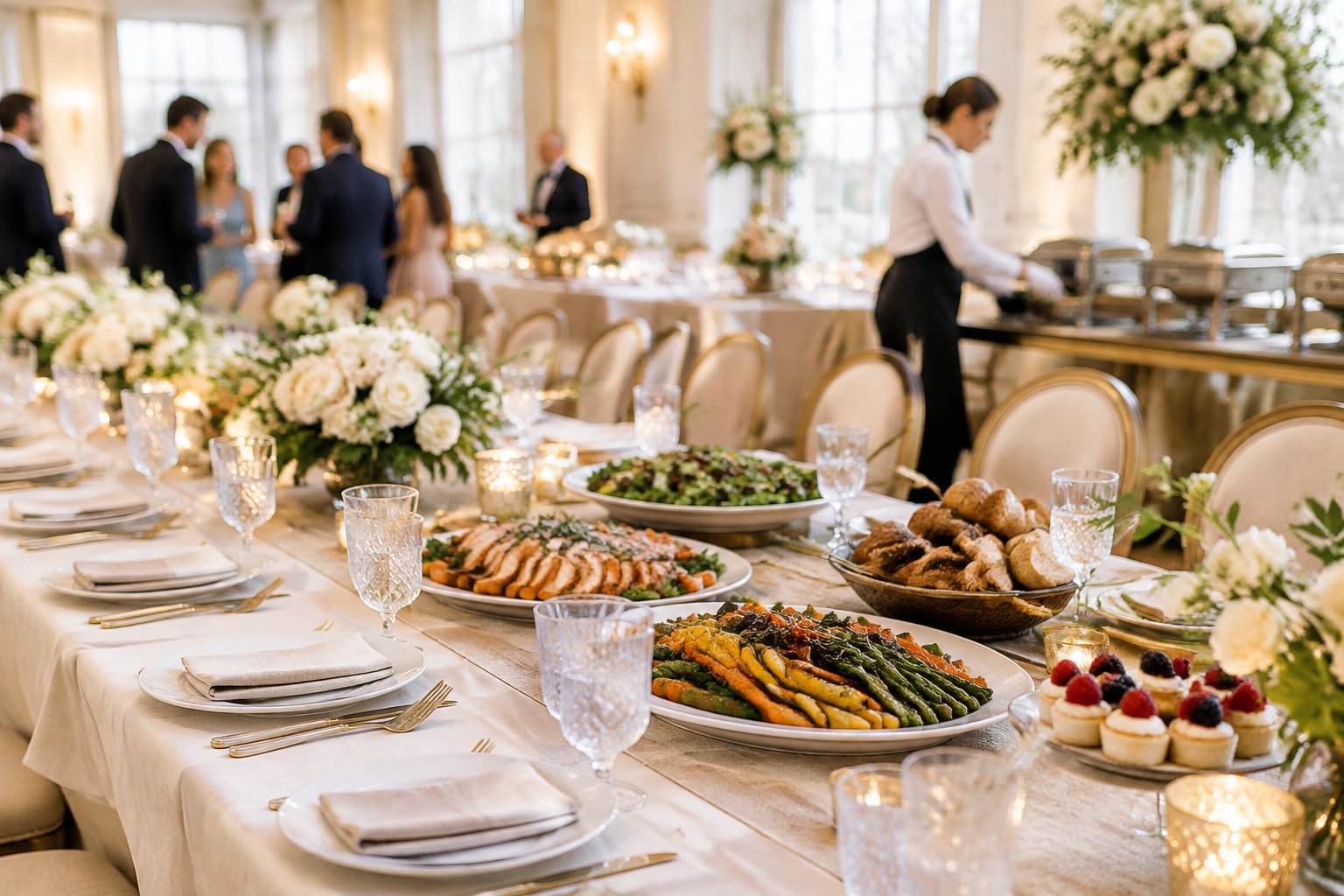
What Should You Expect to Pay Per Guest?
Plan on about $40 to $150 per guest for wedding catering, with $80 per person serving as a useful national planning figure. That range covers casual formats through formal meals, while the wedding catering cost per person rises when you add alcohol, premium dishes, rentals, and extra labor.
Your guest count gives you the first estimate, but your catering quote also reflects the menu, service format, venue, and package terms. Ask whether the price includes food and beverage, cocktail hour appetizers, dinnerware, staffing, setup, and cleanup.
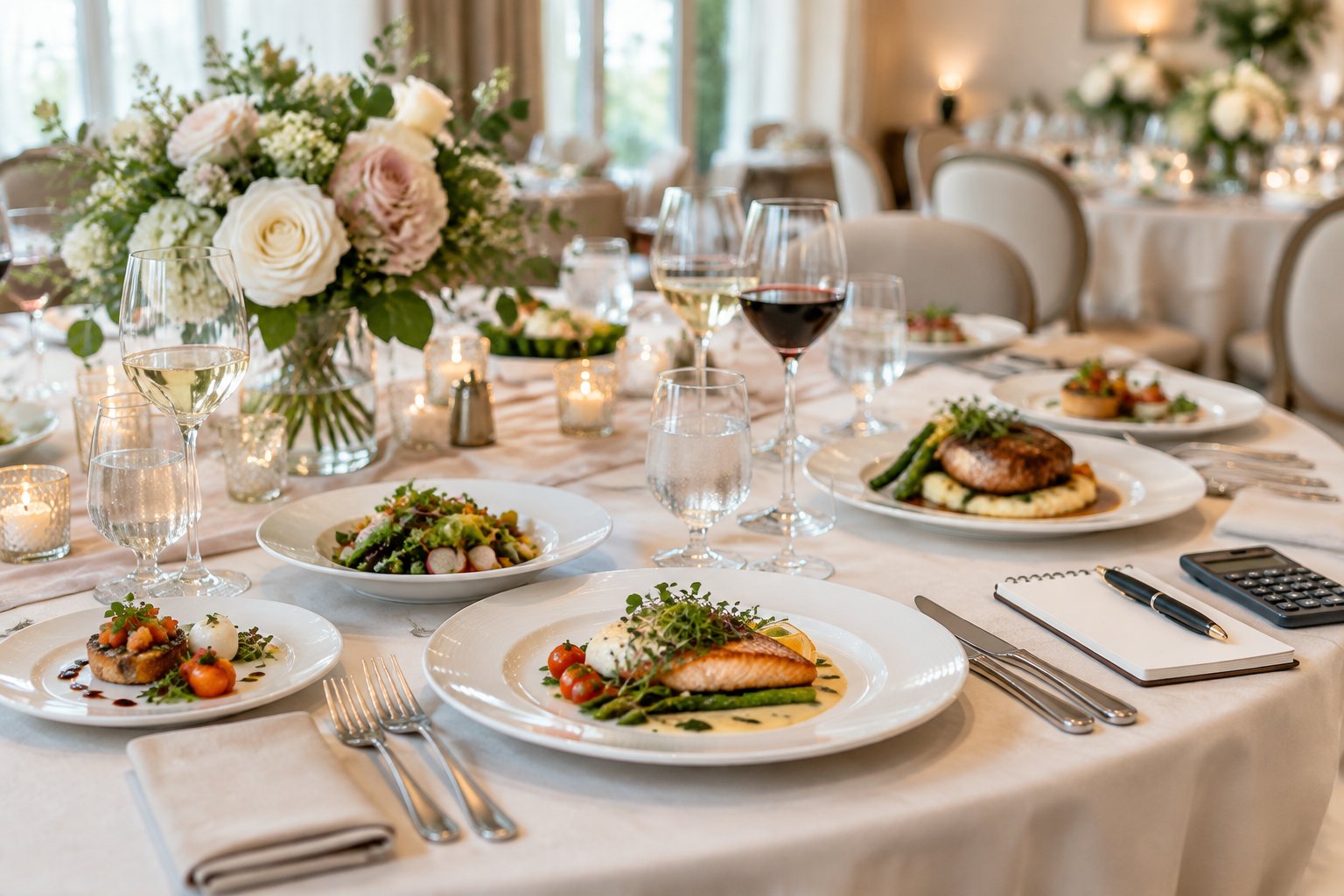
Typical U.S. Price Ranges
Common wedding catering prices fall into these planning ranges:
- Cocktail reception with heavy appetizers: $35 to $55 per person
- Buffet catering: $40 to $65 per person
- Family-style dining: $50 to $70 per person
- Plated dinner catering: $65 to $85 per person
- Food stations: $45 to $75 per person
- Food trucks: $25 to $75 per person, depending on the menu and minimum spend
- Drop-off catering: $15 to $40 per person, with service and rentals priced separately
These figures describe the meal and basic service. Alcohol, service fees, sales tax, gratuity, rentals, and transportation can increase the final invoice by several thousand dollars.
Regional prices also vary. Recent national data places wedding catering prices at about $62 to $123 per person, with lower averages in parts of the Midwest and higher rates in Mid-Atlantic markets.
Destination weddings also bring added travel, staffing, and logistics costs.
Estimated Totals for 50, 100, 150, and 200 Guests
Using the $80 average wedding food cost per person, your starting estimates look like this:
| Guest count | Estimated catering total |
|---|---|
| 50 guests | $4,000 |
| 100 guests | $8,000 |
| 150 guests | $12,000 |
| 200 guests | $16,000 |
These totals provide a simple baseline for meal service. For a more complete estimate, add your bar package, cocktail hour, dessert, rentals, service charge, tax, and gratuity.
At $55 per person, a buffet for 100 guests would start around $5,500. At $95 per person, a formal plated meal for the same guest count would start around $9,500 before those extra charges.
Why Small Weddings Can Cost More Per Person
Small weddings can carry a higher catering cost per person because caterers still need to cover kitchen preparation, transportation, equipment, event management, and staffing. A minimum order of $2,500 to $4,000 can apply even when your guest count is low.
For example, a $3,000 minimum spread across 40 guests equals $75 per person before beverages or fees. Ask intimate-wedding caterers about smaller packages, reduced menus, brunch service, or drop-off options designed for a lower guest count.
How Service Style Changes the Final Bill
Plated dinner service costs the most among common full-meal formats, while buffets, food trucks, and drop-off catering can lower labor and service costs. Your choice also shapes the pace of the reception, guest movement, staffing plan, and amount of equipment required.
A formal meal may suit an elegant reception, while stations or a cocktail-style reception can give guests more freedom to mingle. Match the format to your venue layout and the length of your event.

Plated Dinners and Formal Service
A plated dinner gives each guest a prepared meal at the table. Plated dinner catering commonly costs $65 to $85 per person, with premium menus reaching $100 or more.
The higher price covers kitchen labor, careful timing, individual plating, and a larger service staff. Your caterer may collect entrée selections with the RSVP or offer a limited choice at the reception.
Plated service works well when you want a structured timeline for speeches, toasts, and dancing. Confirm how the caterer handles children’s meals, allergies, vegetarian dishes, and late RSVP changes.
Buffets and Family-Style Meals
Buffet catering commonly runs $40 to $65 per person. Guests choose their portions from a serving line, while the catering team replenishes food and manages the area.
Family-style dining usually costs $50 to $70 per person. Servers bring shared platters to each table, and guests pass the food among themselves.
This format creates a relaxed meal with less individual plating labor than a plated dinner. Your venue needs enough room for buffet lines or large serving dishes.
Ask how the caterer labels dietary accommodations and controls food temperature throughout the meal.
Cocktail Receptions, Stations, and Grazing Tables
A cocktail-style reception with substantial appetizers costs about $35 to $55 per person. Passed appetizers, cocktail hour appetizers, small plates, and stationary displays replace a traditional seated meal.
Food stations and interactive food stations can cost $45 to $75 per person, depending on the number of stations and chef support required. Popular choices include taco bars, carving stations, pasta counters, and dessert stations.
A grazing table adds visual appeal and works well for a reception focused on mingling. Pricing depends on the ingredients, display design, refill needs, and whether the grazing table supplements a full meal.
Add late-night snacks when your reception runs several hours, especially if alcohol and dancing are part of the evening.
Food Trucks and Drop-Off Options
Food trucks can cost $25 to $75 per person, with many vendors also requiring a minimum spend. A casual truck may serve the full meal, while another truck handles late-night snacks or dessert.
Drop-off catering can cost less because it may exclude servers, cooking on-site, table clearing, and formal setup. You will need a plan for food holding, serving equipment, cleanup, and guest flow.
Confirm parking access, power needs, permits, weather plans, and service timing before choosing a food truck. Ask whether the quote includes travel, staff, disposable plates, and minimum guest charges.
What Is Included in a Catering Package?
A wedding catering package often includes food, basic beverages, catering staff, and standard service, while rentals, alcohol, cake service, and special labor may cost extra. Package names vary, so read every line of the proposal before comparing prices.
A low per-person rate may exclude key services that another caterer includes. Request an itemized quote that separates food, beverages, staffing, rentals, fees, and taxes.
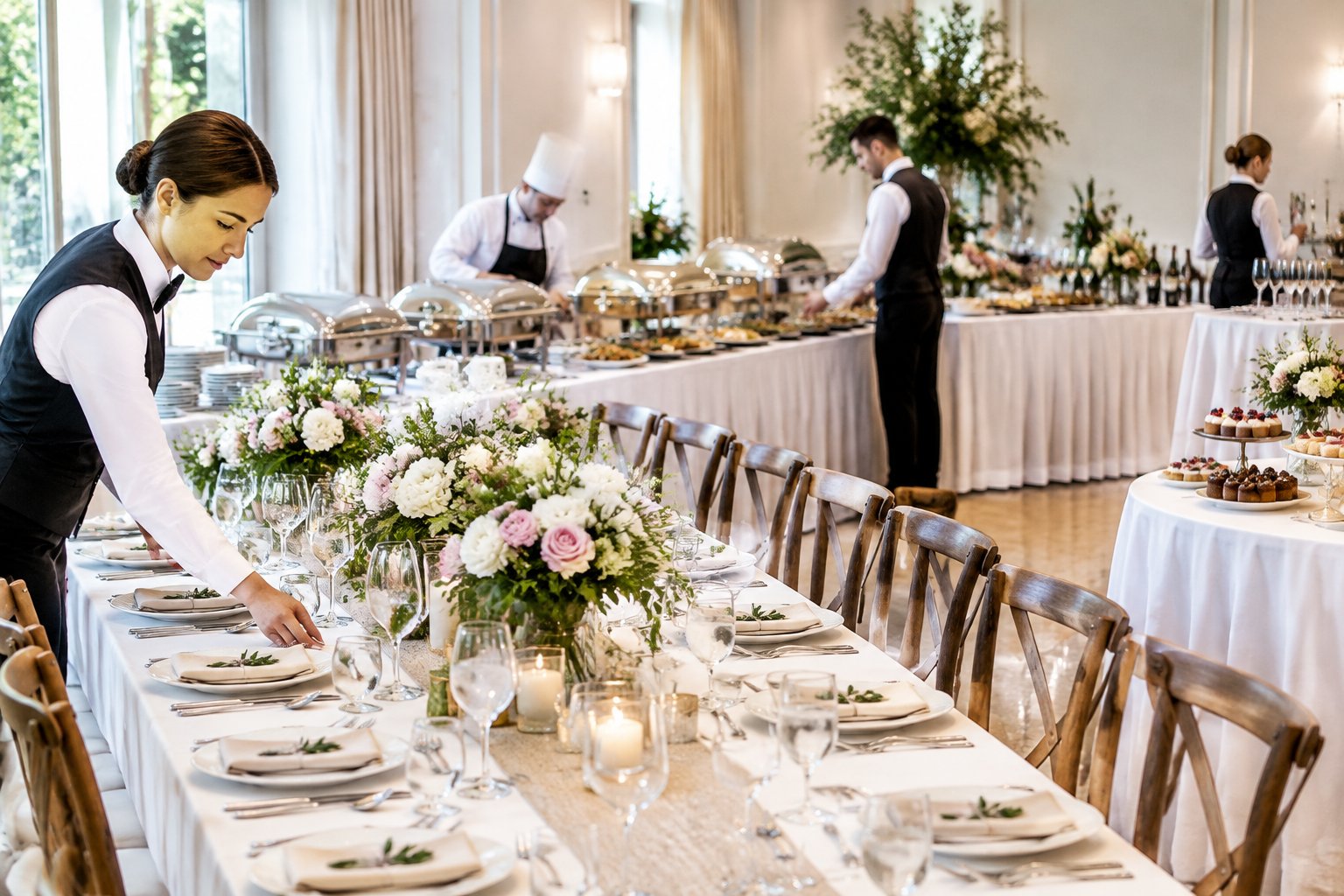
Food, Beverages, and the Wedding Menu
The menu price covers the ingredients and labor for the agreed wedding food. Confirm whether the quote includes cocktail hour appetizers, the main meal, side dishes, bread, dessert, coffee, tea, water, and other non-alcoholic beverages.
Some wedding catering packages include a fixed menu, while others charge more for custom recipes or premium ingredients. Ask about children’s meals, vendor meals, allergen-safe preparation, and meals for guests with dietary restrictions.
Alcohol may appear as a separate package. Clarify whether the quote covers beer, wine, spirits, mixers, ice, glassware, and bartenders.
Staffing, Setup, and Breakdown
Catering staff may include a coordinator, kitchen crew, servers, bartenders, and cleanup workers. The number of servers depends on your service style and guest count.
Ask whether setup and breakdown are included. These tasks may cover arranging serving tables, preparing the bar, placing dinnerware, replenishing food, clearing plates, packing equipment, and removing waste.
Confirm the service hours and overtime rate. A longer reception may require additional staff time even when the menu stays the same.
Dinnerware, Linens, and Rental Items
Some catering packages include basic rentals such as plates, flatware, glassware, serving pieces, and standard linens. Specialty rentals may cost extra for upgraded china, chargers, colored napkins, premium glassware, or formal table settings.
Ask who provides tables, chairs, buffet tables, bars, warming equipment, and trash containers. Your venue may include some items, while an outside caterer may bring others.
A complete rental list helps you avoid paying twice or discovering that essential equipment sits outside the package.
Desserts, Cake Service, and Vendor Meals
Wedding cake may be included in a full package, priced as an add-on, or supplied by an outside bakery. If you provide the cake, ask about the cake-cutting fee. This charge often runs from $1 to $5 per slice.
Cake-cutting fees cover slicing, plating, serving, and cleanup. Some caterers also charge for dessert stations, specialty pastries, ice cream service, or late-night sweets.
Vendor meals cover photographers, DJs, planners, musicians, and other professionals working through dinner. Ask whether vendor meals cost less than guest meals and whether your catering contract requires you to provide them.
Which Factors Raise or Lower Catering Prices?
Menu quality, service labor, venue logistics, season, and bar choices have the strongest effect on your final catering price. You can lower the bill by choosing seasonal dishes, matching the service style to the venue, and setting clear alcohol limits.
A quote should show how each decision changes the per-person rate. Ask for alternate prices when you compare menu choices, bar packages, or reception times.
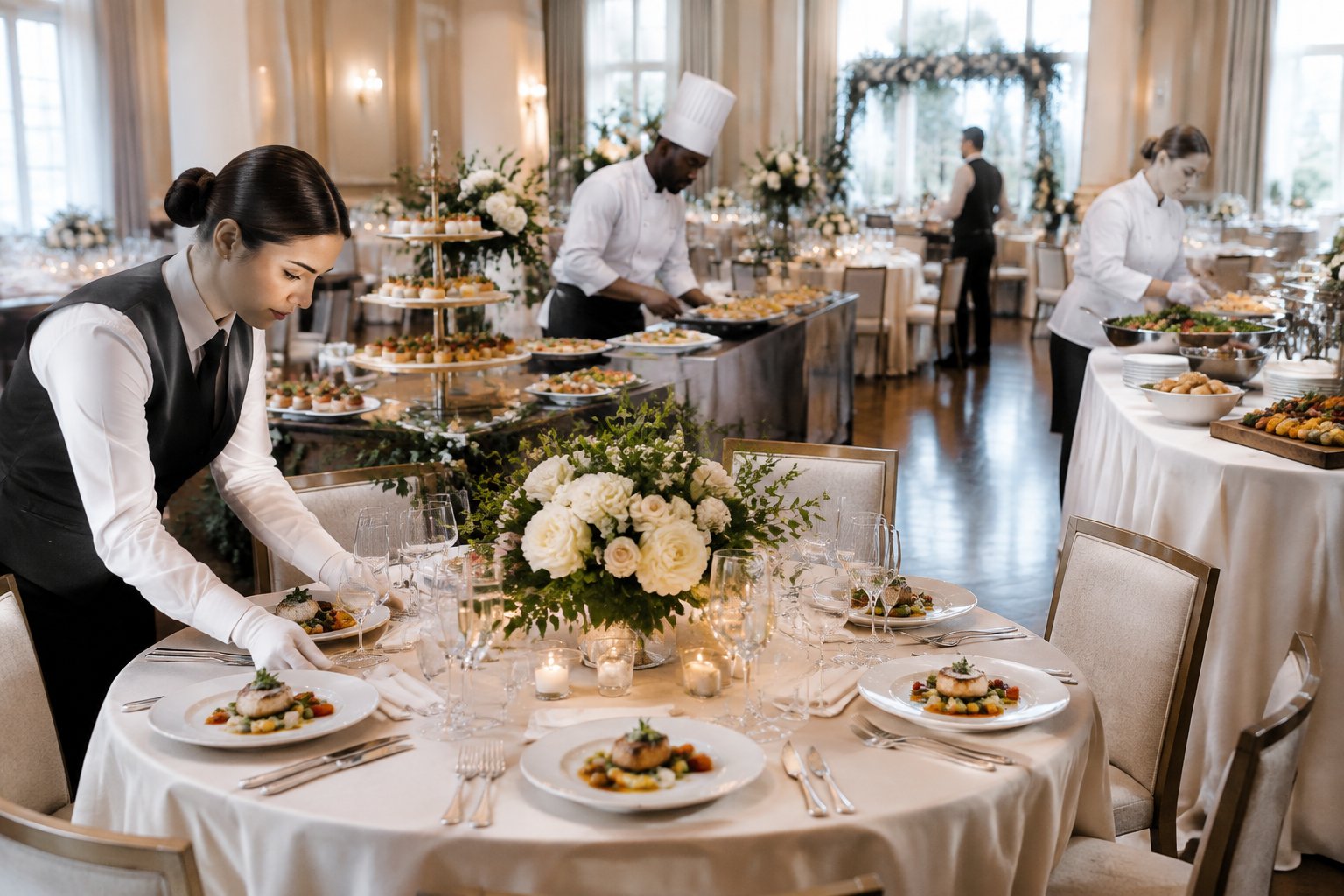
Menu Choices, Ingredients, and Dietary Needs
Food quality and premium ingredients raise the wedding food cost. Filet, lobster, prime rib, raw bars, imported cheese, and complex multi-course menus require more expensive ingredients and labor.
Seasonal ingredients and local ingredients can provide strong flavor at a better price when your menu follows what is available in your area. Ask your caterer to suggest comparable dishes that use in-season produce.
Dietary restrictions also affect planning. Vegan, gluten-free, nut-free, halal, kosher, and other dietary accommodations may require separate ingredients, preparation areas, or individually plated meals.
Share your guest information early so the caterer can price each accommodation accurately.
Location, Venue Rules, and Seasonality
Your location affects labor rates, food costs, delivery distance, and rental pricing. A remote venue may require transportation, extra setup time, portable refrigeration, or an off-site kitchen.
Venue requirements can also change the quote. Some venues require preferred caterers, charge outside-caterer fees, or require liability insurance.
Others have rules for loading, cleanup, alcohol service, waste removal, or kitchen use. Peak wedding season and Saturday evening dates command strong demand.
Friday, Sunday, brunch, and off-season events may qualify for lower rates. Ask for the same menu on two dates so you can see the savings clearly.
Bar Options and Alcohol Policies
Bar service can add $15 to $75 or more per guest, depending on the package and event length.
- Full open bar: Beer, wine, spirits, mixers, and non-alcoholic beverages
- Limited bar: A smaller selection such as beer, wine, and one signature cocktail
- Cash bar: Guests purchase their own drinks
- Signature cocktails: One or two featured drinks that simplify the alcohol menu
Ask whether the caterer provides bartenders, ice, glassware, mixers, liquor, and cleanup. If you provide your own alcohol, check for corkage fees, licensing rules, and liability insurance requirements.
Some venues require licensed bartenders or prohibit outside alcohol. Confirm the policy before choosing a bar package, since a lower beverage price may not apply at your location.
How to Compare Quotes and Keep Costs Under Control
Compare complete, itemized catering quotes that use the same guest count, menu, service style, and fee structure. A low base price can become expensive when another caterer includes staffing, rentals, setup, and beverages in the quoted rate.
Start with the guest experience you want, then adjust the menu and services to fit your wedding catering budget. Protect the parts guests will notice, such as food quality, portion sizes, timing, and clean service.
How to Request Apples-to-Apples Caterer Quotes
Give each wedding caterer the same information:
- Wedding date and service hours
- Venue address and kitchen details
- Expected guest count
- Children’s and vendor meal count
- Preferred service style
- Cocktail hour and reception menu
- Beverage and alcohol plan
- Dessert or cake arrangements
- Rental needs
- Dietary accommodations
Ask each caterer to show the cost per person, estimated subtotal, service charge, sales tax, delivery fees, gratuity, and final projected total. You can use how to choose the right wedding caterer when you compare communication, menu flexibility, and venue experience alongside price.
Schedule a menu tasting after you identify caterers whose pricing fits your budget. A tasting helps you judge flavor, portion size, presentation, and the caterer’s ability to handle your menu.
Fees to Check Before Signing
Review these items before you sign:
- Service charge and service fees
- Sales tax
- Delivery or travel fees
- Setup and breakdown labor
- Overtime charges
- Bartender fees
- Corkage fees
- Cake-cutting fees
- Tasting charges
- Specialty rentals
- Outside-caterer or kitchen fees
- Liability insurance
- Gratuity
Ask whether the service charge is a company fee or a tip for the service staff. Your contract should state payment deadlines, cancellation terms, final guest-count rules, menu-change deadlines, and charges for additional hours.
Ways to Save Without Compromising the Guest Experience
Choose a buffet, family-style meal, brunch, or cocktail reception when it suits your guests and venue. Seasonal ingredients can lower food costs while keeping the menu fresh.
Limit the bar to beer and wine, then add one signature cocktail. Serve premium hors d’oeuvres as passed bites and use filling, lower-cost foods in a buffet or station.
Reduce your guest count with care. Every removed guest lowers food, beverage, rental, and staffing costs, although a small wedding may still meet a caterer’s minimum.
Consider a Friday, Sunday, daytime, or off-season date. Ask about package pricing for shorter service windows, fewer entrée choices, or simple dessert options. You can also review how to keep food cheap at a wedding for additional ways to reduce waste and avoid unnecessary extras.
When to Book a Tasting and Finalize Numbers
Book your caterer soon after securing the venue, especially for a popular Saturday during peak wedding season. Many couples reserve catering about a year before the wedding.
Schedule your menu tasting after you have a clear service plan and before you approve the final menu. Use the tasting to settle portion sizes, entrée choices, dietary meals, beverage selections, and presentation.
Provide the final guest count by the deadline in your contract. Include confirmed vendors, children, and guests with special meals. Your caterer uses that number to order ingredients, assign staff, prepare rentals, and set the final invoice.