
Average Wedding Flowers Cost: 2026 Price Guide
For most U.S. couples, the average wedding flowers cost in 2026 falls between $2,500 and $5,000, with smaller floral plans near $1,500 and full-service designs with arches or large installations reaching $7,500 or more. Your total wedding flower cost includes personal flowers, ceremony décor, reception centerpieces, delivery, setup, design labor, and sometimes rentals or breakdown.
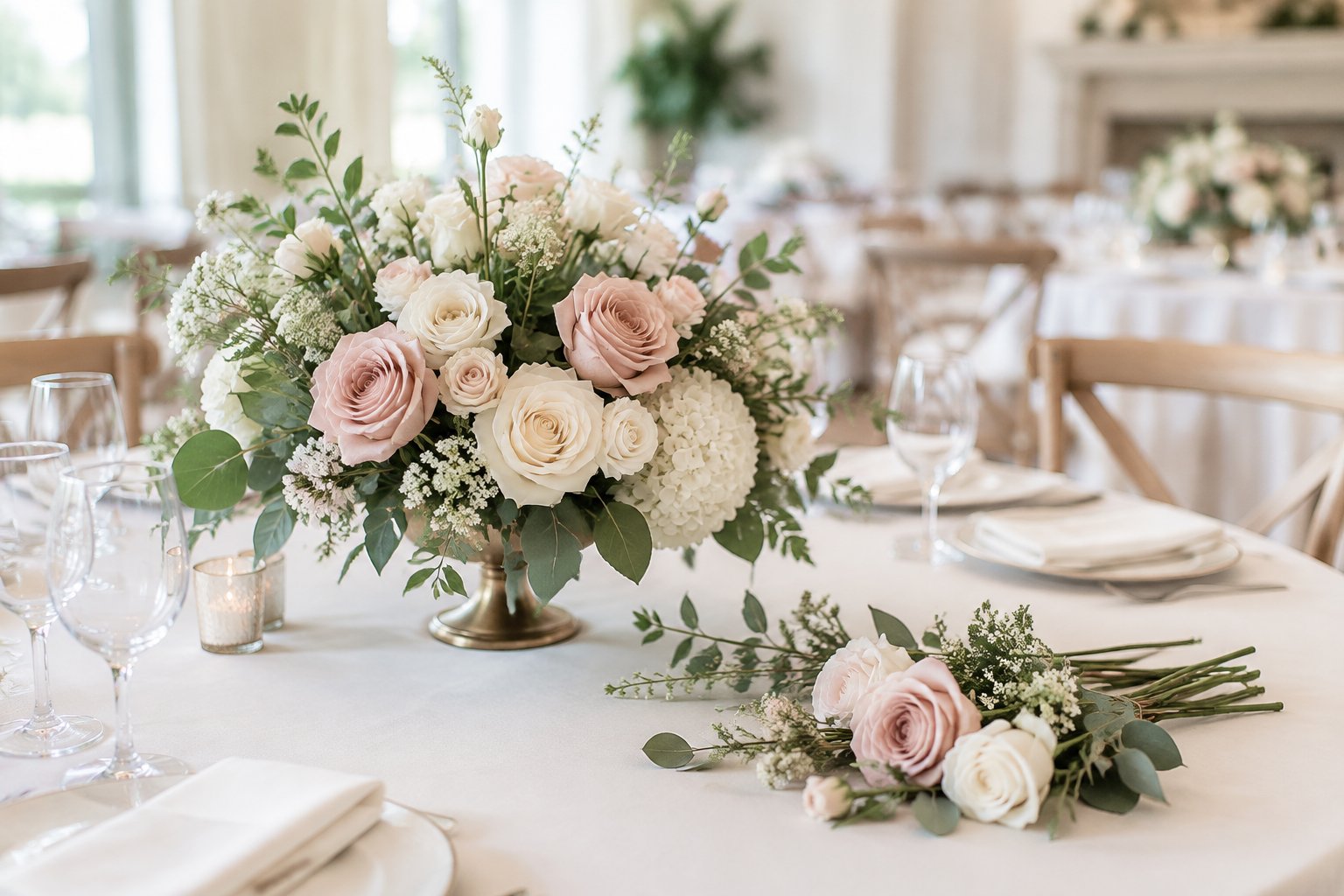
Your guest count, wedding location, date, flower choices, and design style shape the final quote. A modest plan with seasonal blooms and reusable arrangements can stay near the lower end, while a lush celebration with premium flowers and floral installations moves toward the higher range.
Set your wedding flower budget before you book your florist, then ask for an itemized quote that separates flowers, labor, delivery, setup, rentals, and taxes. That approach gives you room to adjust the design while protecting the parts of your wedding florals you care about most.
What Couples Typically Spend in 2026
Most U.S. couples spend about $2,500 to $5,000 on wedding flowers in 2026, with the average wedding flower cost rising when the plan includes large ceremony arrangements, premium blooms, or full-service installation.
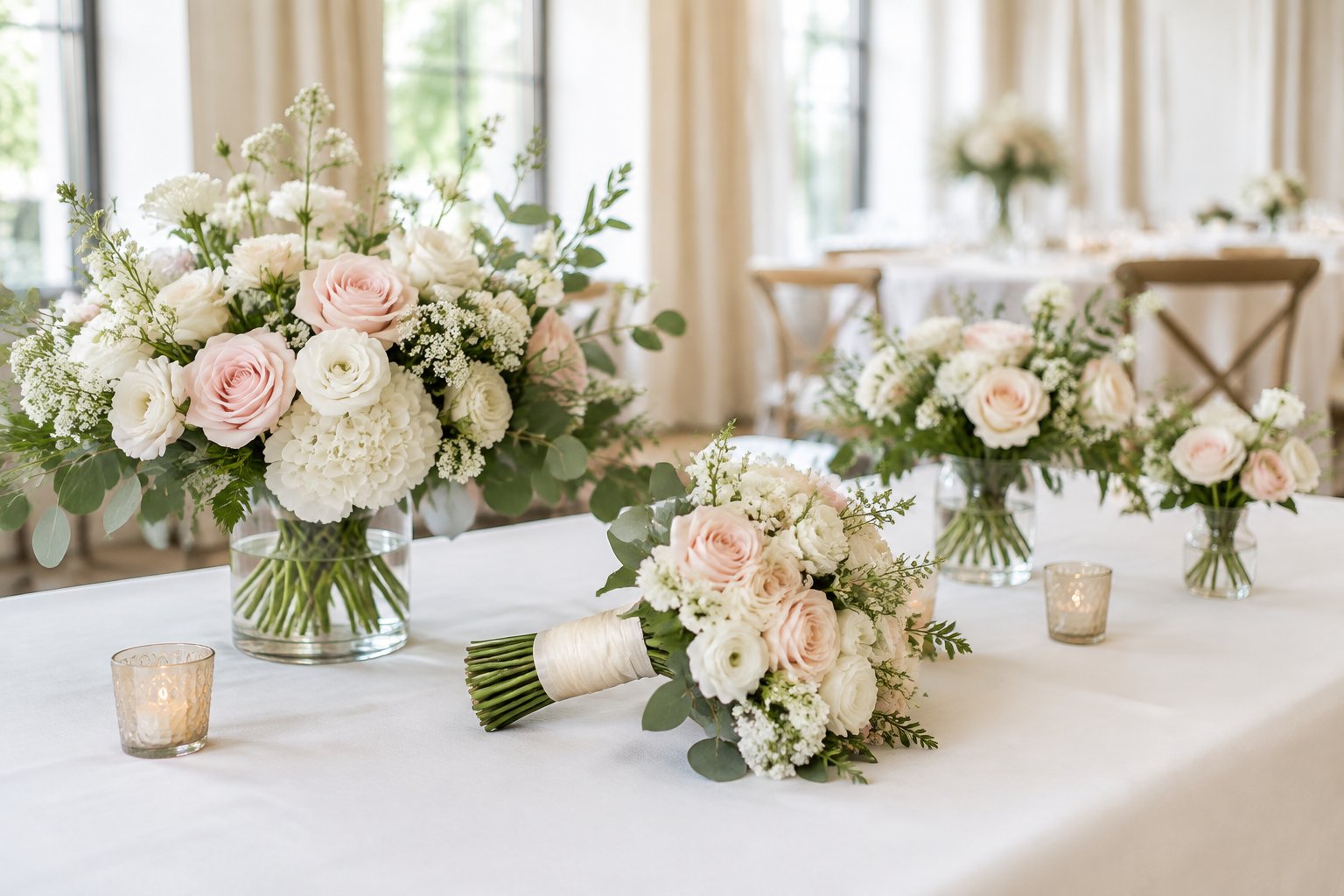
A smaller celebration with personal flowers and a few reception arrangements may cost $1,500 to $2,500. A mid-range wedding flower budget often lands between $2,500 and $5,000. A highly detailed design with a floral arch, hanging pieces, or a flower wall can reach $7,500 or more.
Why National Flower Averages Differ So Much
National averages combine very different wedding flower plans. One couple may order a bridal bouquet, several bridesmaid bouquets, and simple centerpieces, while another may hire a wedding florist to design every ceremony and reception space.
A reported average also changes based on how costs are counted. Some figures include personal flowers only, while full-service estimates include design labor, delivery, setup, rentals, and breakdown. Ask whether each published estimate includes those services before using it to set your own wedding flower budget.
How Guest Count, Region, and Season Affect Spend
Guest count affects the number of tables, centerpieces, place settings, and personal flowers you need. A 150-person reception usually requires more table decor than a 50-person celebration, even when both weddings use the same flower style.
Regional labor rates and delivery distances influence your florist quote. Major metropolitan areas often carry higher design and service fees than smaller markets. Venue access also plays a role when elevators, long loading paths, or strict delivery windows add setup time.
Seasonal flowers cost less when growers and wholesalers have strong local supply. Your wedding flowers by season may include tulips in spring, sunflowers in summer, dahlias in late summer and fall, and evergreen foliage in winter. Ask your florist which seasonal blooms fit your color palette before choosing a specific variety.
How Much of the Wedding Budget Should Go to Florals?
A practical starting point is 8% to 10% of your total wedding budget for flowers. A $30,000 wedding would place that range near $2,400 to $3,000, while a $50,000 wedding would suggest $4,000 to $5,000.
Raise that share when flowers are central to your ceremony backdrop, reception design, or photography. Lower it when you prefer candles, rented décor, potted plants, or minimal table arrangements. Write down which items the floral budget must cover before asking a professional florist for pricing.
How Much Does Each Wedding Floral Item Cost?
Individual wedding flower costs range from about $20 for a boutonniere to $1,500 or more for a large floral arch, with labor and delivery added to many florist quotes.
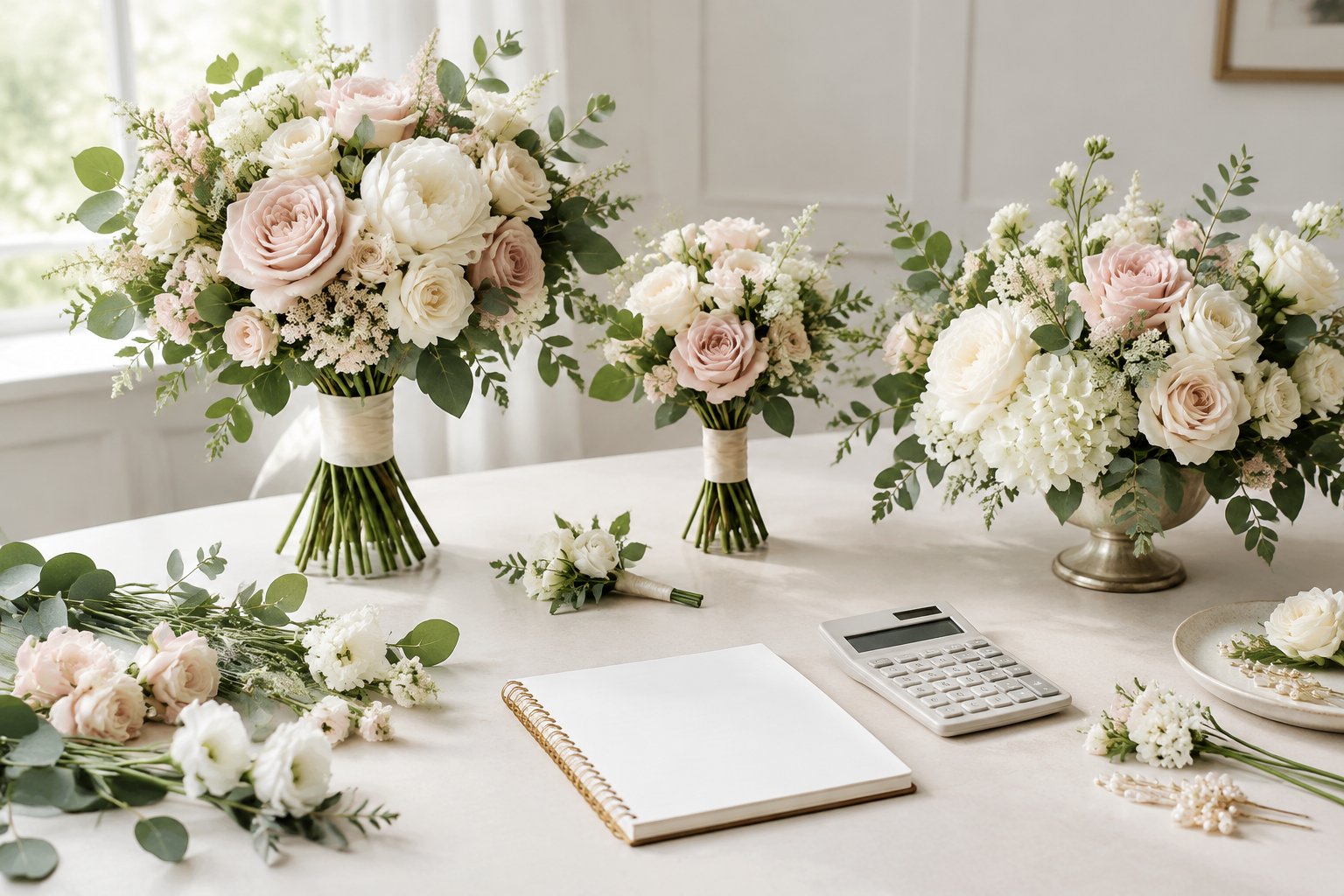
Use these ranges as planning estimates, then request prices for your exact flower choices, quantities, colors, and venue. A smaller arrangement with premium flowers may cost more than a larger design made with hardy, locally available blooms.
How Much Does a Bridal Bouquet Cost?
The average cost of a bridal bouquet is about $150 to $350. A compact bouquet with standard roses, carnations, or seasonal flowers can fall near $100 to $175. A large, hand-tied design with peonies, garden roses, orchids, or cascading greenery may reach $400 or more.
The bridal bouquet cost reflects flower volume, stem length, ribbon, mechanics, design time, and delivery. Share your preferred shape and size with your florist. A smaller bouquet with a few premium focal flowers keeps the design special while limiting the number of costly stems.
What Do Bridesmaid Bouquets, Boutonnieres, and Corsages Cost?
Bridesmaid bouquets commonly cost $65 to $150 each. A smaller posy style uses fewer stems and keeps the wedding party flowers consistent without matching the size of the bridal bouquet.
Boutonnieres often cost $15 to $35 each, while corsages range from $35 to $75. A single flower with greenery, a petite cluster, or a floral wristlet gives you several ways to coordinate attendants with the wedding bouquet.
Other personal flowers may include:
- Toss bouquet: $30 to $75
- Flower girl basket flowers: $25 to $75
- Hair flowers: $25 to $100
- Parent corsages: $35 to $75 each
What Do Ceremony Flowers and Arches Cost?
Ceremony flowers can range from $500 for aisle markers and small altar arrangements to $2,500 or more for a full floral arch. A partial arch with greenery and flowers across one section often costs $800 to $1,500.
Aisle markers may cost $25 to $100 each. Altar arrangements can run $150 to $600 per piece, depending on size and flower selection. Your ceremony arrangements also include the labor needed to attach flowers safely to structures or place heavy vessels at the venue.
Confirm whether the quote includes an arch frame, delivery, installation, removal, and venue-approved hardware.
What Do Reception Centerpieces Cost?
Reception centerpieces commonly cost $75 to $250 per table. Low centerpieces made with seasonal flowers and greenery sit near the lower range, while tall centerpieces with elevated vessels, premium flowers, and added mechanics can reach $300 to $500 or more.
Your number of guest tables creates a major cost multiplier. Ten centerpieces at $150 each cost $1,500 before delivery, labor, rentals, or tax. Mixing low centerpieces with candles, bud vases, or greenery lets you create a layered table design with fewer flowers.
Cake flowers, sweetheart-table arrangements, bar décor, and escort-card displays add separate line items. Include each one on your floral worksheet before accepting a quote.
What Drives a Florist Quote Up or Down?
A florist quote rises with flower volume, design complexity, premium blooms, delivery distance, installation time, rentals, and breakdown services.
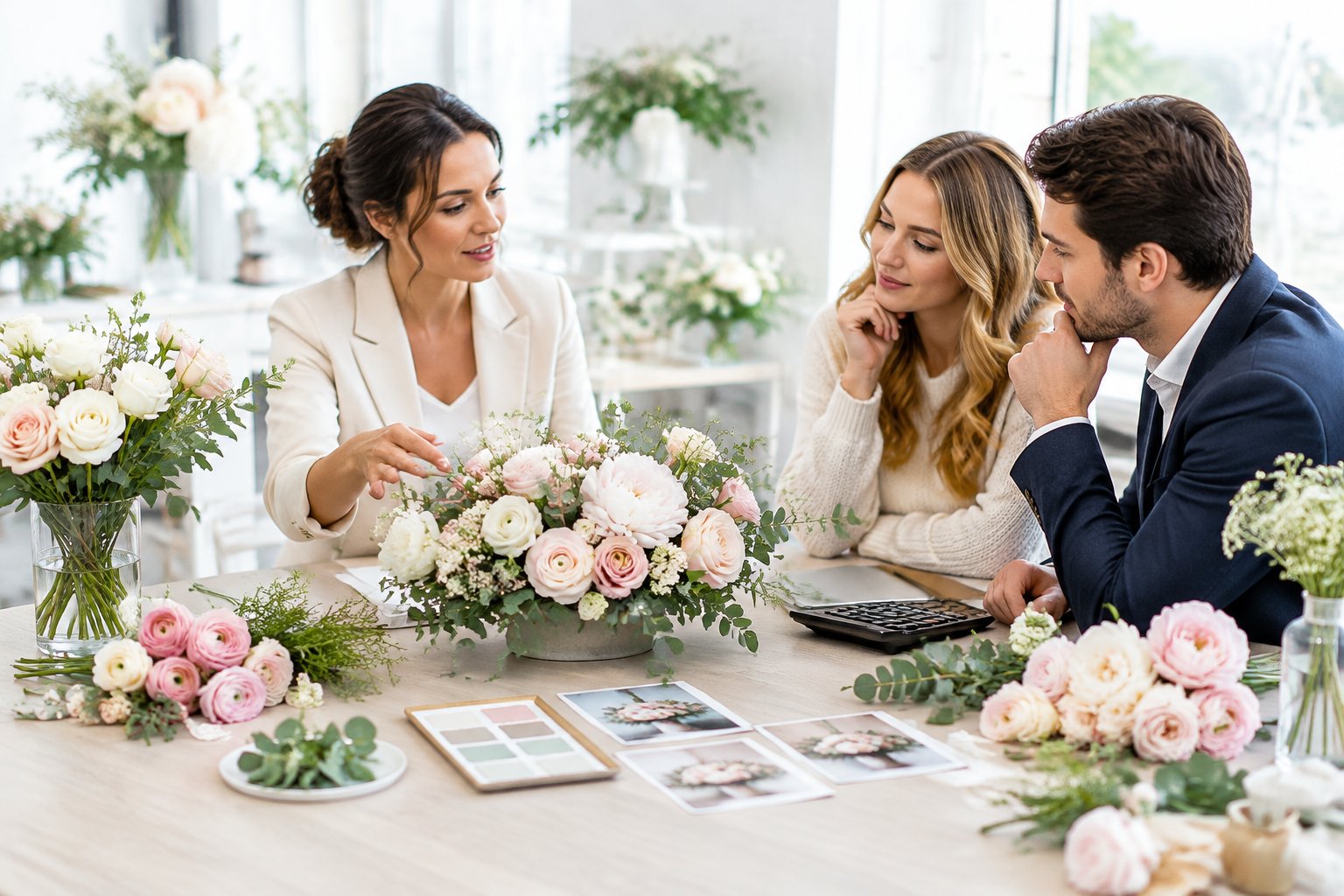
Two weddings with the same guest count can have very different wedding florist costs. The most useful way to compare quotes is to review the flower plan and service details line by line.
Flower Variety, Stem Count, and Design Complexity
Every arrangement starts with the type and number of stems. A dense bouquet needs more flowers than a loose, airy design. A floral installation also requires mechanics such as foam-free structures, wiring, tape, vessels, or support frames.
The shape affects labor. A simple hand-tied bouquet takes less time than a cascading design with delicate stems. Repeated arrangements across many tables increase preparation and transport work for the professional florist.
Give your florist a priority list. You might request a lush bridal bouquet, medium reception centerpieces, and modest aisle markers. That direction helps the designer place flower volume where guests see it most.
Why Premium and Out-of-Season Blooms Cost More
Premium flowers cost more because of limited supply, growing time, delicate handling, or shipping needs. Peonies, gardenias, orchids, lily of the valley, and some garden roses often carry higher prices than standard roses or chrysanthemums.
Out-of-season flowers may need to come from distant growers or import channels. Fresh flowers also require careful storage and transport so they arrive in usable condition. Local flowers and locally grown flowers can reduce shipping needs when they are available for your date.
Ask for two or three substitutions that preserve your color and shape. In-season flowers give your florist more reliable supply and more flexibility when building the design.
Labor, Delivery, Setup, Rentals, and Breakdown
Labor covers ordering, processing, hydration, conditioning, design, packing, transport, installation, and cleanup. A delivery fee may reflect mileage, vehicle needs, timing, and the number of staff required.
Setup becomes more expensive when your florist must install a floral arch, attach flowers to chairs, place arrangements across several rooms, or work within a short venue window. Breakdown charges cover removing designs, collecting rental vessels, and clearing floral mechanics after the event.
Ask your florist to identify:
- Design and preparation labor
- Delivery and travel fees
- Setup and installation
- Vessels, arches, stands, or other rentals
- Breakdown and return service
- Taxes and payment terms
Choose Flowers That Fit Your Budget and Style
Affordable wedding flowers can look polished when you combine dependable volume blooms, a few focal flowers, and greenery that suits your design style.
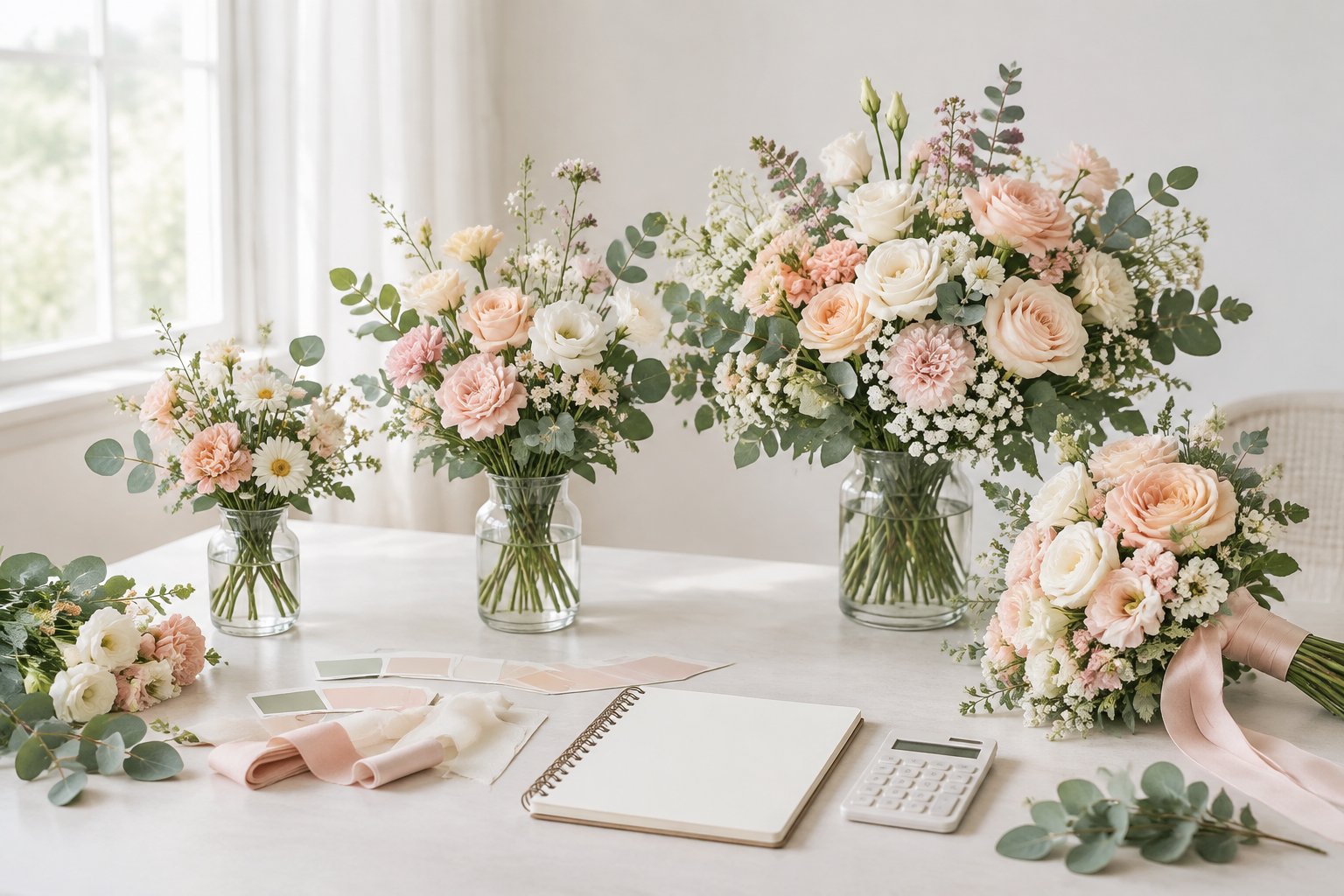
Your florist can use flower shape, color, texture, and placement to create a rich look across different price levels. Share your total budget and preferred mood early so the design choices work together.
Affordable Flowers That Still Look Elevated
Carnations, daisies, chrysanthemums, alstroemeria, baby’s breath, tulips, sunflowers, and standard roses offer strong value in many seasons. Their reliable supply makes them useful for reception centerpieces, bridesmaid bouquets, aisle markers, and filler work.
Lisianthus gives bouquets a soft, romantic texture. Modern carnations add ruffled volume in colors ranging from white to deep burgundy. Alstroemeria lasts well in mixed arrangements, while baby’s breath creates an airy look in bouquets and ceremony décor.
Use one flower type in a group of bud vases for a clean design. A limited color palette also helps affordable flowers feel intentional.
Premium Blooms to Use as Focal Flowers
Roses, garden roses, ranunculus, dahlias, hydrangeas, peonies, orchids, calla lilies, gardenias, lilies, and lily of the valley can serve as focal flowers. Their size, texture, fragrance, or limited growing season can increase the price.
Place premium blooms where they receive close attention, such as the bridal bouquet, sweetheart table, or ceremony focal point. Fill surrounding arrangements with standard roses, chrysanthemums, lisianthus, or seasonal flowers to extend the design.
Ask about in-season flowers that create a similar shape. Garden roses can provide a full, layered look, while ranunculus offers compact texture in a smaller form.
How Greenery Changes the Look and Cost
Greenery adds movement, volume, and structure to wedding flowers. Eucalyptus, Italian ruscus, ruscus, ferns, and other foliage can create a garden, modern, or organic style.
A greenery-forward design does not always cost less. Dense greenery installations require many stems and substantial labor, especially when they cover an arch, staircase, or long table. A few intentional foliage accents can offer better value than a full greenery runner.
Use eucalyptus or ferns to fill open areas, then place flowers at focal points. This keeps the design connected while controlling the number of premium stems.
Ways to Lower Floral Costs Without Losing Impact
You can lower your wedding flower budget by concentrating flowers in visible areas, reusing arrangements, choosing seasonal blooms, and simplifying labor-heavy installations.
Prioritize High-Visibility Floral Moments
Start with the locations that appear in ceremony and reception photos. A bridal bouquet, ceremony focal point, sweetheart table, and entry display often create more visual impact than small arrangements spread across every surface.
Use candles, rented décor, bud vases, or fabric details on lower-priority tables. A few strong floral moments establish your style while reducing the number of full-size arrangements.
Large floral installations such as a flower wall or full floral arch deserve special review. A partial arch, asymmetrical cluster, or concentrated floral ground piece uses less product while preserving a defined ceremony backdrop.
Reuse Ceremony Arrangements at the Reception
Ask your florist to design ceremony arrangements that staff can move after the vows. Altar arrangements can shift to the sweetheart table, welcome table, or reception stage. Aisle markers can decorate the bar, cake table, or guest-book area.
Movement requires planning, labor, and venue approval. Include a relocation fee in the quote when staff must transport and reset the flowers between spaces.
Bridesmaid bouquets also work as reception décor. Place them in water-filled vessels at the head table or on selected guest tables so their flowers serve two purposes.
When Silk Flowers or DIY Options Make Sense
Silk flowers work well for arches, flower walls, hair flowers, and pieces that need to remain arranged for many hours. They also suit couples who want a specific bloom outside its natural season.
Review color, texture, rental terms, storage, and return requirements before choosing them.
Fresh flowers bring natural fragrance and texture, while silk flowers provide a reusable option for selected décor. A mixed plan can reserve fresh flowers for personal bouquets and use rented artificial arrangements for a large backdrop.
DIY works best for simple designs made with hardy local flowers or locally grown flowers. Plan time for pickup, hydration, arranging, transport, and cleanup.
A florist-made bridal bouquet or ceremony arrangement can balance the risk of handling your most visible flowers yourself.