
Average Wedding Photographer Cost Canada: What to Budget
If you are planning a Canadian wedding in 2026, set aside about $2,500 to $6,000 CAD for full-day wedding photography, with many couples landing near $4,000 to $4,900 CAD. Shorter coverage can cost less, while luxury services, major cities, second photographers, albums, and travel can push the quote above $8,000.
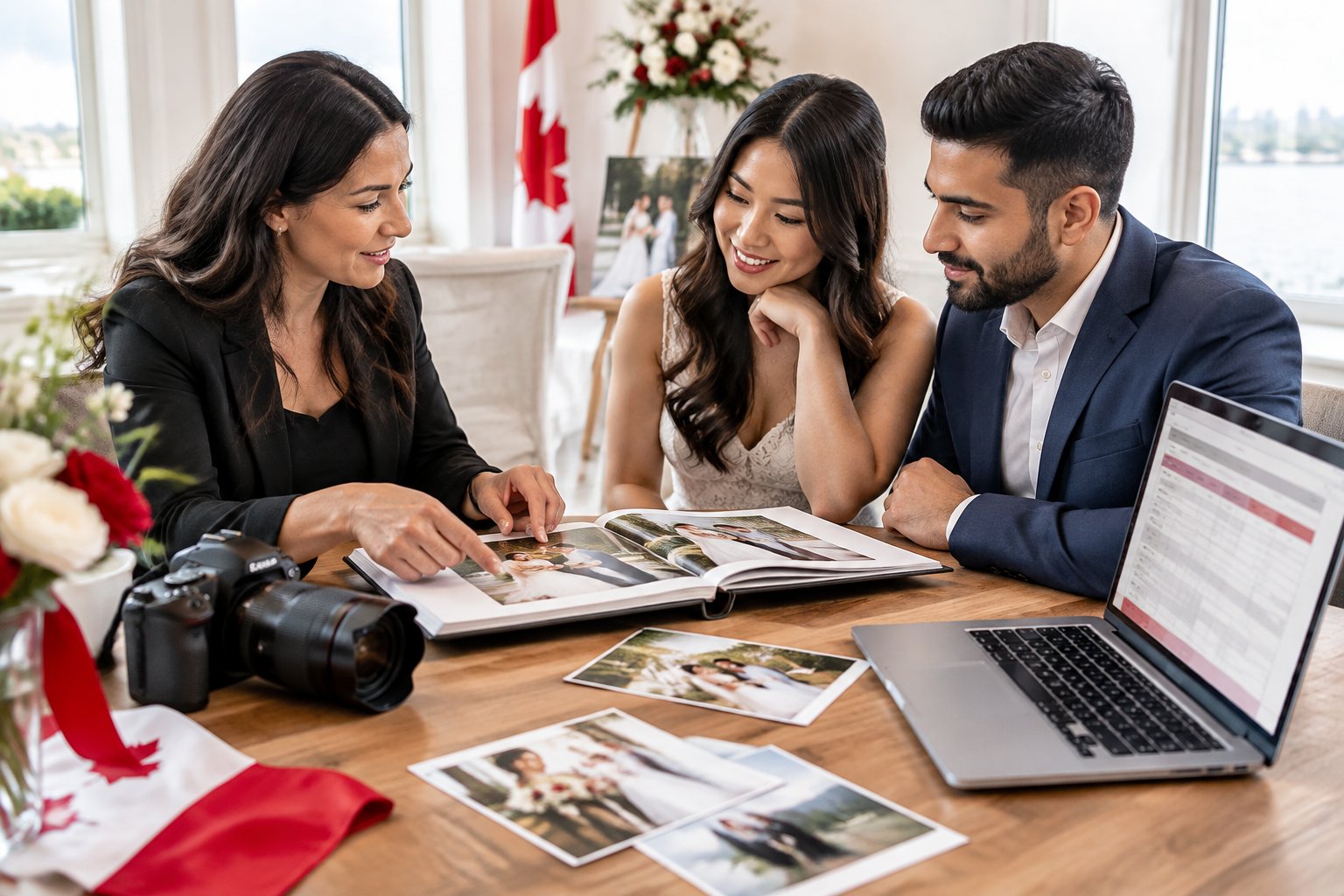
Your final price reflects far more than the hours spent taking pictures. Planning calls, professional equipment, image selection, editing, gallery delivery, business costs, and years of experience all shape wedding photography prices.
Taxes such as GST or HST can also apply, depending on your province. Use your wedding memories as a planning priority, then request quotes that match the moments you want covered.
Comparing complete packages from Canadian photographers will help you build a clear Canadian wedding budget without paying for services you will not use.
What Canadian Couples Typically Pay
Canadian wedding photography commonly costs $2,500 to $6,000 CAD for full-day coverage, with entry-level packages below that range and high-demand artists above it.

Your quote will reflect the photographer’s location, experience, style, coverage length, and package contents. Ask whether taxes, travel, digital files, and album design appear in the listed price.
2026 National Price Ranges
A practical 2026 planning range looks like this:
- Under $2,000 CAD: Short coverage, newer talent, or a small wedding with limited services.
- $2,000 to $3,000 CAD: One photographer, around four to six hours, and edited images delivered through an online gallery.
- $3,000 to $6,000 CAD: Six to ten hours, a larger edited gallery, and either an engagement session, album, or second photographer.
- $6,000 CAD and above: Luxury coverage, multiple experienced photographers, premium albums, extensive planning, or added events.
A standard package near $4,900 CAD may include about 10 hours of coverage and 600 to 1,000 high-resolution images. Treat these figures as planning ranges because photographers define packages in different ways.
How Rates Differ by City and Province
Large cities such as Toronto and Vancouver often sit at the higher end of Canadian wedding photography pricing. Higher operating costs, strong demand, and a larger market for premium services all affect local rates.
Calgary, Edmonton, Ottawa, Montreal, Halifax, Winnipeg, and smaller communities each have their own price patterns. A photographer based outside your wedding city might charge less for the service while adding mileage, lodging, or other travel fees.
Provincial taxes also change your final invoice. Ask whether GST or HST is included in the quote, and confirm the rate that applies to your wedding location.
What Full-Day Coverage Usually Costs
Full-day wedding day coverage often falls between $2,500 and $6,000 CAD. Packages at this level may cover preparations, the ceremony, portraits, reception details, dinner, speeches, and dancing.
Check the exact start and end times. Eight hours might begin during getting-ready photos and finish after the first dances, while 10 hours could include most of the reception.
Extra hours are often billed at a set hourly rate, so plan your timeline before signing.
What Wedding Photography Packages Include
Wedding photography packages commonly combine coverage time, edited digital images, an online gallery, and planning support, with engagement sessions, albums, and second photographers available in selected collections.

Read each package description closely. The number of hours, image delivery method, editing level, print rights, and add-on prices can change the value of two packages with similar headline prices.
Hours of Wedding Day Coverage
Coverage hours determine how much of your timeline the photographer can document. A four-hour package may suit a small ceremony and portrait session. Six to eight hours can include preparations, the ceremony, family portraits, and part of the reception.
Ten hours gives you more room for a full wedding day. Ask whether travel between locations counts toward coverage, and confirm the overtime rate and whether the photographer takes scheduled breaks during a long reception.
Edited Images, Galleries, and Print Rights
Post-production includes culling, colour correction, exposure adjustments, cropping, and detailed post-processing. A package might promise a set number of edited images, while another photographer delivers a gallery based on the usable photographs from the day.
Most packages provide a private online gallery for viewing, downloading, and sharing. Ask how long the gallery stays active and whether you receive high-resolution files.
Copyright normally remains with the photographer. A personal-use license or printing release lets you make prints, share images online, and use them for personal purposes. Ask for these rights in writing before you book.
Engagement Sessions and Engagement Shoots
An engagement session gives you time to learn how your photographer directs poses and captures natural expressions before the wedding. It also provides images for invitations, a wedding website, or announcements.
Some photographers include an engagement shoot in mid-range or premium packages. If yours does not, request the separate price and ask about session length, location limits, outfit changes, and the number of edited images.
Albums, Prints, and Other Add-Ons
Albums, fine-art prints, canvases, parent books, sneak peeks, extra coverage, and second photographers can raise the package price. Album cost depends on page count, cover material, paper quality, and design work.
Ask whether album design is included and how many revision rounds you receive. You can also choose a digital-first package and order printed products later if your contract allows it.
What Raises or Lowers the Final Quote
Experience, demand, coverage length, staffing, location, travel, and wedding logistics have the greatest effect on your final photography quote.
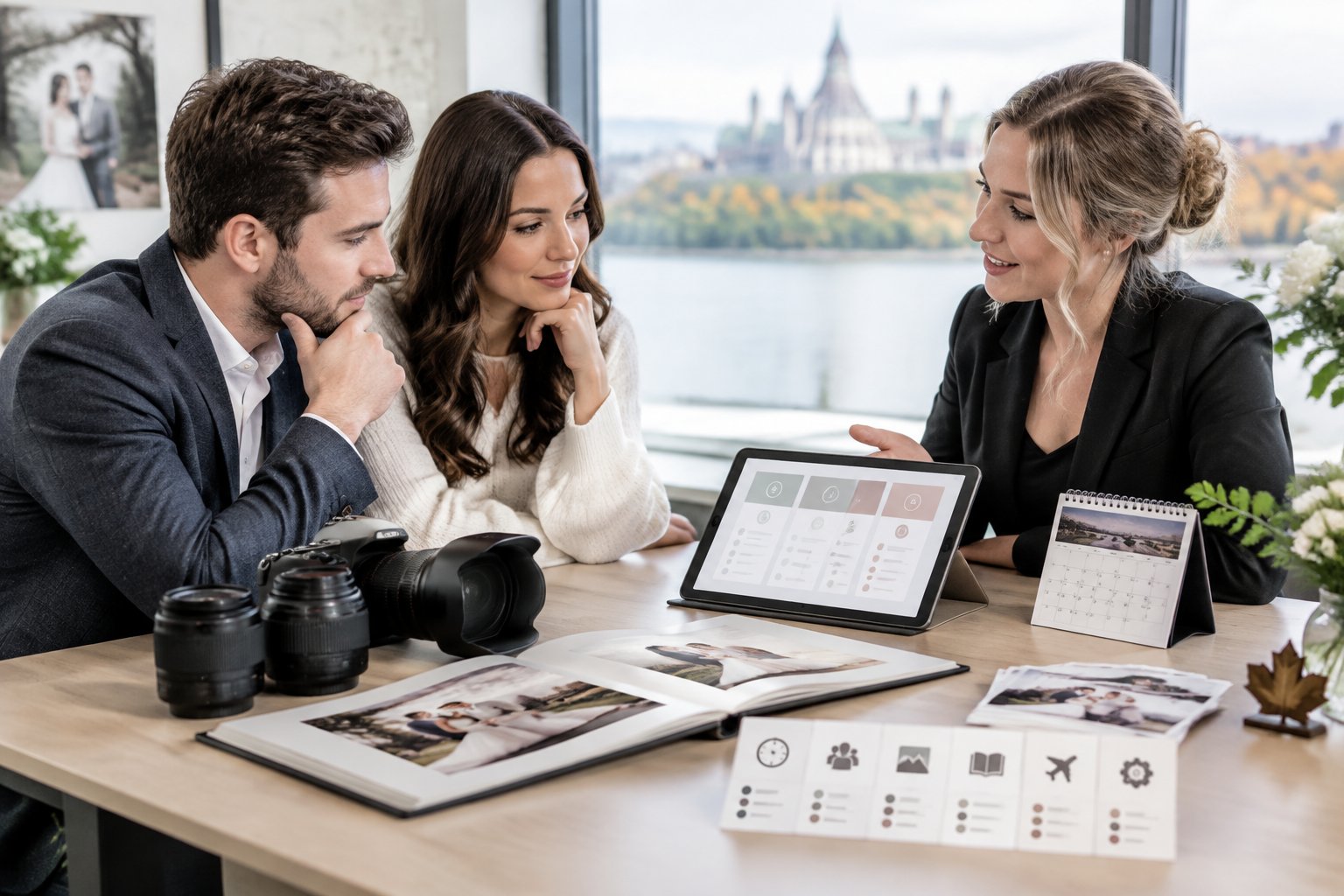
A lower price can reflect a smaller scope, a newer business, or a weekday date. A higher quote can pay for a deeper portfolio, stronger systems, more equipment, longer editing time, and broader coverage.
Experience, Style, and Demand
Experienced wedding photographers charge more because they bring refined skill, reliable workflows, and practice with changing light, tight timelines, and emotional moments. Their editing style also affects the price and should match the look you want.
Documentary, editorial, fine-art, dark-and-moody, and bright-and-airy approaches require different creative decisions. Photographers with full summer calendars may charge more for popular Saturdays and limited availability.
Review complete weddings in the style you like. A strong portfolio should show consistent work across preparations, family groups, portraits, ceremonies, receptions, and difficult lighting.
When a Second Photographer Is Worth It
A second shooter adds coverage and helps capture separate parts of the day. While the lead photographer documents your ceremony entrance, the second photographer might photograph guests, the groom’s preparations, cocktail hour, or another room at the venue.
Second shooters are valuable for large guest counts, split preparation locations, large venues, and timelines with overlapping events. A second photographer may add less value for a small wedding held in one compact location.
Ask who will serve as the second photographer and whether that person’s experience level appears in the contract.
Travel, Accommodation, and Overtime Fees
Travel fees can cover mileage, parking, flights, meals, and accommodation. Ask when these costs begin, whether travel time reduces coverage, and who books lodging for a late reception or remote venue.
Overtime applies when your event continues past the contracted end time. Request the hourly rate before signing, and build a buffer into your schedule if speeches, dinner, or dancing may run late.
Season, Venue, and Wedding Size
Saturday weddings during the summer and early fall often attract the highest demand. A weekday, winter, or off-season date can open more package options and improve availability.
Large weddings require more group organization and guest coverage. A venue with multiple buildings, long walking routes, dark interiors, or difficult parking can also increase the time and equipment required.
How to Compare Photographer Quotes Fairly
Compare wedding photographer quotes by matching coverage hours, staffing, image delivery, rights, products, taxes, travel, and backup procedures.

A $3,000 package and a $5,000 package may serve different needs. Place every quote into the same checklist before deciding which one offers the best fit.
Look Beyond the Headline Package Price
Record these details for each photographer:
- Coverage start and end times
- Lead photographer and second photographer
- Estimated or guaranteed image count
- Editing and delivery timeline
- Online gallery access
- High-resolution download rights
- Personal-use or print release
- Engagement session details
- Album and print inclusions
- Travel, tax, overtime, and payment fees
A package with fewer hours might suit your timeline better than a larger package with products you do not plan to order. Ask for a custom quote when standard packages leave unused services in the price.
Questions to Ask Before Signing a Contract
Ask who will photograph the wedding, how much experience they have with events like yours, and whether the portfolio shows full wedding galleries. Confirm the deposit, payment schedule, cancellation terms, postponement policy, and liability insurance.
Ask when you will receive sneak peeks and the finished gallery. Clarify image storage, copyright, personal-use rights, meal requirements, travel charges, overtime, and the replacement process if the photographer becomes ill.
Clear answers protect you from wedding photographer horror stories involving surprise charges, missing files, unclear ownership, or a substitute photographer whose style differs from the portfolio you selected.
Why Full Galleries and Backup Plans Matter
A complete gallery shows how a photographer handles an entire wedding, including family groups, reception lighting, candid moments, and transitions between locations. A highlight reel alone cannot show that consistency.
Ask how the photographer backs up files during and after the wedding. Confirm whether they carry backup cameras, lenses, memory cards, and lighting equipment, and ask what happens if an emergency prevents attendance.
Your contract should identify the replacement process and explain how your images are stored and delivered.
How to Set a Photography Budget Without Sacrificing Value
Set your photography budget by choosing the moments and service level that carry the most meaning, then compare trusted Canadian photographers within that range.
Start with a firm spending limit that includes taxes, travel, albums, and a contingency amount. Then shape coverage around your priorities instead of selecting the largest package by default.
Choose Coverage Around Your Priorities
List the parts of the day you want documented most. You might prioritize getting-ready photos, a first look, family portraits, the ceremony, reception speeches, or open dancing.
A shorter package can work when the ceremony and reception take place at one venue. You can also schedule portraits efficiently and reserve full-day coverage for a timeline with separate locations or many cultural events.
If your budget is tight, protect professional coverage for the moments that cannot be repeated. Ask whether the photographer can build a custom package around those hours.
Ways to Save Without Cutting Reliability
Consider a weekday, Sunday, winter, or shoulder-season date. Choose a local photographer to reduce travel costs, shorten coverage, or select a digital package before ordering albums and prints.
You can also reduce staffing for a smaller wedding, limit coverage to key events, or book an engagement session separately when it fits your budget better. Keep backup equipment, written contracts, insurance, and secure file storage as non-negotiable parts of the service.
Where to Find and Vet Canadian Photographers
A Canadian wedding photographers directory can help you create a shortlist by location and style. Regional wedding groups, venue recommendations, planner referrals, and recent client reviews can add useful context.
Look for complete galleries, clear contracts, consistent editing, and evidence of professional experience. Canadian wedding photography awards can signal industry recognition, although your final choice should also reflect the photographer’s approach, availability, communication, and quoted services.
Request two to four detailed proposals and compare matching coverage. Save the chosen quote, contract, payment schedule, and included products with your Canadian wedding budget documents.