
Avg Cost for Wedding Catering for 50 Guests Explained
A 50-guest wedding gives you room to serve a thoughtful meal while keeping the guest list intimate. The avg cost for wedding catering for 50 guests is about $2,000 to $7,500 for food and service, with many couples planning near $4,000 before adding a bar, cake, rentals, tax, and gratuity.
Simple drop-off catering may cost less, while a plated dinner with premium food and full service can reach or exceed the high end. Your catering budget starts with the guest count, yet the per-person price does not tell the whole story.
Service style, menu choices, location, date, staffing, rentals, and beverage packages all shape the final wedding catering cost. A 50-guest wedding also gives you flexibility to spend more on signature dishes or personalized service.
Use these ranges to set a working budget, then request itemized quotes from local caterers. For more help choosing a professional, review this guide on how to choose the right wedding caterer before you sign a contract.
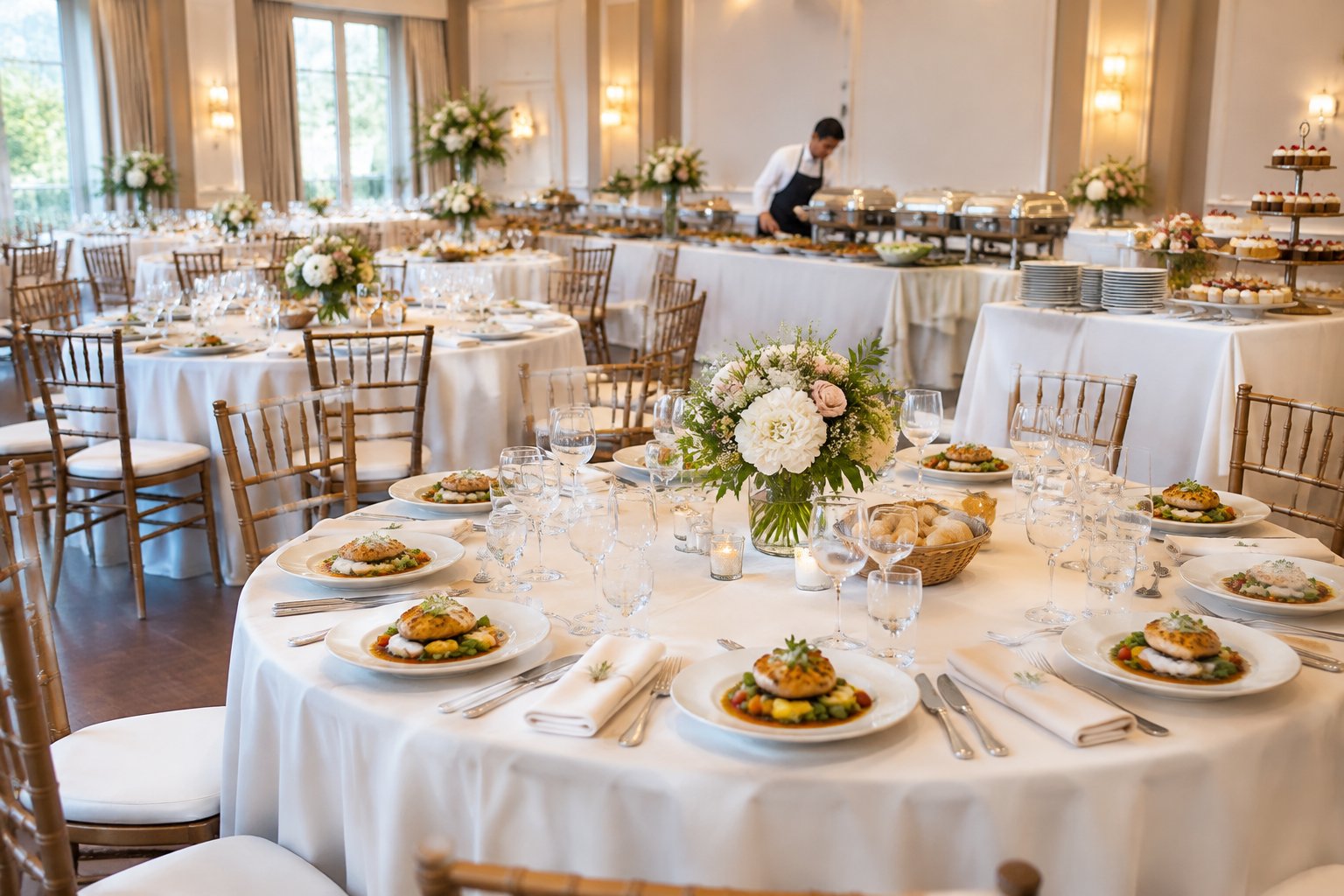
What Is a Realistic All-In Budget for 50 Guests?
A realistic all-in catering budget for 50 guests is about $4,000 to $7,500 for food, staff, basic service, and common fees, while a simple meal may come in near $2,000 to $3,500. A formal reception with premium ingredients, a full bar, rentals, and extensive staffing can move beyond $10,000.
Your guest count sets the base calculation, while the catering package determines how much each guest costs. Ask every caterer to separate food, beverages, labor, rentals, service charges, tax, and gratuity in the catering quote.
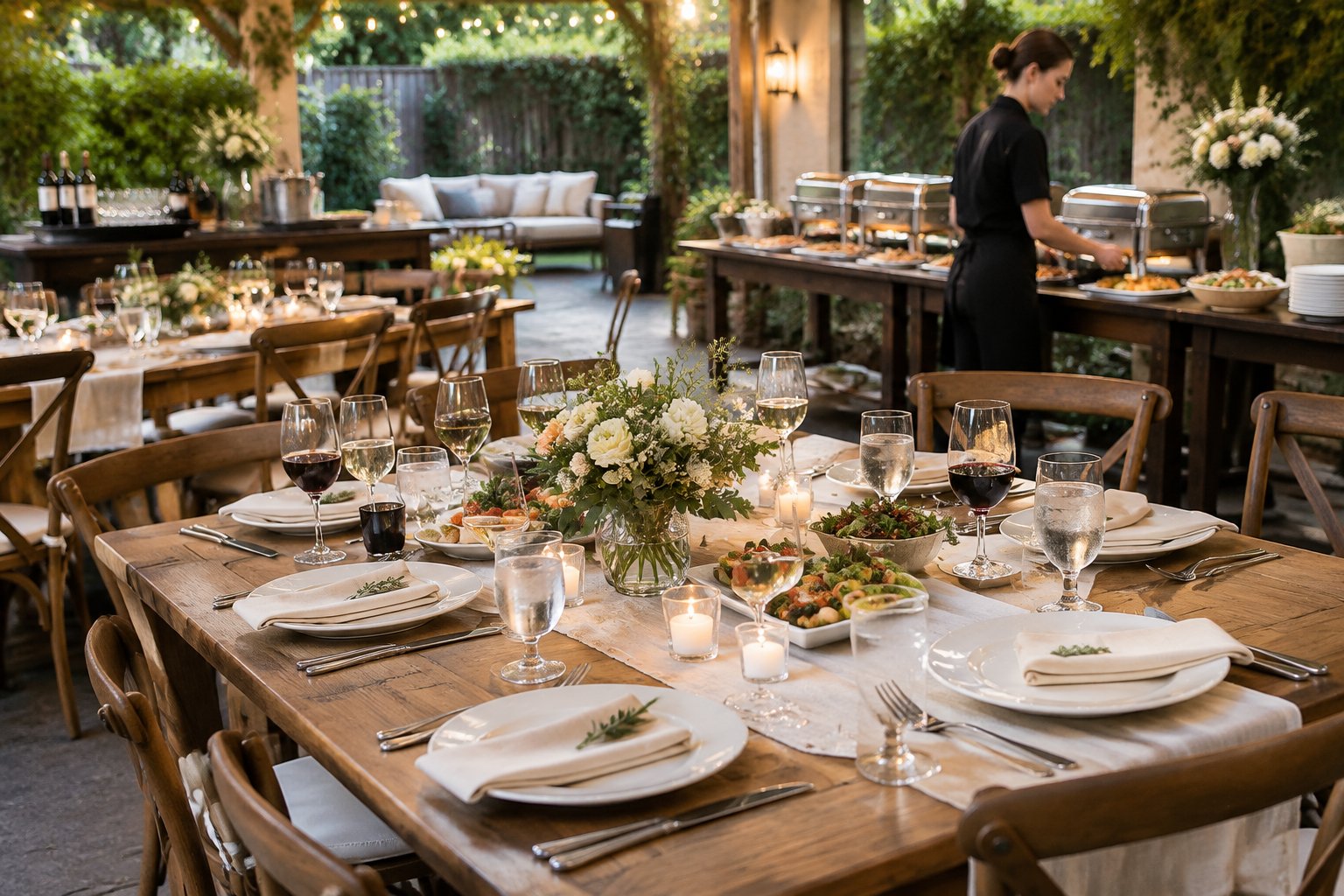
How the National $80-Per-Person Benchmark Translates to 50 Guests
An $80 catering cost per person produces a food estimate of $4,000 for 50 guests:
- 50 guests × $80 per guest = $4,000
- 50 guests × $100 per guest = $5,000
- 50 guests × $125 per guest = $6,250
- 50 guests × $150 per guest = $7,500
The $80 benchmark works as an early planning figure for a standard full meal. A basic buffet may fall near $40 to $65 per guest, while a plated dinner often lands near $65 to $150 per guest.
A 50-person event can carry higher per-person pricing when a caterer applies a minimum labor or equipment charge.
Why Food-Only Pricing Is Not the Final Catering Total
Food-only pricing covers the menu. Your final invoice can also include:
- Servers, chefs, bartenders, and event managers
- Setup, breakdown, delivery, and cleanup
- Plates, china, flatware, glassware, and serving dishes
- Linens, tables, chairs, and other rentals
- Beverage service, alcohol, and mixers
- Service charges, sales tax, and gratuity
- Vendor meals and cake service
A service charge of 18% to 22% is common in wedding catering pricing, though each company sets its own rate. Sales tax follows your state and local rules.
Ask whether gratuity is included in the service charge or expected as a separate payment.
How Location and Peak Wedding Season Affect Pricing
Your city, venue access, travel distance, and wedding date all affect catering quotes. Major metro areas and destination venues often carry higher labor and delivery costs.
A remote venue may also need a temporary kitchen, extra equipment, or additional transportation time. Saturday evenings during peak wedding season tend to command the strongest rates.
A weekday, Sunday, brunch, or off-season date can open more affordable options. Ask caterers for seasonal pricing and confirm whether your venue charges kitchen, loading, insurance, or exclusive-vendor fees.
How Does Service Style Change the Total?
Drop-off catering has the lowest labor cost, while staffed buffets, food stations, and plated dinners add service teams, equipment, and coordination. Choose the format that fits your reception style, venue layout, timeline, and guest needs.
A casual meal can keep catering for 50 people near the lower end of the range. A formal plated meal raises the price through table service and kitchen coordination, while interactive stations add cooking equipment and attendants.
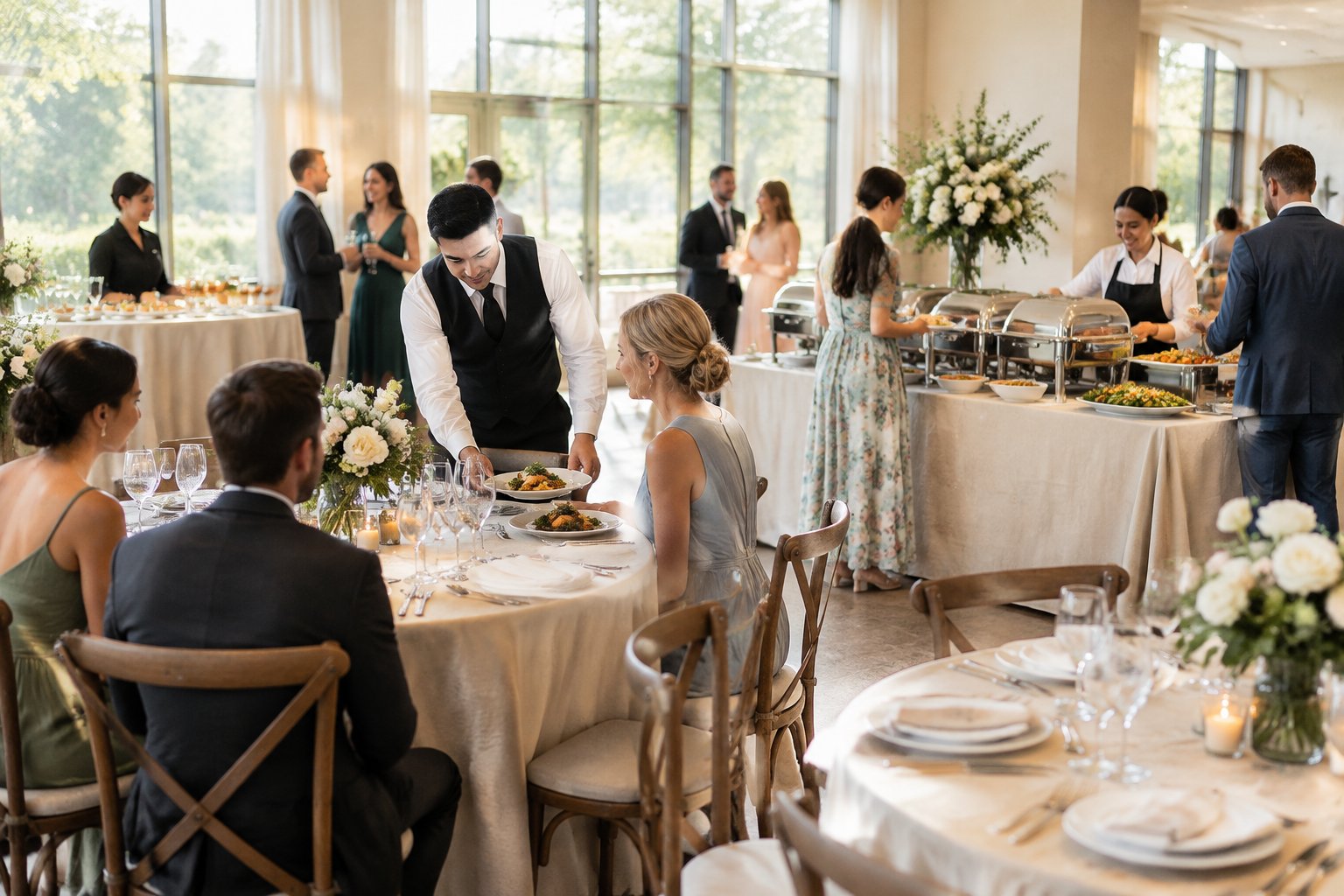
Drop-Off Catering for a Casual Reception
Drop-off catering may cost about $15 to $40 per guest for a basic meal, with delivery and setup priced separately. For 50 guests, food could start near $750 and reach $2,000 before rentals, staff, tax, and gratuity.
This format works well for a backyard reception, private home, community hall, or venue with volunteers who can arrange food. Confirm delivery timing, warming equipment, serving utensils, labels, cleanup, and food safety instructions.
You will need a clear plan for replenishing dishes and clearing used plates.
Staffed Buffet vs. a Plated Dinner
A staffed buffet often costs about $40 to $65 per guest for food. Attendants replenish trays, manage serving areas, answer menu questions, and help control portions.
A plated dinner often costs about $65 to $150 per guest for food and service. Servers deliver each course, clear plates, and coordinate with speeches and reception events.
Collect entrée choices with RSVPs and record allergies in a guest list your caterer can use.
Food Stations, Taco Bars, and Pasta Buffets
Food stations commonly cost about $45 to $75 per guest. A taco bar, pasta buffet, carving station, or dessert display gives guests choices and supports a relaxed flow through the reception.
Each additional station adds ingredients, equipment, signage, and labor. Choose stations that share ingredients to control waste and simplify dietary accommodations.
Ask whether chef-attended stations include cooking staff in the quoted price.
Is Food Truck Catering a Good Fit for 50 Guests?
Food truck catering may cost about $15 to $40 per guest and suits outdoor receptions with a casual atmosphere. Your quote may also include travel, minimum spending, staffing, power, permits, and weather protection.
For 50 guests, confirm the truck’s serving capacity and expected wait time. A single truck can create a long line if every order is cooked from scratch.
Preselected menu choices or a second serving point can keep dinner moving.
What Menu Choices Raise or Lower Catering Costs?
Seasonal ingredients, familiar entrées, and a focused catering menu keep costs manageable, while premium proteins, multiple courses, and custom dietary preparation raise the price. You can create a polished meal through smart menu design without offering every possible choice.
Your caterer can price dishes more accurately when you provide the guest count, reception length, service style, venue location, and dietary details. Ask for two or three menu versions so you can compare cost and guest experience.
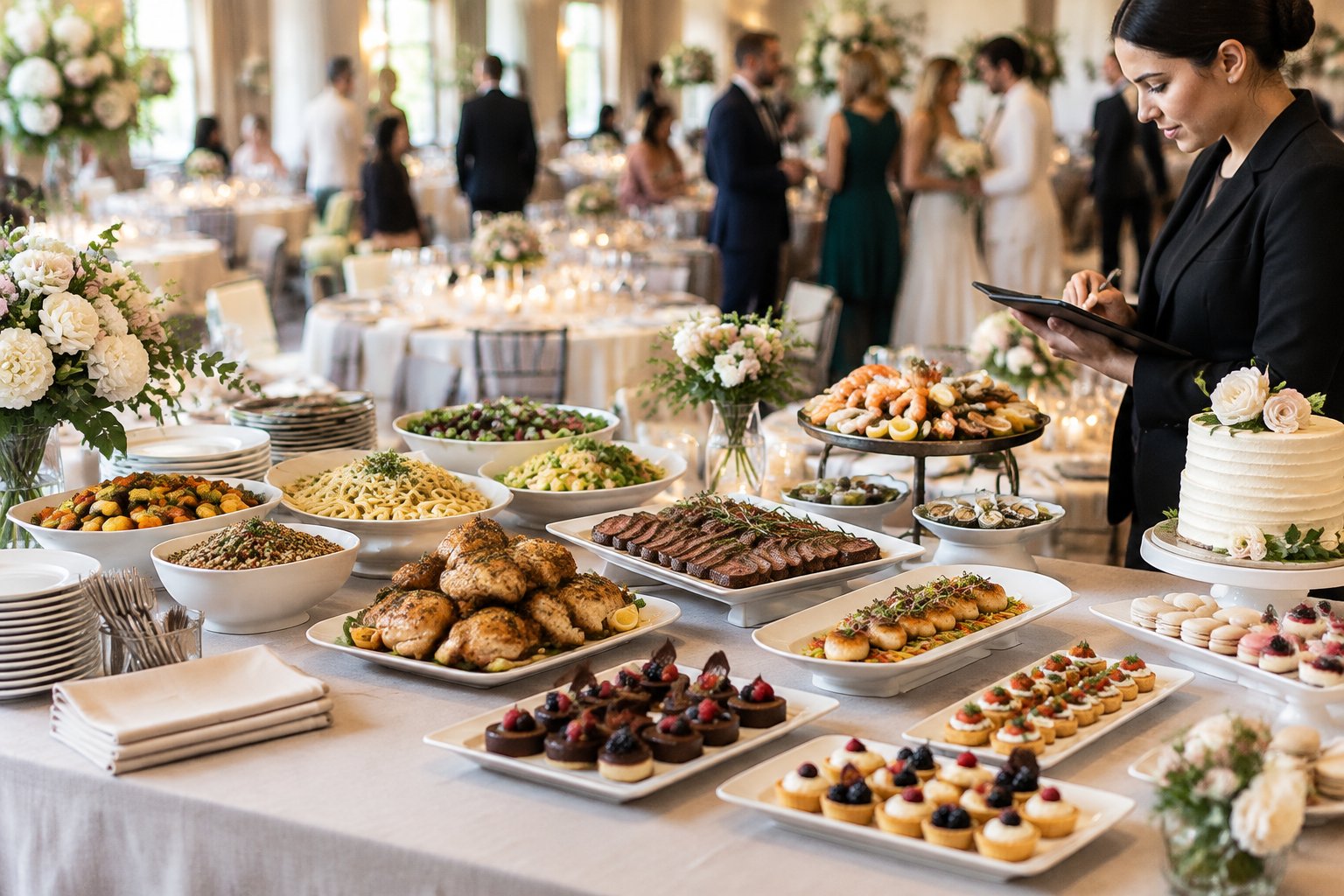
Affordable Entrées and Seasonal Ingredients
Chicken, pasta, grains, roasted vegetables, and seasonal produce often support a lower-cost menu. A seasonal ingredient list reduces specialty purchasing and gives your caterer more reliable supply options.
You can add visual appeal through sauces, fresh herbs, colorful vegetables, and attractive presentation. A single well-designed entrée with two sides often costs less than several entrée choices.
Ask which ingredients are in season on your wedding date.
Premium Proteins and Multi-Course Meals
Filet, prime rib, lobster, high-end seafood, and specialty cuts raise food costs. A multi-course meal also requires additional preparation, plating, serving time, and dishware.
You can reserve premium ingredients for one featured course or offer a single upgraded entrée. Hors d’oeuvres, amuse-bouches, dessert courses, and late-night food each add labor and ingredients, so include them in the first estimate.
Portion Control Without Leaving Guests Hungry
Portion control helps your caterer buy the right amount of food and reduce waste. A professional caterer will set serving sizes based on the menu, meal length, guest profile, and service format.
Give your caterer an accurate guaranteed guest count and share details about children, heavy appetizers, and late-night snacks. Buffet service needs enough food for the full group, while plated meals use planned portions for each guest.
Ask how seconds, replenishment, and leftovers are handled.
Planning for Dietary Restrictions
Include dietary restrictions in the first catering conversation. Vegetarian, vegan, gluten-free, nut-free, and allergy-safe meals require clear preparation and labeling.
Build inclusive dishes into the main menu when possible. Separate meals may require extra ingredients, cookware, staff time, or packaging.
Give the caterer a final list of dietary accommodations before the event and confirm how servers will identify each meal.
How Much Should You Budget for Drinks and Dessert?
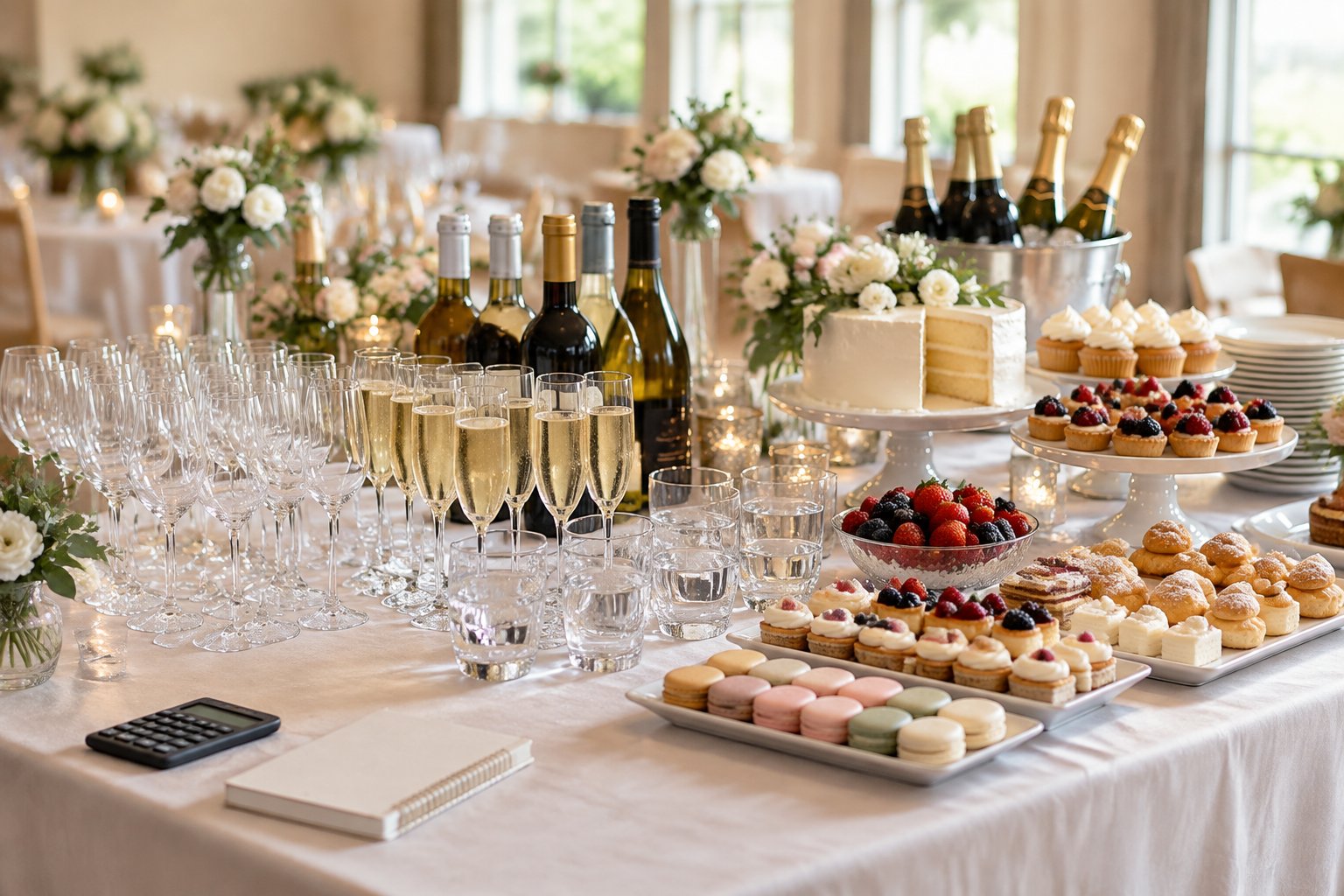
Plan about $500 to $2,500 for drinks and dessert at a 50-guest wedding, with an open bar and custom cake pushing the total higher. Beer and wine, signature cocktails, non-alcoholic beverages, and a modest cake can keep this part of your budget controlled.
Ask whether beverage pricing includes bartenders, ice, mixers, glassware, delivery, and cleanup. Dessert quotes should identify cake size, delivery, display pieces, cutting, plating, and service.
Open Bar vs. Beer and Wine
An open bar may add about $10 to $50 per guest, depending on the spirits, package length, mixers, and staffing. For 50 guests, that equals roughly $500 to $2,500 before tax and service charges.
A beer-and-wine package costs less and simplifies inventory. Confirm whether sparkling wine for the toast is included.
Some venues require a licensed bar provider or charge a corkage fee for alcohol you supply.
Limited Bars and Signature Cocktails
A limited bar can feature beer, wine, one spirit, and a pair of signature cocktails. This approach gives guests variety while keeping the liquor list and bartender setup focused.
Price the cocktail ingredients, garnishes, mixers, ice, glassware, and bartender hours. A signature cocktail menu also benefits from clear drink limits, such as service during cocktail hour and dinner.
Using an Alcohol Calculator for 50 Guests
An alcohol calculator can help estimate quantities from your guest count, event length, drinking preferences, and bar type. Start with 50 invited guests, then adjust for children, non-drinkers, and guests who will leave early.
Ask your caterer how the package handles unopened bottles and extra consumption. The written quote should state the service period, alcohol brands, mixers, ice, bartenders, and restocking policy.
Wedding Cake and Late-Night Snack Costs
A traditional wedding cake may cost about $3 to $8 per slice, while a dessert station may cost about $5 to $11 per guest. For 50 guests, cake pricing can range from roughly $150 to $400 before delivery and cutting fees.
A late-night snack such as sliders, pizza, fries, or cookies adds food, staffing, and cleanup costs. Review how much wedding cake for 50 guests when choosing your cake size.
Ask whether a cake cutting fee applies when an outside bakery supplies the dessert.
Which Fees and Rentals Should Be in Your Quote?
Your quote should list staffing, setup, equipment, rentals, vendor meals, tax, service charges, and cleanup beside the menu price. A low per-person figure can grow quickly when these items appear as separate lines.
Use the venue’s inventory list before requesting catering quotes. The caterer needs to know whether tables, chairs, linens, china, glassware, kitchen access, and trash service are already available.
Staffing, Setup, and Serving Equipment
Ask how many servers, bartenders, chefs, captains, and cleanup workers the package includes. Plated meals require more servers than a drop-off buffet.
Confirm setup and breakdown times, delivery access, warming equipment, serving dishes, chafing dishes, trash removal, and final cleanup. Setup fees may apply when the team arrives early or works at a venue without a commercial kitchen.
Tables, Chairs, and Tableware Rentals
Your venue may include tables and chairs, while the caterer supplies plates, flatware, glassware, and serving equipment. A bare venue may require a separate rental order for every guest place setting.
Request prices for linens, china, flatware, glassware, serving dishes, buffet tables, cocktail tables, and specialty chairs. Ask who delivers, sets up, collects, and washes each item.
Rental minimums and delivery charges should appear in writing.
Vendor Meals and Other Often-Missed Charges
Photographers, DJs, planners, and other vendors may need meals during the reception. Ask whether vendor meals cost less than guest meals and whether staff meals are included.
Other charges can include delivery, travel, cake cutting, corkage, overtime, kitchen use, permit fees, insurance, rush changes, and damage deposits. Give the caterer your venue address and schedule so these costs appear before you sign.
Questions to Ask Before Signing a Catering Contract
Ask these questions during your quote review:
- What does the per-person price include?
- Which fees are fixed, and which increase with the guest count?
- Are tax, gratuity, and service charges included?
- How many servers and bartenders will attend?
- Who supplies tables, chairs, linens, china, flatware, and glassware?
- What happens if the final guest count changes?
- Is there a food or beverage minimum?
- What are the cancellation, overtime, and payment terms?
- How are allergies and dietary accommodations handled?
- Who manages cleanup and leftover food?
How to Compare Catering Quotes and Stay on Budget
Compare the full invoice for the same guest count, menu, service period, rentals, drinks, tax, and fees, then keep a contingency for changes. A catering budget stays useful when every quote uses the same assumptions.
A clear comparison helps you choose between a buffet, plated meal, food stations, or food truck without focusing on one attractive headline price. Keep your guaranteed guest count and reception schedule consistent across proposals.
Build an Apples-to-Apples Quote Comparison
Create a simple worksheet with these rows:
- Food per guest
- Appetizers and dessert
- Bar or beverage service
- Servers and bartenders
- Setup and cleanup
- Rentals and tableware
- Vendor meals
- Delivery and travel
- Service charge
- Sales tax
- Gratuity
- Estimated total
Send each caterer the same menu request and venue details. Mark every line as included, optional, or excluded.
When a caterer offers a package, ask for the equivalent itemized version so you can compare catering quotes accurately.
Where to Save Without Sacrificing Guest Experience
Choose seasonal ingredients, a focused menu, beer and wine, or a staffed buffet to reduce labor and food costs. A weekday, Sunday, brunch, or off-season date can also lower pricing.
Keep guest-facing quality high through one memorable entrée, attractive presentation, thoughtful vegetarian food, and reliable service. Skip extras that guests will barely notice, such as too many passed appetizers or several duplicate dessert options.
You can also review how do you keep food cheap at a wedding for more budget ideas.
Set a Contingency for Final Guest-Count Changes
Reserve about 5% to 10% of your catering budget for final guest-count changes, menu adjustments, overtime, and added beverages. For a $5,000 catering plan, that equals $250 to $500.
Read the contract’s guarantee deadline and minimum charge. Ask whether children, vendors, and guests who attend only part of the reception are billed at different rates. Send the final count in writing and keep a copy of the approved menu, seating plan, and dietary list.