
Avg Wedding Photographer Cost: 2026 Pricing Guide
Your average wedding photographer cost in the U.S. is about $3,000, with many couples spending roughly $2,500 to $4,500 for professional coverage. Current wedding photography prices range from about $1,000 for shorter coverage to $10,000 or more for highly experienced photographers, major-city celebrations, and luxury services.
The Knot Real Weddings Study reports a $3,000 average, while other industry data places many couples closer to the mid-$4,000 range.

Your final wedding photography cost reflects the hours you book, the photographer’s experience, your location, the number of shooters, editing, albums, and travel. Set your photography budget before requesting quotes, then compare each proposal by coverage and deliverables.
If you want help planning your wedding photography, start by contacting photographers in your area and asking for a complete package breakdown.
What Is the Typical U.S. Spend?
The average wedding photographer cost in the United States is about $3,000, while a practical planning range for many couples is $2,500 to $4,500. Your quote may fall below or above that range based on coverage, location, experience, and package details.
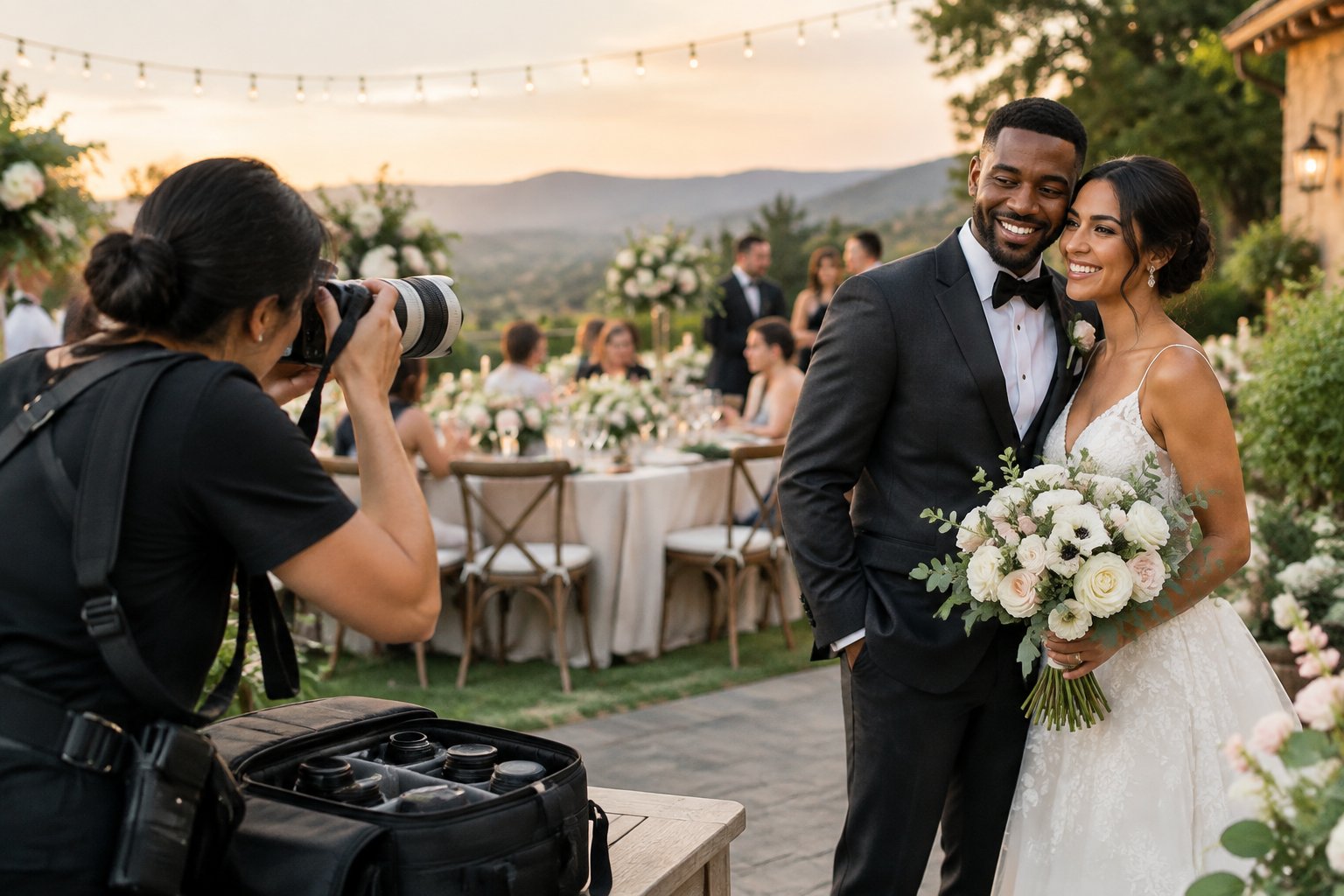
National data gives you a useful starting point, while local proposals show what your wedding expenses will look like in practice. Build photography into your wedding budget early so you can protect the parts of the day you want documented.
National Average and Typical Price Range
The Knot Real Weddings Study places the average cost of a professional wedding photographer at $3,000. Its reported spending levels include about $1,500 for couples in the lower cost quartile, $2,800 at the median, and $4,700 for the upper quartile.
You may see wedding photography costs from $1,000 to $2,500 for shorter coverage or newer photographers. Full-day packages from established professionals commonly reach $3,500 to $6,000. Luxury studios and photographers in high-demand markets may charge $10,000 or more.
Hourly pricing gives you another reference point. An eight-hour booking at the national average works out to about $375 per hour, though photographers price in editing, planning, equipment, insurance, and business time.
How Photography Fits Into a Wedding Budget
Photography takes about 8% to 10% of many wedding budgets, though your priorities should set the final amount. Couples who value portraits, candid moments, and printed work may give photography a larger share.
Start with the moments you want preserved. Full getting-ready coverage, family portraits, ceremony details, reception events, and a grand exit require more time than ceremony-only coverage.
A $30,000 wedding budget with a 10% photography allocation gives you $3,000. A $50,000 budget with the same share gives you $5,000. Use these figures as planning points, then adjust them for your venue, date, and preferred photographer.
Why Local Quotes Can Differ From National Data
National averages combine rural areas, suburbs, major cities, small weddings, large weddings, new photographers, and luxury studios. Your local wedding photography cost reflects the market where your event takes place.
Reported regional averages have ranged from about $2,600 in the Southwest to $3,800 in the Mid-Atlantic. Major cities carry higher business costs and stronger demand. A Manhattan photographer may charge far more than a photographer serving a smaller Midwest town.
Ask for three to five local quotes with matching coverage details. Compare the same number of hours, shooters, edited images, and products before deciding which price fits your wedding budget.
What Determines Your Final Quote?
Your final wedding photography rates are shaped most by coverage time, photographer experience, location, date demand, staffing, and travel. Each factor changes the work required before, during, and after your wedding day.

A clear timeline helps you choose the right coverage length. Your guest count and venue layout then show whether one photographer can document the day well or whether a second shooter adds useful coverage.
Coverage Hours and Wedding-Day Timeline
Six hours may cover a ceremony, portraits, and key reception events. Eight hours gives you room for getting-ready photos, the ceremony, family formals, cocktail hour, dinner, dances, and speeches. Ten or more hours suits longer timelines, multiple locations, or a grand exit.
Photographers may charge a flat package price and set an extra-hour rate for time beyond the agreement. Confirm when the clock starts and ends. Travel between venues, meal breaks, and overtime terms should appear in your proposal and contract.
Build your timeline backward from the moments you care about. If your reception ends late but the photographer only needs to capture the ceremony and portraits, shorter coverage may fit well.
Experience, Style, and Professional Lighting
An experienced professional wedding photographer charges for reliable timing, consistent editing, calm direction, and skill in difficult conditions. Their style also shapes the quote. Fine-art, editorial, documentary, and dark-and-moody approaches require different shooting and editing processes.
Professional lighting adds value at dim receptions, indoor ceremonies, and evening exits. Ask to see full galleries from venues with lighting similar to yours. A polished highlight reel cannot show how consistently a photographer handles an entire wedding.
Editing time forms a large part of wedding photography rates. Your photographer sorts, selects, color-corrects, retouches, exports, and uploads the final images after the event.
Geographic Location and Peak-Date Demand
Geographic location affects pricing through local living costs, business expenses, competition, and demand. Major markets such as New York City, Los Angeles, Boston, and San Francisco commonly carry higher rates than smaller towns.
Saturday weddings during peak months, especially May through October, attract the strongest demand. Friday, Sunday, weekday, and off-season dates may have more flexible pricing. Ask each photographer whether their rate changes by date type.
Venue rules also affect work. A large property, several ceremony locations, or difficult parking may require extra time and planning.
Guest Count and the Need for a Second Shooter
A larger guest list increases the number of people, groups, and moments your team needs to cover. A second shooter helps photograph separate preparations, cocktail-hour interactions, guest reactions, and alternate ceremony angles.
Guest count alone does not decide staffing. Your venue layout and timeline matter too. A compact 50-person celebration at one venue may work well with one photographer, while a 120-person wedding across several spaces may benefit from two.
Ask whether the second shooter is included, how many hours they work, and who will fill the role. Add the answer to your written proposal.
Destination Events and Travel Fees
A destination wedding photographer may add transportation, lodging, meals, parking, rental equipment, and assistant travel to the package. Some photographers include travel within a set radius and charge a fixed rate beyond it.
Request a full travel estimate before signing. Confirm whether travel days, hotel nights, baggage, and local transportation are included. A nearby photographer may offer a lower total even when their base package costs more.
What Does a Wedding Photography Package Include?
A wedding photography package should state the coverage hours, photographer count, edited image delivery, gallery access, print rights, and every included product. Packages with similar prices can provide very different value when albums, engagement sessions, or raw files are handled differently.

Read the deliverables line by line and ask about anything described vaguely. A written list protects you from surprise add-on fees and helps you compare wedding photography packages fairly.
Lead Photographer and Edited Digital Images
The lead photographer directs the coverage and handles the main creative work. Your package should name the lead, list the hours, and state whether an assistant or second shooter is included.
Edited digital images normally arrive as high-resolution JPEG files. Ask whether the package promises a minimum number or delivers the photographer’s complete edited selection. Many full-day weddings produce hundreds of finished images.
The editing style should match the portfolio you reviewed. Ask whether color correction, cropping, retouching, and black-and-white conversions are included.
Engagement Sessions and Rehearsal Dinner Coverage
An engagement session gives you practice working with your photographer before the wedding. It also creates images for announcements, guest books, or a wedding website. Some packages include it, while others price it as an add-on.
Rehearsal dinner photography adds coverage for speeches, family introductions, and informal interactions before the wedding. It requires extra hours and may involve a separate date, location, and travel charge.
Ask whether unused engagement-session time transfers to wedding-day coverage. Get the answer in writing because package policies differ.
Digital Gallery, Complete Wedding Gallery, and Raw Files
A digital gallery lets you view, download, and share your finished images online. Confirm how long the gallery stays active, whether downloads include high-resolution files, and whether you receive a backup option.
Ask what “complete wedding gallery” means. Some photographers deliver every image they select and edit. Others provide a limited collection. The contract should state the expected image count or delivery standard.
Raw files are unedited camera files. Many photographers keep them because they do not represent the finished work or editing style. If raw files matter to you, ask before booking and record the agreement in the contract.
Wedding Albums, Parent Albums, and Canvas Prints
A wedding album may include a design service, premium paper, a custom cover, and a set number of spreads. Parent albums provide smaller copies for family members. Canvas prints create wall art from selected images.
These products add design, proofing, printing, shipping, and album-company costs. Ask how many revisions the design includes and whether you can order extras later.
If an album is not included, request its current upgrade price. You can also ask for album credit or a future ordering window.
Drone Photography and Other Optional Services
Drone photography can add aerial views of the venue, grounds, ceremony setup, or group portraits. Local laws, venue rules, weather, permits, and flight safety determine whether it is possible.
Other optional services may include rush editing, photo booths, bridal portraits, extra shooters, rehearsal dinner coverage, prints, and video. Request a price list with your proposal so you can choose add-ons deliberately.
How to Compare Photographer Prices Fairly
Compare wedding photographer prices by matching coverage, deliverables, experience, and contract terms before looking at the total. A lower quote may include fewer hours, fewer edited images, or fewer services.

Use one comparison sheet for every proposal. Record the lead photographer, second shooter, hours, image delivery, album terms, travel costs, overtime, and payment schedule.
Compare Coverage and Deliverables Before the Total
Start with the parts you can measure:
- Coverage hours and start time
- Number of photographers
- Engagement or rehearsal dinner coverage
- Edited image delivery
- Gallery access and download rights
- Album, print, and canvas options
- Travel and overtime fees
A $3,000 package with eight hours and a second shooter differs from a $3,000 package with six hours and one photographer. Write each item beside the price so the differences stay clear.
Review a Full Wedding Gallery
A complete wedding gallery shows how a photographer handles the entire day. Look for preparation details, indoor lighting, family groups, ceremony moments, reception action, flash work, and quiet candid images.
Check whether faces look natural, colors stay consistent, and important moments receive thoughtful coverage. Ask for a gallery from a wedding with a similar venue or timeline.
A highlight portfolio shows a photographer’s strongest selections. A full gallery shows the consistency you will receive.
Ask About Turnaround Times and Extra-Hour Rates
Ask when you will receive sneak peeks, the complete gallery, and album proofs. Delivery ranges from a few weeks to several months, depending on the photographer and season.
Request the extra-hour rate for the lead photographer and each additional shooter. Confirm whether overtime requires advance approval or starts automatically when coverage runs past the contracted end time.
Put delivery dates, gallery access, and overtime pricing in your contract.
Check Experience, Backup Plans, and Communication
Ask how many weddings the photographer has covered, whether they carry backup cameras and memory cards, and how they protect files during the event. Confirm the plan for illness, equipment failure, severe weather, and venue changes.
You should know who will photograph your wedding if the lead becomes unavailable. Review communication expectations for planning calls, timeline help, and final gallery delivery.
A professional wedding photographer answers these questions clearly and gives you a contract that matches the proposal.
What Should the Photography Contract Say?
Your wedding photography contract should define payment, cancellation, deliverables, print rights, gallery access, travel, overtime, and backup responsibilities in plain terms. A proposal describes the offer, while the contract controls the agreement you sign.
Read every clause before paying the retainer. Ask for written changes before signing, and keep the final version with your payment records.
Deposits, Payment Schedule, and Cancellation Terms
The contract should state the retainer amount, remaining balance, due dates, accepted payment methods, late fees, cancellation rules, and rescheduling process. Many photographers use a two- or three-payment schedule, with the final balance due before the wedding.
Check whether your retainer transfers to a new date. Review what happens if the photographer cancels, becomes ill, or cannot attend because of an emergency. The agreement should explain replacement coverage and refund terms.
Add each payment deadline to your wedding planning calendar.
Print Rights vs. a Print Release
A print release gives you permission to print and share finished images for personal use. It does not transfer copyright ownership to you. Print release rights should cover personal printing, downloads, and social media sharing.
Ask whether images include watermarks and whether the photographer can use them for marketing. If you want privacy, request a written restriction before signing.
A copyright transfer and a print release are different arrangements. Confirm which one your contract provides.
Image Delivery, Archive Access, and Usage Limits
The contract should identify the file type, image resolution, delivery method, expected image count, editing style, and gallery availability period. Ask whether the photographer keeps an archive and whether restoring access after the gallery expires costs extra.
Raw files should be listed as included or excluded. If the photographer does not provide them, confirm that you will receive high-resolution edited files for personal use.
Usage limits should explain personal sharing, commercial use, vendor use, and photographer marketing rights.
Travel, Overtime, and Add-On Fees
Your contract should list included travel distance, mileage charges, lodging, parking, meals, and destination expenses. It should also state the hourly overtime rate and the person or people covered by that rate.
Add-ons such as extra hours, a second shooter, rehearsal dinner photography, rush editing, albums, prints, and drone photography should have written prices.
Ask whether taxes, shipping, album design, and gallery extensions are included in the quoted total.
How to Save Money on Wedding Photography
The most effective way to save money on wedding photography is to match your coverage and add-ons to your priorities while keeping professional reliability intact. Flexible dates, shorter coverage, and a focused package can reduce wedding expenses without removing the moments you value.
Review your wedding budget with your partner and rank the parts of photography you care about most. Then ask photographers for custom options that preserve those priorities.
Choose Coverage Hours Based on Priorities
Book the hours that cover your key moments. You may want preparation, portraits, the ceremony, family formals, reception entrances, dances, toasts, and cake cutting.
Skipping the final hour of open dancing can reduce the package total. Ask whether your photographer offers six-, eight-, or ten-hour options.
Confirm the start time so your coverage begins with the moment you want documented. A well-planned timeline helps you avoid paying for idle gaps between locations.
Consider Off-Peak Dates and Smaller Packages
Friday, Sunday, weekday, and off-season weddings may offer more date flexibility. Ask about available rates for November through April or for celebrations outside peak Saturday demand.
A smaller wedding may need fewer hours or one photographer. If your ceremony and reception share one venue, the team spends less time traveling and more time photographing.
A newer photographer with a strong portfolio may also fit a smaller wedding budget. Review a complete gallery and confirm their backup plan before booking.
Decide Which Add-Ons Matter Most
Choose add-ons based on how you will use your images. An engagement session may help you feel comfortable in front of the camera. An album may be important if you want a printed family heirloom.
Drone photography may have less value if your venue restricts flights. Ask for a digital-focused wedding photography package if high-resolution files are your main priority.
You can add albums, parent albums, and canvas prints later when your budget allows.
Avoid Cutting Corners on Reliability
Keep backup equipment, file protection, insurance, replacement coverage, and clear communication in your requirements. A low quote loses its value when the photographer cannot manage difficult lighting, timeline changes, or technical problems.
A newer professional or associate photographer can offer savings when their full gallery, contract, and backup plan meet your standards. Avoid assigning the job to a guest who lacks wedding experience and cannot enjoy the celebration.
Before signing, verify the lead photographer, coverage hours, edited image delivery, print rights, replacement terms, and total cost.