
Barn Style Wedding Venue: How to Choose the Right One
A barn style wedding venue suits you best when you want rustic charm, open countryside, and a flexible setting for both your wedding ceremony and reception. The right property fits your guest count, supports a smooth wedding-day schedule, and includes practical features such as climate control, restrooms, parking, and a clear rain plan.
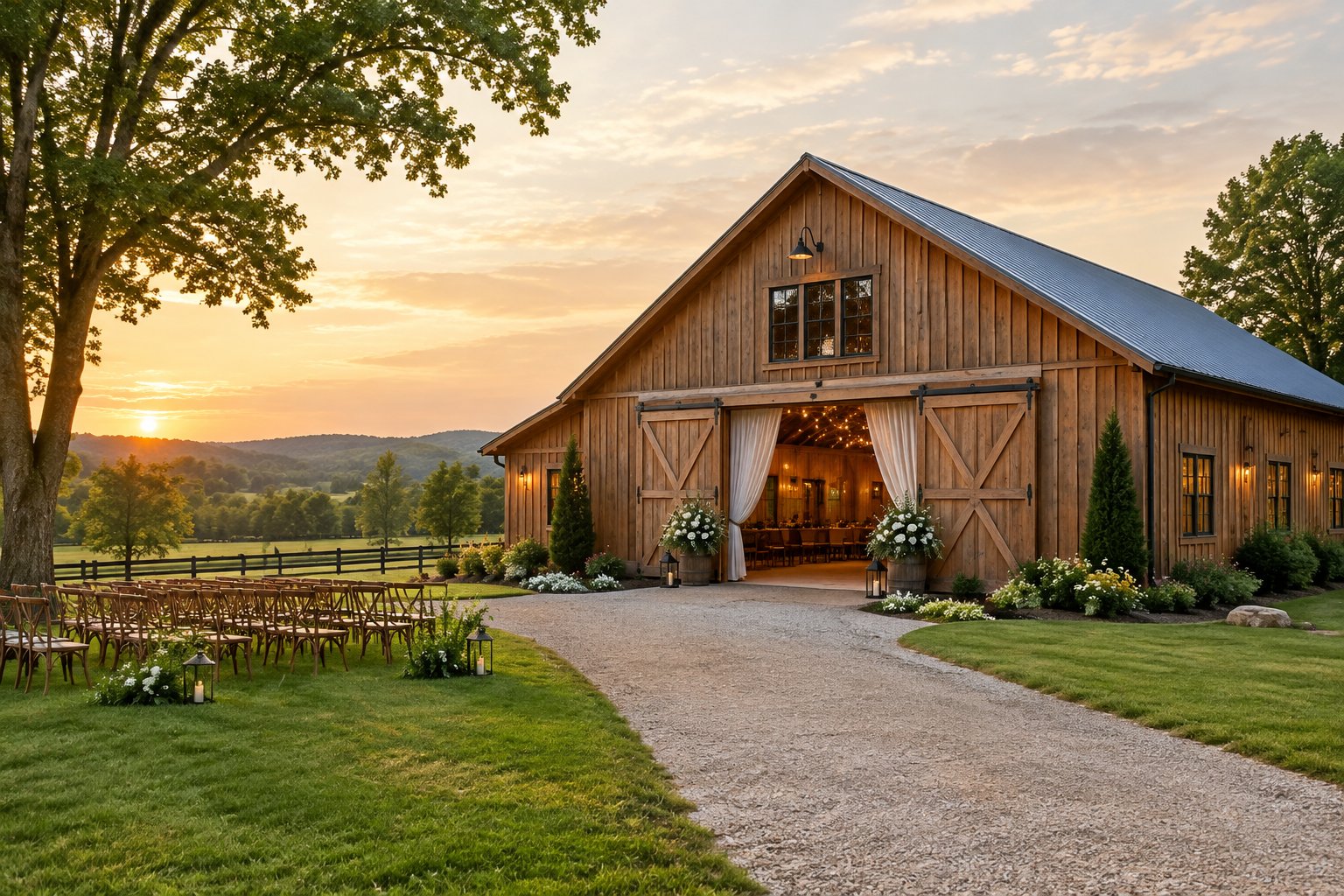
You can create a relaxed barn wedding with exposed wood, warm lights, natural scenery, and personal details. Visit your favorite locations before booking, walk through the spaces as your guests will, and compare each venue’s full costs and policies. For more inspiration, explore these wedding venue ideas as you build your shortlist.
What Defines a Great Barn Setting?
A great barn setting combines character, comfortable event features, and scenery that supports your wedding plans. Exposed beams, wide doors, open fields, and countryside views create the mood, while sound, lighting, flooring, and guest access keep the celebration running well.
The building’s age, design, and surrounding land shape the experience. Review the structure and the services behind it before choosing a barn wedding venue.
Traditional, Historic, and Modern Barn Options
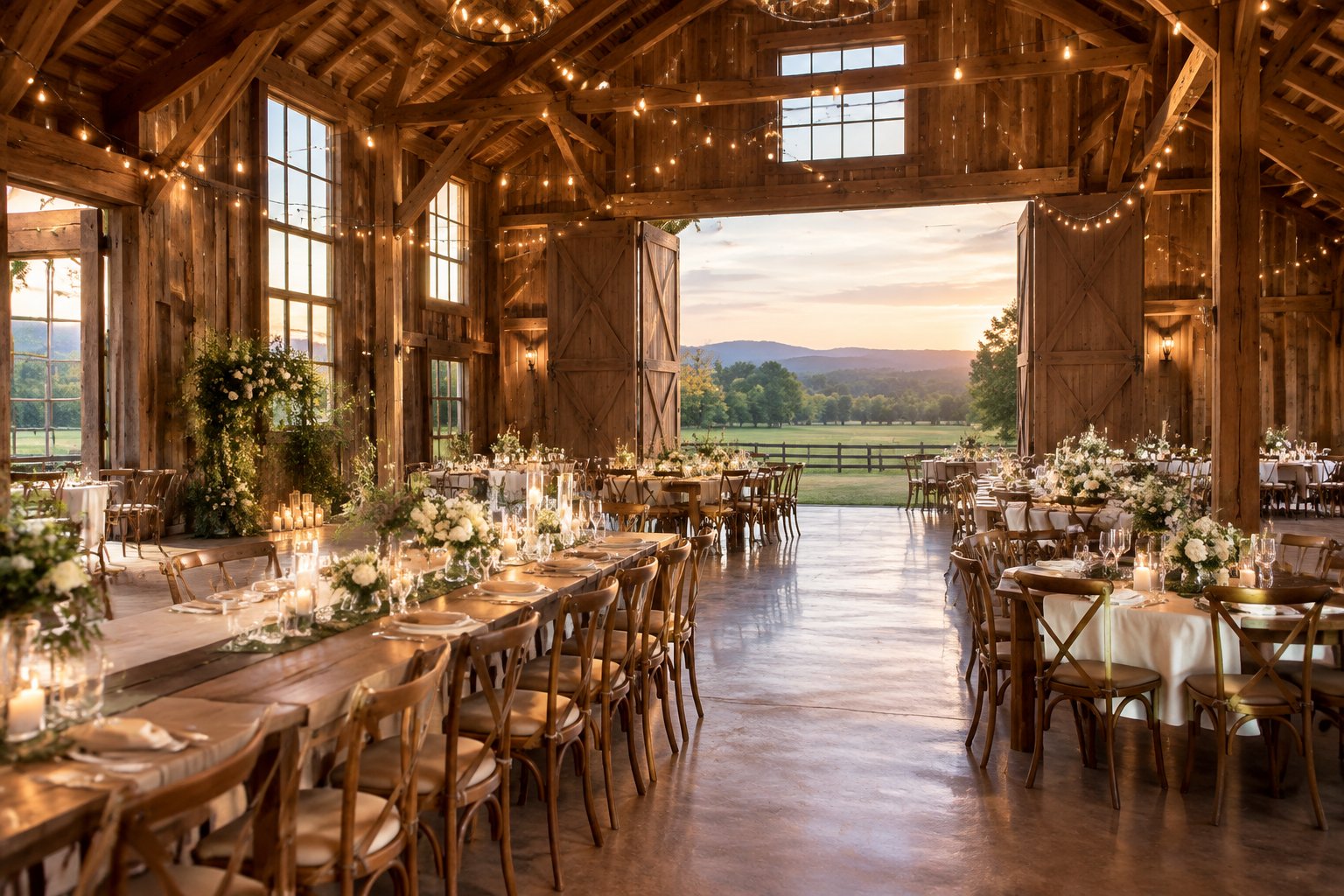
A traditional barn brings familiar rural details such as timber walls, rafters, large doors, and weathered wood. A historic barn adds original beams, old stonework, and a strong connection to the property’s past. Ask about insulation, electrical capacity, restrooms, accessibility, and preservation rules.
A modern wedding barn may pair wood architecture with polished floors, glass doors, updated restrooms, climate control, preparation rooms, and built-in lighting. These features support larger celebrations and reduce the amount of equipment you need to rent.
Working farms and countryside estates offer added choices for a farm wedding. You might have access to fields, orchards, gardens, ponds, or rolling hills. Ask whether farm activity continues during your event and which areas are reserved for guests and photographs.
Indoor-Outdoor Flow for the Full Wedding Day
Walk through the guest route from arrival to the wedding ceremony, cocktail hour, dinner, and dancing. Look for level paths, clear signs, lighting after sunset, and covered areas between spaces.
A separate outdoor ceremony space gives you a scenic setting while keeping the reception layout ready. If the same room serves every purpose, ask who moves chairs and resets tables during the transition. Confirm where guests wait during a room flip and how long the change takes.
A destination wedding or rural celebration also requires travel planning. Check the distance from major roads, airports, hotels, rideshare pickup points, and rehearsal dinner locations.
Scenery That Enhances Photos Without Extra Décor
Choose a property with several photo locations close to the main event areas. Mature trees, open fields, gardens, ponds, fences, stone walls, and dramatic barn doors can provide variety throughout the day.
Ask where portraits take place in hot weather, rain, or strong sunlight. Confirm whether guests will remain private during photographs and whether farm equipment, vehicles, or active work areas appear in the background.
A venue with strong natural scenery helps you keep décor focused. You can use the architecture and landscape as the foundation, then add details that match your colors and formality.
How to Match the Space to Your Guest List and Plans
Match the venue to your seated dinner count, ceremony layout, dance floor, and guest movement. A posted maximum does not describe every wedding setup, so request a floor plan for your exact plans.
Your guest list affects table spacing, food service, bar lines, restrooms, and accessible routes. Review each area before you make an emotional decision based on photos.
Capacity, Layout, and Dance Floor Room
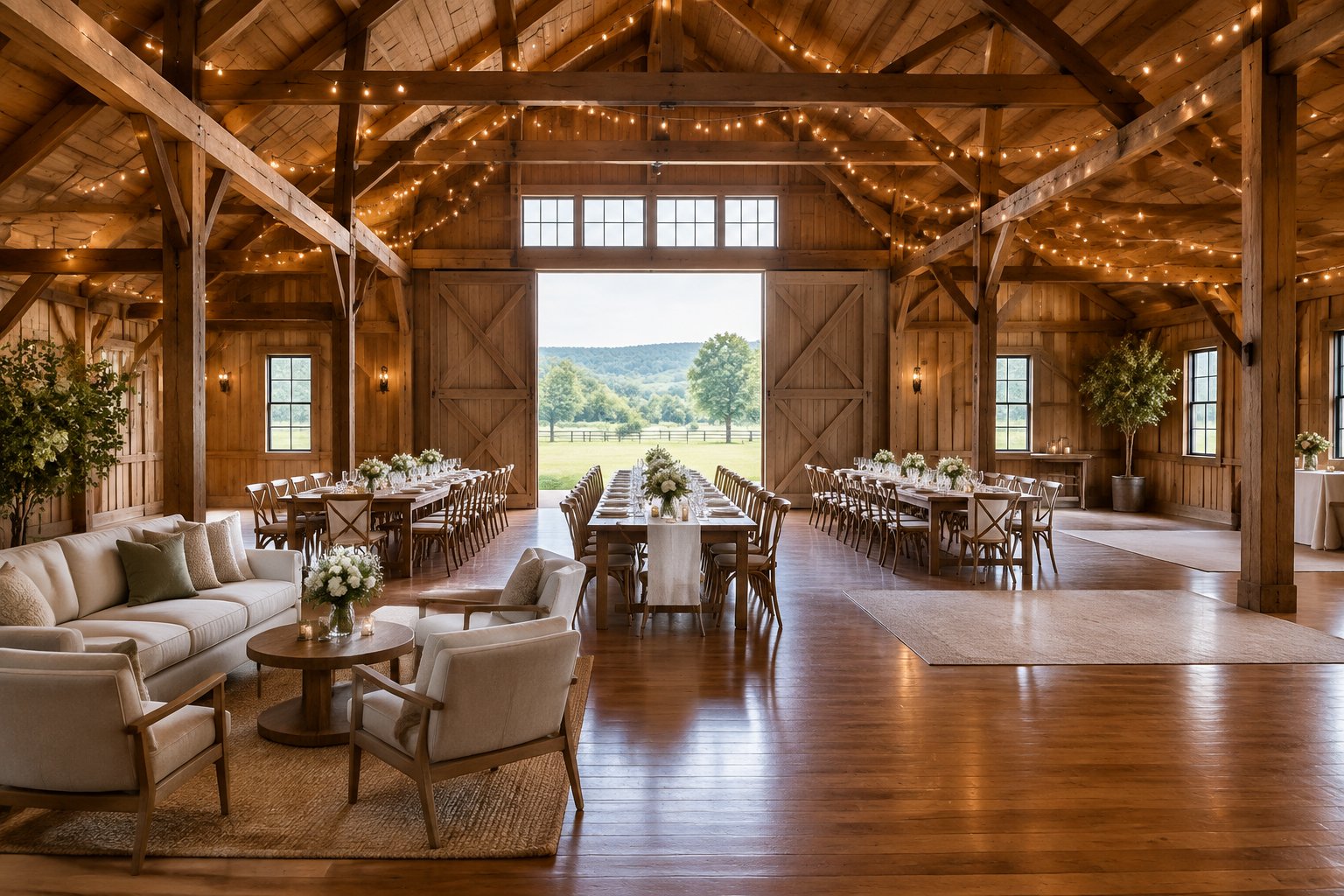
Ask for separate capacity figures for ceremony seating, cocktail service, seated dinner, and dancing. A room that holds 200 people for a ceremony might feel crowded with 150 guests, banquet tables, a buffet, a band, and a dance floor.
Bring your estimated guest count to the tour. Mark the locations for dining tables, the bar, catering stations, gifts, the cake, entertainment, lounge seating, and clear walkways.
Long farm tables fit many barn layouts efficiently, while round tables need more space around each chair. Ask to see a scaled floor plan that includes the dance floor and vendor equipment.
Outdoor Ceremony Space and Rain Plans
An outdoor ceremony space should offer firm seating, a clear aisle, guest shade, and a nearby indoor backup. Check the route between the ceremony area and reception space for grass, gravel, steep slopes, and poor lighting.
Ask what happens if rain, wind, heat, cold, or mud affects the plan. Confirm the exact indoor location, how quickly staff move chairs, and whether the backup layout leaves room for dinner and dancing.
If the ceremony and reception share one room, ask where guests go during the reset. A covered patio, deck, or terrace can give guests a comfortable place to gather during that change.
Getting-Ready Areas, Parking, and Accessibility
Look for private getting-ready rooms with mirrors, seating, outlets, storage, and nearby restrooms. Ask when the wedding party can enter and whether vendors have separate loading access.
Review parking capacity, surface type, lighting, signs, shuttle access, and walking distance. Gravel and uneven ground can create problems for guests using mobility aids or wearing formal shoes.
Check accessible entrances, ramps, restrooms, parking spaces, and routes between the ceremony and reception. Ask how guests reach the building if the weather turns wet.
Which Features Should You Check Before Booking?
Prioritize climate control, restrooms, power, vendor policies, and written time limits before you sign a contract. These details shape comfort and cost throughout your wedding day.
A rustic wedding venue can look beautiful while needing substantial rentals or added planning. Walk through service areas with your coordinator and record every inclusion in writing.
Climate Control, Restrooms, and Power
Ask how the barn handles summer heat and winter cold. Confirm the type and capacity of heating or cooling equipment, ventilation, insulation, and backup power.
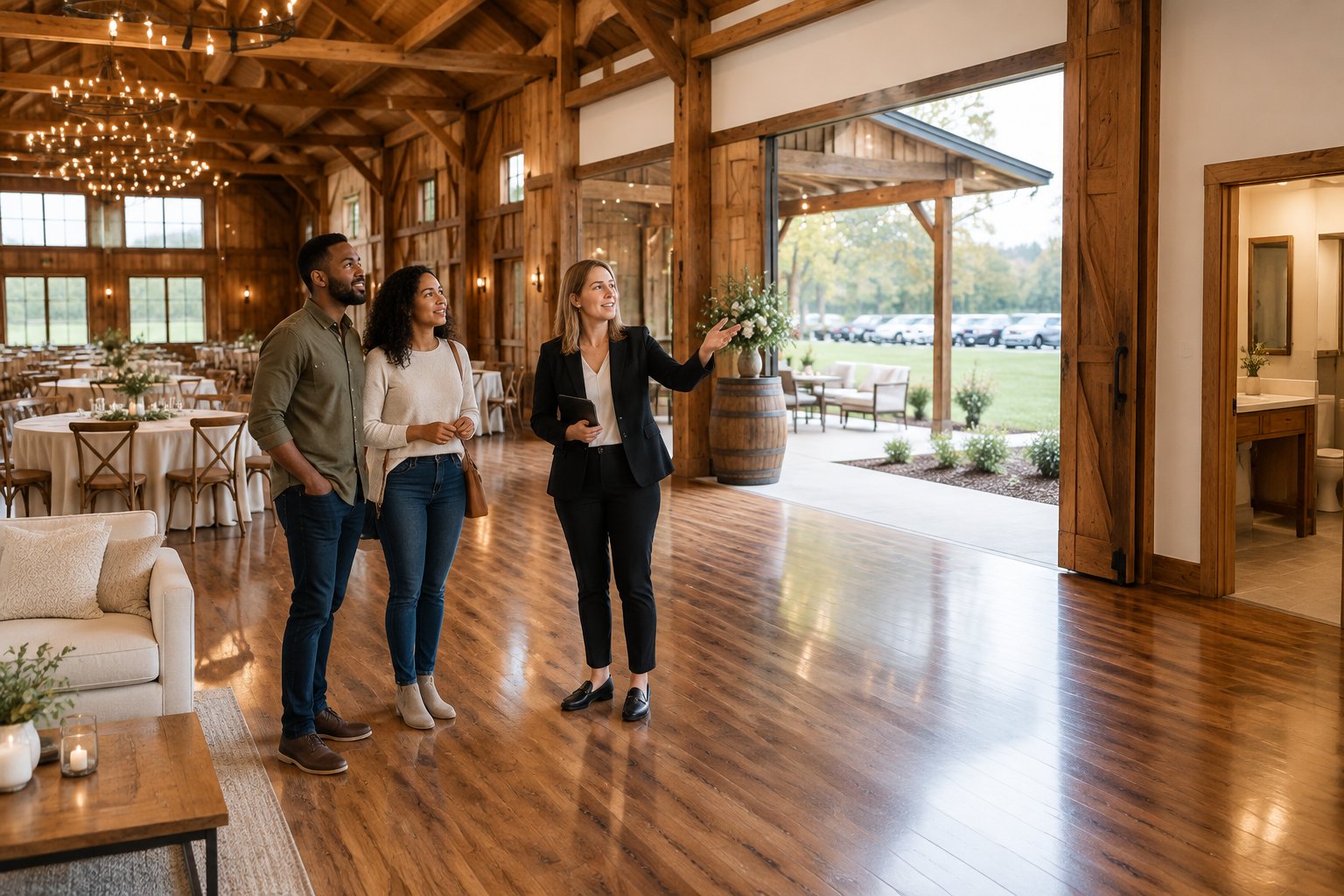
Count the restrooms and ask whether they serve your guest count. Check accessible restroom features and the distance from the reception area.
Review outlets, lighting, sound power, catering power, and generator rules. High ceilings, wooden beams, and wide barn doors create a beautiful setting, yet they also affect sound and temperature.
Catering, Bar, and Vendor Policies
Find out whether the venue provides catering, requires approved vendors, or lets you hire your own team. Ask about kitchen access, refrigeration, prep space, loading areas, trash removal, cleanup, and service fees.
Clarify alcohol rules separately. Ask whether you may bring alcohol, which bartenders are required, whether permits or insurance apply, and when last call occurs.
Ask whether outside florists, rental companies, planners, bands, and DJs are allowed. Compare each proposal line by line because a venue package may include tables and chairs while another charges separately for every rental.
Curfews, Sound Rules, and Backup Spaces
Ask when vendors may arrive, when music must end, and when cleanup must finish. Rural properties may have local sound rules, neighbor agreements, or firm event cutoffs.
Confirm whether amplified music is allowed inside and outside. Ask where a band or DJ may set up, how the room’s acoustics perform, and whether a sound limiter applies.
Review every backup space in person. Check whether it can hold your guests, protect décor and equipment, and support dinner service if an outdoor plan changes.
How to Create Rustic Charm Without Overdecorating
Use lighting, greenery, and a few focused details to highlight the barn’s existing character. Wood walls, rafters, barn doors, and countryside views already provide texture and warmth.
Choose decorations that support guest comfort and comply with venue rules. For more ideas, browse these rustic wedding decor ideas before you meet with your florist and rental team.
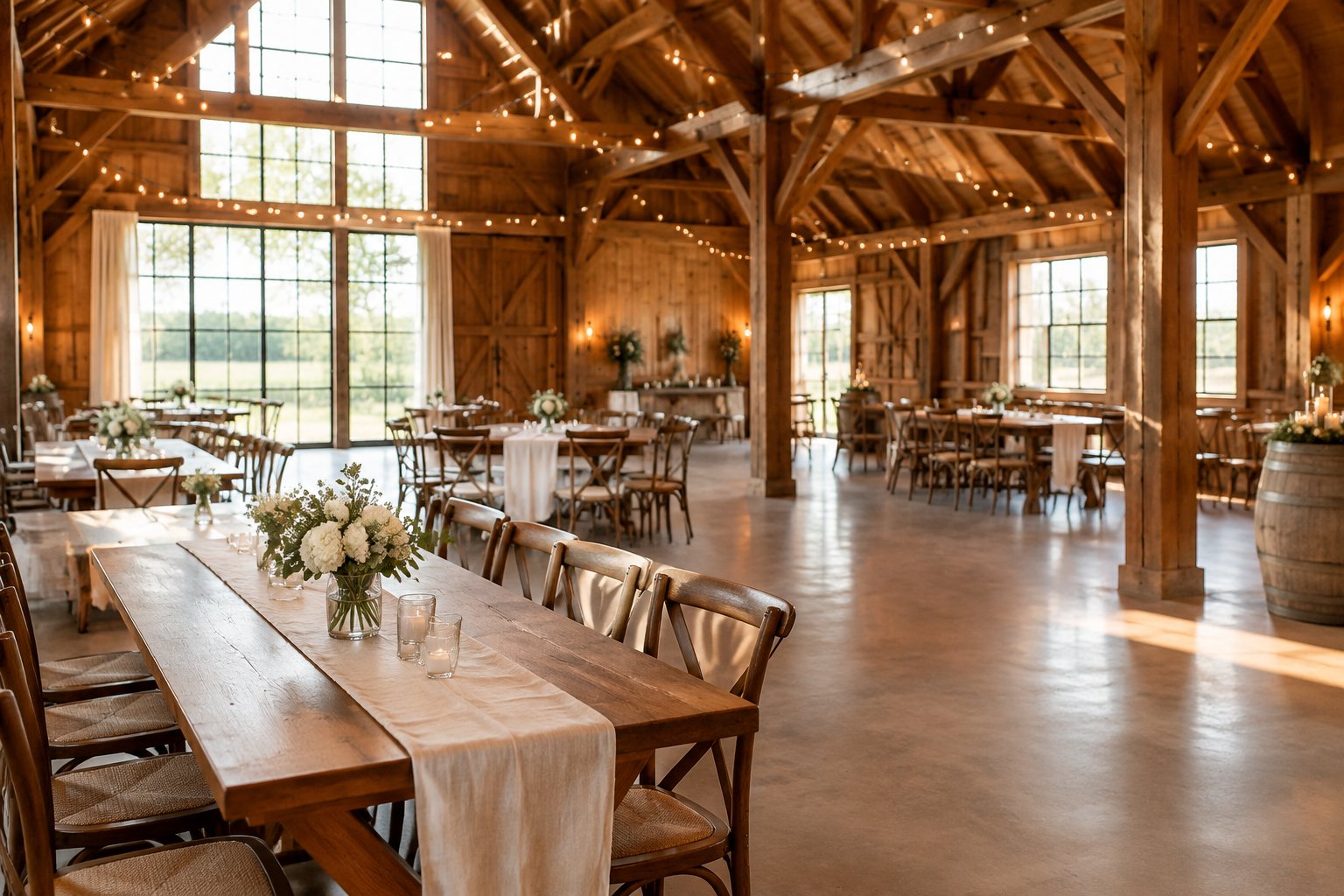
Lighting Ideas for a Warm Evening Glow
String lights across rafters or along beams create a soft foundation for the reception. Fairy lights, twinkle lights, lanterns, and warm uplighting add depth around doors and architectural details.
Use romantic lighting at guest tables with candlelight, protected votives, or taper candles where the venue permits open flame. Battery candles work well in areas with fire restrictions.
Place lighting where guests need it, including entrances, walkways, restrooms, bars, and parking paths. Ask who installs, removes, and powers each lighting element.
Floral and Greenery Designs That Suit Wood Interiors
Choose floral arrangements with natural shapes and seasonal colors. Loose greenery, wildflowers, branches, eucalyptus, and locally available blooms complement wood interiors without covering their texture.
Focus larger arrangements on the ceremony backdrop, welcome sign, sweetheart table, or head table. Use smaller pieces along dining tables so guests can see across the room.
Fall foliage adds strong seasonal color for autumn celebrations. Work with your florist to select flowers that suit the barn’s light, ceiling height, table shape, and available installation points.
Table Details, Cakes, and Seasonal Touches
Farm tables, neutral linens, woven textures, simple place cards, and low centerpieces create a welcoming reception. Add a personal detail such as a custom menu, family recipe, handwritten note, or local favor.
A wedding cake can sit on a wood, stone, or vintage-inspired display that matches the venue. Protect the cake from heat, direct sun, insects, and nearby guest traffic.
Seasonal touches might include fresh fruit in summer, dried grasses in fall, evergreen branches in winter, or soft pastel blooms in spring. Keep the palette focused so the room feels coordinated.
Where to Find and Compare Promising Locations
Use a searchable vendor marketplace, local directories, and venue tours to compare properties against the same checklist. Filter by location, guest count, style, and amenities first, then verify every important detail with the venue owner.
Save real wedding galleries, floor plans, pricing details, and contract notes for each property. This makes it easier to compare a historic barn with a modern farm wedding venue.
Using The Knot Vendor Marketplace and Local Directories
The Knot Vendor Marketplace helps you narrow wedding venues by location, style, guest count, and other planning needs. Use those filters to build a focused list before scheduling tours.
Local directories and regional wedding groups can reveal smaller properties that do not appear in broad searches. Check recent reviews, event photos, nearby lodging, and vendor feedback.
Keep a comparison sheet with the date, rental period, seated capacity, ceremony options, rain plan, climate control, restrooms, catering rules, alcohol policy, parking, accessibility, and total estimated cost.
Examples of Standout Farm and Barn Properties
The Barns at Wesleyan Hills offers a named barn property to consider when you compare countryside settings and event layouts. Perona Farms is another recognizable farm and event venue option for couples reviewing established properties.
The Farm in South Berwick, Maine, gives you a useful example of how a location name and regional setting can shape your search. Search for properties by full name and town so you review the correct location and available services.
Treat examples as starting points, then confirm capacity, available dates, included services, lodging, weather plans, and current pricing directly with each property.
Questions to Ask During a Venue Tour
Bring these questions to every tour:
- What is the seated dinner capacity with a dance floor, band, DJ, buffet, and accessible routes?
- Which spaces are reserved for the ceremony, cocktail hour, reception, portraits, and rain backup?
- What does the rental fee include, and which costs are billed separately?
- Is the barn heated, cooled, ventilated, and supplied with enough power?
- How many restrooms are available, and which features support accessibility?
- May you choose your own caterer, bar team, florist, rentals, planner, and entertainment?
- What are the vendor arrival times, music curfew, cleanup deadline, and overtime fees?
- Where do guests park, and how do they reach the barn after dark or in wet weather?
- What does the contract say about deposits, cancellations, rescheduling, insurance, and damage?
- Can you view real weddings held during the same season with a similar guest count?
Take photos and measurements with permission. Request the floor plan, pricing sheet, vendor rules, and contract before you pay a deposit.