
Barn Style Wedding Venues: How to Choose the Right One
Choose a property that supports your guest count, wedding-day flow, comfort needs, and personal style. The right barn style wedding venue gives you a memorable setting with enough practical support for your ceremony, reception, guests, and vendors.
Barn settings bring warmth through timber beams, high ceilings, wide doors, and countryside views. They also require careful planning because amenities differ widely from one wedding venue to the next. A historic barn may offer unmatched character, while a purpose-built event barn may provide climate control, restrooms, and built-in event support.
As you compare barn wedding venues, focus on how each property works for your actual celebration. Review the details below, then schedule tours with your strongest options to see the spaces in person and ask specific questions before you book.
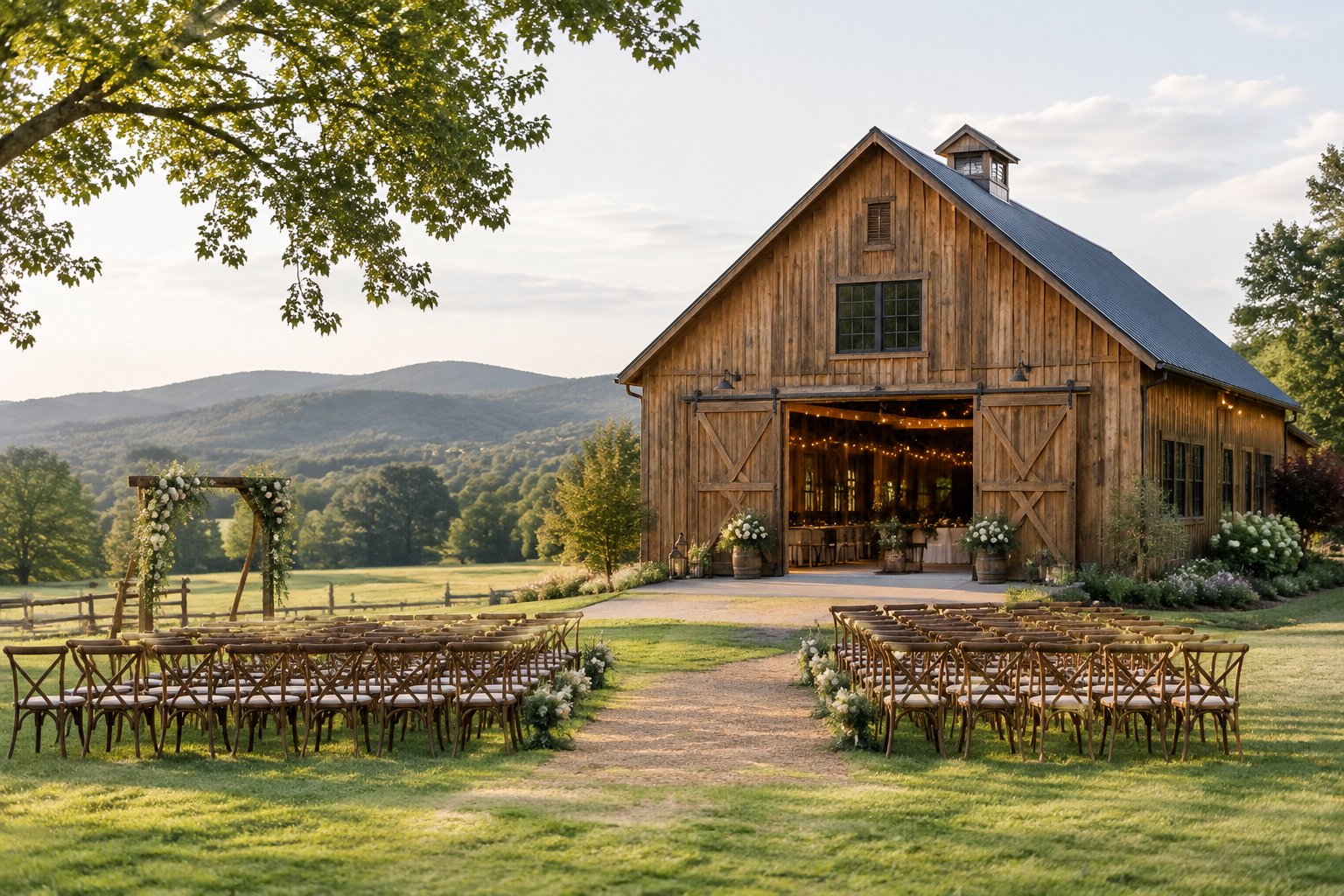
What Defines a Barn-Style Setting?
A barn-style setting combines rural character, open space, and a warm atmosphere with event features that support a comfortable celebration. Exposed wood, large doors, rafters, fields, and farm landscapes create the foundation, while lighting, flooring, heating, and catering facilities shape your guest experience.
The property’s history, surrounding land, and design direction all affect how the space feels. Look closely at the structure and the services behind it before choosing a rustic wedding venue.
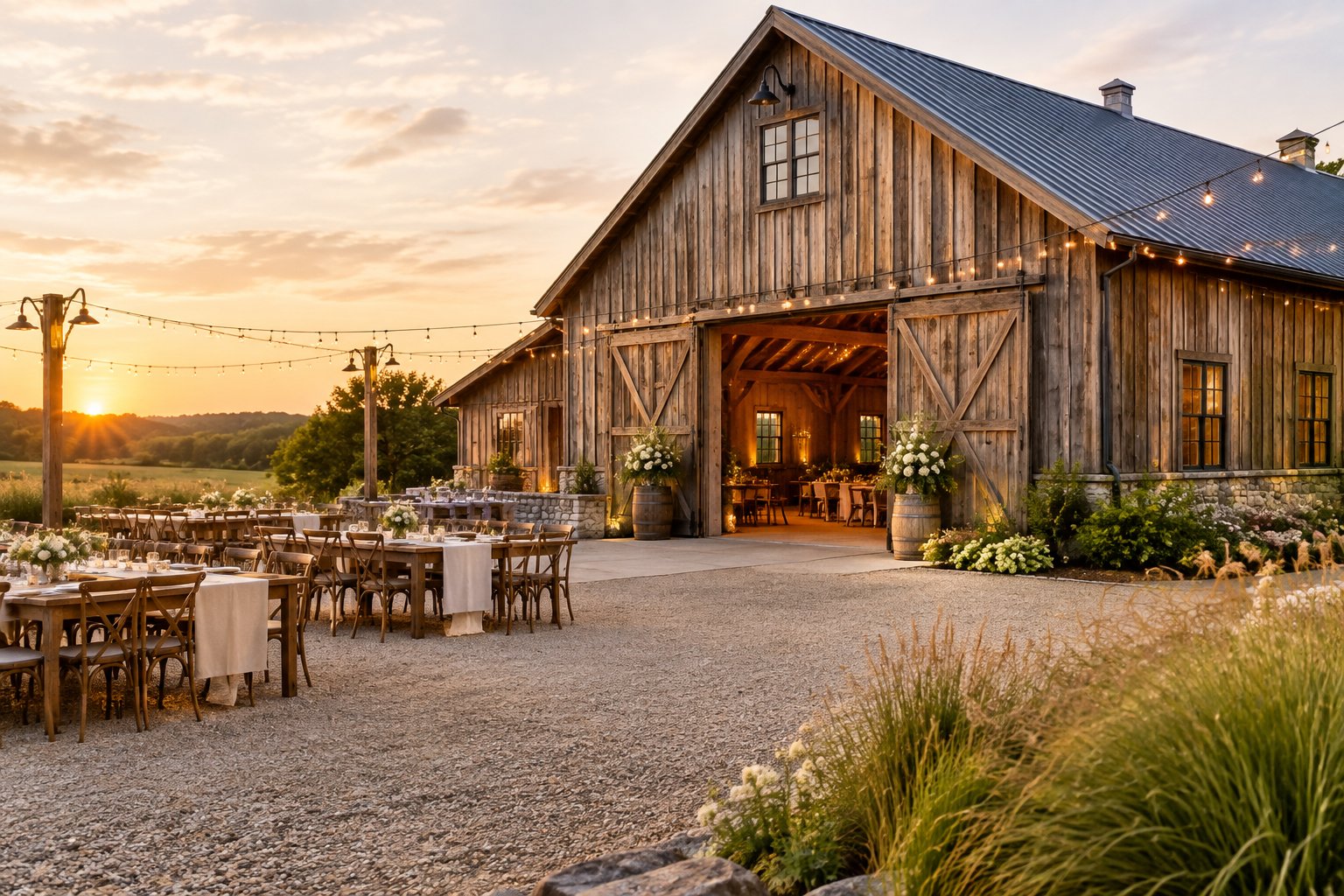
Historic Barns vs. Purpose-Built Event Barns
A historic barn gives you original beams, weathered boards, old stonework, and a strong connection to local history. Its character often reduces the need for heavy décor. Ask about electrical capacity, insulation, restrooms, accessibility, and preservation rules before you commit.
A purpose-built event barn is designed around weddings and private events. You may find wider aisles, dedicated preparation rooms, climate control, commercial kitchens, improved lighting, and layouts planned for dining and dancing. These features can make the day easier to manage, especially for larger guest lists.
Working Farms, Ranches, and Countryside Estates
A farm wedding venue may place your celebration beside fields, orchards, animals, or active agricultural areas. Ranch properties can add open land, mountain views, riding facilities, or western details. A countryside wedding venue may include gardens, guest cottages, ponds, and private roads.
Ask how active the property will be during your wedding. Find out where guests will park, whether farm equipment will operate nearby, and which areas are reserved for photos. Confirm that paths between the ceremony, cocktail hour, and reception remain safe and easy to follow.
Rustic Charm vs. Contemporary Design
Rustic design highlights wood grain, vintage furniture, natural textiles, greenery, and warm lighting. A contemporary wedding venue may pair timber architecture with clean lines, polished concrete, modern restrooms, glass doors, and refined finishes.
Your décor should support the building’s strongest features. A wedding barn with dramatic rafters may need only lighting and floral accents, while a simpler event space may benefit from draping, lounge furniture, or a bold ceremony backdrop. Choose a unique wedding venue whose existing style fits your vision and budget.
How to Choose the Right Property for Your Wedding
Choose an event venue that fits your seated guest count, allows a smooth ceremony-to-reception transition, and gives guests a practical way to arrive, stay nearby, and move around the property.
The best property supports the way you want your wedding ceremonies and reception to unfold. Review the floor plan, travel time, parking, lodging, and outdoor ceremony space before you fall in love with the décor.
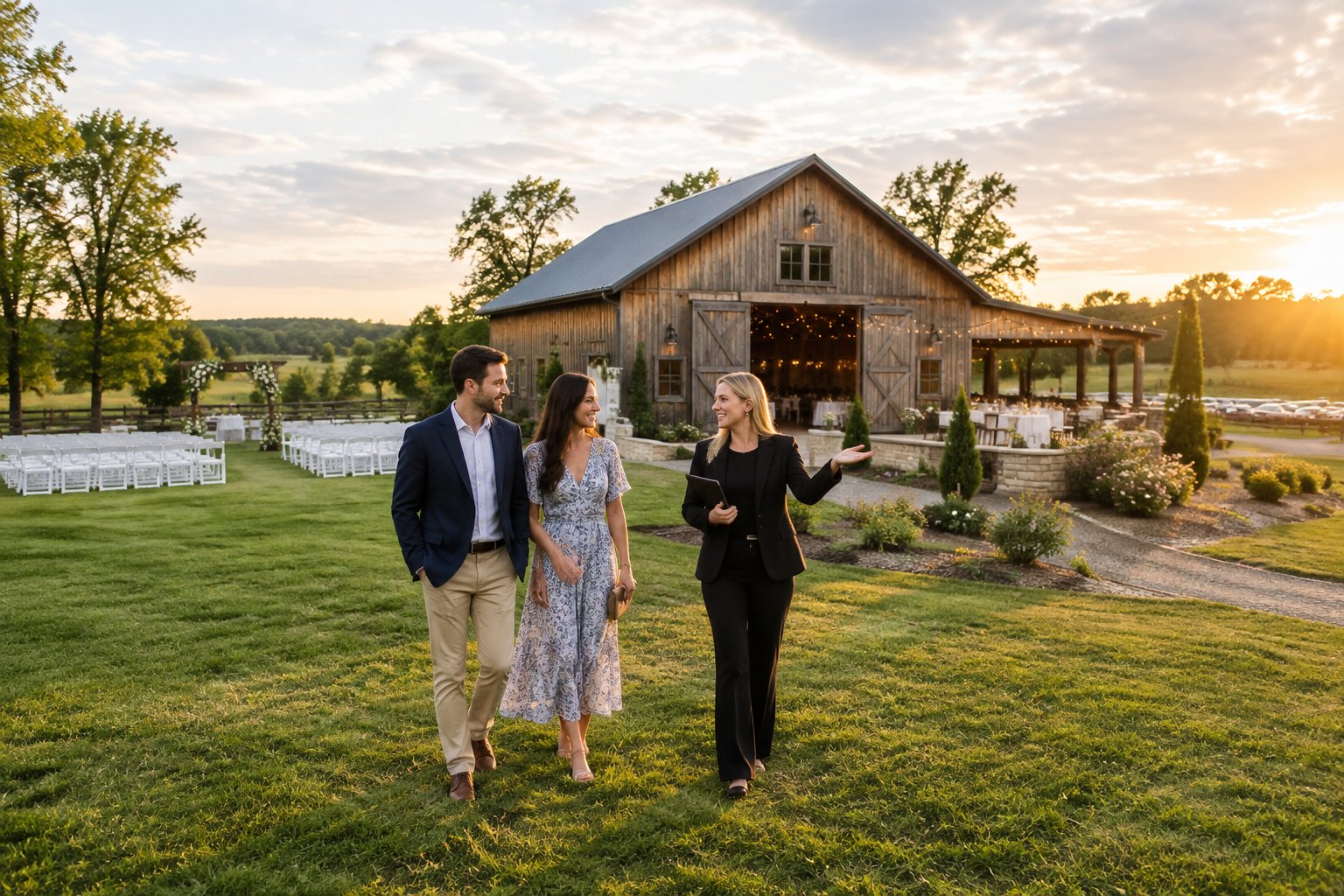
Match Guest Count to Comfortable Capacity
Ask for capacity figures based on your planned layout. A venue may list one maximum for a standing cocktail event and another for a seated dinner with a dance floor, band, buffet, or DJ booth.
Bring your estimated guest list to the tour. Mark space for dining tables, service stations, dancing, gifts, a cake table, and accessible routes. A crowded barn makes conversation and movement harder, even when the posted capacity appears to fit your numbers.
Evaluate Ceremony-to-Reception Flow
Walk the route your guests will take from arrival through the ceremony, cocktail hour, dinner, and dancing. Check whether the path is level, well lit, covered, and easy to follow after sunset.
Ask whether the outdoor ceremony space remains available during the reception. Confirm where guests go during a room flip and whether staff handle chairs, décor, and table changes. A property with separate ceremony and reception areas can reduce interruptions during the event.
Consider Location, Travel, and Nearby Lodging
Map the drive from the airport, major roads, hotels, and the rehearsal dinner location. Rural wedding venues can offer privacy and beautiful views, while winding roads, limited cell service, or long distances from lodging require extra planning.
Check parking surfaces, shuttle access, rideshare availability, and lighting. Ask for nearby hotel recommendations and group rates when many guests will travel. Share clear directions with your invitations and wedding website.
Essential Features to Check Before You Book
Prioritize climate control, accessible facilities, a workable weather plan, and clear catering and bar policies before signing a contract. These features shape comfort and logistics throughout the day.
A beautiful event barn still needs enough power, restroom capacity, service access, and staff support for your celebration. Walk through each area with your planner or coordinator and record what the venue provides.
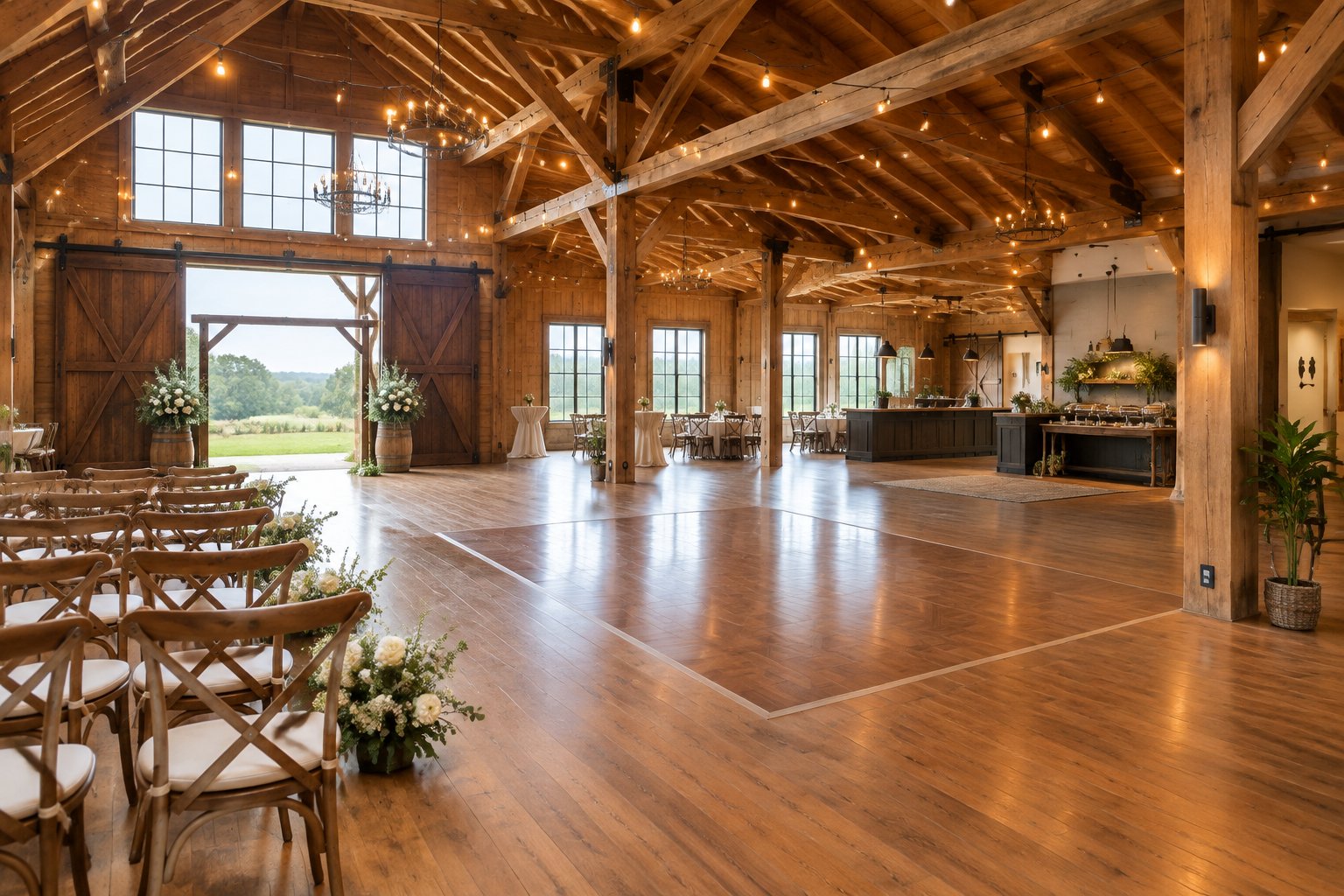
Indoor Comfort, Restrooms, and Accessibility
Ask how the building handles hot summers and cold winters. Confirm the location and capacity of heating or cooling equipment, along with ventilation, insulation, and backup power.
Count restrooms and ask whether they serve your guest count. Check accessible entrances, restroom features, parking spaces, walkways, ramps, and seating routes. Gravel, grass, steep paths, and uneven flooring can affect guests who use mobility aids or prefer stable shoes.
Rain Plans and Seasonal Weather Protection
A rain plan should identify the exact indoor space for each outdoor activity. Ask how quickly staff can move the ceremony, where guests wait, and whether the backup layout still leaves room for dinner and dancing.
Review protection from wind, heat, cold, and mud. Find out whether the property supplies tents, heaters, fans, umbrellas, covered walkways, or floor mats. Ask how weather decisions are made and when your vendors receive updates.
Catering Rules, Bar Service, and Vendor Flexibility
Some wedding and event venues include catering, while others require approved vendors or let you bring your own team. Ask about kitchen access, prep space, refrigeration, trash removal, loading areas, service charges, and cleanup.
Clarify alcohol rules, bartender requirements, corkage fees, permits, insurance, and last-call times. Ask whether outside florists, rental companies, bands, DJs, and planners are welcome. Confirm the policy in writing, including any vendor fees.
A banquet hall package may include tables, chairs, linens, staffing, and meals. A barn package may cover the building alone, so compare each proposal line by line.
How Much Does a Barn Wedding Venue Cost?
A barn wedding venue can range from a basic space rental to a full-service package, with price shaped by location, date, guest count, amenities, and included staffing. Published rental prices commonly fall in the several-thousand-dollar range, while premium properties and complete packages can cost much more.
Set your budget using the complete event cost, not the headline rental fee. Ask each venue for a detailed estimate that includes taxes, service charges, rentals, catering, bar service, insurance, and overtime.
What the Rental Fee May Include
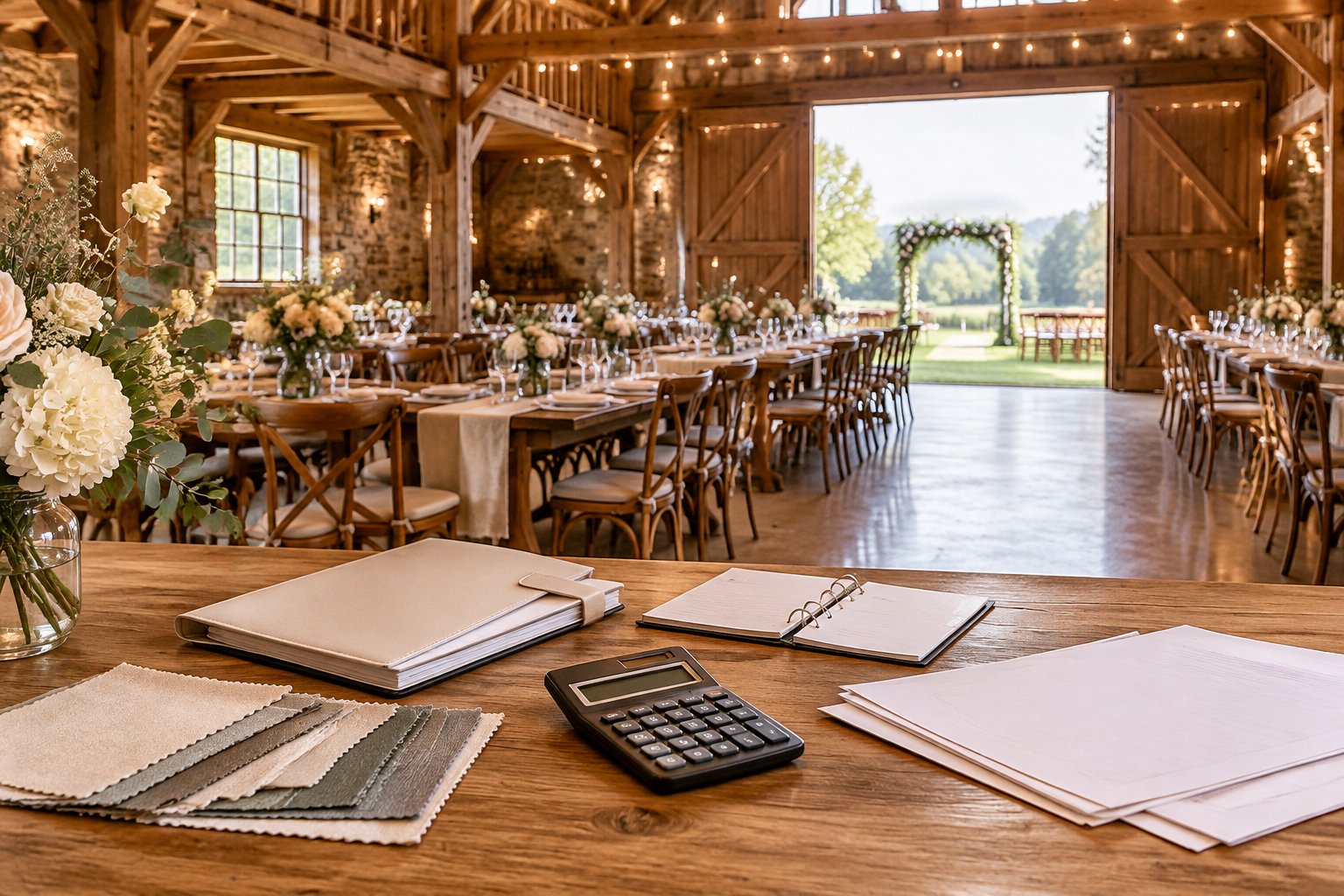
Your rental may cover exclusive property use, ceremony and reception areas, tables, chairs, parking, basic lighting, getting-ready rooms, setup, cleanup, or an on-site coordinator.
Some farm wedding properties include only the structure and grounds. Others package furniture, restrooms, staff, catering, and bar service. Request an itemized list before comparing prices so you can see which services are included.
Expenses That Commonly Fall Outside the Package
Plan for possible costs such as:
- Catering, drinks, bartenders, and cake service
- Tables, chairs, linens, dinnerware, and glassware
- Florals, décor, lighting upgrades, and ceremony rentals
- Photography, entertainment, transportation, and lodging
- Portable restrooms, generators, heaters, fans, or tents
- Insurance, permits, service fees, gratuities, cleanup, and overtime
Ask who pays for delivery, setup, breakdown, trash removal, and damage repairs. These details can add meaningful costs to a rustic barn wedding.
How Season, Day, and Guest Count Affect Pricing
Saturday dates during popular spring and fall months command strong demand. Friday, Sunday, weekday, and winter dates may offer more availability and different rates, depending on the property.
Guest count affects catering, staffing, rentals, restroom needs, and space requirements. Compare a smaller guest list, an off-peak date, and an inclusive package if you need to lower the total. You can also review what most wedding venues cost while building your first budget.
Ways to Personalize the Celebration
Personalize your barn wedding by using the building’s structure as a base, then adding details that reflect your colors, culture, hobbies, and preferred level of formality. Wood, fields, and open doors provide a flexible setting for both casual and refined designs.
Choose décor that works with the space and supports guest comfort. Your barn wedding ideas can guide the look while your venue rules determine what you can safely install.
Barn Wedding Ideas That Suit the Architecture
Use string lights to trace rafters, warm uplighting to highlight beams, and greenery to frame large doors. Long farm tables, colorful linens, vintage lounge pieces, and seasonal flowers can create a polished look without covering the barn’s character.
Keep décor secure and fire-safe. Ask whether the venue permits candles, hanging installations, nails, tape, confetti, or open flames. For tablescape inspiration, explore barn wedding table decoration ideas.
Creating an Outdoor Ceremony Space
Position the ceremony to use the strongest view while giving guests shade and a clear path. Consider a garden edge, meadow, covered porch, or spot beneath mature trees.
Plan seating, an aisle surface, sound equipment, power access, and a visible altar. Provide shade or blankets according to the season. Confirm where guests go if rain, wind, or extreme temperatures make the outdoor ceremony space unsuitable.
Balancing Rustic Details With Your Own Style
Rustic does not require a fixed color palette or a country theme. Pair timber walls with modern stationery, sleek chairs, bold florals, cultural details, or minimalist table settings.
Use sliding barn doors as a ceremony reveal, portrait backdrop, or entrance feature when the venue permits it. Let your attire, music, food, and paper goods express your personality so the farm wedding feels connected to you.
Questions to Ask During a Venue Tour
Ask for written answers about the contract, access hours, weather plan, vendor rules, parking, noise limits, and guest services. These details help you compare each wedding venue on the same practical measures.
Bring a checklist, tape measure, guest-count estimate, and phone charger for notes. Take photos only with permission, and ask to see the property during the season and time of day closest to your wedding.
Policies That Can Affect Your Timeline
Ask when you and your vendors may arrive, when guests may enter, and when cleanup must finish. Confirm ceremony length, room-flip timing, music end time, overtime rates, candle rules, sparkler policies, and exit requirements.
Review deposit amounts, payment dates, cancellation terms, damage fees, insurance, permits, and force majeure language. Ask who makes weather calls and when the decision becomes final.
Logistics for Guests and Wedding Vendors
Ask about parking capacity, shuttle drop-off, accessible routes, restrooms, cell service, emergency access, and lighting after dark. Confirm whether guests can use rideshare services and where cars may wait.
Show vendors the loading entrance, storage areas, kitchen, power outlets, preparation rooms, and waste area. Ask whether the venue supplies a coordinator and what that person handles on the wedding day.
How to Compare Finalists With Confidence
Create a comparison sheet with the same categories for every property:
- Total estimated cost
- Comfortable seated capacity
- Ceremony and reception flow
- Indoor comfort and rain plan
- Restrooms and accessibility
- Catering and alcohol rules
- Vendor flexibility
- Lodging and transportation
- Access hours and noise limits
Read the contract beside the proposal and mark every unanswered question. A venue such as Ru’s Farm may appeal to you for its setting, while another wedding venue may offer stronger infrastructure or a simpler package.
Choose the property that meets your required needs at a cost you can track clearly.