
Barns to Rent Near Wedding Venues: A Planning Guide
A barn to rent near wedding venues gives you a warm setting, flexible layout, and countryside character for your celebration. The strongest choice is a barn that already supports weddings, with safe guest capacity, restrooms, power, parking, and a clear weather plan.
A private rental marketplace such as Giggster suits couples who want to compare distinctive spaces by location, photos, reviews, and booking details, while a dedicated barn wedding venue suits couples who want more built-in support.
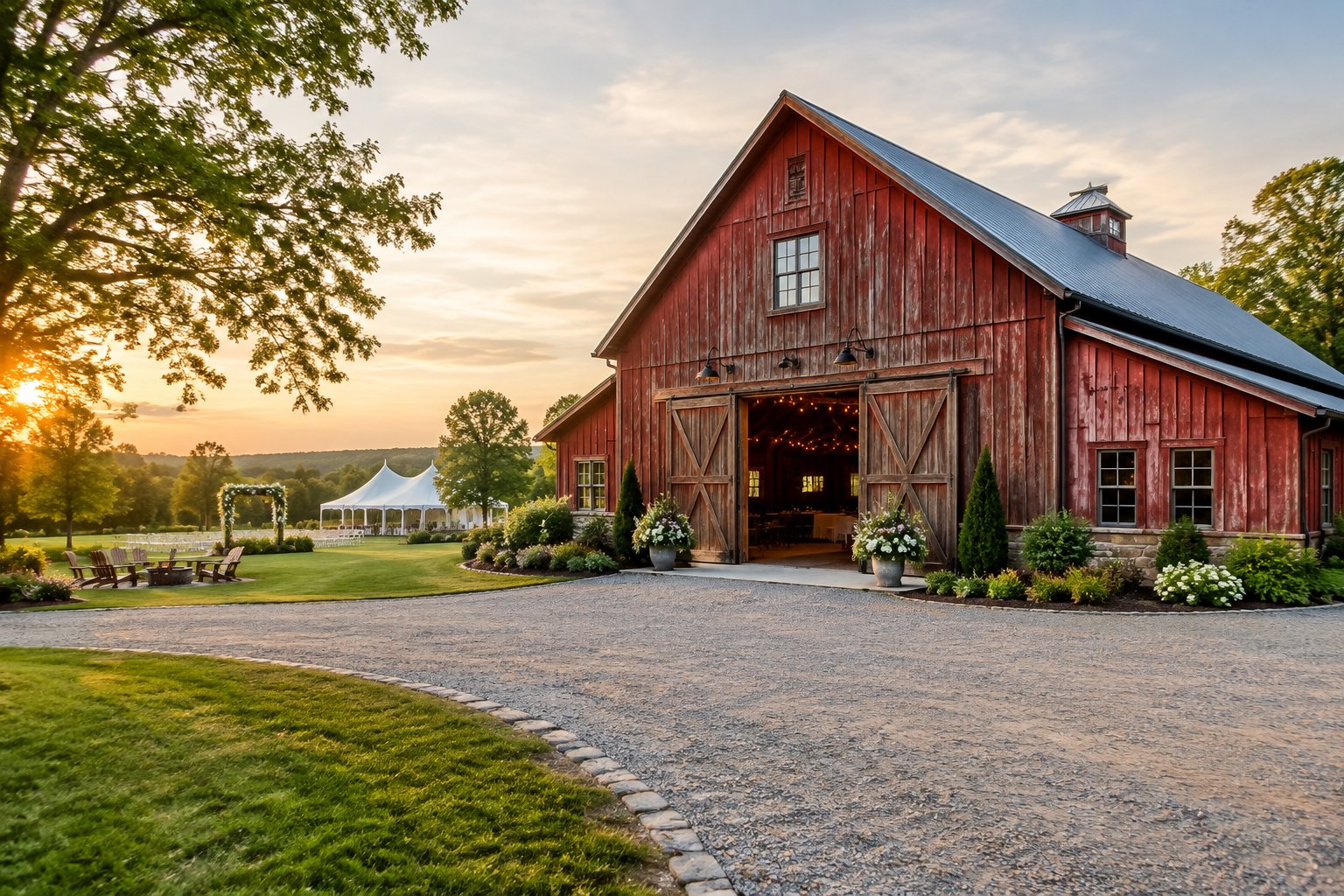
Start with your guest count, ceremony location, date, and total venue budget. Then tour spaces in person so you can check the drive, walking paths, sound, lighting, and comfort for yourself.
If you are ready to explore rustic settings and shape your shortlist, browse wedding venue ideas and save the properties that fit your plans.
Choose Between a Standalone Barn Rental and a Wedding-Ready Venue
A standalone barn gives you creative control, while a wedding-ready venue gives you tested facilities and event support. Your choice should match how much planning, renting, and vendor coordination you want to manage.
What Makes a Barn Suitable for a Wedding?
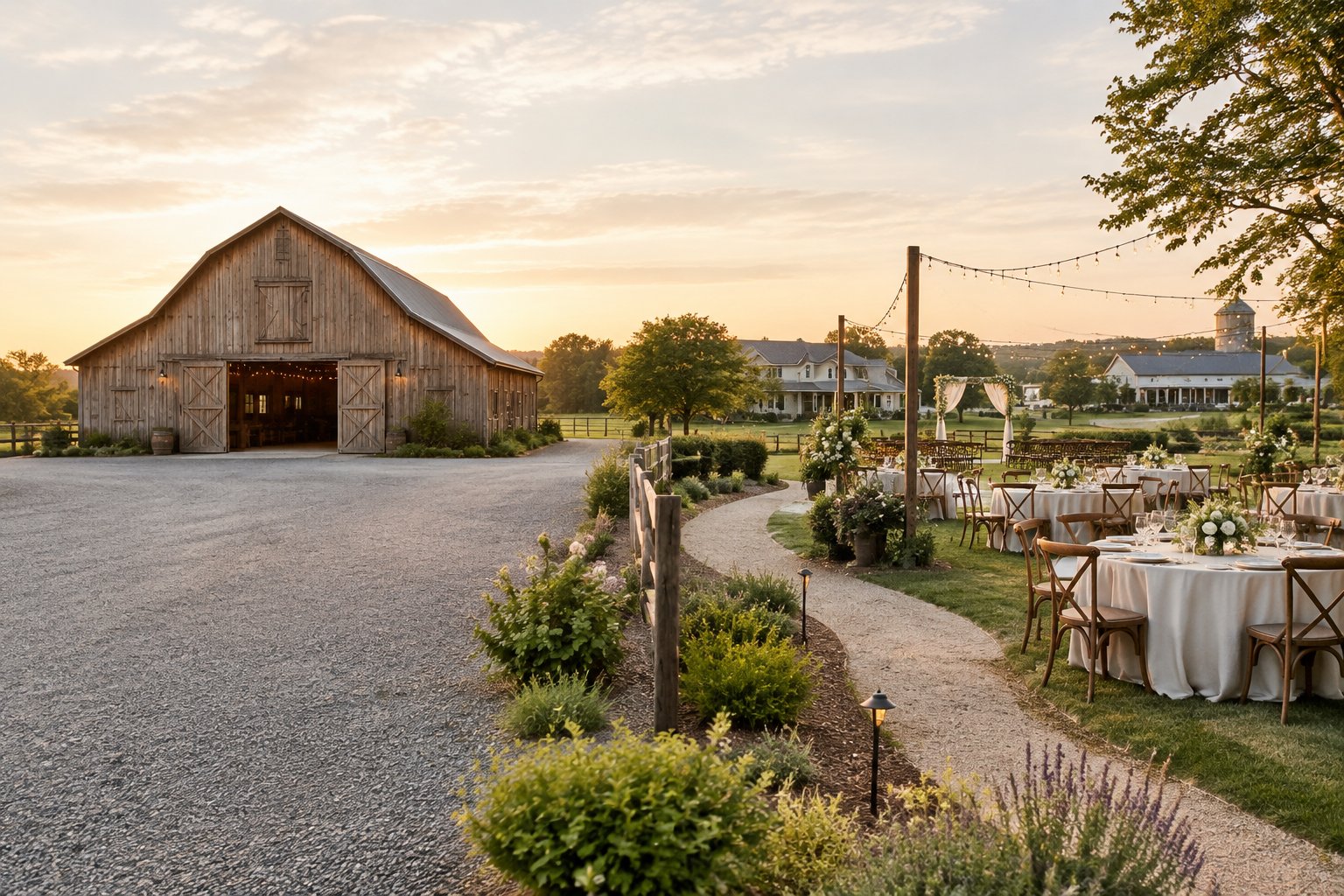
A suitable barn has a safe structure, reliable power, clean restrooms, and enough room for dining, dancing, catering, and vendor setup. Check the floor, exits, lighting, ceiling height, and sound limits during your tour.
A historic barn or restored barn brings character through timber beams, wide doors, and aged surfaces. Those details create a beautiful rustic barn wedding venue, yet the building still needs modern safety features. Ask whether the property is approved for gatherings and whether its insurance covers wedding events.
Look for:
- A stated capacity for seated meals and dancing
- A level floor with clear paths and marked exits
- Heating, cooling, or approved rental equipment
- A prep area for caterers
- Adequate electrical outlets
- Restrooms near the main event space
- Parking for guests, vendors, and emergency access
- A private area for getting ready
A standalone rental can work well for a small event when you have a planner and a flexible vendor team. Include every added service in your budget before you sign.
When a Dedicated Farm Wedding Venue Is the Better Choice
A dedicated farm wedding venue is the better fit when you want indoor and outdoor event spaces, venue staff, and a smoother event timeline. These properties are designed for farm weddings and may include ceremony lawns, reception barns, preparation suites, parking, and preferred vendors.
A rustic barn wedding venue also reduces setup decisions. You may have access to tables, chairs, lighting, restrooms, catering areas, and a rain plan through one agreement.
Ask whether the venue coordinator handles building operations only or also supports your wedding timeline. Compare the complete package with a rental-only quote. A lower space fee can grow after you add furniture, restroom rentals, power, heating, cleanup, and coordination.
How Close Should the Barn Be to Your Ceremony Site?
Keep the barn close enough for guests to move between the ceremony and reception without confusion. A short walk works when paths are level, shaded, and well lit.
A shuttle or golf cart helps guests who have mobility needs and anyone traveling across a large farm property. If your ceremony takes place at another wedding venue, ask about the drive time, parking, traffic, and guest transportation.
Build extra time into the schedule for late arrivals, photos, and weather changes. Nearby hotels and a clear address on your invitations will also make a rural location easier for guests.
Find Barn Rentals Near Your Wedding Location
Search a wider radius than your ceremony town, then compare each property by travel time, guest capacity, services, and total cost. A barn a few miles outside a popular wedding area may offer more space and a calmer setting.
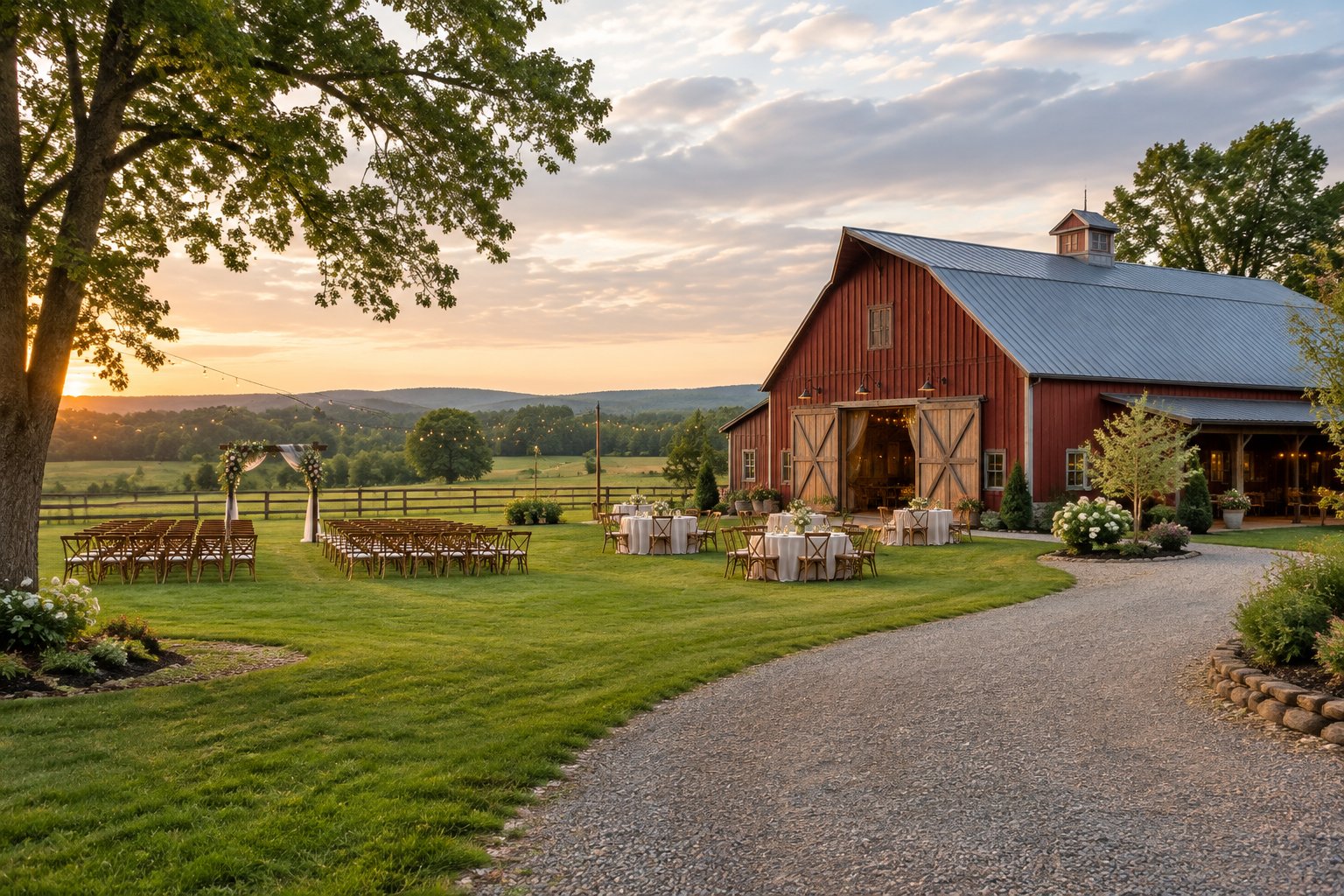
Your shortlist should include the venue’s address, available dates, rental hours, included items, vendor rules, and contact person. Save real-wedding photos when possible so you can see how the space works with a full guest count.
Search Beyond City Limits and Popular Wedding Areas
Expand your search 30 to 60 minutes outside the city where your ceremony or hotel block is located. Rural areas often give you larger grounds, open fields, and more flexible layouts.
Factor in the cost of shuttles, rideshare availability, lodging, and late-night transportation. Use location terms that reflect how local listings are written:
- “[City] barn wedding venues”
- “[County] farm wedding venues”
- “rustic wedding venues near [town]”
- “historic barns near [metro area]”
- “barn reception venue near [ceremony site]”
Ask whether the venue address works for GPS and whether guests need to follow special signs after leaving the main road.
Compare Wedding Directories and Rental Marketplaces
Wedding directories help you compare wedding venues by capacity, style, packages, and reviews. Rental marketplaces such as Giggster can help you find distinctive barns, farms, and event spaces with listing photos, availability details, and host information.
Big Sky Barn is another example of a name you may encounter while comparing barn wedding venues. Treat every listing as a starting point and confirm current pricing, availability, access hours, and event policies with the property owner.
Create a simple comparison sheet with:
- Total venue fee
- Guest capacity
- Ceremony and reception options
- Restrooms and climate control
- Tables and chairs
- Parking and lodging
- Vendor restrictions
- Cleanup and overtime charges
Questions to Ask Before Scheduling a Tour
Send these questions before you spend time visiting a property:
- Is the barn approved for wedding events?
- What guest count fits a seated meal and dance floor?
- What dates and access hours are available?
- Are the ceremony, cocktail, and reception areas included?
- What tables, chairs, lighting, and furniture come with the rental?
- Are outside caterers and bartenders allowed?
- What is the rain plan?
- Are restrooms, parking, and accessible paths available?
- What insurance and alcohol documents are required?
- What time must music stop and cleanup end?
A clear response helps you remove unsuitable spaces before the tour. Ask the same questions of every property so your comparison stays fair.
Check the Essentials Before You Book
Book a barn only after you confirm capacity, weather protection, guest access, restrooms, parking, power, and vendor logistics in writing. These details shape comfort and cost throughout the day.
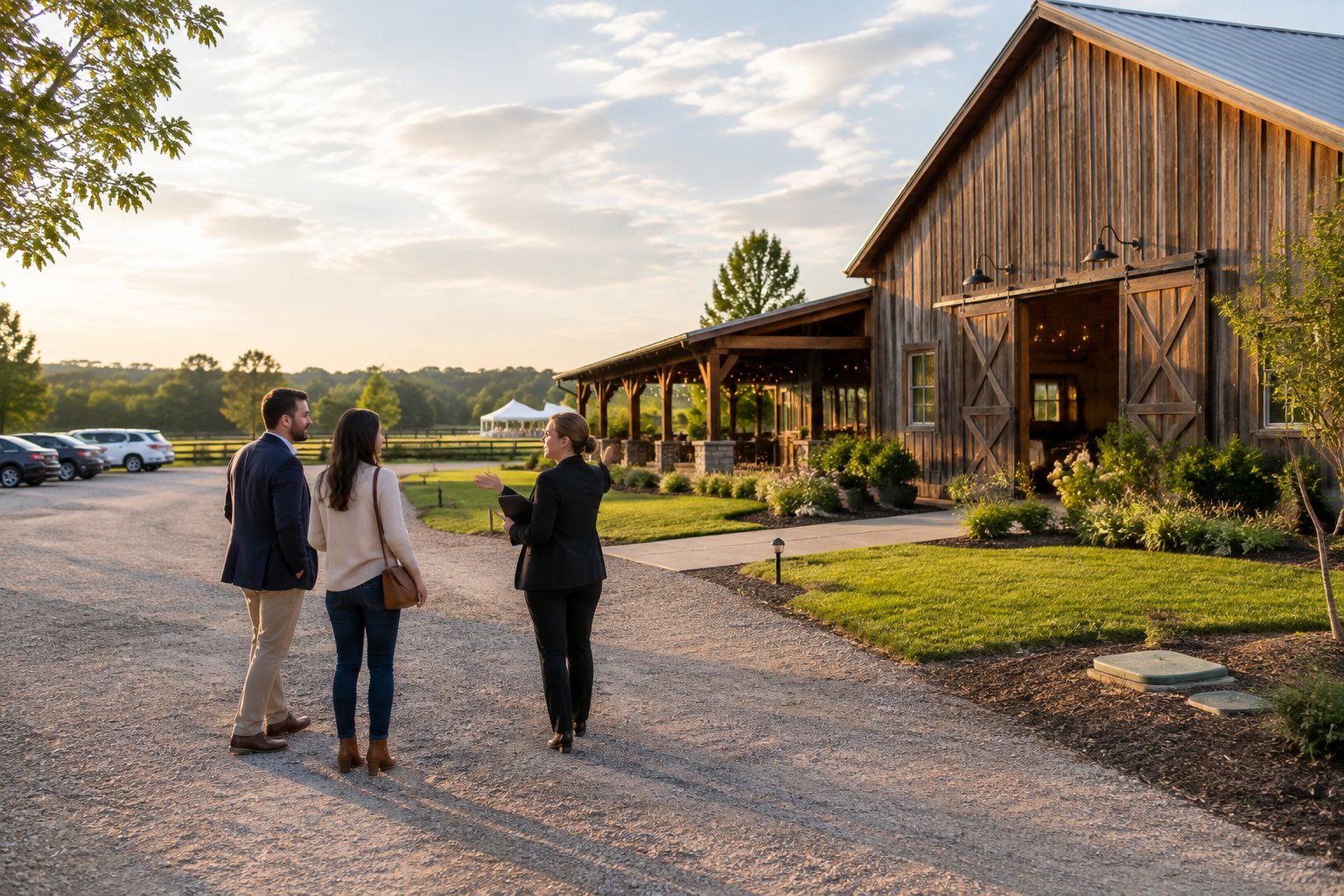
Walk through the building during your visit and note where guests will arrive, eat, dance, use the restroom, and leave at night. Ask your caterer and DJ to review the space before the final layout is approved.
Capacity, Layout, and Guest Flow
Choose a capacity that leaves room for tables, food service, dancing, a bar, gifts, and vendor equipment. A venue’s maximum number may apply to standing guests, while a seated dinner needs more floor space.
Map the movement from arrival to ceremony, cocktails, dinner, dancing, and departure. Keep the bar away from the buffet line, give the DJ a safe power source, and leave wide paths between tables.
Confirm where the wedding party will get ready and where vendors can store cases, boxes, and décor. Ask to see a layout for your guest count. Online photos can hide tight corners, low beams, or long walks between spaces.
Weather Plans and Climate Control
A dependable weather plan gives you a comfortable indoor option or a covered structure that fits the full guest count. Ask when the decision must be made, who moves furniture, and whether the backup space remains attractive and practical.
Confirm climate control for your wedding date. Heating and air conditioning affect guest comfort, food service, flowers, candles, and photography equipment.
If the barn uses fans, heaters, or portable units, ask who supplies them, where they sit, and what they cost. For an outdoor wedding, plan for rain, wind, heat, cold, mud, insects, and dark pathways.
Tell guests about grass or gravel on your wedding website so they can choose suitable shoes.
Restrooms, Accessibility, and Parking
Count the restrooms and confirm their location, cleanliness plan, lighting, and accessibility. A property without permanent plumbing may need a restroom trailer, with delivery space and a firm rental deadline.
Inspect routes from parking to the ceremony, barn, restrooms, and outdoor areas. Look for firm surfaces, ramps, accessible parking, handrails, and seating options.
Ask whether a golf cart or shuttle is available for guests who cannot manage long distances. Check parking after rain if possible. A field that works in dry weather may need mats, attendants, signs, or a shuttle when the ground is soft.
Tables, Chairs, and Vendor Requirements
Write down the exact number and type of tables and chairs included. Confirm whether the same chairs serve the ceremony and reception, who sets them up, and who moves them during the day.
Ask about catering access, refrigeration, water, sinks, prep surfaces, trash removal, and electrical load. Your caterer may need a commercial kitchen, generator approval, or a service tent.
Your band or DJ needs safe outlets and a place for equipment that does not block guest paths. Confirm décor rules before ordering anything. Some barns limit candles, hanging pieces, nails, confetti, fog machines, open flames, or amplified music.
Create a Rustic Wedding Experience That Feels Personal
Use the barn’s natural structure as your foundation, then add details that connect the property to your story. Rustic elegance feels polished when your décor supports the wood, landscape, and light already present.
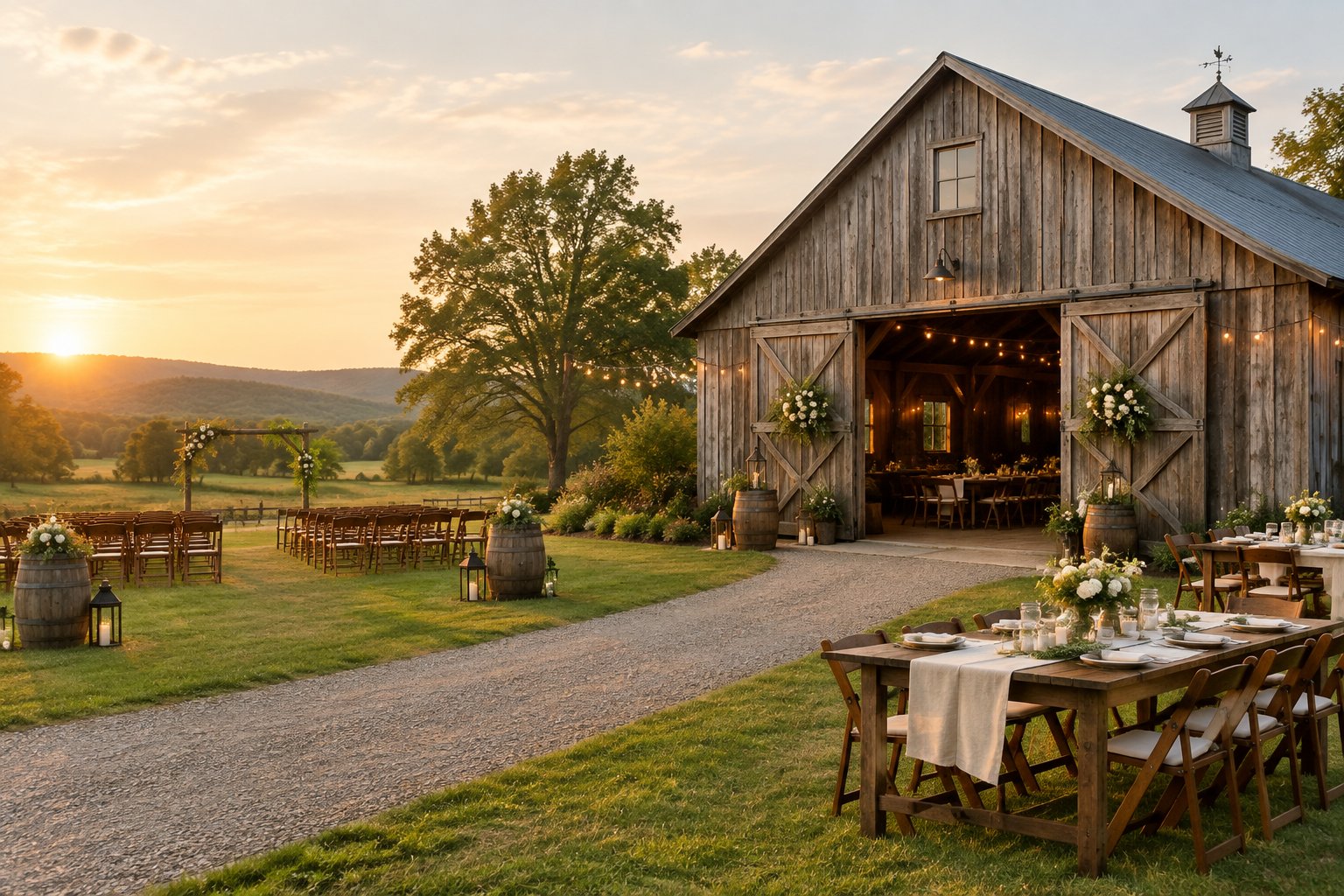
Choose a small set of colors and materials before you order décor. Natural textures, seasonal flowers, comfortable seating, and practical lighting help the space feel welcoming without covering its best features.
For more inspiration, explore rustic wedding decor ideas.
Use the Grounds for Ceremony, Cocktails, and Photos
Divide the property into clear zones so each part of the day has its own mood. Open fields work well for ceremonies and portraits, while a porch, patio, or shaded lawn gives guests room to talk during cocktails.
Walk the grounds with your photographer and mark photo locations before the wedding day. Note the sun direction, walking time, uneven ground, and privacy of each spot. Keep a covered route available if the weather changes.
A garden wedding setup can suit a barn with planted borders, mature trees, or a landscaped lawn. A working farm may feel better with meadow views, weathered fences, or wide fields.
Use signs and staff guidance to keep guests away from equipment, animals, and private areas.
Choose a Wedding Theme That Fits the Setting
Match your wedding theme to the barn’s character and your preferred level of formality. A soft garden palette suits a bright restored barn, while deep colors and candlelight complement a historic property with dark timber.
You might build the design around:
- Wildflowers, linen, and pale wood
- Jewel tones, taper candles, and iron accents
- White florals, greenery, and refined glassware
- Bright colors, patterned runners, and playful paper details
Use personal elements that have meaning, such as family recipes, framed photos, local drinks, or a guestbook made from reclaimed wood. Keep the design consistent across the ceremony, tables, bar, and lounge areas.
Add Lighting, Lounge Areas, and Guest Activities
String lights bring warmth to rafters, porches, and paths after sunset. Ask the venue where lights may hang, who installs them, and whether the electrical supply supports your plan.
Add pathway lighting near parking, restrooms, stairs, and outdoor seating. Create a lounge with sofas, benches, rugs, and blankets. A fire pit adds a gathering point when the venue permits it, while lawn games give guests an easy activity during photos or cocktail hour.
A rustic bar can serve as a visual anchor with a custom sign, local beer, seasonal cocktails, or a nonalcoholic drink station. Confirm liquor rules, bartender requirements, ice storage, and closing time before finalizing the menu.
Browse barn wedding ideas for more ways to use the structure and grounds.
Review Packages, Costs, and Contract Details
Compare the full event cost, not only the advertised rental fee. A barn venue may charge for the space alone, while another package includes furniture, staffing, lighting, cleanup, or catering support.
Ask for a written quote that separates the base fee, taxes, deposits, optional services, vendor charges, and damage costs. Barn venues and other event venues can vary widely by season, location, guest count, access hours, and included infrastructure.
What Is Included in a Barn Rental Fee?
A rental fee may include the building, grounds, parking, and a specific access period. Some farmhouses and barn properties also include tables, chairs, basic lighting, preparation areas, or overnight rooms.
Confirm each item in writing:
- Ceremony and reception access
- Setup and teardown
- Tables, chairs, and furnishings
- Lighting, heating, and cooling
- Restrooms and cleaning
- Parking and security
- Getting-ready rooms
- Catering and bar facilities
- Event staff or coordination
- Storage before and after the event
Ask whether the venue provides labor or only makes equipment available. “Tables included” may mean stacked tables that your team must set up.
How to Compare Venue Packages Fairly
Put every quote into the same budget format. Add the venue fee to rentals, catering, bar service, insurance, restrooms, transportation, staffing, cleanup, taxes, and overtime.
A rental-only barn may cost $2,000 to $7,000 for the space, while broader packages can start around $8,000 and rise with guest count and service level. Treat these ranges as planning figures and confirm current pricing with each property.
Compare access time as well as money. A full-day or weekend booking gives vendors more setup time and may reduce rushed labor. Friday, Sunday, winter, and midsummer dates may offer different prices than peak Saturdays.
Permits, Insurance, and End-of-Night Rules
Ask who handles permits for weddings, alcohol, amplified music, tents, food service, and temporary structures. Agricultural zoning does not automatically cover public events, so the venue should explain its approvals and your responsibilities.
Many properties require event liability insurance, and alcohol service may require host liquor coverage. Confirm the coverage amount, certificate holder, deadline, and approved providers.
Read the end-of-night rules carefully. Note the music cutoff, guest departure time, vendor pickup deadline, trash requirements, cleaning standard, damage deposit, and overtime rate. Include these costs in your budget before paying a deposit.
See a Wedding-Ready Barn Rental Example
Lavender Ridge Farm shows how a property can combine rustic character with the practical features needed for a comfortable wedding day. Its mix of historic barns, a log cabin, open fields, and event amenities gives you several ways to organize the celebration.
What Lavender Ridge Farm Includes
A well-planned property such as Lavender Ridge Farm can bring key wedding functions together on one site. Look for a rustic barn with climate control, restrooms, preparation space, and room for dinner and dancing.
Useful features include:
- Historic barns for ceremonies or receptions
- A log cabin for lodging or getting ready
- Tables and chairs for guest seating
- A rustic bar for drinks and service
- String lights for evening atmosphere
- A fire pit for a relaxed gathering area
- Lawn games for cocktail hour
- Open fields for ceremonies and photos
Confirm which features are included in your selected package and which require an added fee. Ask about capacity, access hours, vendor policies, cleanup, and seasonal availability before you reserve the date.
How On-Site Features Simplify the Wedding Day
Keeping the ceremony, reception, portraits, and guest activities on one property reduces travel between parts of the celebration. Your photographer can move between open fields and the barn, while guests can find food, drinks, restrooms, and seating without leaving the site.
Climate control protects comfort during changing weather. Permanent restrooms reduce rental coordination. Tables and chairs shorten the delivery schedule, while string lights, a fire pit, and lawn games give you built-in ways to style the grounds.
During your tour, ask the manager to walk through a sample timeline from vendor arrival to final cleanup. That conversation will show you where each feature fits and what your team still needs to arrange.