
Barn Type Wedding Venues: How to Choose the Right One
Choosing among barn type wedding venues starts with the way you want your celebration to feel and function. A barn wedding venue with a comfortable guest capacity, a strong rain plan, and dependable amenities is the best choice for couples who want rustic character without sacrificing guest comfort.
Historic barns, working farms, and modern event barns each offer a different experience. The right wedding venue gives you a setting that fits your style while supporting your ceremony, reception, vendors, and guests. Tour each property with your guest count, budget, wedding date, and must-have features in hand.
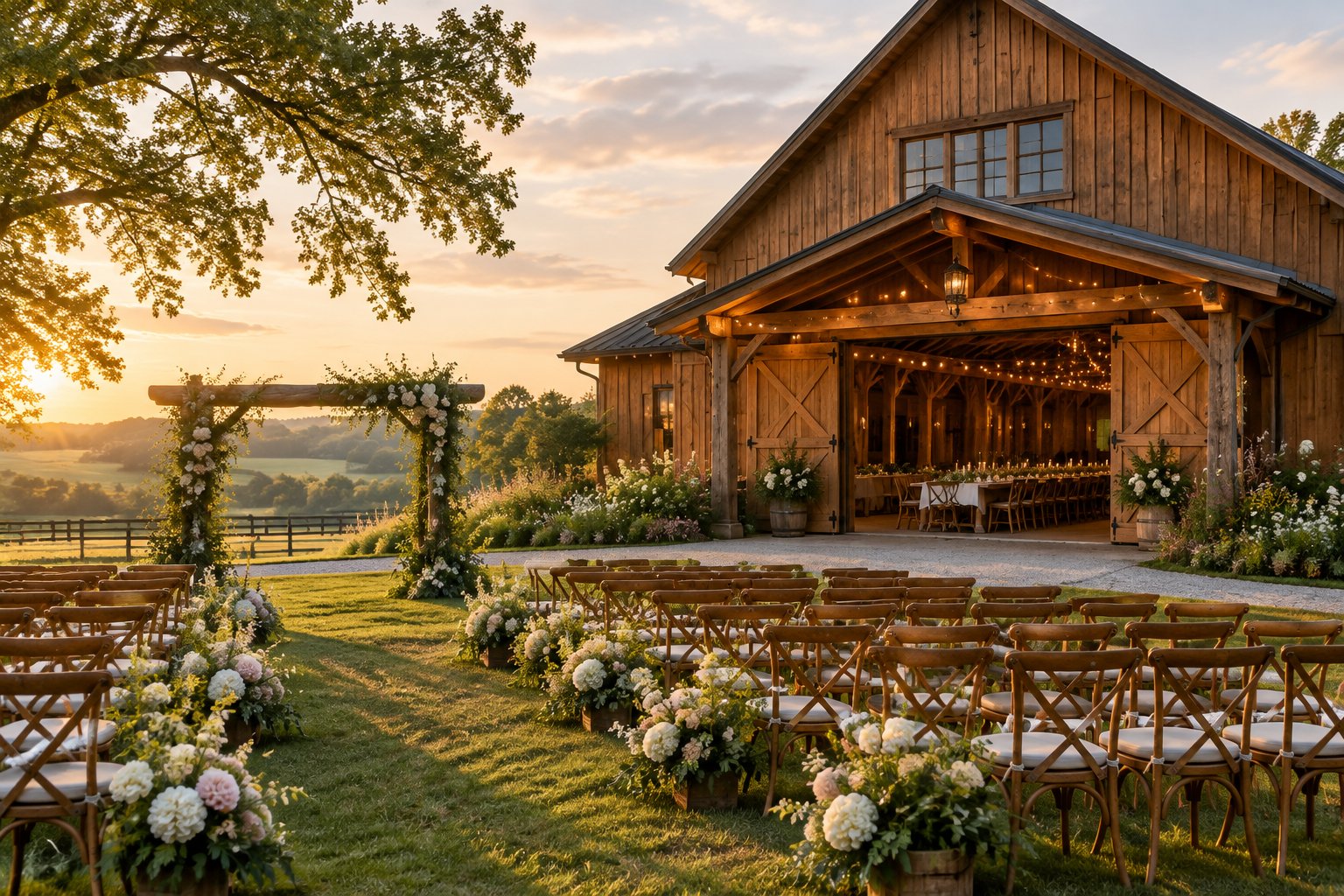
Start by comparing venues in person and asking for a complete written estimate. A thoughtful tour will reveal details that online galleries cannot show, from parking routes to restroom access. For more inspiration, browse these barn wedding ideas as you shape your plans.
What Makes a Barn Setting Work for a Wedding?
A barn setting works well when its natural character supports a clear guest flow, comfortable facilities, and flexible spaces for each part of your celebration. The best barn venues combine architectural charm with reliable event infrastructure.
Historic Barns, Working Farms, and Purpose-Built Spaces
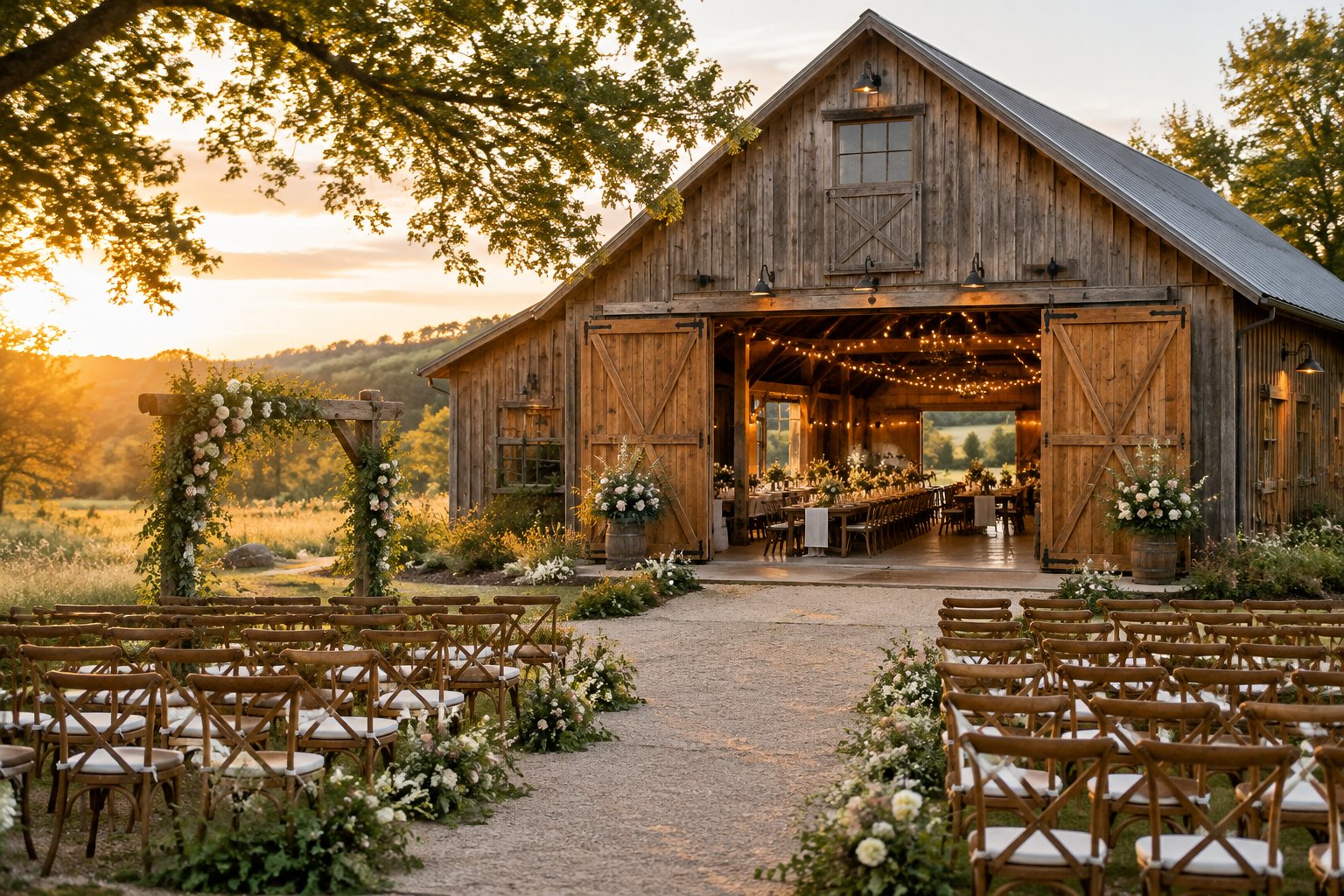
Historic barns bring age, texture, and a strong sense of place. Original beams, wide doors, weathered siding, and hand-built details create a setting with built-in character. Ask about floor strength, electrical capacity, fire safety, and approved guest limits before booking an older structure.
Working farms add open fields, gardens, animals, and seasonal scenery. Confirm which areas belong to your event, how guests will move around the property, and whether farm activity continues during your wedding.
Purpose-built spaces offer a barn look with event-focused planning. They often include restrooms, getting-ready suites, catering areas, climate control, and dedicated parking. This format suits couples who want rustic design with a smoother venue setup.
How Rustic Charm Can Meet Modern Comfort
A well-designed barn wedding venue pairs natural materials with features that keep guests comfortable. Look for secure flooring, clean restrooms, strong lighting, heating and cooling, reliable power, and accessible routes.
Ask whether the venue provides tables, chairs, linens, sound equipment, and cleanup. Check the condition of each item during your tour. A beautiful space still needs practical support for dinner service, dancing, and vendor work.
Indoor-Outdoor Flow for the Full Celebration
Sliding doors, covered porches, patios, and nearby lawns help guests move easily from ceremony to cocktails to dinner. A strong layout keeps the bar, restrooms, dining area, and dance floor easy to find.
Walk the property in the order your guests will experience it. Note steep paths, gravel, narrow doorways, poor lighting, and long distances between spaces. These details shape the comfort of your barn weddings as much as the décor does.
How to Match the Venue to Your Guest List and Vision?
Match the venue to your guest list by checking usable seating space, event flow, and the setting you want for your ceremony. A capacity number alone does not show whether guests will have room to dine, dance, mingle, and move comfortably.
What Is the Real Seated Capacity?
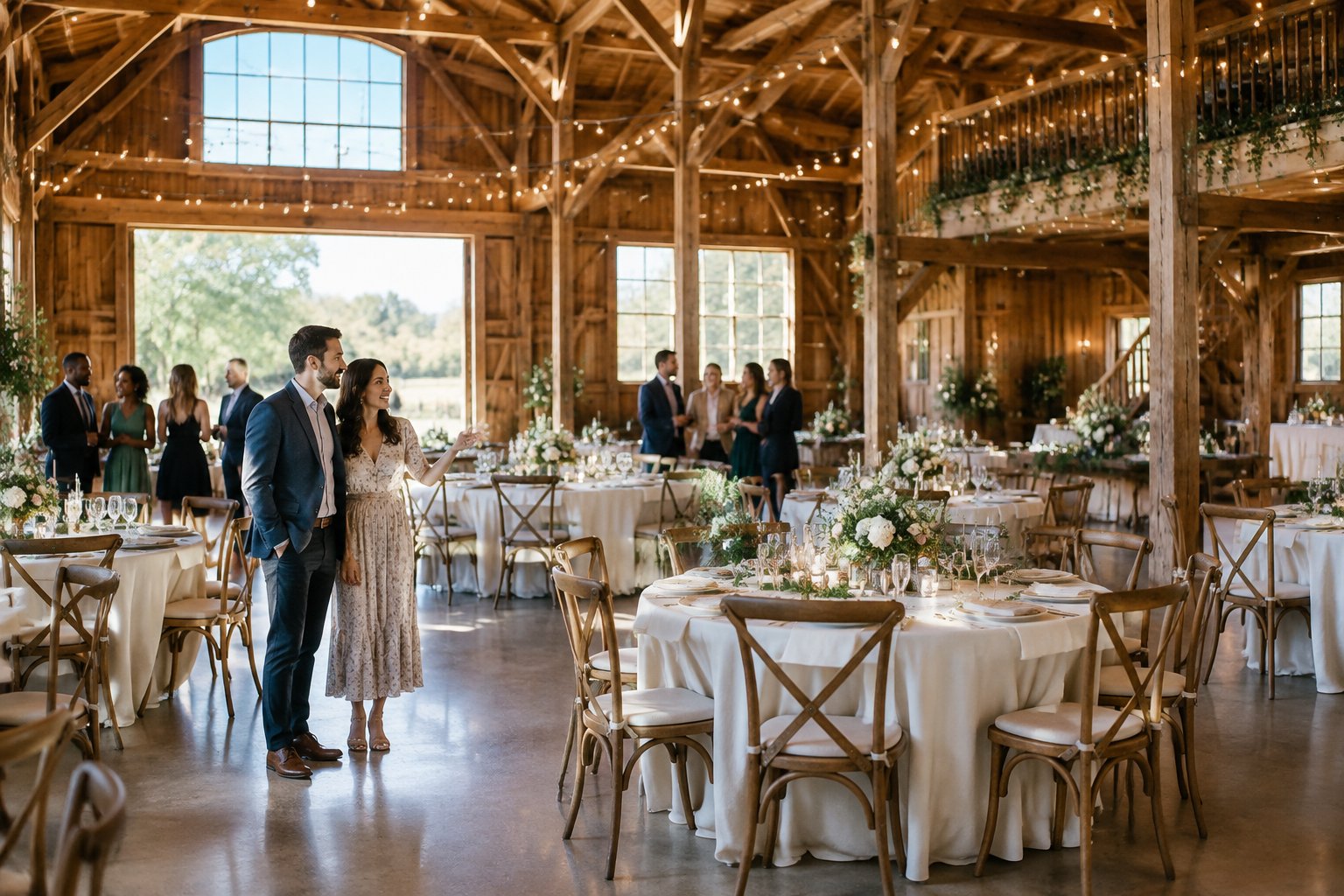
Ask for the maximum seated capacity with your preferred table style, buffet or plated meal, dance floor, bar, DJ or band, and service areas included. A venue that seats 150 without a dance floor may feel crowded once you add the features you want.
Request a floor plan with table sizes and aisle widths. Leave room for wheelchairs, strollers, servers, and guests who need easy access to restrooms. If your guest list is still changing, compare the venue’s comfortable capacity with your expected attendance.
Choosing a Ceremony and Reception Layout
A venue that hosts both parts of the day can simplify transportation and protect your schedule. Look for a separate ceremony area, cocktail space, and reception room so staff can reset one space while guests enjoy another.
Consider the sound and sight lines. Guests should hear the ceremony, see the couple, and reach the reception without crossing active vendor areas. Ask how long a room flip takes and where guests wait during that transition.
Finding the Right Ceremony Backdrop
Choose a ceremony backdrop that fits your style and works in the season you selected. A field, tree line, pond, garden, barn doors, or timber frame can create a memorable setting with limited extra décor.
Visit the backdrop at your ceremony time if possible. Check sun direction, shade, wind, nearby roads, and background noise. Confirm where the wedding party will stand and whether chairs remain level on the ground.
Making the Most of an Outdoor Ceremony Space
An outdoor ceremony space needs firm walkways, guest seating, shade, sound support, and a clear weather switch. Ask where guests go if rain, high heat, strong wind, or cold temperatures affect the plan.
Provide signs that guide guests from parking to the ceremony. Consider water stations, fans, blankets, umbrellas, and shoe-friendly paths based on the season. A venue with a beautiful lawn should also offer a practical way to use it safely.
Which Amenities Should You Confirm Before Booking?
Confirm the rain plan, food and drink policies, climate control, restrooms, accessibility, parking, lodging, and transportation before you sign a contract. These details shape the guest experience and the final budget.
A Rain Plan That Still Feels Special
A rain plan should give you a complete event experience with a ceremony location, reception layout, guest seating, vendor access, and safe walkways. Ask whether the backup space is included in the site fee and who makes the weather call.
Review the plan for heat, wind, cold, and muddy ground as well as rain. Check whether tents, flooring, fans, heaters, umbrellas, or covered paths cost extra. Put the decision deadline and backup layout in writing.
Catering, Bar Service, and Vendor Policies
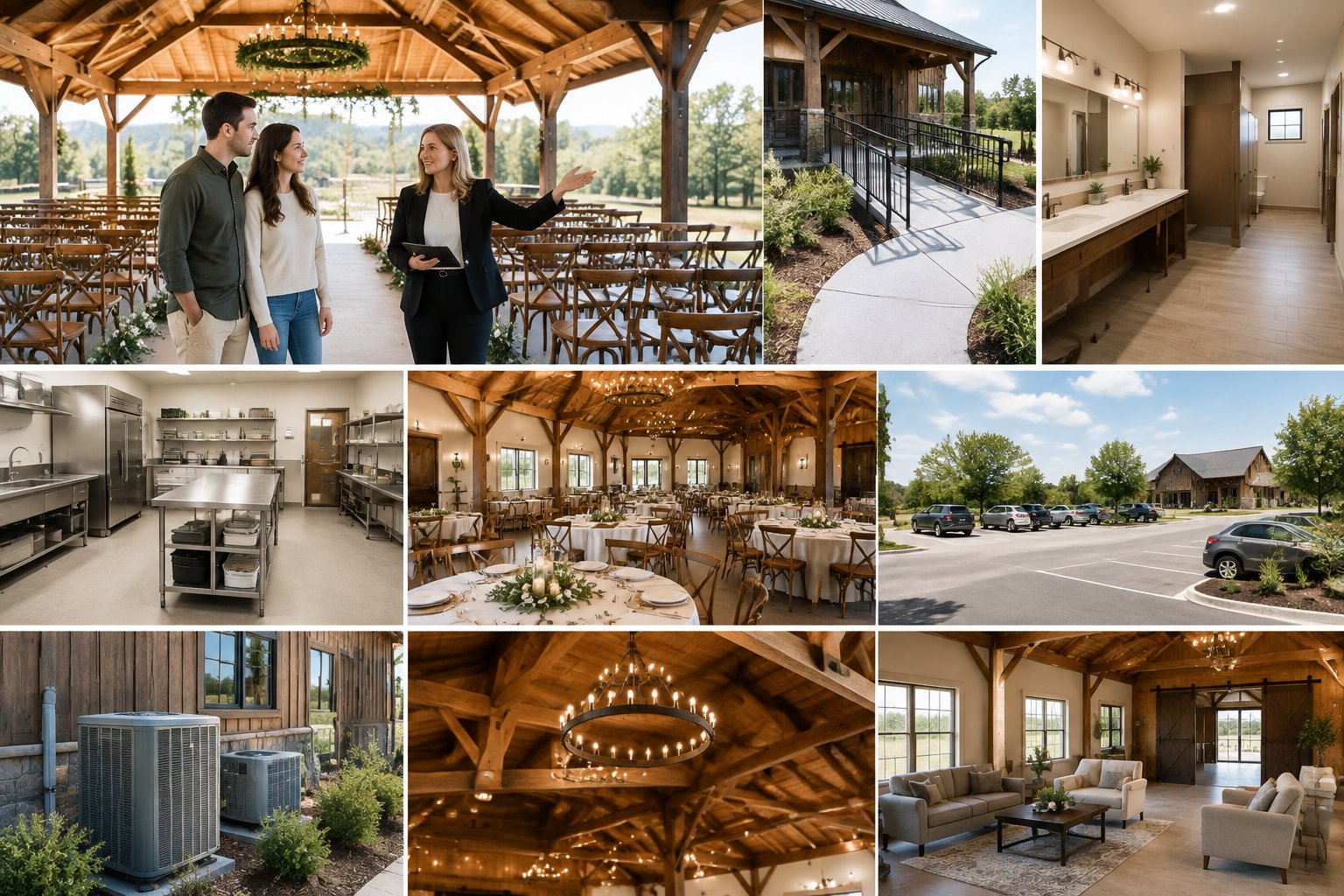
Ask whether the venue includes a catering kitchen, prep tables, ice storage, sinks, refrigeration, and trash removal. Some barns offer a full banquet hall setup, while others require caterers to bring equipment and serving supplies.
Confirm rules for outside caterers, food trucks, bakers, bartenders, DJs, bands, and rental companies. Review corkage fees, alcohol permits, security requirements, service charges, and bar closing times. For help with food planning, use these tips for choosing the right wedding caterer.
Climate Control, Restrooms, and Accessibility
Ask how the venue handles summer heat and winter cold. Confirm the number and location of restrooms, including accessible facilities, and check whether portable restroom trailers are required for your guest count.
Inspect ramps, paths, thresholds, parking surfaces, seating access, and restroom routes. Ask whether generators support heating, cooling, lighting, music, and catering equipment during a power outage.
Parking, Lodging, and Rural Guest Transportation
Count available parking spaces and ask how guests reach the barn after dark. Gravel lots, narrow roads, and wet fields need clear plans for attendants, lighting, and accessible drop-off points.
Map nearby hotels, inns, and vacation rentals. If guests will drink at the reception or travel from a distant town, price a shuttle and publish transportation details with your wedding information.
How to Create a Polished Rustic Atmosphere?
Create a polished rustic atmosphere by treating the barn’s architecture as your foundation, then adding layered lighting, intentional florals, and personal details. A restrained design lets natural wood and open space support your wedding style.
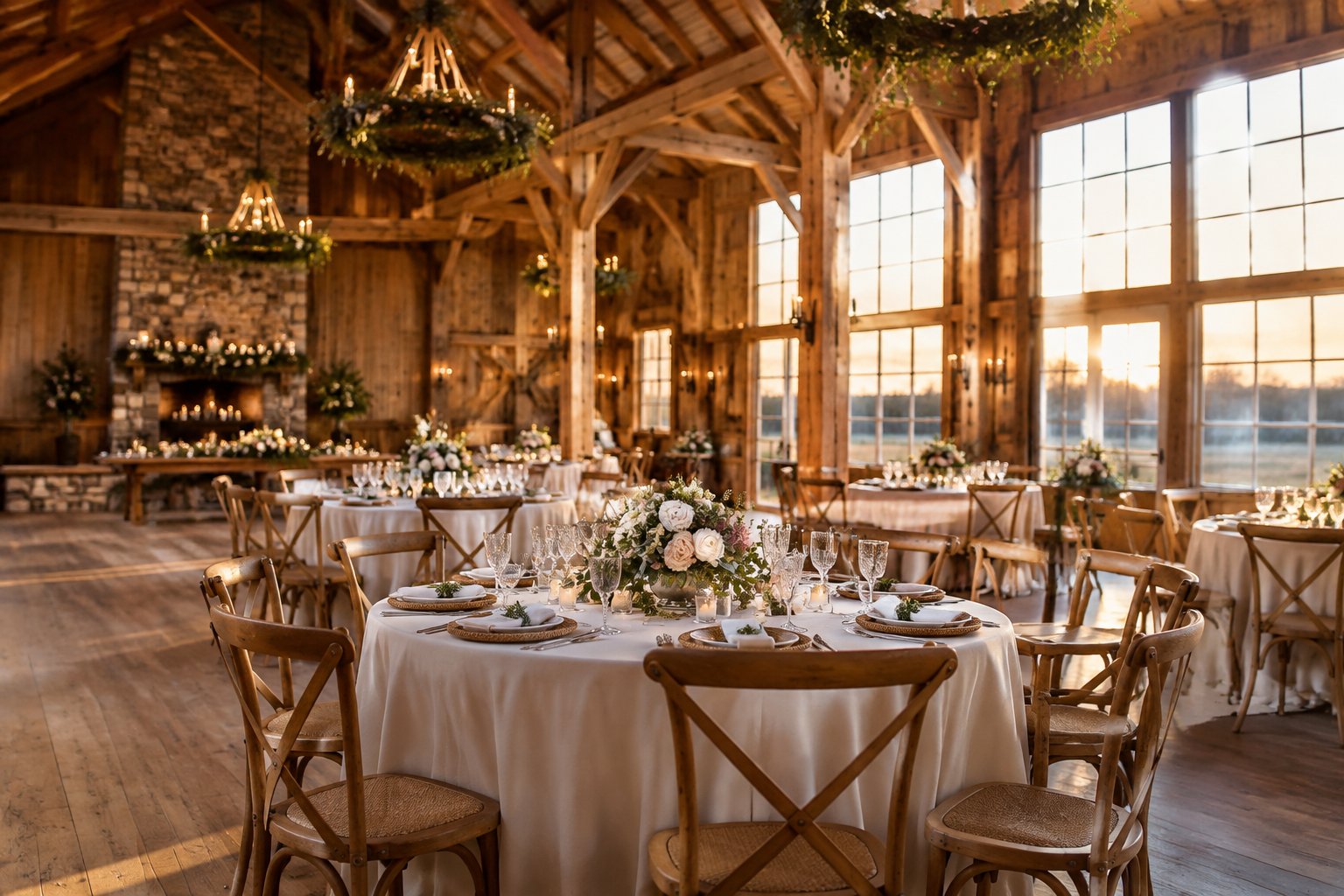
Using Exposed Beams and Natural Wood as Design Assets
Let exposed beams, timber trusses, wood siding, and wide doors guide your color palette and décor scale. Greenery, soft fabric, glass, metal, and seasonal flowers add contrast without covering the features that give the barn its identity.
Use focal points where guests pause, such as the ceremony arch, sweetheart table, bar, escort display, or dessert table. Keep signs easy to read and leave clear routes through the room. These rustic wedding décor ideas can help you build a cohesive look.
Lighting the Reception With String Lights
String lights create warmth across high ceilings and open rafters. Combine them with candles, lanterns, chandeliers, or wall lighting so guests can see their meals, paths, and table details after sunset.
Ask where fixtures may be attached and who handles installation. Confirm power needs, dimming options, safety rules, and removal fees. Warm light usually complements natural wood and photographs well across the reception space.
Planning Photos Around Golden Hour
Build portrait time around golden hour if your property has open fields, tree lines, ponds, or distinctive barn doors. Ask your photographer to scout indoor locations as well, especially for changing weather or bright midday sun.
Keep the timeline practical by choosing photo spots close to the ceremony and reception. A short route gives you beautiful variety while letting you return to your guests on schedule.
Balancing Country Details With Your Personal Style
Rustic charm can support formal, colorful, minimalist, vintage, or modern design. Choose a few country details that feel meaningful, such as local flowers, family heirlooms, farm tables, handmade signs, or regional food.
Repeat your chosen textures and colors across stationery, ceremony décor, table settings, and lighting. For table planning, explore these barn wedding table decoration ideas.
How to Compare Costs, Packages, and Contracts?
Compare each wedding venue by its complete event cost, included services, vendor rules, and contract terms. A low rental fee can rise quickly when you add rentals, staffing, lighting, transportation, restrooms, and weather equipment.
What Is Included in the Site Fee?
Ask for an itemized list covering the ceremony area, reception room, tables, chairs, linens, lighting, heating and cooling, restrooms, parking, suites, setup, cleanup, security, and venue staff. Confirm the number of event hours and whether rehearsal access is included.
Check whether the fee covers one layout or several. Ask about delivery access, vendor load-in, storage, trash removal, and end-of-night breakdown. Record each answer in your comparison notes.
All-Inclusive Packages vs. Flexible Vendor Options
An all-inclusive package can make planning easier by combining food, drinks, rentals, staffing, and coordination. Review the menu, service levels, taxes, gratuity, minimum guest count, and package upgrade costs.
Flexible vendor options give you more control over caterers, florists, rentals, music, and design. Ask about approved vendor lists, outside vendor fees, insurance requirements, and delivery windows before choosing a blank-slate barn wedding venue.
Hidden Costs That Affect the Final Budget
Add likely charges for overtime, ceremony setup, cleanup, security, generators, restrooms, tenting, flooring, heaters, fans, lighting, shuttle service, corkage, cake cutting, and vendor meals. Include taxes and service charges in every estimate.
Create one all-in total for each venue and divide it by your expected guest count. This makes a flexible barn venue easier to compare with a package-based property. Keep a separate line for optional upgrades so you can see which choices drive the budget.
Questions to Ask During a Venue Tour
Bring a written checklist and request contract language for every answer that affects cost or comfort. Ask:
- What is the maximum seated capacity with our planned layout?
- What happens if weather affects the ceremony or reception?
- Which caterers, bartenders, and rental companies may we use?
- What equipment and furniture does the site fee include?
- How much power is available for catering, lighting, and music?
- What are the setup, event, cleanup, and departure times?
- Which fees apply to overtime, outside vendors, alcohol, security, or damage?
- What happens if we postpone, cancel, or need to change the date?
- Are the parking routes, restrooms, ceremony area, and reception space accessible?
- Who will manage the venue on our wedding day?
Take photos of layouts and record the same details for every barn venue you visit. Review the complete estimates with your partner before paying a deposit.