
Barn Wedding Venues for Sale: Buyer’s Guide
A barn wedding venue can become a strong real estate and event business investment when the property has legal event-use approval, steady local demand, reliable infrastructure, and enough cash for improvements and slow seasons. For most buyers, an operating barn venue with verified bookings and clean financial records offers the clearest path because it combines real estate with an established event business.
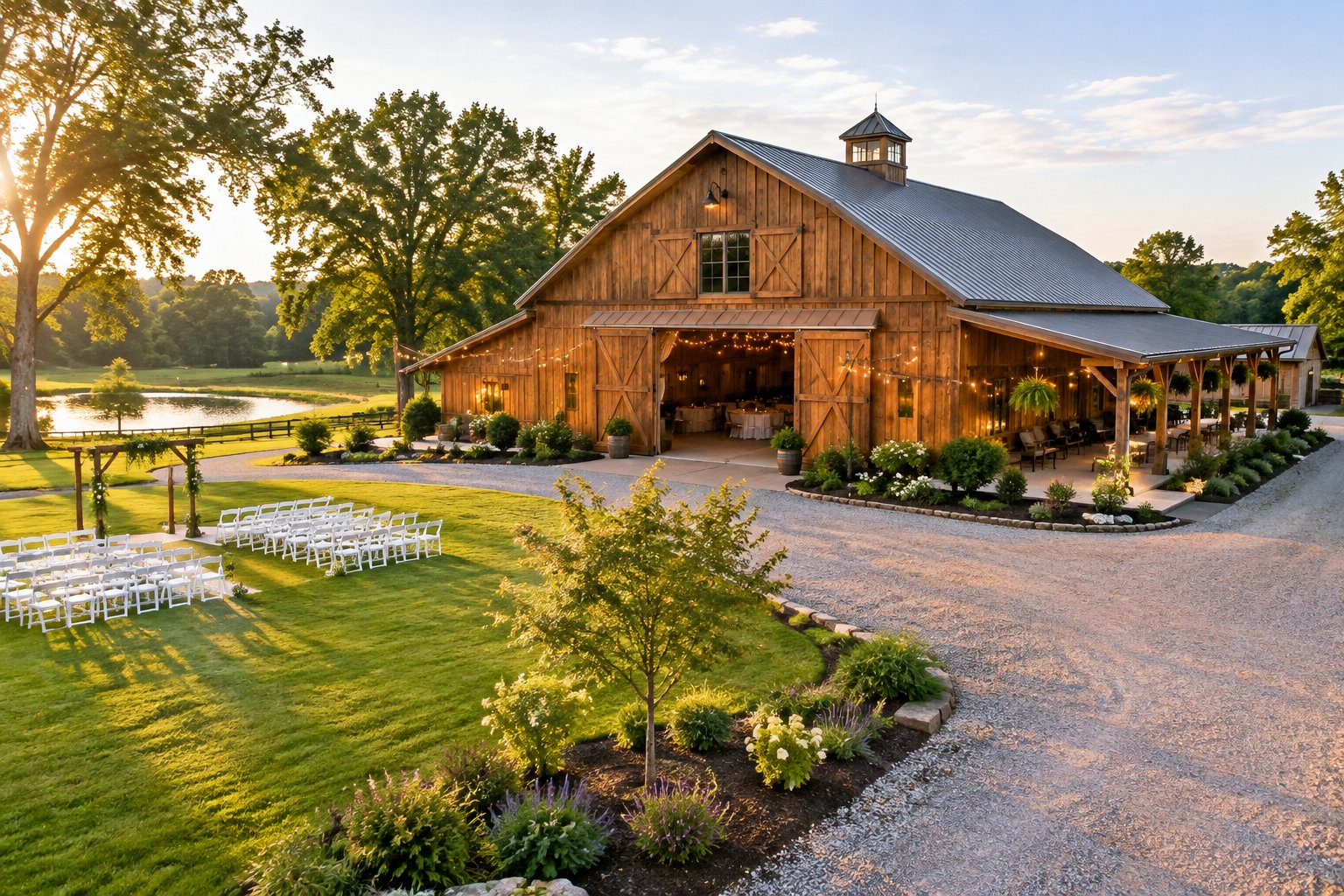
You should evaluate the purchase as both a property transaction and a hospitality business. A beautiful barn cannot support its debt if zoning limits events, parking is inadequate, or the market has too many similar venues.
Review the property, business records, permits, contracts, and future revenue potential before you submit an offer. If you are comparing properties, explore wedding venue ideas to sharpen your view of the features that attract couples.
What to Look for in a Profitable Property
A profitable barn wedding venue has proven demand, practical guest facilities, documented income, and room to improve revenue without overwhelming operating costs. Your review should connect the land and buildings to the performance of the event business.
Location, Demand, and Competitive Landscape
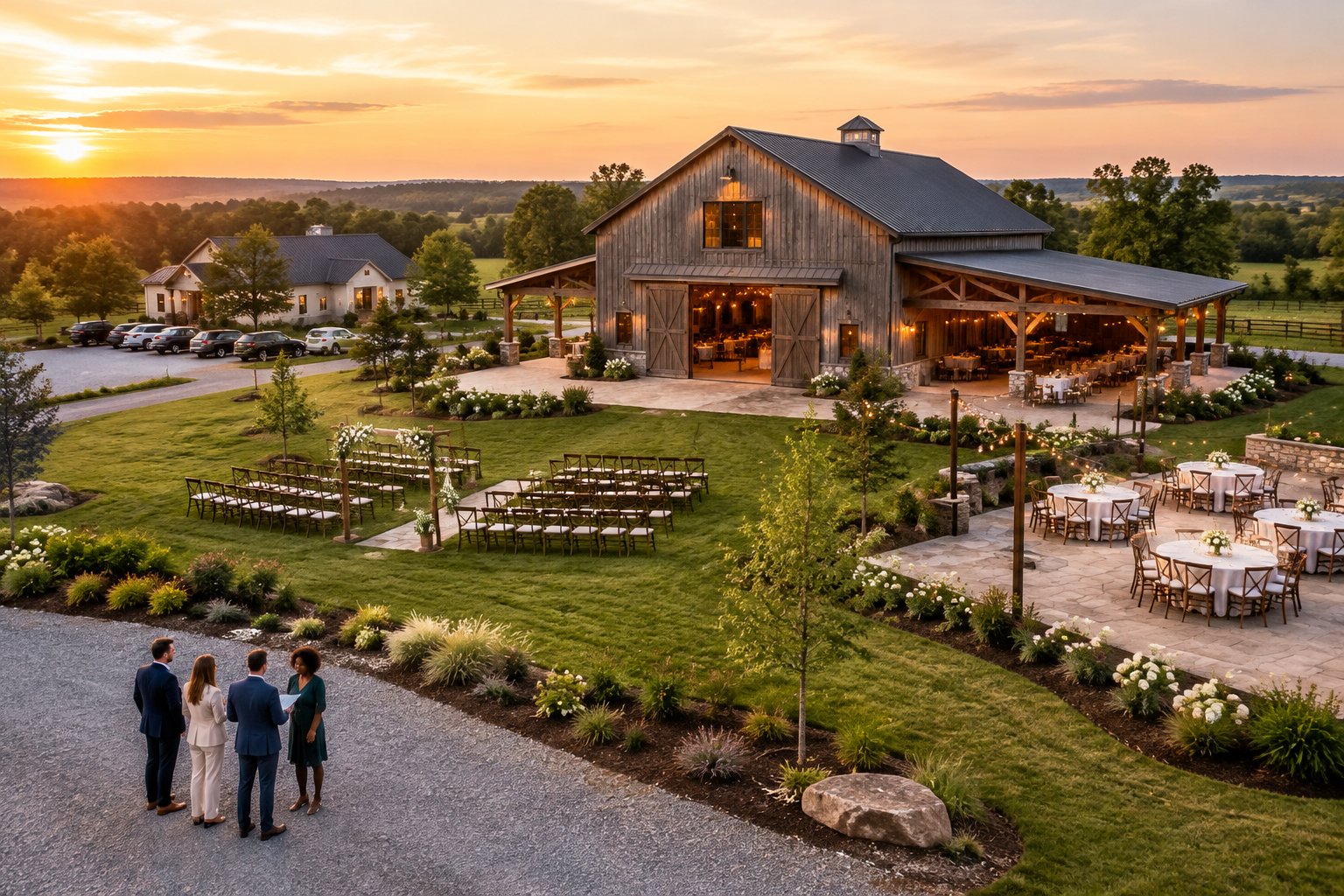
Location shapes booking volume, pricing, staffing, and guest experience. Look for a property within a reasonable drive of a population center, with clear roads, dependable internet, nearby lodging, and access for vendors and emergency services.
Study competing event venues within the same travel area. Record their guest limits, rental rates, included services, peak-date availability, online reviews, and recurring complaints.
A property can stand out through historic character, scenic grounds, lodging, a strong rain plan, or better service. Confirm that local couples have enough spending power to support your projected rates.
Check demand across the full calendar. Spring and fall Saturdays may fill quickly, while winter, weekdays, and Sunday dates need separate pricing and marketing plans.
Ask the seller for inquiry records, lost-booking reasons, lead sources, and booking trends by month.
Guest Capacity, Layout, and Essential Amenities
Capacity should match both local demand and the building’s legal approval. Verify the allowed occupancy for seated meals, ceremonies, outdoor areas, and separate spaces used at the same time.
Walk through the guest flow from arrival to departure. Look for:
- A weather-ready ceremony and reception plan
- Accessible entrances, restrooms, and routes
- Adequate parking with overflow options
- Bridal and groom preparation areas
- Commercial-grade electrical service and lighting
- Heating, cooling, ventilation, and fire protection
- Catering prep space, refrigeration, and waste storage
- Secure storage for tables, chairs, décor, and equipment
- Safe paths, signage, lighting, and emergency exits
A flexible layout supports ceremonies, receptions, rehearsal dinners, corporate gatherings, private parties, and community events. Confirm that the site can handle vendors, deliveries, music, alcohol service, and cleanup without disrupting neighbors.
Existing Bookings, Reputation, and Vendor Relationships
Existing bookings create immediate revenue and also create obligations. Review every signed agreement, payment schedule, cancellation clause, refund policy, guest limit, and promised inclusion.
Confirm which deposits are held, whether they transfer at closing, and who carries responsibility for changes made before the sale.
Examine reviews across major platforms and match them to the seller’s booking records. Look for repeated concerns about communication, restrooms, parking, temperature, noise, cleanliness, or vendor coordination.
A strong reputation supports future pricing, while unresolved complaints require a repair plan.
Ask which planners, caterers, rental companies, photographers, DJs, and bartenders regularly work at the property. Vendor relationships help maintain smooth operations, though you should confirm that each relationship transfers to you.
Review vendor agreements, insurance requirements, referral arrangements, and any exclusive contracts before relying on them in your forecast.
How Much Does a Barn Wedding Venue Cost?
The purchase price is only the starting point. Your acquisition budget should include the real estate, business assets, repairs, permits, professional fees, working capital, and the cash needed to operate through the first full booking cycle.
Purchase Price vs. Total Acquisition Cost
Barn wedding venues for sale range widely because location, land size, building quality, capacity, lodging, and business performance all affect value. A rural property with an older barn may sell for far less than a destination venue with updated facilities, strong cash flow, and a long booking calendar.
Build a total acquisition worksheet with these lines:
- Real estate purchase price
- Business assets and goodwill
- Inventory, furniture, vehicles, and equipment
- Appraisal, inspection, survey, and legal fees
- Loan fees, lender reserves, and closing costs
- Insurance, taxes, and utility deposits
- Immediate repairs and safety work
- Technology, branding, website, and software
- Employee hiring and training
- Working capital
Value the operating business from normalized earnings and transferable assets. Remove unusual owner expenses, personal purchases, one-time repairs, and revenue that depends only on the seller’s personal relationships.
Compare the adjusted cash flow with the required debt payment and a reasonable owner salary.
Renovation, Code Compliance, and Accessibility Costs
Renovation costs depend on the barn’s structure and the standards required for commercial events. Budget for foundations, framing, roofs, floors, electrical upgrades, plumbing, restrooms, HVAC, fire systems, kitchens, parking, drainage, landscaping, and accessibility work.
Ask a commercial contractor and relevant specialists to inspect the property before you set a final budget. Older barns can contain hidden moisture, unstable framing, outdated wiring, poor insulation, or hazardous materials.
Local officials may require upgrades that do not appear in the listing description.
Keep a contingency reserve for discoveries behind walls and under floors. Separate cosmetic improvements from work required for occupancy, safety, or legal operation.
A new bar, lighting package, or décor collection can support revenue, while a failed septic system or missing fire exit can stop events entirely.
Working Capital and First-Year Operating Budget
Working capital pays bills while bookings build and deposits arrive on different schedules. Create a monthly budget for mortgage payments, payroll, utilities, repairs, lawn care, snow removal, insurance, taxes, software, marketing, cleaning, and vendor support.
Model at least three cases:
- Base case: expected bookings, average package price, and normal expenses
- Slow case: fewer events, delayed bookings, and higher repair costs
- Growth case: stronger bookings with added staffing and service costs
Include the timing of deposits, final payments, refunds, and vendor invoices. Keep reserve funds for weather damage, equipment failure, legal costs, and unexpected vacancies in the calendar.
Your projections should show the booking count and average revenue per event required to cover fixed costs and debt.
Due Diligence Before You Buy
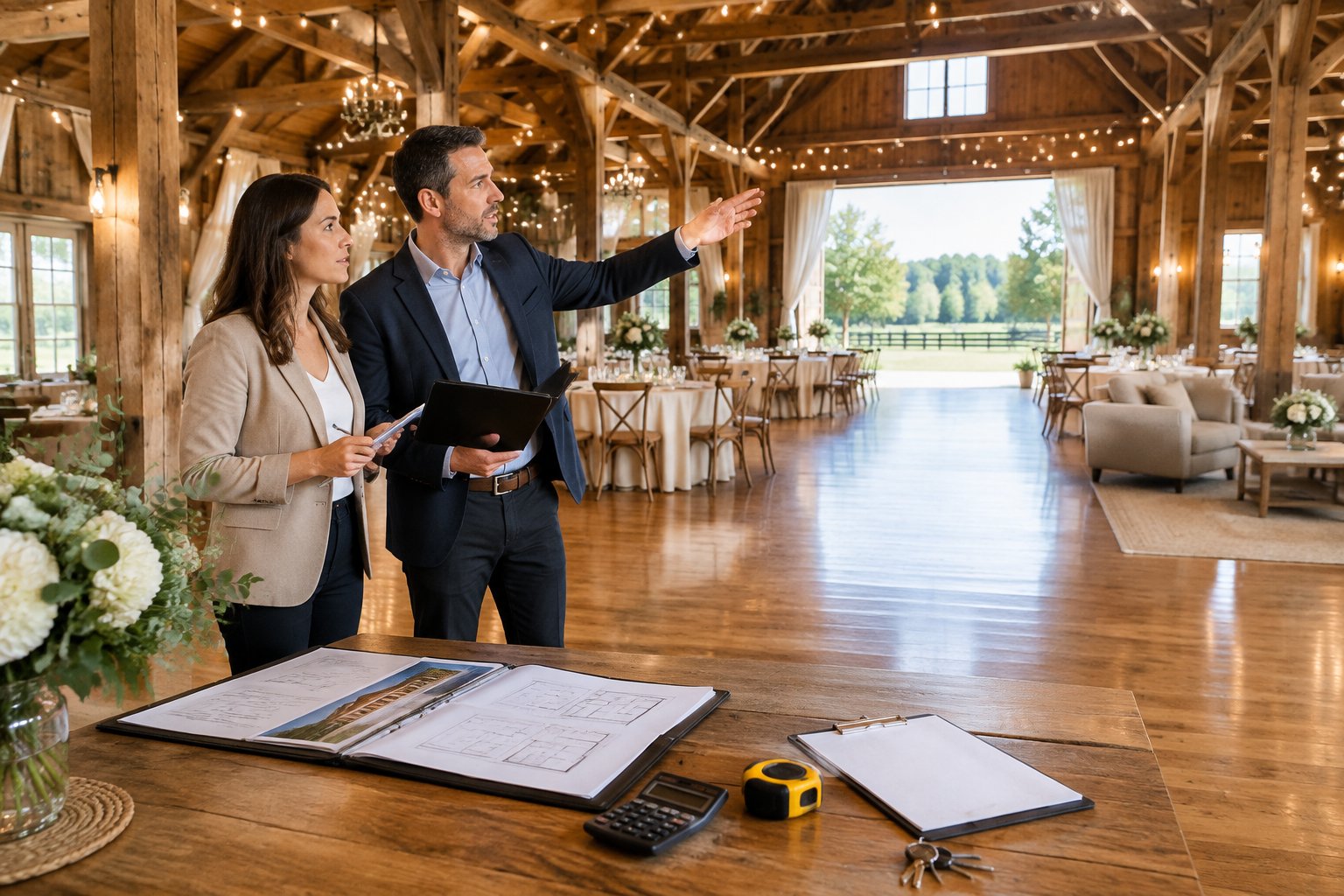
Due diligence should verify that the property can legally host events, that its physical systems support the promised capacity, and that the business records match the seller’s claims. Use independent professionals for legal, structural, environmental, accounting, and insurance reviews.
Zoning, Permits, and Conditional-Use Requirements
Obtain written confirmation of the property’s zoning and approved use from the city or county. Agricultural zoning may cover farm activity while requiring a conditional-use permit for weddings, concerts, corporate events, amplified music, or alcohol service.
Request copies of:
- Conditional-use approvals and variances
- Site plans and occupancy approvals
- Building, electrical, plumbing, and fire permits
- Food-service and alcohol licenses
- Health department approvals
- Noise, traffic, and operating-hour restrictions
- Environmental or stormwater requirements
- Certificates of insurance and claims history
Ask officials whether approvals transfer to a new owner or business entity. Confirm the permitted guest count, event frequency, parking plan, lighting rules, music curfew, and required security.
A pending application is not the same as an approved use, so price the property around its current legal position.
Inspecting Structures, Utilities, Septic, and Parking
Hire qualified inspectors who understand older agricultural buildings and commercial event use. Review the barn’s foundation, roof, framing, exterior cladding, floors, stairs, exits, windows, and signs of water or pest damage.
Test the systems that affect event continuity:
- Electrical capacity and backup power
- Well water quality and supply
- Septic size, age, inspection history, and reserve area
- Heating and cooling performance
- Fire alarms, extinguishers, sprinklers, and emergency lighting
- Internet and cellular coverage
- Drainage and flood exposure
- Parking surfaces, access lanes, and lighting
Measure parking against the approved capacity and event layout. Ask how many vehicles fit during a full reception and where staff, vendors, shuttles, emergency vehicles, and rideshare pickups will go.
Review winter access and storm plans if the property operates year-round.
Reviewing Financials, Contracts, and Transferable Licenses
Request several years of tax returns, profit-and-loss statements, balance sheets, bank statements, sales-tax filings, booking reports, payroll records, and expense invoices. Reconcile reported revenue with deposits and completed events.
Separate venue rental income from catering, bar service, lodging, rentals, and owner contributions.
Review all current agreements, including:
- Future wedding contracts
- Corporate and private-event bookings
- Deposits and payment schedules
- Employee and contractor agreements
- Vendor and referral contracts
- Equipment leases
- Software subscriptions
- Maintenance agreements
- Property leases or easements
- Insurance policies and claims
Confirm that licenses, permits, trademarks, website domains, phone numbers, social accounts, customer data, photos, and brand assets transfer at closing.
Require seller representations about undisclosed disputes, unpaid taxes, code violations, environmental issues, and customer claims. Use an attorney and a certified public accountant to document the deal structure and closing conditions.
How to Finance the Purchase
A barn venue purchase needs financing that covers both the property and the operating business, with enough liquidity for repairs and seasonal cash flow. Compare loan terms by total cost, collateral requirements, repayment schedule, prepayment rules, and working-capital limits.
SBA Loans, Conventional Loans, and Seller Financing
SBA programs can support eligible purchases of real estate and operating businesses, subject to lender and program rules. Ask lenders about SBA 7(a) and 504 structures, owner-occupancy requirements, equity contributions, collateral, personal guarantees, and eligible uses of proceeds.
Conventional commercial loans may offer a fit for buyers with strong credit, substantial equity, proven cash flow, and valuable collateral. Banks will examine debt-service coverage, appraisal results, tax returns, liquidity, and your experience managing an event business.
Seller financing can bridge a valuation gap or reduce the amount of bank debt. Negotiate the interest rate, term, payment schedule, security position, personal guarantees, default rights, and treatment of existing bookings.
Combine seller financing with another loan only after each lender approves the full structure.
Equipment loans or a business line of credit can fund vehicles, kitchen equipment, furniture, and short-term needs. Use short-term debt carefully because seasonal event revenue may not arrive evenly throughout the year.
Buying Real Estate and the Operating Business Together
A combined purchase usually includes land and buildings plus goodwill, contracts, equipment, inventory, intellectual property, and customer records. Your lender, attorney, accountant, and appraiser should assign values to each component.
Choose a legal structure that separates property ownership from business operations when appropriate. A real estate entity can lease the venue to an operating company, though you need professional advice about taxes, lender rules, liability, insurance, and related-party agreements.
Use a detailed purchase agreement with separate schedules for:
- Real estate and fixtures
- Furniture and equipment
- Brand and intellectual property
- Existing deposits and future bookings
- Accounts receivable and liabilities
- Employee records and vendor contracts
- Licenses, permits, and approvals
Protect yourself during the transition with escrowed deposits, seller training, client notification procedures, and a clear allocation of refunds or event changes that arise before closing.
Preparing a Lender-Ready Business Plan
Your plan should show how the venue earns money, serves its market, and repays debt. Include a property description, market analysis, competitor review, pricing plan, operations schedule, staffing model, marketing strategy, renovation budget, and risk controls.
Add monthly projections for at least the first year and annual projections for several years after that. Show bookings by season, average revenue per event, ancillary sales, payroll, repairs, insurance, taxes, debt service, and owner compensation.
Include a break-even calculation based on events per year.
Give lenders evidence that supports the forecast:
- Signed future bookings
- Historical occupancy and inquiry data
- Review ratings and website traffic
- Vendor and planner relationships
- Management experience
- Contractor bids
- Permit status
- Personal liquidity and credit history
Explain how you will handle a slow season, weather disruption, staff shortage, or major repair. A lender can evaluate a plan more clearly when each assumption has a document or operating process behind it.
How to Grow Revenue After Closing
Revenue growth comes from raising the value of each event, filling underused dates, and making the venue easy for couples and planners to find and book. Protect guest experience while you expand services, because poor execution quickly affects reviews and referrals.
Wedding Packages and Ancillary Revenue Streams
Create clear packages that fit different budgets and levels of service. A venue-only option can attract price-sensitive couples, while enhanced packages can include tables, chairs, linens, ceremony setup, lighting, coordination, rehearsal access, or cleanup.
Price add-ons around genuine client needs. Potential revenue streams include:
- Ceremony-site fees
- Furniture and décor rentals
- Bar or beverage service
- Catering coordination
- Bridal suite and preparation-room access
- Rehearsal dinners and farewell brunches
- Overnight lodging
- Shuttle coordination
- Extended setup or cleanup time
- Photo sessions and engagement shoots
- Seasonal styling or specialty installations
Track the labor, insurance, storage, licensing, and vendor costs behind every add-on. A service that raises sales while adding excessive staffing or equipment expense may reduce profit.
Use deposits, payment milestones, cancellation terms, damage policies, and guest limits that match the service level. For design inspiration that supports upsells, review barn wedding table decoration ideas and identify décor options that fit your venue’s storage and setup capacity.
Booking Non-Wedding Events Across the Calendar
Non-wedding bookings help use the property during weekdays, winter months, and open dates between weddings. Target corporate meetings, holiday parties, nonprofit fundraisers, retreats, reunions, showers, celebrations of life, photo shoots, workshops, and community gatherings.
Build separate rate cards for event length, guest count, staffing, furniture, alcohol, cleaning, security, and noise requirements. Corporate clients may value reliable internet, presentation equipment, parking, and straightforward invoices.
Private clients may prioritize flexible layouts, décor access, and affordable weekday pricing. Use the venue’s calendar to protect wedding setup and teardown windows.
Establish rules for amplified sound, cooking, candles, outside vendors, pets, children’s activities, and late departures. Each event type should have a contract and operating checklist that fits its risks.
Marketing the Venue to Couples and Event Planners
Your marketing should show the property’s experience, price range, capacity, availability, and planning process. Use professional images, floor plans, a virtual tour, sample timelines, parking details, accessibility information, vendor policies, and clear inquiry forms on your website.
Build visibility through local search, social media, planner referrals, venue open houses, styled shoots, tourism organizations, and relationships with hotels. Ask satisfied couples for reviews and request permission before publishing their photos.
Respond to inquiries quickly with a pricing guide, available dates, package details, and a direct next step. Measure inquiries, tour bookings, proposal conversions, average booking value, lead source, cancellation rate, and revenue by date type.
Adjust pricing when peak dates sell quickly and create targeted offers for dates that remain open. Keep your website and listings accurate so couples receive the same capacity, pricing, and policy information at every stage.