
Barns for Wedding Venues: How to Choose the Right One
Barns for wedding venues give you a warm setting, open countryside, and flexible space for ceremonies, dinner, and dancing. The right barn wedding venue is the one that matches your guest count, wedding-day flow, comfort needs, and preferred style while keeping key costs clear.
You can choose from historic farm buildings, restored barns, vineyard estates, white barns, and modern event spaces with open interiors. Before you book, tour the property, test the layout, review the weather plan, and ask what the rental fee includes. Use the ideas below to compare your options and schedule a tour with the venues that fit your celebration.
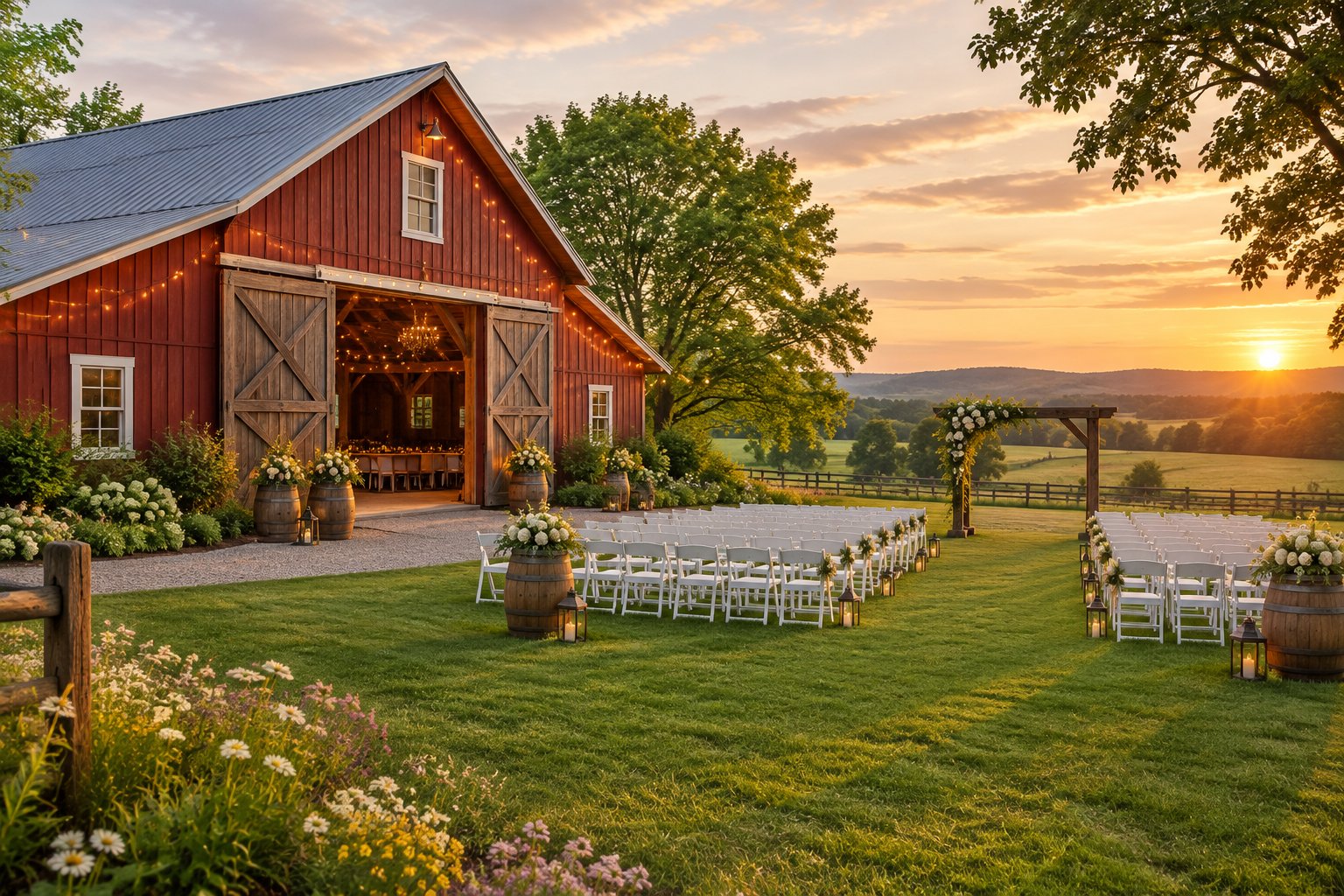
What Makes a Barn Setting Right for Your Wedding?
A barn setting suits your wedding when you want relaxed rural character, flexible spaces, and a reception atmosphere built around conversation and dancing. The property should also provide practical support for your guest count, season, vendors, and accessibility needs.
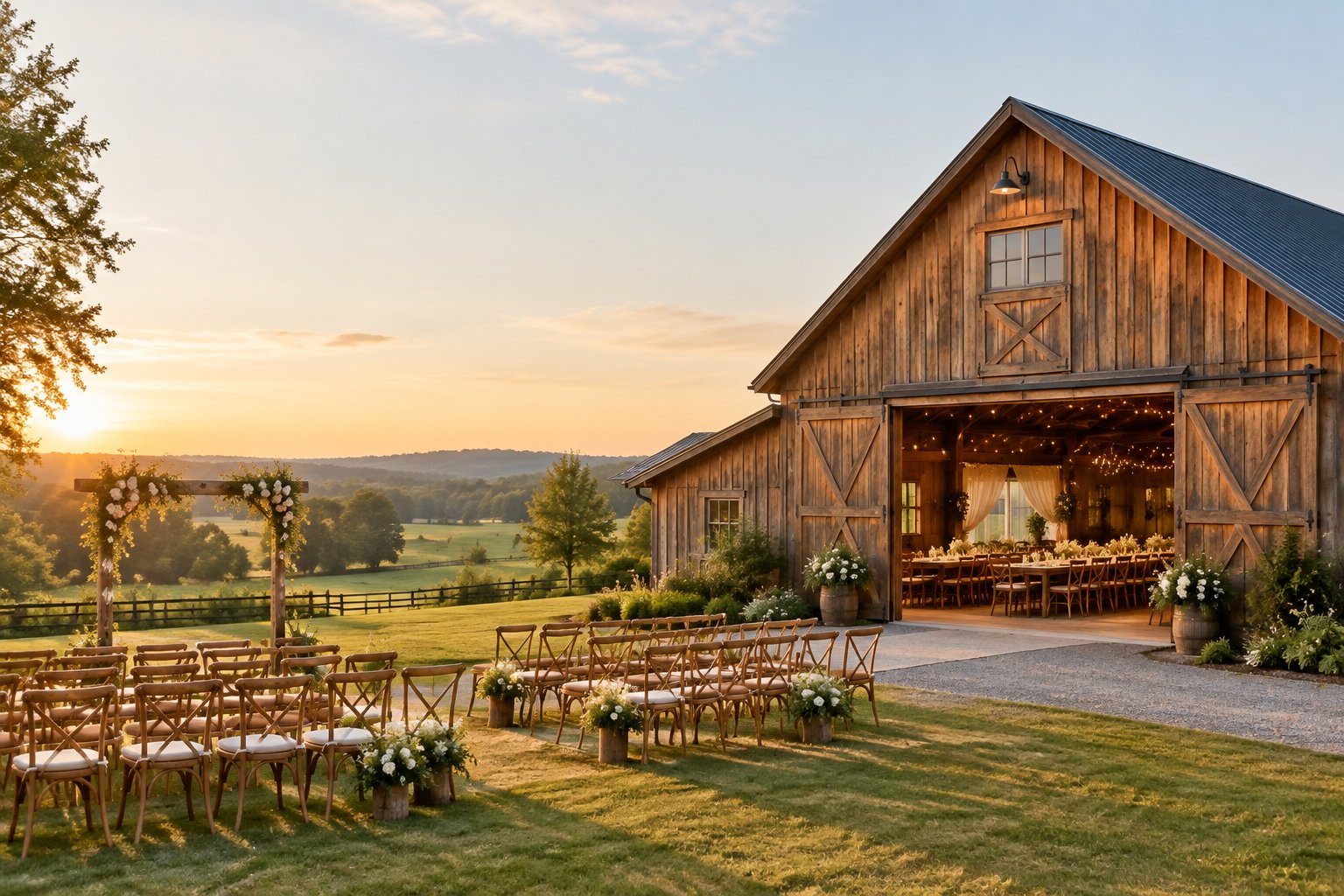
Traditional, Restored, and Purpose-Built Spaces
A traditional barn brings exposed beams, wide doors, weathered boards, and a strong connection to the land. Its character gives your décor a natural starting point.
A restored barn wedding venue may add finished floors, improved lighting, restrooms, insulation, and climate control. Ask whether updates protect the building’s original details while supporting a full wedding day.
A purpose-built wedding barn is designed around events. You might find dedicated suites, wider paths, commercial kitchen access, sound equipment areas, and layouts made for dining and dancing. These features help when you have a larger guest list or a tight timeline.
Rustic Charm vs. Modern Event Comfort
Rustic charm comes from timber framing, natural textures, fields, and warm lighting. Modern comfort comes from heating, air conditioning, clean restrooms, stable flooring, strong electrical service, and comfortable seating.
Look for a balance that fits your priorities. A rustic wedding venue with limited utilities may require rentals for restrooms, generators, fans, or heaters. A polished space may reduce logistical work while still giving you room for greenery, vintage furniture, candles, and string lights.
How the Property Shapes the Guest Experience
The land around a wedding barn affects how guests arrive, mingle, and move through the day. Fields and gardens create ceremony and photo settings, while a farmhouse, porch, or courtyard can give guests a comfortable cocktail-hour area.
Walk the property from parking to the ceremony, reception, restrooms, and exits. Check paths after rain, lighting after sunset, and the distance between each activity. If farm weddings are active on the property, ask where equipment, animals, and private work areas are located during your event.
Choose a Layout That Works From Ceremony to Last Dance
A successful event venue gives guests a clear route from arrival through the ceremony, meal, dancing, and departure. Review the floor plan with your guest count and timeline so every area has enough room for people, furniture, vendors, and service.
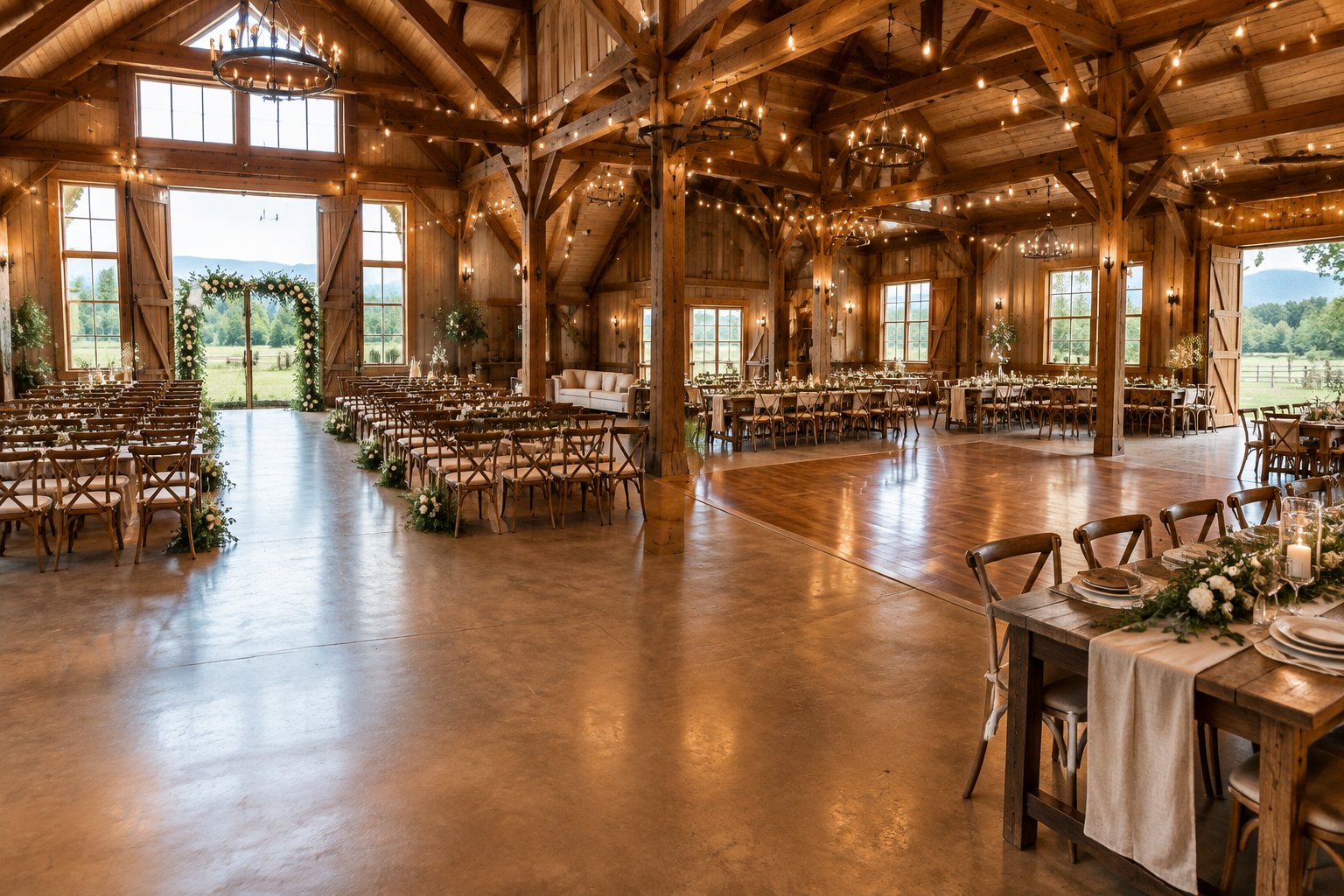
Indoor, Outdoor, and Rain-Plan Ceremony Options
An outdoor ceremony space offers open skies, fields, gardens, or water views. Ask about sun direction, shade, aisle access, sound, seating, and the distance to the reception.
An indoor ceremony gives you more control during rain, wind, heat, or cold. Some barn venues use the main room for both the ceremony and reception, so confirm how staff handle the room change.
Your contract should identify the rain plan, backup ceremony site, decision deadline, added fees, and guest movement. Ask whether the backup layout still leaves room for dinner, dancing, and accessible routes.
Capacity, Dance Floors, and Flexible Reception Flow
Use the seated dinner capacity as your planning number. A posted maximum might describe a standing event and leave little room for tables, a dance floor, buffet stations, a bar, a DJ, or a band.
A floor plan helps you test traffic flow before you book. Place the dance floor near the entertainment area, keep service paths open, and give guests a direct route to restrooms and exits. Sliding barn doors and vaulted ceilings create visual impact, while support posts and narrow entrances affect setup.
Ask whether the venue provides tables, chairs, linens, a dance floor, and room-reset staff. Confirm the time required to change the space between wedding ceremonies and the reception.
Getting-Ready Rooms, Catering Areas, and Guest Amenities
A comfortable getting-ready room needs mirrors, seating, outlets, good lighting, climate control, and nearby restrooms. Ask when you receive access and whether each wedding party has a separate area.
Inspect the catering space with your caterer’s needs in mind. Confirm refrigeration, sinks, prep counters, power, trash storage, loading access, and cleanup duties.
Check restroom counts, accessible entrances, ramps, parking surfaces, signage, and lighting. These details shape the experience for every guest, including anyone using a wheelchair, walker, or cane.
Compare Barn Venue Styles and Standout Features
Barn venues range from historic working farms to refined white barns and large modern halls. Compare the building’s design, surrounding property, event infrastructure, and level of service before choosing a style.
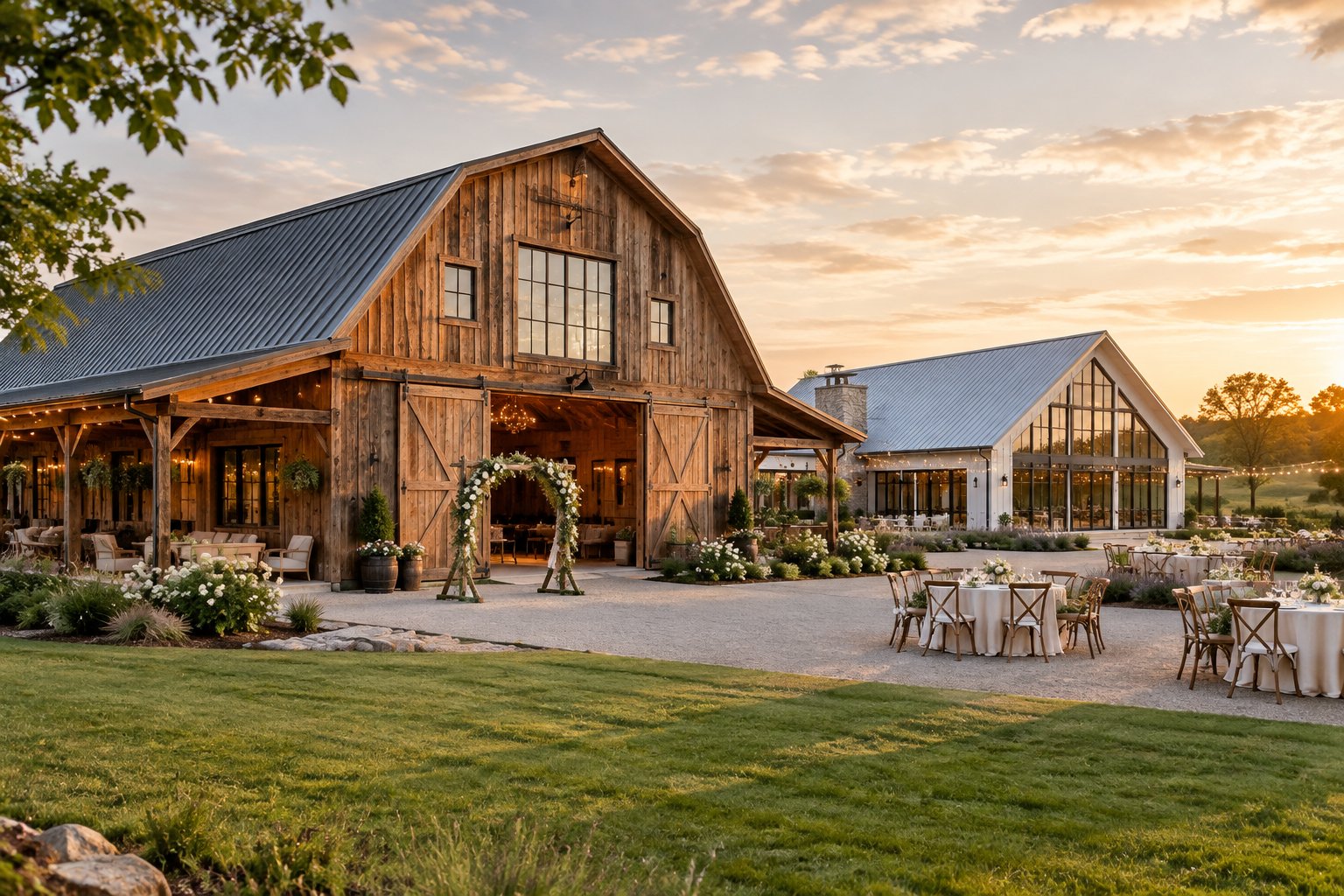
Historic Farms and Vineyard Estates
Historic farms connect your wedding to the land through original structures, mature trees, fields, orchards, or livestock areas. Vineyard estates add rows of vines, tasting spaces, and landscape views that work well for ceremonies and portraits.
Ask how the property operates during your wedding. Find out where guests park, whether farm work continues nearby, which areas are open for photos, and how vendors reach the building.
Properties such as Mount Ida Farm & Vineyard show how a barn setting can pair with estate grounds and agricultural scenery. When comparing a vineyard or farm, review lodging, transportation, climate control, restroom access, and the distance between event areas.
White Barns and Refined Rustic Design
The White Barn style uses bright siding, clean finishes, large windows, and simple architectural lines. It works well with formal florals, neutral linens, colorful arrangements, and modern furniture.
A white barn can feel elegant while keeping the relaxed shape of a rural venue. Look at the roofline, natural light, ceiling height, doors, floors, and outdoor spaces during a tour. Ask how the room looks after sunset and which lighting fixtures are included.
Modern Event Barns With Open-Span Interiors
Modern event barns use open-span or clear-span construction to create broad interiors with fewer structural obstructions. This gives you more freedom to place tables, seating, entertainment, bars, and dance floors.
Mountain Star Estate is an example of the elevated setting some couples seek when they want dramatic scenery with event-ready features. Compare ceiling height, acoustic treatment, electrical service, loading access, heating and cooling, and kitchen support.
| Feature | Historic farm | White barn | Modern event barn |
|---|---|---|---|
| Main appeal | Original character | Bright refined style | Flexible open interior |
| Best setting | Fields or orchards | Garden or countryside | Estate or scenic property |
| Layout | May include fixed features | Clean, adaptable room | Clear-span flexibility |
| Décor direction | Natural and vintage | Elegant and light | Modern rustic |
| Key check | Utilities and access | Lighting and finishes | Acoustics and climate control |
What Should You Ask Before Booking?
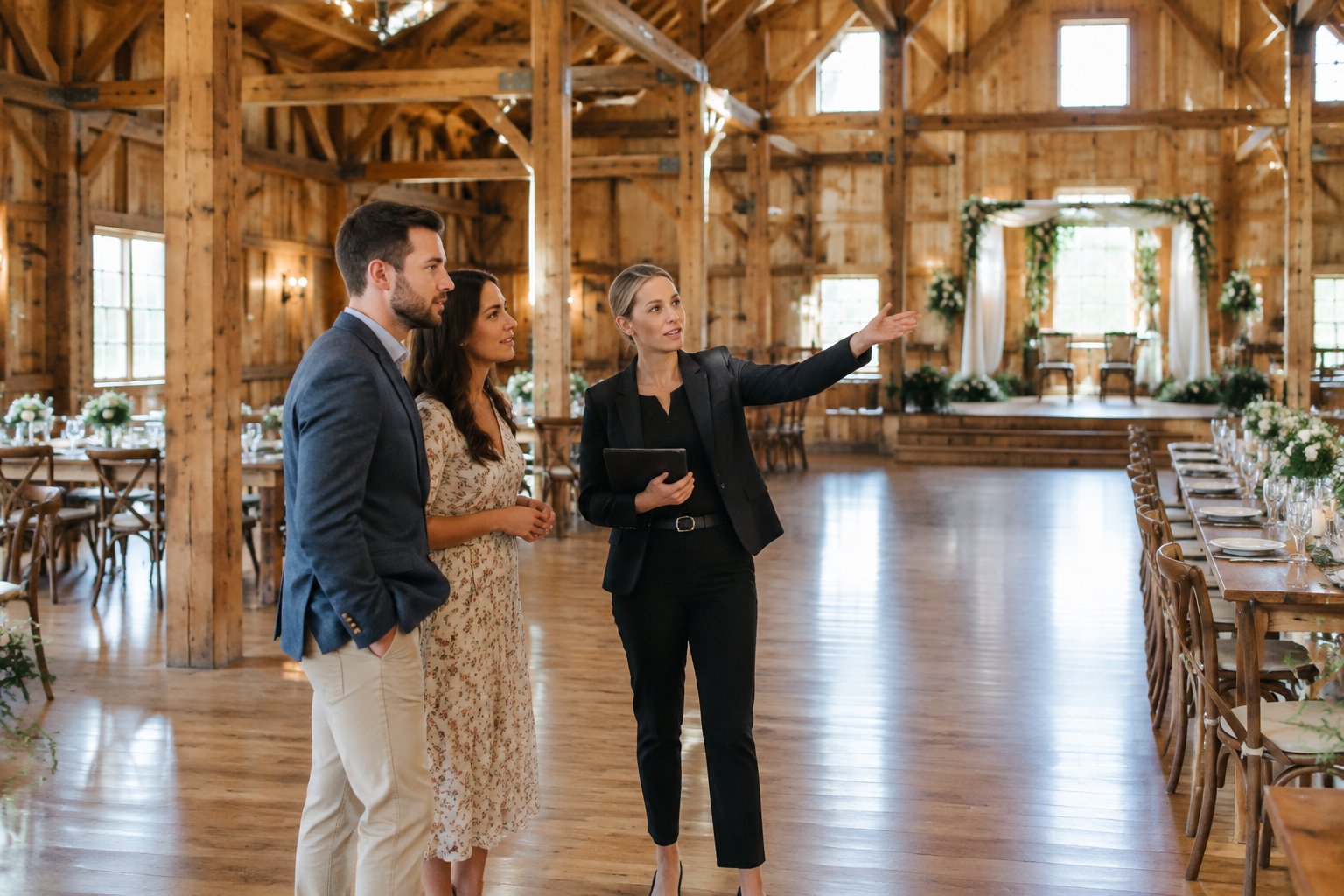
Before booking among wedding venues in the US, ask for written details about comfort, accessibility, vendors, alcohol, curfews, parking, transportation, and overnight stays. A tour should answer how the property works during your exact season and guest count.
Weather, Climate Control, and Accessibility
Ask how the barn handles summer heat, winter cold, rain, wind, and muddy ground. Confirm heating, air conditioning, fans, insulation, ventilation, backup power, and the location of each unit.
Have the venue walk you through the rain plan. Ask when the decision is made, who moves furniture, and where guests wait during a transition.
Check parking surfaces, ramps, entrances, restrooms, floor changes, and routes between buildings. Gravel, grass, steep paths, and uneven boards affect mobility and footwear choices. Ask whether accessible parking is close to the main entrance.
Vendor Rules, Alcohol Policies, and Curfews
Confirm whether you can choose your caterer, florist, rental company, planner, band, and DJ. Some barn wedding venues in the US use preferred vendors, while others allow outside teams with insurance or access fees.
Ask about kitchen use, refrigeration, loading times, trash removal, setup, cleanup, and damage deposits. Review alcohol rules, bartender requirements, permits, corkage, liability insurance, and last call.
Write down music limits, quiet hours, event end time, overtime rates, candle rules, hanging décor limits, and cleanup responsibilities. Compare the complete contract, including taxes, service fees, rentals, and staffing.
Parking, Transportation, and Overnight Stays
Ask how many cars the property can hold and whether overflow parking is available. Confirm lighting, paved or stable surfaces, shuttle drop-off, rideshare access, and directions for evening arrivals.
Rural wedding venues can sit far from hotels, airports, restaurants, and emergency services. Map the route for guests and vendors, then ask about nearby hotels, cabins, farm stays, or on-site lodging.
If guests will drink, plan a shuttle or another designated transportation option. Share the venue address, parking map, hotel list, and arrival instructions through your invitations or wedding website.
Find Inspiration From Notable U.S. Properties
Notable properties can help you identify the setting and service level you want, from farm-based packages to estate celebrations and modern rustic spaces. Use them as style references, then compare actual capacity, pricing, location, and contract terms.
Michigan Farm Venues With Full-Service Options
Peacock Road Tree Farm shows how a farm property can combine a natural landscape with a wedding-focused setting. When you review Michigan farm venues, ask whether packages include tables, chairs, catering, coordination, setup, cleanup, and ceremony support.
Tree farms and working farms create strong seasonal character through wooded paths, open fields, and natural backdrops. Confirm the ground conditions, weather plan, restroom facilities, power, parking, and vendor access before choosing a date.
Estate and Vineyard Experiences
Etre Farms represents the estate-style approach, where landscaped grounds, architectural details, and event services work together. This format suits you if you want a polished celebration with outdoor ceremony options and a reception space prepared for formal dining.
The Sixpence offers another useful reference for comparing a refined barn atmosphere with curated guest amenities. Review how each property handles getting-ready rooms, cocktail hour, ceremony transitions, catering, alcohol service, and guest transportation.
Matching the Venue to Your Wedding Style
Choose a farm venue when you want open land, seasonal scenery, and a relaxed countryside setting. Choose an estate or vineyard when views, gardens, and polished guest areas are central to your plans.
A white barn fits bright, elegant décor. A historic barn suits weathered wood, greenery, and vintage details. A modern event barn gives you a clean foundation for bold florals, contemporary rentals, and a flexible reception layout.
Create a short list based on your guest count, preferred date, travel needs, ceremony plan, and comfort requirements. Then tour each property with your draft floor plan and request an itemized proposal before you reserve your wedding date.