
Beach Wedding Venue Rentals: How to Plan Your Stay
A beach wedding gives you ocean views, private time with loved ones, and a relaxed destination wedding setting. The best beach wedding venue rentals are event-approved vacation homes with enough sleeping space, outdoor room, guest access, and a clear plan for wind, tides, vendors, and permits.
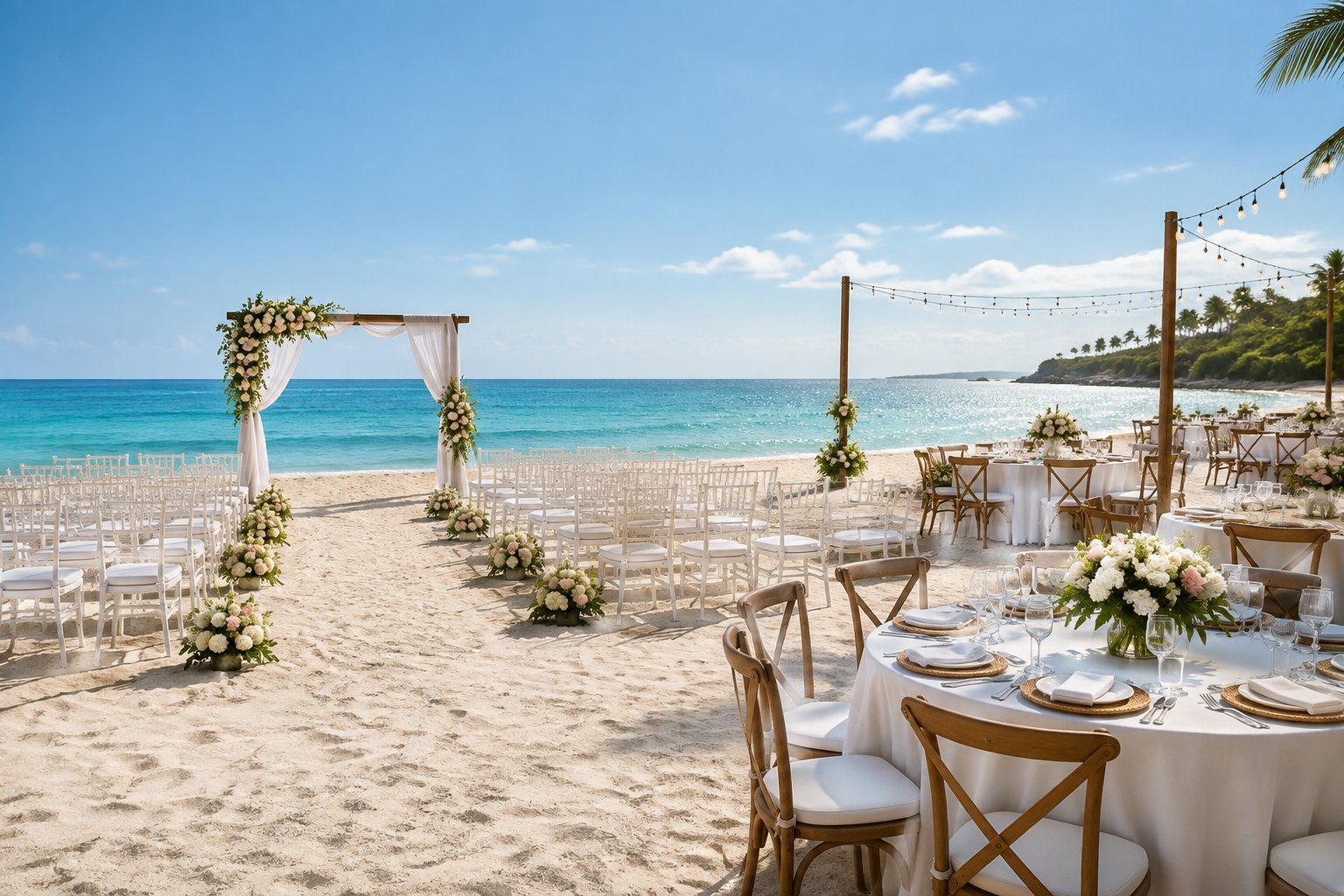
A rental home can combine lodging, ceremony space, and reception areas in one coastal stay. You still need written approval for the event, a realistic guest count, and a budget that includes rentals and services beyond the nightly rate.
Browse beach wedding ideas for ways to shape your ceremony and reception, then contact the property team before placing a deposit.
What Makes a Rental Suitable for a Wedding?
A suitable rental has written event approval, enough usable space, safe access, and clear rules for the beach and property.
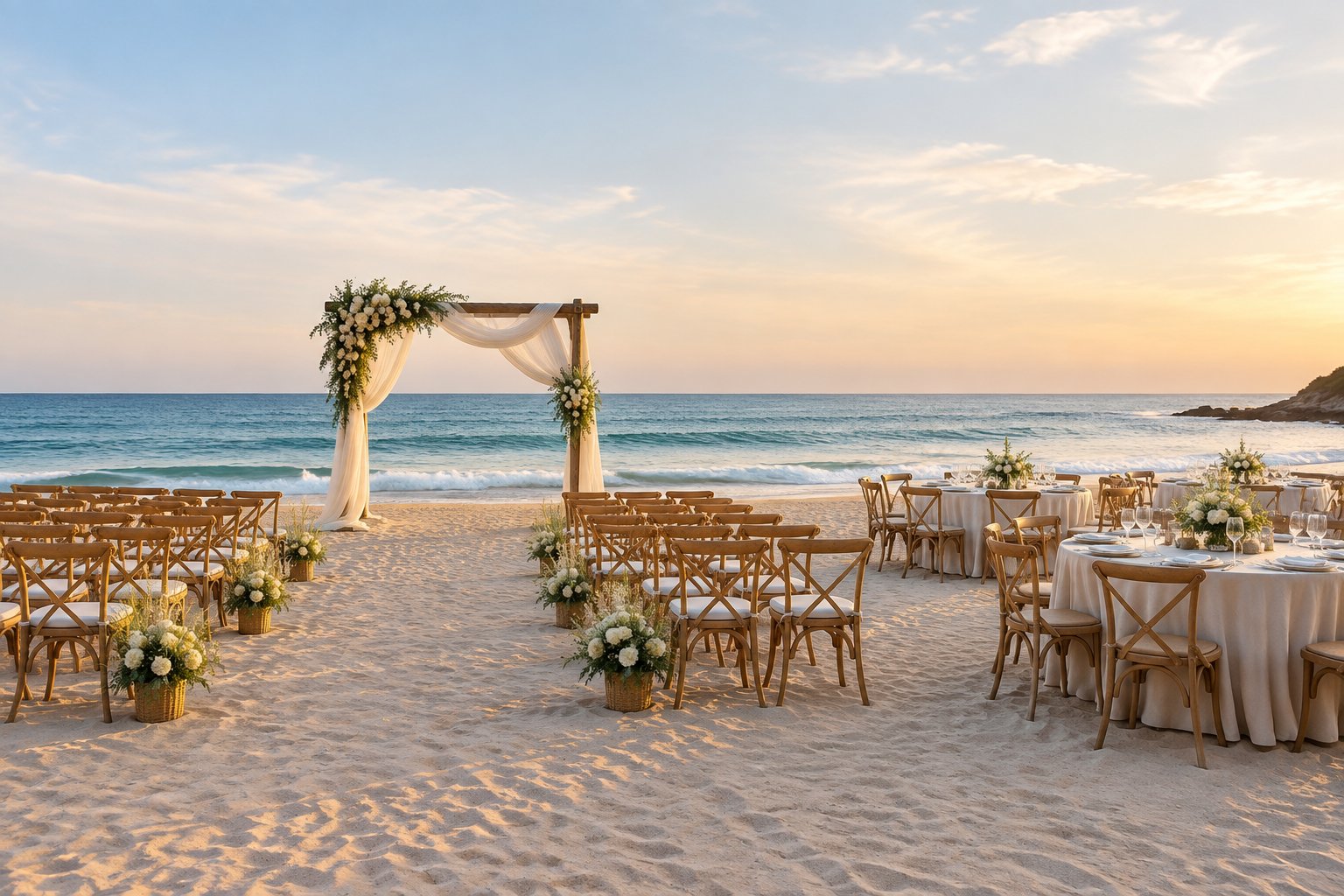
A beautiful listing photo does not confirm that a home works as a wedding venue. Review the contract, ask how vendors enter the property, and confirm every rule that affects your guest experience.
Rental Home vs. Traditional Wedding Venue
A rental home gives you private lodging, kitchen access, flexible gathering areas, and a residential feel. A traditional wedding venue often provides established ceremony layouts, event staff, restrooms, power, and vendor procedures.
Beach house wedding rentals work well for intimate beachfront celebrations where your group wants to stay together. Check the home’s outdoor surface, indoor backup space, parking, bathrooms, noise rules, and furniture limits before you choose it.
How to Confirm Event Approval Before Booking
Ask the owner or manager to confirm these points in writing:
- Whether weddings and receptions are allowed
- Maximum event attendance
- Maximum overnight occupancy
- Event fees and refundable deposits
- Approved vendor requirements
- Music and quiet-hour rules
- Delivery, setup, and cleanup windows
- Insurance or permit requirements
A sleeping limit and an event limit serve different purposes. A home that sleeps 12 guests might allow a larger ceremony, or it might restrict all gatherings to the overnight occupancy.
Private Beach Access and Public Beach Rules
Private beach access can offer a more controlled setting, though the shoreline may still fall under local rules. Public beaches can require permits for chairs, arches, amplified sound, tents, food service, or professional setups.
Contact the city, county, park office, or coastal authority that manages the beach. Ask about guest limits, ceremony hours, alcohol, fires, cleanup, accessibility, and tide conditions.
Get permit details before you sign the rental agreement.
How to Match the Property to Your Guest List
Choose a property by counting both overnight guests and event guests, then map the ceremony, meal, dancing, and circulation areas.
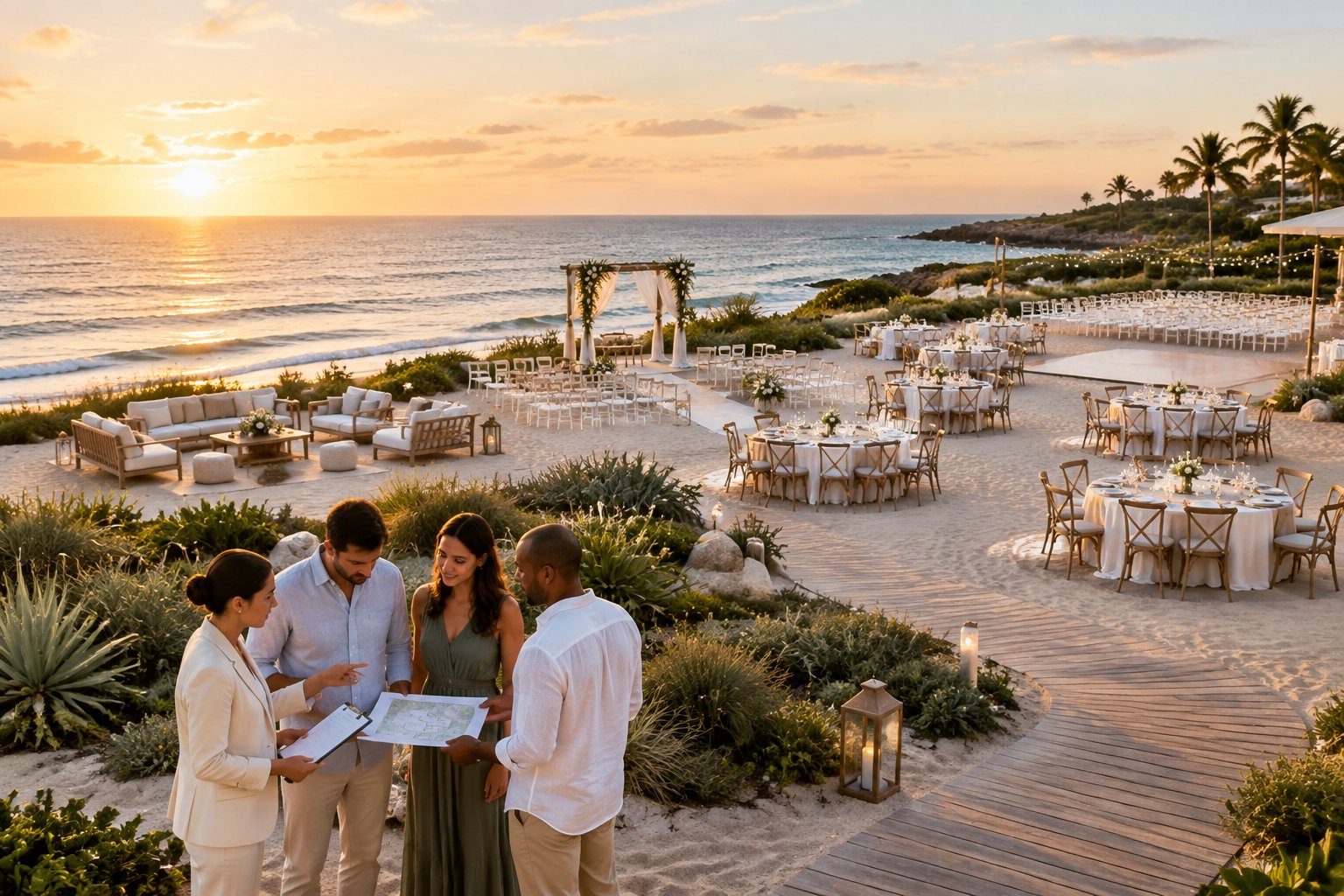
A smaller property can feel comfortable for a wedding weekend when the layout supports your plans. Ask for a site plan or measure the outdoor areas so your rental company can place every item safely.
Sleeping Capacity vs. Event Capacity
Start with the number of people staying at the home. Count beds, legal occupancy, bathrooms, and shared spaces.
Then create a separate event count that includes local guests, children, vendors, musicians, and the wedding party.
A property with room for overnight guests may have limited space for dining or dancing. Confirm whether the event limit includes vendors and staff, and ask how the manager counts children and short-term visitors.
Choosing Space for a Ceremony and Reception
A ceremony needs a clear view, guest seating, an aisle, sound equipment, and space for the couple and officiant. A reception needs tables, chairs, food service, bar access, lighting, dancing, and room for guests to move around.
Measure the distance between the ceremony and reception areas. A nearby indoor room gives guests a comfortable place to cool down, change shoes, or wait during a weather shift.
If you plan to use the sand, select furniture with wide feet and secure décor against wind.
Why an Oceanfront Lawn Can Simplify the Setup
An oceanfront lawn creates a firm surface for chairs, tables, catering stations, and a dance floor while keeping the water in view. It also gives vendors easier access than loose sand and provides a practical transition between the house and shoreline.
Check drainage, irrigation, tree roots, slope, lighting, and electrical outlets. Ask whether vehicles can reach the lawn for deliveries.
A lawn can support an outdoor wedding setup, though tents and décor still need approval and proper anchoring.
How Much Should You Budget for a Rental-Home Wedding?
Build your wedding budget from the complete event cost, including the home, event fee, rentals, vendors, permits, transportation, and cleanup.
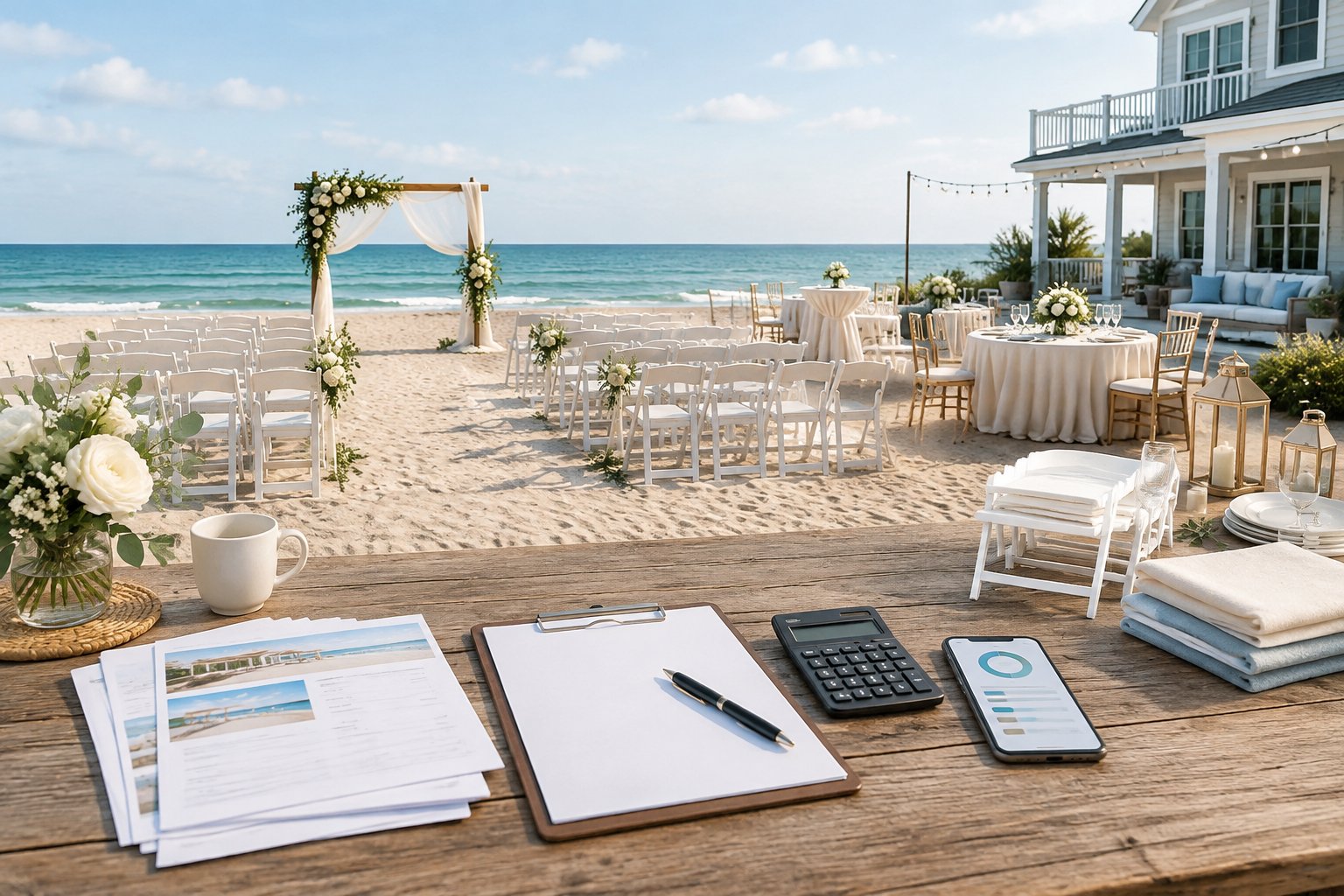
A low nightly rate can rise when you add a minimum stay, event surcharge, tent, flooring, sound equipment, restrooms, and delivery labor. Compare each property using the same complete cost list.
You can also review how much you should budget per person for a wedding before setting your guest count.
Rental Rates, Minimum Stays, and Event Fees
Ask for the full price for your dates, including taxes, cleaning, deposits, service charges, and event fees. Coastal homes often use minimum stays during busy seasons, so price the required nights even when your celebration lasts one day.
Confirm check-in and checkout times, early vendor access, late-night music rules, and the deadline for returning the property to its original condition. Request a written payment schedule and cancellation policy.
What Wedding Packages May Include
A wedding package might include a ceremony setup, chairs, tables, linens, basic décor, an officiant, a coordinator, catering, photography, or music. Package names vary, so request an itemized list with guest limits and service times.
Ask whether setup and cleanup are included. Confirm which vendors provide the items, whether gratuity is separate, and whether you can bring outside professionals.
Costs That Are Often Separate From the House
Plan separate line items for:
- Tables, chairs, linens, dishes, and glassware
- Tent, flooring, lighting, and dance floor
- Catering equipment, bar service, and ice
- Restrooms, generators, and sound equipment
- Florals, décor, photography, and entertainment
- Beach permits, insurance, transportation, and cleanup
Sand, narrow access roads, and limited delivery windows can increase labor costs. Ask the rental company for a site visit and a quote based on the exact property before you finalize the budget.
Coastal Destinations to Consider
Choose a destination by weighing beach character, travel access, property rules, seasonal weather, and lodging for your guests.
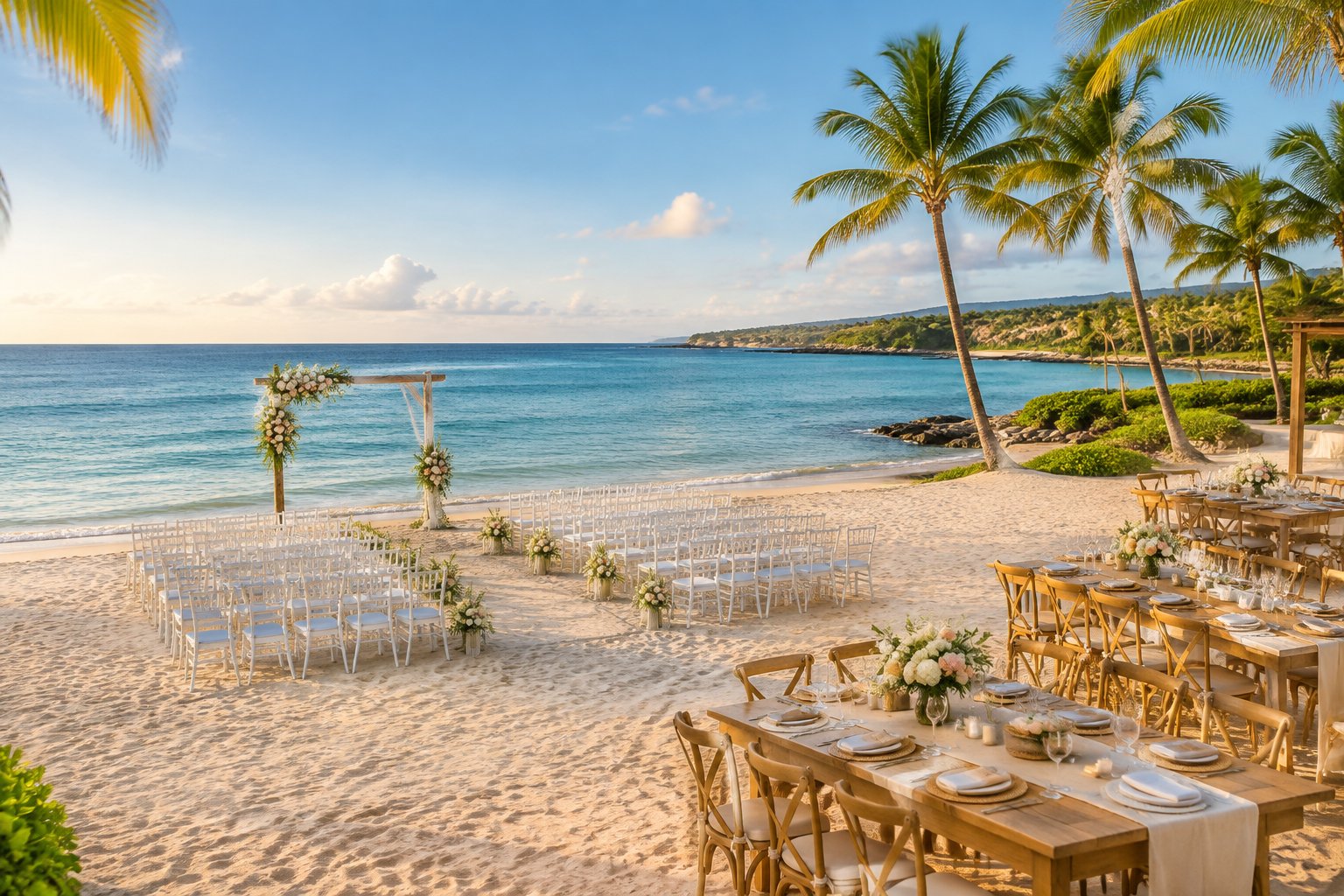
The United States offers rental-home options along the Gulf of Mexico, Atlantic Ocean, and Long Island Sound. Compare the feel of a busy resort town with a quieter coastal community, then check local event rules for your preferred date.
Florida Gulf Coast Options From Destin to Jacksonville
Destin offers bright Gulf waters, broad beaches, and vacation homes designed for group stays. Gulf Coast properties can suit couples who want warm-weather gatherings with ocean views and nearby restaurants.
Jacksonville gives you a larger city, airport access, and a wide range of lodging. Check whether your preferred property sits on a private beach, a public shoreline, or a residential street with neighborhood restrictions.
North Carolina Choices From the Outer Banks to Emerald Isle
The Outer Banks offers spacious homes, dunes, sound-side settings, and long stretches of Atlantic beach. Wind, sand access, and seasonal traffic should shape your vendor plan.
Emerald Isle, Ocean Isle Beach, Beaufort, and Sneads Ferry provide different coastal settings across North Carolina. Beaufort brings a historic waterfront feel, while beach communities such as Emerald Isle focus on relaxed group stays.
Ask each property manager about event approval, parking, and beach permits.
South Carolina, New York, and New England Alternatives
Myrtle Beach offers broad visitor services and many accommodation choices. Long Island communities, Bridgehampton, New York, and areas near Long Island Sound provide coastal elegance with access to restaurants and full-service vendors.
New England properties bring a seasonal setting with harbor views, lawn ceremonies, and historic homes. Vail offers a mountain destination wedding option when you want a vacation-home celebration away from the coast.
Compare travel time, weather patterns, rental availability, and local noise rules before choosing the setting.
Plan the Logistics for a Smooth Wedding Weekend
A smooth wedding weekend starts with one shared plan for access, weather, vendors, guest comfort, and the rental agreement.
Coastal Events & Occasions, The Beaufort Hotel, Luxury Lodging by Laura, and Surf Club illustrate the range of coastal hospitality and event support you might encounter while researching locations. Ask whether your rental manager has preferred local partners or requires specific vendors.
Parking, Deliveries, and Vendor Coordination
Create a delivery map showing the driveway, unloading point, ceremony area, reception area, and storage location. Confirm vehicle limits, parking spaces, shuttle access, and delivery windows with the property manager.
Give your caterer, rental company, florist, DJ, photographer, and planner the same timeline. Include contact names, gate codes, setup times, pickup times, and a rain layout.
Keep rental items away from dunes and protected areas, and plan a clear route for guests with mobility needs.
Weather Plans for Wind, Rain, and Tides
Check the tide schedule when you set the ceremony time. Place the ceremony above the active shoreline, allow extra room for wave movement, and protect electrical equipment from water and damp sand.
Choose a backup space that fits your guest count and wedding layout. A covered patio, oceanfront lawn with a permitted tent, or large indoor room can support a fast change.
Secure arches, signage, linens, menus, and centerpieces with weather-safe methods, and offer shade, water, fans, wraps, or towels based on the season.
When to Bring In a Wedding Planner or Coordinator
Bring in a planner when you are hosting a destination wedding, using several vendors, arranging a tented reception, or managing a public beach permit. A local professional can coordinate arrival windows, rental placement, weather changes, and cleanup while you focus on your guests.
A day-of coordinator can take over vendor calls and timeline decisions even when you plan the event yourself. Ask about site visits, emergency planning, setup supervision, and the number of assistants included in the fee.
Questions to Ask Before Signing the Rental Agreement
Ask for clear written answers to these questions:
- Is the wedding approved at this property?
- What is the maximum event attendance?
- What is the overnight occupancy limit?
- Which areas may guests use?
- Are public beach permits required?
- Are tents, amplified music, alcohol, or candles allowed?
- What are the parking and quiet-hour rules?
- When can vendors deliver and collect equipment?
- Who handles setup, cleanup, trash, and damage?
- What happens if rain, wind, or unsafe tides affect the event?
- Which fees, deposits, taxes, and insurance requirements apply?
- What cancellation terms cover the home and event services?
Keep the signed agreement, permit records, vendor contacts, floor plan, and emergency numbers in one shared file. Include the Atlantic Ocean forecast, tide chart, and property access instructions in the final week’s schedule.