
Beach Wedding Venues on a Budget: How to Save
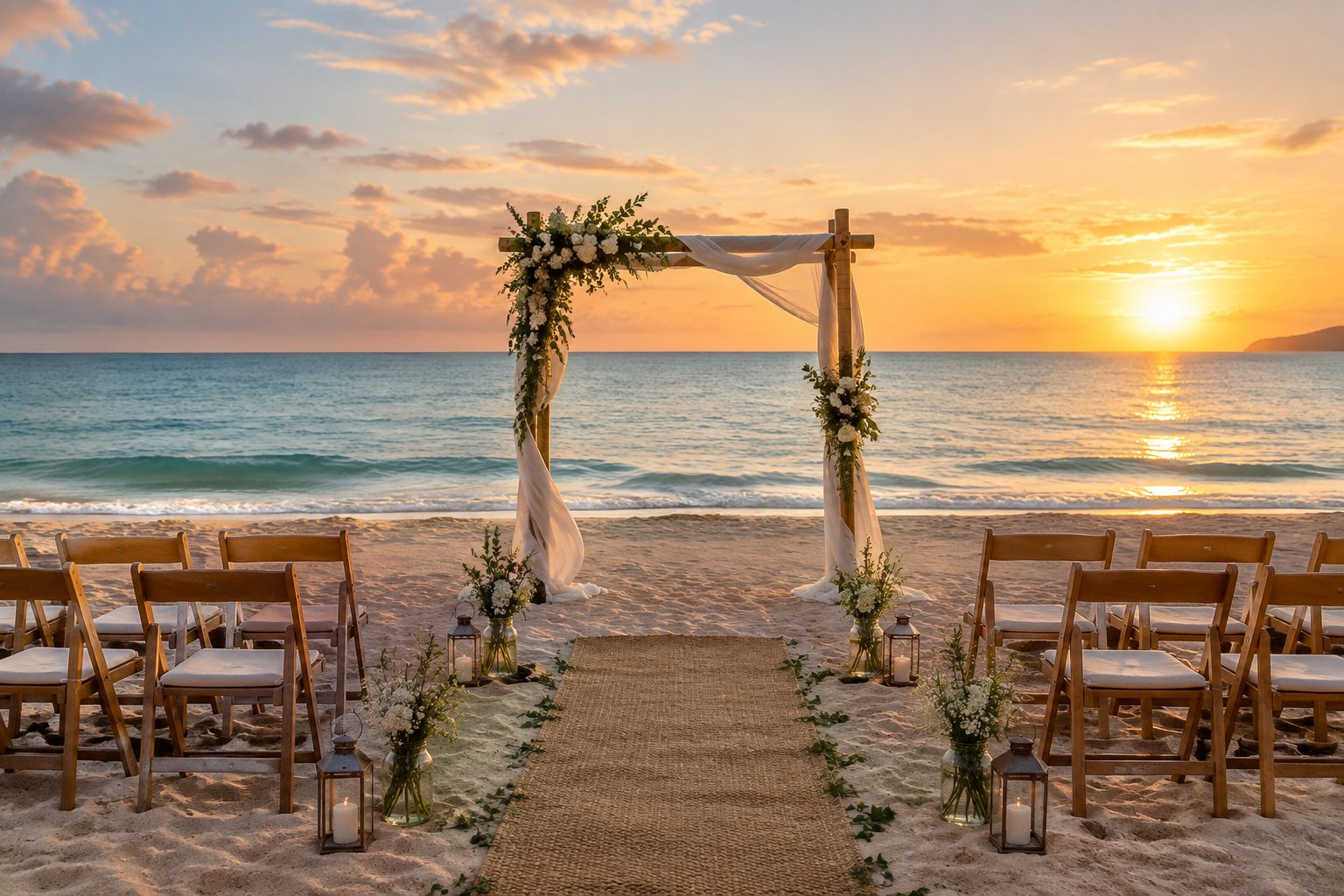
A beach wedding can fit a modest budget when you choose a low-fee location, keep the guest list focused, and pay close attention to included services. Public beaches and state parks are often the best starting points for beach wedding venues on a budget because they offer natural scenery with lower site costs than private resorts.
Your largest savings usually come from the venue, date, guest count, and reception plan. You can then add personal style through simple beach wedding ideas, seasonal flowers, borrowed décor, and relaxed food service. For couples planning along Florida’s east coast, Affordable Beach Wedding serves Daytona Beach, New Smyrna Beach, Ormond Beach, Port Orange, Ponce Inlet, Edgewater, and nearby areas with ceremony packages and optional planning services. Contact the team at (386) 428-0777 or (386) 279-1179 to discuss your date and guest count.
How to Compare Low-Cost Coastal Venue Options
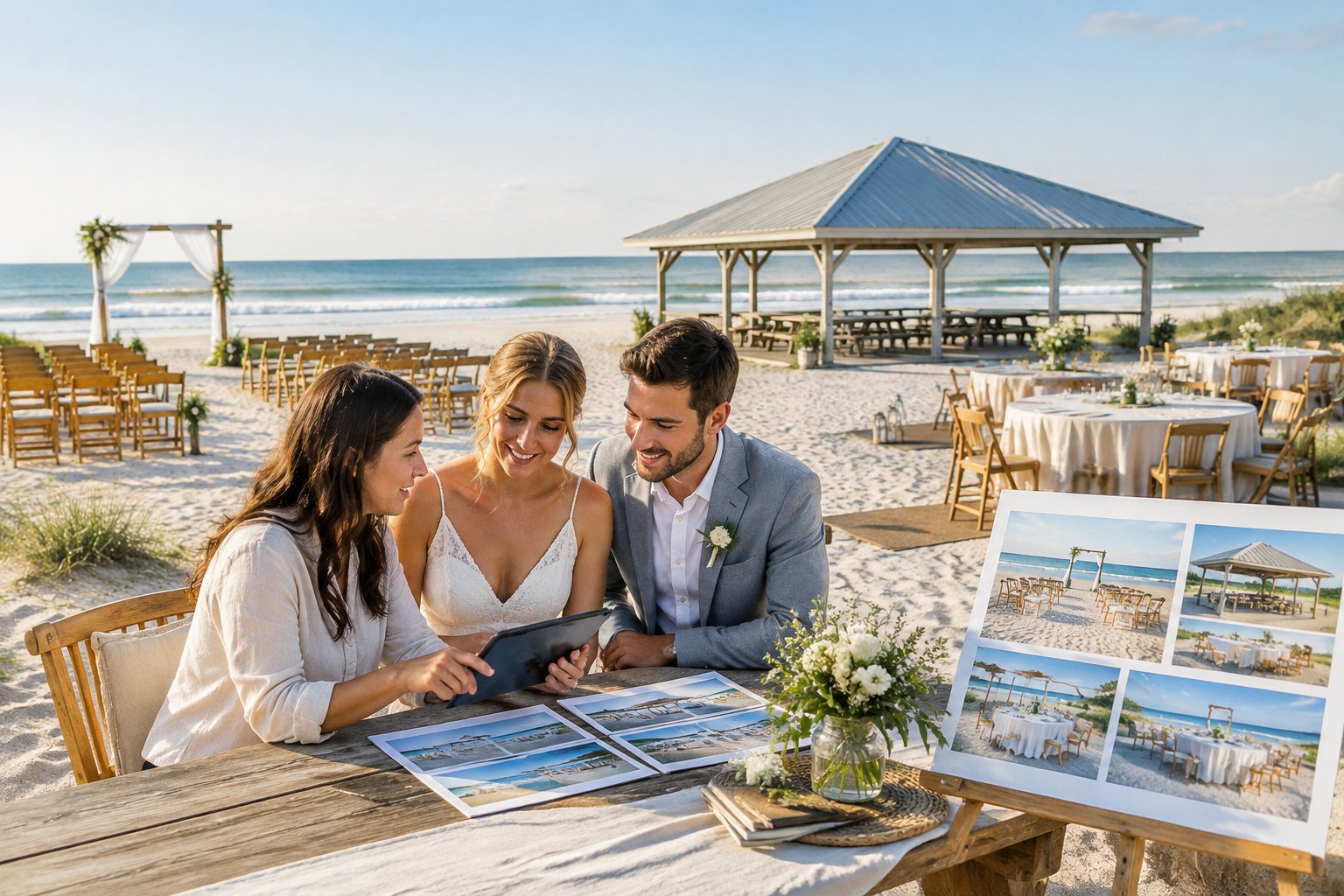
The most affordable coastal venue depends on how much planning, privacy, and guest support you want. Public beaches and state parks reduce rental costs, while private properties and resorts bundle more services into a higher price.
Public Beaches: Low Fees With More Planning
Public beaches offer a beautiful ceremony setting with modest permit fees in many locations. You handle more details, including seating, décor, sound, parking, guest directions, and cleanup.
Before booking, contact the city or county parks office. Ask about:
- Ceremony permits and application deadlines
- Maximum guest counts
- Reserved areas and setup times
- Alcohol, music, and décor rules
- Beach access during high-traffic periods
- Restroom and trash facilities
A public beach works well for a small budget beach wedding when you have a reliable coordinator or a few trusted helpers. Choose lightweight décor that packs easily and assign one person to remove every item after the ceremony.
State Parks: Scenic Settings With Built-In Amenities
State parks can provide a structured setting with parking areas, restrooms, picnic shelters, trails, and marked ceremony spaces. Fees vary by park, and some locations require both a special-use permit and general admission.
Ask whether the park allows receptions, amplified music, catering deliveries, tents, and open flames. A park with a covered pavilion can reduce the need to rent a weather backup. Check accessibility from the parking area to the ceremony site, especially when guests use wheelchairs or have limited mobility.
Private Beach Properties and Small Waterfront Venues
Vacation homes, inns, restaurants, and community waterfront spaces offer more control over guest access and reception timing. Their rental price may include tables, chairs, restrooms, a kitchen, or overnight guest accommodation.
Read the contract closely. Look for cleaning charges, security deposits, event insurance requirements, noise limits, vendor rules, and extra fees for setup. A smaller waterfront venue can deliver better value when the ceremony and reception share one property.
All-Inclusive Resorts and Free Wedding Packages
An all-inclusive resort can reduce planning work by combining the ceremony site, officiant, basic décor, food, and guest accommodation. Some resorts advertise a free wedding package when you meet a room-night requirement or book a minimum number of stays.
Calculate the full destination wedding cost before choosing this route. Include travel, room rates, taxes, resort fees, guest meals, upgraded décor, photography, and activities. A free wedding package helps when your guests already want a resort stay and the included ceremony services match your needs.
What Does a Beach Wedding Venue Really Cost?
A beach wedding on a budget requires a full-cost estimate that includes permits, rentals, food, guest lodging, weather plans, and access needs. A low venue fee can lose its value when essential services carry separate charges.
Permit, Insurance, and Cleanup Fees
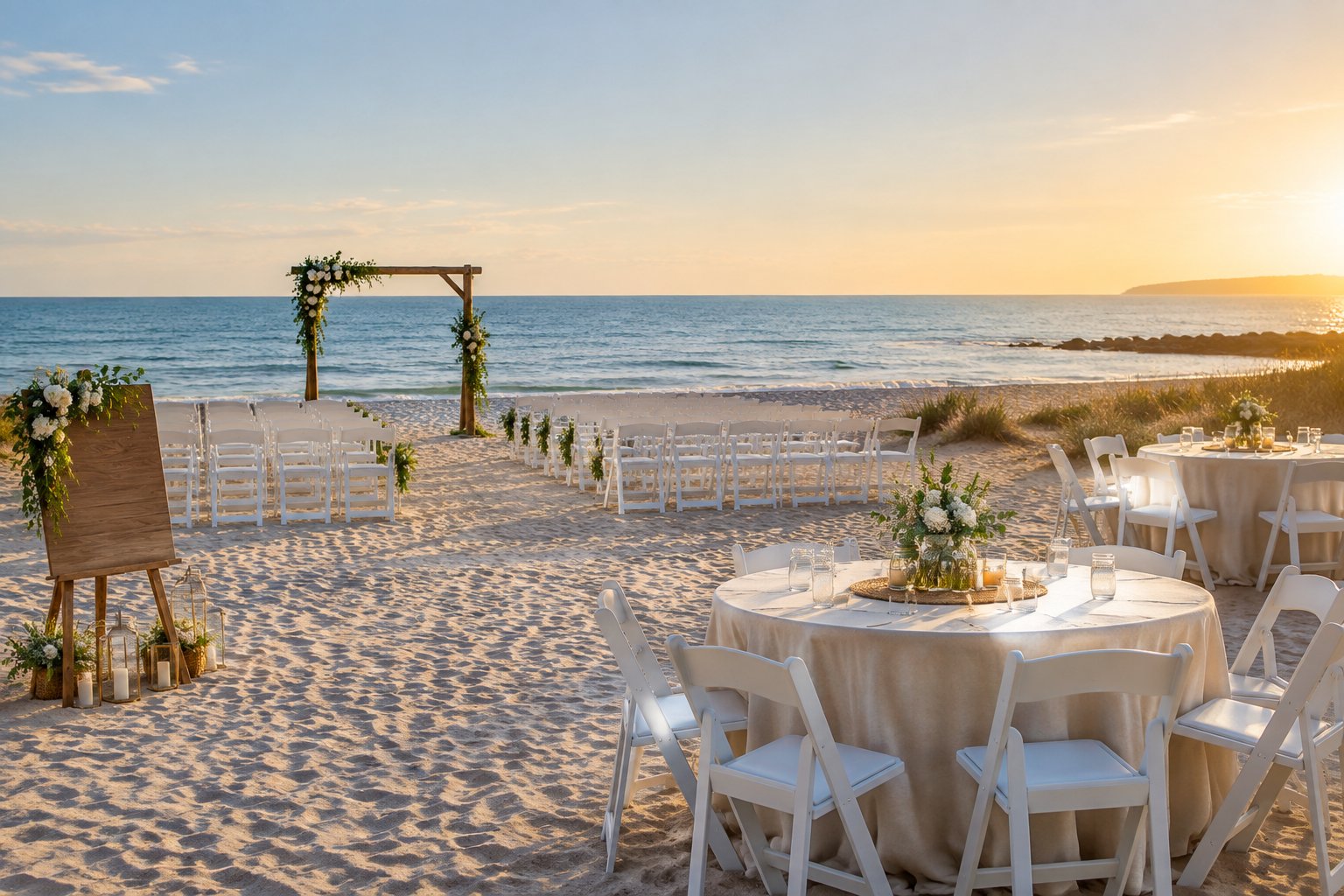
Public beaches and state parks may require permits for ceremonies, reserved areas, professional photography, amplified sound, or large gatherings. Some locations also request proof of liability insurance.
Add cleanup labor, trash removal, delivery charges, and permit processing fees to your first estimate. Ask who handles sand removal, chair pickup, décor breakdown, and damage repairs. Get every required fee in writing before you compare venues.
Minimum Stays, Food Minimums, and Rental Add-Ons
Waterfront inns and vacation properties may require a two- or three-night stay. Resorts can set room-night requirements or charge food and beverage minimums. These terms affect your guests as well as your own budget.
Rental add-ons can include:
- Chairs and ceremony arches
- Tables, linens, plates, and glassware
- Portable restrooms
- Lighting and power
- Sound equipment
- Tents or shade structures
Request an itemized quote that shows included quantities and per-item prices. This makes it easier to remove extras that do not serve your plans.
Guest Count and Reception Costs
Guest count drives food, seating, rentals, transportation, and guest accommodation expenses. A ceremony for 20 people can use a small rental package, while a reception for 80 guests needs more space, service staff, and equipment.
Set your guest limit before touring venues. If your favorite location has a tight capacity, invite immediate family and close friends, then plan a larger casual celebration later.
Weather Backup and Accessibility Expenses
A beach ceremony needs a clear plan for wind, rain, heat, and rough surf. Covered pavilions, indoor rooms, tents, fans, heaters, and backup transportation add to your budget.
Check the route from parking to the ceremony area. Soft sand creates access problems for wheelchairs, walkers, children, and formal shoes. Boardwalks, firm paths, nearby restrooms, shade, and seating help guests stay comfortable without last-minute rentals.
How to Find the Best Value Location and Date
You find the best value by pairing a less crowded location with a flexible date and a careful site visit. Public beaches, state parks, and smaller coastal towns can offer the setting you want with lower demand.

Choose Off-Peak and Weekday Dates
Thursday, Friday, and Sunday weddings may open more venue availability and lower rates. Shoulder-season dates can also reduce travel and guest accommodation costs, depending on the local climate.
Ask each venue for weekday, off-season, and short-event pricing. Confirm sunset time, tide conditions, daylight for photos, and the area’s storm patterns before signing a contract.
Look Beyond Famous Resort Towns
Popular resort towns bring higher demand for venues, lodging, parking, and vendors. Search nearby coastal communities, public park beaches, riverfront areas, and small towns within driving distance of a major airport.
Compare the complete guest experience. A less famous town with affordable hotels, restaurants, and free parking may serve your group better than a famous resort with a low ceremony fee and high room rates.
Visit the Site Before Booking
Walk the ceremony area at the same time of day you plan to marry. Check the sun angle, wind, noise, public traffic, parking distance, restrooms, shade, and accessible paths.
Take measurements for the arbor, chairs, aisle, signing table, and photographer’s position. Ask the venue manager where vendors may unload and where guests should gather before the processional.
Check Rules for Noise, Alcohol, Décor, and Parking
Local rules shape the ceremony more than the view does. Confirm whether you may use speakers, candles, glassware, confetti, flower petals, stakes, arches, alcohol, or food service.
Ask for written details about parking passes, reserved spaces, event hours, vendor insurance, and cleanup. A signed permit protects your plans and helps prevent fees on the wedding day.
Make the Ceremony Look Beautiful for Less
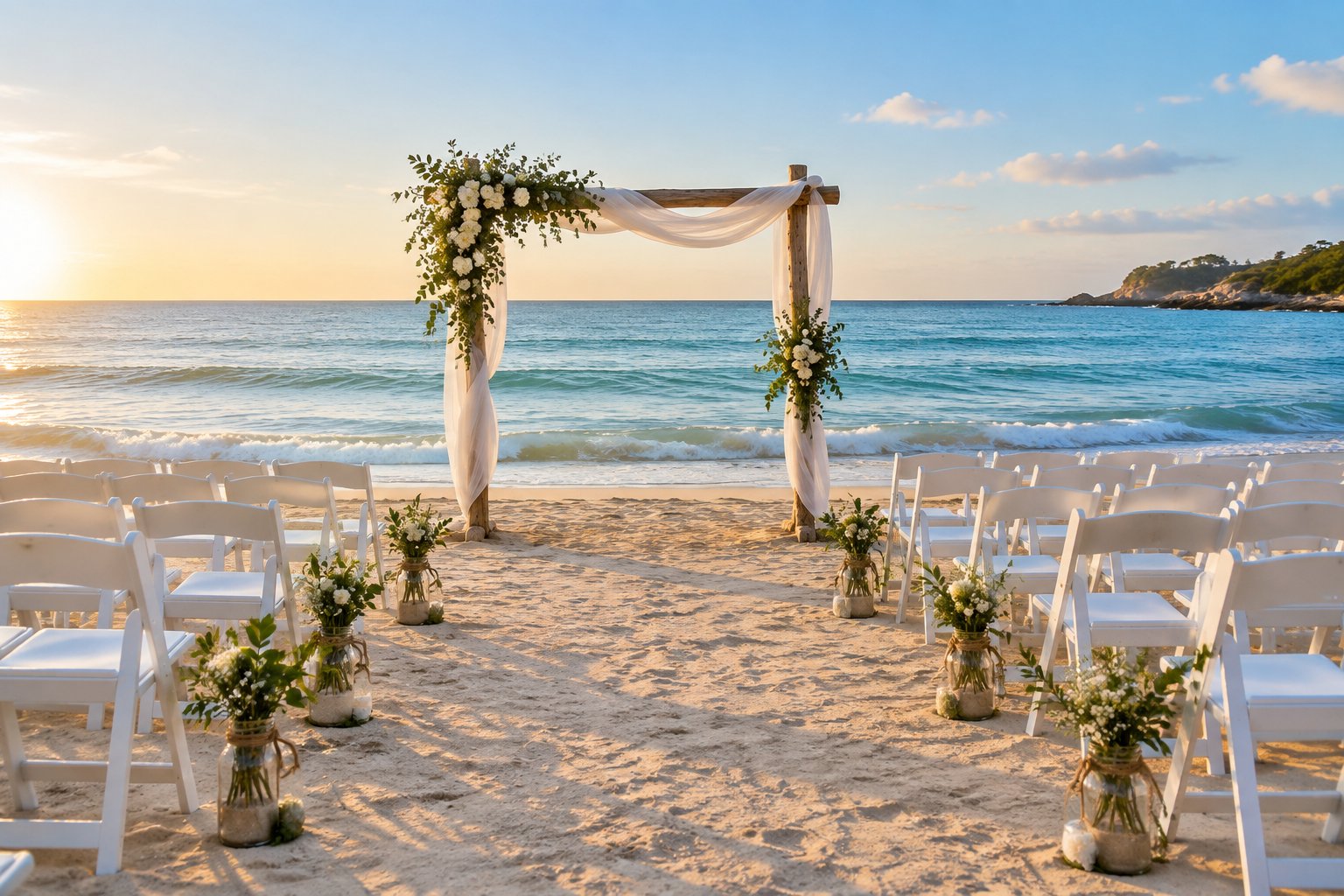
The shoreline provides most of your ceremony décor, so spend your styling budget on one focal point and guest comfort. A clean aisle, a modest arbor, and flowers suited to the coast can create a polished setting.
Use the Shoreline as the Main Backdrop
Face the seating toward the water and keep the ceremony structure low enough to preserve the view. Choose a simple arbor, bamboo frame, or fabric drape that handles wind and meets local rules.
Let the sand, water, horizon, and natural light carry the design. Use aisle markers only where guests need direction, and secure every lightweight item with approved weights.
Create DIY Beach Wedding Decorations
DIY beach wedding decorations work best when they are easy to transport, safe outdoors, and quick to remove. Build a small sign from reclaimed wood, wrap jars with cord, or use fabric ribbons in colors that match the water and sand.
Avoid loose glitter, paper scraps, plastic petals, and items that wind can carry into the ocean. Prepare décor in labeled bins and appoint a setup team with a written placement plan.
For more projects, explore these low budget beach wedding ideas DIY, including ways to personalize ceremony details without adding large rental costs.
Style Tables With Seashell Centerpieces and Native Flowers
Seashell centerpieces add a coastal feel when you use clean shells in glass bowls or shallow trays. Pair them with native flowers, local greenery, or a few seasonal blooms for color and texture.
Ask your florist which flowers tolerate heat, wind, and transport. Small arrangements reduce the number of vases, water needs, and setup hours. Reuse ceremony flowers on the reception tables when the venue allows it.
Choose Comfortable, Affordable Beach Wedding Attire
Beach wedding attire should suit heat, wind, sand, and walking conditions. Lightweight dresses, linen shirts, breathable suits, simple sandals, and low shoes help you move comfortably across the site.
Look for pre-owned gowns, sample dresses, suit separates, rental clothing, and accessories you can wear again. Keep a second pair of shoes, garment clips, hair pins, and stain supplies available for the ceremony and photos.
Plan an Affordable Reception Guests Will Enjoy
An affordable reception succeeds when you choose a simple menu, predictable service, and activities that fit the location. Casual food, shaded seating, cold drinks, and clear guest instructions create comfort without a large production.
Use Food Trucks and Casual Coastal Menus
Food trucks can provide cost-effective catering for a relaxed beach reception, especially when the site has vehicle access and enough serving space. Ask about travel charges, service time, guest capacity, power, permits, and rain procedures.
Other practical menus include boxed lunches, taco bars, barbecue, sandwiches, fresh fruit, salads, and local seafood. Select foods that hold safely in the local temperature and do not require complicated table service.
Keep Catering Costs Predictable
Request a quote based on your confirmed guest count and ask how the vendor handles children, vendors, overtime, service fees, taxes, delivery, plates, drinks, and cake cutting. Limit the bar to beer, wine, and one signature drink if the venue permits alcohol.
Serve the meal during a set window and use self-serve stations where local rules allow them. A smaller dessert display, sheet cake, or cupcakes can reduce cutting and serving charges.
Set Up Simple Entertainment and Beach Activities
A playlist, portable speaker, lawn games, and a guestbook station provide low-cost entertainment. Beach volleyball works well for active groups when the beach allows organized play and the area stays clear for other visitors.
Plan activities around the weather and your guest list. Provide a quiet seating area for older guests and anyone who wants a break from sun, sand, or music.
Save on Invitations, Favors, and Guest Comfort Items
Digital beach wedding invitations reduce printing and postage costs while making updates easier. For guests who prefer paper, print a small number of formal invitations and direct everyone else to a wedding website.
Skip favors that guests must carry home. Offer useful items such as water, sunscreen, fans, bug spray, hand wipes, and clear directions to restrooms. A labeled hydration station keeps guests comfortable and reduces repeated drink purchases during the reception.