
Beach Wedding Venues Southeast: Planning Guide
A beach wedding gives you a beautiful setting and a guest experience that feels like a getaway. The Southeast offers Gulf sunsets, Atlantic surf, historic coastal towns, and resort spaces that make planning easier.
The best beach wedding venues Southeast couples can choose are full-service coastal properties with a private ceremony area, a weather backup, guest lodging, and clear support for permits and beach logistics.
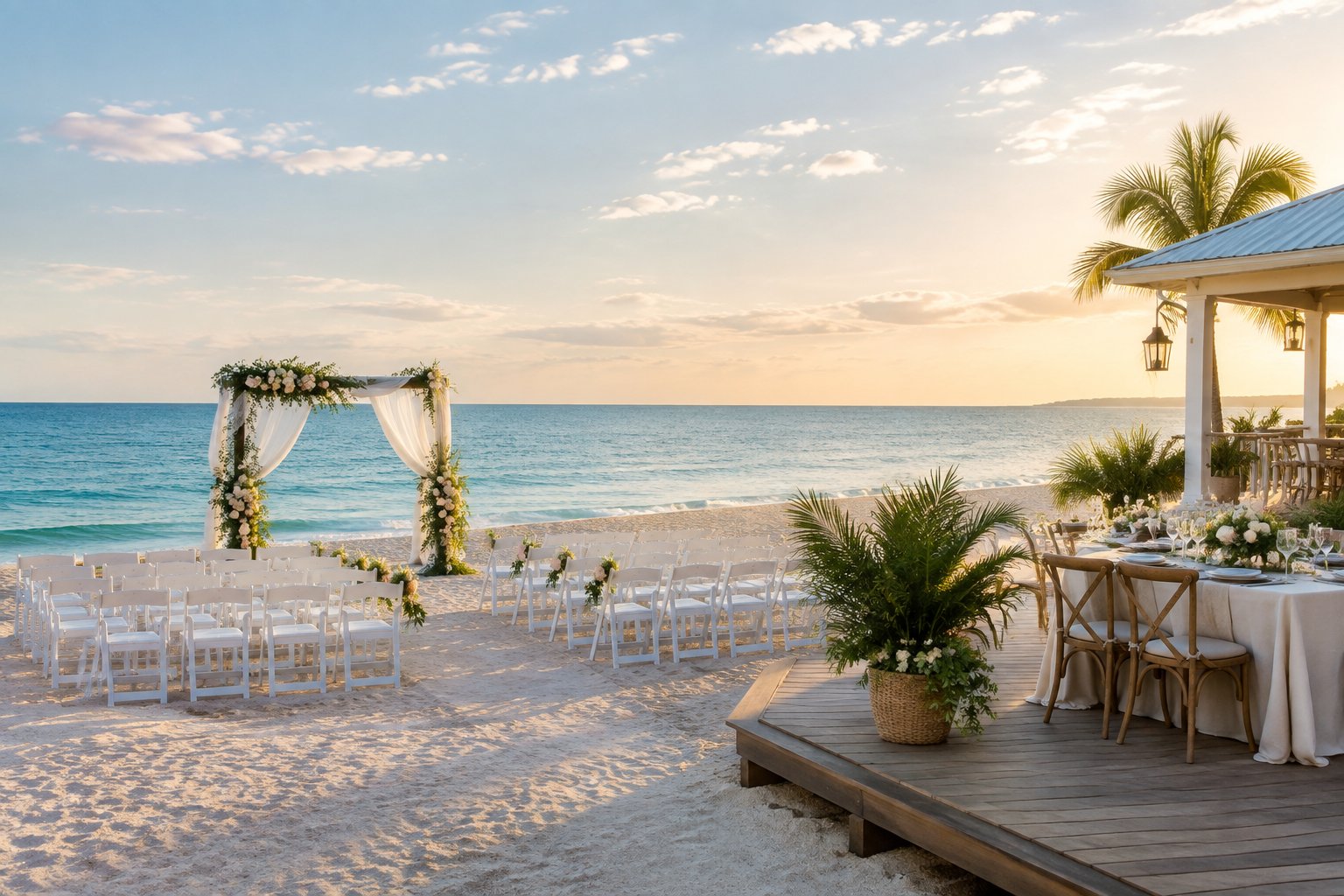
You can exchange vows on white sand, host dinner beside the water, or pair a small beach ceremony with an indoor reception. Start by setting your guest count, preferred coast, season, and budget.
Then compare what each beach wedding venue includes, from chairs and florals to transportation and a rain plan. If you want help turning your ideas into a polished celebration, explore beach wedding ideas and begin shortlisting venues that fit your plans.
Choose the Right Coastal Setting for Your Celebration
Choose a coastal setting that supports both your ceremony style and the way you want guests to spend the rest of the day. Your choice might lead to a waterfront wedding on a private terrace, a beachfront wedding on the sand, or an outdoor ceremony beside landscaped gardens.
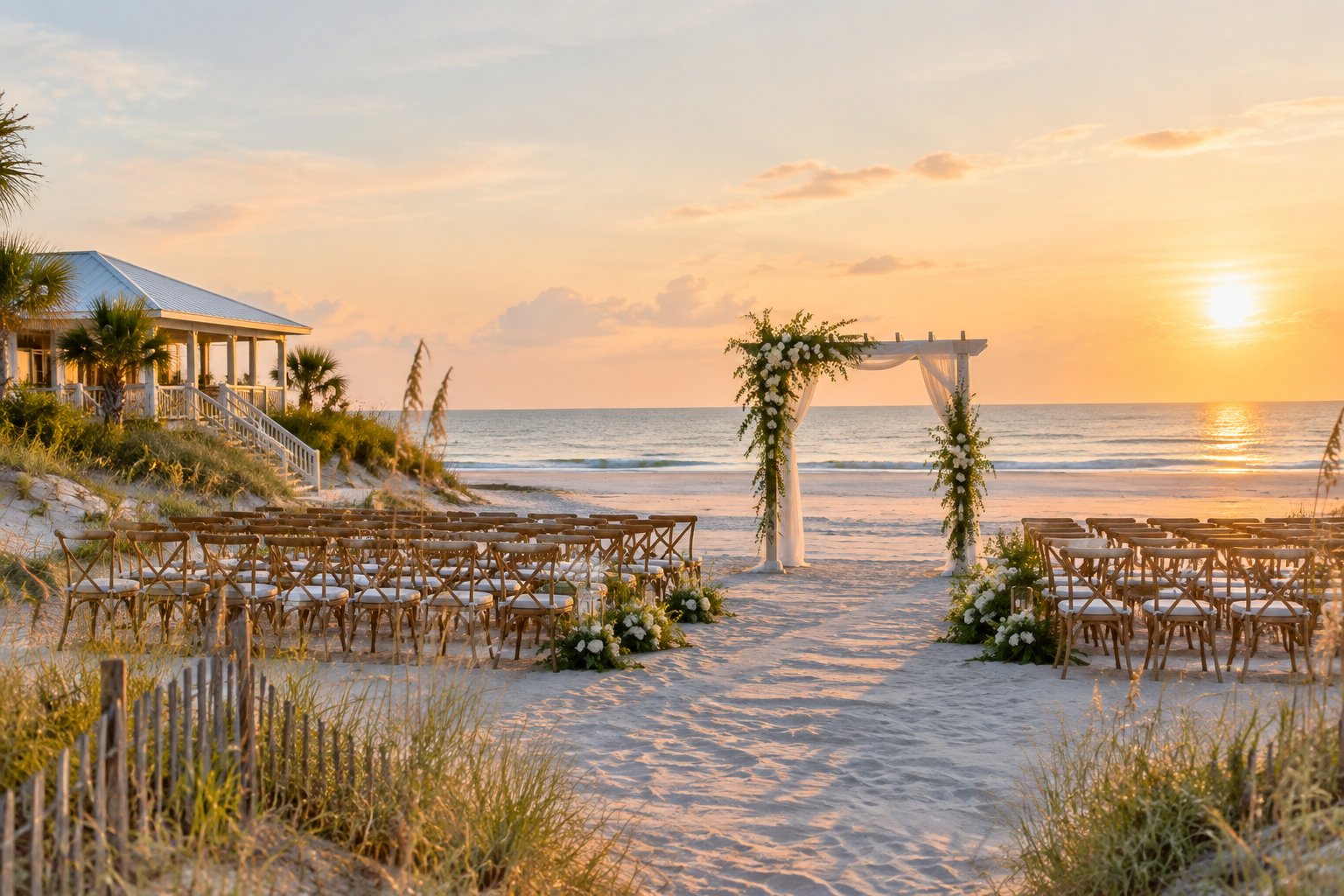
On-the-Sand Ceremonies vs. Waterfront Receptions
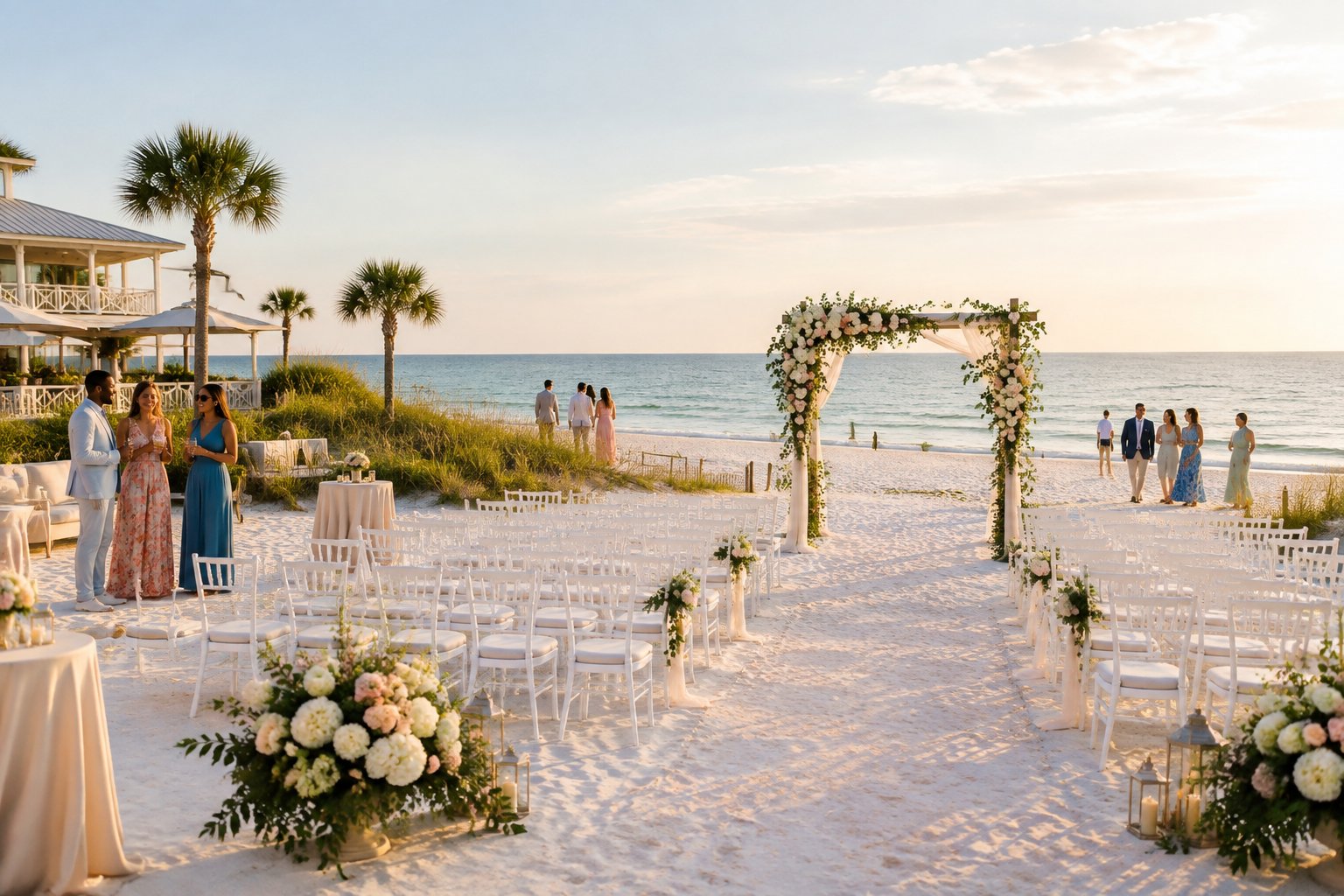
An outdoor wedding on the beach creates a relaxed atmosphere with direct access to the shoreline and ocean views. Ask about walking distance from parking, footwear guidance, shade, seating, sound equipment, and accessibility for guests who cannot walk easily across sand.
A waterfront reception gives you coastal scenery with firmer flooring, easier dining service, and more control over wind and temperature. You can hold the vows on the sand, then move guests to a covered deck, patio, or ballroom for dinner and dancing.
Resorts, Historic Estates, Gardens, and Elegant Ballrooms
Resorts work well when you want lodging, catering, event staff, and guest activities in one location. A historic estate brings architectural character and works well for portraits, cocktail hour, and an indoor backup.
Gardens offer color, privacy, and a softer setting for an outdoor ceremony. Elegant ballrooms provide climate control and dependable flooring for receptions.
A waterfront estate can combine private grounds with direct views of the Atlantic Ocean or Gulf of Mexico. When you compare these settings, ask whether the venue hosts the ceremony and reception in the same area, how guests move between spaces, and which services the package includes.
What Ocean Views Really Mean for Your Event
“Ocean view” can describe direct beach frontage, a distant horizon, or a partial view from an upper floor. Request a site plan and recent photos taken from the ceremony and reception areas.
Check the direction of the view at your ceremony time. A west-facing Gulf setting can create a sunset backdrop, while some Atlantic locations offer brighter morning light.
Ask about nearby buildings, public beach traffic, noise, and the position of the sun during portraits.
Where Are the Best Coastal Areas to Consider?
The best coastal areas match your preferred scenery, travel access, season, and wedding style. Florida offers broad choices along the Gulf and Atlantic, while the Carolinas and New England bring distinct architecture, beaches, and cooler seasonal patterns.
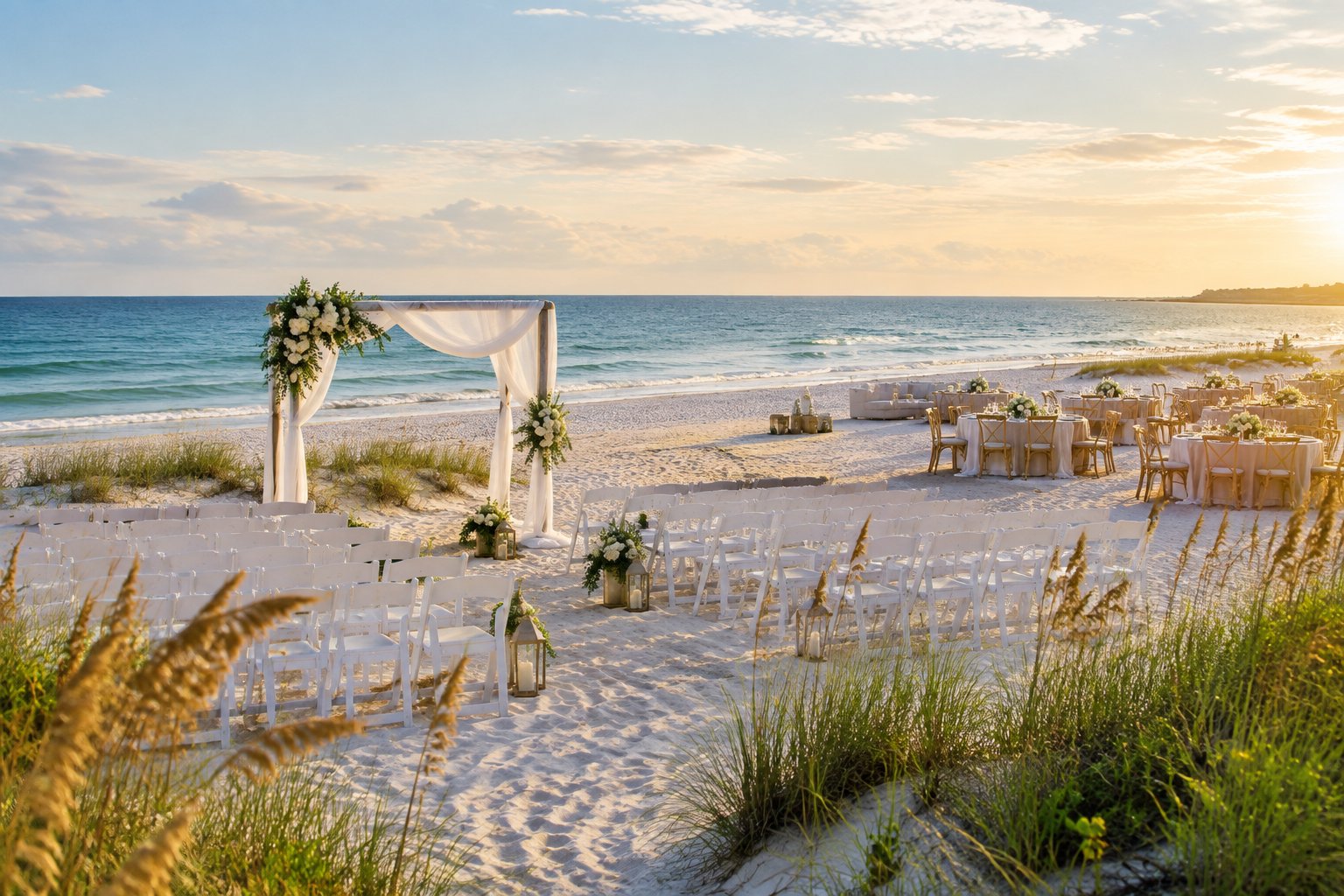
Florida’s Gulf and Atlantic Coasts
Florida gives you many venue styles, from relaxed beach towns to polished resorts. Destin is known for bright Gulf water and white sand, while Daytona Beach offers broad Atlantic shoreline and easy access for larger groups.
St. Pete Beach pairs Gulf sunsets with resort services. Rosemary Beach brings a planned community feel, walkable streets, and refined coastal architecture.
On the Atlantic side, you can consider quieter stretches near St. Augustine, Palm Coast, or Amelia Island. Compare the exact beach before booking, since water color, shoreline width, parking, public access, and reception options differ from one city to the next.
The Florida Keys and South Florida
The Florida Keys suit couples who want island scenery, warm water, and a relaxed destination wedding. Venues near Key West or smaller islands may offer sunset ceremonies, tropical landscaping, and boating activities for guests.
Miami and Miami Beach bring nightlife, design-focused hotels, and large event spaces. South Beach works well for a lively celebration, while Fort Lauderdale offers beaches, waterways, and a broad range of hotels.
In South Florida, confirm local noise rules, beach access, parking, and hurricane-season policies before paying a deposit.
The Carolinas and the Outer Banks
South Carolina offers historic charm alongside coastal venues. Charleston, Charleston, SC, and nearby barrier islands combine waterfront properties, gardens, historic estates, and elegant reception rooms.
The Outer Banks gives you a quieter Atlantic setting with dunes, wide beaches, and vacation homes suited to a wedding weekend. Ask about wind exposure, access roads, tent rules, and the distance between guest lodging and the ceremony site.
New England Coastal Escapes
Rhode Island offers rocky shoreline, refined estates, and harbor views around Narragansett Bay. Narragansett and Newport work well for couples who want coastal scenery with historic architecture and formal dining spaces.
Maine and Nantucket bring a cooler, classic seaside feel. You can also consider coastal venues near Long Island Sound, where lawns and grand hotels create sheltered ceremony options.
Maryland adds Chesapeake scenery, especially around Easton, with waterfront estates and countryside charm.
How to Match a Venue to Your Guest List and Wedding Style
Match the venue to your guest capacity first, then shape the décor and schedule around the space. A small destination wedding needs comfort and privacy, while a large celebration needs reliable access, restrooms, power, parking, and a reception layout that keeps guests together.
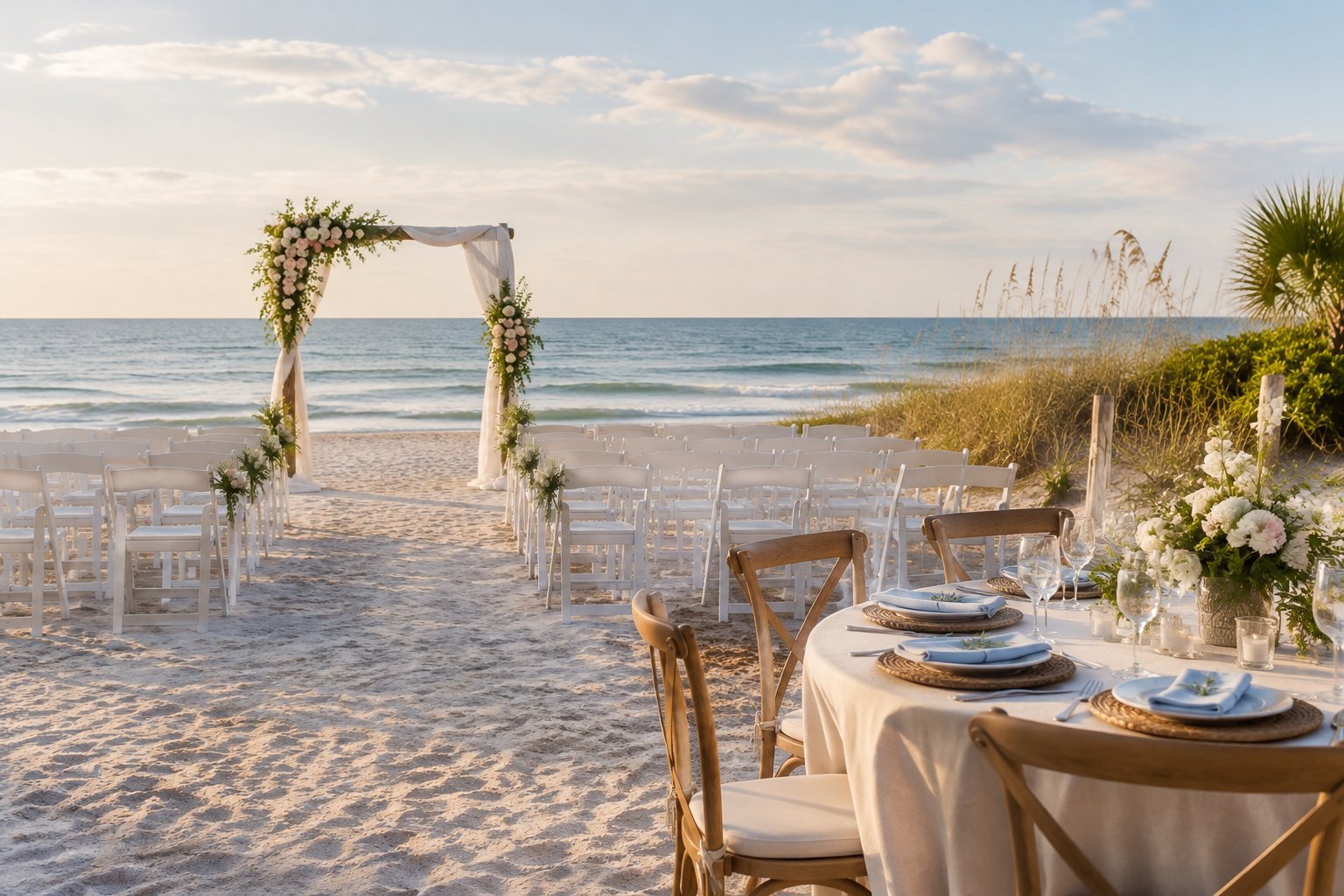
Estimate Guest Capacity Without Sacrificing Comfort
Ask for the venue’s seated dinner capacity, ceremony capacity, and maximum capacity for the exact layout you want. A space that holds 120 guests for a standing cocktail party might feel crowded with tables, a dance floor, buffet stations, and a band.
Include children, older relatives, and guests with mobility needs in your planning. Confirm restroom locations, shade, seating on firm ground, and the distance from parking or shuttles.
A smaller guest list can open access to private estates, boutique hotels, farms, and intimate waterfront properties. For help shaping a smaller celebration, use these tips for choosing the perfect venue for a small wedding.
Plan a Ceremony-to-Reception Flow
A smooth flow keeps guests from waiting in heat or walking long distances in formal clothes. Look for a venue with a clear path from the wedding ceremony to cocktails and dinner.
Decide whether guests will walk, ride a shuttle, or remain in one location. Build time for family photos, a room change, and any reset of chairs or décor.
An onsite coordinator can explain how the venue handles the transition and where vendors store equipment.
Find the Right Fit for an Intimate or Large Celebration
An intimate ceremony may suit a private beach, garden, small inn, or waterfront estate. You can use a smaller space for a more personal dinner, long-table reception, or weekend gathering.
Large destination weddings need strong infrastructure. A grand hotel, resort, or dedicated event property can provide guest rooms, elevators, catering facilities, indoor space, and transportation support.
Review the floor plan, not only the gallery photos, and confirm how many events take place on your date.
Plan a Destination Wedding Weekend That Guests Can Enjoy
A well-planned destination wedding gives guests clear travel information, comfortable lodging, and free time between hosted events. Your wedding weekend should feel organized without filling every hour.
Lodging, Airports, and Group Transportation
Choose a venue within a practical drive of an airport and offer lodging at more than one price point. Share the closest major airports, recommended hotels, room-block deadlines, parking details, and expected travel times.
Ask whether the venue provides shuttles from hotels. If guests must drive to a public beach, explain parking limits and arrival times.
Include accessibility details for guests who need elevators, paved paths, or shorter walks. Your guest guide can also list nearby pharmacies, grocery stores, restaurants, and beach supply shops.
A clear destination wedding checklist helps you track these details alongside contracts and payments.
Welcome Events and Day-After Gatherings
A welcome dinner lets guests meet before the ceremony. You can host it at a waterfront restaurant, resort patio, casual seafood spot, or rented home.
For the day after, choose an optional event such as brunch, a sunset cruise, a beach walk, or a local tour. Keep attendance flexible so guests can rest, explore, or travel home.
Share costs and dress expectations in advance when guests will pay for their own activities.
Making a Multi-Day Celebration Feel Easy
Give guests one reliable source for the itinerary, lodging, transportation, attire, weather updates, and contact information. Send key details early, then provide a final schedule shortly before arrival.
Leave open blocks in the wedding weekend. Guests appreciate time to settle in, enjoy the destination, and manage travel delays.
On the wedding day, assign one coordinator to answer questions so you and your partner can focus on the celebration.
Evaluate Weather, Costs, and Venue Logistics Before Booking
Review weather, total costs, access rules, and backup spaces before you sign a contract. A venue on a beautiful beach becomes far easier to manage when the agreement explains what happens during rain, high wind, extreme heat, or restricted beach access.
Understand Seasonal Weather and Hurricane Considerations
Choose your date with temperature, rain patterns, wind, and hurricane risk in mind. Florida beach wedding venues may have different policies for storms, cancellations, postponements, and date changes, so read each clause carefully.
Ask when the venue makes a weather call and who has authority to move the ceremony. Confirm the backup location, its capacity, its décor plan, and the notification process for guests.
A covered terrace or nearby ballroom gives you a practical option when the outdoor ceremony cannot proceed. Plan guest comfort for warm weather with water, shade, fans, sunscreen guidance, and breathable attire.
Wind-resistant décor, weighted signage, secure floral arrangements, and protected microphones help keep the ceremony working in coastal conditions.
Ask About Tides, Permits, and Beach Access
Tides affect the usable width of white sand beaches and the distance between your ceremony setup and the water. Ask the venue or planner about tide timing, sunset, wind direction, public access, and the setup window for your exact date.
Public beaches often require permits, with rules that vary by city, county, park, and season. Confirm who applies for the permit, what it covers, and whether it includes chairs, arches, amplified sound, photography, or food service.
Check whether vendors can drive equipment close to the ceremony area. Find out where guests enter, whether restrooms are nearby, and how the team removes décor after the event.
Compare Packages, Vendor Rules, and Backup Plans
Compare packages line by line. Look for ceremony setup, chairs, officiant, florals, photography, music, coordination, catering, bar service, taxes, service charges, cleanup, and transportation.
Ask whether you can hire outside vendors and whether the venue charges an outside-vendor fee. Review required insurance, load-in times, décor restrictions, candle rules, sound limits, and payment deadlines.
Request a complete cost estimate that includes rentals, permits, tenting, weather changes, vendor meals, taxes, gratuities, and guest transportation. Then put every promise in writing, including the backup location, cancellation terms, and the person responsible for each beach wedding detail.